Skyvia is the best database integration software for most businesses, earning 4.8/5 from 328 G2 reviews and offering paid integration plans from $79 monthly with annual billing. Choose Airbyte for customizable database pipelines or Hevo Data for managed data ingestion and warehouse integration.
How we make this list: we compare pricing pages, product documentation and public user reviews, then re-check every price before each update. No product paid for a place. Disclosure.
Skyvia earns 4.8/5 from 328 G2 reviews, with a free allowance of 10,000 records monthly.
Airbyte Standard starts at $20/month with 5 included credits.
Hevo Data Starter starts at $265/month with annual billing and supports up to 10 users.
Fivetran offers 500,000 monthly active connection rows on its free plan.
CData Sync Standard costs $7,999/year and supports 100 million processed rows monthly.
Integrate.io offers unlimited data volumes and pipelines for $1,999/month.
What to look for in database integration software
Database integration software connects databases, business applications and analytical destinations. Unlike standalone database engines, these platforms focus on moving, transforming and synchronizing information across existing systems.
Look for support for your source databases and destination platforms. Common requirements include relational databases, cloud warehouses, application APIs and file-based data sources.
Change data capture helps reduce unnecessary transfers by identifying changes rather than repeatedly copying entire tables. This matters when integrating frequently updated operational databases.
Compare pricing units carefully. Some platforms charge for records, events or credits, while others offer subscriptions with fixed capacity or unlimited data movement.
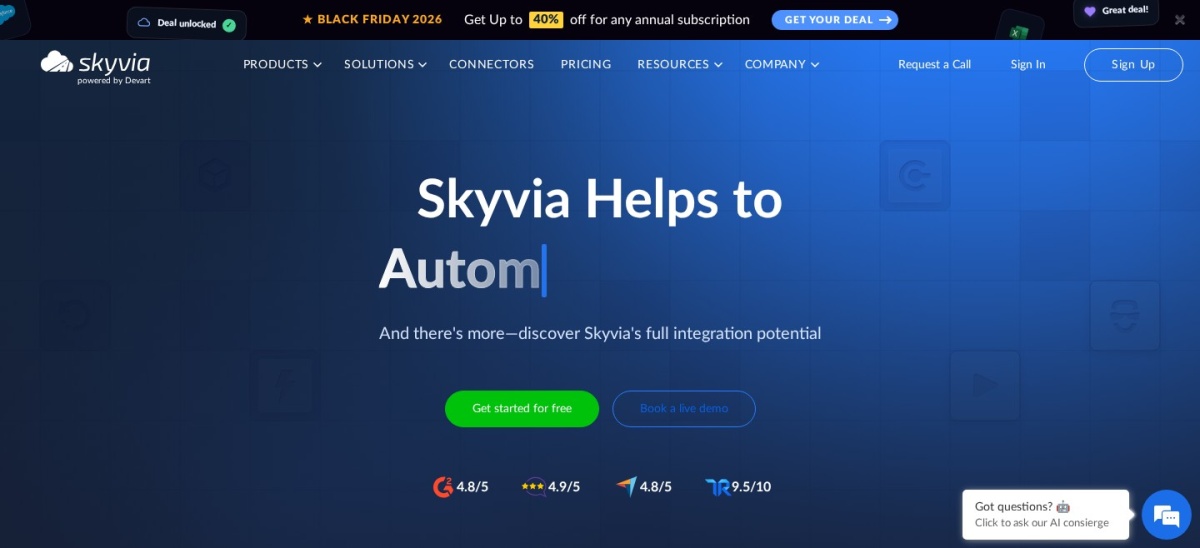
Skyvia is a cloud integration platform supporting database migration, synchronization and ETL workflows. Its free integration plan includes 10,000 monthly records, while Basic provides additional capacity and scheduled integrations.
The trade off is that Basic costs $79 monthly with annual billing or $99 with monthly billing, and hourly scheduling requires Standard. It suits smaller businesses that need database integration without maintaining custom scripts.
What we like
Free integration allowance
Visual configuration without coding
Supports database synchronization
Published subscription tiers
Watch out for
Basic scheduling limited to daily runs
Advanced mapping requires higher plans
Basic expands integration capacity; Standard adds hourly scheduling and advanced mapping.Visit skyvia.com
02
Airbyte
4.4/5on G2 (80 reviews, checked Nov 2026)
Paid from$20/mo
Best for customizable database pipelines
Entry cloud planStandard
Included credits5
Approximate included sync volume1 GB
Standard sync frequencyHourly
airbyte.com
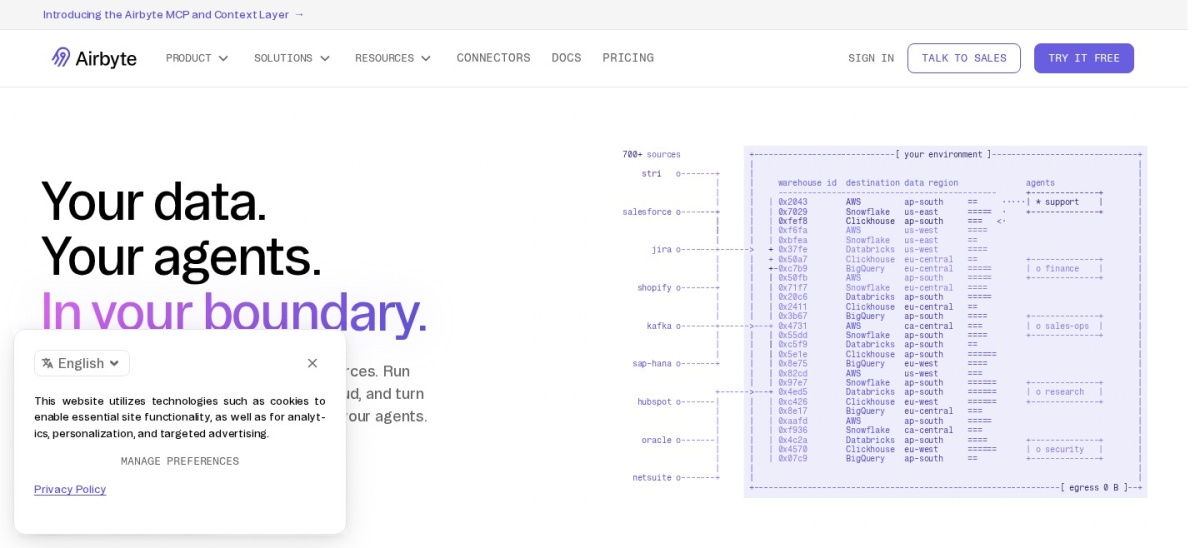
Airbyte homepage, captured Nov 2026.
Airbyte is a data integration platform supporting database replication, API connections and warehouse loading. Its managed Standard subscription includes 5 credits, approximately 1 GB of synchronization volume, and hourly pipeline execution.
The trade off is that the $20 monthly starting subscription scales with consumption, while faster synchronization requires higher tiers. It suits developers who want greater control over connectors and deployment options.
What we like
Low managed-cloud starting price
Open-source deployment option
Custom connector flexibility
Supports database-to-warehouse pipelines
Watch out for
Consumption-based costs can increase
Self-hosting requires technical administration
Plus adds single sign-on, faster synchronization and expanded support.Visit airbyte.com
03
Hevo Data
4.4/5on G2 (297 reviews, checked Nov 2026)
Starts at$265/mo
Best for managed database ingestion
Entry planStarter
Included users10
Starter schedulingHourly
Free trial14 days
hevodata.com
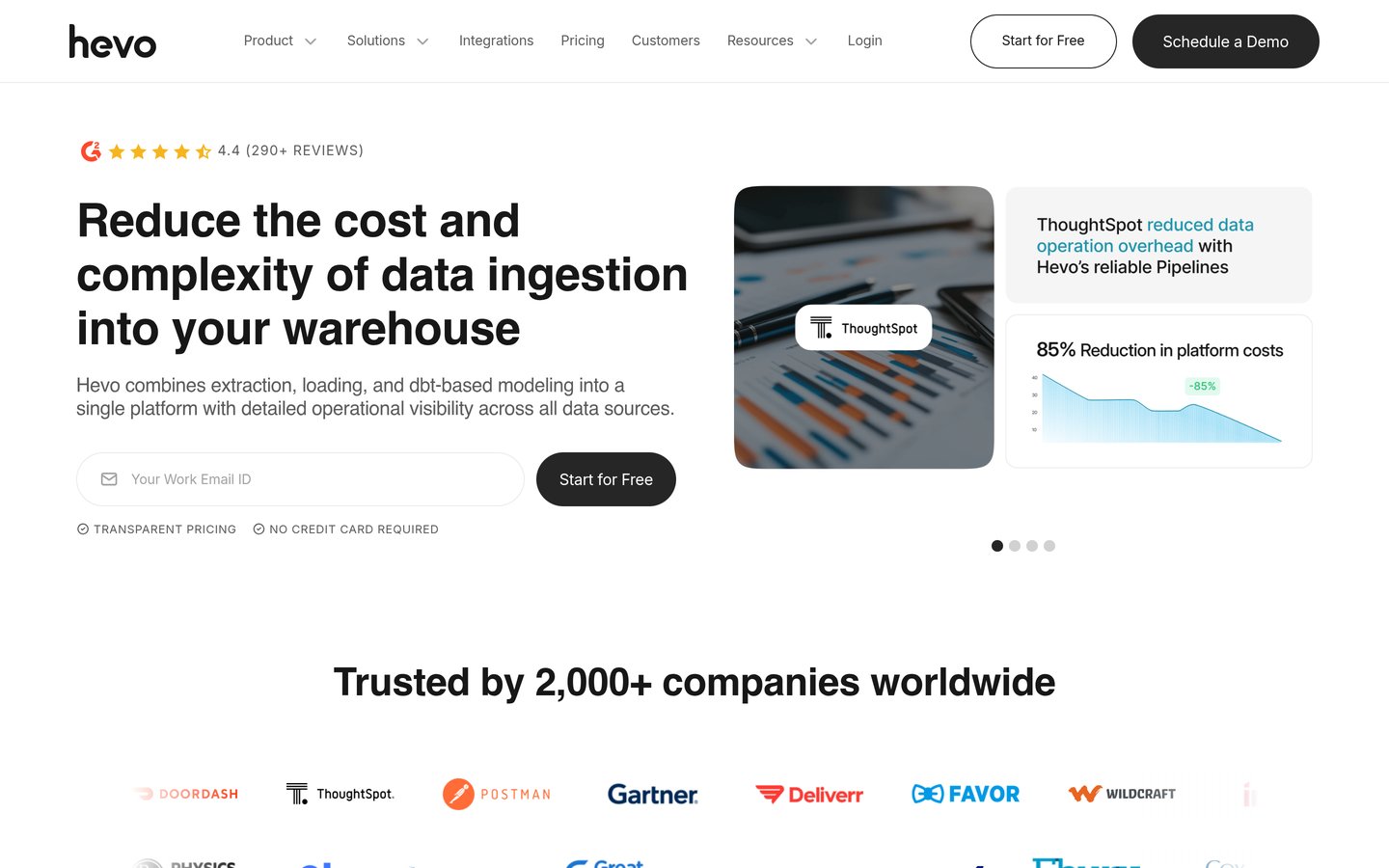
Hevo Data homepage, captured Nov 2026.
Hevo Data is a managed data pipeline platform connecting operational databases and applications to analytical destinations. Starter includes hourly synchronization, dbt integration, encrypted connections and access for up to 10 users.
The trade off is that Starter costs $265 monthly with annual billing or $299 on monthly billing, with consumption limits affecting overall expenses. It suits organizations that prefer managed ingestion over maintaining their own pipeline infrastructure.
What we like
Managed pipeline infrastructure
Built-in dbt integration
Encrypted database connections
Continuous email and chat support
Watch out for
Higher starting cost than Airbyte
Streaming pipelines require higher tiers
Professional adds streaming pipelines, automation APIs and unlimited users.Visit hevodata.com
04
Fivetran
4.3/5on G2 (857 reviews, checked Nov 2026)
PricingCustom pricing
Best for managed database replication
Paid entry planStandard
Free monthly connection rows500,000
Standard connectors700+
Standard sync interval15 minutes
fivetran.com
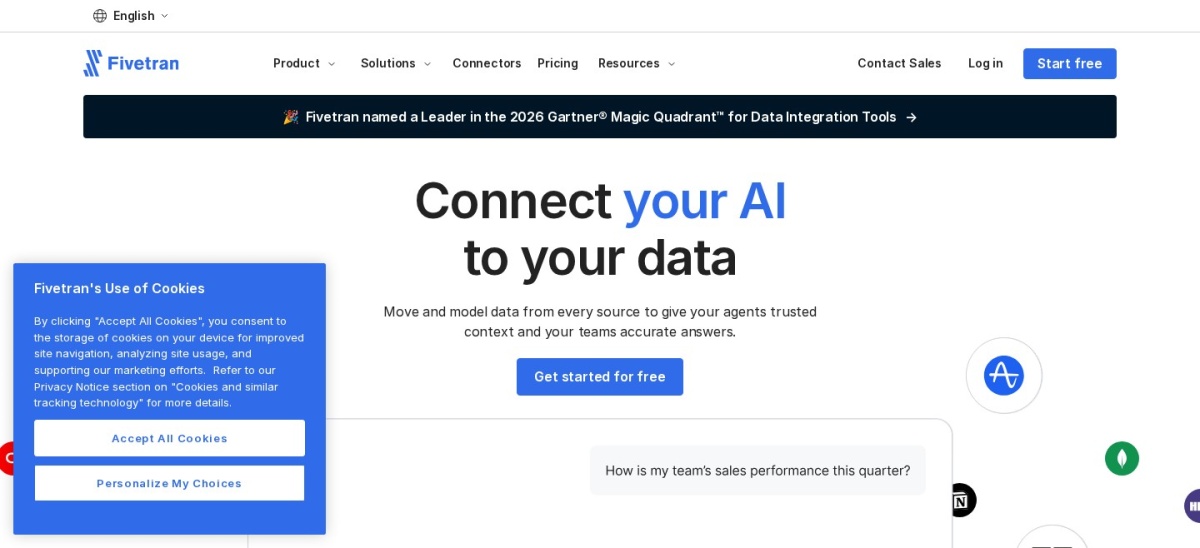
Fivetran homepage, captured Nov 2026.
Fivetran is a managed data movement platform supporting automated database replication and warehouse integration. Its free subscription includes 500,000 monthly active connection rows, with paid plans supporting higher consumption and additional capabilities.
The trade off is usage-dependent pricing rather than a fixed subscription amount, making costs sensitive to changing data volumes. It suits organizations that prioritize managed connectors and reduced pipeline maintenance.
What we like
Extensive managed connector catalog
Permanent free subscription available
Automatic source schema adaptation
Integrated transformation capabilities
Watch out for
Costs vary with active data volumes
Frequent source changes can increase consumption
Standard removes free usage ceilings and bills according to consumption.Visit fivetran.com
05
CData Sync
4.2/5on G2 (20 reviews, checked Nov 2026)
Starts at$7,999/yr
Best for high-volume database replication
Entry planStandard
Standard connections5
Monthly processed rows100 million
Incremental replicationIncluded
cdata.com
CData Sync homepage, captured Nov 2026.
CData Sync is a database replication platform supporting scheduled transfers and incremental updates across enterprise systems. Standard includes up to 5 connections, 100 million processed rows monthly and automated schema management.
The trade off is the $7,999 annual subscription, with premium connectors and advanced change data capture available through additional configurations. It suits organizations integrating substantial database workloads across a relatively concentrated set of connections.
What we like
Substantial monthly replication capacity
Predictable annual base subscription
Automated schema management
Flexible replication schedules
Watch out for
High initial subscription commitment
Advanced features require additional configurations
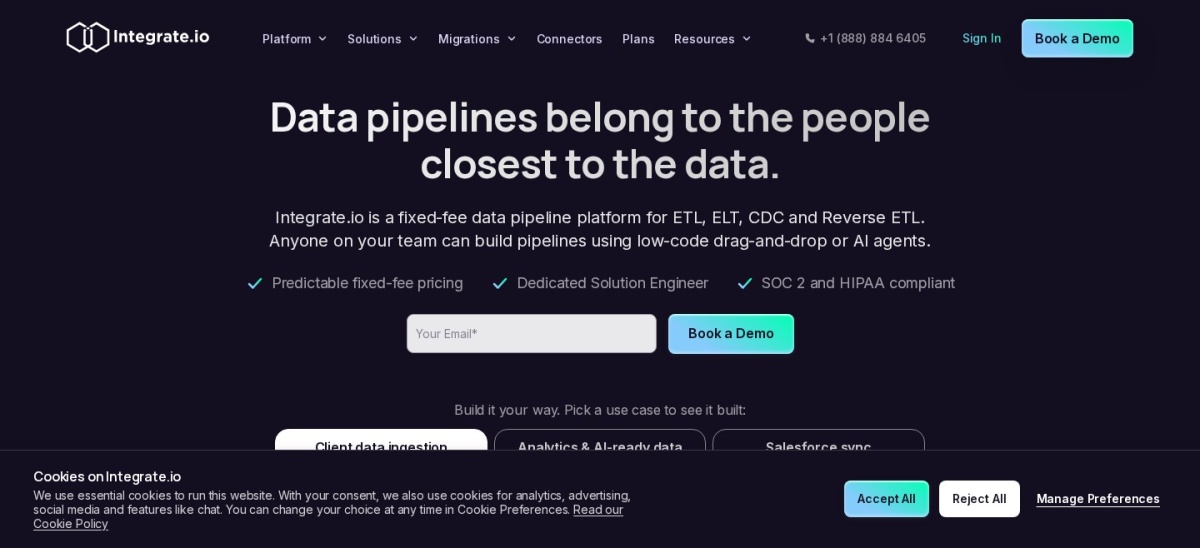
Integrate.io is a data pipeline platform covering database ingestion, replication, transformation and reverse ETL. Its Core subscription includes unrestricted data volumes and pipeline counts, with execution frequency as short as 60 seconds.
The trade off is that Core costs $1,999 monthly, making it expensive for modest integration workloads. It suits established data teams that want predictable subscription expenses despite increasing transfer volumes and pipeline complexity.
IBM DataStage is an enterprise data integration platform designed for complex transformations and parallel processing. It supports visual pipeline development and earns 4.0/5 from 73 G2 reviews.
The trade off is enterprise pricing and more involved configuration than lightweight managed integration services. It suits experienced data engineering departments working with complex database environments and demanding transformation workloads.
What we like
Parallel data processing
Complex transformation support
Visual pipeline development
Enterprise integration capabilities
Watch out for
Steeper learning curve
Requires careful deployment planning
Enterprise arrangements accommodate deployment and processing requirements.Visit ibm.com
Should you choose ETL or ELT for database integration?
ETL extracts information, transforms it and then loads it into the destination. This approach works well when information must be cleaned or filtered before entering analytical systems.
ELT loads extracted information before applying transformations within the destination. It is particularly relevant for modern cloud warehouses that provide their own scalable processing resources.
How we chose
We selected established database integration platforms covering managed ingestion, replication, ETL and synchronization. We prioritized database connectivity, scheduling capabilities, transformation features and suitability for different operational requirements.
We reviewed official pricing information and G2 ratings on 25 Nov 2026. Annual prices represent published base subscriptions, including standard annual billing rates where available. Usage-dependent expenses are separate.
We excluded standalone database engines without dedicated integration functionality and products without established independent review histories. No vendor paid for a place, and we do not claim testing for this list.
How to choose database integration software
Evaluate your database architecture, synchronization requirements and expected data volumes before purchasing an integration platform.
Confirm source and destination compatibility. Check support for your database engines, versions, cloud warehouses and application APIs.
Define synchronization requirements. Determine whether scheduled transfers are sufficient or whether your applications need continuous replication and change data capture.
Estimate realistic integration costs. Calculate expected consumption using the vendor's pricing units, including data changes, pipeline execution and additional connections.
Review operational and security requirements. Compare encryption, access permissions, error recovery, monitoring and deployment options before committing production data.
FAQ
What is the best database integration software?
Skyvia is our top pick for businesses seeking accessible database integration without custom development. Airbyte is suitable for customizable pipelines, while Hevo Data provides managed ingestion for teams that prefer to reduce infrastructure administration.
What is database integration software used for?
Database integration software moves and synchronizes information between databases, applications and analytical destinations. Businesses use these platforms for data migration, reporting, warehouse ingestion, operational synchronization and preparing information for analytical workloads.
Is there free database integration software?
Skyvia offers a free integration subscription covering 10,000 monthly records, while Fivetran provides a larger active-row allowance under a different pricing model. Airbyte also offers a self-managed open-source option.
What is change data capture in database integration?
Change data capture identifies database inserts, updates and deletions so integration pipelines can transfer changed information instead of repeatedly copying complete datasets. This can reduce unnecessary processing and improve synchronization efficiency.
How much does database integration software cost?
Published entry subscriptions in this comparison start at $20 monthly for Airbyte and reach $1,999 monthly for Integrate.io. Actual expenses depend on consumption, connector requirements, infrastructure, transformation workloads and subscription commitments.
SaaS SEO and WordPress specialist with about 8 years of experience. Rakib compares WordPress plugins, themes, hosting and software using public pricing, documentation and user reviews. See how we rank.