Harness is the best CI/CD platform for blue-green deployment, with built-in blue-green and canary strategies plus automatic rollback, rated 4.6/5 on G2. Pick Spinnaker for free multi-cloud delivery, Octopus Deploy for release management, or Argo CD for GitOps on Kubernetes.
How we make this list: we compare pricing pages, product documentation and public user reviews, then re-check every price before each update. No product paid for a place. Disclosure.
Harness is the only pick with blue-green, canary, verification and automatic rollback in one platform, with a free plan for up to 25 users.
Spinnaker, Argo CD and Jenkins cost $0 in licence fees; you pay with your own servers and setup time instead.
Octopus Deploy's cheapest paid plan is $360.83 a month, a big step up from the $45 Cloud plan older guides still list.
GitLab Premium at $29 a user a month is the priciest per-seat plan here; GitHub Team at $4 a user a month is the cheapest paid seat.
Only Harness, Spinnaker and Octopus Deploy treat blue-green as a built-in strategy; the rest need plugins, orbs or extra projects.
What blue-green deployment needs from a CI/CD platform
Blue-green deployment keeps two copies of your app live: blue serves traffic while green gets the new version, then the router flips over once checks pass. If the new version fails, traffic flips back in seconds.
A platform earns its place here by running that flip for you: shifting traffic in steps, watching health signals and rolling back on its own. Our guide on monitoring your hosting uptime covers the health-check side of that job.
Price shapes the list as much as features. Open-source tools cost nothing in licences but need servers and upkeep, while hosted platforms charge per user, per month or per deployment target.
Kubernetes changes the answer. GitOps tools deploy by syncing a cluster to Git, so blue-green comes from a rollout controller rather than a pipeline step.
The 9 best CI/CD platforms with blue-green deployment
01
Harness
4.6/5on G2 (335 reviews, checked Nov 2026)
PriceFree
Best CI/CD platform for blue-green deployment overall
Blue-green strategyBuilt in
Canary strategyBuilt in
Automatic rollbackYes, with verification
Free plan$0, 25 users
harness.io
Harness homepage, captured Nov 2026.
Harness is a continuous delivery platform built around safe releases. Its CD module ships blue-green and canary strategies out of the box, watches health signals during a rollout and rolls back on its own when a check fails, and the free plan covers up to 25 users with 1,000 units a month.
The trade off is price. Paid plans are custom-priced by sales with no public figure, so you cannot budget from the pricing page, and costs can rise as you add modules. It suits teams that deploy often and want verification and rollback handled by the platform.
What we like
Blue-green and canary built in, not added by plugins
Automatic rollback when health checks fail
Free plan covers up to 25 users
Strong G2 scores for support
Watch out for
No published price for paid plans
Costs can grow as you add modules
G2 reviewers report about 3 months to implement
Paid Essentials and Enterprise plans are priced by salesVisit harness.io
02
Spinnaker
3.9/5on G2 (22 reviews, checked Nov 2026)
PriceFree
Best free multi-cloud blue-green deployment
Blue-green strategyRed/black, built in
Canary analysisBuilt in
Clouds supportedAWS, GCP, Azure, Kubernetes
Licence cost$0, open source
spinnaker.io
Spinnaker homepage, captured Nov 2026.
Spinnaker is a free, open-source continuous delivery platform that runs the same pipeline across AWS, Google Cloud, Azure and Kubernetes. Its red/black strategy is blue-green by another name: it spins up the new version beside the old one, shifts traffic over and keeps the old version ready to take traffic back.
The trade off is upkeep. You host Spinnaker yourself, it is heavy on resources, and G2 reviewers rate setup 6.1 out of 10, the lowest in this list. It suits platform teams that already run Kubernetes or several clouds and can afford to operate the tool.
Octopus Deploy is a release and deployment platform that treats environments, approvals and rollbacks as first-class ideas. Blue-green is a built-in deployment pattern, so a release can stand up the green environment, run smoke checks and flip traffic without a custom script, and the free tier covers 10 projects and 10 targets.
The trade off is price. The cheapest paid plan is Professional at $360.83 a month on yearly billing, far above the $45 Cloud plan older guides still list, and each extra target adds cost. It suits teams that deploy the same app to many servers or clusters and want approvals and runbooks in one place.
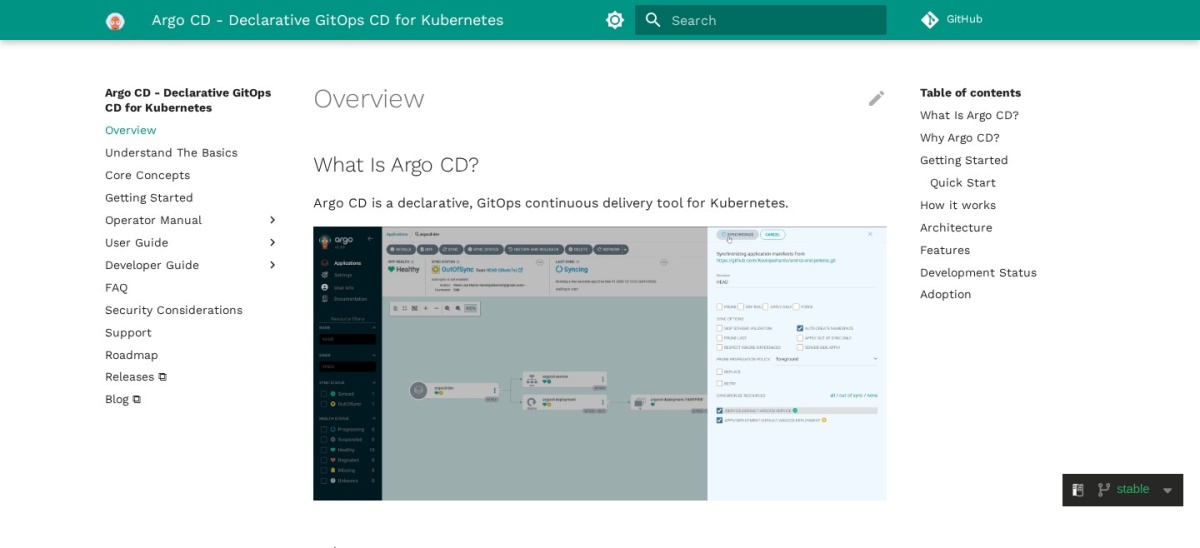
Argo CD is a free, open-source GitOps tool for Kubernetes that keeps each cluster in sync with the state declared in Git. Rollbacks are a Git revert, and every sync is visible in its web UI, which shows 24,687 GitHub stars on its homepage.
The trade off is scope. Argo CD itself does rolling syncs, so blue-green and canary releases need Argo Rollouts installed beside it, and it only deploys to Kubernetes. It suits teams already on Kubernetes that want Git as the single source of truth for what runs.
GitLab is a full DevOps platform that puts repositories, CI/CD, planning and security scanning in one app. Blue-green releases run through its environments: a job deploys the new version beside the live one, and traffic moves over once the pipeline passes, with Premium adding 10,000 compute minutes a month.
The trade off is price. Premium costs $29 a user a month billed yearly, about seven times GitHub Team per seat, and the free plan covers only 5 users per group. It suits teams that want source control, CI and deployment in one tool and will use the bundled scanning and planning.
GitHub Actions is the CI/CD engine built into GitHub, so pipelines live beside the code they ship. Blue-green releases are assembled from workflow steps and marketplace actions that deploy to a staging slot and swap it live, and the free plan includes 2,000 Actions minutes a month.
The trade off is assembly. There is no built-in blue-green strategy, so you wire up slots, health checks and rollback yourself, and heavy CI use can push the bill up. It suits teams already on GitHub that want deployments in the same place as pull requests.
What we like
Pipelines live beside the code
Team is only $4 a user a month
Huge marketplace of ready actions
Highest G2 rating in this list, 4.7/5
Watch out for
No built-in blue-green strategy
CI minutes can add up at scale
Rating covers GitHub as a whole, not Actions alone
Team adds 3,000 minutes a month and branch protectionsVisit github.com
07
CircleCI
4.4/5on G2 (511 reviews, checked Nov 2026)
Paid from$15/mo
Best fast cloud CI with deploy orbs
Blue-green supportVia orbs
Free plan30,000 credits a month
Performance plan$15 a month
Extra credits$15 per 25,000-credit block
circleci.com
CircleCI homepage, captured Nov 2026.
CircleCI is a cloud CI/CD platform that runs pipelines from a config file in your repo. Blue-green releases run through orbs, reusable config packs that deploy the new version, check its health and shift traffic, and the free plan includes 30,000 credits a month for up to 5 users.
The trade off is billing. Performance starts at $15 a month, but each extra user consumes credits and compute blocks cost $15 each, so the bill can climb past the headline price. It suits teams that want fast cloud builds and are happy to configure releases in YAML.
What we like
Fast cloud builds with many executor types
Free plan covers small teams
Orbs cover common deploy patterns
Rated 4.4/5 on G2 from 511 reviews
Watch out for
Credit billing can be hard to predict
Blue-green needs orb setup
Docker layer caching is a paid feature
Performance adds seats, concurrency and bigger resource classesVisit circleci.com
08
Azure DevOps
4.3/5on G2 (585 reviews, checked Nov 2026)
Paid from$6/mo
Best for Azure and .NET teams
Blue-green supportVia deployment slots
Free usersFirst 5 Basic users free
Basic plan$6/user/mo
Free pipeline minutes1,800 a month
azure.microsoft.com
Azure DevOps homepage, captured Nov 2026.
Azure DevOps is Microsoft's suite for boards, repos, pipelines and artifacts in one bill. Blue-green releases run through release pipelines and App Service deployment slots: the new version warms up in a slot, then swaps into production, and the first 5 Basic users are free.
The trade off is the Microsoft world. It fits best on Azure and .NET, the interface can overwhelm newcomers, and the 6th user triggers $6 a month for every additional Basic user. It suits teams already on Azure that want repos, boards and pipelines in one place.
What we like
First 5 users free
Repos, boards and pipelines in one bill
1,800 free pipeline minutes a month
Deployment slots make blue-green simple on App Service
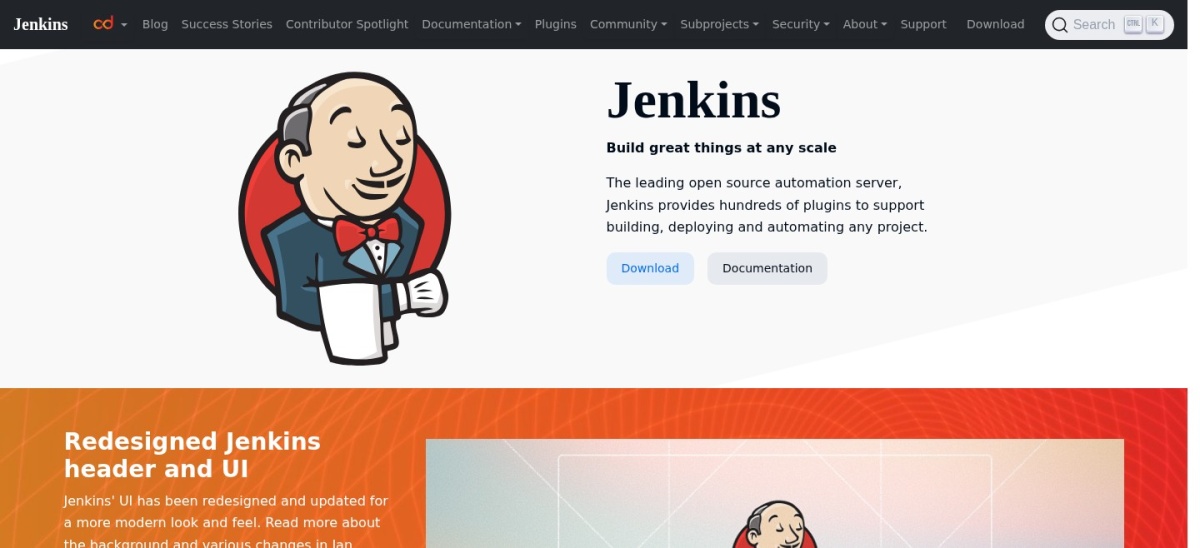
Jenkins is the leading open-source automation server, and its plugin library covers building, deploying and automating almost any project. Blue-green releases are built from pipeline scripts and plugins that deploy a second copy, check it and switch traffic, with no licence fee at all.
The trade off is maintenance. You host, update and secure Jenkins yourself, plugins need upkeep, and G2 reviewers note a dated interface. It suits teams that want full control and already have someone to run the server.
Harness, Spinnaker and Octopus Deploy ship blue-green as a named strategy. You pick it in the pipeline and the platform handles the second environment, the traffic shift and the rollback.
Argo CD, GitLab, GitHub Actions, CircleCI, Azure DevOps and Jenkins can all do blue-green, but you build it: a rollout controller, an environment, an orb or a plugin. That gives you control, and it gives you more to maintain.
If you deploy daily, the built-in route usually pays for itself in saved pipeline work. If you deploy weekly and already run one of the DIY tools, adding the pattern there is the cheaper move.
How we chose
We started from CI/CD platforms with documented blue-green support, then kept the nine with the strongest combination of a named blue-green strategy, a public rating and a published price or a free plan.
Prices come from each vendor's pricing page or a G2 pricing record, checked on 25 November 2026. Ratings and review counts come from G2 on the same day. Where a vendor shows a sale, the list shows the regular price.
We left out tools with no public rating and tools that only deploy to one cloud. No vendor paid for a place, and we do not claim to have used these tools ourselves.
How to choose a CI/CD platform for blue-green deployment
Start with where your app runs, then match the blue-green pattern to it.
Check where your app runs. Kubernetes points to Argo CD or Spinnaker; App Service points to Azure DevOps; anywhere else, a pipeline tool with a blue-green pattern works.
Decide who runs the tool. Hosted platforms such as Harness and CircleCI need no servers. Spinnaker, Argo CD and Jenkins need someone to host and update them.
Count what the price covers. Per-user seats, per-target billing and credit blocks behave very differently at scale. Work out your real team and target counts before comparing headline prices.
Plan the rollback before the first deploy. A blue-green setup is only useful if the old version stays ready to take traffic back. Check that the platform keeps it and flips back on a failed health check.
FAQ
What is the best CI/CD platform for blue-green deployment?
Harness is the best pick for blue-green deployment. It ships blue-green and canary strategies built in, watches health signals during a rollout and rolls back on its own, and it is rated 4.6 out of 5 on G2 from 335 reviews.
What is blue-green deployment?
Blue-green deployment runs two copies of your app. Blue serves live traffic while green gets the new version, then traffic flips to green once checks pass. If the new version fails, traffic flips back to blue in seconds.
Which CI/CD tools do blue-green deployment for free?
Spinnaker, Argo CD and Jenkins are free and open source, and Harness, GitLab, GitHub Actions, CircleCI and Azure DevOps all have free plans. The free tools need your own servers, while the free plans of hosted tools have user, minute or target limits.
Is blue-green deployment the same as canary deployment?
No. Blue-green flips all traffic from the old version to the new one at once, after checks pass. Canary moves a small share of traffic first, watches it, then moves the rest. Harness and Spinnaker support both patterns in the same pipeline.
Do I need Kubernetes for blue-green deployment?
No. Kubernetes tools such as Argo CD and Spinnaker do blue-green well, but Octopus Deploy, Azure DevOps slots and Jenkins pipelines do it on virtual machines and app services too. Pick the tool that matches where your app already runs.
How much does a CI/CD platform with blue-green deployment cost?
Free tools cost $0 in licences, and paid plans in this list run from $4 a user a month for GitHub Team to $360.83 a month for Octopus Deploy Professional. Harness publishes no paid price, and per-user, per-target and credit billing all scale differently.
SaaS SEO and WordPress specialist with about 8 years of experience. Rakib compares WordPress plugins, themes, hosting and software using public pricing, documentation and user reviews. See how we rank.