Recorded Future is the best cyber security threat intel software for most teams, with the largest review base here and intelligence from over a million sources. Pick Cyble for the highest rating and dark-web coverage, and Flashpoint for deep-web research and fraud teams.
How we make this list: we compare pricing pages, product documentation and public user reviews, then re-check every price before each update. No product paid for a place. Disclosure.
Recorded Future has the largest review base: 4.5 out of 5 from 256 G2 reviews, with intelligence from over a million sources.
Cyble has the highest score here at 4.8 out of 5 from 150 G2 reviews, unifying CTI, dark web, ASM and brand protection.
Flashpoint is the pick for dark-web research, with analyst-led collection from closed forums and a 4.5 score from 84 reviews.
Every platform in this list sells by quote: none publishes a price, so budget on the quote and the analyst time it needs.
ThreatConnect has the thinnest base at 14 G2 reviews, and Mandiant's 110-review figure comes from a third-party roundup.
What to look for in threat intel software
Threat intelligence splits into three shapes. Full platforms like Recorded Future and Anomali ingest and operationalise feeds, vendor-curated feeds like Mandiant ride on an existing stack, and specialists like Flashpoint cover one domain deeply.
Coverage is the first filter. If your risk is ransomware and fraud, dark-web collection matters most; if it is nation-state activity, frontline incident research matters more.
Workflow is the second filter. A TIP only helps if its indicators flow into your SIEM and SOAR automatically, so check STIX and TAXII support and the connector list before you buy. Our guide to antivirus software for business covers the endpoint side of the same stack.
Pricing is opaque across the whole category. Every vendor here sells by quote, and contracts usually run into five or six figures a year, so get the quote and the implementation time in writing.
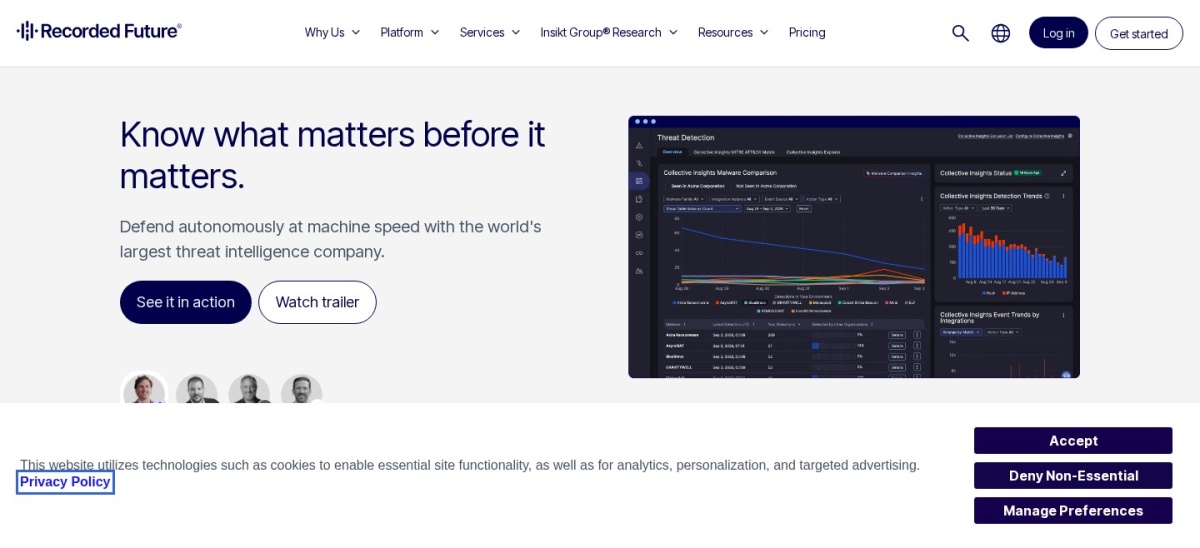
Recorded Future is the largest threat intelligence company in this list, with an Intelligence Cloud that collects from over a million sources and scores risk in real time. It holds 4.5 out of 5 on G2 from 256 reviews, the largest review base here, and covers adversaries, infrastructure and targets in one platform.
The trade off is cost and complexity. Reviewers call it a premium product with a steep learning curve, and extra capabilities come as separate modules. It suits mature CTI teams and enterprise SOCs with a real budget.
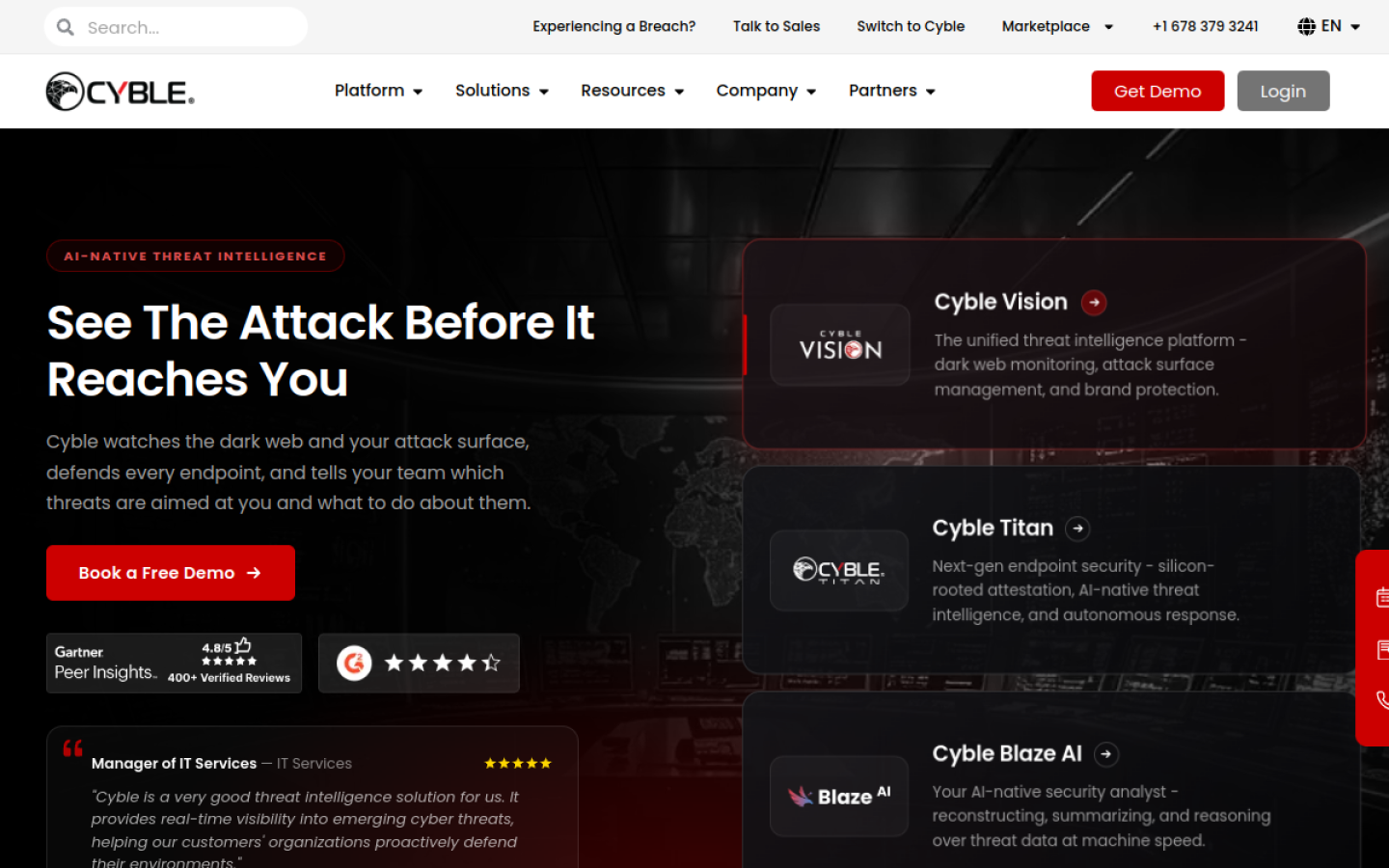
Cyble is an AI-native threat intelligence platform that unifies cyber threat intel, dark-web monitoring, attack surface management and brand protection in one console. It holds 4.8 out of 5 on G2 from 150 reviews, the highest score in this list.
The trade off is that Cyble is a newer challenger, so its review base is smaller than Recorded Future's and its Gartner position is Challenger rather than Leader. It suits teams that want dark-web and brand coverage without buying four separate tools.
What we like
Highest G2 score in this list at 4.8
Dark web, ASM and brand in one console
AI-native investigation workflows
Strong value scores from reviewers
Watch out for
Smaller review base than Recorded Future
Gartner Challenger, not Leader
Quote-only pricing
Cyble Vision X adds AI-led investigation workflowsVisit cyble.com
03
Flashpoint
4.5/5on G2 (84 reviews, checked Nov 2026)
PricingCustom/yr
Best for dark-web and fraud research
CollectionAnalyst-led, closed forums
PlatformIgnite
Free trialDemo only
PricingQuote only
flashpoint.io
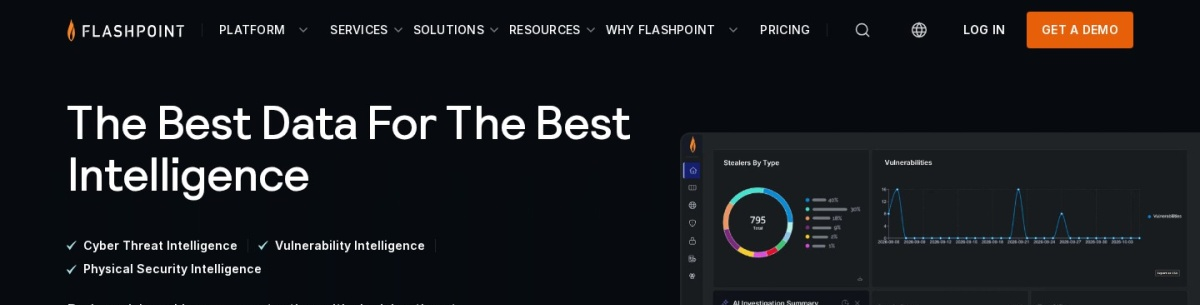
Flashpoint homepage, captured Nov 2026.
Flashpoint is a threat intelligence platform built on analyst-led collection from closed forums and illicit chat channels, with vulnerability intelligence from Risk Based Security. It holds 4.5 out of 5 on G2 from 84 reviews and is strongest for financial services, brand protection and fraud teams.
The trade off is focus. Flashpoint is deep on the underground and fraud, but lighter than Recorded Future on broad technical IOC coverage, and pricing is quote-only. It suits analysts who research forums, fraud and vulnerabilities.
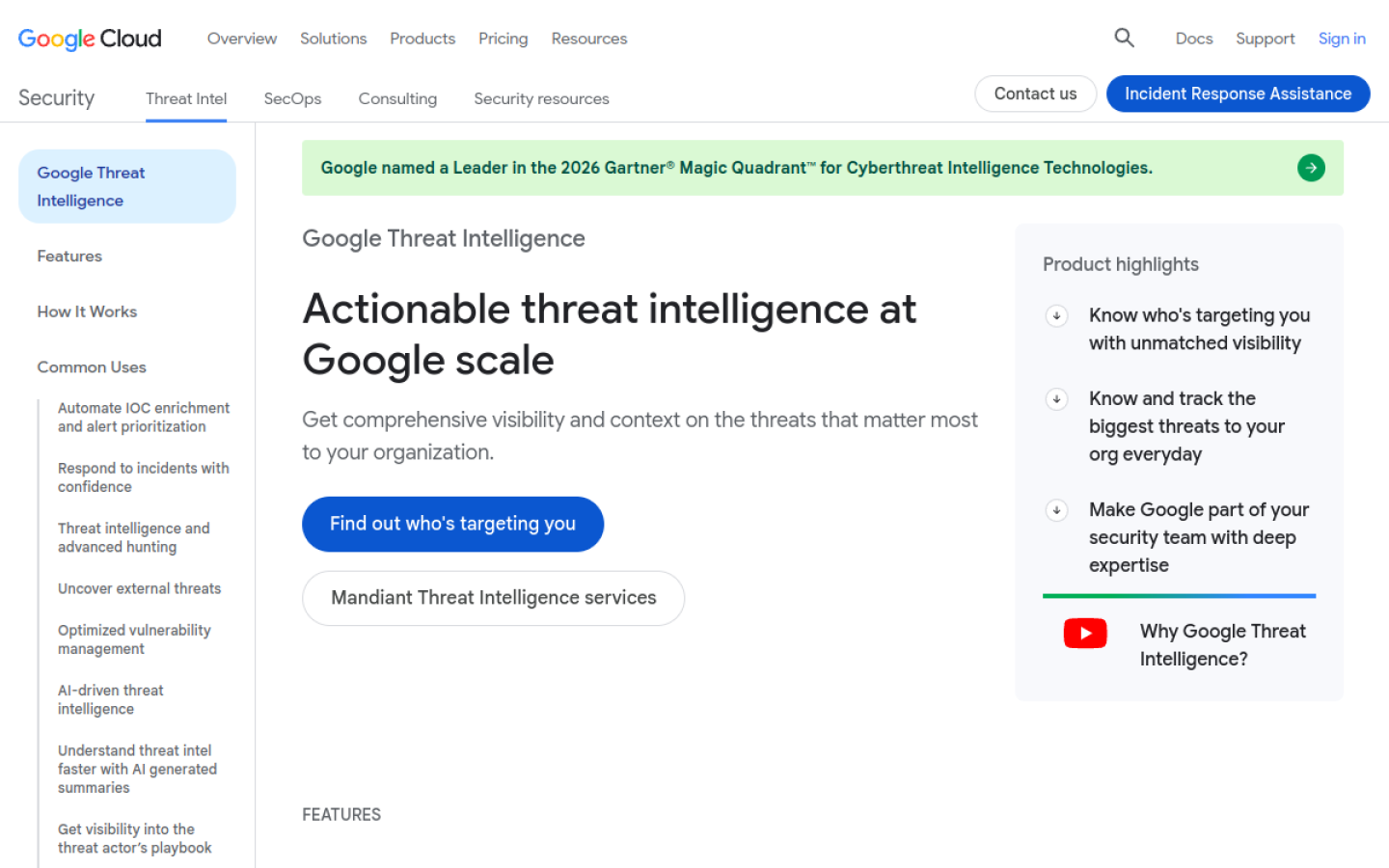
Mandiant Threat Intelligence homepage, captured Nov 2026.
Mandiant Threat Intelligence is Google's threat intelligence service, built from frontline incident response engagements, so its adversary research comes from real breaches rather than feeds alone. It holds 4.5 out of 5 on G2 from 110 reviews and combines Mandiant research with VirusTotal telemetry.
The trade off is the thin public review base. G2's Google Threat Intelligence page shows only one review, so the 110-review figure comes from a third-party roundup of the Mandiant listing, and paid tiers are quote-only. It suits enterprise and government teams with mature CTI capacity.
ZeroFox is an external threat intelligence and brand protection platform that monitors the surface, deep and dark web for impersonation, fraud and leaked data, with automated takedowns. It holds 4.4 out of 5 on G2 from 167 reviews.
The trade off is scope. ZeroFox is strongest on brand and external threats, so it is not a full TIP for SOC feed work, and reviewers rate its value as reasonable rather than cheap. It suits teams whose main risk is impersonation and fraud.
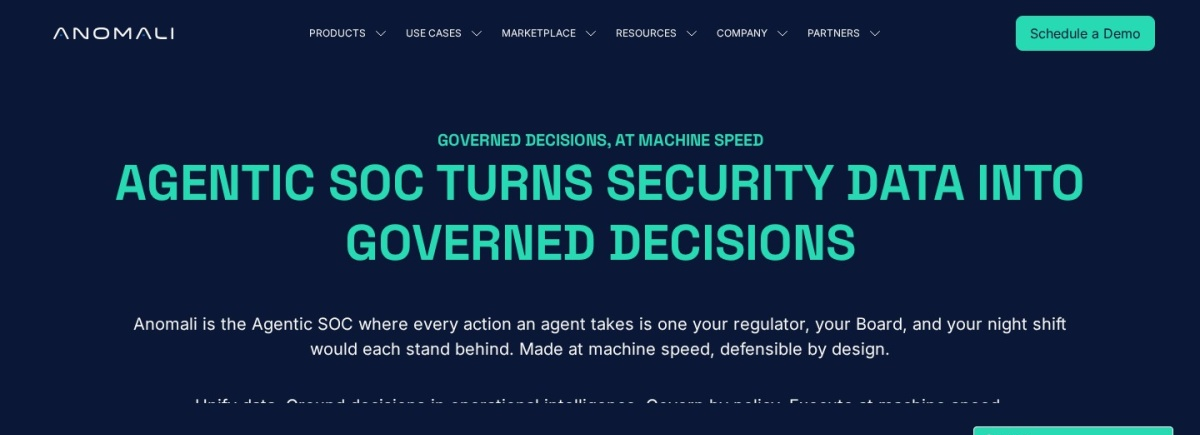
Anomali ThreatStream is a threat intelligence platform that aggregates hundreds of pre-integrated feeds, enriches indicators and pushes them to SIEM and SOAR tools. It holds 4.3 out of 5 on G2 from 180 reviews and is built for CTI teams running multi-feed workflows.
The trade off is analyst effort. ThreatStream needs dedicated analysts to operationalise it, and reviewers say it is priced toward the expensive end for enterprise SOCs. It suits large teams that share intelligence across groups.
ThreatConnect is a threat intelligence operations platform that combines a TIP with case management, playbook automation and MITRE ATT&CK mapping. It holds 4.6 out of 5 on G2 from 14 reviews, and its RQ add-on turns cyber risk into dollar values.
The trade off is the thin review base. Fourteen G2 reviews is the smallest base in this list, so treat the 4.6 score with caution, and pricing is quote-only. It suits government, defence and financial services CTI teams.
Not every team needs a paid platform. MISP and OpenCTI are open-source TIPs, and AlienVault OTX is a free community feed, and all three work for small teams with analyst time.
The catch is labour. Free tools need someone to run, tune and feed them, while paid platforms bundle collection, enrichment and support.
Start free if you have one analyst and a small estate, and move to a paid platform when the feed volume outgrows them.
How we chose
We started from every threat intelligence platform with a public rating on G2, then kept the seven with the clearest fit for CTI teams, SOC feed work and dark-web research.
Prices were checked on 25 November 2026. All seven vendors sell by quote and publish no prices, so every tool shows as Custom. Ratings and review counts come from G2 on the same day, except Mandiant, whose 110-review figure comes from a third-party roundup.
We left out CrowdStrike Falcon Intelligence, which has no verifiable G2 review count, and EclecticIQ, which has no G2 reviews at all. No vendor paid for a place, and we do not claim hands-on testing for this list.
How to choose a threat intel platform
Start with the risk you are trying to see, then check the feed flow and the analyst time it needs.
Name the intelligence you need. Dark-web, fraud, nation-state and vulnerability intel are different jobs. Pick the one that matches your top risk before you compare vendors.
Check the feed flow. Ask how indicators reach your SIEM and SOAR, which standards are supported, and how often feeds update.
Price the analyst time, not just the licence. Every platform here needs analysts to run it. Budget for the people as well as the quote.
Trial with a real investigation. Run one live investigation through the trial, from indicator to ticket, and see how much context the platform adds.
FAQ
What is the best cyber security threat intel software?
Recorded Future is the best pick for most teams. It has the largest review base in this list at 4.5 out of 5 from 256 G2 reviews, and it collects intelligence from over a million sources.
How much does threat intelligence software cost?
Every platform in this list sells by quote and publishes no prices. Enterprise contracts usually run into five or six figures a year, and the price depends on modules, users and data volume, so get the quote in writing.
What is the difference between a TIP and a threat feed?
A threat intelligence platform ingests, normalises and operationalises many feeds, while a feed is just the data. Recorded Future, Anomali and ThreatConnect are platforms, while Mandiant and Falcon Intelligence are mainly curated feeds.
Is there free threat intelligence software?
Yes. MISP and OpenCTI are open-source threat intelligence platforms, and AlienVault OTX is a free community feed. They need analyst time to run, while paid platforms bundle collection, enrichment and support.
Which threat intel tool is best for dark-web monitoring?
Flashpoint is the strongest pick for dark-web research, with analyst-led collection from closed forums and illicit chat. Cyble is the broader alternative, adding attack surface management and brand protection to its dark-web coverage.
Do I need a threat intelligence platform?
Only if your team acts on intelligence every week. Small teams often get more from a free feed plus their EDR console, while SOCs and CTI teams need a platform to manage feed volume.
SaaS SEO and WordPress specialist with about 8 years of experience. Rakib compares WordPress plugins, themes, hosting and software using public pricing, documentation and user reviews. See how we rank.