CrowdStrike Falcon is the best cyber security platform for most teams, with cloud-native endpoint protection from about $60 per device a year and the largest review base among the leaders. Pick Huntress for a 24/7 SOC without hiring analysts, and Microsoft Defender for Business for the lowest price at $3 per user a month.
How we make this list: we compare pricing pages, product documentation and public user reviews, then re-check every price before each update. No product paid for a place. Disclosure.
CrowdStrike Falcon is the top pick: 4.6 out of 5 on G2 from 441 reviews, with entry pricing from $59.99 per device a year.
Huntress has the highest rating here at 4.8 out of 5 from 1,236 G2 reviews, and its 24/7 SOC is included at $8.99 per endpoint a month.
Microsoft Defender for Business is the cheapest entry at $3 per user a month, with EDR included and a 300-user cap.
Sophos Endpoint ties for the highest score at 4.7 out of 5 from 837 reviews, with an entry tier widely listed at $28 per user a year.
Two of the nine platforms sell by quote only, and four more prices rest on third-party reads of vendor pricing, so confirm the rest in writing.
What to look for in a cyber security platform
A cyber security platform should cover more than antivirus. Look for endpoint detection and response, device and firewall control, and a console that shows every device in one place.
Managed response is the biggest fork in the road. Platforms like Huntress include a human SOC that triages alerts, while CrowdStrike and SentinelOne expect your team, or a partner, to work the detections.
Price is usually per device or per user, and the cheapest tier rarely includes EDR. Our guide to antivirus software for business covers the lighter-weight end of the same market.
Check the caps before you buy. CrowdStrike Falcon Go is limited to 100 devices, Defender for Business to 300 users, and Bitdefender self-service purchase to 100 devices.
Free trials are common: CrowdStrike offers 15 days, and Huntress, Sophos, ESET and Bitdefender all offer 30 days. Use the trial to test the agent on your oldest hardware first.
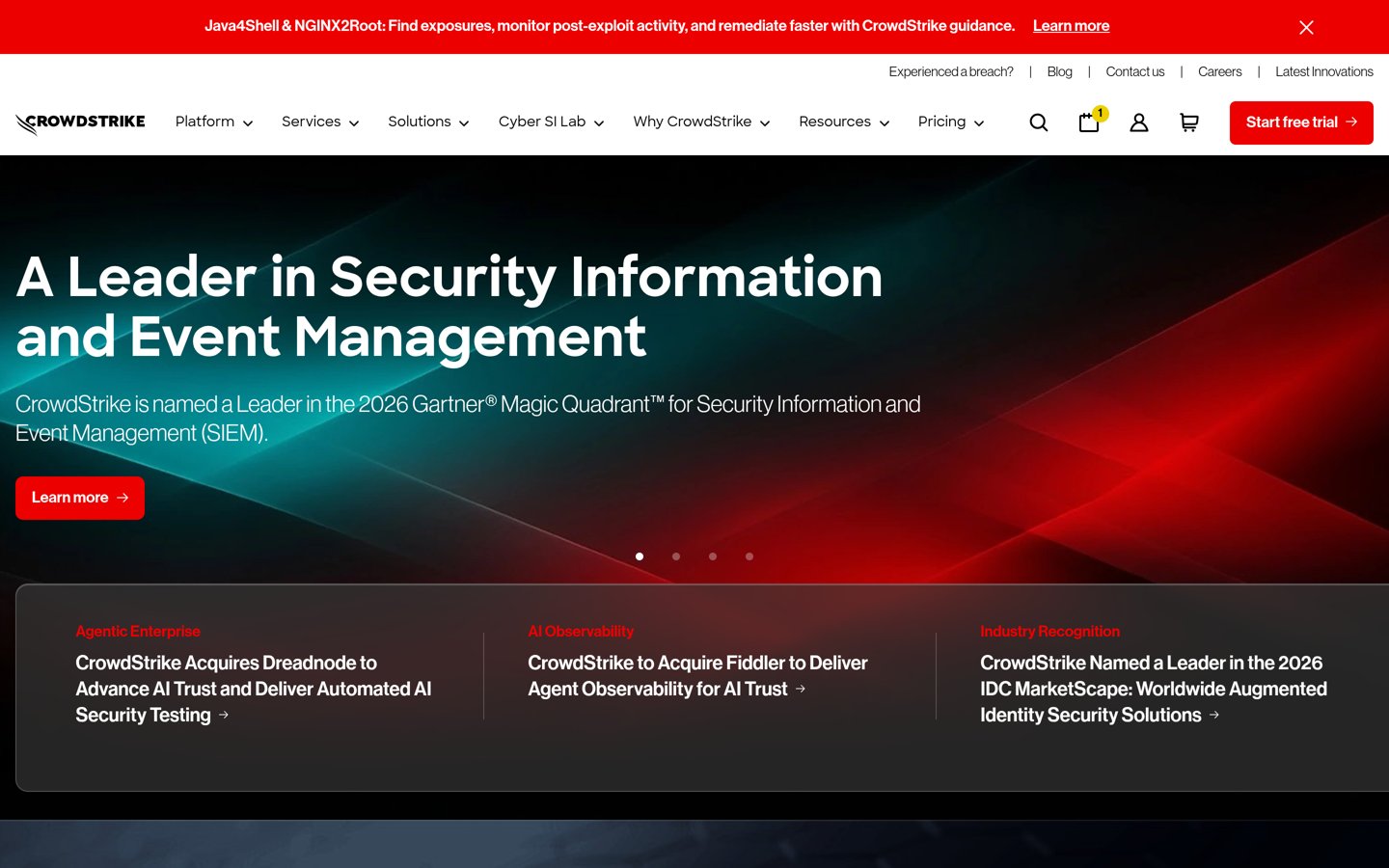
CrowdStrike Falcon is a cloud-native platform that covers endpoint protection, detection and response, identity protection and cloud security from one lightweight agent. Falcon Go starts at $59.99 per device a year and includes next-generation antivirus, device control and mobile protection, and the platform holds 4.6 out of 5 on G2 from 441 reviews.
The trade off is price and scope. Full EDR only starts with Falcon Enterprise at $184.99 per device a year, and the managed Falcon Complete service is quote-only, so smaller teams pay enterprise money for the best parts. It suits mid-market and enterprise teams that want one agent across endpoints, cloud and identity.
Huntress Managed EDR is a managed detection and response service that pairs behavioural endpoint detection with a 24/7 human security operations centre that triages every alert before it reaches you. It manages more than 5 million endpoints, holds 4.8 out of 5 on G2 from 1,236 reviews, and its published list price is $8.99 per endpoint a month.
The trade off is depth. Huntress is built for small and mid-market teams and MSPs, so it lacks the cloud and identity breadth of CrowdStrike or Palo Alto, and reporting customisation draws complaints. It suits teams with no analyst on staff that want someone watching overnight.
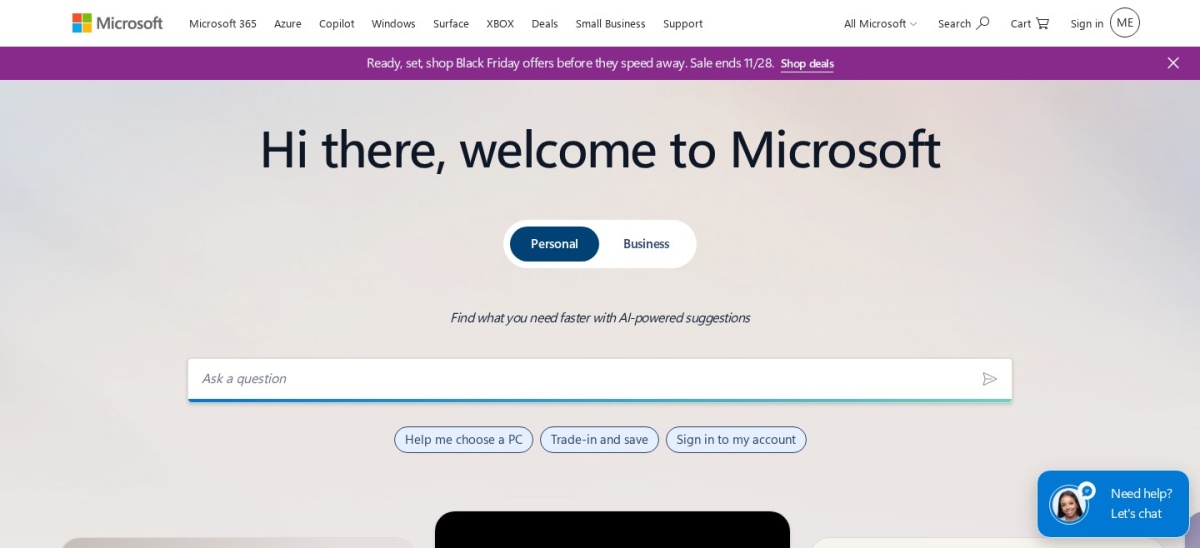
Microsoft Defender for Business homepage, captured Nov 2026.
Microsoft Defender for Business is a small-business endpoint service that brings next-generation antivirus, endpoint detection and response, automated investigation and vulnerability management to businesses with up to 300 users. It costs $3 per user a month billed yearly, covers up to five devices per user, and is included in Microsoft 365 Business Premium at $22 per user a month.
The trade off is reach. Protection on macOS and Linux is weaker than on Windows, servers need a separate add-on, and teams past 300 users must move to Defender for Endpoint. It suits small Microsoft 365 shops that want enterprise-grade endpoint protection at the lowest price here.
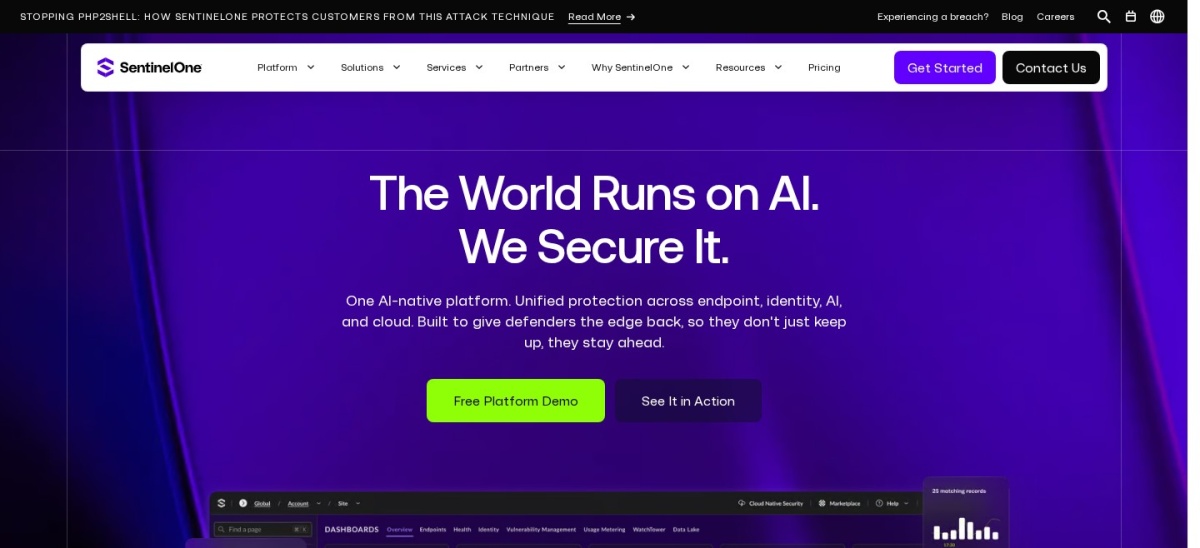
SentinelOne Singularity Endpoint homepage, captured Nov 2026.
SentinelOne Singularity Endpoint is an AI-driven endpoint platform that blocks threats in real time, even when a device is offline, and rolls back ransomware damage with one click. It holds 4.7 out of 5 on G2 from 249 reviews and was named a Leader in the 2026 Gartner Magic Quadrant for Endpoint Protection Platforms for the sixth year running.
The trade off is price transparency. SentinelOne publishes no dollar figures on its pricing page, and the $179.99 per endpoint a year shown here for Singularity Complete comes from a third-party price tracker, so confirm it with a partner quote. It suits teams that want autonomous response without a large SOC.
Sophos Endpoint is a deep-learning endpoint platform, formerly Intercept X, that combines malware detection with CryptoGuard, which rolls back ransomware-encrypted files automatically. It holds 4.7 out of 5 on G2 from 837 reviews, the joint-highest score in this list, and its entry tier lists at $28 per user a year.
The trade off is that the $28 figure is widely reported from vendor page reads, while sophos.com itself routes buyers to a quote and its AWS Marketplace listing prices EDR at $110 per user a year. It suits mid-market teams that want strong prevention at a low entry price.
What we like
Joint-highest G2 score at 4.7
CryptoGuard ransomware rollback
Lowest entry price among the leaders
Deep-learning malware detection
Watch out for
Vendor site routes buyers to a quote
EDR needs the higher XDR tier
Console feels older than rivals
Advanced with XDR adds threat hunting at $48/user/yrVisit sophos.com
06
ESET PROTECT
4.6/5on G2 (1,003 reviews, checked Nov 2026)
Starts at$54.90/device/yr
Best lightweight endpoint platform
Entry planPROTECT Entry, $54.90/device/yr
AgentLightweight, low overhead
Free trial30 days
PlatformsWindows, macOS, Linux
eset.com
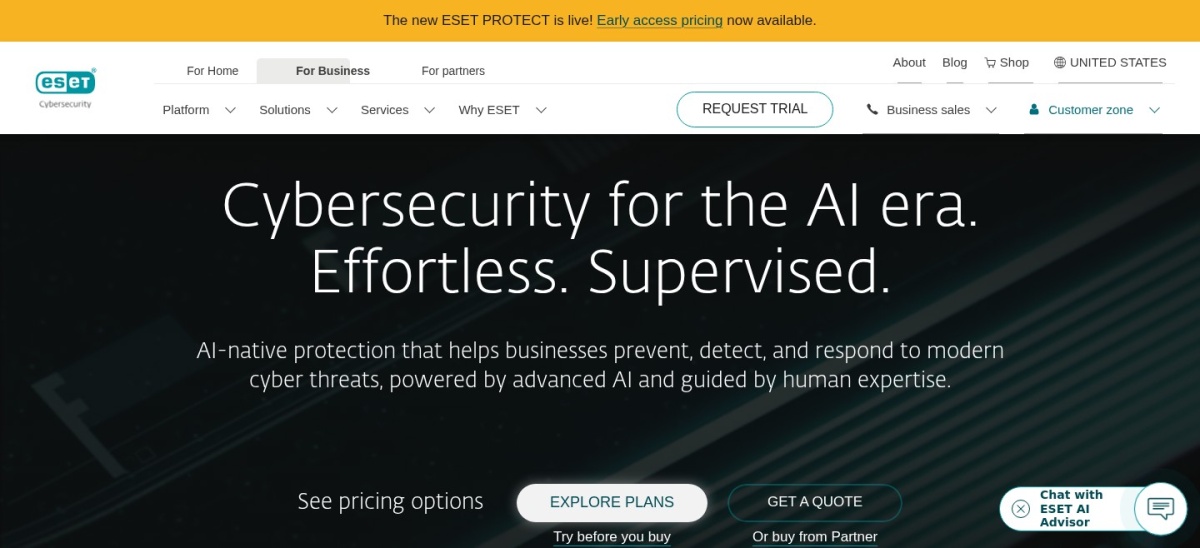
ESET PROTECT homepage, captured Nov 2026.
ESET PROTECT is a lightweight endpoint platform known for minimal impact on device performance and strong malware detection. It holds 4.6 out of 5 on G2 from 1,003 reviews, and its entry tier lists at $54.90 per device a year for a five-device pack.
The trade off is console depth. Reviewers praise the light agent but say advanced reporting and some management features lag the bigger XDR platforms, and the $54.90 figure comes from a third-party read of vendor pricing. It suits teams that run older hardware or value speed over breadth.
What we like
Lightest agent in this list
1,003 G2 reviews at 4.6
Strong malware and ransomware detection
On-premise console option
Watch out for
Reporting lags the big XDR platforms
Price read from a third-party source
Advanced features need higher tiers
Higher tiers add encryption and cloud sandboxingVisit eset.com
07
Bitdefender GravityZone
4.2/5on G2 (115 reviews, checked Nov 2026)
Starts at$324.99/yr
Best detection per dollar
Entry planSmall Business Security, $324.99/yr
Devices10 devices included
EDR tierEnterprise, quote only
Free trial30 days
bitdefender.com
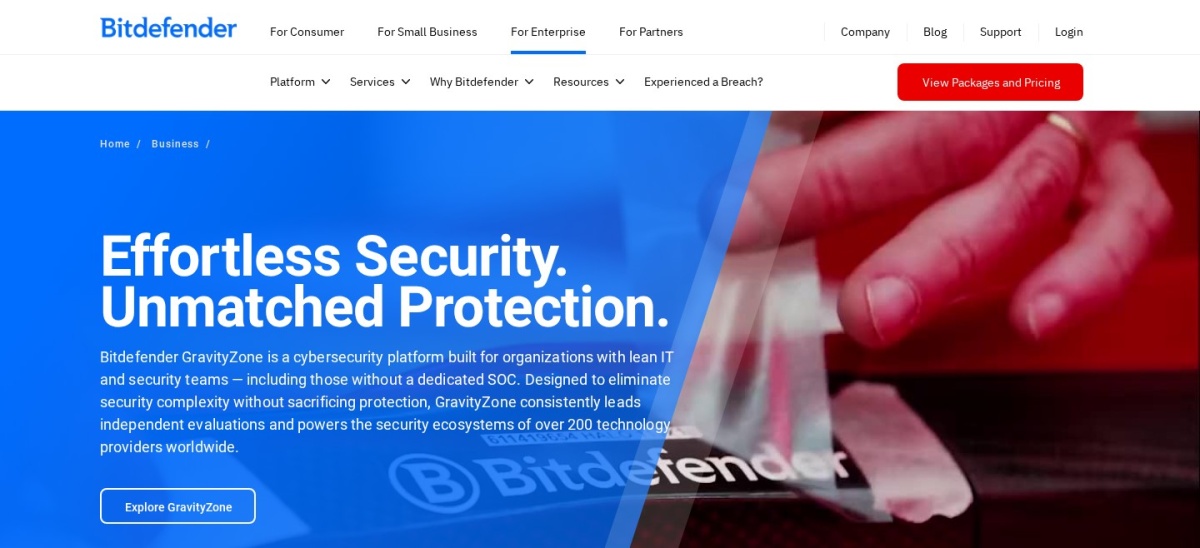
Bitdefender GravityZone homepage, captured Nov 2026.
Bitdefender GravityZone is a cloud-managed endpoint platform that scores near the top of independent business protection tests, including AV-TEST Best Protection for corporate users in 2025. Small Business Security lists at $324.99 a year for 10 devices, and it holds 4.2 out of 5 on G2 from 115 reviews.
The trade off is the tier ladder. Full EDR sits in the Enterprise tier, which is sold by quote, and first-term promotions of about 30% do not carry into renewal pricing. It suits mixed Windows, Mac and Linux offices that want top detection at a low per-device price.
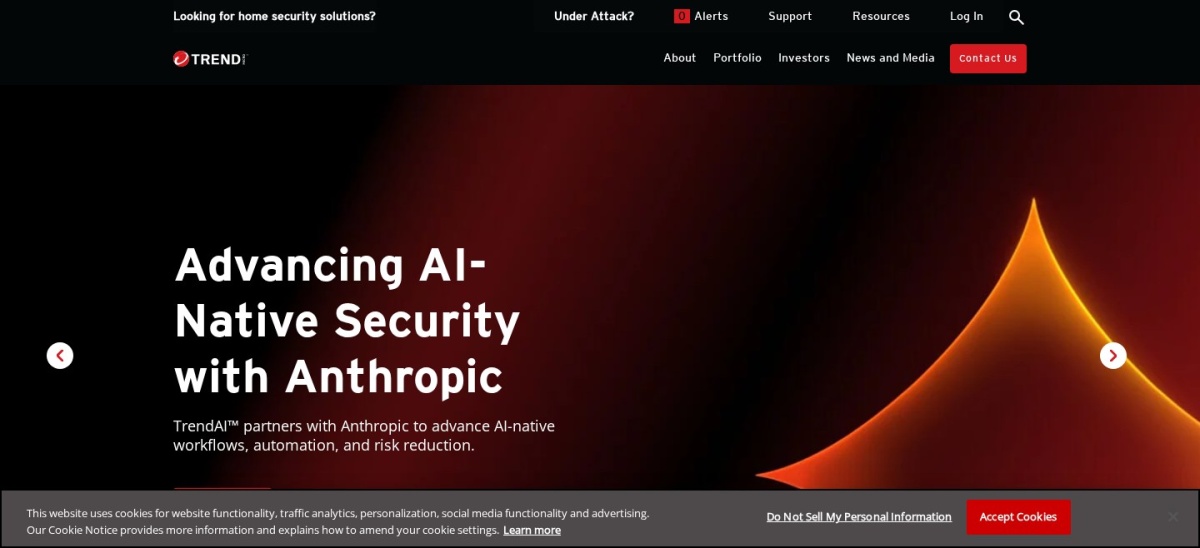
Trend Micro Vision One homepage, captured Nov 2026.
Trend Micro Vision One is an XDR platform that pulls endpoint, cloud, email and network telemetry into one console with centralised management. It holds 4.3 out of 5 on G2 from 115 reviews and is built for enterprises that want one vendor across many attack surfaces.
The trade off is price and complexity. Trend Micro publishes no prices and sells by quote with credit-based licensing, and reviewers say smaller teams find it expensive and complex to set up. It suits enterprises already running Trend Micro products.
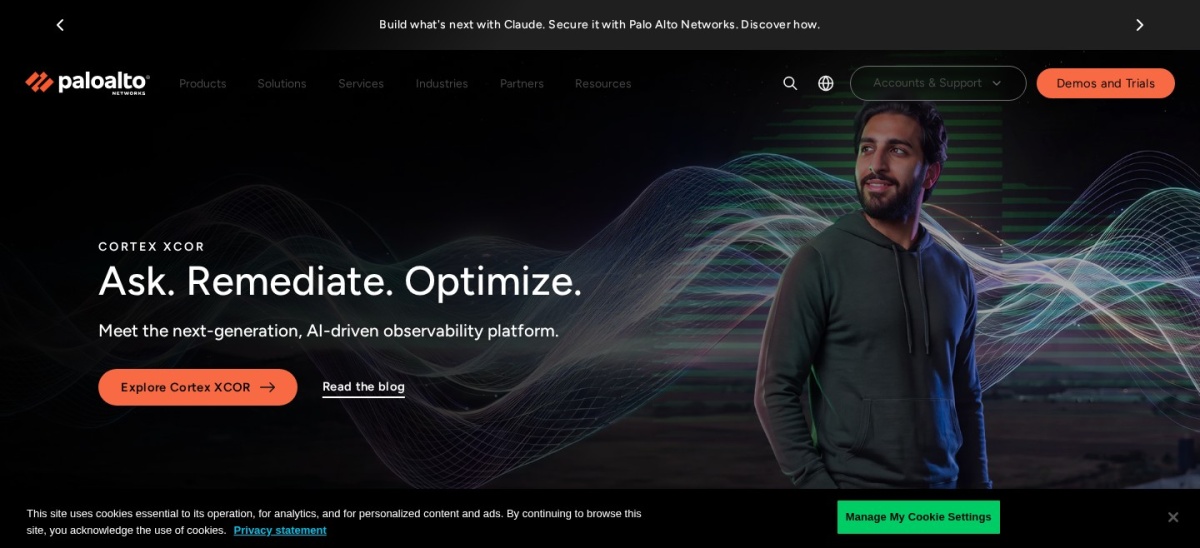
Palo Alto Cortex XDR is an XDR platform that unifies endpoint, network and cloud data into one investigation view, with behavioural analytics and automated root-cause analysis. It holds 4.5 out of 5 on G2 from 99 reviews and integrates deeply with Palo Alto firewalls and the wider Cortex stack.
The trade off is cost and learning curve. Cortex XDR is quote-only and reviewers call it a premium product with a steep learning curve, and G2 reports an average discount of about 16%. It suits enterprises already invested in Palo Alto Networks.
A platform only helps if someone acts on its alerts. Huntress includes a 24/7 SOC in the subscription, and CrowdStrike Falcon Complete adds one for a quote, while the rest expect your team to staff the console.
Small teams should price the staffing, not just the licence. A $36-a-year Defender licence is cheap, but an unmonitored EDR console still misses breaches at 3 a.m.
If you have no security hire, start with a managed option and move to a self-managed platform when you have someone to run it.
How we chose
We started from every cyber security platform with a public rating on G2, then kept the nine with the clearest fit for endpoint protection, XDR and managed response.
Prices were checked on 25 November 2026. CrowdStrike, Huntress and Microsoft publish their entry prices, and those three were confirmed on the vendors' own pricing pages. SentinelOne, Sophos, ESET and Bitdefender prices come from third-party reads of vendor pricing and are flagged as second-hand, while Trend Micro and Palo Alto sell by quote.
We left out niche and consumer-only antivirus tools with no business platform. No vendor paid for a place, and we do not claim hands-on testing for this list.
How to choose a cyber security platform
Start with who will watch the alerts, then match the platform to your stack and your budget.
Decide who watches the alerts. If nobody is on call overnight, pick a managed option like Huntress or a managed tier. A self-managed EDR console needs a person behind it.
Match the platform to your stack. Microsoft 365 shops get the most from Defender, Palo Alto shops from Cortex XDR, and mixed estates from CrowdStrike or SentinelOne.
Price the tier you actually need. Entry tiers rarely include EDR. Check whether detection and response, identity protection and the managed SOC are in the price you are quoted.
Trial it on your oldest hardware. Run the 15- or 30-day trial on the slowest machines you own. Agent weight and console speed only show up on real endpoints.
FAQ
What is the best cyber security platform?
CrowdStrike Falcon is the best pick for most teams. It covers endpoint, cloud and identity from one agent, holds 4.6 out of 5 on G2 from 441 reviews, and entry pricing starts at $59.99 per device a year.
How much does a cyber security platform cost?
Entry prices in this list run from $3 per user a month for Microsoft Defender for Business to $179.99 per endpoint a year for SentinelOne. Two of the nine platforms sell by quote, so enterprise pricing depends on device count and modules.
What is the difference between EDR and XDR?
EDR watches endpoints only, while XDR pulls in endpoint, network, cloud and email data into one investigation view. CrowdStrike, SentinelOne, Trend Micro and Palo Alto all sell XDR, while Huntress and Defender focus on endpoints.
Do I need a managed SOC?
Only if nobody on your team watches alerts around the clock. Huntress includes a 24/7 SOC in its price, and CrowdStrike Falcon Complete adds one for a quote. Without one, alerts can sit unread overnight.
Is Microsoft Defender for Business enough?
For small Microsoft 365 teams it often is. It includes next-generation antivirus, EDR and automated investigation at $3 per user a month, but it caps at 300 users and is weaker on macOS and Linux.
Why do some platforms hide their prices?
Enterprise pricing depends on device count, contract length, modules and discounts, so vendors quote instead of publishing. CrowdStrike, Huntress and Microsoft publish entry prices on their own sites, while Trend Micro and Palo Alto do not.
SaaS SEO and WordPress specialist with about 8 years of experience. Rakib compares WordPress plugins, themes, hosting and software using public pricing, documentation and user reviews. See how we rank.