Medidata Rave is the best CTMS software for large trials, with the highest G2 score here and the deepest EDC and RTSM features. Veeva Vault suits teams already on Veeva, while Castor suits academic and mid-size trials.
How we make this list: we compare pricing pages, product documentation and public user reviews, then re-check every price before each update. No product paid for a place. Disclosure.
Medidata Rave scores 4.7 out of 5 on G2 from 27 reviews, the highest here.
Castor scores 4.6 out of 5 from 126 reviews, the most reviews among the dedicated CTMS tools here.
REDCap is free for academic and non-profit use and runs in more than 7,000 institutions.
OpenClinica lists pricing from $750 a month, the only published CTMS price in this list.
Florence eBinders scores 4.5 out of 5 on Capterra from 83 reviews for site document management.
What makes a good CTMS
A CTMS, or clinical trial management system, tracks a trial from protocol to close-out: sites, subjects, visits, documents, monitoring and payments. It replaces spreadsheets with one system that auditors can trace.
EDC integration is the key difference. A CTMS that shares data with the electronic data capture system avoids double entry and keeps visit data in sync. Medidata Rave, Veeva Vault and Castor all bundle EDC with CTMS.
Compliance decides which tools qualify. A CTMS for regulated trials needs 21 CFR Part 11 compliance, audit trails and validated workflows, and every tool in this list meets that bar for its market.
Pricing is rarely published. Only OpenClinica lists a price, from $750 a month, and most vendors quote by trial size and user count. Budget for an annual contract and ask what counts as a billable site.
Medidata Rave is the leading CTMS for large, complex trials, with EDC, RTSM and trial management in one platform. It scores 4.7 out of 5 on G2 from 27 reviews and is the standard choice for pharma sponsors running multi-site global trials.
The trade off is cost and complexity. Medidata Rave does not publish a price, and it needs more setup than Castor or OpenClinica. It suits large sponsors and CROs who need the deepest trial features.
Veeva Vault is a unified content and trial management platform, with CTMS, EDC and eTMF in one suite. It scores 4.1 out of 5 on G2 from 54 reviews and suits life sciences teams who already run Veeva for documents and quality.
The trade off is a lower G2 score than Medidata Rave and no published price. It suits Veeva customers who want trial management inside the same platform as their documents and quality systems.
Castor is a clinical trial platform built for academic and mid-size trials, with EDC and CTMS in one system. It scores 4.6 out of 5 on G2 from 126 reviews, the most reviews among the dedicated CTMS tools here, and it is known for a clean interface.
The trade off is scale. Castor suits mid-size trials better than global pharma programmes, and it does not publish a price. It suits academic centres and mid-size sponsors who want a modern, easy-to-use trial platform.
Medrio is a clinical trial platform known for fast study builds, with EDC and CTMS in one system. It scores 4.2 out of 5 on G2 from 255 reviews, the most reviews in this list, and it suits teams who need to launch trials quickly.
The trade off is a lower G2 score than Castor or Medidata Rave, and no published price. It suits mid-size sponsors and CROs who value speed of setup over the deepest feature set.
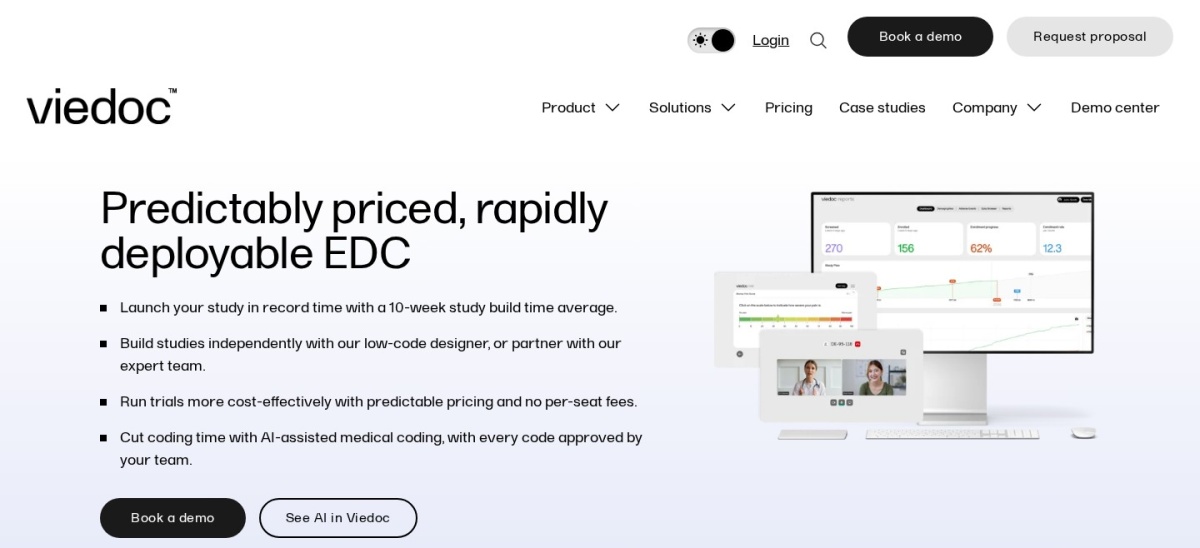
Viedoc is a modern clinical trial platform with EDC and CTMS in one system, known for a clean interface and strong study design tools. It scores 4.5 out of 5 on G2 from 200 or more reviews and suits teams who want a modern trial platform.
The trade off is a smaller market share than Medidata or Veeva, and no published price. It suits mid-size sponsors and CROs who want a modern interface and strong EDC design.
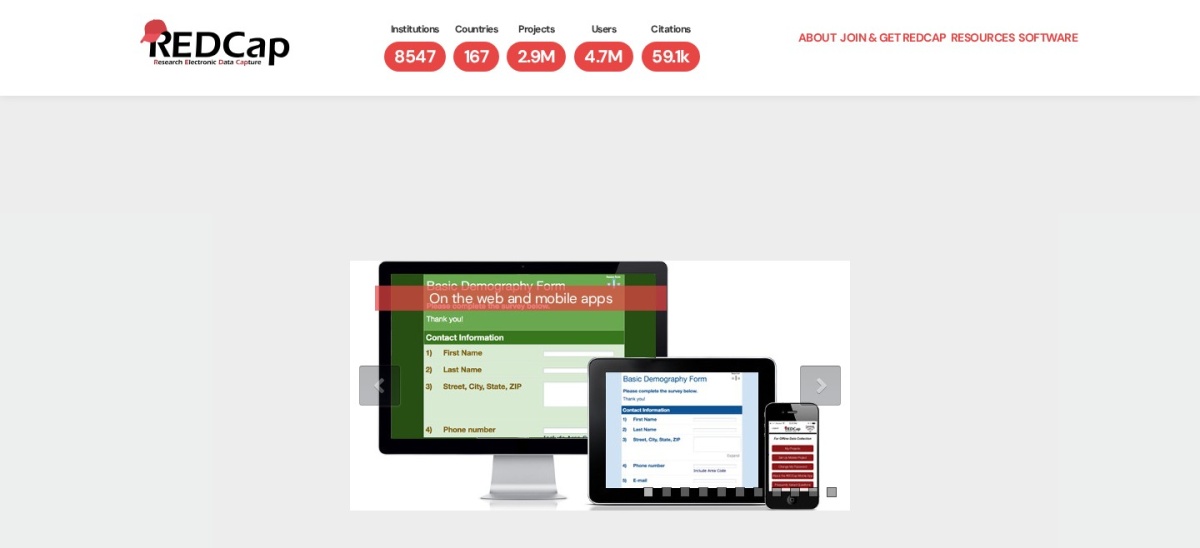
REDCap is a free electronic data capture system for academic and non-profit institutions, running in more than 7,000 institutions worldwide. It scores 4.3 out of 5 on G2 from 221 reviews and is the standard choice for academic research teams.
The trade off is that REDCap is primarily an EDC tool, not a full CTMS, so teams often pair it with a separate trial management system. It suits academic and non-profit teams who need a free, proven data capture tool.
OpenClinica is an open-source clinical trial platform with EDC and CTMS, listing pricing from $750 a month, the only published CTMS price in this list. It scores 4.2 out of 5 on G2 from 24 reviews and suits teams who want an open-source trial platform.
The trade off is a small review base. Only 24 G2 reviews support the 4.2 score, and the $750 price comes from a secondary source. It suits teams who want an open-source platform with a published starting price.
Oracle Clinical is the clinical trial platform inside Oracle Health, with EDC and CTMS in one enterprise system. It scores 4.1 out of 5 on G2 from 29 reviews and suits health systems and sponsors who already run Oracle software.
The trade off is a small review base and no published price. Only 29 G2 reviews support the 4.1 score, and Oracle quotes by contract. It suits Oracle customers who want trial management inside the Oracle stack.
Florence eBinders is a site document management tool for clinical trials, with electronic investigator site files and remote monitoring. It scores 4.5 out of 5 on Capterra from 83 reviews and is the most adopted eISF in clinical research, according to the vendor.
The trade off is scope. Florence eBinders manages site documents, not full trial management, so teams pair it with a CTMS such as Medidata Rave or Veeva Vault. It suits sites and sponsors who want paperless trial documents.
A CTMS manages the trial: sites, subjects, visits, documents, monitoring and payments. An EDC system captures the trial data itself, such as lab results and patient responses, in electronic case report forms.
The two systems work together. Visit dates and subject status live in the CTMS, while the data collected at each visit lives in the EDC, and the best platforms share data between the two without double entry.
Some vendors bundle both. Medidata Rave, Veeva Vault and Castor include EDC with CTMS, while REDCap is primarily an EDC tool that many teams pair with a separate CTMS.
How we chose
We started from CTMS tools with a live product, a G2 or Capterra profile and at least 20 reviews, then ranked them on rating, review count, trial features and compliance.
Ratings and review counts come from G2 or Capterra on 25 November 2026, and prices come from vendor pricing pages where published. Where a vendor does not publish a price, we say so instead of guessing.
We left out tools without a verifiable G2 or Capterra rating, including Signant Health and DATATRAK. No vendor paid for a place, and we do not claim hands-on testing for this list.
How to choose a CTMS
Match the system to your trial size, your EDC needs and your budget.
List the trials you run each year. Large multi-site trials need Medidata Rave or Veeva Vault, while academic and mid-size trials suit Castor, REDCap or OpenClinica. Size decides the shortlist.
Check EDC is included or integrated. A CTMS that shares data with EDC avoids double entry. Medidata Rave, Veeva Vault and Castor bundle EDC; REDCap is primarily an EDC tool.
Confirm 21 CFR Part 11 compliance. Regulated trials need audit trails, electronic signatures and validated workflows. Every tool here meets that bar for its market, but confirm it in writing.
Get the price in writing. Only OpenClinica publishes a price, from $750 a month. Ask every vendor for the price per site, per user and per trial before signing.
FAQ
What is the best CTMS software?
Medidata Rave is the best CTMS software for large trials, with a 4.7 G2 score from 27 reviews and the deepest EDC and RTSM features. Veeva Vault suits teams already on Veeva, and Castor suits academic and mid-size trials.
What does CTMS stand for?
CTMS stands for clinical trial management system. It tracks a trial from protocol to close-out, covering sites, subjects, visits, documents, monitoring and payments in one system that auditors can trace.
Is REDCap free?
Yes, REDCap is free for academic and non-profit institutions that join the consortium, and it runs in more than 7,000 institutions worldwide. Commercial use needs a licence, and hosting costs apply if you do not run it yourself.
What is the difference between CTMS and EDC?
A CTMS manages the trial itself, such as sites, visits and documents, while an EDC system captures the trial data, such as lab results and patient responses. Medidata Rave, Veeva Vault and Castor bundle both; REDCap is primarily an EDC tool.
How much does CTMS software cost?
Only OpenClinica publishes a price, from $750 a month. Other vendors quote by trial size, site count and user count, so ask for a written quote that covers sites, users and trials before signing.
Which CTMS is best for academic trials?
Castor suits academic and mid-size trials best, with a 4.6 G2 score from 126 reviews and a strong EDC bundle. REDCap is free for academic use and runs in more than 7,000 institutions, though it is primarily an EDC tool.
SaaS SEO and WordPress specialist with about 8 years of experience. Rakib compares WordPress plugins, themes, hosting and software using public pricing, documentation and user reviews. See how we rank.