Best Creative Project Management Software in 2026: 7 Tools Compared
WLWPLegible EditorsLast verified 22 Nov 2026How we rank11 min read
★ Short answer
ClickUp is the best creative project management software for most teams, combining unlimited free tasks with docs, boards, calendars and built-in time tracking. Its regular Core price is $12 per user monthly, with an annual-billing offer available. Wrike suits structured creative operations, while Teamwork is a better fit for agencies managing client delivery and billable work.
How we make this list: we compare pricing pages, product documentation and public user reviews, then re-check every price before each update. No product paid for a place. Disclosure.
ClickUp leads for flexible creative work, with unlimited tasks on Free Forever and a regular Core price of $12 per user/month.
Wrike Team costs $10 per user/month and supports 2–15 users, with Gantt charts and shared dashboards.
Teamwork Basics starts at $9.99 per user/month billed annually and focuses on client projects and time tracking.
Asana Starter costs $10.99 per user/month billed annually, adding timelines, Gantt charts and project automation.
Trello Standard is the cheapest paid option at $5 per user/month billed annually, adding unlimited boards and 1,000 monthly automation runs.
All 7 products have free plans, but approval workflows, resource planning and advanced reporting vary by paid tier.
What creative teams need from project management software
Creative projects rarely follow a straight line. Designers, writers, editors and clients exchange briefs, files and revisions before anything is approved. Project management software should connect those moving parts without making the process harder.
Start with creative intake. A useful platform captures project requirements, deadlines, deliverables and ownership before work begins. Custom fields and request forms help teams avoid scattered email instructions.
Next, consider visual workflows and collaboration. Boards should show what is being drafted, reviewed, revised and delivered. File attachments, comments and clear task histories help keep feedback attached to the right version.
Finally, check scheduling and costs. Agencies benefit from time tracking, client access and workload visibility, while internal teams may value calendars, approval checkpoints and integrations more. The cheapest entry plan is not necessarily the cheapest plan that supports your full process.
The 7 best creative project management software tools
01
ClickUp
4.6/5on G2 (15,879 reviews, checked Nov 2026)
Paid from$12/mo
Best creative project management software overall
Free planUnlimited tasks and members
Free storage60 MB
Creative viewsBoard, calendar and Gantt
Paid planCore, regular $12/user/mo
clickup.com
ClickUp homepage, captured Nov 2026.
ClickUp is a work management platform for creative briefs, production tasks, editorial calendars and team collaboration. Free Forever includes unlimited tasks, unlimited free members, 60 MB of storage, collaborative docs, Kanban boards, calendar views and time tracking. Teams can organize deliverables by client, campaign or production stage.
The trade off is complexity, especially when configuring custom workflows for a small studio. Core has a regular price of $12 per user monthly, although the pricing page advertises $9 with annual billing. It suits creative teams that want detailed task management and flexible production tracking in one workspace.
What we like
Unlimited tasks and free members
Built-in docs, boards and time tracking
Custom fields and forms on paid plans
Flexible organization for multiple creative campaigns
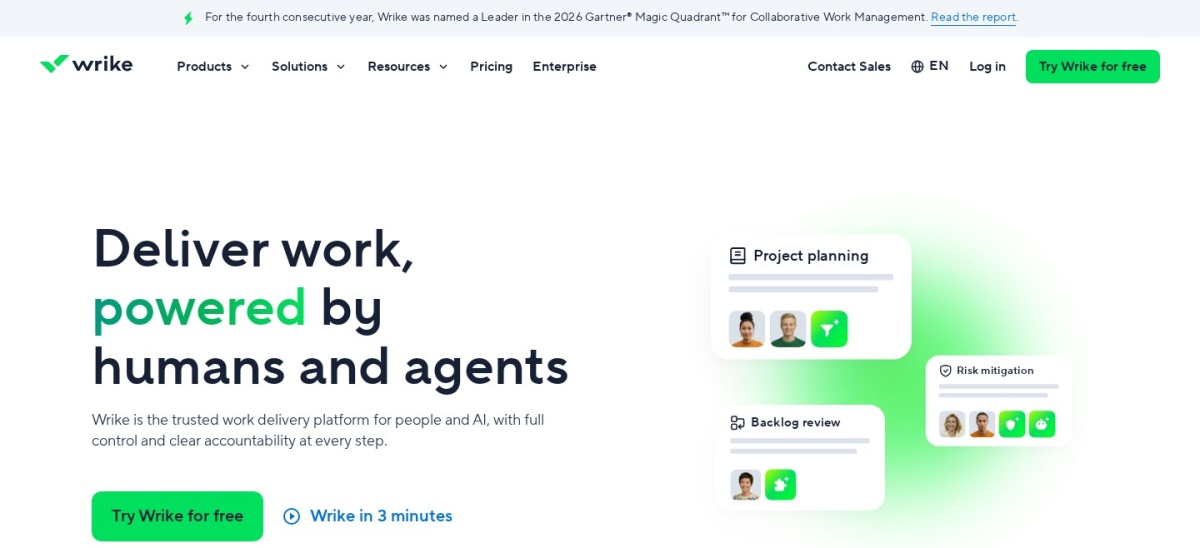
Wrike is a work management platform for coordinating creative production, marketing campaigns and cross-functional projects. Its free plan includes task management, board views, table views and desktop and mobile access. Team adds interactive Gantt charts, shareable dashboards and AI Essentials for teams of 2–15 users.
The trade off is that creative-specific processes such as advanced request intake and formal review coordination may require higher plans or additional configuration. Team starts at $10 per user monthly, and subscriptions follow seat-group purchasing rules. It suits established creative departments handling multiple stakeholders and deadlines.
What we like
Structured workflows for complex projects
Free task, board and table management
Gantt charts and dashboards on Team
Dedicated creative and marketing use cases
Watch out for
Seat purchasing rules can affect small teams
Advanced workflow features require upgrades
More setup than a simple Kanban tool
Team adds interactive Gantt charts, shareable dashboards and AI Essentials.Visit wrike.com
03
Teamwork
4.4/5on G2 (1,225 reviews, checked Nov 2026)
Paid from$9.99/mo
Best for creative agencies and client delivery
Free planAvailable
Time trackingIncluded in Basics
Client managementClient project workflows
Paid planBasics, $9.99/user/mo
teamwork.com
Teamwork homepage, captured Nov 2026.
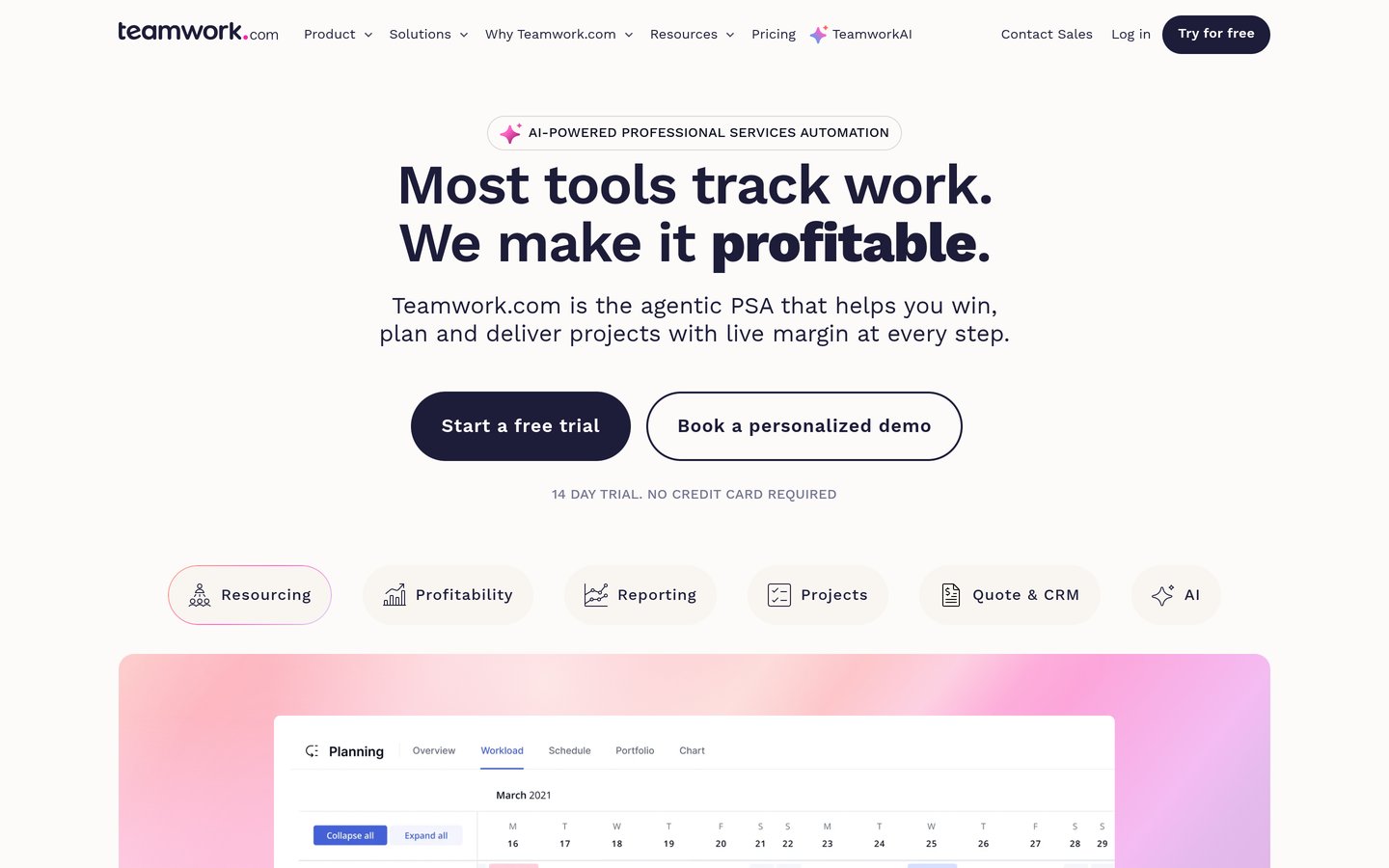
Teamwork is a project and client work management platform designed around service delivery. Its free plan offers an entry point for organizing projects, while Basics focuses on delivering work and tracking time more consistently. Teams can connect tasks, deadlines and project activity with the broader needs of client relationships.
The trade off is that sophisticated capacity planning, profitability reporting and proofing may require higher plans. Basics costs $9.99 per user monthly when billed annually, while Accelerate is a separate upgrade. It suits branding studios, design agencies and marketing service providers that need clear accountability for client deliverables.
What we like
Designed for client-facing project delivery
Time tracking supports service workflows
Free plan available
Useful path toward resource and profitability management
Watch out for
Advanced financial controls need higher tiers
Dedicated proofing is not a core Basics benefit
More agency-focused than general collaboration tools
Basics adds paid client-project capabilities and time-tracking functionality.Visit teamwork.com
04
Asana
4.4/5on G2 (14,143 reviews, checked Nov 2026)
Paid from$10.99/mo
Best for creative campaign planning
Free users2
Free projectsUnlimited
Planning viewsList, board, calendar and Gantt
Paid planStarter, $10.99/user/mo
asana.com
Asana homepage, captured Nov 2026.
Asana is a project management platform for organizing campaign schedules, deliverables, responsibilities and cross-team work. Personal is free for 2 users and includes unlimited tasks and projects, list, board and calendar views, and file attachments up to 100 MB each. Starter adds timeline and Gantt views alongside broader collaboration features.
The trade off is that detailed resource planning and more advanced organization-wide controls sit above Starter. Starter costs $10.99 per user monthly with annual billing, compared with $13.49 on monthly billing. It suits content teams, internal creative departments and campaign managers who prioritize deadlines and clear task ownership.
What we like
Clear task ownership and due dates
Unlimited projects on the free plan
Timeline and Gantt planning with Starter
Useful integrations for creative collaboration
Watch out for
Free collaboration is limited to 2 users
Advanced workload planning requires an upgrade
Less focused on agency billing than Teamwork
Starter adds timeline and Gantt views, expanded collaboration and automation features.Visit asana.com
05
Trello
4.4/5on G2 (14,078 reviews, checked Nov 2026)
Paid from$5/mo
Best for simple visual creative boards
Free boards10 per workspace
Free cardsUnlimited
Free automation250 command runs/month
Paid planStandard, $5/user/mo
trello.com
Trello homepage, captured Nov 2026.
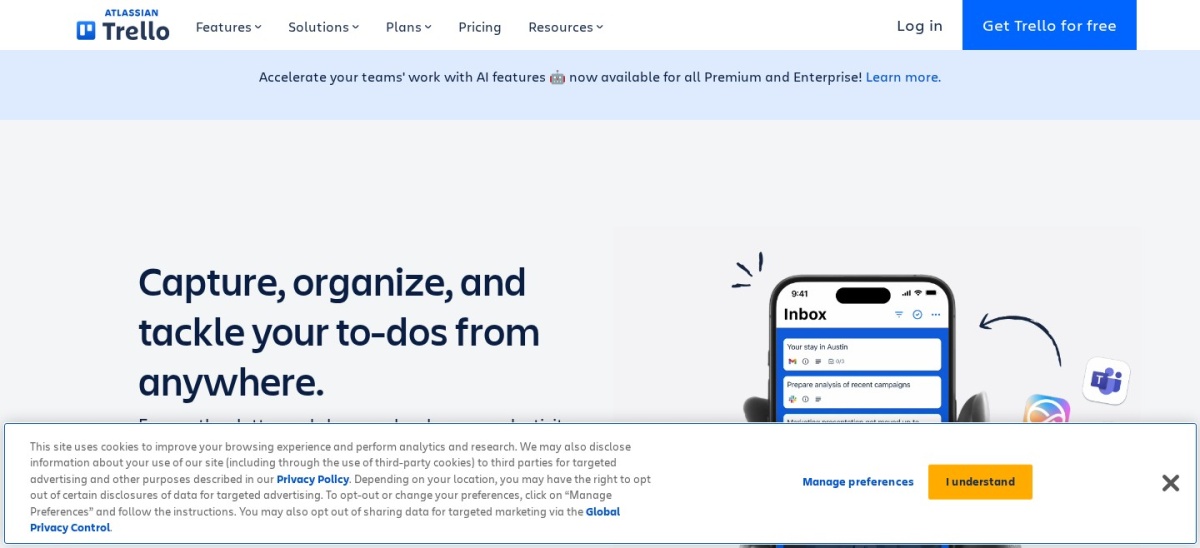
Trello is a visual task management platform that organizes creative work into boards, lists and cards. Its free plan includes unlimited cards, up to 10 boards per workspace, unlimited Power-Ups and 250 workspace automation runs monthly. Designers and content teams can move deliverables through simple production stages.
The trade off is limited native support for complex dependencies, resource planning and formal creative approvals. Standard costs $5 per user monthly with annual billing, or $6 with monthly billing. It suits freelancers, small design studios and editorial teams that prefer visible task stages over complicated project controls.
What we like
Easy visual Kanban organization
Unlimited cards on the free plan
Lowest paid entry price in this comparison
Large selection of Power-Ups and templates
Watch out for
Limited advanced planning on entry tiers
Not a full creative proofing solution
Complex projects may require integrations
Standard adds unlimited boards, custom fields, advanced checklists and 1,000 monthly automation runs.Visit trello.com
06
Notion
4.6/5on G2 (14,021 reviews, checked Nov 2026)
Paid from$10/mo
Best for creative briefs and documentation
Free planPages, databases and basic forms
Project trackingDatabase tasks and dependencies
DocumentationCollaborative pages
Paid planPlus, $10/member/mo
notion.com
Notion homepage, captured Nov 2026.
Notion is a connected workspace that combines documents, creative briefs, project databases and team knowledge. Its free plan includes pages, databases with subtasks and dependencies, basic forms and calendar integration. Creative teams can build an editorial tracker alongside brand guidelines, research notes and campaign documentation.
The trade off is that teams must design and maintain much of their own project structure, and dedicated proofing is not a core feature. Plus costs $10 per member monthly on the displayed annual-billing plan. It suits studios and content departments that want project tracking closely connected to creative documentation.
What we like
Creative briefs and tasks in one workspace
Flexible databases and linked documentation
Free plan for initial organization
Templates support repeatable content processes
Watch out for
Requires manual workspace design
No dedicated visual proofing workflow
Free collaborative blocks have limits
Plus adds custom forms, custom sites, charts and expanded collaboration capabilities.Visit notion.com
07
Airtable
4.6/5on G2 (3,306 reviews, checked Nov 2026)
Paid from$20/mo
Best for creative production databases
Free planAvailable
Workflow modelRelational databases
CustomizationViews, interfaces and automations
Paid planTeam, $20/user/mo
airtable.com
Airtable homepage, captured Nov 2026.
Airtable is a customizable database and application platform for tracking creative assets, production schedules, campaigns and content records. Its free plan lets teams start organizing structured project information. Linked records, customizable views and interfaces make it useful for managing connected deliverables across campaigns and channels.
The trade off is that a useful creative production system often requires significant initial configuration, and Airtable does not replace specialist design feedback tools. Team costs $20 per user monthly when billed annually. It suits marketing operations teams and content production departments that need searchable asset inventories and custom tracking workflows.
What we like
Flexible relational data structure
Useful for creative asset and content inventories
Custom interfaces for different teams
Can connect production records across campaigns
Watch out for
Highest paid entry price in this comparison
Requires setup to become a project system
Dedicated design proofing requires other tools
Team increases database capacity and adds more advanced collaboration and customization.Visit airtable.com
Project management versus creative proofing
Creative project management and creative proofing solve related but different problems. Project management tracks assignments, ownership, deadlines and dependencies. Proofing focuses on collecting feedback directly on visual assets and approving the correct version.
A design team handling frequent revisions should verify whether reviewers can annotate images, documents or videos without purchasing full user seats. A comment on a project task is not necessarily equivalent to feedback attached to a particular area of an image.
Wrike and Teamwork offer paths toward more formal creative review processes. Other platforms may depend on integrations or higher plans. Check supported file types, guest access, approval history and version handling before committing.
What creative project management software really costs
The prices in this comparison are per-user entry prices, not total team subscription costs. Most products charge for every paid seat, while some enforce purchasing increments or different rules for guests.
Trello Standard costs $60 per user annually at its annual-billing rate. Teamwork Basics costs $119.88, while Asana Starter costs $131.88 per user annually. Airtable Team reaches $240 per user annually. These figures exclude additional services and higher-tier capabilities.
ClickUp displays a regular Core price of $12 per user monthly alongside a $9 annual-billing offer. The price ladder uses the regular $12 figure rather than the discounted offer.
Before comparing annual totals, identify which employees need editing access, whether clients require paid seats, and whether proofing or capacity planning triggers an upgrade. These details can change the actual budget more than the advertised entry price.
How we chose
We shortlisted established project management platforms with documented applications for creative agencies, marketing departments, designers and content production teams. The comparison focuses on project planning, visual organization, collaboration, client workflows, documentation and creative delivery.
Official vendor pricing pages and public G2 review pages were checked against information available on 22 Nov 2026, with pages opened for verification on 23 Nov 2026. Annual equivalents multiply the displayed monthly entry rate by 12. ClickUp uses its explicitly labeled regular Core price instead of its advertised annual-billing offer.
We excluded products without verifiable public entry pricing, specialized tools with insufficient relevance to broader creative project management, and platforms whose public information did not support a reliable comparison. G2 ratings describe public reviewer feedback, not independent performance measurements. No vendor paid for a place, and we do not claim testing for this list.
How to choose creative project management software
Start by mapping how a creative brief moves from request to final approval. Then compare the features and pricing rules that directly support that process.
Map your production stages. Write down how work enters the team, who creates it, who reviews it and what counts as approved. Choose software that can represent those stages clearly through boards, task statuses, forms or custom fields.
Match collaboration to your deliverables. For design and video work, check file attachments, annotations, version history and guest feedback. For editorial production, prioritize document collaboration, recurring tasks, calendars and deadlines.
Check scheduling and workload visibility. If projects overlap, compare Gantt charts, dependencies, dashboards and resource planning. Small teams may need only a board and calendar, while busy agencies may require team capacity information.
Calculate the full subscription cost. Multiply paid seats by the applicable monthly price and billing period. Include any required upgrades for approval workflows, time tracking, integrations or client access. Review minimum seat requirements before committing.
FAQ
What is the best creative project management software overall?
ClickUp is the strongest general-purpose choice in this comparison because it combines tasks, documents, visual boards, calendars and time tracking. Its free plan supports unlimited tasks and members, while paid plans expand customization and storage. Wrike is worth considering when creative production involves more formal planning and coordination.
Which project management software is best for creative agencies?
Teamwork is particularly suited to creative agencies because it focuses on client projects, time tracking and service delivery. Its Basics plan starts at $9.99 per user monthly with annual billing. Agencies requiring more detailed production workflows should also compare Wrike and ClickUp.
Is there free creative project management software?
Yes. All seven platforms in this comparison offer a free plan. Trello provides up to 10 boards per workspace, while ClickUp allows unlimited free tasks and members. Asana Personal supports 2 users. Free plans are useful starting points, but advanced approvals, storage and scheduling may require upgrades.
What is the cheapest creative project management tool?
Trello Standard has the lowest paid entry price in this comparison at $5 per user monthly when billed annually, equivalent to $60 per user per year. Its free plan also includes unlimited cards. The main limitation is that complex resource planning and creative approvals are not its central strengths.
Can project management software handle design approvals?
Some platforms support structured review and approval workflows, but capabilities vary by subscription. Wrike and Teamwork offer features relevant to creative review, while general task systems often rely on comments or integrations. Verify visual annotations, supported file types and approval history before assuming a tool can replace dedicated proofing software.
Is Asana or ClickUp better for creative teams?
Asana emphasizes clear ownership, project timelines and cross-team coordination. ClickUp offers broader workspace customization and combines documents, tasks and time tracking. Teams that want a straightforward campaign structure may prefer Asana, while those managing varied creative workflows may favor ClickUp.
Can Notion replace creative project management software?
Notion can manage briefs, content calendars, task databases and project documentation within one workspace. Its database structure supports subtasks and dependencies. However, teams requiring formal visual proofing, advanced resource planning or agency financial reporting may need additional applications or a more specialized project platform.
What features matter most for creative teams?
Prioritize request intake, task ownership, deadlines, file collaboration and clearly defined review stages. Visual boards help teams follow production status, while calendars and dependencies support scheduling. Agencies should also examine client permissions, time tracking and capacity planning, especially when several projects compete for the same designers or editors.