Best Cloud Cost Management Tools in 2026: 7 Tools Compared
WLWPLegible EditorsLast verified 22 Nov 2026How we rank11 min read
★ Short answer
Vantage is the best cloud cost management tool for most teams, with a free plan covering $2,500 in cloud spending and support for more than 40 providers. Datadog suits engineering teams connecting infrastructure performance with spending, while AWS Budgets is a practical choice for AWS-specific budget monitoring.
How we make this list: we compare pricing pages, product documentation and public user reviews, then re-check every price before each update. No product paid for a place. Disclosure.
Vantage earns 4.7/5 from 72 G2 reviews and offers a $30 monthly Pro plan.
Datadog Pro starts at $5 per $1,000 of monitored cloud and SaaS spending per month with annual billing.
AWS Budgets includes 2 free action-enabled budgets before charging $0.10 per additional budget per day.
CloudZero scores 4.6/5 from 64 G2 reviews and focuses on cloud unit economics.
Cast AI has 284 G2 reviews and specializes in Kubernetes infrastructure optimization.
Finout, CloudZero, Cast AI and IBM Cloudability require custom pricing quotes.
What to look for in cloud cost management software
Cloud cost management software helps businesses understand where infrastructure spending goes, which resources generate unnecessary costs and how future bills may change. It gives finance and engineering teams a shared view of cloud expenses.
Look for cost allocation capabilities that connect infrastructure expenses to departments, applications, projects and customers. This makes it easier to assign financial responsibility without maintaining spreadsheets manually.
Budget alerts, spending forecasts and anomaly detection help teams identify unexpected expenses before they become larger financial problems. Automated optimization can also reduce waste from oversized or unused resources.
Pricing models matter because some platforms charge fixed subscription fees while others calculate fees against monitored spending. Compare the expected annual subscription cost at your actual cloud spending level.
Businesses using Kubernetes, AI infrastructure or multiple cloud providers should check whether the software supports those environments directly. General billing dashboards may not provide the resource-level details these workloads require.
Vantage is a cloud financial management platform that combines infrastructure, software and AI expenses in shared reports. Its Starter plan supports 3 users and tracks up to $2,500 in monthly cloud spending, giving smaller businesses an accessible starting point for FinOps.
The trade off is that subscriptions have spending and user limits. Pro costs $30 per month, while businesses exceeding its $7,500 spending allowance need a higher tier. It suits startups and growing technology companies looking for predictable subscription costs.
What we like
Free entry plan for smaller cloud environments
Published subscription prices
Supports cloud, SaaS and AI expenses
Virtual tagging on paid subscriptions
AWS Savings Plans automation
Watch out for
Subscription tiers limit tracked spending
Entry plans restrict user accounts
Advanced reporting customization could improve
Pro increases spending capacity and adds virtual tagging.Visit vantage.sh
02
Datadog
4.4/5on G2 (746 reviews, checked Nov 2026)
Paid from$5/mo
Best for connecting cloud costs with engineering metrics
Free coverageDatadog expenses only
Pro pricing unit$1,000 monitored spending
Cost allocationCloud and Kubernetes
Paid billingAnnual or on-demand
datadoghq.com
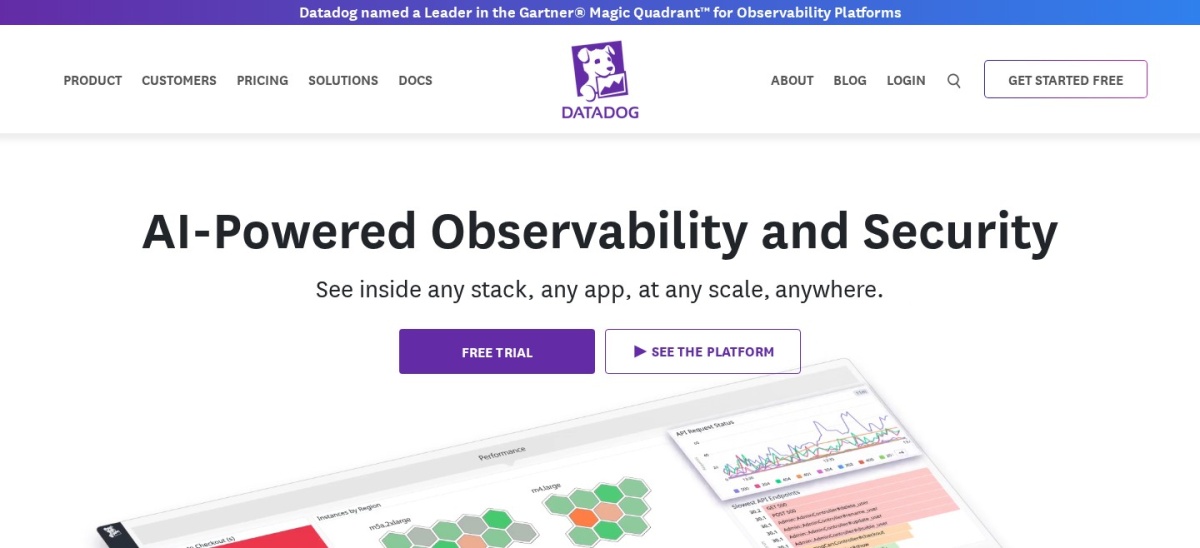
Datadog homepage, captured Nov 2026.
Datadog is an observability platform with financial management capabilities for cloud infrastructure and software services. Its free Cost Visibility offering monitors Datadog expenses, while Cloud Cost Management Pro starts at $5 monthly per $1,000 of monitored spending.
The trade off is variable subscription costs as infrastructure spending increases, with on-demand pricing at $7.20 per $1,000 of monthly monitored expenses. It suits engineering departments already using Datadog and businesses that want infrastructure performance and financial information in the same platform.
What we like
Connects financial and operational information
Kubernetes cost allocation
Spending anomaly investigation
Published usage-based rates
Supports engineering optimization workflows
Watch out for
Free coverage excludes external cloud spending
Costs increase with monitored expenses
Other Datadog modules may cost extra
Pro adds external cloud cost tracking from $60 yearly per $1,000 of monthly monitored spending.Visit datadoghq.com
03
AWS Budgets
4.1/5on G2 (45 reviews, checked Nov 2026)
Paid from$0.10/day
Best for AWS-native budget monitoring
Budget monitoringFree
Free action-enabled budgets2
Additional budget$0.10/day
Delivered budget report$0.01
aws.amazon.com
AWS Budgets homepage, captured Nov 2026.
AWS Budgets is a native financial monitoring service for controlling Amazon Web Services expenses. Standard budget monitoring and notifications are free, and businesses can configure 2 action-enabled budgets without additional charges.
The trade off is limited coverage outside the AWS ecosystem, with additional action-enabled budgets costing $0.10 per day and delivered reports costing $0.01 each. It suits AWS-focused businesses that need budget alerts and basic spending controls rather than an independent FinOps platform.
What we like
Native integration with AWS billing
Free standard budget notifications
Supports forecast-based alerts
Can trigger predefined resource controls
Watch out for
No independent multi-cloud management
Additional reports generate usage charges
Less extensive financial analysis than dedicated platforms
Paid usage expands action-enabled budgets and scheduled reports.Visit aws.amazon.com
04
CloudZero
4.6/5on G2 (64 reviews, checked Nov 2026)
PricingCustom pricing
Best for cloud unit economics
Cost allocationBusiness dimensions
Cost granularityHourly
Subscription usersUnlimited
Pricing modelCustom quote
cloudzero.com
CloudZero homepage, captured Nov 2026.
CloudZero is a cloud cost intelligence platform that connects infrastructure spending with business performance. Its subscription includes unlimited users, flexible cost grouping, hourly cost data, financial forecasts and tools for analyzing the economics of individual products or customers.
The trade off is pricing transparency because CloudZero requires a custom subscription quote instead of publishing a standard entry fee. It suits SaaS companies that need to understand customer profitability, infrastructure efficiency and the financial impact of engineering decisions.
What we like
Detailed customer-level cost analysis
Flexible business cost categories
No published user limits
Cloud spending anomaly detection
Connects infrastructure costs with profitability
Watch out for
No public subscription price
Cost allocation requires initial configuration
May exceed the needs of smaller businesses
The subscription includes cost intelligence, budgeting and optimization recommendations.Visit cloudzero.com
05
Finout
4.5/5on G2 (87 reviews, checked Nov 2026)
PricingCustom pricing
Best for consolidated enterprise cloud spending
Cloud coverageAWS, Azure, GCP and OCI
Additional coverageAI, SaaS and Kubernetes
Cost organizationVirtual allocation
Billing modelFixed annual fee
finout.io
Finout homepage, captured Nov 2026.
Finout is an enterprise FinOps platform that consolidates infrastructure, software and AI costs into shared financial reports. It supports allocation across 4 major cloud providers alongside Kubernetes and other technology expenses, helping businesses assign costs to their owners.
The trade off is that Finout calculates its custom annual fee from committed spending tiers and environmental requirements rather than providing public subscription prices. It suits larger organizations with complex infrastructure expenses and multiple departments sharing cloud services.
What we like
Consolidates spending across different environments
Supports AI infrastructure cost allocation
Annual subscription model
Useful for departmental financial accountability
Includes shared cost reporting
Watch out for
Requires a personalized pricing quote
Complex environments require configuration
Kubernetes requirements may affect pricing
Annual contracts cover consolidated reporting and financial management capabilities.Visit finout.io
06
Cast AI
4.5/5on G2 (284 reviews, checked Nov 2026)
PricingCustom pricing
Best for automated Kubernetes cost optimization
Primary environmentKubernetes
OptimizationAutomated scaling and rightsizing
GPU infrastructureSupported
Pricing modelEnvironment-based quote
cast.ai
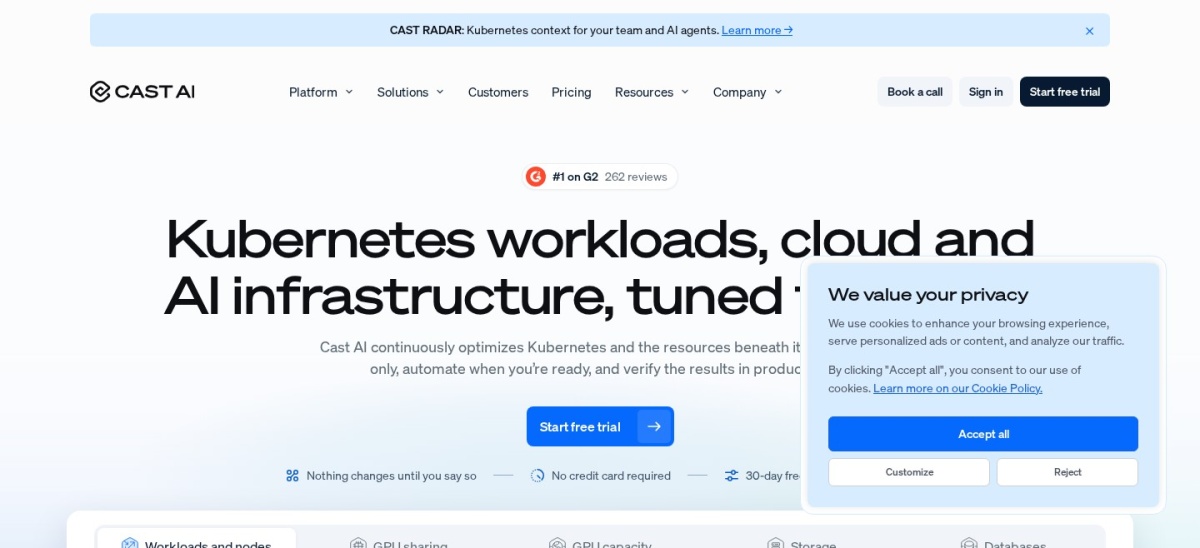
Cast AI homepage, captured Nov 2026.
Cast AI is an infrastructure automation platform focused on reducing Kubernetes and GPU resource waste. The vendor reports adoption by more than 2,100 companies, and its platform helps engineering teams adjust infrastructure capacity and workload resource requirements.
The trade off is its narrower infrastructure focus and custom pricing, which depends on cluster and GPU requirements. It suits businesses running containerized applications that want to automate infrastructure optimization rather than relying entirely on manual resource adjustments.
What we like
Automated Kubernetes resource adjustments
Supports workload rightsizing
GPU infrastructure management
Reduces manual infrastructure optimization
Designed for containerized workloads
Watch out for
Custom pricing complicates comparisons
Less suitable for traditional infrastructure environments
Automated changes require operational oversight
Paid contracts provide infrastructure automation based on deployment requirements.Visit cast.ai
07
IBM Cloudability
4.2/5on G2 (256 reviews, checked Nov 2026)
PricingCustom pricing
Best for enterprise FinOps governance
Cost allocationDepartmental chargeback
ForecastingDriver-based forecasting
OptimizationRightsizing recommendations
Pricing modelCustom quote
ibm.com
IBM Cloudability homepage, captured Nov 2026.
IBM Cloudability is an enterprise cloud financial management platform with a 4.2/5 rating from 256 G2 reviews. Its capabilities cover spending allocation, financial forecasting, infrastructure optimization and departmental chargeback across public cloud environments.
The trade off is custom pricing and the administrative effort involved in configuring enterprise financial processes. It suits large organizations that need structured reporting, spending accountability and coordination between technology teams and financial leadership.
What we like
Enterprise financial reporting
Department-level cost attribution
Supports shared expense allocation
Infrastructure optimization recommendations
Budget variance and forecasting capabilities
Watch out for
No published entry subscription price
Requires structured implementation
May be excessive for small cloud environments
Paid subscriptions support enterprise cost allocation, forecasting and optimization.Visit ibm.com
How cloud cost management software pricing works
Fixed subscription pricing gives businesses a predictable software expense within defined usage limits. Vantage follows this approach, with its Pro subscription costing $360 annually and supporting up to $7,500 in monthly tracked cloud spending.
Usage-based subscriptions calculate fees against monitored expenses. Datadog Pro starts at $5 per $1,000 of monthly monitored cloud and SaaS spending when billed annually. Its $60 annual figure in this comparison represents that pricing unit rather than an unlimited subscription.
AWS Budgets uses feature-based consumption charges rather than a conventional paid subscription. The annual price shown represents an additional action-enabled budget running throughout a standard year. Delivered reports generate separate charges.
Enterprise platforms commonly provide personalized quotes based on infrastructure complexity, spending commitments and required features. Custom pricing entries in this comparison do not represent free subscriptions.
Cloud financial management vs. cloud cost optimization
Cloud financial management focuses on understanding, forecasting and allocating technology expenses. It gives finance teams the information needed to establish budgets and hold departments accountable for their infrastructure consumption.
Cloud cost optimization focuses on reducing unnecessary expenses through resource adjustments, infrastructure scheduling and commitment management. Engineering teams use these capabilities to improve resource efficiency without sacrificing application reliability.
Some organizations need both capabilities, while others benefit from dedicated tools. A business might use CloudZero for customer profitability reporting and Cast AI for automated Kubernetes infrastructure adjustments.
How we chose
We selected established products from G2's cloud cost management category and individual software review listings. We compared their coverage, cost allocation capabilities, financial reporting, optimization features and suitability for different infrastructure environments.
The article's verification date is 22 Nov 2026. Official vendor pricing pages and G2 ratings were accessed again on 24 Nov 2026. Published rates were annualized where applicable, and vendors without public subscription prices were marked as custom pricing.
We excluded products with insufficient public review evidence, unclear product availability or limited relevance to cloud financial management. Free trials were not classified as permanent free subscriptions. No vendor paid for a place, and we do not claim testing for this list.
How to choose the right cloud cost management tool
Evaluate your infrastructure, financial reporting requirements and expected subscription expenses before selecting a cloud cost management platform.
**Identify your infrastructure requirements.** List your cloud providers, container environments, AI services and software subscriptions. Choose a platform that supports the services responsible for your largest expenses.
**Define your financial reporting goals.** Determine whether you need simple spending alerts, customer profitability analysis, departmental chargeback or detailed financial forecasts. More complex reporting requirements generally favor dedicated FinOps platforms.
**Calculate the expected subscription cost.** Compare fixed subscription fees, monitored spending charges and custom quotes using your actual infrastructure expenses. Include additional charges for reporting, integrations and related services.
**Review automation and access requirements.** Check which permissions the platform requires and how it applies optimization recommendations. Establish approval processes for automated infrastructure changes that could affect application performance.
FAQ
What is the best cloud cost management tool?
Vantage is our top overall choice because it combines multi-provider spending visibility with published subscription prices. Its free plan supports up to $2,500 in tracked monthly cloud spending, and its Pro subscription starts at $30 per month.
Are there free cloud cost management tools?
Yes. Vantage offers a limited free subscription, while AWS Budgets provides free standard budget monitoring and notifications. Datadog also offers free visibility into its own service expenses, although external cloud cost monitoring requires a paid subscription.
How much does cloud cost management software cost?
Pricing depends on the platform and infrastructure requirements. Vantage Pro costs $30 monthly, while Datadog Pro starts at $5 per $1,000 of monitored monthly cloud and SaaS spending. Enterprise platforms frequently require personalized annual subscription quotes.
What is the best cloud cost management tool for AWS?
AWS Budgets is a practical choice for native budget monitoring, spending notifications and predefined resource controls. Businesses needing more extensive allocation, consolidated reporting or optimization across additional cloud providers should consider Vantage or another dedicated FinOps platform.
Which cloud cost management software is best for Kubernetes?
Cast AI is a specialist option for Kubernetes infrastructure optimization because it supports automated scaling and workload rightsizing. Datadog is another option for teams that want Kubernetes financial visibility alongside infrastructure monitoring and application performance information.
Can cloud cost management software reduce infrastructure bills?
These platforms can identify unnecessary resource consumption, inefficient infrastructure configurations and opportunities for spending reductions. Actual savings depend on existing infrastructure efficiency, the quality of optimization recommendations and whether engineering teams implement the suggested changes safely.
What is FinOps in cloud computing?
FinOps is a financial management practice that brings engineering, finance and business teams together to manage technology spending. It focuses on financial accountability, resource efficiency and understanding the business value generated by cloud infrastructure investments.
Which cloud cost management tool is best for SaaS companies?
CloudZero is particularly suitable for SaaS companies that need to connect infrastructure costs with individual customers, products or business activities. Vantage is an alternative for smaller SaaS businesses that prioritize accessible cost reporting and predictable subscription fees.