Best Clinical Documentation Software in 2026: 8 Tools Compared
WLWPLegible EditorsLast verified 24 Nov 2026How we rank9 min read
★ Short answer
Freed is the best clinical documentation software for small practices, because it turns visits into notes from a clear monthly price. Nabla suits large health systems, while Heidi is the best free start.
How we make this list: we compare pricing pages, product documentation and public user reviews, then re-check every price before each update. No product paid for a place. Disclosure.
Freed leads for small practices, with ambient notes from $39 a month and the highest G2 rating in this list at 5.0.
Nabla is the strongest choice for large health systems, with more than 130 health organisations, 85,000 clinicians and a free plan.
Heidi Health offers a free plan with unlimited standard-template notes, making it the best free start here.
Abridge, Augmedix, DeepScribe and Suki are all quote-based, so shortlist first and ask for numbers second.
Nuance DAX Copilot is listed at $600 a month by third-party sources, with the lowest aggregate rating in this list at 2.8.
What clinical documentation software should cover
Clinical documentation software, often called an ambient AI scribe, listens to a patient visit and turns it into a structured clinical note. The best tools capture the conversation, draft the note, and let the clinician review and sign it in minutes.
Accuracy is the feature that matters most. A note with a wrong dose or a missed allergy is worse than no note at all, so several tools add human review or specialty-tuned models. Our guide on telehealth software covers the virtual care category these scribes sit beside.
Pricing is usually monthly per clinician, with free tiers for light use and enterprise contracts for health systems. Freed publishes $39 a month, Nabla publishes $119 a month, and the rest are quote-based.
Privacy and compliance decide the shortlist. Any tool that records patient visits must meet HIPAA requirements, with encryption, access controls and a business associate agreement, so confirm compliance before you trial.
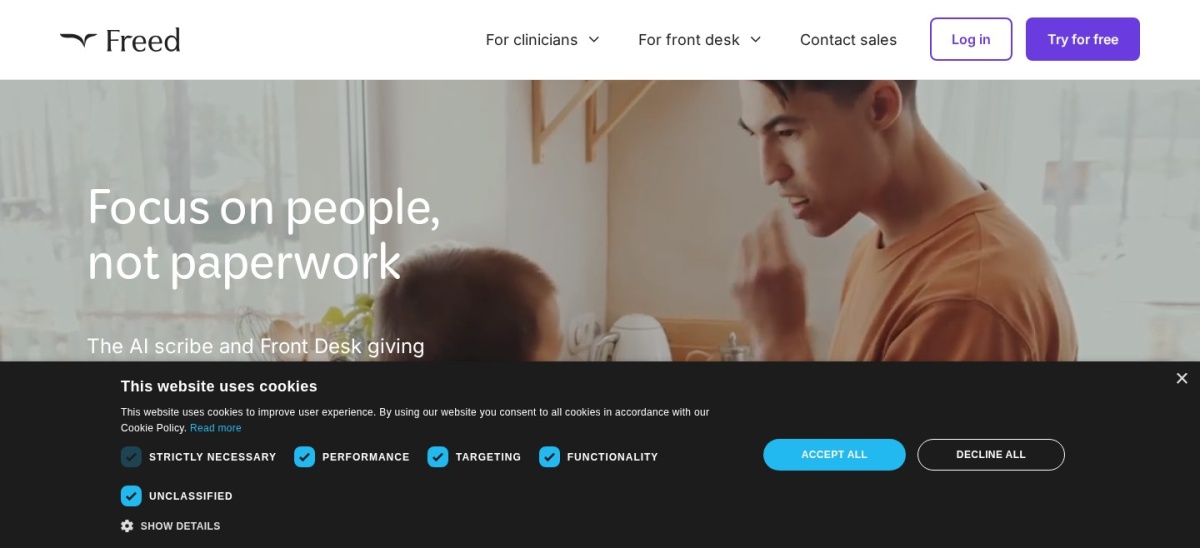
Freed is an ambient AI scribe that listens to patient visits and drafts clinical notes, with a Starter plan at $39 a month for 40 notes and Core at $79 a month for unlimited notes. It is the highest-rated tool in this list, with a 5.0 rating from 13 G2 reviews.
The trade off is a smaller scale than Nabla or Abridge, with fewer health-system deployments. It suits small practices and individual clinicians that want a clear price and a fast setup.
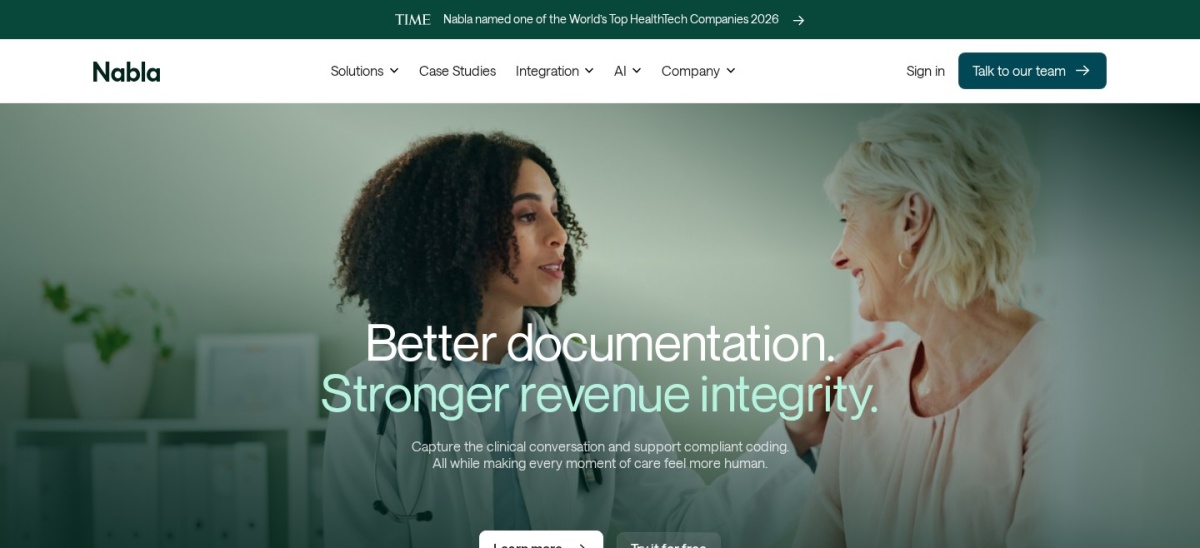
Nabla is an ambient AI scribe used by more than 130 health organisations and 85,000 clinicians, with a free plan and a Pro plan at $119 a month. It drafts notes from visits, supports more than 20 million encounters a year, and integrates with major EHR systems.
The trade off is a price that rises with the Pro tier, and a feature set that is broader than small practices need. It suits large health systems that want a proven scribe at scale.
4.8/5on G2 (Not published reviews, checked Nov 2026)
PricingCustom/yr
Best for free unlimited standard notes
Free planYes, unlimited standard notes
TemplatesMany specialties
PricingCustom, not published
Paid planCustom quote
heidihealth.com
Heidi Health homepage, captured Nov 2026.
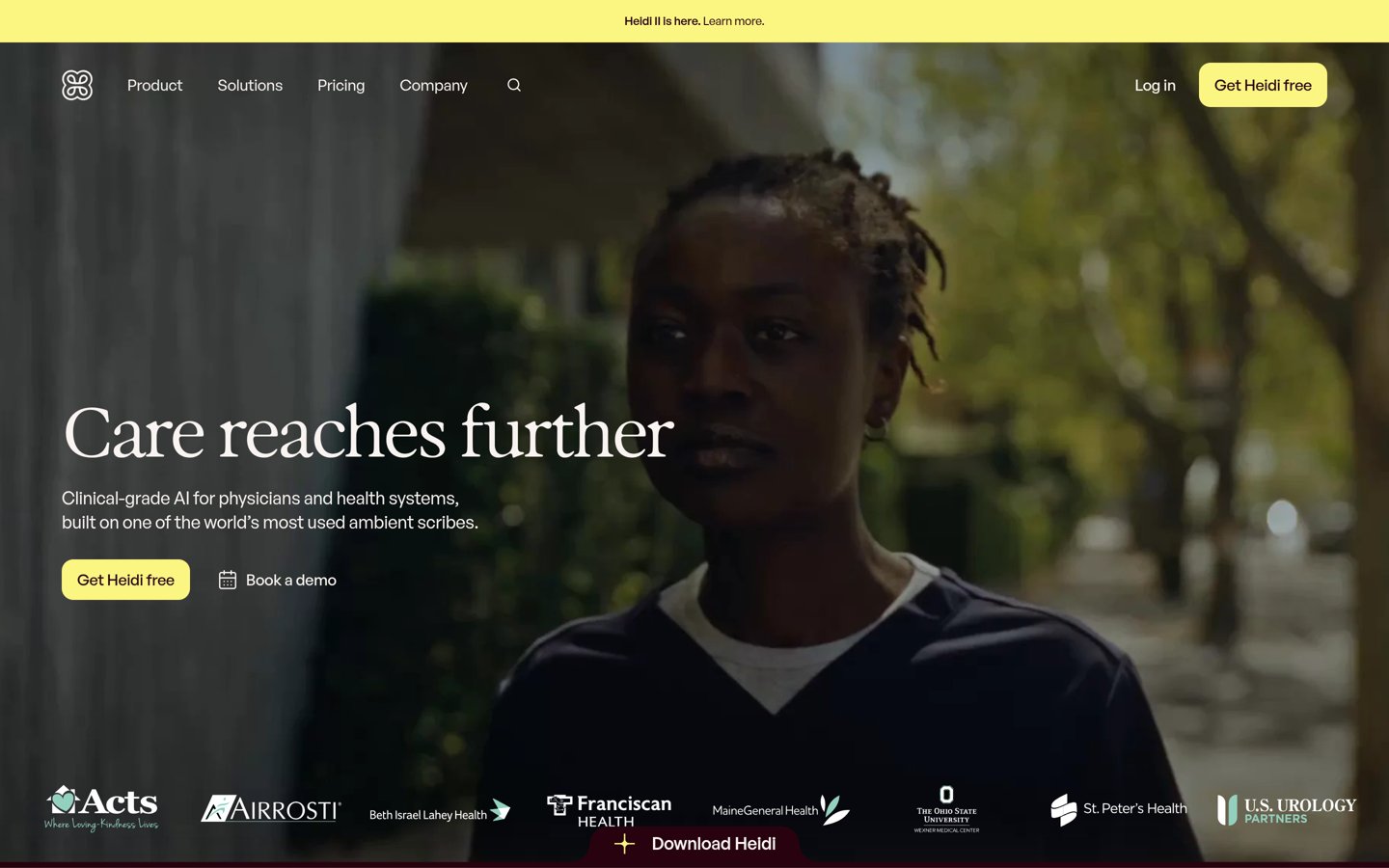
Heidi Health is an ambient AI scribe with a free plan that includes unlimited standard-template notes, making it the best free start in this list. It drafts notes from visits, with templates for many specialties and a clean review workflow.
The trade off is paid pricing that is not published, with conflicting reports from $40 to $150 a month, and a rating that is an aggregate across review sites rather than a single G2 score. It suits clinicians that want to start free and upgrade later.
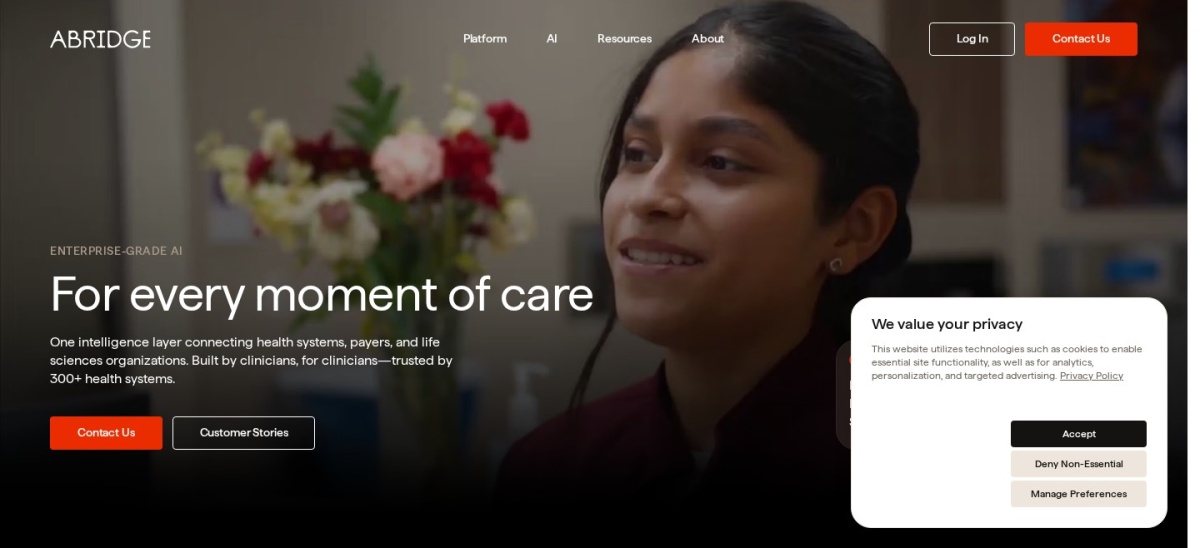
Abridge is an ambient AI scribe built for large health systems, with more than 250 deployments and a focus on enterprise integration. It drafts notes from visits, with specialty-tuned models and a deep EHR integration that larger systems need.
The trade off is custom pricing with no public figures, and third-party reports of $208 to $500 per clinician a month that are not confirmed by the vendor. It suits health systems that need an enterprise scribe at scale.
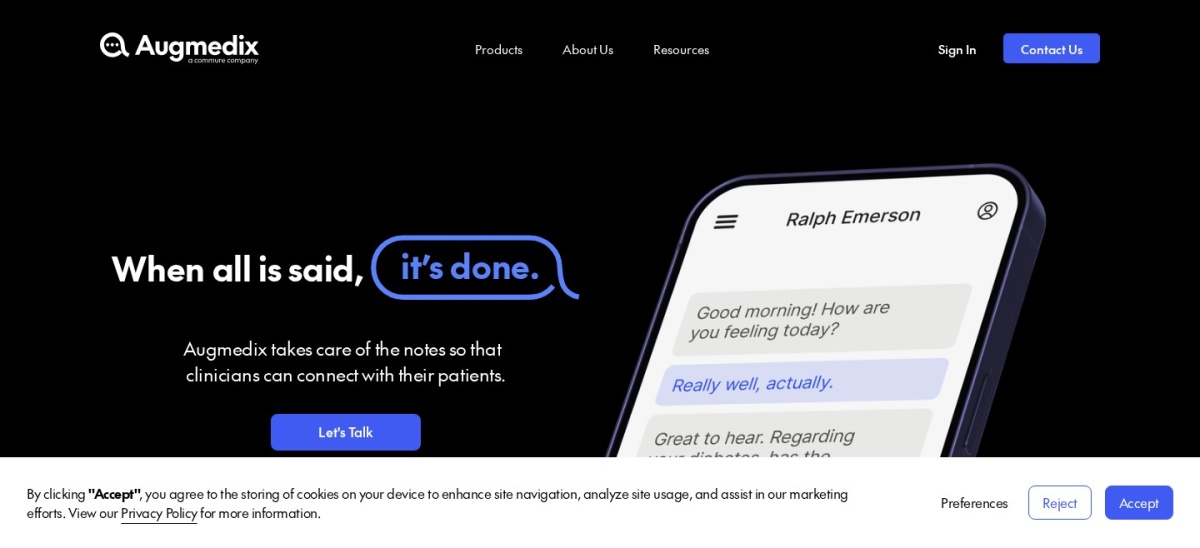
Augmedix is an ambient AI scribe that pairs AI drafting with human review, so a trained reviewer checks the note before it reaches the clinician. It is built for practices that want a second pair of eyes on every note.
The trade off is custom pricing with no public figures, and a smaller review base than Nabla or Freed. It suits clinicians that want human review alongside the AI draft.
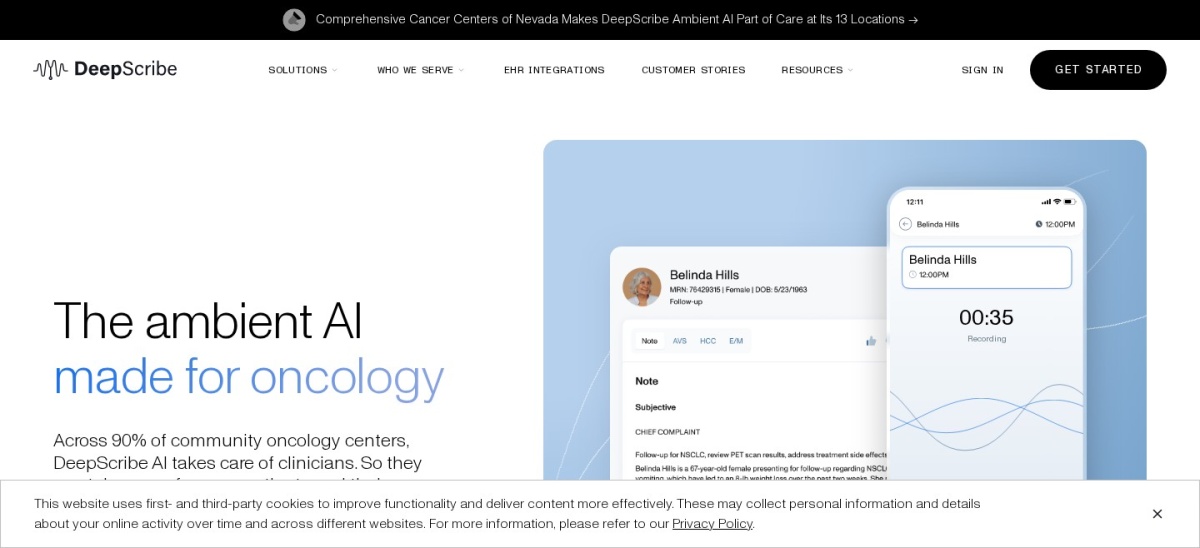
DeepScribe is an ambient AI scribe with specialty-tuned models that adapt to the terms and templates of each field, from cardiology to orthopaedics. It drafts notes from visits, with a focus on accuracy in specialty language.
The trade off is custom pricing with no public figures, and third-party reports of $350 to $500 a month that are not confirmed by the vendor. It suits specialty practices that need accurate notes in their own language.
4.6/5on G2 (Not published reviews, checked Nov 2026)
PricingCustom/yr
Best for voice commands and notes
Free planNo, demo
Voice commandsYes, built in
EHR integrationYes
Paid planCustom quote
suki.ai
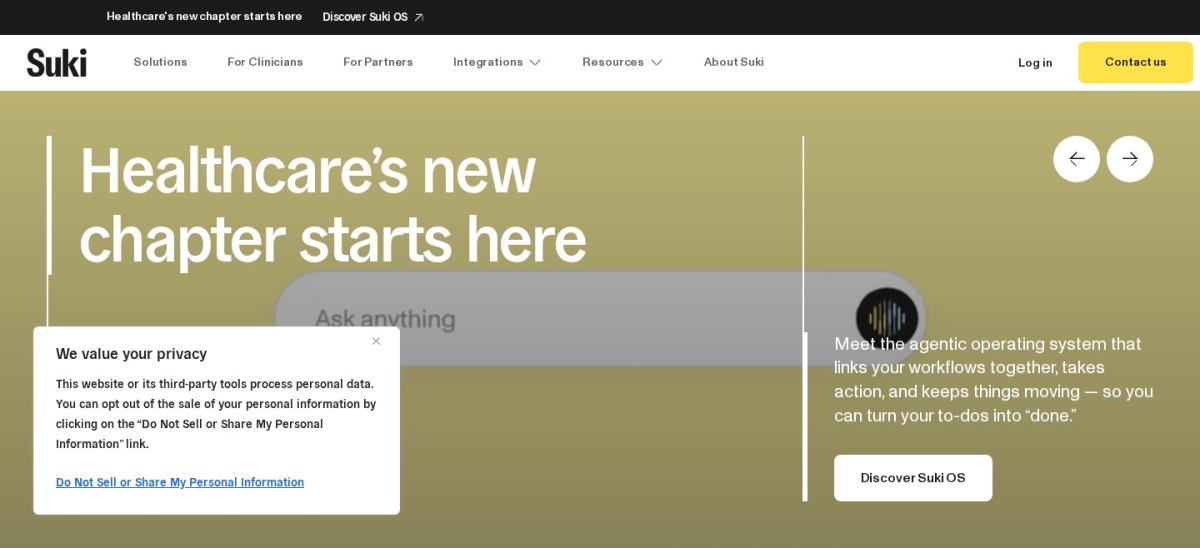
Suki homepage, captured Nov 2026.
Suki is an AI voice assistant for clinicians that combines ambient note drafting with voice commands, letting doctors dictate, order and document by voice. It is built for clinicians that want to work hands-free, with a focus on reducing administrative time.
The trade off is custom pricing with no public figures, and third-party reports of $299 to $399 a month that are not confirmed by the vendor. It suits clinicians that want voice control alongside ambient notes.
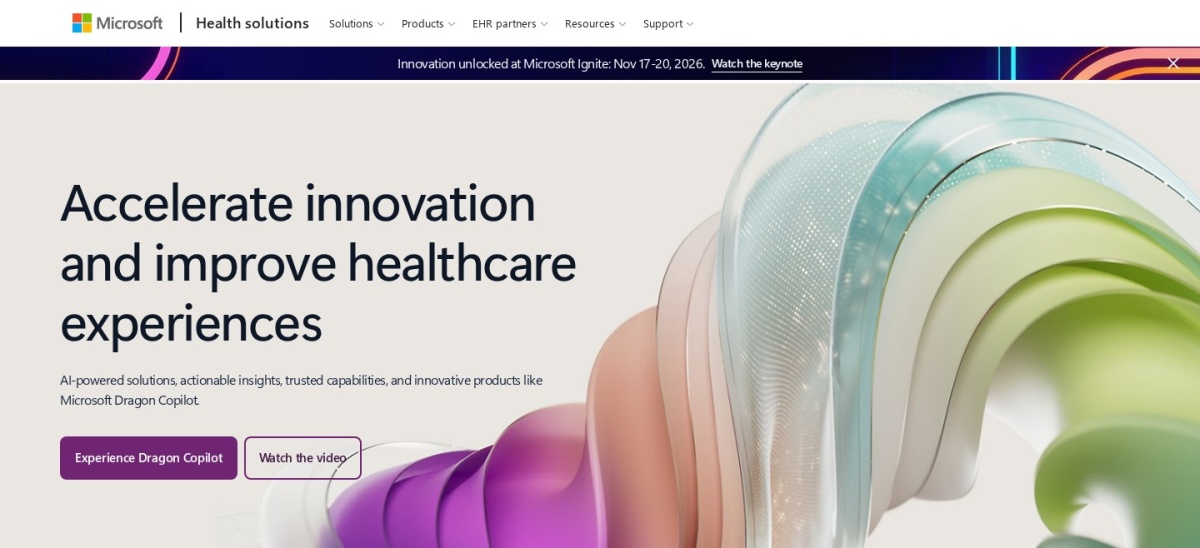
Nuance DAX Copilot is an ambient AI scribe from the Dragon speech recognition family, now sold as Microsoft Dragon Copilot, built for clinicians already using Microsoft and Dragon products. It drafts notes from visits, with deep integration into the Microsoft health stack.
The trade off is the lowest aggregate rating in this list at 2.8 from 10 reviews, and a third-party price of $600 a month that is not confirmed by the vendor. It suits Microsoft shops that want a scribe inside their existing stack.
What we like
Deep Microsoft and Dragon integration
Built for the Microsoft health stack
Strong speech recognition heritage
Watch out for
Lowest aggregate rating in this list
Price is a third-party figure, not vendor-published
No AI scribe is perfect, so the review workflow matters as much as the transcription. Check how the note is presented for sign-off, and whether the clinician can edit it quickly.
Augmedix adds human review to the AI draft, which suits clinicians who want a second pair of eyes. Freed, Nabla and Heidi rely on the clinician to review the AI output directly.
Specialty tuning helps accuracy. DeepScribe and Abridge tune their models for specific specialties, which reduces errors on the terms that matter in that field.
Trial with your own visits. Record a few real consultations during the trial and check the notes against what was actually said, especially for doses and allergies.
How we chose
We started from the ambient AI scribe and clinical documentation tools with a live G2 or Capterra listing and real adoption among clinicians, then kept the eight with the strongest fit for visit documentation.
Prices come from each vendor's pricing page or a vendor-supplied directory listing, checked on 24 November 2026. Where a vendor publishes no number, the list shows custom pricing rather than a guessed figure. Ratings come from G2 or review-site aggregates on the same day.
We left out tools with no verifiable rating on G2, Capterra or Trustpilot. No vendor paid for a place, and we do not claim hands-on testing for this list.
How to choose clinical documentation software
Start with your specialty and your volume, then match the scribe to both.
Name your specialty first. A scribe tuned for your specialty makes fewer errors, so shortlist DeepScribe or Abridge for specialty work.
Check the free tier. Nabla and Heidi offer free plans, which are enough to trial ambient scribing before you pay.
Trial with real visits. Record a few real consultations and check the notes against what was said, especially for doses and allergies.
Confirm HIPAA compliance. Check encryption, access controls and the business associate agreement before you record any patient visit.
FAQ
What is the best clinical documentation software?
Freed is the best pick for small practices because it turns visits into notes from $39 a month with a clear price, rated 5.0 out of 5 on G2. Nabla suits large health systems, and Heidi is the best free start.
How much does an AI medical scribe cost?
Freed starts at $39 a month for 40 notes, Nabla Pro costs $119 a month, and Nuance DAX Copilot is listed at $600 a month by third-party sources. Abridge, Augmedix, DeepScribe, Suki and Heidi are quote-based.
Is there a free AI medical scribe?
Yes. Nabla offers a free plan, and Heidi Health offers a free plan with unlimited standard-template notes. Both are useful for trying ambient scribing before you pay, though paid tiers add more features.
Do AI scribes work for all specialties?
Most scribes cover primary care and common specialties well, and several tune their models for specific fields. DeepScribe and Abridge are the strongest for specialty-specific notes, while Freed and Nabla cover general practice broadly.
Are AI medical scribes HIPAA compliant?
The tools in this list are built for healthcare and offer HIPAA compliance, with encryption, access controls and a business associate agreement. Confirm the agreement is in place before you record any patient visit.
Which tool is best for a large health system?
Nabla is the strongest choice for large health systems, with more than 130 health organisations and 85,000 clinicians using it, plus a free plan for pilots. Abridge is the other enterprise pick, with more than 250 health-system deployments.