Best Cash Flow Forecasting Software in 2026: 9 Tools Compared
WLWPLegible EditorsLast verified 24 Nov 2026How we rank10 min read
★ Short answer
Fathom is the best cash flow forecasting software for most teams, because it pairs three-way forecasting with management reporting and KPI dashboards. Jirav suits teams that also want budgeting, while Pulse is the cheapest simple option for owners.
How we make this list: we compare pricing pages, product documentation and public user reviews, then re-check every price before each update. No product paid for a place. Disclosure.
Fathom leads for firms that need forecasting plus reporting, with three-way forecasts out to five years and multi-entity consolidation.
Pulse at $29 a month and LivePlan at $20 a month are the cheapest ways to start forecasting properly.
Float is the purest rolling forecast for Xero and QuickBooks Online, with Essentials at $105 a month when billed annually.
Agicap and Dryrun are quote-based, so shortlist first and ask for numbers second.
Cash Flow Frog forecasts up to 36 months ahead and prices by revenue tier, starting at $55 a month for smaller businesses.
What cash flow forecasting software should cover
Cash flow forecasting turns invoices, bills and bank balances into a view of what cash you will hold on future dates. The best tools pull live data from your ledger, so the forecast updates when a payment lands or slips.
Forecast depth varies a lot. Some tools show a simple weekly money-in and money-out view, while others model profit and loss, balance sheet and cash flow together, so a hiring plan shows its effect on cash and on the balance sheet at once.
Integrations decide how much manual work remains. Tools that sync with QuickBooks Online, Xero or NetSuite keep actuals current, while tools without a ledger link need regular imports. Our guide on cash flow software covers the wider category these forecasters sit in.
Pricing is usually monthly per company or per user, and several vendors price by revenue tier or company count. Confirm the rate for your region, because some vendors publish different figures by currency.
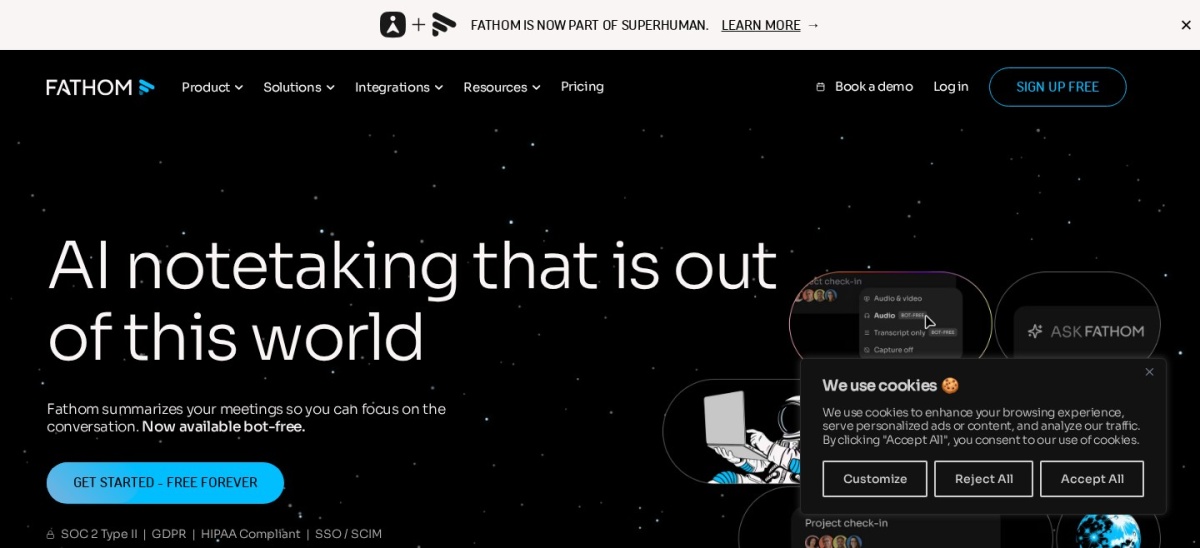
Fathom is a reporting and forecasting platform that models profit and loss, balance sheet and cash flow together, so a hiring plan shows its effect on cash and on the balance sheet at once. Forecasts run out to five years with KPI dashboards and multi-entity consolidation.
The trade off is price structure. The Portfolio plan for firm oversight is $67 a month for 100 companies, while Pro for deeper analytics is $450 a month for 25 companies, so small teams pay for depth they may not need. It suits accounting firms and finance teams that deliver advisory work.
What we like
Three-way forecasting to five years
Polished management reporting and KPIs
Multi-entity consolidation for firms
Watch out for
Pro plan is $450 a month for 25 companies
Firm-centred workflow can feel indirect for owners
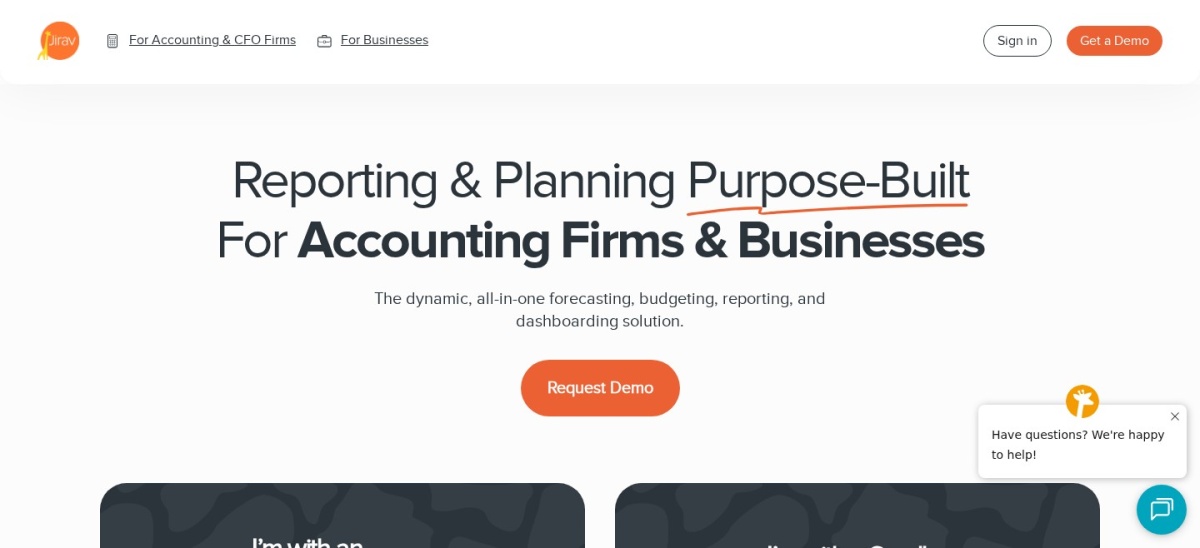
Jirav is a full planning platform covering budgeting, forecasting, reporting and dashboards, with driver-based plans that tie headcount, revenue and cash together. Its entry Controller Essentials plan is published at $50 a month, low for this category.
The trade off is a steeper learning curve than the simpler cash tools, because driver-based planning needs setup before it pays off. It suits growing teams that want budgeting and forecasting in one system rather than two.
What we like
Driver-based budgeting and forecasting
Connects to QuickBooks, Xero and NetSuite
Strong dashboards and reporting
Watch out for
Steeper learning curve than simple tools
Higher entry price than Pulse or LivePlan
Higher tiers add headcount planning and consolidationsVisit jirav.com
03
Float
4.4/5on G2 (45 reviews, checked Nov 2026)
Starts at$105/mo
Best rolling forecast on Xero and QuickBooks
Free planNo, 14-day trial
IntegrationsXero, QuickBooks, FreeAgent
Forecast horizonUp to 3 years
Cheapest planEssentials, $105/mo
floatapp.com
Float homepage, captured Nov 2026.
Float is a cash flow forecasting tool that builds a visual timeline directly from Xero or QuickBooks Online data, so expected invoice payments and bill dates land on the days they are due. It pulls reconciled transactions daily and shows weekly, monthly and three-year views.
The trade off is narrow scope and moving prices. Essentials costs $105 a month when billed annually, Growth is $215 a month, and the tool only connects to Xero, QuickBooks Online and FreeAgent. It suits finance teams that live in those ledgers and want a trusted rolling forecast.
Agicap is a cash management platform that consolidates bank accounts and ERPs into one real-time liquidity view, with forecasting built on that live data. It adds accounts payable and receivable modules alongside the forecast.
The trade off is custom, quote-based pricing that scales with entities and modules, plus a roughly two-month implementation. It suits mid-market companies with many banks, entities or currencies that need one consolidated cash position.
Pulse is a cash flow management tool built for owners, not finance teams. It shows money in and money out on a clear weekly view, lets you add expected payments by hand, and answers the can-we-afford-this question without accounting training.
The trade off is a light feature set. Basics costs $29 a month, Premium is $89 a month, and there is no direct bank feed beyond QuickBooks Online sync. It suits very small businesses and freelancers that want a simple cash view.
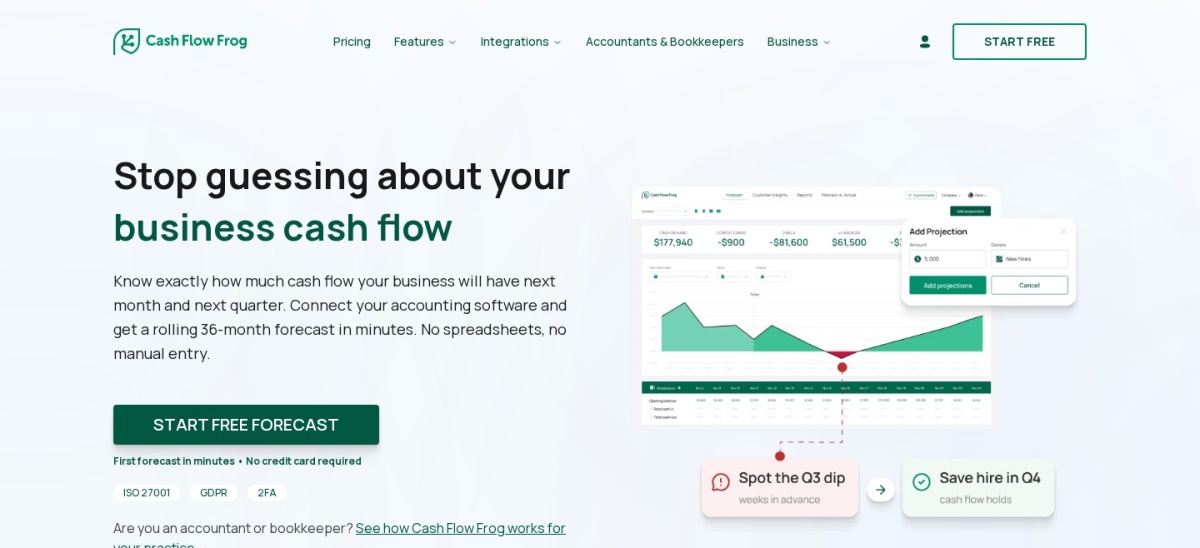
Cash Flow Frog is a cash flow forecasting tool for small and mid-sized businesses that connects accounting and bank data to a rolling forecast with scenario planning. Forecasts run up to 36 months ahead with transaction-level drill-down and multi-entity consolidation.
The trade off is revenue-tiered pricing. Pro Tier 1 for up to $1M annual revenue is $55 a month on the official calculator, so larger businesses pay more for the same features. It suits owners and bookkeepers that want a long-range forecast without a finance team.
What we like
Forecasts up to 36 months ahead
Scenario planning with drill-down
Multi-entity consolidation included
Watch out for
Price rises with revenue tier
Revenue-tier pricing needs the calculator to quote
Futrli is a forecasting and reporting tool from Sage that forecasts daily in the short term and up to three years out, using Xero, QuickBooks Online or Sage data plus a prediction engine for recurring income and costs. Its dashboards are visual and board-friendly, with alerts when actuals drift from forecast.
The trade off is a UK and Australia heartland, so US support hours and content trail slightly, and published pricing starts around $40 a month for a small licence bundle. It suits accountants and bookkeepers that want daily forecasts with visual reporting.
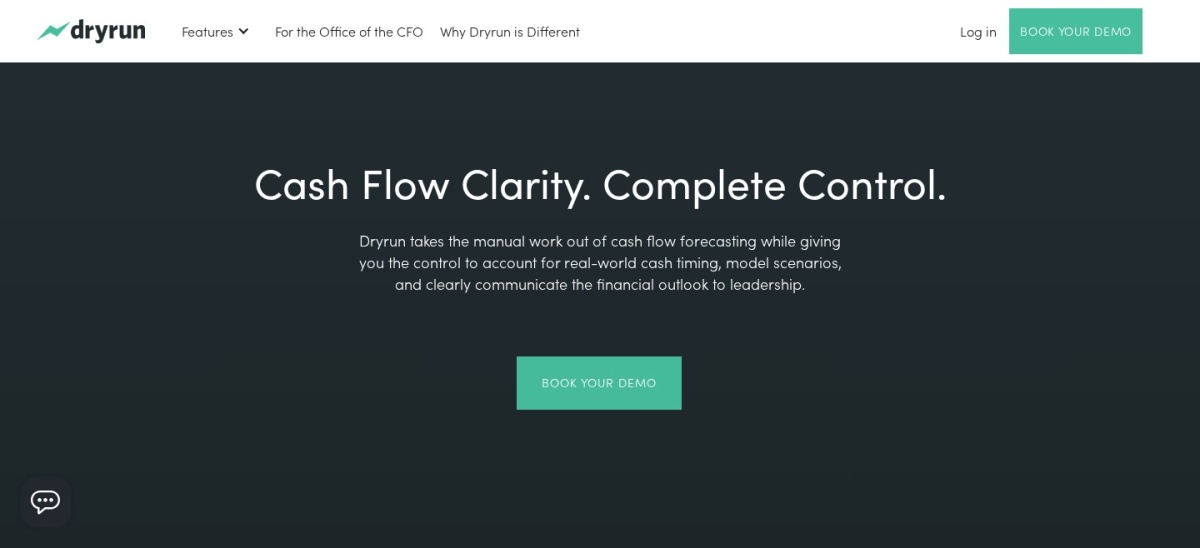
Dryrun is a cash flow forecasting tool built for agencies, consultancies and other project-based businesses where one late client payment can break the month. It models receivables at the client and project level, with daily, 13-week and monthly views and manual control of assumptions.
The trade off is pricing. Dryrun does not publish prices, and directory listings put its business tier near $249 a month, so you learn the real cost only after a sales conversation. It suits CFOs and advisors that want direct control of forecast assumptions.
What we like
Client and project-level receivables modelling
Daily, 13-week and monthly views
Connects to QuickBooks, Xero and Sage Intacct
Watch out for
No published prices on the vendor site
Complex for teams that want a simple view
Business tier is listed near $249 a month by directoriesVisit dryrun.com
09
LivePlan
4.3/5on G2 (53 reviews, checked Nov 2026)
Starts at$20/mo
Best for planning plus forecasting
Free planNo
Cash forecastingYes, with scenarios
IntegrationsQuickBooks, Xero
Cheapest planStandard, $20/mo
liveplan.com
LivePlan homepage, captured Nov 2026.
LivePlan is a business planning tool that pairs step-by-step plan writing with financial forecasting, including full cash flow projections and scenario work. Standard costs $20 a month and covers automatic financial statements, a one-page pitch builder and more than 500 sample plans.
The trade off is that it is a planning tool first. Cash forecasting is strong, but it lacks the live bank consolidation and daily actuals refresh of the dedicated forecasters. It suits first-time founders and small businesses writing an investor-ready plan.
Most small businesses need 13 weeks ahead in detail, then monthly to the end of the year. That window catches payroll, tax and seasonal dips without pretending to know next year precisely.
Project firms and agencies benefit from daily views in the short term, because one late client payment can break the month. Dryrun and Futrli both offer daily forecasting for that reason.
Five-year forecasts belong in planning tools like Fathom and Jirav, where the forecast ties to budgets and headcount plans rather than to next week's bank balance.
Whatever the horizon, a forecast is only useful if actuals refresh automatically. A weekly manual update is where most forecasts quietly die.
How we chose
We started from the cash flow forecasting tools with a live G2 or Capterra listing and real adoption among small and mid-market finance teams, then kept the nine with the strongest fit for forecasting cash.
Prices come from each vendor's pricing page, checked on 24 November 2026. Where a vendor publishes no number, the list shows custom pricing rather than a guessed figure. Ratings come from G2 or Capterra on the same day.
We left out tools with no verifiable rating on G2, Capterra or Trustpilot. No vendor paid for a place, and we do not claim hands-on testing for this list.
How to choose cash flow forecasting software
Start with your ledger, then match the forecast to the decisions you actually make.
Check your ledger first. Pick a tool that syncs with QuickBooks, Xero or NetSuite, so actuals refresh without manual imports.
Decide how far ahead you need. Thirteen weeks suits most small businesses, while firms and planners need multi-year, three-way forecasts.
Weigh forecasting against reporting. If you also need board reports and KPIs, Fathom or Jirav beat a pure cash view, even at a higher price.
Trial the forecast, not the demo. Load your real invoices and bills during the trial and watch whether the forecast moves when a payment slips.
FAQ
What is the best cash flow forecasting software?
Fathom is the best pick for most teams because it pairs three-way forecasting with management reporting, KPI dashboards and multi-entity consolidation. Jirav is the stronger choice when budgeting and headcount planning matter as much as cash.
How much does cash flow forecasting software cost?
Entry prices run from $20 a month for LivePlan to $105 a month for Float Essentials when billed annually. Pulse starts at $29 a month, while Agicap and Dryrun are quote-based and cost more at scale.
What is the difference between cash flow forecasting and budgeting?
Budgeting sets targets for income and spending over a period, while cash flow forecasting predicts the bank balance on specific future dates. Tools like Jirav do both, while Pulse and Float focus on the cash view alone.
Does cash flow forecasting software connect to QuickBooks?
Most of these tools sync with QuickBooks Online and Xero, and several also connect to Sage, NetSuite or Dynamics 365. Pulse is the exception, with a narrower integration set centred on QuickBooks Online.
Can I forecast cash flow in a spreadsheet?
Yes, and many small businesses start there. Dedicated software wins when invoices, bills and bank feeds change daily, because it refreshes actuals automatically and flags variances instead of relying on manual updates.
Which tool is cheapest for a small business?
LivePlan at $20 a month and Pulse at $29 a month are the cheapest entries here. Both cover the basics, though LivePlan is a planning tool first and Pulse is a focused cash view without deeper reporting.