HackerOne is the best bug bounty platform for beginners, with the largest researcher community and a free Community Edition for open source programs. Start with Bugcrowd or Intigriti for guided programs, and use Open Bug Bounty to learn disclosure for free.
How we make this list: we compare pricing pages, product documentation and public user reviews, then re-check every price before each update. No product paid for a place. Disclosure.
HackerOne has the largest researcher community and a free Community Edition for open source projects.
Bugcrowd publishes the clearest entry price: its VDP Basic plan starts at $3,588 a year.
Intigriti and YesWeHack are the strongest European options, with triage included and GDPR-friendly hosting.
Open Bug Bounty is the only genuinely free option, though it covers disclosure rather than managed bounties.
Synack and Cobalt are vetted, invite-only teams, so aim for them after you have public findings.
What a bug bounty platform should cover for beginners
Bug bounty platforms connect companies with security researchers who hunt for vulnerabilities and get paid for valid findings. For a beginner, the platform is both a classroom and a marketplace: you learn by reading public programs, then earn by submitting reports.
Joining as a researcher is free on almost every platform here. The money flows the other way: companies pay a platform fee plus bounties for valid bugs, so beginners should start with disclosure programs that build reputation before chasing cash.
Our main guide to bug bounty platforms covers the same tools from a buyer's angle. This list is different: it ranks them for a beginner learning the craft, so community size, free entry and feedback quality matter more than enterprise features.
Start small. Pick one platform, read its rules, and submit your first report to a disclosure program. A valid low-severity finding teaches more than a dozen rejected critical guesses.
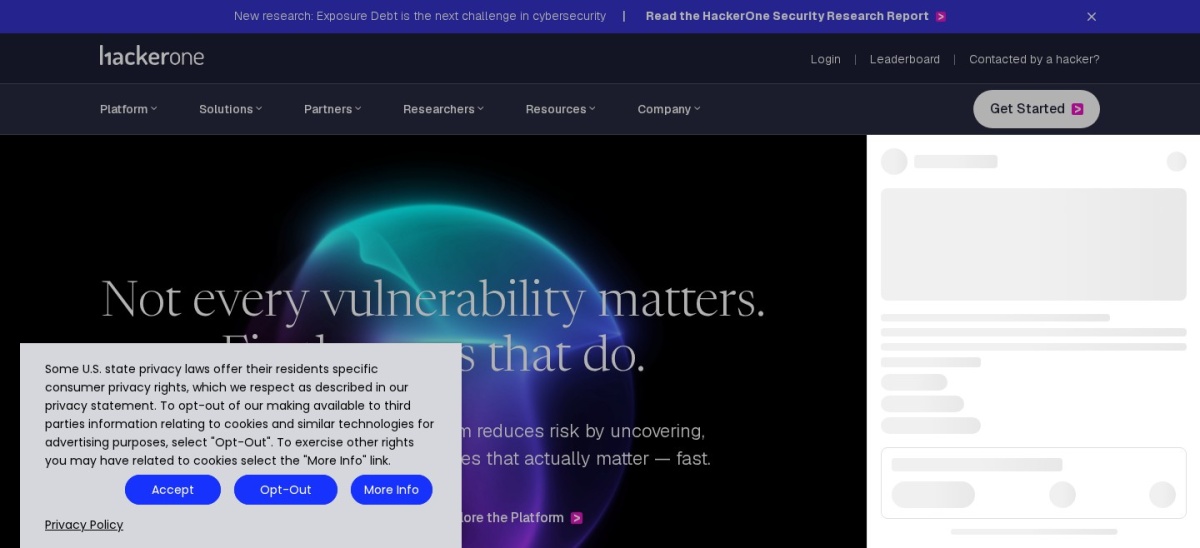
HackerOne is the largest bug bounty platform in the world, with more than 2 million researchers in its community. Beginners can join for free, browse public programs, and start with vulnerability disclosure programs that pay in reputation before moving to paid bounties.
The trade off is scale and competition. The biggest programs attract experienced hunters, so a beginner's first valid report is harder to win, and most commercial programs are quote-based with no published pricing. It suits anyone who wants the deepest pool of programs to learn from.
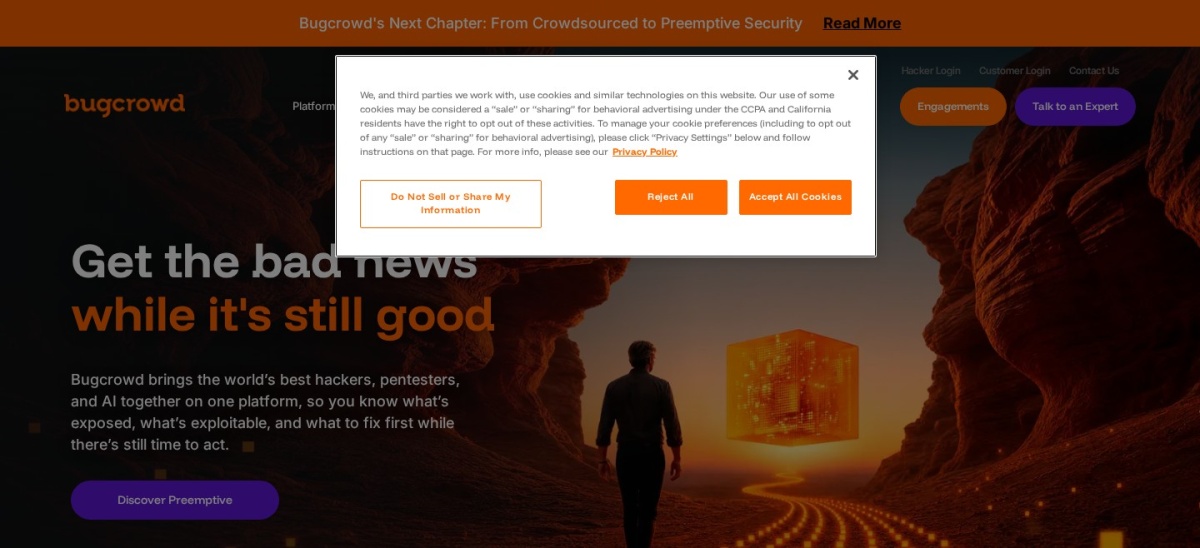
Bugcrowd is the broadest crowdsourced security platform after HackerOne, combining bug bounties with disclosure programs and penetration testing. Its CrowdMatch system pairs researchers with programs that fit their skills, which helps beginners find scopes they can actually test.
The trade off is that the best programs are still competitive, and Bugcrowd's published prices are for buyers, not hunters: VDP Basic starts at $3,588 a year. It suits beginners who want structured programs and clear rules rather than an open free-for-all.
Intigriti is the leading European bug bounty platform, built around continuous testing with in-house triage included on every tier. Researchers get fast, human feedback on reports, and the platform's EU cloud hosting appeals to companies with strict data rules.
The trade off is reach. Intigriti's program list is smaller than HackerOne's, so there are fewer public scopes to choose from, and commercial pricing is quote-only. It suits beginners in Europe who want quality feedback on every report they submit.
YesWeHack is a European bug bounty and disclosure platform with a community of more than 160,000 researchers. It offers in-house triage around the clock, EU data hosting, and a dojo where beginners can practise on deliberately vulnerable targets.
The trade off is that the platform is smaller outside Europe, and commercial pricing is quote-based with no published rates. It suits beginners who want a practice range, EU hosting, and triage that explains why a report was accepted or rejected.
BugBase is a newer bug bounty platform from India that keeps things simple for new hunters, with open programs and a dashboard that tracks reports clearly. Its G2 rating of 4.5 out of 5 from 47 reviews is the strongest among the smaller platforms here.
The trade off is size. BugBase lists far fewer open programs than the big platforms, with only a handful paying bounties, so choice is limited. It suits beginners who want a quieter platform where their reports get noticed.
Open Bug Bounty is a non-profit project that coordinates responsible disclosure for free. Researchers report vulnerabilities, the project verifies them, and site operators are notified at no cost, which makes it the gentlest first step into security research.
The trade off is that there are no managed bounties here, so most reports earn recognition rather than money, and its G2 rating is only 3.7 out of 5 from 11 reviews. It suits beginners who want to learn disclosure before chasing paid programs.
Cobalt is a penetration-testing platform that runs structured tests with vetted researchers and unlimited free retesting. Its credit model buys blocks of testing time, and reports are written for developers, which makes findings easier to fix.
The trade off is access. Cobalt's testers are vetted and application-based, so it is not a place a beginner can simply join, and pricing is quote-based. It suits hunters who already have public findings and want structured, paid testing work.
Synack is a vetted red team platform that pairs AI-led testing with background-checked researchers for continuous security validation. It holds a 4.8 out of 5 rating on G2 and Leader status in the Fall 2026 penetration testing grid.
The trade off is that Synack is invite-only, so beginners cannot join directly, and its published pentest prices start at $5,085. It suits experienced hunters as a goal to aim for once they have a track record of valid findings.
Joining as a researcher costs nothing on every platform here. You sign up, pick a public program, and submit reports.
Paying starts on the buyer side. Companies pay a platform subscription plus bounties, and most commercial platforms keep those prices behind a sales call.
The cheapest published buyer price here is Bugcrowd VDP Basic at $3,588 a year, while Open Bug Bounty charges nothing at all.
How we chose
We started from every established bug bounty platform with a public researcher program, then kept those with a G2 rating or a clear public record. Platforms with no verifiable rating and no media were left out.
Prices come from vendor pricing pages and public program listings checked in November 2026. Most commercial platforms are quote-based, so the list shows Custom where no public price exists, and flags the few published prices as second-hand.
We ranked for a beginner: free entry, community size, triage quality and feedback mattered most. No vendor paid for a place, and we do not claim hands-on testing for this list.
How to choose a bug bounty platform as a beginner
Pick the platform that matches your skill level, then learn its rules before your first report.
Start with a disclosure program. Open Bug Bounty and HackerOne disclosure programs pay in reputation, not cash, and teach you how reports are judged.
Pick one platform and learn it. Each platform has its own scope rules and report format. Master one before spreading across five.
Practise on a safe target first. YesWeHack runs a practice range, and many platforms list deliberately vulnerable apps you can test legally.
Aim for vetted teams later. Cobalt and Synack are invite-only. Build a record of valid findings first, then apply.
FAQ
What is the best bug bounty platform for beginners?
HackerOne is the best starting point. It has the largest researcher community, free entry, public programs to learn from, and a free Community Edition for open source projects. Bugcrowd is a strong second choice for guided programs.
Do I need to pay to join a bug bounty platform?
No. Joining as a researcher is free on every platform in this list. Companies pay the platform fees and the bounties, while researchers earn money for valid findings and pay nothing to take part.
How much can a beginner earn from bug bounties?
Most beginners earn little at first. Small valid findings often pay tens or hundreds of dollars, while critical bugs on major programs can pay thousands. Treat the first year as learning, and let payouts grow with your skills.
What is the difference between a bug bounty and a disclosure program?
A bug bounty pays cash for valid vulnerabilities, while a disclosure program only asks researchers to report issues responsibly, usually for recognition. Disclosure programs are the safest place to submit your first reports.
Do I need programming skills to start bug hunting?
Basic web knowledge helps more than deep coding at first. Learn how websites work, how to use a proxy such as Burp Suite, and how to read a program's scope. Coding becomes important when you hunt complex or specialised targets.
How do I get my first bounty?
Start with a disclosure program and read the scope carefully before testing anything. Report one real, reproducible issue with clear steps, screenshots and the impact it could have. A clean first report builds your reputation faster than ten rushed guesses.
SaaS SEO and WordPress specialist with about 8 years of experience. Rakib compares WordPress plugins, themes, hosting and software using public pricing, documentation and user reviews. See how we rank.