Best Bug Bounty Platforms in 2026: 9 Tools Compared
WLWPLegible EditorsLast verified 24 Nov 2026How we rank11 min read
★ Short answer
HackerOne is the best bug bounty platform for most teams, with 2M+ researchers and a 4.5/5 G2 rating from 80 reviews. Pick Bugcrowd for AI-matched researchers and a free disclosure tier, or Intigriti for EU-hosted programs with unlimited triage.
How we make this list: we compare pricing pages, product documentation and public user reviews, then re-check every price before each update. No product paid for a place. Disclosure.
HackerOne has the largest crowd at 2M+ researchers and bundles a disclosure program in every tier, but publishes no prices.
Bugcrowd is the only platform here with a free disclosure tier and published entry prices, from $299 a month.
Intigriti and YesWeHack bundle unlimited or in-house triage and host in the EU; YesWeHack adds SecNumCloud hosting.
Synack and Cobalt are vetted-team pentest platforms, not open bounty marketplaces, with listed entry prices from $5,060 and $12,000 a year.
Five of the nine platforms publish no prices at all, so budget for a quote plus a separate bounty pool.
Zerocopter has just 1 G2 review and Yogosha's 4.8 comes from 7 Gartner reviews, so treat both ratings as thin evidence.
What a bug bounty platform should cover
A bug bounty platform connects your team with outside security researchers who probe your apps and get paid for valid findings. The platform handles intake, triage, payouts and program rules.
Triage is where programs succeed or fail. Most raw reports are invalid or duplicates, so a platform with managed triage saves your engineers hours every week.
Start with disclosure before bounty. A free disclosure channel lets researchers report flaws safely while you learn how much triage your team can handle. Before inviting outside researchers, lock down the basics: our guide on limiting login attempts in WordPress shows how to block most brute-force traffic.
Pricing is mostly quote-based. Only Bugcrowd, Synack, Cobalt and BugBase list a dollar entry price, and bounty payouts always sit on top of the platform fee.
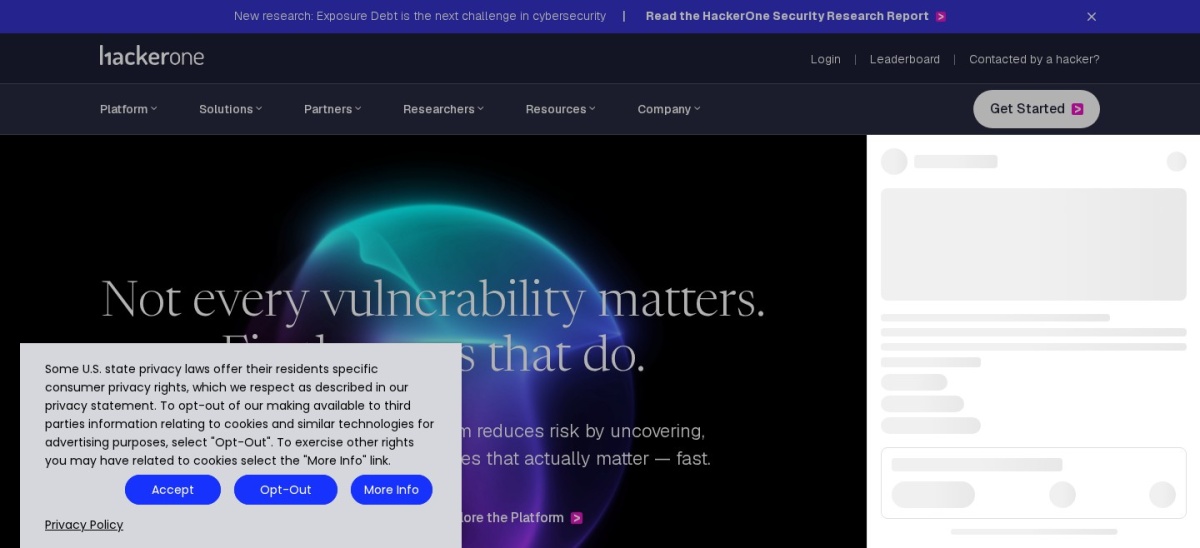
HackerOne is the largest bug bounty platform, with more than 2 million registered researchers and public and private programs for web, mobile, API and cloud targets. Every tier bundles H1 Response, its always-on vulnerability disclosure program, and Hai Triage filters invalid and duplicate reports before they reach your team.
The trade off is price. HackerOne publishes no list prices, and third-party benchmarks put managed programs at about $100,000 a year or more, so small teams should budget carefully and ask for a quote. It suits large teams that want the widest researcher reach and deep Jira and GitHub integrations.
Bugcrowd is HackerOne's closest rival, and it stands out for CrowdMatch AI, which pairs each program with researchers matched on skills and past performance. It also publishes entry prices: a free VDP Compliance tier, VDP Basic 15 at $299 a month, and a Standard Pen Test from $5,000 as a one-time purchase.
The trade off is that managed bug bounty itself is quote-based, with third-party benchmarks starting near $30,000 a year, so the published prices cover disclosure and pentest entry points only. It suits mid-size and large teams that want bundled triage and FedRAMP Moderate compliance.
What we like
Free VDP tier with paid upgrades
CrowdMatch AI researcher matching
FedRAMP Moderate authorized
12-month retesting on pentest plans
Watch out for
Managed bounty pricing is quote-based
Some reviewers report slow support replies
GitHub sync is one-way only
Paid tiers add managed triage, private programs and pentestVisit bugcrowd.com
03
Intigriti
4.7/5on G2 (32 reviews, checked Nov 2026)
PricingCustom/yr
Best bug bounty platform in Europe
Researchers150,000+
Managed triageUnlimited, all tiers
Hosting100% EU cloud
Programs400+ active
intigriti.com
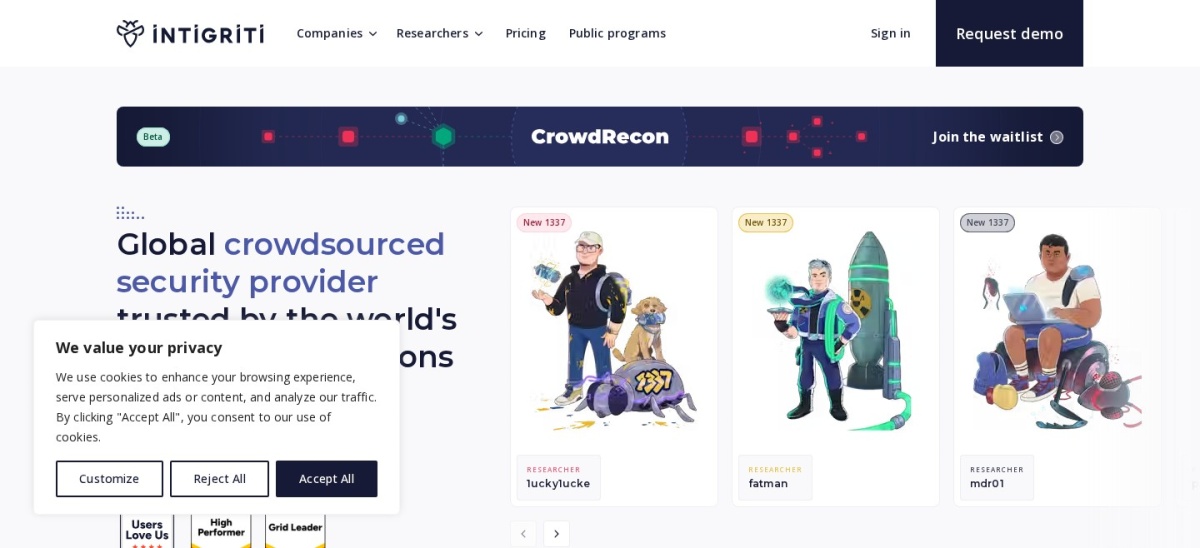
Intigriti homepage, captured Nov 2026.
Intigriti is the leading European bug bounty platform, with more than 150,000 researchers and 400-plus active programs. Every plan, from Core to Enterprise, includes unlimited in-house triage, and the platform is hosted entirely in EU cloud regions.
The trade off is price. Intigriti publishes no prices, so buyers request a quote across its Core, Premium and Enterprise plans, and bounty payouts sit on top as a pay-for-impact pool. It suits European mid-market and enterprise teams that need GDPR-native hosting and bundled triage.
What we like
Unlimited triage on every tier
100% EU hosting for GDPR fit
ISO 27001 and SOC 2 Type II
Four program confidentiality modes
Watch out for
No public prices
No SecNumCloud or FedRAMP status
Jira sync is one-way only
Paid plans add premium triage, pentest and live hacking eventsVisit intigriti.com
04
YesWeHack
4.8/5on G2 (33 reviews, checked Nov 2026)
PricingCustom/yr
Best for strict EU data sovereignty
Researchers160,000+ in 50+ countries
Triage24/7 in-house, 6-step
HostingSecNumCloud, OVHcloud
ComplianceISO 27001, CREST
yeswehack.com
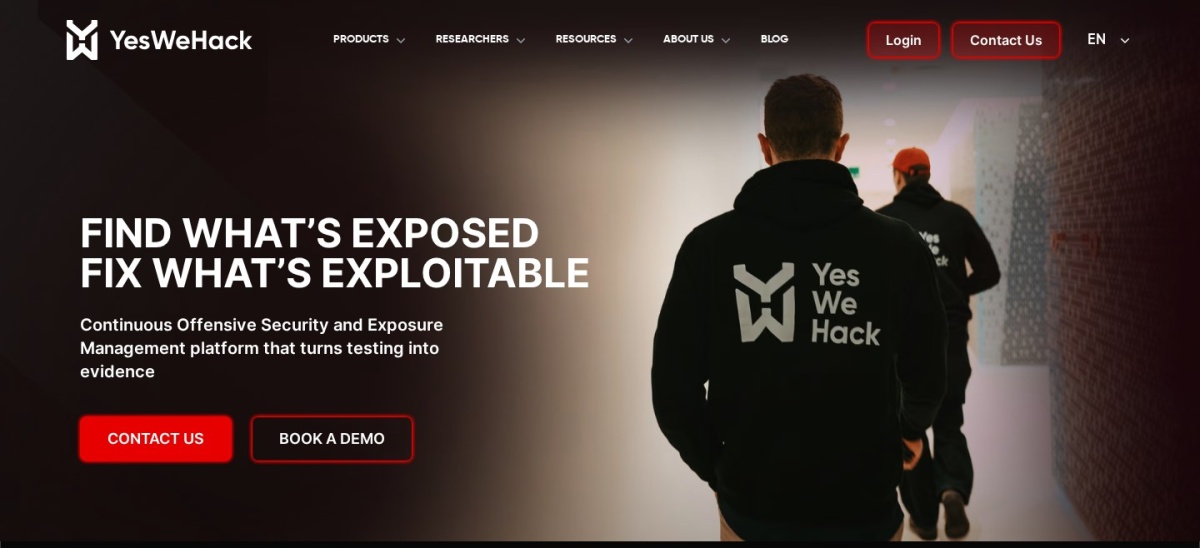
YesWeHack homepage, captured Nov 2026.
YesWeHack is a Paris-based bug bounty platform with more than 160,000 researchers across 50-plus countries. Its platform runs on ANSSI SecNumCloud-qualified OVHcloud infrastructure, and a permanent in-house triage team reproduces every report's proof of concept before it reaches your team.
The trade off is price and reach. YesWeHack is quote-based, and its researcher base is smaller in North America than HackerOne or Bugcrowd. It suits EU public-sector and regulated teams that need hosting outside the US CLOUD Act.
Synack is a continuous pentest platform built on the Synack Red Team, more than 1,500 background-checked researchers who test through the LaunchPoint+ gateway. G2 lists its platform from $5,060 a year, and its Sara AI agent runs autonomous tests that humans then validate.
The trade off is scope. Synack runs vetted, invite-only testing rather than open public bounty programs, and a separate platform fee applies for SSO and integrations. It suits federal, defense and banking teams that need cleared testers and fixed package pricing.
What we like
Background-checked researchers only
FedRAMP Moderate with DoD IL2
Fixed package prices, no bounty pool swings
Credits work across test types
Watch out for
No open public bounty marketplace
Platform fee is a separate line item
Credits expire after 12 months
Paid packages add Sara pentests, SynackST and Synack14Visit synack.com
06
Cobalt
4.5/5on G2 (185 reviews, checked Nov 2026)
Starts at$12,000/yr
Best credit-based pentest platform
Testers500+ vetted Cobalt Core
Basic plan$12,000/yr (G2)
Start time1-3 business days
RetestingUnlimited, free
cobalt.io
Cobalt homepage, captured Nov 2026.
Cobalt is a pentest-as-a-service platform where one credit buys 8 hours of testing from its 500-plus vetted Cobalt Core pentesters. G2 lists its Basic plan at $12,000 a year, and every tier includes unlimited free retesting while your contract runs.
The trade off is that Cobalt does not run open pay-per-bug bounty programs, so it fits scheduled testing rather than always-on crowds. Credits also expire at year-end on Standard and Premium tiers. It suits agile SaaS and fintech teams that want fast, repeatable pentests.
BugBase is a managed bug bounty platform where an in-house team triages every report, talks to researchers and pays bounties, so engineers only see real, reproducible issues. G2 lists its managed disclosure program from $999 a month, and programs run as public, private or disclosure-only.
The trade off is scale. BugBase has fewer programs and a smaller researcher pool than HackerOne or Bugcrowd, and reviewers note slow support replies at times. It suits smaller teams that want a fully managed program without hiring triage staff.
4.8/5on Gartner Peer Insights (7 reviews, checked Nov 2026)
PricingCustom/yr
Best for self-hosted security testing
Strike Force800-1,100+ vetted researchers
DeploymentSaaS or self-hosted
Acceptance rateUnder 20% pass
Report acceptance70%+ of reports
yogosha.com
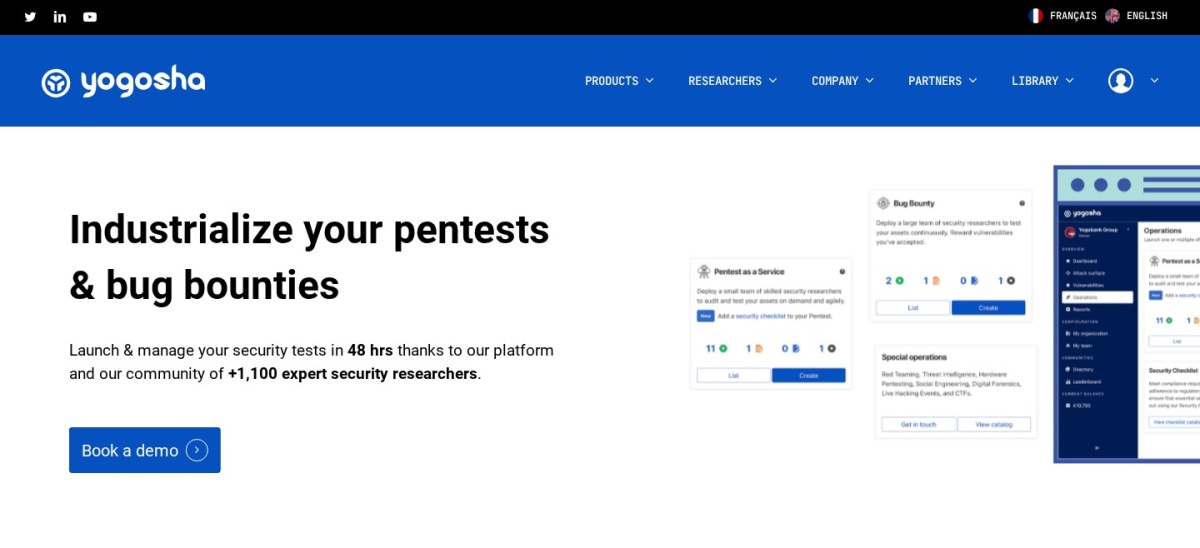
Yogosha homepage, captured Nov 2026.
Yogosha is a French offensive security platform built around the Strike Force, 800 to 1,100-plus researchers who pass technical exams with under a 20% acceptance rate. It is the only platform here that also runs fully self-hosted, and its SaaS option uses SecNumCloud-qualified hosting.
The trade off is size. The Strike Force is far smaller than HackerOne's crowd, so it cannot support massive open public programs, and pricing is quote-based. It suits defense, banking and MSSP teams that need self-hosting or strict control over who tests.
Zerocopter is a Dutch platform for teams that want to grow into crowdsourced security step by step. You can start with a coordinated disclosure channel, add continuous recon scanning, then move up to pentesting or a full bug bounty with vetted researchers.
The trade off is evidence. Zerocopter has a single G2 review, and it lists its plans in euros with no dollar price, so ask sales for a dollar quote. It suits Dutch and European teams that want disclosure, scanning and bounty from one vendor.
Five of the nine platforms publish no prices, and the four that do list very different things: a disclosure tier, a pentest package or a platform fee.
Ask every vendor for the same three numbers: the annual platform fee, the triage fee, and the bounty pool you must fund. Third-party benchmarks put managed HackerOne programs near $100,000 a year before payouts.
Watch for expiry terms too. Synack credits expire after 12 months, and Cobalt credits expire at year-end on its lower tiers.
How we chose
We started from the best-known bug bounty and crowdsourced security platforms, then kept the nine with a real program offering and a public review profile.
Prices and plan details come from vendor pricing pages and G2 listings, checked on 24 November 2026. Ratings come from G2, except Yogosha, which is rated on Gartner Peer Insights. Where a vendor shows no price, the list shows Custom and says so in the text.
We left out Web3-only platforms without a G2, Capterra or Trustpilot rating, and tools that only sell one-off audits. No vendor paid for a place, and we do not claim hands-on testing for this list.
How to choose a bug bounty platform
Start with a disclosure program, then add paid bounty once triage keeps up.
Run a disclosure program first. A free or cheap VDP tier shows how many reports you get and how fast your team can fix them before you pay bounties.
Match the crowd to your stack. Web and API programs suit the big crowds; smart-contract or on-premise scopes need a specialist platform with vetted researchers.
Ask who does triage. Managed triage costs more but keeps invalid reports off your engineers. If you triage in-house, budget staff time, not just the platform fee.
Get the full quote in writing. Ask for the platform fee, triage fee, bounty pool and expiry terms together, so quotes from different vendors compare like for like.
FAQ
What is the best bug bounty platform?
HackerOne is the best overall pick, with 2M+ researchers, a 4.5/5 G2 rating from 80 reviews, and a disclosure program bundled in every tier. Bugcrowd is the closest rival, and Intigriti leads for European teams.
How much does a bug bounty platform cost?
Most platforms are quote-based, and five of the nine here publish no prices at all. Bugcrowd lists a disclosure tier from $299 a month, Synack lists its platform from $5,060 a year, and bounty payouts sit on top of every platform fee.
Do I need a vulnerability disclosure program first?
Yes, in most cases. A disclosure program gives researchers a safe way to report flaws and shows your team how much triage work to expect. Bugcrowd offers a free disclosure tier, and most other platforms include disclosure in their paid plans.
What is managed triage?
Managed triage means the vendor's own security team checks every report, reproduces the flaw, removes duplicates and sets a severity score before your engineers see it. HackerOne, Bugcrowd, Intigriti, YesWeHack and BugBase all offer it.
Can small teams afford a bug bounty platform?
Usually not a full managed program, which can run into five figures a year before payouts. Start with a free disclosure tier such as Bugcrowd's, or a low-cost managed disclosure plan, and add bounties once you can fix findings quickly.
Bug bounty vs pentest: which should I choose?
Choose a pentest for a fixed-scope, point-in-time check with a set report, which suits compliance deadlines. Choose a bug bounty for continuous testing by many researchers, which finds flaws a single scheduled test can miss.