Best Board Governance Software in 2026: 8 Tools Compared
WLWPLegible EditorsLast verified 24 Nov 2026How we rank9 min read
★ Short answer
OnBoard is the best board governance software for most boards, with the highest satisfaction among mid-market portals, backed by 691 G2 reviews. Large public companies should pick Diligent Boards or Nasdaq Boardvantage, and small nonprofits should start with Boardable, the cheapest published price here.
How we make this list: we compare pricing pages, product documentation and public user reviews, then re-check every price before each update. No product paid for a place. Disclosure.
OnBoard leads on satisfaction for most boards, rated 4.7 from 691 G2 reviews with AI-generated minutes.
Diligent Boards is the enterprise standard, with the deepest governance suite and reported contracts of $15,000 to $30,000 a year and beyond.
Convene holds the highest rating here at 4.8 from 406 G2 reviews, with built-in video conferencing.
Boardable is the only tool with published per-user pricing, from $20.99 a user a month.
Six of the eight tools are quote-only, so get every price in writing before comparing.
What board governance software should cover
Board governance software, often called a board portal, centralizes agendas, board packs, minutes, voting, e-signatures and secure communications in one compliant system. It replaces scattered email attachments and shared drives with a single system of record.
The evaluation hinges on three things: security for sensitive governance documents, usability that busy directors will actually adopt, and meeting workflow depth from agenda building to minutes.
Director adoption decides everything. The best governance features are worthless if the board will not log in, so prioritize modern UX and mobile access alongside security, and invest in onboarding for the first two meeting cycles.
Prices span a wide range. Enterprise portals run $15,000 to $30,000 a year and beyond, while Boardable publishes per-user pricing from $20.99 a month. Our guide to the best project management software covers the wider work-management stack boards often pair with a portal.
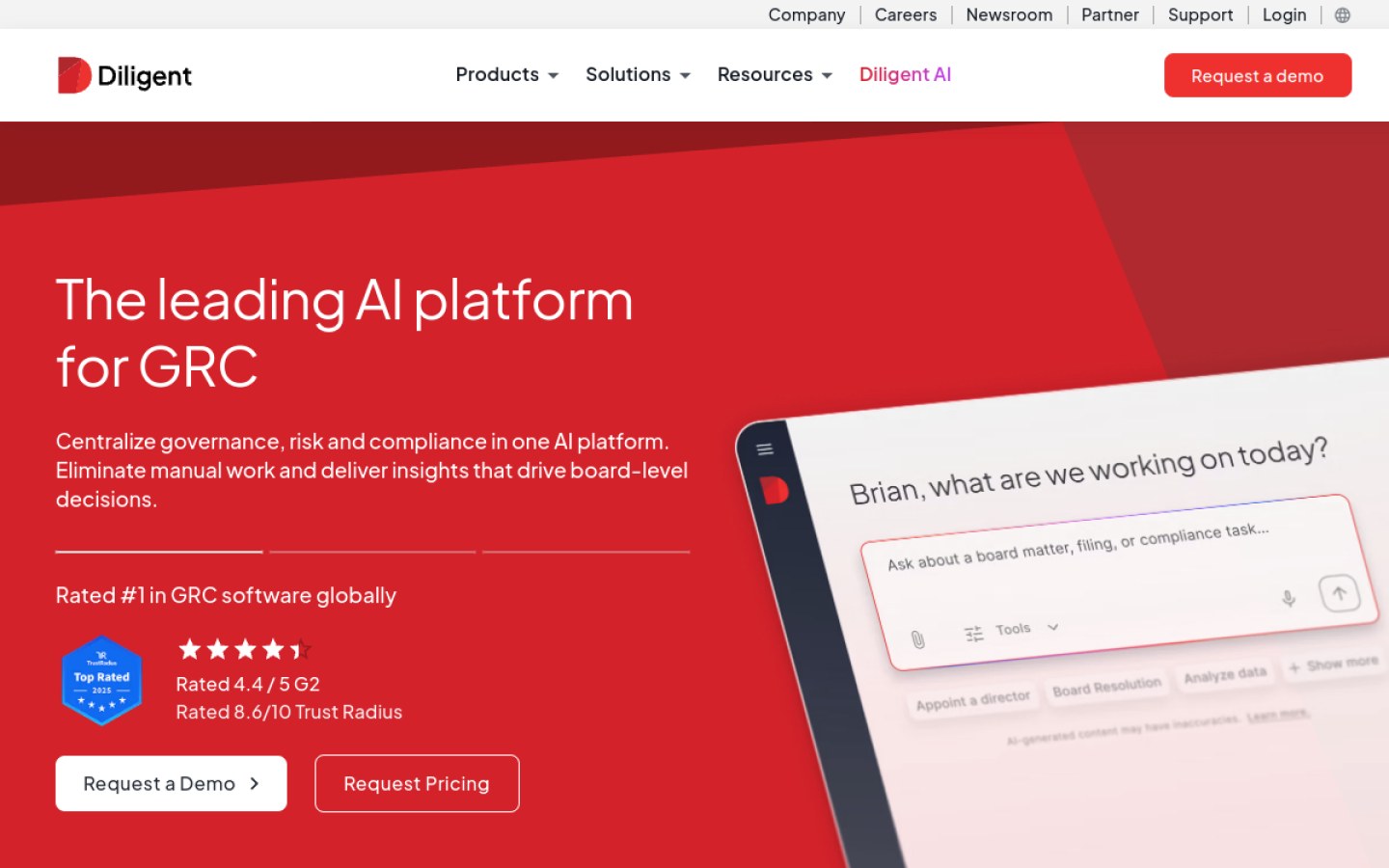
Diligent Boards is the enterprise standard for board portals. Agendas, board books, minutes, voting, e-signatures and secure messaging run in a hardened environment with the compliance certifications regulated industries require, and AI-driven meeting summaries and real-time collaboration keep governance moving between meetings.
The trade off is price and implementation. Pricing is enterprise-grade, with independent comparisons putting typical contracts at $15,000 to $30,000 a year and beyond, and implementations need planning. It suits large organizations where governance failure is not an option.
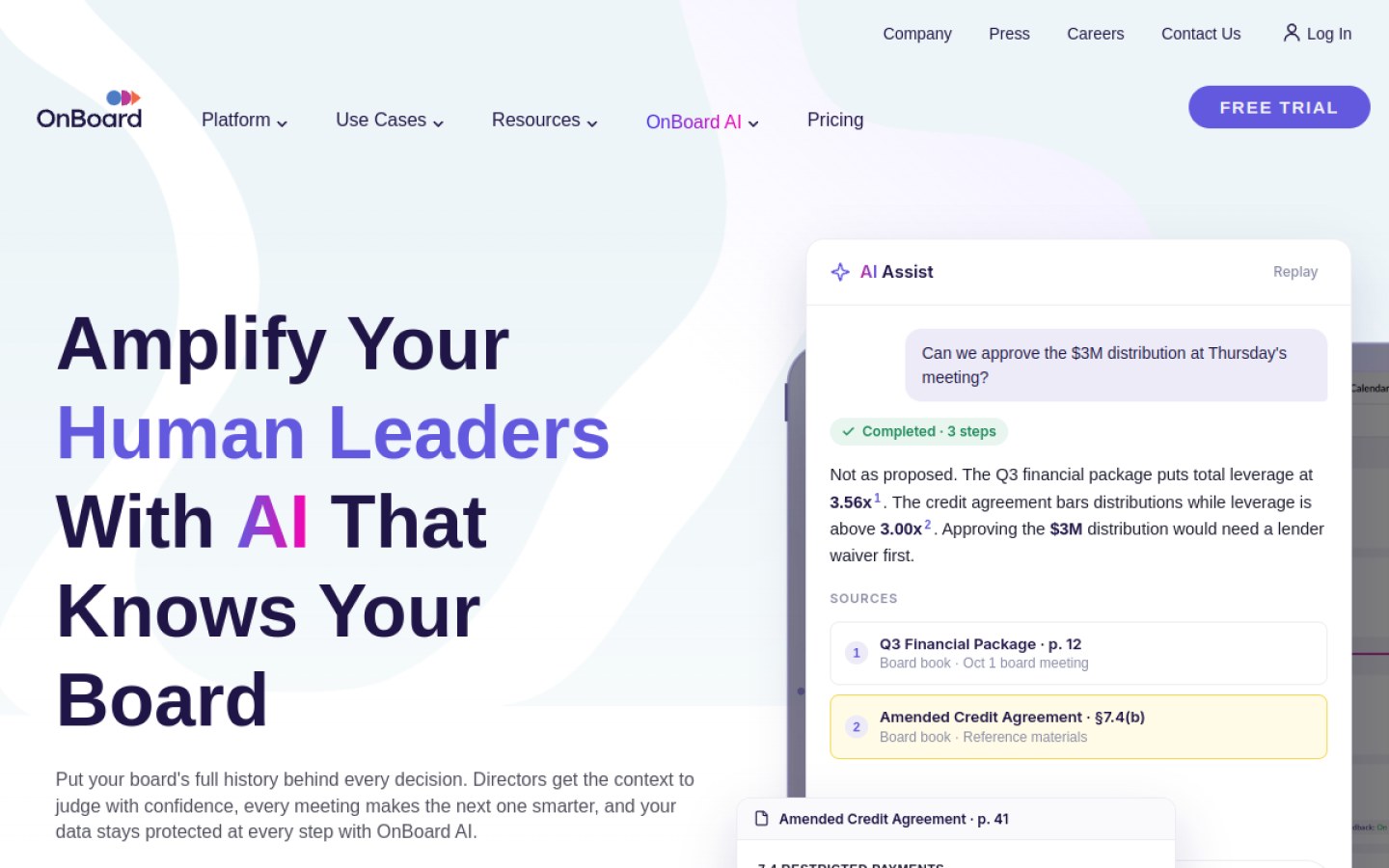
OnBoard is the board portal that earns the highest user ratings in the category by focusing on the adoption problem: directors are busy and often non-technical, so the portal has to be effortless. Centralized agendas, documents and meeting materials pair with AI-generated minutes and integrations with the tools boards already use.
The trade off is custom pricing and enterprise depth. Quotes are required, and the governance depth does not match Diligent for the largest enterprises. It suits mid-market companies and nonprofits as the best blend of usability and power for most boards.
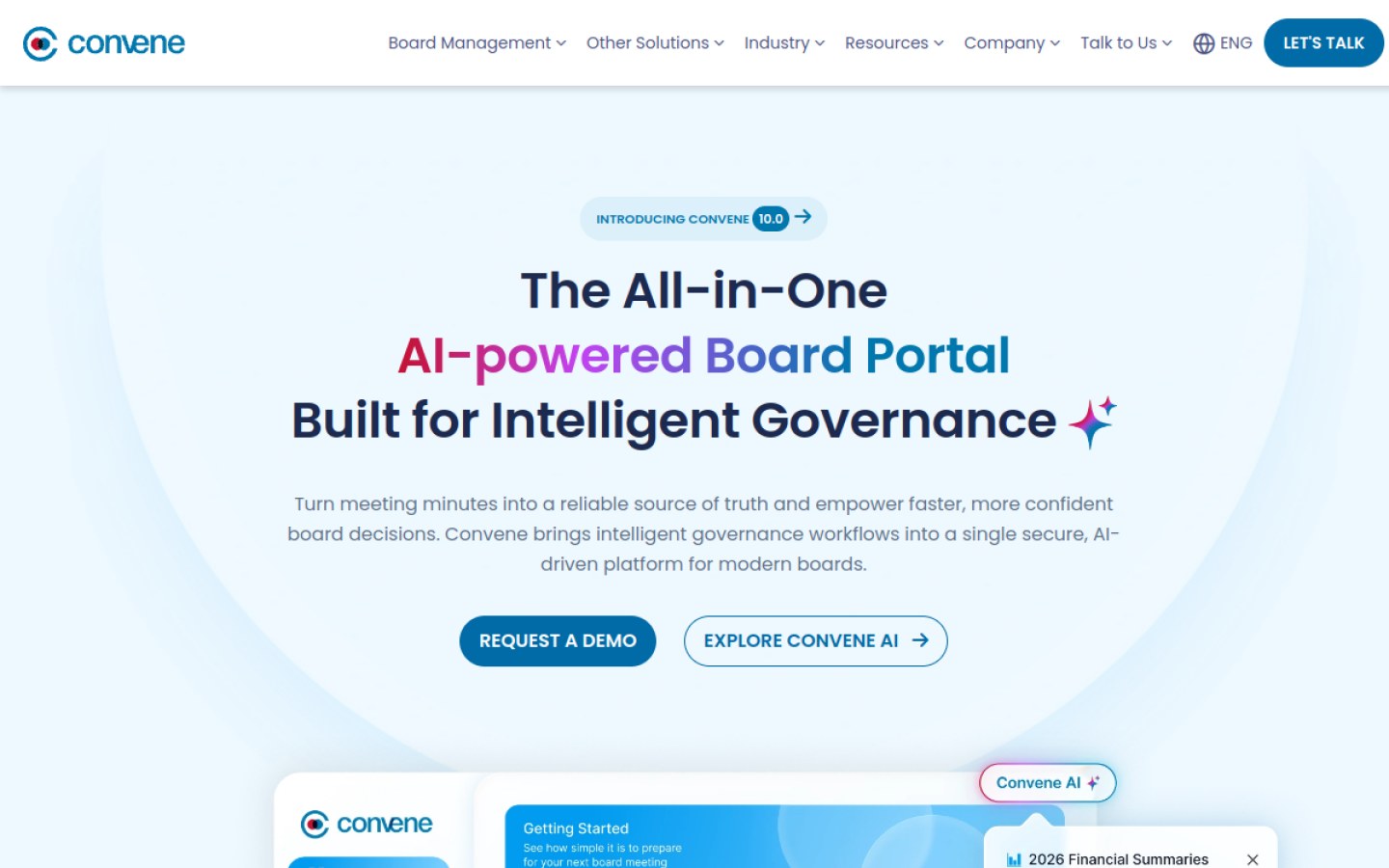
Convene is a board portal that packs the full meeting lifecycle into one platform: document collaboration with annotations, agenda building, in-meeting voting, secure messaging and built-in video conferencing. The 4.8-star user ratings lead the category, reflecting an interface reviewers consistently call intuitive.
The trade off is quote-based pricing and learning curve. Pricing is custom, and the breadth takes some learning, while brand recognition trails Diligent. It suits boards that meet hybrid or fully remote, where integrated video removes the tool-switching that fragments meetings.
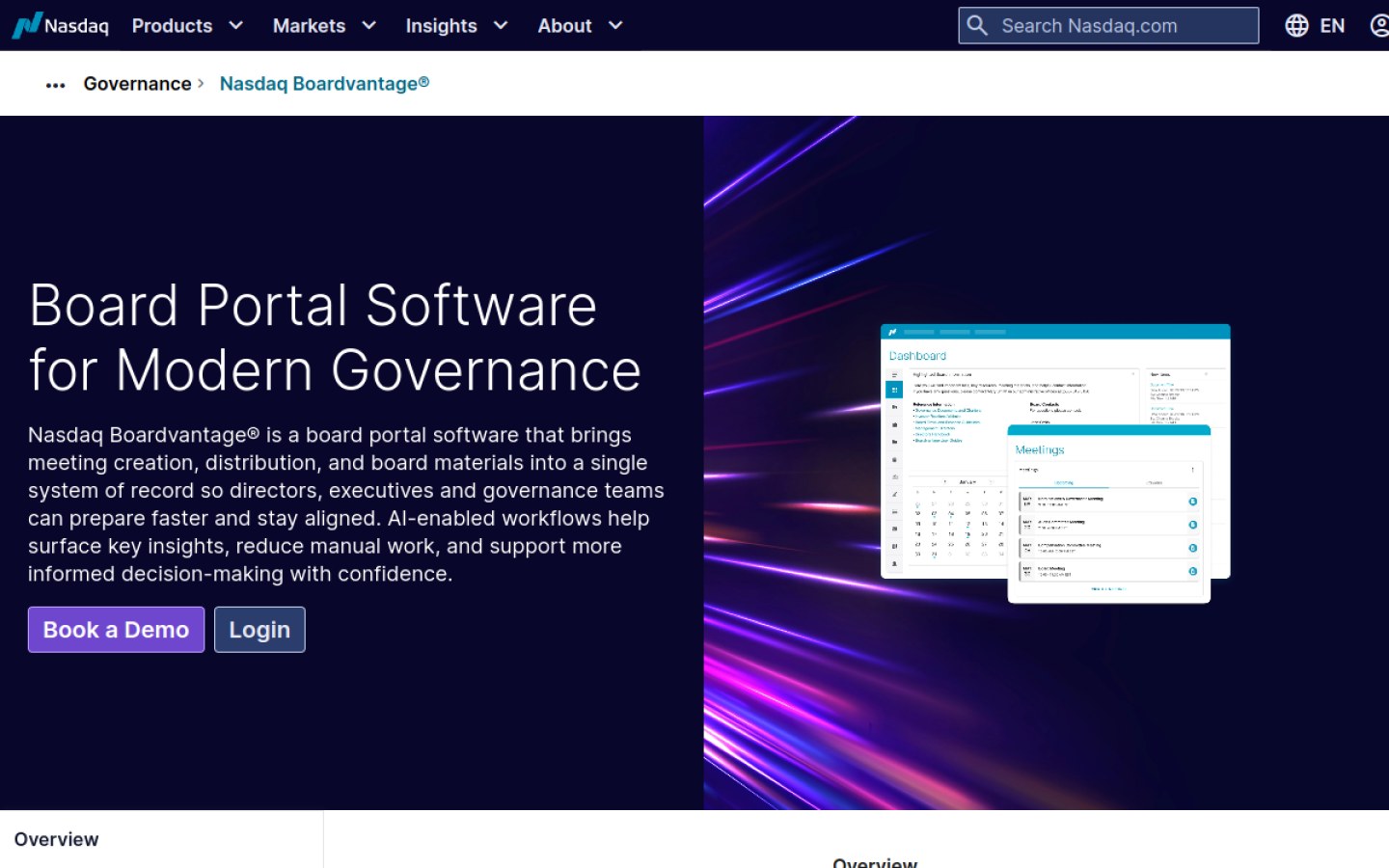
Nasdaq Boardvantage is the board portal for the boards where governance scrutiny is highest: public companies with audit committees, regulatory exposure and institutional investors. The agenda builder is intuitive, document distribution is secure and auditable, and SharePoint integration fits Microsoft-centric enterprises.
The trade off is enterprise focus and price. Pricing reflects the public-company focus, and private and nonprofit boards get equal governance from cheaper tools. It suits listed companies that need audit-ready board operations with defensible records.
BoardEffect is a board portal, part of Diligent, tailored to nonprofit and community boards: simplified board book creation, secure document sharing, surveys and voting designed around how mission-driven boards operate. Onboarding is quick and the 24/7 library access suits volunteer trustees.
The trade off is depth. Large corporate boards will want more depth, and AI features trail the leaders, while pricing is custom with a reported tier from about $79 a month. It suits nonprofits that need professional governance on a nonprofit budget and timeline.
BoardPro is a board portal that keeps board management simple: agendas, board packs, minutes and actions in a clean interface that small boards master quickly. The 4.8-star ratings reflect genuine satisfaction among users who want governance without enterprise software weight.
The trade off is scope. Enterprise governance, advanced compliance and complex committee structures exceed its scope. It suits SMEs, startups with formal boards and small nonprofits, where professional board meetings without overhead are the requirement.
Boardable is the price-transparent option in this category: published per-user pricing that small nonprofits can budget without a sales call. Meeting management pairs with task assignment, so board decisions become tracked actions rather than forgotten minutes.
The trade off is ceiling. Larger or regulated boards will outgrow it, and advanced governance features are limited. It suits accountability-focused small boards as the affordable starting point for nonprofit governance, from $20.99 a user a month.
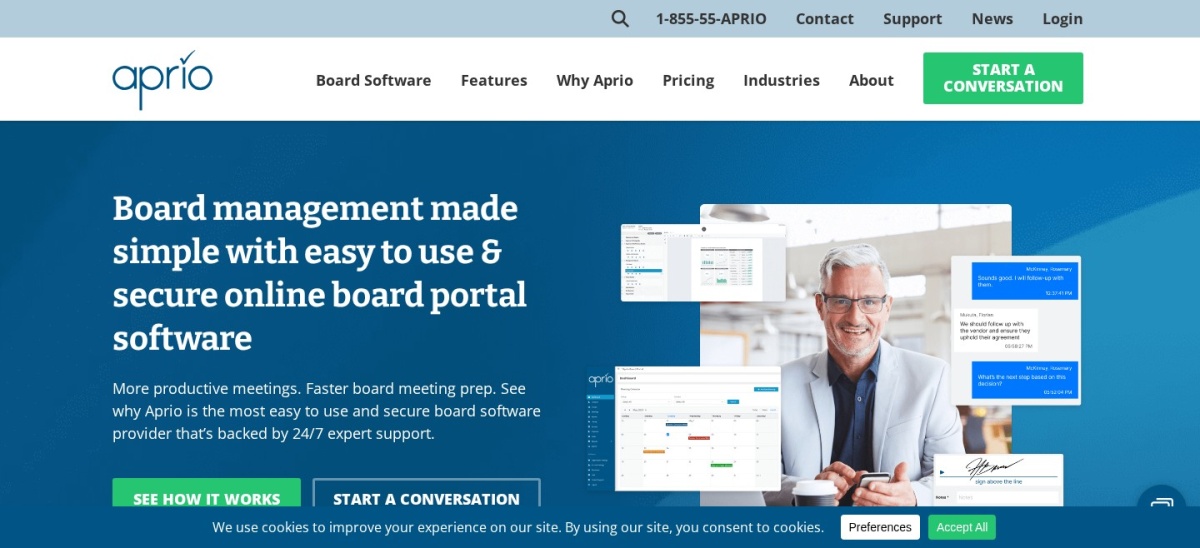
Aprio is a board portal that offers the essentials for small boards: agendas, document sharing, minutes and communications in a straightforward package. Setup is quick and the product does not overwhelm first-time portal users, and it adds survey and assessment tools for board, committee and CEO evaluations.
The trade off is a smaller review base and less depth. Growing boards may graduate to OnBoard or Convene, and no starting price is published. It suits committees and small boards moving off email as a sensible first portal.
Adoption beats ratings: the portal directors open wins
Review scores cluster tightly here, from 4.4 to 4.8, so adoption beats ratings. The best portal is the one your directors open without being chased, and the least technical director sets the bar.
Choose the portal with the most intuitive interface your least technical director can handle, and invest in onboarding: a thirty-minute training session and a printed quick-start guide do more than any feature.
Assign a board administrator who owns the portal and supports directors patiently through the first two meeting cycles, and keep the paper backup plan for exactly one cycle.
After two successful digital meetings, retire the paper backup. Directors who fear being unable to access materials will resist; knowing the fallback exists paradoxically speeds adoption.
How we chose
We started from the board portals with the strongest 2026 G2 reviews and analyst presence, weighting security, director usability, meeting workflow depth, voting and compliance features, and fit by organization type.
Prices come from vendor pricing pages and vendor-page reads, checked on 24 November 2026. Ratings and review counts come from G2 on the same day. Where a vendor publishes no prices, the list says Custom or See website instead of inventing a number.
We left out tools with no verifiable G2, Capterra or Trustpilot rating, including Board Intelligence, which was considered but cut to keep the list at eight. No vendor paid for a place, and we do not claim hands-on testing for this list.
How to choose board governance software
Start with who governs, then match the portal to that board.
Name the board first. Public companies need audit-ready workflows; nonprofits need simple, affordable governance; small boards need simplicity above all.
Test with your least technical director. If they cannot find the board pack in one sitting, the portal will fail no matter how good its features are.
Check the security story. Ask for SOC 2, granular permissions and audit trails before you sign, especially for regulated boards.
Get quotes in writing. Six tools here publish no prices. Ask for the quote in writing, including implementation and onboarding fees, before you compare.
FAQ
What is the best board governance software?
OnBoard is the best board governance software for most boards, rated 4.7 from 691 G2 reviews with AI-generated minutes. Diligent Boards is the enterprise standard for large public companies.
How much does board governance software cost?
Enterprise portals run $15,000 to $30,000 a year and beyond, with Diligent Boards at the top end. Boardable publishes pricing from $20.99 a user a month, and BoardPro starts at $165 a month.
Is there free board governance software?
No full board portal here is free. BoardPro, Boardable and Aprio offer free trials, and OnBoard, Diligent, Nasdaq Boardvantage, BoardEffect and Convene are quote-only with no free tier.
Which board software is best for nonprofits?
BoardEffect is built for nonprofit workflows with simple board books and strong support, while Boardable is the cheapest published option from $20.99 a user a month. OnBoard also serves nonprofits well with the best usability.
What is the difference between Diligent and OnBoard?
Diligent Boards is the enterprise standard with the deepest governance suite, entity management and compliance depth for large public companies. OnBoard is the usability leader for mid-market and nonprofit boards, with higher user ratings and faster adoption.
Do board portals include e-signatures and voting?
Yes, most do. Diligent, OnBoard, Convene, Boardable and BoardEffect all include voting and e-signatures or document approvals, so directors can consent and sign without leaving the portal.