Best Augmented Reality Software in 2026: 9 Tools Compared
WLWPLegible EditorsLast verified 24 Nov 2026How we rank10 min read
★ Short answer
Unity is the best augmented reality software for most teams, with AR Foundation covering iPhone and Android from one codebase and a Pro plan at $2,310 per seat a year. ARKit is the best free native option for iPhone, and ARCore is the best free native option for Android.
How we make this list: we compare pricing pages, product documentation and public user reviews, then re-check every price before each update. No product paid for a place. Disclosure.
Unity is the default for commercial AR apps, with AR Foundation covering iPhone and Android from one codebase.
ARKit and ARCore are free native SDKs, and they still give the best tracking on their own platforms.
Unreal Engine is free under $1 million in annual revenue and wins on photoreal scenes.
Vuforia starts at $99 a month and is the industrial pick for CAD and object recognition.
ZapWorks starts at $12.99 a month and is the cheapest way into no-code WebAR.
8th Wall is now open source and free, after Niantic retired the hosted platform in February 2026.
What augmented reality software should cover
Augmented reality software splits into two jobs: building an app, and publishing an experience in a browser. Engines and SDKs build apps, while WebAR platforms publish experiences that open from a link.
Native SDKs still set the quality bar. ARKit and ARCore are free, ship with the phone, and give the best tracking, LiDAR support and geospatial features on their own platforms.
Cross-platform engines trade a little native polish for reach. Unity with AR Foundation lets one project ship to iPhone and Android, while Unreal Engine wins when the scene must look photoreal.
WebAR is the right pick for marketing. ZapWorks and 8th Wall open in a phone browser with no app to install, which matters when the audience will not download anything.
Unity is the cross-platform engine most commercial AR apps are built with. AR Foundation wraps ARKit and ARCore in one API, so a team writes most of the app once and ships native-grade tracking on both iPhone and Android, with the asset store covering most AR tricks.
The trade off is price. Personal is free under $200,000 in trailing revenue or funding, and Pro costs $2,310 per seat a year, confirmed on Unity's pricing page at $210 a month. It suits product teams that must ship one AR app to both phone platforms.
What we like
One codebase for iPhone and Android AR
AR Foundation with native-grade tracking
Largest developer ecosystem and asset store
Rated 4.5 out of 5 on G2 from 364 reviews
Watch out for
Pro seats add up fast for large teams
App install required, unlike WebAR
Tier eligibility follows client revenue on agency work
Enterprise is custom priced for teams over $25M revenueVisit unity.com
02
ARKit
4.3/5on G2 (75 reviews, checked Nov 2026)
Paid from$99/yr
Best for iPhone AR
PlatformiOS and iPadOS
LiDAR supportYes, Pro devices
Face trackingYes
Paid planDeveloper Program, $99/yr
developer.apple.com
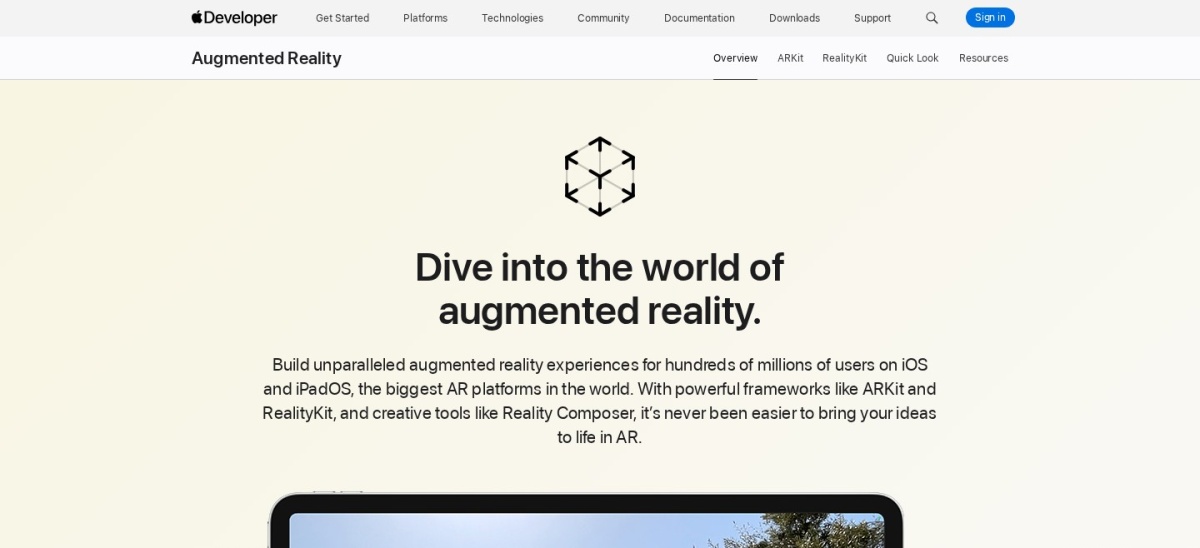
ARKit homepage, captured Nov 2026.
ARKit is Apple's augmented reality framework for iPhone and iPad. It gives direct access to plane detection, image and object tracking, face tracking, location anchors and LiDAR-powered scene reconstruction on Pro devices, tuned to the hardware it runs on.
The trade off is reach. ARKit apps run on iPhone and iPad only, every user must install the app, and publishing needs the $99 a year Apple Developer Program. It suits teams whose audience is on iPhone and who want the best possible tracking.
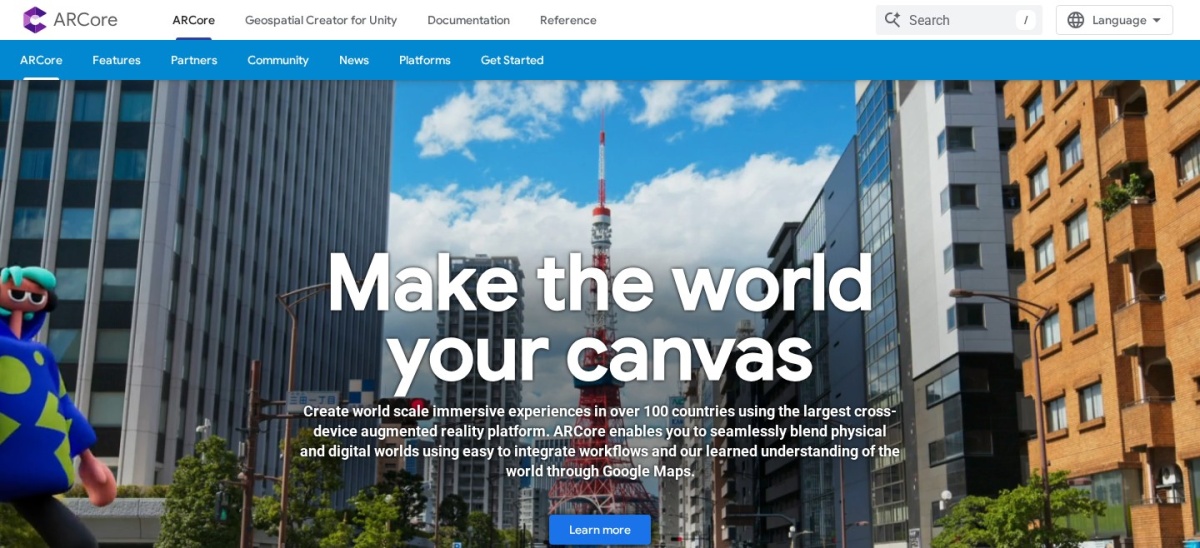
ARCore is Google's augmented reality SDK for Android. It covers motion tracking, plane detection and light estimation, with geospatial anchors for location-based experiences, and it works inside Unity as well as in native Android apps.
The trade off is platform. ARCore is free and needs no paid plan, but it is built for Android first, and iOS support is limited. It suits Android-first teams and location-based AR that leans on Google's geospatial data.
Unreal Engine is the engine for high-fidelity AR, with Nanite and Lumen rendering for photoreal scenes, simulation and visualization. It supports AR on iOS, Android and headsets, and it is free for companies with less than $1 million in annual revenue.
The trade off is cost above that line. Non-game use costs $1,850 per seat a year once revenue passes $1 million, and the engine needs stronger hardware and a bigger team than Unity. It suits visualization, simulation and games where the scene must look real.
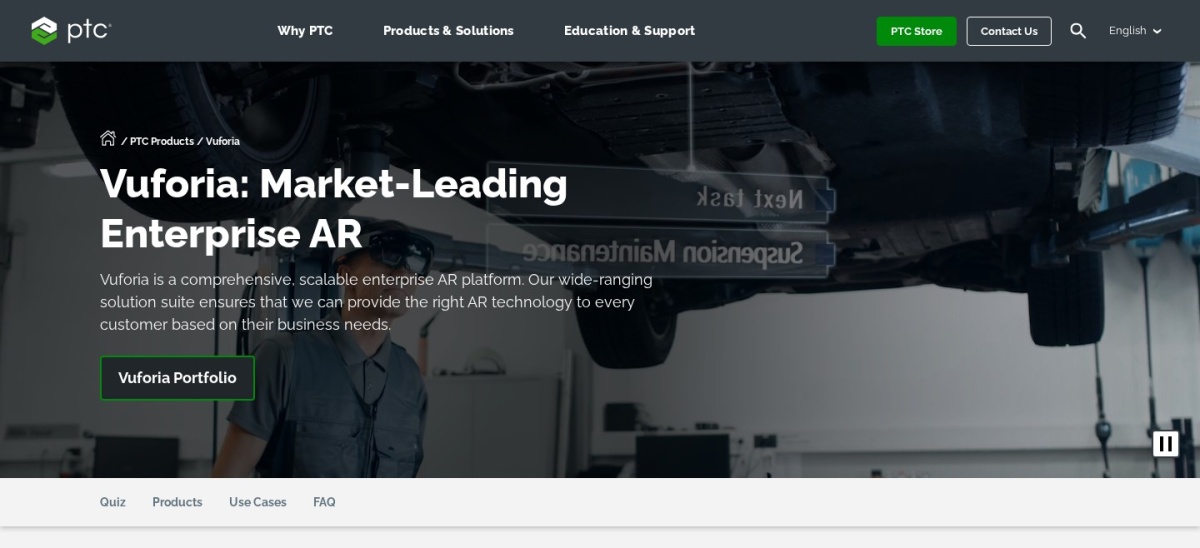
Vuforia is the industrial AR SDK from PTC, built around computer vision. Its Model Targets recognize machines from CAD data with no QR code, and it covers image, object and area tracking for service, training and operations work.
The trade off is price and scope. Basic starts at $99 a month, premium tiers are priced by quote, and Vuforia is built for industrial teams rather than marketing campaigns. It suits manufacturers that need reliable tracking on real equipment.
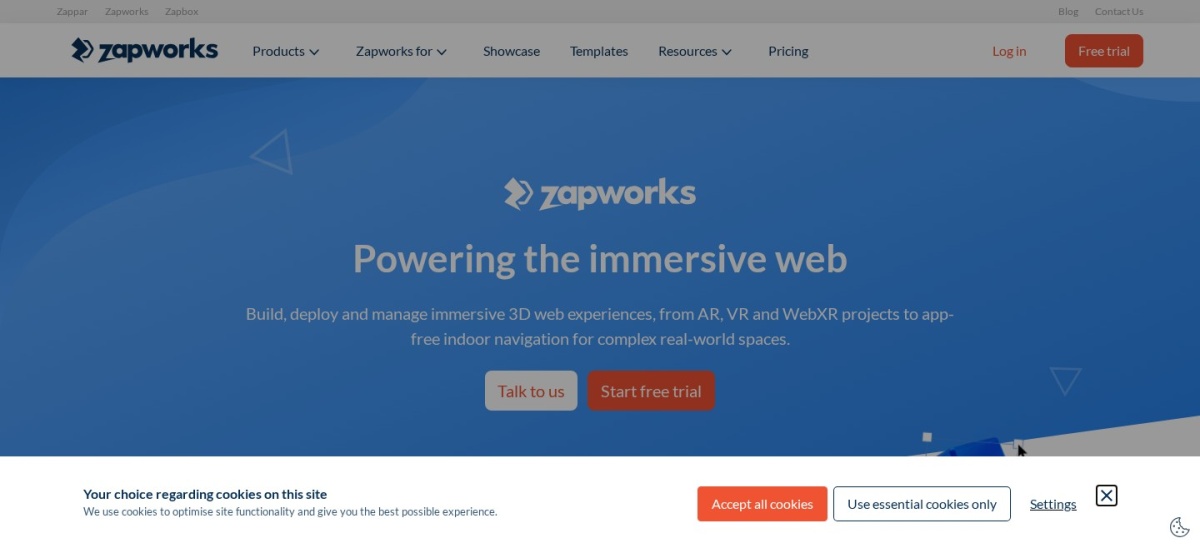
ZapWorks is the no-code WebAR platform from Zappar. Teams build browser-based AR with a drag-and-drop editor, publish from a link or QR code, and reach users with no app to install. The Developer plan costs $12.99 a month for non-commercial use.
The trade off is scale. Pro costs $315 a month, or $2,640 a year, and includes 12,000 views a year, so a busy campaign pays more than the entry price suggests. It suits marketing teams that want AR campaigns without developers.
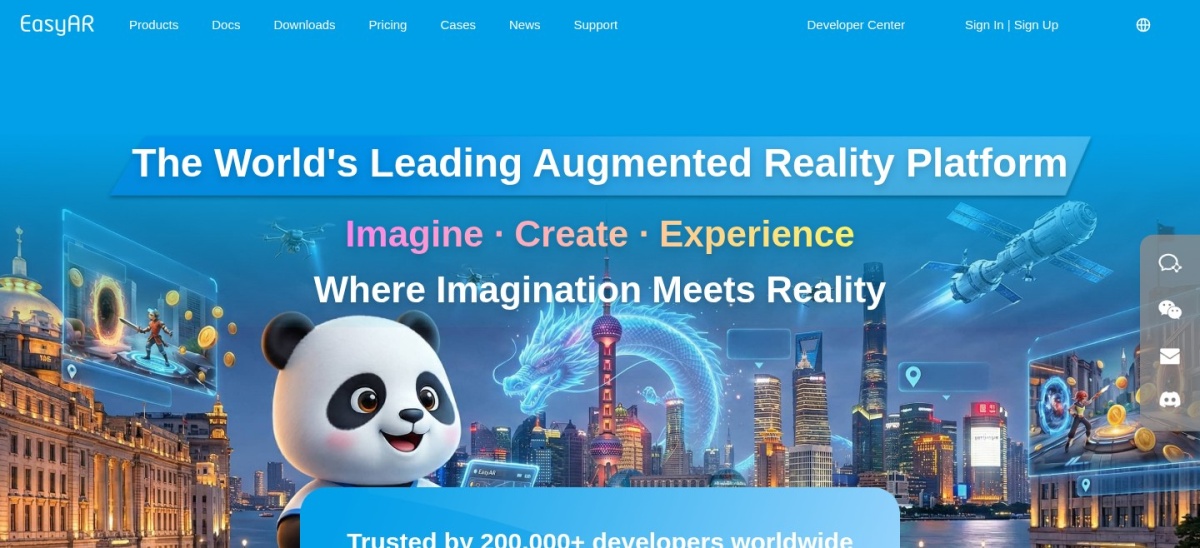
EasyAR is a cross-platform AR SDK from Visionstar, covering image tracking, 3D object tracking, motion tracking, SLAM and cloud recognition. The Personal edition is free for learning, and Professional costs $39 a month with no watermark and no session limits.
The trade off is community. EasyAR holds 3.8 out of 5 on G2 from 11 reviews, and its documentation and community are thinner than Unity's. It suits small teams that want a full SDK at a low monthly price.
5/5on G2 (Not published reviews, checked Nov 2026)
Starts at$59/mo
Best for visual SLAM
Visual SLAMYes
Smart glassesYes
VPS positioningYes
Paid planPro, $59/mo per license
maxst.com
MAXST homepage, captured Nov 2026.
MAXST is an AR engine built for visual SLAM and AR smart glasses. The SDK spans image, object and cloud recognition, supports external camera input and smart glasses, and its VPS service covers indoor and outdoor positioning for navigation and advertising.
The trade off is community. MAXST is used by more than 10,000 developers in over 50 countries, but it has a smaller community than Vuforia or EasyAR, and enterprise pricing needs a direct quote. It suits navigation, glasses and tracking work where ARKit and ARCore fall short.
4.1/5on G2 (Not published reviews, checked Nov 2026)
PriceFree
Best free WebAR engine
App install neededNo, browser-based
Open sourceYes, since Feb 2026
Commercial useYes, free
Paid planNone, free
8thwall.com
8th Wall homepage, captured Nov 2026.
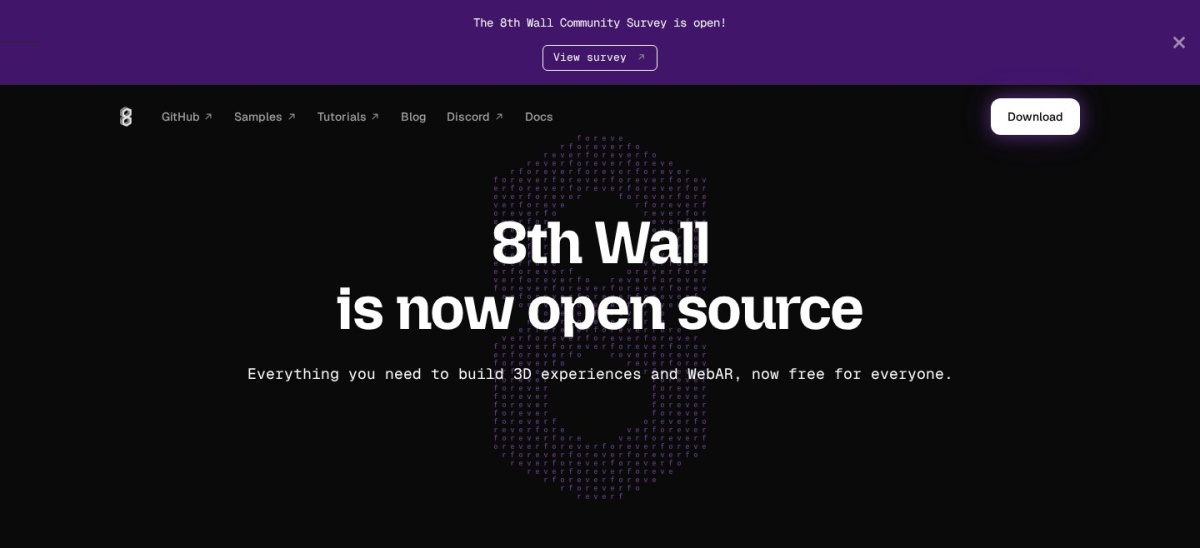
8th Wall is the WebAR engine that pioneered browser-based AR with no app download. Niantic retired the hosted platform in February 2026 and released the engine as open source, free for everyone including commercial use, so teams now host it themselves.
The trade off is support. There is no hosted platform or paid support tier to buy, so teams run the engine and handle hosting on their own. It suits developers who want free WebAR and are happy to self-host.
Native SDKs give the best tracking on one platform. Pick ARKit for iPhone and ARCore for Android when your audience sits on one side.
Engines cover both platforms from one codebase. Unity is the default for commercial apps, and Unreal Engine suits high-fidelity scenes and simulation.
WebAR skips the app store entirely. A QR code opens the experience in the browser, which suits campaigns, retail try-ons and events.
How we chose
We started from every augmented reality SDK, engine and WebAR platform still sold or maintained in 2026, then kept those with a verifiable G2 rating and a working vendor site.
Prices come from each vendor pricing page, checked on 24 November 2026, with Unity Pro confirmed on its own pricing page at $210 a month. Ratings come from G2 on the same day. Where a vendor shows a sale, the list shows the regular price.
We left out Adobe Aero, which was discontinued in late 2025, and Wikitude, which shut down in September 2024. No vendor paid for a place, and we do not claim hands-on testing for this list.
How to choose augmented reality software
Start with where your audience will open the experience, then match the tool to that platform.
Pick the platform first. iPhone-only means ARKit, Android-only means ARCore, both means Unity, and browser-only means WebAR.
Check the free tier limits. Personal and free tiers cap revenue, sessions or views, so read the limits before you build on them.
Test tracking on a real device. Image, object and plane tracking behave differently on real phones than in an editor, so test early.
Price it per seat, not per project. Engine seats multiply with team size, so model the cost for the whole team over a year.
FAQ
What is the best augmented reality software?
Unity is the best augmented reality software for most teams, because AR Foundation covers iPhone and Android from one codebase. ARKit is the best free native option for iPhone, and ARCore is the best free native option for Android.
Is augmented reality software free?
The native SDKs are free: ARKit ships with iOS and ARCore ships with Android, though publishing iPhone apps needs the $99 a year Apple Developer Program. Unity Personal is free under $200,000 in revenue, and 8th Wall is now open source and free.
How much does Unity Pro cost?
Unity Pro costs $210 a month per seat when billed monthly, or $2,310 per seat a year. Pro is required once a business passes $200,000 in revenue or funding in the last 12 months.
What is the best AR software for industrial use?
Vuforia is the best industrial pick, with model targets that recognize machines from CAD data and no QR code needed. It starts at $99 a month for the Basic plan, and larger deployments are priced by quote.
Do I need an app for augmented reality?
Not always. WebAR tools such as ZapWorks and 8th Wall run in the phone browser from a link or QR code, with no app to install. Native apps still win on tracking quality and offline use.
What happened to 8th Wall?
Niantic retired the hosted 8th Wall platform in February 2026 and released the WebAR engine as open source, free for commercial use. Teams now host it themselves instead of paying for the hosted platform.