Best Augmented Reality AR SDK Software in 2026: 7 Tools Compared
WLWPLegible EditorsLast verified 22 Nov 2026How we rank6 min read
★ Short answer
Unity leads for cross-platform AR projects with a free personal tier and Pro plans starting at $2,310/yr per seat. DeepAR fits camera face filters and try-on apps from $300/yr ($25/mo billed annually), while Vuforia Engine targets industrial image and object tracking.
How we make this list: we compare pricing pages, product documentation and public user reviews, then re-check every price before each update. No product paid for a place. Disclosure.
Unity holds a 4.5/5 rating from 364 G2 reviews and starts at $2,310/yr for Pro after its free tier.
DeepAR scales by monthly active users starting at $300/yr ($25/mo) for up to 1,000 MAU.
Vuforia Engine supports over one million developers worldwide with a free Basic plan for image and ground tracking.
ZapWorks starts at $64.99/yr for non-commercial Developer use and $2,640/yr for Pro commercial projects.
PlayCanvas offers a free browser editor and a $180/yr ($15/mo) Personal plan for private projects.
echo3D holds a 4.5/5 score across 169 Capterra reviews and starts at $1,188/yr ($99/mo) for Pro.
What to look for in an augmented reality SDK
Choosing an AR SDK depends first on whether you need a native mobile app, a headset experience, or a browser-based launch via link or QR code. Native and engine SDKs handle deeper sensor access, offline tracking, and complex scenes, whereas WebAR tools reduce friction by running in mobile browsers without an app install.
Tracking mode is the next major divider. Surface and world tracking anchor 3D assets to floors or walls, image and marker tracking trigger overlays from printed targets, and face or body tracking powers filters and virtual try-ons.
Licensing models vary sharply across vendors. Some charge per developer seat, some meter monthly active users or experience views, and others lock commercial rights, custom domains, or watermark removal behind higher tiers.
Check asset pipeline and hosting requirements before committing. Teams working with heavy 3D catalogs often need format conversion, cloud storage, or analytics alongside the core tracking SDK.
TrackingSurface, plane, and headset XR via plugins
Revenue capPersonal tier up to $200K revenue/funding
unity.com
Unity homepage, captured Nov 2026.
Unity is a cross-platform 3D development engine used to build mobile, spatial, and headset AR applications from a single project. Unity Personal is free for eligible users under $200,000 in annual revenue or funding.
The trade off is that Unity Pro costs $2,310 per seat per year ($210/mo monthly) and requires ongoing 3D engineering effort. It suits studios and product teams building multi-platform AR apps with custom interactions.
What we like
Supports mobile AR frameworks and OpenXR headsets from one editor
Free Personal plan lets small teams prototype and ship under revenue limits
Large asset ecosystem and extensive documentation for 3D workflows
Watch out for
Pro seat pricing adds up quickly for larger engineering teams
Steeper learning curve than no-code browser AR builders
Unity Pro at $2,310/yr removes the $200K revenue and funding cap and adds Pro seat capabilities.Visit unity.com
02
DeepAR
4.4/5on G2 (55 reviews, checked Nov 2026)
Paid from$300/yr
Best for face filters and virtual try-on
PricingFree up to 10 MAU; from $300/yr ($25/mo)
Rating4.4 / 5 (55 reviews on G2)
PlatformsiOS, Android, HTML5 web, and macOS SDKs
Creator toolFree DeepAR Studio effect builder
deepar.ai
DeepAR homepage, captured Nov 2026.
DeepAR is an AR SDK focused on real-time face tracking, camera filters, and virtual try-on experiences across mobile and web apps. It includes a free tier up to 10 monthly active users and free DeepAR Studio access.
The trade off is that paid plans start at $300 per year ($25/mo billed annually) for up to 1,000 MAU and scale up to $10,000/yr at 100,000 MAU. It suits retail, beauty, and social apps centered on camera effects.
What we like
Clear published MAU pricing starting at $25/mo billed annually
Covers iOS, Android, macOS, and HTML5 web SDKs
Free DeepAR Studio lets teams build effects without extra studio fees
Watch out for
Free tier is capped at 10 monthly active users and includes a watermark
Higher MAU tiers climb rapidly as traffic grows
Paid SDK plans from $300/yr ($25/mo) scale monthly active user limits up to 100,000 MAU.Visit deepar.ai
03
Vuforia Engine
4.3/5on G2 (54 reviews, checked Nov 2026)
Paid from$1,188/yr
Best for image, object, and industrial tracking
PricingFree Basic plan; Cloud add-on from $99/mo
Rating4.3 / 5 (54 reviews on G2)
ScaleUsed by over 1M developers worldwide
TargetsImage targets, VuMarks, Model & Area Targets
ptc.com
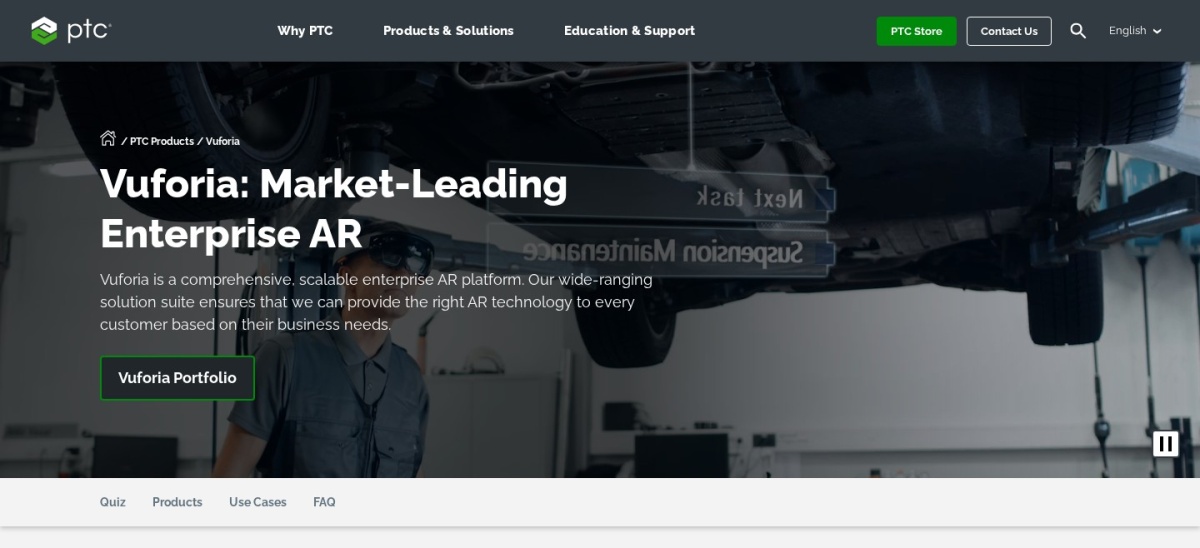
Vuforia Engine homepage, captured Nov 2026.
Vuforia Engine is an AR SDK built around image targets, VuMarks, ground plane tracking, and 3D model or area recognition. Its free Basic plan supports unlimited app publishing with core target types and 1,000 cloud recognitions per month.
The trade off is that Model Targets, Area Targets, and barcode scanning require paid licensing, and Cloud Image Recognition add-ons start at $99/mo ($1,188/yr). It suits industrial, manufacturing, and product-recognition apps.
What we like
Established image and object recognition across mobile and Unity workflows
Free Basic plan allows publishing without watermarks on supported features
Supports CAD-based Model Targets and spatial Area Targets
Watch out for
Model Targets, Area Targets, and custom quotes add cost for enterprise builds
Cloud recognition overages bill per recognition once allowances are exceeded
Paid plans and cloud add-ons from $99/mo unlock higher recognition limits and advanced target types.Visit ptc.com
04
ZapWorks
4.9/5on Capterra (35 reviews, checked Nov 2026)
Starts at$64.99/yr
Best for browser-based WebAR campaigns
PricingDeveloper $64.99/yr (non-commercial); Pro $2,640/yr
Rating4.9 / 5 (35 reviews on Capterra)
DeliveryBrowser WebAR via link or QR code
Pro views12,000 views/yr included; $30 per 1,000 extra
zap.works
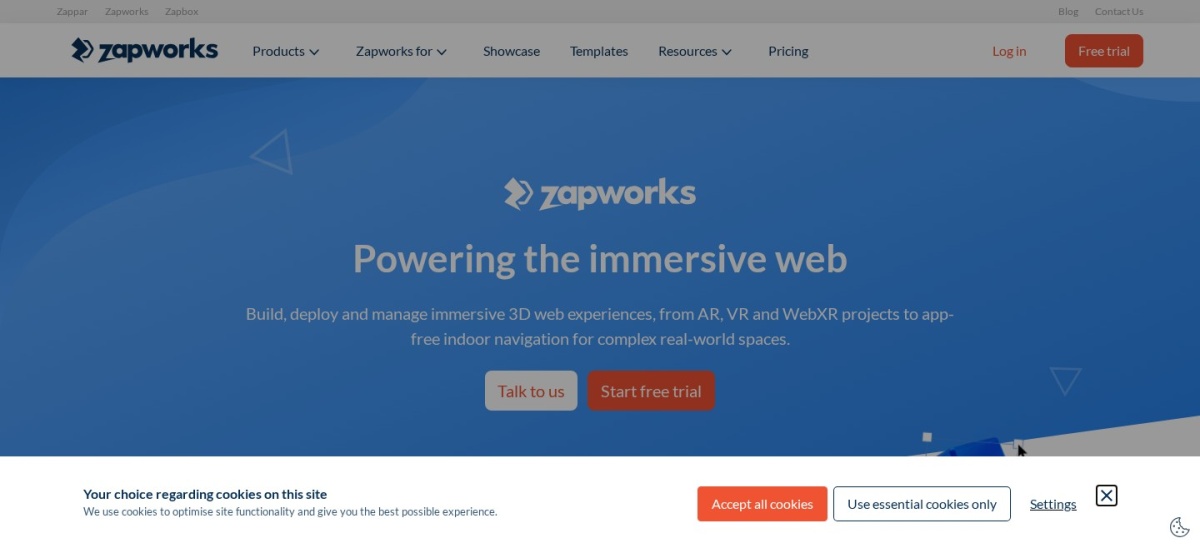
ZapWorks homepage, captured Nov 2026.
ZapWorks is a WebAR platform and SDK suite for launching browser-based AR experiences without requiring a separate app download. Its annual Developer plan is $64.99/yr ($12.99/mo monthly) for non-commercial use with a 14-day trial available.
The trade off is that commercial projects require Pro at $2,640/yr ($315/mo monthly) with 12,000 annual views and $30 per additional thousand views. It suits marketing teams and agencies running browser-first AR campaigns.
What we like
Opens AR in mobile browsers without forcing users to install an app
Combines visual creation tools with developer SDKs
Low annual entry price for non-commercial experimentation
Watch out for
Commercial tier jumps to $2,640/yr with strict view caps
Overage charges of $30 per 1,000 views can raise campaign costs
ZapWorks Pro at $2,640/yr adds commercial licensing, removes the interstitial screen, and includes 12,000 annual views.Visit zap.works
05
PlayCanvas
4.5/5on G2 (12 reviews, checked Nov 2026)
Paid from$180/yr
Best for browser-native WebGL and WebXR
PricingFree public projects; Personal $15/mo ($180/yr)
Rating4.5 / 5 (12 reviews on G2)
WorkflowBrowser-based editor with team collaboration
LicenseFree and open-source engine; hosted editor tiers
playcanvas.com
PlayCanvas homepage, captured Nov 2026.
PlayCanvas is an open-source WebGL and WebXR engine paired with a browser-based editor for real-time 3D and AR scenes. The free tier includes unlimited public projects, 1 GB of storage, and app hosting.
The trade off is that keeping projects private requires the Personal plan at $15/mo ($180/yr) and Organization plans cost $50/mo per seat. It suits web developers building lightweight interactive 3D and WebXR scenes in the browser.
What we like
Runs directly in a web browser with real-time collaborative editing
Free plan covers unlimited public projects and self-hosting exports
Affordable $15/mo Personal tier for private project work
Watch out for
Private projects and higher storage limits require paid plans
More code-oriented than drag-and-drop marketing builders
Personal at $15/mo ($180/yr) unlocks unlimited private projects and increases storage to 10 GB.Visit playcanvas.com
06
echo3D
4.5/5on Capterra (169 reviews, checked Nov 2026)
Paid from$1,188/yr
Best for cloud 3D asset management and delivery
PricingFree plan; Pro from $99/mo ($1,188/yr)
Rating4.5 / 5 (169 reviews on Capterra)
Scale200K+ 3D and IT professionals
FormatsglTF, GLB, USDZ, FBX, OBJ, and more
echo3d.com
echo3D homepage, captured Nov 2026.
echo3D is a cloud 3D digital asset management platform and SDK layer for storing, converting, and streaming 3D and AR assets. Its free plan starts with 10 monthly credits and a 7-day trial is offered for paid plans.
The trade off is that the Pro plan starts at $99/mo ($1,188/yr) for 500 monthly credits and adds pay-as-you-go overages. It suits teams managing multi-format 3D catalogs across web, Unity, and mobile apps.
What we like
Supports broad 3D file conversion including glTF, GLB, USDZ, and FBX
Provides SDKs and integrations for Unity, Unreal, and web viewers
Strong review volume with 4.5/5 across 169 Capterra reviews
Watch out for
Credit-based usage can require monitoring for heavy traffic or storage
Pro entry price of $99/mo is higher than simple indie WebAR tools
Pro at $99/mo ($1,188/yr) includes 500 monthly credits, 5 projects, version control, and pay-as-you-go scaling.Visit echo3d.com
07
MyWebAR
4.4/5on G2 (5 reviews, checked Nov 2026)
Paid from$300/yr
Best for no-code browser AR experiences
PricingFree non-commercial tier; Pro $25/mo yearly ($300/yr)
Rating4.4 / 5 (5 reviews on G2)
Pro quotaUp to 50 projects and 120,000 views/yr
ModesSurface, QR, flat/curved image, and face effects
mywebar.com
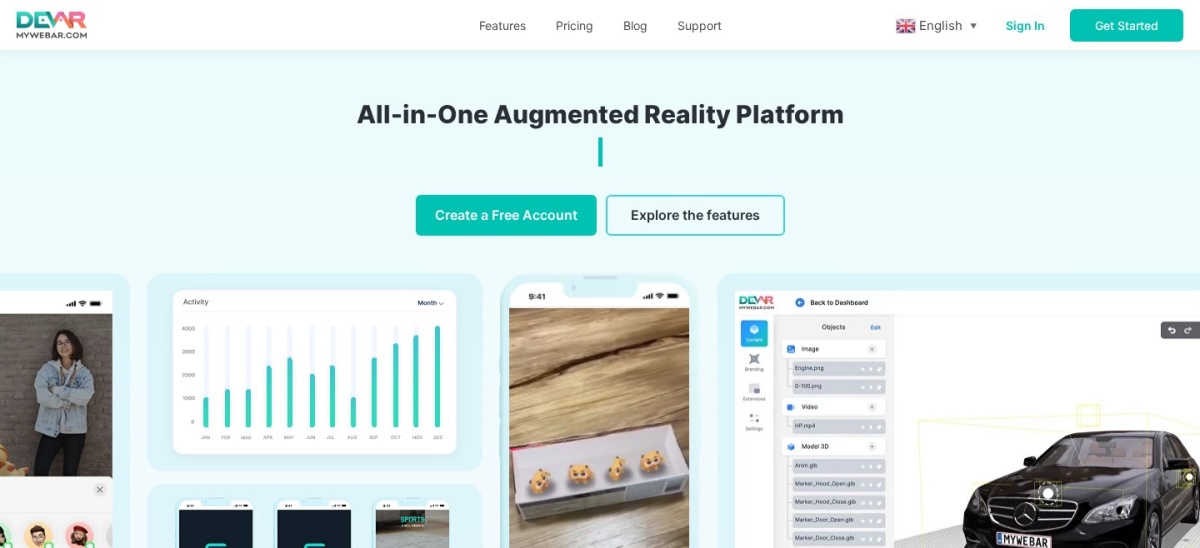
MyWebAR homepage, captured Nov 2026.
MyWebAR is a browser-based WebAR creation platform for publishing surface, image, QR, and face filter experiences without an app. Its Creator tier is free for non-commercial use with up to 5 projects and 500 views per year.
The trade off is that commercial use requires Pro at $25/mo billed yearly ($300/yr, or $39/mo monthly) with a 120,000-view yearly cap. It suits small businesses, educators, and marketers launching lightweight browser AR.
What we like
Browser editor supports surface, image, QR, and face AR without coding
Lower annual commercial entry price than many competing WebAR suites
Includes analytics and custom domain support on Pro
Watch out for
Free plan is restricted to non-commercial projects and low view counts
Higher-tier white-label and object tracking plans cost significantly more
Pro at $25/mo billed annually ($300/yr) enables commercial use, 50 projects, 120,000 views/yr, and a custom domain.Visit mywebar.com
How we chose
We selected active AR SDKs, engines, and WebAR platforms with established documentation, public review profiles, and clear commercial or developer positioning.
All pricing figures, plan tiers, and review ratings were checked on 22 Nov 2026 from official vendor pages and review directories.
We excluded discontinued or unmaintained toolkits, tools lacking verifiable pricing or active support, and products without clear AR development workflows. No vendor paid for a place, and we do not claim testing for this list.
How to pick the right AR SDK for your project
Follow four steps to narrow down the right SDK before writing production code.
Confirm your target runtime first. Decide whether users will launch AR inside a native app, a headset, or a mobile browser link.
Match the SDK to your tracking need. Separate world and plane placement from image targets, 3D object recognition, or real-time face filters.
Model your ongoing usage meter. Compare seat-based pricing against monthly active user or view quotas so traffic spikes do not surprise your budget.
Check commercial and branding rules. Verify whether free or entry plans allow commercial client work, custom domains, or watermark removal.
FAQ
What is an AR SDK?
An AR SDK is a software development kit or engine that provides camera tracking, spatial mapping, 3D rendering, or face recognition so developers can build augmented reality features into apps or web pages.
Do you need an app install for WebAR?
No, WebAR runs inside a mobile web browser through a URL or QR code, which removes app store install friction. Native apps usually offer deeper hardware access and offline reliability.
Why do some AR SDKs charge per user or per view?
Cloud hosting, analytics, and recognition services scale with traffic and active users, so vendors tie tiers to monthly active users or experience views.
Can you start building AR for free?
Yes, several options offer free tiers or free plans for prototyping, public projects, or low-volume usage, though commercial rights or higher quotas often require paid plans.
How does image tracking differ from surface tracking?
Image tracking anchors 3D content to a specific printed image, label, or marker, while surface tracking places virtual objects onto detected floors, tables, or walls in open space.
What should teams watch for in AR pricing?
Watch for commercial use restrictions on free plans, view or credit overage rates, and higher tiers required for custom domains or white-label branding.