Best Concept Testing Platforms in 2026: 8 Tools Compared
WLWPLegible EditorsLast verified 22 Nov 2026How we rank10 min read
★ Short answer
Lyssna is the best concept testing platform for most product teams, offering unlimited quick studies and 15 self-recruited test and survey responses on its free plan. Choose PickFu for consumer preference testing or Great Question for combining concept validation with interviews, participant management and ongoing product research.
How we make this list: we compare pricing pages, product documentation and public user reviews, then re-check every price before each update. No product paid for a place. Disclosure.
Lyssna offers 3 seats and unlimited quick studies on its free plan, with Growth starting at $166 per month billed annually.
PickFu earns 4.8/5 from 116 G2 reviews, with subscriptions starting at $200 per year and surveys from $1 per response.
Great Question starts at $129 per seat per month, with 2 months free under annual billing.
Typeform provides 100 monthly responses on its Basic plan and earns 4.5/5 from 1,027 G2 reviews.
Maze includes 1 study per month and 5 seats for free, making it suitable for occasional prototype validation.
Wynter earns 4.8/5 from 144 G2 reviews and offers access to more than 86,000 verified B2B research participants.
What to look for in a concept testing platform
Concept testing helps businesses evaluate product ideas, feature proposals, packaging designs, marketing messages and pricing strategies before committing resources to development or launch. The goal is to identify which ideas appeal to the intended audience and understand why.
Look for platforms that support both quantitative research and qualitative feedback. Preference scores reveal which concepts participants favor, while written explanations and interviews help uncover objections, misunderstandings and unmet needs.
Audience recruitment matters as much as the testing interface. A platform with a large consumer panel may be unsuitable for specialized B2B research. Check available demographic filters, professional targeting, screening questions and participant verification procedures.
Compare the total cost of conducting research rather than the subscription alone. Some platforms charge separately for panel participants, screening questions, research incentives or advanced analysis. A cheaper subscription can become expensive when recruitment costs increase.
Consider the type of concept you need to validate. Static designs and marketing messages work well in survey-based platforms, while interactive software concepts benefit from prototype testing, behavioral recordings and moderated interviews.
Best for versatile concept testing and design validation
Free team seats3
Free self-recruited responses15
Research methodsPreference tests, surveys and prototypes
Paid planGrowth, billed annually
lyssna.com
Lyssna homepage, captured Nov 2026.
Lyssna is a remote research platform for validating product ideas, visual designs, messaging and interactive prototypes. Its free plan includes unlimited quick studies, 3 team seats and 15 self-recruited test and survey responses, allowing small teams to begin collecting feedback without purchasing a subscription.
The trade off is that advanced research features require Growth at $166 per month billed annually, which includes 5 monthly in-depth studies and unlimited self-recruited test and survey responses. Panel recruitment costs extra on every plan. It suits product designers, marketers and researchers who need several testing methods in one workspace.
What we like
Supports multiple concept validation methods
Permanent free plan for smaller research projects
Built-in research participant panel
Supports interactive prototype testing
Paid plan includes conditional logic and study randomization
Watch out for
Panel recruitment is billed separately
Free self-recruited responses are limited
Advanced reporting and exports require a paid plan
Best for consumer product and packaging concept testing
Research methodsPolls and preference surveys
Pay-as-you-go pricingFrom $1 per response
Team seatsUnlimited
Paid subscriptionStarter, $200/yr
pickfu.com
PickFu homepage, captured Nov 2026.
PickFu is a consumer research platform for comparing product concepts, packaging, advertising, images and written messages with targeted respondents. Its pay-as-you-go model starts at $1 per response, while all plans allow unlimited team members to participate in the research workflow.
The trade off is that research spending depends on audience targeting, survey configuration and response volume, even with the Starter subscription at $200 per year. A temporary annual-plan panel credit promotion was available when checked. It suits e-commerce businesses, consumer brands and marketers looking for direct preference feedback.
What we like
Strong consumer preference testing capabilities
High G2 user rating
Pay-as-you-go option without a subscription
Supports different visual and written concept formats
Unlimited team seats
Watch out for
Free account creation does not include free panel responses
Recruitment costs increase with research requirements
Less suitable for detailed interactive usability studies
Starter provides subscription benefits for recurring research and AI-assisted workflowsVisit pickfu.com
03
Great Question
4.7/5on G2 (23 reviews, checked Nov 2026)
Starts at$129/mo
Best for managing ongoing product research programs
Free trial14 days
Self-serve seat limit5
Research methodsInterviews, surveys and prototype tests
Annual billing$1,290 per seat
greatquestion.com
Great Question homepage, captured Nov 2026.
Great Question is a research management platform that combines concept interviews, surveys, prototype evaluation and research findings in a shared workspace. Its self-serve plan supports up to 5 researcher seats, unlimited observers and a 14-day trial for evaluating the research workflow.
The trade off is per-seat pricing of $129 per month, with annual billing reducing the regular yearly cost to $1,290 per seat. Dedicated participant management and enterprise capabilities can introduce additional expenses. It suits product organizations that regularly conduct discovery interviews and want to preserve findings across projects.
What we like
Combines concept testing with broader research activities
Supports moderated interviews and prototype evaluation
Centralized research findings and video highlights
Unlimited observer seats
Public self-serve pricing
Watch out for
No permanent free platform plan
Researcher seats are charged individually
Some participant management capabilities require an add-on
Self-serve provides research studies, scheduling and analysis tools in a shared workspaceVisit greatquestion.com
04
Typeform
4.5/5on G2 (1,027 reviews, checked Nov 2026)
Paid from$28/mo
Best for concept surveys using your own audience
Basic monthly responses100
Basic user seats1
Survey logicConditional branching
Paid planBasic, billed annually
typeform.com
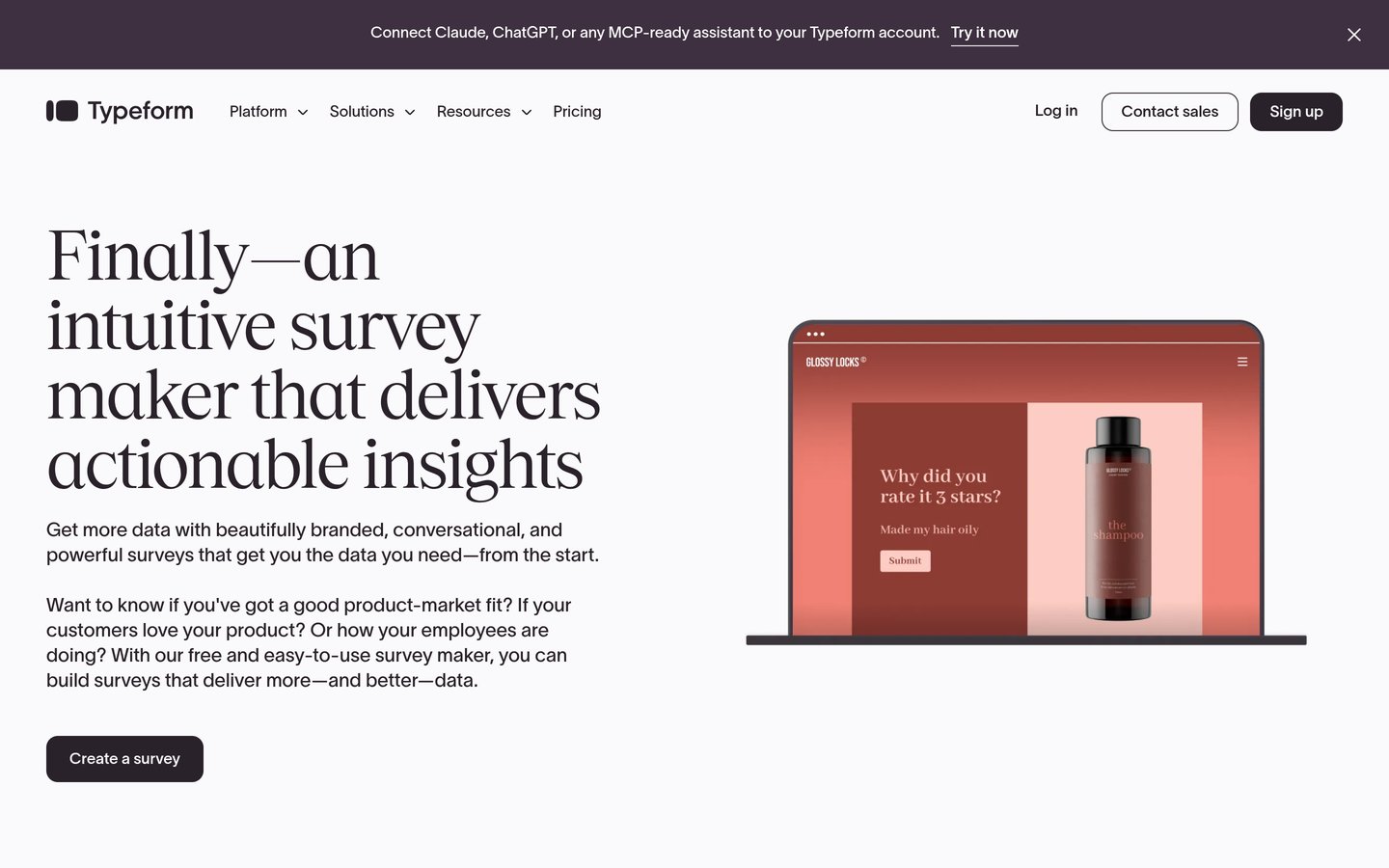
Typeform homepage, captured Nov 2026.
Typeform is an interactive survey builder suitable for testing product descriptions, marketing messages, feature ideas and purchase intentions with an existing audience. Its Basic plan includes 100 responses per month, unlimited forms, conditional logic and integrations for moving feedback into other business applications.
The trade off is that the Basic plan costs $28 per month under annual billing or $39 with monthly billing, and the standard survey workflow does not include a dedicated participant panel. Advanced branding and reporting require higher plans. It suits businesses that already have customer lists or established recruitment channels.
What we like
Accessible survey creation interface
Conditional logic for relevant follow-up questions
Suitable for visual and text-based concept surveys
Connects with external business applications
Permanent free plan available
Watch out for
Entry paid plan has a limited response allowance
Standard plans require independent participant recruitment
Not designed for detailed prototype interaction analysis
Basic increases response capacity and adds integrations and conditional survey workflowsVisit typeform.com
05
Maze
4.5/5on G2 (111 reviews, checked Nov 2026)
PricingCustom pricing
Best for interactive software concept validation
Free studies1 per month
Free seats5
Prototype testingSupported
Paid planEnterprise
maze.co
Maze homepage, captured Nov 2026.
Maze is a product research platform for evaluating early concepts, interactive prototypes and existing digital experiences. Its free plan includes 1 study per month, 5 seats, basic surveys and essential prototype testing, with participant recruitment available through separately purchased panel credits.
The trade off is that advanced research workflows require Enterprise, which uses custom pricing rather than a public fixed subscription rate. Moderated interviews, advanced survey logic and broader research capabilities are concentrated in the paid offering. It suits software product teams that want to measure how participants interact with proposed designs.
What we like
Supports interactive software concept testing
Free plan includes multiple team seats
Integrated participant recruitment
Combines surveys with behavioral research
Enterprise features support larger research programs
Watch out for
Free plan permits limited monthly studies
No public fixed-price paid subscription
Advanced testing methods require Enterprise
Enterprise adds customized study allowances, advanced methods and research analysisVisit maze.co
06
Wynter
4.8/5on G2 (144 reviews, checked Nov 2026)
Starts at$20,000/yr
Best for B2B concept and positioning research
Research audience86,000+ verified B2B participants
Pro research credits20,000
Team seatsUnlimited
Paid subscriptionPro, $20,000/yr
wynter.com
Wynter homepage, captured Nov 2026.
Wynter is a B2B market research platform for validating positioning, product concepts, advertising messages and buyer perceptions with verified business professionals. Its participant pool exceeds 86,000 verified B2B respondents, and the platform supports research across professional roles and target customer segments.
The trade off is that the Pro subscription costs $20,000 annually and includes 20,000 research credits. Pay-as-you-go studies are available without a subscription, but individual tests cost more than under the Pro plan. It suits B2B software companies that need feedback from specific business buyers rather than general consumers.
What we like
Specialized B2B research participant pool
Verified professional identities and roles
Suitable for positioning and message validation
Pay-as-you-go research available
Unlimited team seats
Watch out for
High annual subscription commitment
Less suitable for general consumer concept research
Research costs depend on audience and test configuration
Pro includes research credits and lower per-test costs than pay-as-you-go researchVisit wynter.com
07
UserTesting
4.4/5on G2 (802 reviews, checked Nov 2026)
PricingCustom pricing
Best for enterprise video-based concept research
Research methodsModerated and unmoderated testing
Feedback formatsVideo and verbal feedback
Pricing modelsConsumption and team-based plans
Entry editionAdvanced
usertesting.com
UserTesting homepage, captured Nov 2026.
UserTesting is an enterprise research platform that helps organizations collect recorded feedback on product concepts, prototypes and customer experiences. Its Advanced entry edition is available through usage-based or team-based pricing models, with access to research capabilities determined by the selected edition.
The trade off is custom pricing, which makes it difficult to establish an annual budget without discussing study volumes and requirements with the vendor. Enterprise-oriented workflows can also be excessive for occasional research. It suits established organizations that prioritize detailed participant reactions and collaborative qualitative analysis.
What we like
Video feedback reveals participant reasoning
Supports moderated and unmoderated research
Suitable for early ideas and interactive prototypes
Paid editions provide research access according to contracted usage and capabilitiesVisit usertesting.com
08
Qualtrics
4.4/5on G2 (3,028 reviews, checked Nov 2026)
PricingCustom pricing
Best for advanced quantitative concept research
Research focusQuantitative market research
Concept formatsProduct, messaging and pricing
Pricing modelPlanned usage
Reviewed productQualtrics Market Research
qualtrics.com
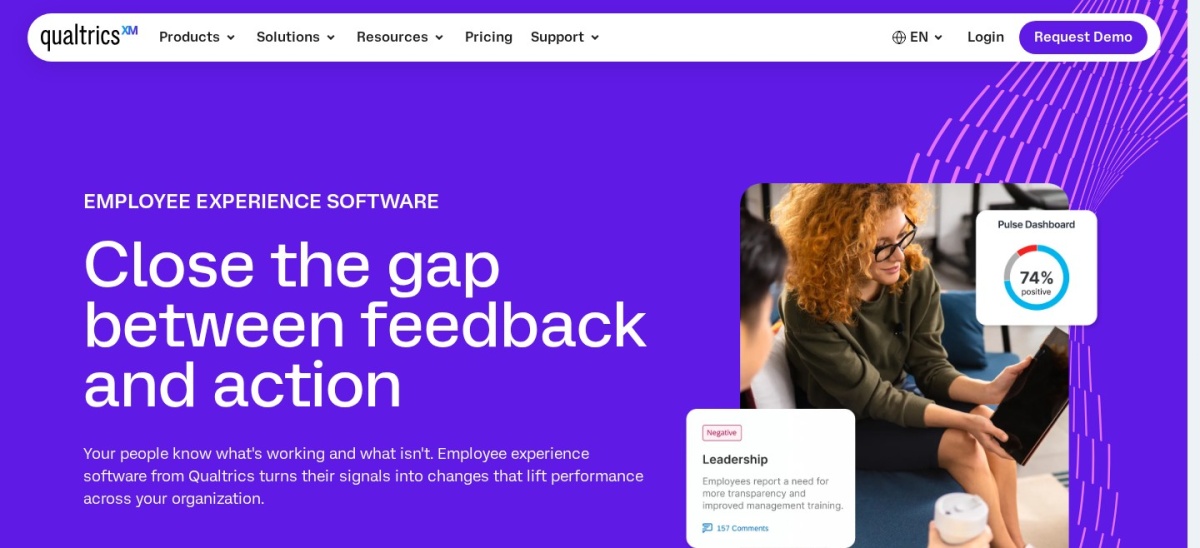
Qualtrics homepage, captured Nov 2026.
Qualtrics is a market research platform for conducting structured surveys, evaluating product concepts and measuring customer preferences across audience segments. Its Market Research product has a 4.4/5 rating from 3,028 G2 reviews, providing an established review history for buyers comparing enterprise research platforms.
The trade off is that Qualtrics uses custom pricing based on research requirements and planned usage, so buyers need a formal quote to establish the total cost. Advanced research design can also require specialist knowledge. It suits organizations conducting detailed quantitative research and recurring product innovation studies.
What we like
Flexible quantitative survey design
Supports detailed audience segmentation
Suitable for structured product and pricing research
Established enterprise research platform
Extensive public review history
Watch out for
No fixed public price for Market Research
Advanced workflows require research expertise
May be unnecessarily complex for simple preference polls
Paid research packages are configured around contracted usage and required capabilitiesVisit qualtrics.com
Which concept testing method should you use?
Monadic testing presents each participant with an individual concept and asks them to evaluate it independently. This approach reduces direct comparison effects and helps researchers understand whether an idea meets specific expectations on its own.
Sequential monadic testing presents multiple concepts individually to the same participant. It can reduce recruitment requirements, although researchers should randomize presentation order to limit the influence of earlier concepts on later evaluations.
Preference testing asks participants to choose between competing ideas, designs or messages. It works well for selecting packaging designs, advertising visuals and alternative positioning statements. PickFu and Lyssna are suitable platforms for this approach.
Prototype testing evaluates how participants interact with an early representation of a digital product. Maze and Lyssna support this approach, helping teams identify navigation problems, unclear functionality and mismatches between expectations and proposed designs.
Moderated concept interviews allow researchers to explore participant reactions through follow-up questions. Great Question and UserTesting are worth considering when understanding the reasoning behind feedback is more important than collecting preference scores alone.
How much does concept testing software cost?
Concept testing platforms use subscription, usage-based and enterprise contract pricing. The most appropriate model depends on how often you conduct studies, whether you recruit your own participants and how much analysis you need.
PickFu offers a Starter subscription at $200 per year and separately priced survey responses. This can suit businesses conducting consumer research periodically without committing to a large enterprise research contract.
Lyssna Growth starts at $1,992 annually, while Great Question starts at $1,290 annually per researcher seat. These subscriptions support broader research workflows, but participant recruitment and optional capabilities can increase spending.
Wynter Pro costs $20,000 annually and includes research credits for B2B studies. Maze, UserTesting and Qualtrics use custom pricing for their applicable paid packages.
The price ladder compares published subscription costs before recruitment and optional charges. Per-seat costs apply to the minimum purchase quantity. Custom-priced products use zero as a display placeholder, not as an indication that their paid plans are free.
How we chose
We selected established concept testing platforms covering consumer preference research, software prototype validation, B2B positioning studies, moderated interviews and quantitative market research. Rankings consider testing methods, audience recruitment, pricing transparency, usability requirements and publicly available customer ratings.
The editorial verification date is 22 Nov 2026, with official pricing pages and G2 review profiles checked on 24 Nov 2026. We used regular published subscription prices and annualized recurring fees according to their billing terms. Participant recruitment, optional services and usage charges are excluded from the subscription price ladder unless explicitly included.
We excluded discontinued platforms, products with insufficient public review histories and applications whose official pricing could not be verified. Custom pricing is retained only where vendors publish quote-based paid packages rather than fixed subscription rates. No vendor paid for a place, and we do not claim testing for this list.
How to choose the best concept testing platform
Identify your research objectives, target audience and available budget before comparing concept testing subscriptions or purchasing participant responses.
Define the decision your research needs to support. Determine whether you are selecting a product idea, improving a proposed feature, comparing packaging or validating marketing positioning. Choose a platform with research methods that directly address the decision rather than paying for unrelated capabilities.
Check whether the platform reaches your intended audience. Review available participant filters, professional targeting and screening options. Use consumer panels for broad product research and verified professional audiences for B2B concepts. Consider bringing your own customers when their experience is essential to the research.
Calculate the complete study budget. Include subscription fees, researcher seats, participant recruitment, incentives, screening charges and optional research services. Compare costs using your expected study frequency and response volumes instead of relying solely on the advertised entry price.
Run a small validation study before scaling. Use an available free plan, trial or pay-as-you-go option to evaluate participant feedback quality, study setup, reporting and exports. Refine your research questions before conducting a larger study that will influence development or marketing investments.
FAQ
What is the best concept testing platform in 2026?
Lyssna is our top overall recommendation because it supports preference tests, surveys, interviews and prototype evaluation in one platform. Its free plan includes 3 seats and unlimited quick studies. PickFu is a stronger alternative for consumer packaging and product preference research.
What is a concept testing platform?
A concept testing platform is software that helps businesses collect feedback on proposed products, services, features or marketing messages before launching them. These platforms use surveys, preference tests, interviews or interactive prototypes to measure audience reactions and identify potential improvements.
Are there free concept testing platforms?
Yes. Lyssna, Maze and Typeform offer free plans suitable for smaller research projects. Maze includes 1 study per month and 5 seats. Free plans typically limit responses or advanced research features, and recruiting participants through vendor panels can introduce separate charges.
Which concept testing platform is best for B2B software companies?
Wynter is particularly suitable for B2B software companies because it provides access to more than 86,000 verified business research participants. Great Question is another useful option for organizations conducting recurring customer interviews, product discovery studies and interactive prototype evaluations.
What is the difference between concept testing and usability testing?
Concept testing evaluates whether an idea is appealing, relevant and understandable to its intended audience. Usability testing measures how easily people complete tasks using a product or prototype. Both methods are useful during development but answer different research questions.
How many participants do you need for concept testing?
The appropriate sample size depends on your research objectives, audience diversity, expected differences between concepts and required statistical confidence. Qualitative interviews can uncover important themes with smaller samples, while quantitative comparisons generally require larger groups and a planned sampling approach.
Can concept testing platforms help determine product pricing?
Yes. Survey-based research platforms can evaluate purchase intentions, willingness to pay and reactions to different pricing structures. Advanced research methods can help measure trade-offs between features and costs. However, stated purchase intentions should be interpreted alongside actual customer behavior.
Can I test product concepts before building a prototype?
Yes. You can present written product descriptions, static mockups, illustrations or proposed feature lists to research participants. PickFu, Lyssna and Typeform support approaches suitable for early concept evaluation, allowing teams to gather feedback before investing in interactive design or development.
Do concept testing subscriptions include research participants?
Not always. Lyssna charges separately for recruitment through its participant panel, while PickFu offers surveys starting at $1 per response. Some enterprise packages and research subscriptions include credits. Review recruitment allowances, targeting fees and incentives before calculating your total research budget.