Google Apigee is the best enterprise API management platform for full-lifecycle programs, with deep analytics and monetization built in. Kong suits gateway-first teams on a budget, while MuleSoft fits Salesforce shops that need integration plus APIs.
How we make this list: we compare pricing pages, product documentation and public user reviews, then re-check every price before each update. No product paid for a place. Disclosure.
Apigee leads for enterprise API programs, with pay-as-you-go from 365 dollars a month per environment.
Kong is the cheapest serious start: the open-source gateway is free and managed Konnect Plus starts at 25 dollars a month.
MuleSoft is the pick when API management sits downstream of large-scale system integration.
Postman is the best place to design and test APIs, with a free plan and Basic from 14 dollars per user a month.
AWS API Gateway and Azure API Management win when you already live on that cloud, both billing per million calls.
What enterprise API management should cover
Enterprise API management is two jobs in one: a gateway that routes, secures and scales traffic, and a lifecycle layer that designs, documents, publishes and monetizes APIs.
A good platform should enforce policies such as rate limits and authentication at the gateway, give developers a portal with clear docs, and show usage analytics per API and per consumer.
Pricing models differ sharply. Some vendors charge per gateway or per environment, others per million calls, and the big full-lifecycle suites are usually quote-only, so always ask for a written quote.
If your APIs mostly serve one cloud, that cloud's native gateway is usually the cheapest and simplest choice. Our guide to the best API management tools covers the wider field.
The 9 best api management platforms for enterprise
01
Google Apigee
4.5/5on G2 (700 reviews, checked Nov 2026)
Starts at$365/mo
Best for enterprise API programs
Pay-as-you-goFrom $365/mo per environment
Free plan60-day sandbox
GatewayManaged, multi-cloud
MonetizationBuilt in
cloud.google.com
Google Apigee homepage, captured Nov 2026.
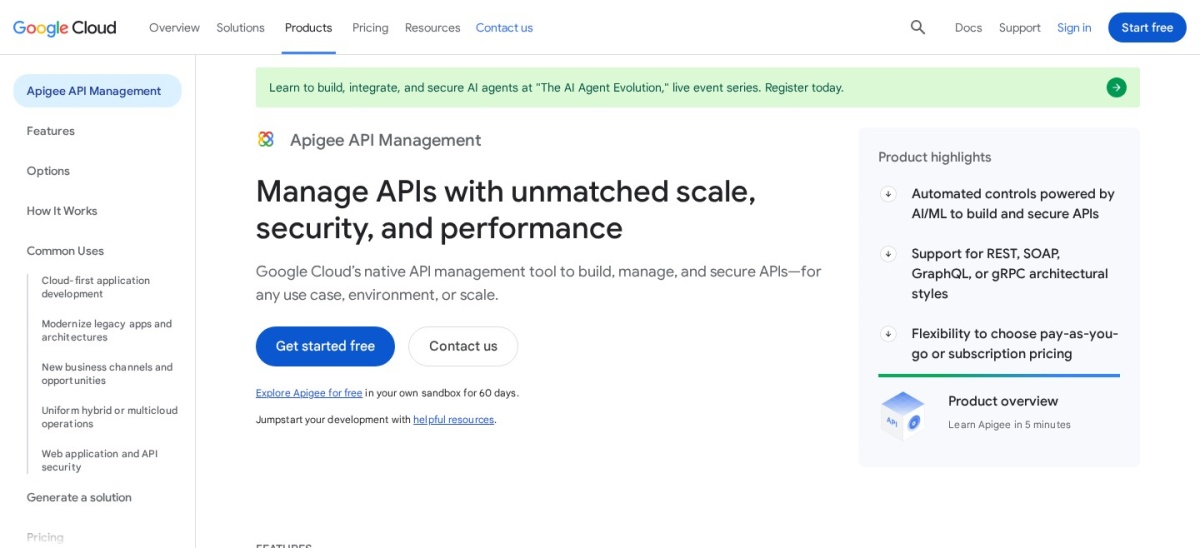
Google Apigee is the full-lifecycle API management platform from Google Cloud, covering design, security, analytics and monetization in one console. It suits large API programs with partner and public APIs, where governance, versioning and usage reporting matter as much as routing.
The trade off is cost and complexity. Pay-as-you-go starts at $365 a month per environment plus $20 per million calls, and enterprise deployments run far higher. It suits teams already on Google Cloud with a dedicated API program.
MuleSoft Anypoint Platform homepage, captured Nov 2026.
MuleSoft Anypoint Platform is Salesforce's integration and API management suite, combining an iPaaS with full API lifecycle tools. It connects systems, builds APIs on top of them and manages the whole portfolio from one control plane.
The trade off is price and sales motion. There is no published price, so every deal is a quote, and mid-market reach has narrowed under Salesforce. It suits large enterprises where API management follows heavy system integration.
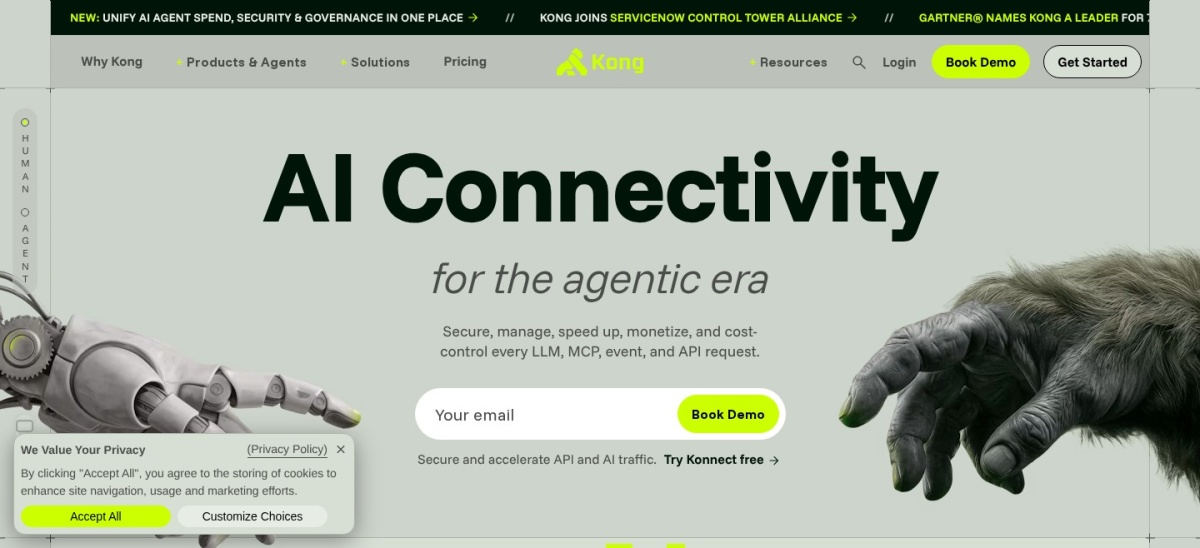
Kong is the high-performance open-source API gateway, paired with Kong Konnect as a cloud control plane. The gateway is fast, Kubernetes-native and extensible through a large plugin marketplace, which is why platform teams keep choosing it.
The trade off is lifecycle depth. Governance and developer-portal tooling are lighter than Apigee or MuleSoft, and managed dedicated gateways start at $200 a month. It suits engineering-led teams that want speed without vendor lock-in.
4.6/5on G2 (Not published reviews, checked Nov 2026)
Paid from$14/user/mo
Best for API design and testing
Free planYes
Basic plan$14/user/mo
API testingBuilt in
DocumentationAuto-generated
postman.com
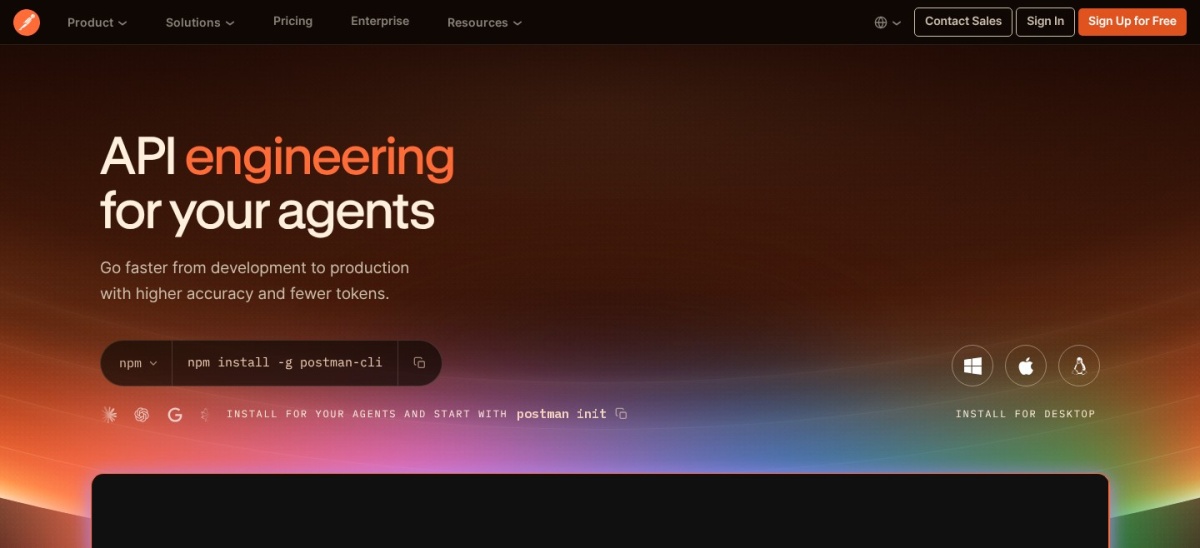
Postman homepage, captured Nov 2026.
Postman is the developer-anchored API platform, used by more than 30 million developers to design, mock, test and document APIs. Collections, environments and automated tests make it the default workspace where APIs are built before they are published.
The trade off is runtime depth. Postman is not a production gateway, so teams still need Kong, Apigee or a cloud gateway for traffic. It suits engineering teams that want one place to design and collaborate on APIs.
4.4/5on G2 (Not published reviews, checked Nov 2026)
Paid from$48/mo
Best for Microsoft shops
Developer tierFrom about $48/mo
Consumption tierPay per call
Free planConsumption free calls
PortalBuilt-in developer portal
azure.microsoft.com
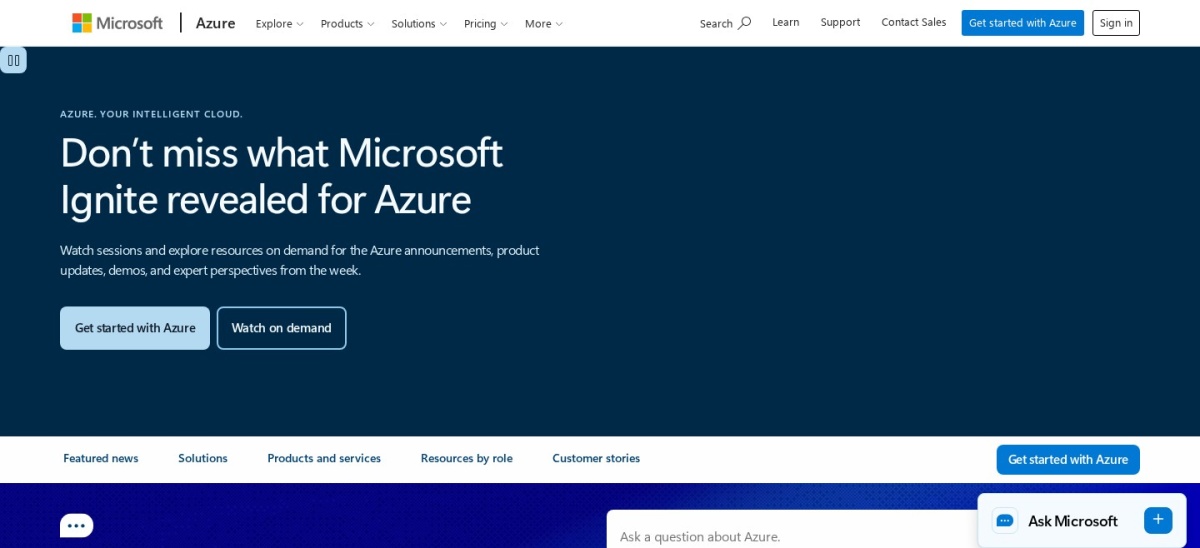
Azure API Management homepage, captured Nov 2026.
Azure API Management is Microsoft's native API gateway, covering publishing, policies, analytics and a developer portal inside Azure. It fits teams whose services already run on Azure, with private networking and Azure identity built in.
The trade off is portability. It is at its best inside Azure, and the Developer tier at about $48 a month lacks the scale and high-availability options of production tiers. It suits Azure-anchored organizations of any size.
4.5/5on G2 (Not published reviews, checked Nov 2026)
Pricing$3.50/1M calls
Best for AWS-native APIs
REST API price$3.50 per 1M calls
Free tier12 months
HTTP APIsFrom $1.00 per 1M
AuthIAM, Cognito, Lambda
aws.amazon.com
AWS API Gateway homepage, captured Nov 2026.
AWS API Gateway is Amazon's serverless API front door, routing REST, HTTP and WebSocket APIs to Lambda, containers and backends. Pricing is per million calls, starting at about $3.50 for REST APIs, with a 12-month free tier.
The trade off is scope. It is a gateway, not a full lifecycle suite, so design, monetization and portal depth are thinner than Apigee. It suits teams already on AWS who want serverless APIs with no gateway to run.
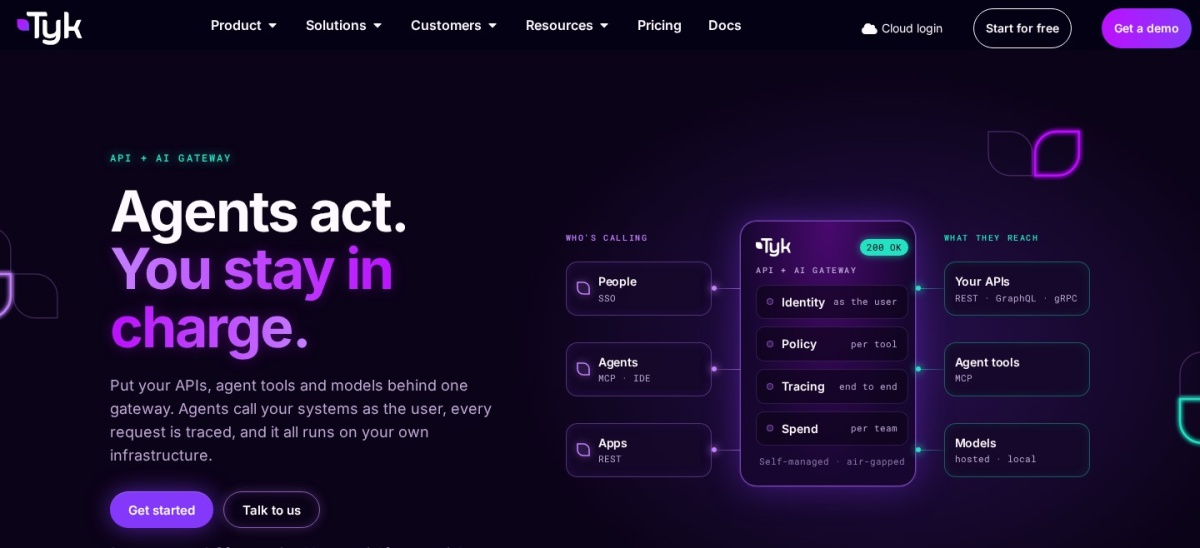
Tyk is a lightweight open-source API gateway with a small footprint and a clean dashboard. It covers routing, rate limiting, authentication and analytics, and it runs well on modest infrastructure or at the edge.
The trade off is scale of ecosystem. Its plugin and community footprint is smaller than Kong, and managed cloud pricing is quote-based. It suits teams that want a fast, simple gateway they can self-host.
WSO2 is a full API management platform with an open-source core, covering design, gateway, analytics and a developer portal. Its pay-as-you-go SaaS starts at $119 a month, making it one of the cheapest full-platform entries here.
The trade off is polish. The interface and documentation feel less refined than Apigee or Kong, and support quality varies by tier. It suits cost-conscious teams that want a full platform without an enterprise quote.
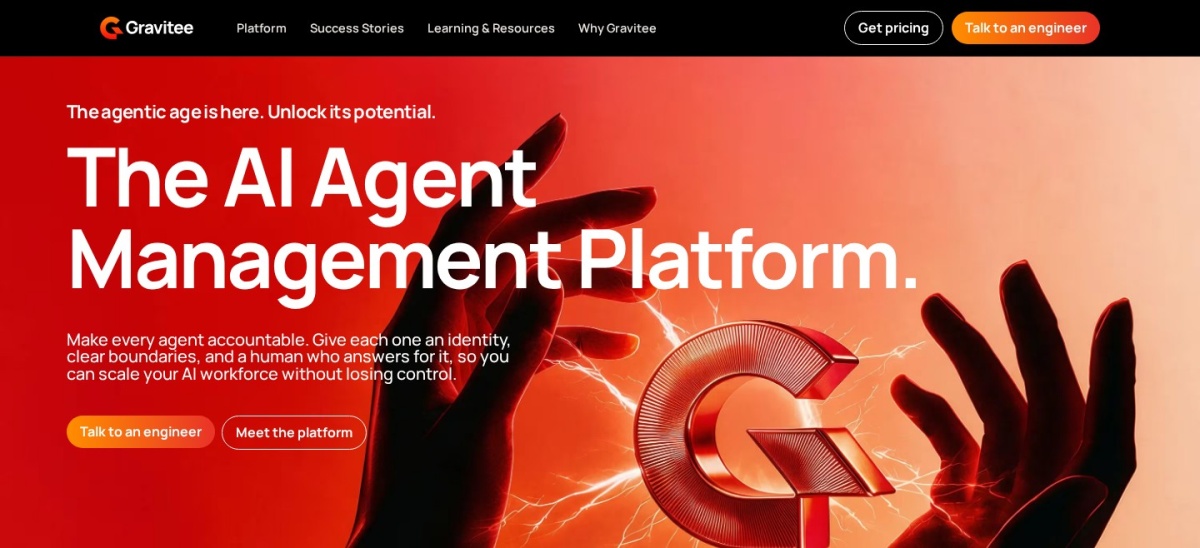
Gravitee is an open-core API platform with a free community edition and managed tiers priced per production gateway, not per API. That flat model suits portfolios with many APIs, and it covers gateway, design, analytics and event streaming.
The trade off is entry price. Managed Planet starts at $2,500 a month, so small teams should start with the community edition. It suits API-heavy portfolios that want predictable costs.
A gateway routes and secures traffic. A lifecycle platform also designs, versions, documents and monetizes APIs.
If you only need routing and rate limits, Kong, Tyk or a cloud gateway is enough. If you run partner or public APIs, Apigee, MuleSoft or WSO2 earns its price.
Many teams run both: Postman for design and testing, plus a gateway for production traffic.
How we chose
We started from the enterprise API platforms with the largest G2 review bases and the clearest public pricing, then kept nine that cover gateways, lifecycle suites and cloud-native options.
Prices come from vendor pricing pages and vendor-published pay-as-you-go rates, checked on 25 November 2026. Ratings come from G2 on the same day. Where a vendor sells by quote, the list says so.
We left out niche gateways with very small review bases. No vendor paid for a place, and we do not claim hands-on testing for this list.
How to choose an enterprise API management platform
Start with where your APIs run, then match the pricing model to your traffic.
Map your API portfolio first. Count public, partner and internal APIs, and note which cloud they run on. That decides whether a cloud gateway or a neutral platform fits.
Choose gateway or lifecycle. Pick a gateway if you only need routing and security. Pick a lifecycle suite if you publish APIs to partners or charge for them.
Model the pricing on real traffic. Compare per-call, per-gateway and per-environment prices against your actual call volumes, not the headline tier.
Trial with a real API. Publish one production API through the trial or free tier and check the portal, analytics and policy tooling before signing.
FAQ
What is the best enterprise API management platform?
Google Apigee is the strongest full-lifecycle choice for large API programs, with analytics and monetization built in. Kong is the best gateway-first pick, and MuleSoft suits enterprises that need integration plus API management in one platform.
How much does enterprise API management cost?
It ranges from free open-source gateways to thousands of dollars a month. Managed starts run from about 25 dollars a month for Kong Konnect Plus, while Apigee pay-as-you-go starts at 365 dollars a month per environment.
Is Kong or Apigee better for enterprise use?
Apigee is better for full API programs with partner APIs, monetization and deep analytics. Kong is better when the gateway itself is the priority and you want speed, plugins and multi-cloud control at a lower price.
Do I need a gateway if I use Postman?
Yes, for production traffic. Postman is the best place to design, test and document APIs, but it does not route live traffic. Pair it with Kong, Apigee or a cloud gateway for production.
What is the cheapest enterprise API gateway?
The open-source Kong and Tyk gateways cost nothing but your own hosting. For a managed service, Kong Konnect Plus at 25 dollars a month is the cheapest paid start in this list.
Are cloud gateways enough for enterprise APIs?
Often yes, when your services live on one cloud. AWS API Gateway and Azure API Management cover routing, security and analytics well, but they lack the lifecycle depth of Apigee or MuleSoft.
SaaS SEO and WordPress specialist with about 8 years of experience. Rakib compares WordPress plugins, themes, hosting and software using public pricing, documentation and user reviews. See how we rank.