Best Anti-Money Laundering Software in 2026: 9 Tools Compared
WLWPLegible EditorsLast verified 24 Nov 2026How we rank9 min read
★ Short answer
NICE Actimize is the best anti-money laundering software for large banks, with the deepest transaction monitoring and case management platform. ComplyAdvantage suits fintechs that want modern screening, while Sanction Scanner carries the highest user rating in this list.
How we make this list: we compare pricing pages, product documentation and public user reviews, then re-check every price before each update. No product paid for a place. Disclosure.
NICE Actimize leads for large banks, ranking first in the Chartis FCC50 2026.
ComplyAdvantage is the best modern pick for fintechs, with AI-native screening and fast API deployment.
Sanction Scanner carries the highest G2 rating here, at 4.8 out of 5 from 67 reviews.
LexisNexis and Dow Jones sell the deepest risk data, not just the software.
Every platform here prices by quote, so budget from sales conversations, not price pages.
What AML software actually covers
Anti-money laundering software helps financial institutions detect and prevent financial crime: customer screening against sanctions and watchlists, transaction monitoring for suspicious patterns, know-your-customer checks, case management and regulatory reporting.
The market splits three ways. Enterprise suites like NICE Actimize and SAS cover the whole financial crime program for large banks, screening specialists like ComplyAdvantage and Sanction Scanner cover sanctions and PEP checks for fintechs, and data providers like LexisNexis and Dow Jones sell the risk intelligence itself.
Pricing is quote-based across this whole category. No vendor publishes a starting price, so budgets come from sales conversations, and enterprise contracts often reach six or seven figures a year.
Analyst standing matters more here than in most categories. NICE Actimize ranked first in the Chartis FCC50 2026, with LexisNexis third, which is a stronger signal than any single user rating for a bank choosing a platform.
4.4/5on G2 (Not published reviews, checked Nov 2026)
PricingCustom/yr
Best for large banks
PricingCustom, quote-based
Chartis FCC50Ranked first, 2026
CoverageMonitoring, screening, cases
Free planNo
niceactimize.com
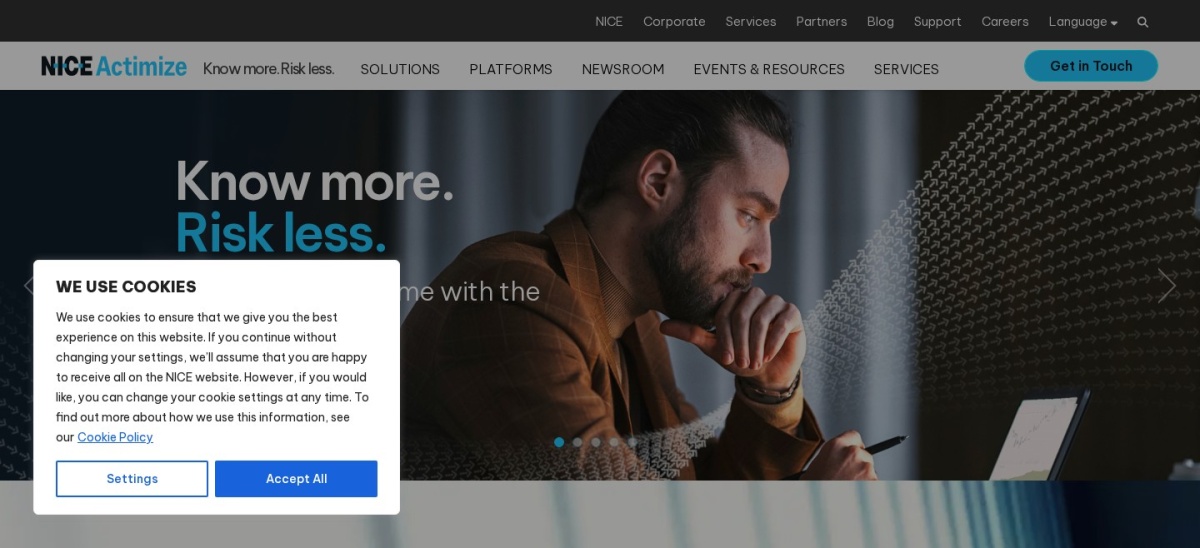
NICE Actimize homepage, captured Nov 2026.
NICE Actimize is the enterprise standard for financial crime, with transaction monitoring, customer due diligence, sanctions screening, fraud prevention and case management in one platform. It is deployed at the largest banks in the world, and it ranked first overall in the Chartis FCC50 2026.
The trade off is enterprise weight. Pricing is quote-based, implementation takes months, and operating it needs skilled financial crime staff. It suits large regulated banks with dedicated financial crime technology teams.
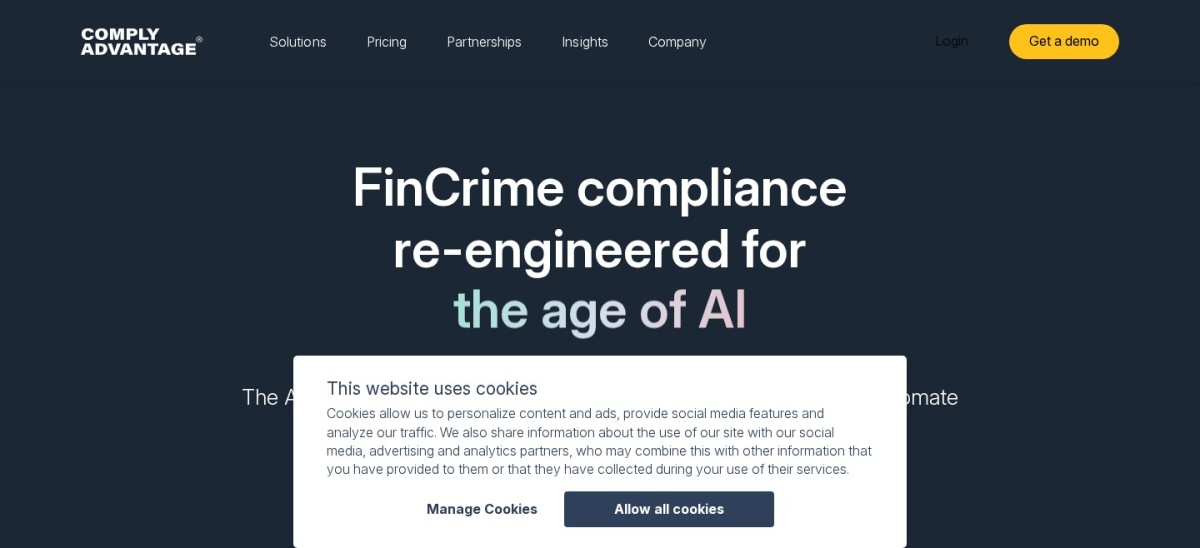
ComplyAdvantage is an AI-led screening platform built on its own risk database, which it updates in near real time from sanctions lists, news and adverse media. It offers fast API deployment, dynamic risk scoring and ongoing monitoring, and it has held G2 Leader status for nine consecutive quarters.
The trade off is cost at scale. Pricing is volume-based and quoted per firm, and media-match noise needs tuning. It suits fintechs and payment firms that want modern screening without legacy weight.
4.6/5on G2 (Not published reviews, checked Nov 2026)
PricingCustom/yr
Best for risk data depth
PricingCustom, data-tier based
Languages58
Risk profiles5 million structured
Free planNo
risk.lexisnexis.com
LexisNexis Risk Solutions homepage, captured Nov 2026.
LexisNexis Risk Solutions is a data and identity platform with one of the broadest risk data estates in the market. Its screening covers sanctions and PEP lists across 58 languages, with entity resolution and watchlist data maintained by hundreds of researchers.
The trade off is complexity. Its G2 position is split across multiple listings, and pricing is data-tier based and quoted per institution. It suits global corporations that need maximum human-curated sanctions and PEP coverage.
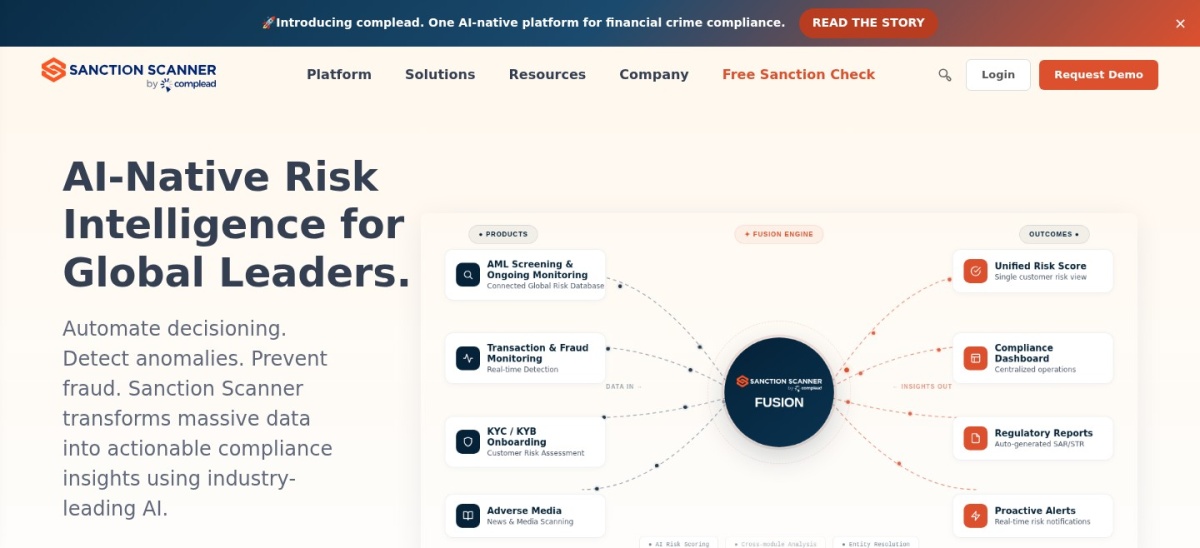
Sanction Scanner is a screening product built for smaller and mid-sized firms, and it carries the highest G2 rating in this list. It covers sanctions, PEP and adverse media screening with ongoing monitoring, and it is the most accessible enterprise-grade screening tool here.
The trade off is breadth. Sanction Scanner is a screening specialist, not a full monitoring suite, so large banks will still need a platform like Actimize beside it. It suits smaller firms that want strong screening without enterprise weight.
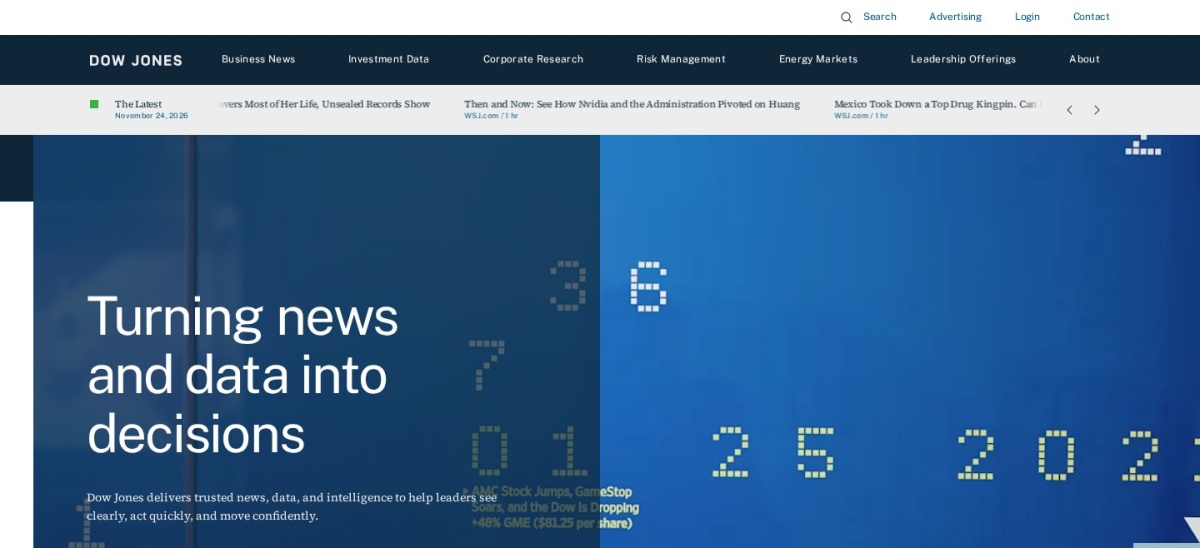
Dow Jones Risk & Compliance homepage, captured Nov 2026.
Dow Jones Risk & Compliance is a premium risk intelligence provider, with sanctions, PEP and adverse media data plus due diligence research. It is the data source many banks and corporates build their screening programs on, rather than a standalone screening app.
The trade off is that it is a data provider first. Teams need screening software beside it, and pricing is quoted per data tier. It suits institutions that want premium adverse media and due diligence depth.
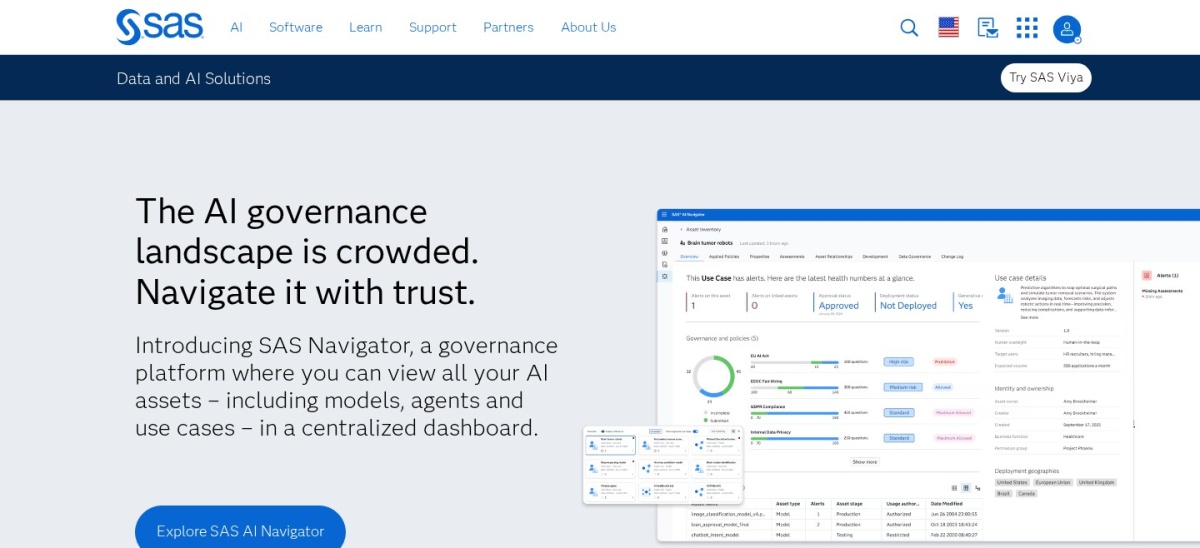
SAS is an analytics platform whose fraud, anti-money laundering and security intelligence suite brings advanced analytics and AI to financial crime detection. It covers transaction monitoring, customer due diligence and case management, with modelling tools that go deeper than most rivals.
The trade off is that SAS is a broad analytics vendor, so the AML suite is one product among many, and pricing is quote-based. It suits institutions that want advanced analytics behind their financial crime program.
Oracle Financial Crime and Compliance Management homepage, captured Nov 2026.
Oracle Financial Crime and Compliance Management is an enterprise compliance suite for organisations already running Oracle systems. It covers transaction monitoring, customer due diligence, sanctions screening and case management, with integration into the wider Oracle stack.
The trade off is fit. Oracle FCCM suits Oracle-centric enterprises best, and its G2 rating of 3.9 from 14 reviews is the lowest in this list. It suits enterprises that want integrated compliance inside their Oracle estate.
4.7/5on G2 (Not published reviews, checked Nov 2026)
PricingCustom/yr
Best API-first AML for fintechs
PricingCustom, volume-based
IntegrationAPI-first
RulesNo-code for compliance
Free planNo
flagright.com
Flagright homepage, captured Nov 2026.
Flagright is a modern, API-first AML platform for fintechs that need compliance without legacy weight. It covers sanctions screening, transaction monitoring, risk scoring and case management through an API that developers can integrate fast, with no-code rules for compliance teams.
The trade off is scale. Flagright suits fintechs and growing payment firms best, while tier-one banks will still want an enterprise suite. It suits fintechs that need modern, API-first AML compliance.
4.3/5on G2 (Not published reviews, checked Nov 2026)
PricingCustom/yr
Best for real-time fraud and AML
PricingCustom, quote-based
DetectionReal-time machine learning
CoverageMonitoring, scoring, cases
Free planNo
feedzai.com
Feedzai homepage, captured Nov 2026.
Feedzai is a real-time risk platform that combines fraud prevention with anti-money laundering, using machine learning on transaction data to spot suspicious behaviour as it happens. It covers transaction monitoring, risk scoring and case management for banks and payment firms.
The trade off is that Feedzai is fraud-first. Its AML features are strong, but teams that need deep sanctions data should pair it with a data provider. It suits banks and payment firms that want real-time risk scoring.
Screening checks customers against sanctions, PEP and adverse media lists at onboarding and on an ongoing basis. It is the job ComplyAdvantage, Sanction Scanner and Dow Jones do best.
Monitoring watches transactions for suspicious patterns after onboarding, then builds cases and files suspicious activity reports. It is the job NICE Actimize, SAS and Oracle FCCM do best.
Most institutions need both, so the shortlist usually pairs a screening specialist with a monitoring suite, or buys one enterprise platform that covers both.
How we chose
We started from every established AML platform with a verifiable rating on G2, then kept the nine that cover screening, monitoring and data intelligence between them.
Prices are quote-based across this category, so no vendor publishes a starting price. Ratings come from G2, checked on 24 November 2026, and review counts are shown where the listing publishes them.
We left out niche and regional tools with no verifiable rating. No vendor paid for a place, and we do not claim hands-on testing for this list.
How to choose anti-money laundering software
Start with your regulator and your volume, then check data depth before features.
Name your regulator and your obligations. BSA, FinCEN, FINTRAC and EU rules differ, so the platform must cover your jurisdiction, not just your use case.
Check the data before the features. Screening is only as good as the sanctions, PEP and adverse media data behind it, so ask whose lists the vendor owns and how often they update.
Trial the alert volume, not the demo. A tool that flags everything is worse than one that flags nothing, so measure false positives on your own transaction mix.
Price the whole program, not the licence. Implementation, tuning and investigator time usually cost more than the first year of software, so budget for all of it.
FAQ
What is the best anti-money laundering software?
NICE Actimize is the best pick for large banks, with the deepest transaction monitoring and case management platform. ComplyAdvantage is the best alternative for fintechs, and Sanction Scanner carries the highest G2 rating in this list.
How much does AML software cost?
No vendor publishes a starting price. Enterprise suites run on custom annual contracts that often reach six or seven figures, while modern screening tools bill per check or per verification, so cost tracks transaction volume.
What is the difference between screening and transaction monitoring?
Screening checks customers against sanctions and watchlists at onboarding, while monitoring watches transactions for suspicious patterns after onboarding. Most institutions need both, and the enterprise suites cover both in one platform.
Which AML tool is best for fintechs?
ComplyAdvantage is the best default for fintechs and payment firms, with AI-native screening, a proprietary risk database and fast API deployment. Sanction Scanner and Flagright are the best alternatives for smaller firms.
Does AML software replace compliance staff?
No. It flags suspicious activity and builds cases, but investigators still decide what to file, and regulators still hold the institution responsible. The software makes a compliance team faster, not smaller.
What should a small firm use for AML screening?
Sanction Scanner is the most accessible screening product for smaller and mid-sized firms, with the highest G2 rating in this list. Flagright is the best API-first alternative for fintechs that need modern compliance tooling.