IQAir AirVisual is the best air quality app for most people, with free global coverage, a seven-day forecast and health advice for sensitive groups. Pick AirCare for pollen and allergy detail, and AirNow if you want the official United States source.
How we make this list: we compare pricing pages, product documentation and public user reviews, then re-check every price before each update. No product paid for a place. Disclosure.
IQAir AirVisual is the best free pick for most people, with worldwide coverage, a seven-day forecast and health advice.
AirCare is the strongest choice when pollen matters, tracking five pollen types alongside AQI, UV and fire hotspots.
AirNow is the official United States source, free with the Fire and Smoke map, but its forecasts run only two days.
PurpleAir shows street-level smoke where neighbours run sensors, but coverage depends entirely on sensor density.
Most of these apps are free. Paid upgrades are small: WeatherBug ad-free costs $10.99 a year and AirCare Pro costs $39.99 a year.
What an air quality app should cover
Air quality changes by the hour, and one number rarely tells the whole story. A good app shows the current index, the main pollutants behind it, a forecast for the hours ahead and alerts when conditions turn bad. Coverage matters most: an app is only useful if it has sensors or official monitors near where you live, work and exercise.
Data sources differ more than home screens suggest. Official monitors run by government agencies follow strict standards but are sparse, while community sensors are dense and fast but less rigorously calibrated. The best approach is to pair an official source with a sensor map during smoke events, and to check several nearby sensors before drawing conclusions.
Pollen, wildfire smoke and indoor air are separate problems. Allergy sufferers should pick an app with pollen counts and forecasts, while households near wildfires need a smoke map that updates every few minutes. No app replaces medical advice, and sensor readings should be checked against official monitors when the air looks bad.
Every app in this list is free to download. Paid upgrades are small, from $10.99 a year for WeatherBug ad-free to $39.99 a year for AirCare Pro, and Air Matters Premium is a one-off A$7.99 purchase. The bigger cost is hardware: home monitors and sensors that some of these apps pair with are sold separately.
4.7/5on Google Play (338K reviews, checked Nov 2026)
PriceFree
Best air quality app overall
Coverage100+ countries
Forecast7 days
Pollen dataYes, 3-day forecast
Free planYes, full app free
iqair.com
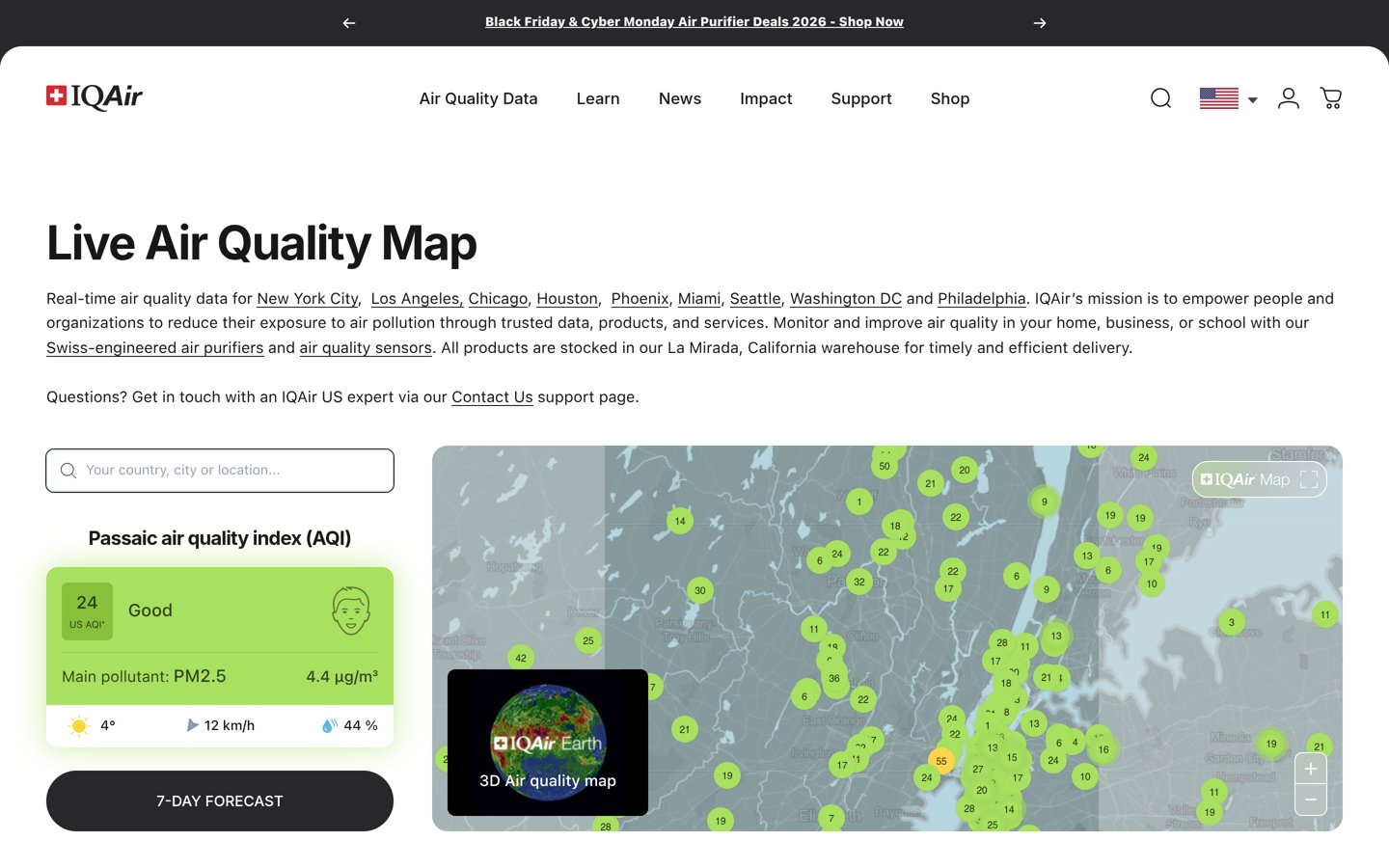
IQAir AirVisual homepage, captured Nov 2026.
IQAir AirVisual is the most complete free air quality app, covering more than 500,000 locations in over 100 countries with real-time, historical and forecast readings. It tracks six main pollutants, adds wildfire and smoke alerts, pollen counts and health advice, and pairs with IQAir monitors for indoor readings.
The trade off is that readings in places with few sensors lean on modelled data, and purifier and monitor controls only matter if you own IQAir hardware. It suits travellers and anyone who moves between cities and wants one free app for worldwide air quality.
4.8/5on App Store (3,300 reviews, checked Nov 2026)
Paid from$39.99/yr
Best for pollen and allergy sufferers
Pollen types5, US and Europe
UV forecastYes
Fire hotspotsNASA satellite data
Free planYes, with ads
getaircare.com
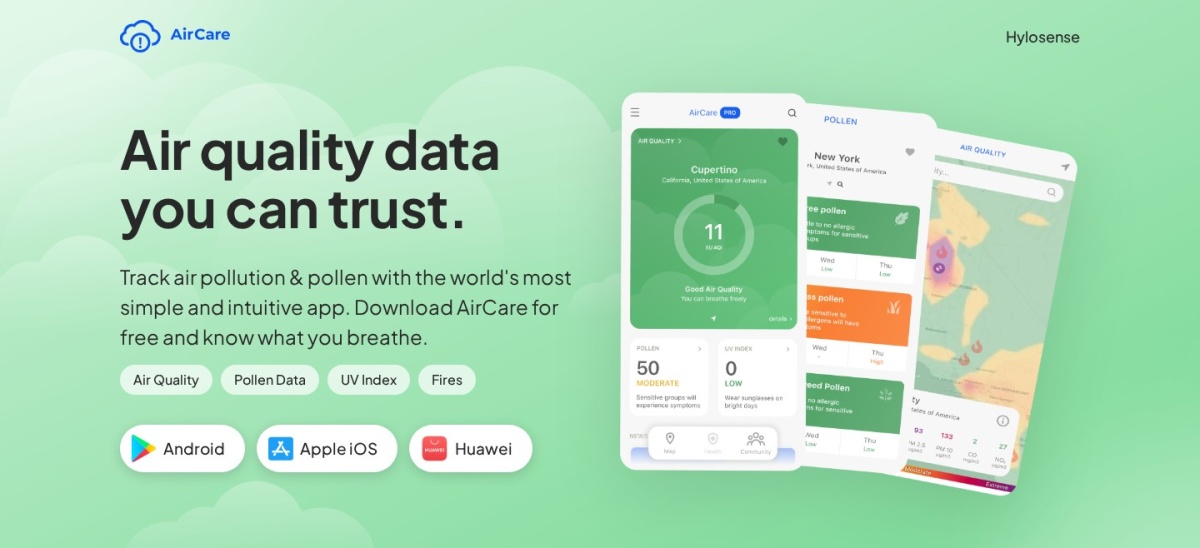
AirCare homepage, captured Nov 2026.
AirCare is an air quality and pollen app that combines worldwide AQI readings with pollen tracking for five types in the United States and Europe, plus UV forecasts and NASA satellite fire hotspots. It breaks down six pollutants, offers a chat assistant that answers questions using live data, and is free with ads.
The trade off is price. Widgets, push alerts, Apple Watch support and extended history need Pro at $5.99 a month or $39.99 a year, and the AI chat upgrade costs extra. It suits allergy and asthma sufferers whose day depends on pollen as much as pollution.
4.6/5on Google Play (1.92M reviews, checked Nov 2026)
Paid from$10.99/yr
Best weather app with air quality built in
Air qualityAQI with forecasts
RadarYes, live
AlertsSevere weather
Free planYes, with ads
weatherbug.com
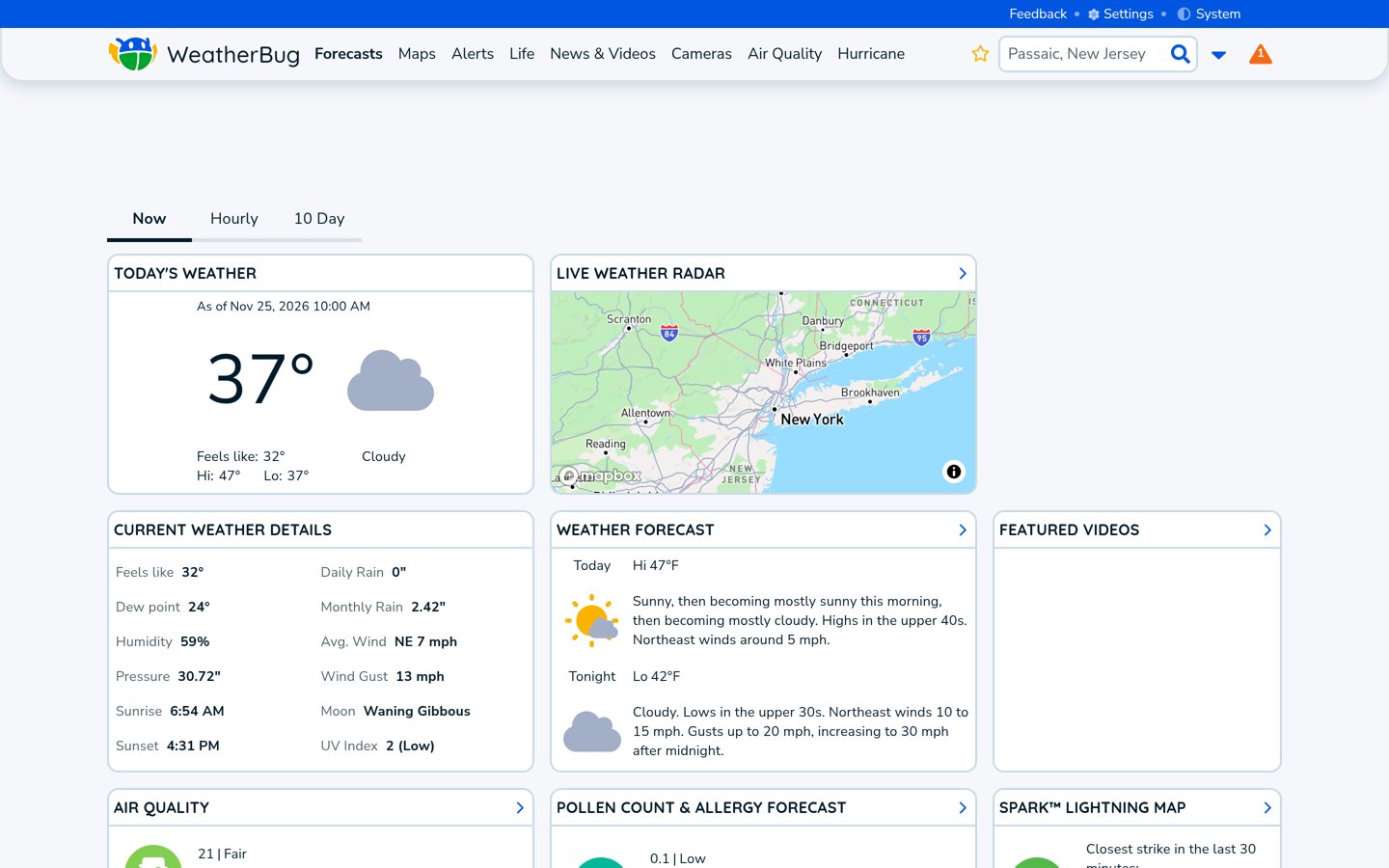
WeatherBug homepage, captured Nov 2026.
WeatherBug is a full weather app with air quality built in, so one download covers radar, hourly and ten-day forecasts, severe weather alerts and AQI. Its dense station network gives hyperlocal readings in rural areas where other apps have gaps, and the free version is genuinely useful.
The trade off is ads. The free version shows full-screen video ads on opening plus a banner that shrinks the radar map, and removing them costs $1.99 a month or $10.99 a year. It suits people who want weather and air quality in one app and will pay a little to remove ads.
4/5on Google Play (4,521 reviews, checked Nov 2026)
Paid fromA$7.99one-time
Best for switching AQI standards
AQI standardsUS, China, UK, India
Pollen dataUS and Europe
WidgetsYes
Free planYes, with ads
air-matters.com
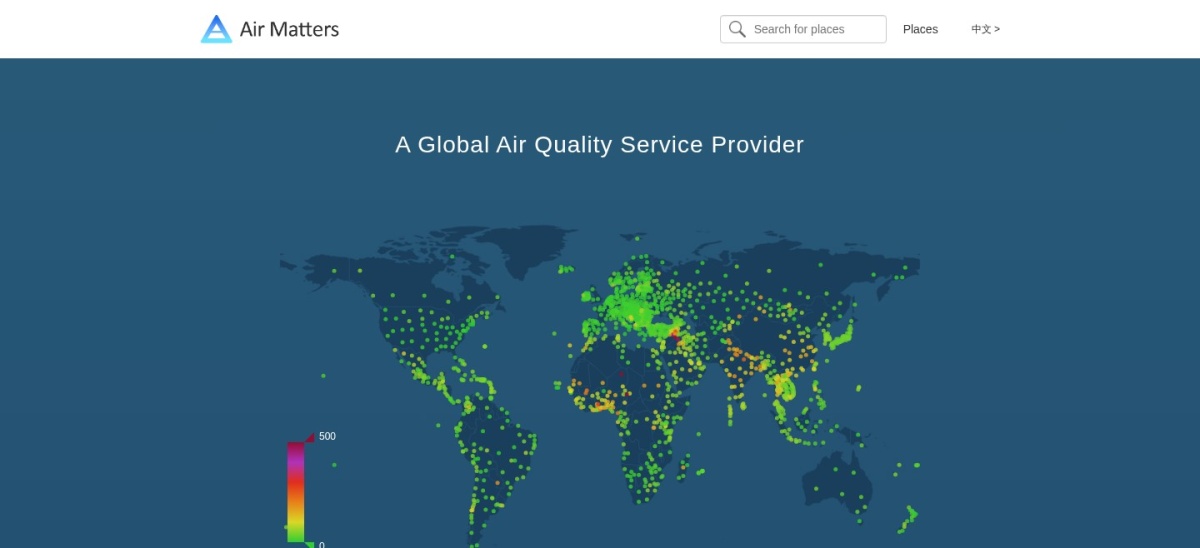
Air Matters homepage, captured Nov 2026.
Air Matters is a simple global AQI app that keeps the daily check short: open it, see the index for your location, check the main pollutants, and move on. Its standout feature is switching between United States, China, United Kingdom and India air quality standards, which helps people who move between countries.
The trade off is polish. The app shows ads, widgets sometimes fail to refresh, and the Premium upgrade is a one-off purchase listed at A$7.99 on the Australian App Store. It suits readers who want pollutant detail and switchable standards in a simple free app.
4.4/5on PurpleAir store (121 reviews, checked Nov 2026)
Paid from$209one-time
Best for hyperlocal street-level readings
Sensor updatesEvery 2 minutes
MapFree, public
PollutantsPM1, PM2.5, PM10
Cheapest sensor$209 one-time
purpleair.com
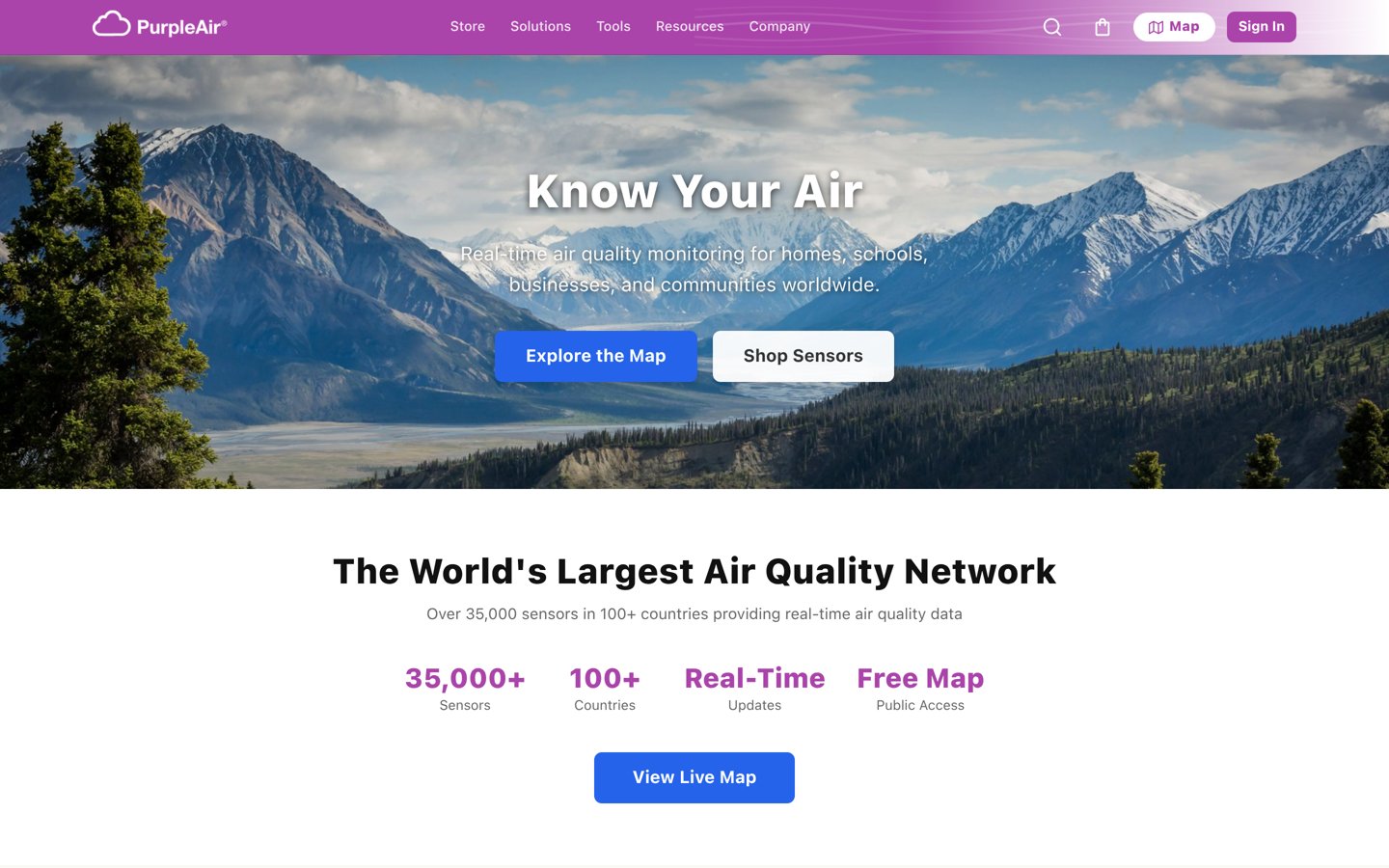
PurpleAir homepage, captured Nov 2026.
PurpleAir is a sensor network first and an app second. Owners install small laser sensors at homes and businesses, and the public map shows their readings in real time, updating every two minutes. Where sensors are dense, you can see block-by-block differences during smoke that a regional monitor misses.
The trade off is cost and coverage. The map is free, but your own sensor is a one-time purchase from $209, and coverage depends entirely on where people have installed sensors. It suits wildfire-season households in areas with many nearby sensors.
What we like
Street-level readings every two minutes
Public map is free to use
Best during wildfire smoke where sensors are dense
3.6/5on Google Play (932 reviews, checked Nov 2026)
PriceFree
Best official US air quality source
CoverageUS, Canada, Mexico
ForecastToday and tomorrow
Fire and Smoke mapYes, with US Forest Service
Free planYes, fully free
airnow.gov
AirNow homepage, captured Nov 2026.
AirNow is the United States Environmental Protection Agency app, and it is free on iOS and Android. It shows the current AQI for your location or any area you choose, with today and tomorrow forecasts and an interactive map of monitors that also covers Canada and Mexico.
The trade off is scope. Coverage outside North America is limited, forecasts run only two days, and users rate it lower than the leading third-party apps. It suits United States readers who want the official index and the Fire and Smoke map during wildfire season.
3.6/5on Google Play (6,940 reviews, checked Nov 2026)
PriceFree
Best for European city sensor maps
Sensors13,000+ data points
ForecastNeural network based
PollutantsPM1, PM2.5, PM10
Free planYes
airly.org
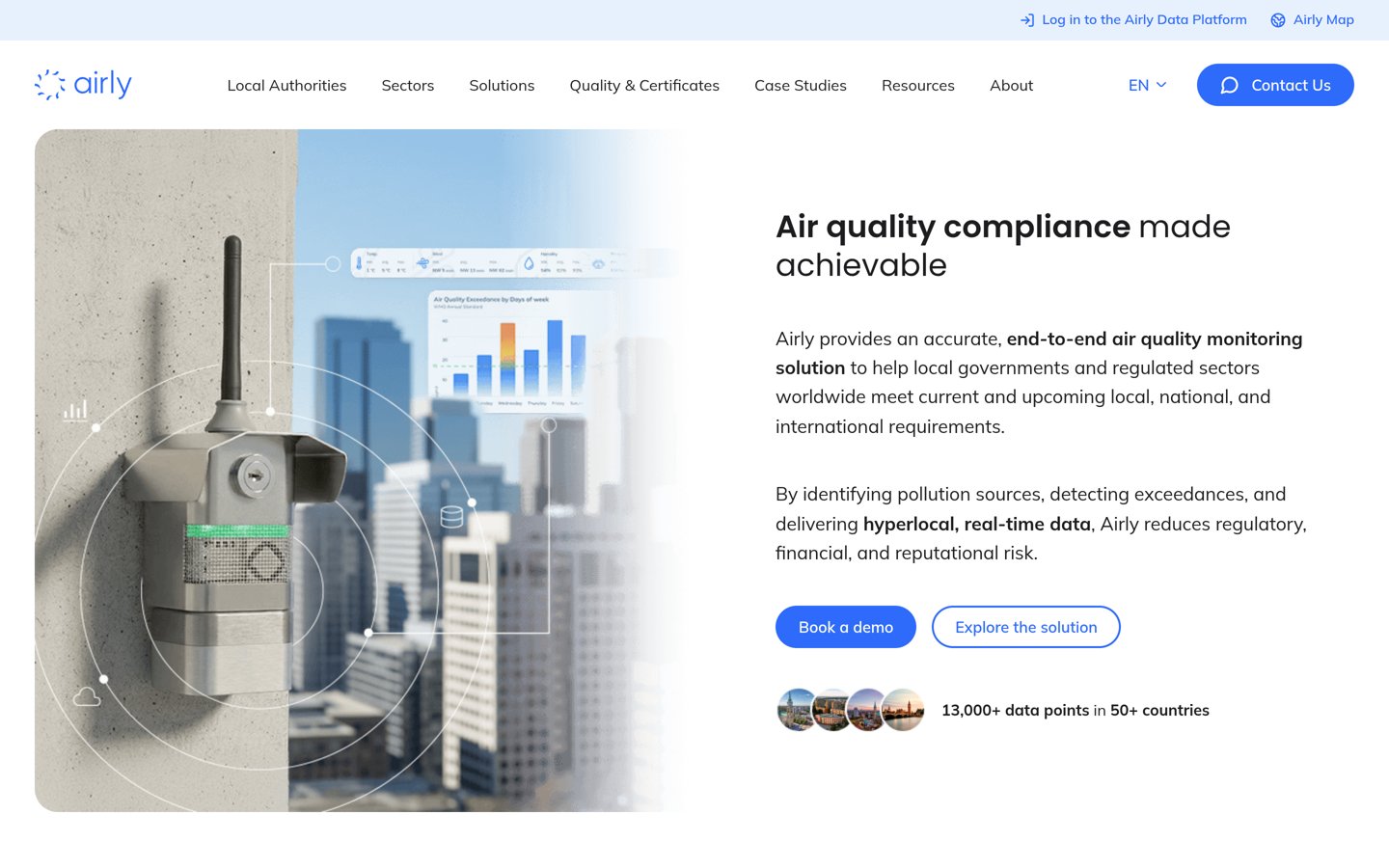
Airly homepage, captured Nov 2026.
Airly is a sensor-network air quality app that runs a dense network of its own sensors plus public monitoring stations, and its map shows street-level air quality with a forecast built on neural network predictions. The app is free, covers PM1, PM2.5, PM10, temperature, pressure and humidity, and updates every few minutes.
The trade off is geography. The network is strongest in Poland and European cities, so coverage thins out elsewhere, and the app earns a middling store rating. It suits readers in Europe who want a detailed local sensor map beside a global app.
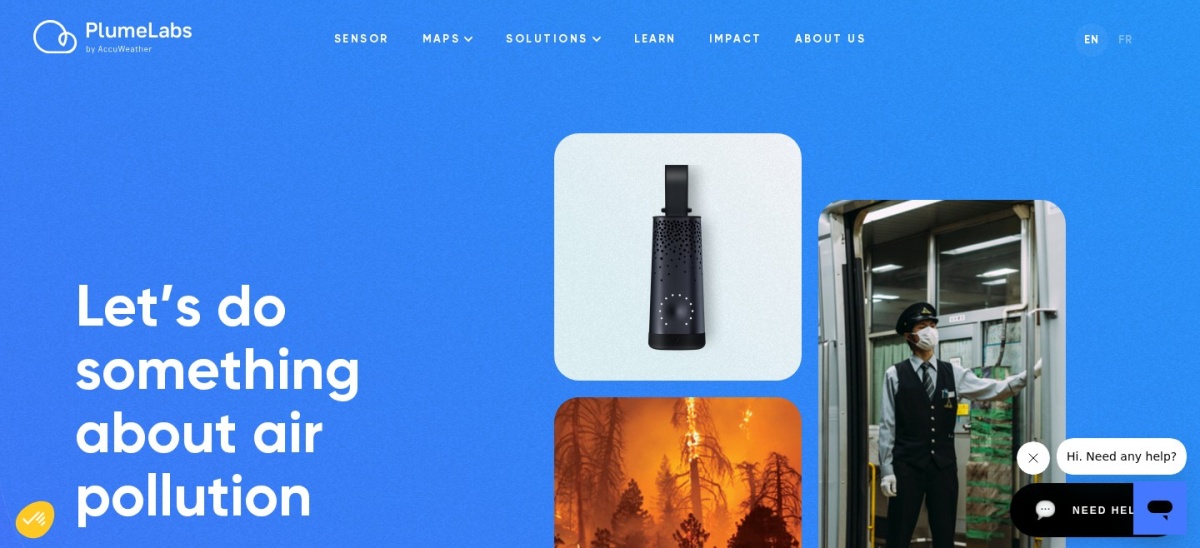
Plume Labs is an air quality app built around one question: what will the air be like where you are going, and when? Instead of only showing a current reading, it forecasts exposure hour by hour, so you can pick a better time for a walk or a run.
The trade off is upkeep. The app was last updated in October 2023, recent reviews report crashes on some Android devices, and Plume was bought by AccuWeather. It suits readers who like the hourly forecast and can live with an app that may not get fixes.
1.3/5on Trustpilot (543 reviews, checked Nov 2026)
Paid from$19.99/yr
Best for forecasts with AQI context
ForecastUp to 90 days with Premium+
MinuteCastYes
Air qualityAQI with forecasts
Free planYes, with ads
accuweather.com
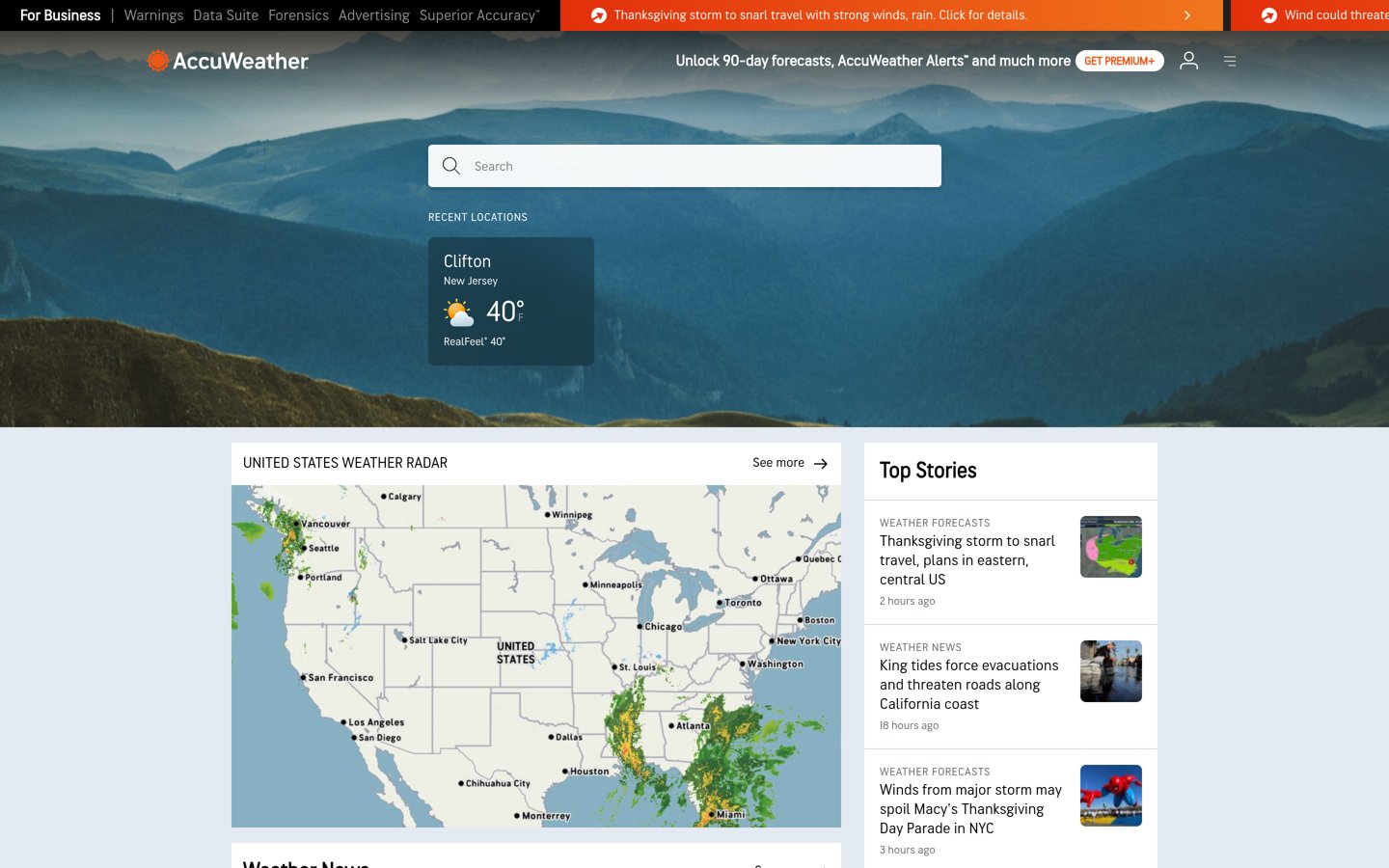
AccuWeather homepage, captured Nov 2026.
AccuWeather is one of the biggest weather apps, with forecasts, radar, MinuteCast rain timing and air quality context in one place. The iOS app still rates well, and Premium adds alerts and extended forecasts for people who already rely on AccuWeather every day.
The trade off is trust. Trustpilot reviewers rate AccuWeather 1.3 out of 5, complaining about intrusive ads, a 2025 redesign and features moving behind a second subscription. It suits readers who already use AccuWeather and want AQI beside the forecast.
We started from the air quality apps that appear most often in 2026 round-ups and app store charts, then kept the established apps with a free version and a verifiable public rating. Hardware-only products and apps with no public rating were left out.
Prices and ratings were checked on 25 November 2026. Ratings come from Google Play, the App Store or Trustpilot, as listed for each app, because consumer air quality apps have almost no G2 or Capterra coverage. Prices come from vendor pages and official store listings; where a listing shows a non-United States price, the list says so.
We left out Ambee, which has too few App Store ratings to show a score, and Windy, a weather app first whose air quality layer is secondary and whose Premium prices are listed without billing periods. No vendor paid for a place, and we do not claim hands-on testing for this list.
How to choose an air quality app
Start with coverage where you live, then decide whether pollen, smoke or alerts matter most.
Check coverage where you live. Open the app and look at readings near your home and workplace. An app with no sensors or monitors nearby is not useful, however good its design is.
Decide whether pollen matters. If allergies drive your choice, pick an app with pollen counts and forecasts, such as AirCare or Air Matters, rather than a bare AQI number.
Set up alerts before smoke season. Push alerts for high AQI or smoke are what make an app useful day to day. Some alerts need a paid plan, so check before you rely on them.
Pair an official source with a sensor map. Use AirNow or IQAir AirVisual for the official index, and PurpleAir or Airly for street-level changes during smoke. Check several nearby sensors before acting.
FAQ
What is the best air quality app?
IQAir AirVisual is the best all-round air quality app. It is free, covers more than 500,000 locations in over 100 countries, includes a seven-day forecast and health advice, and pairs with IQAir monitors for indoor readings.
Are air quality apps free?
Most are. IQAir AirVisual, AirNow, Airly and Plume Labs are fully free, while AirCare, WeatherBug and Air Matters are free with optional paid upgrades. The paid upgrades cost $10.99 to $39.99 a year, and PurpleAir charges only for its sensors.
Which air quality app is best for wildfire smoke?
AirNow has the official Fire and Smoke map, produced with the United States Forest Service, and it is the reference during wildfire season. PurpleAir adds street-level readings from nearby community sensors that update every two minutes.
Which app shows pollen and air quality together?
AirCare tracks five pollen types in the United States and Europe alongside AQI, UV and fire hotspots, and its Pro plan costs $39.99 a year. Air Matters also shows pollen data and forecasts for the United States and Europe.
What AQI level is unhealthy?
On the United States AQI scale, values above 100 are unhealthy for sensitive groups, and above 150 are unhealthy for everyone. Sensitive groups include people with asthma, heart or lung conditions, children and older adults.
Why do air quality apps show different numbers?
They use different sensors, models and AQI standards. Community sensors measure very local conditions, while official monitors and models give area averages. Air Matters lets you switch between United States, United Kingdom, China and India standards.
SaaS SEO and WordPress specialist with about 8 years of experience. Rakib compares WordPress plugins, themes, hosting and software using public pricing, documentation and user reviews. See how we rank.