Paperpal is the best AI writing software for most researchers, with Prime at 144 dollars a year and journal checks built for manuscript submission. Jenni AI suits long-form drafting with citations, while Writefull is the cheapest annual pick for LaTeX users.
How we make this list: we compare pricing pages, product documentation and public user reviews, then re-check every price before each update. No product paid for a place. Disclosure.
Paperpal Prime costs $144 a year and includes 20,000 monthly edits plus plagiarism and reference checks.
Jenni AI Plus costs $144 a year and offers unlimited citations across more than 10,000 styles.
Writefull Premium costs $65.52 a year, the lowest annual price here, and is built for Overleaf and Word.
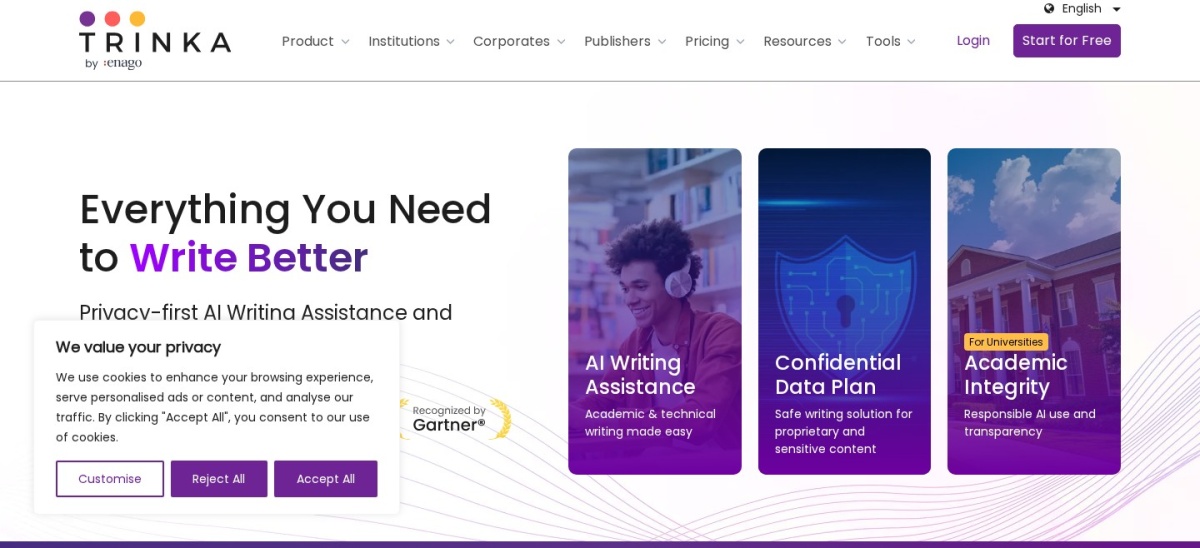
Trinka AI Premium costs $80 a year and focuses on technical editing and style-guide compliance.
Scite Basic costs $144 a year and shows whether later papers support or contrast with a claim.
What to look for in AI writing software for research papers
General chatbots can draft prose quickly, but academic writing demands accurate source grounding, disciplined tone and clear boundaries around authorship. Fabricated citations or unverified claims create serious problems in coursework and peer-reviewed submissions.
Most dedicated academic tools split into two camps: manuscript editors and citation-aware research assistants. Manuscript editors focus on grammar, academic phrasing, consistency and journal formatting, while research tools help locate papers, extract findings and verify how studies cite one another.
Pricing is often split between monthly and annual billing, with monthly rates running noticeably higher than annualised plans. Watch credit allowances and monthly caps on plagiarism or reference checks so you do not hit limits mid-draft. Our guide on best AI tools for academic writing covers the same tools from the wider academic angle.
Always check your institution or target journal guidelines on AI use before relying on generative rewriting or automated citation insertion. Even when a tool retrieves real references, you should open and verify every source yourself.
The 7 best AI writing software tools for research papers
01
Paperpal
4.8/5on Trustpilot (579 reviews, checked Nov 2026)
Paid from$144/yr
Best AI writing software for research papers overall
Free tier200 edits/mo, 5 AI uses/day
Prime annual$144/yr ($25/mo monthly)
Prime checks20k edits/mo, 10k words plagiarism
IntegrationsWord, Google Docs, Overleaf, Web
paperpal.com
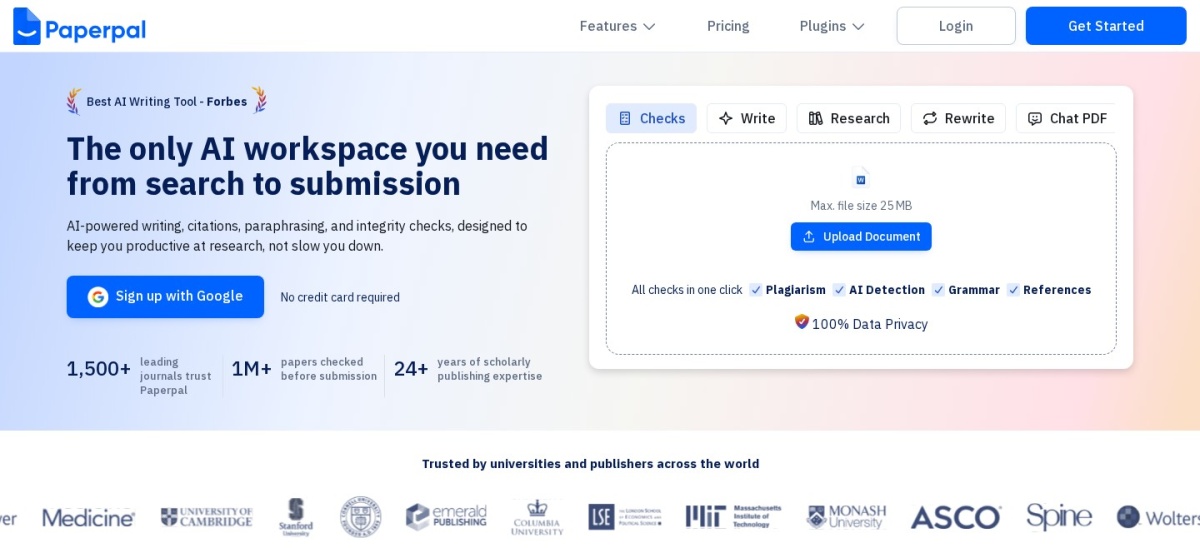
Paperpal homepage, captured Nov 2026.
Paperpal is an academic writing and editing assistant from Cactus Communications built for researchers and students. Its free plan includes 200 monthly grammar edits, 5 daily writing and polishing actions, and a lite plagiarism check.
The trade off is that heavy monthly editing and full journal-fit reports require a paid plan, with Prime at $144 a year billed annually ($25 a month monthly), and promotional discounts sometimes lower initial billing. It suits writers polishing drafts for journal submission or regular coursework.
What we like
Academic-specific language, consistency and journal checks
4.2/5on Trustpilot (161 reviews, checked Nov 2026)
Paid from$144/yr
Best for assisted drafting and inline citations
Free tier10 autocompletes/day, 10 PDFs
Plus annual$144/yr ($30/mo monthly)
Plus limits5,000 autocompletes, 500 AI requests/mo
Citation stylesUnlimited in 10,000+ styles
jenni.ai
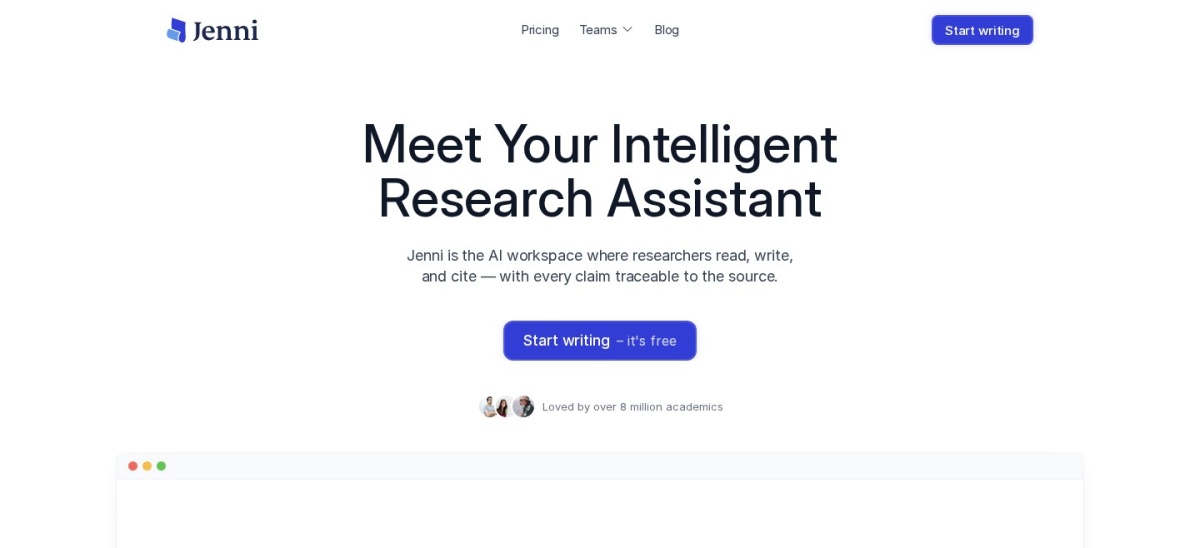
Jenni AI homepage, captured Nov 2026.
Jenni AI is an academic writing workspace with in-editor autocomplete, source-based drafting and citation formatting. The free plan includes unlimited citations across more than 10,000 styles, 10 daily autocompletes and up to 10 PDF uploads.
The trade off is strict daily and monthly limits on AI generation unless you upgrade to Plus at $144 a year billed annually ($30 a month monthly), and some Trustpilot reviewers note billing and refund friction. It suits students and researchers drafting sections with inline references.
What we like
Built-in citation insertion inside the writing editor
Free tier allows unlimited citation formatting
Supports version history and a browser extension
Watch out for
Free plan restricts daily autocompletes
Monthly plan is much pricier than annual billing
Plus raises limits to 5,000 monthly autocompletesVisit jenni.ai
03
Writefull
4.8/5on Capterra (5 reviews, checked Nov 2026)
Paid from$65.52/yr
Best for LaTeX, Overleaf and budget annual plans
Free tierLimited daily quotas on tools
Premium annual$65.52/yr ($15.37/mo monthly)
Key toolsLanguage edits, title and abstract helpers
IntegrationsOverleaf, Microsoft Word, Web
writefull.com
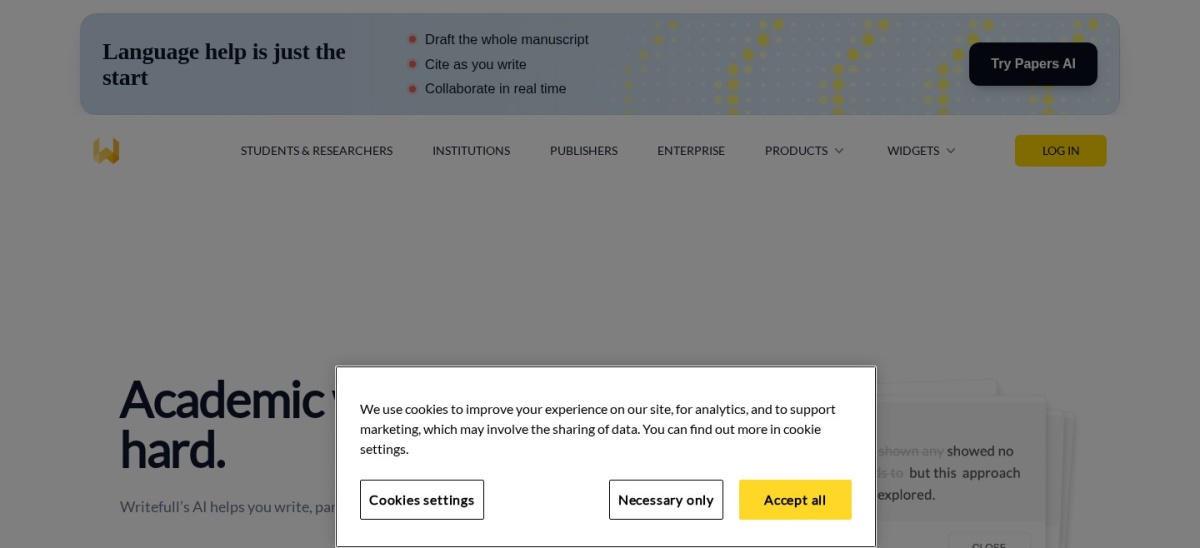
Writefull homepage, captured Nov 2026.
Writefull is an academic writing assistant tailored to scholarly phrasing, Overleaf LaTeX workflows and Microsoft Word. Its free plan provides limited daily usage across language feedback, abstract and title generators, and writing widgets.
The trade off is tight daily free quotas and a narrow focus on academic English rather than general writing, though Premium starts at $65.52 a year billed annually. It suits researchers and STEM authors working in Overleaf or Word on a budget.
What we like
Low annual entry price for individual academic users
Designed around Overleaf LaTeX workflows
Specialised tools like title and abstract generators
Watch out for
Free tier daily limits run out quickly
Focused on academic English rather than broad writing
Trinka AI is a grammar and writing assistant built for academic and technical English. Its free Basic plan lets you test core writing enhancements with a small allowance of AI writing requests.
The trade off is credit-based usage on certain checks and mixed ratings on G2, with annual Premium starting at $80 a year. It suits authors looking for technical style checks and Word or LaTeX file proofreading.
What we like
Targets academic and technical writing conventions
Under $100 a year on the entry annual plan
Includes Citation Checker and Journal Finder
Watch out for
Credit consumption across checks needs tracking
Smaller review count and lower G2 score than rivals
Premium expands monthly usage and adds file proofreadingVisit trinka.ai
05
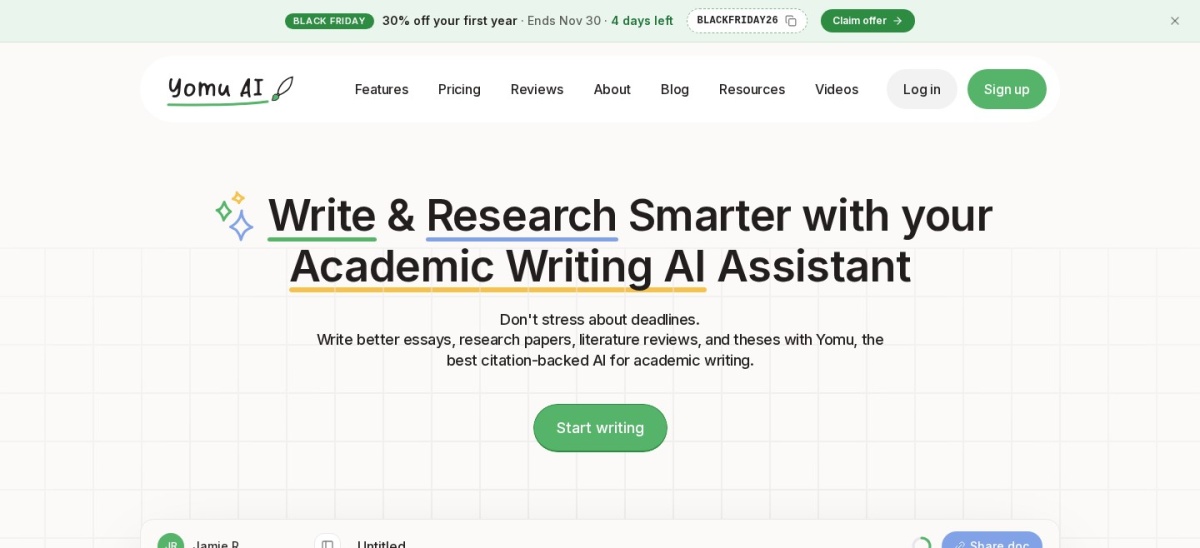
Yomu AI
4.2/5on Trustpilot (1 reviews, checked Nov 2026)
Paid from$120/yr
Best for structured drafting and PDF chat
Free accessFree tier available to try
Pro annual$120/yr ($21/mo monthly)
Pro quota1,000 AI actions/month
Ultra annual$204/yr, unlimited AI actions
yomu.ai
Yomu AI homepage, captured Nov 2026.
Yomu AI is an academic writing editor that combines outline and draft generation with PDF chat and citation tools. It offers a free way to get started alongside paid Pro and Ultra tiers.
The trade off is a monthly cap of 1,000 AI actions on Pro at $120 a year billed annually ($21 a month monthly), and public review counts remain small. It suits students and researchers who want source chat and structured drafting in one editor.
What we like
Combines drafting, PDF chat and reference management
Lower annual price than several competing suites
Includes academic and web search plus a reference library
Watch out for
Pro caps usage at 1,000 AI actions a month
Very limited independent public review volume
Pro provides 1,000 monthly AI actions with PDF chatVisit yomu.ai
06
Scite
4.7/5on G2 (27 reviews, checked Nov 2026)
Paid from$144/yr
Best for checking how papers cite each other
Free tierFree plan with public data access
Basic annual$144/yr ($20/mo monthly)
Basic allowance250 MCP credits/month
Pro annual$480/yr ($50/mo monthly)
scite.ai
Scite homepage, captured Nov 2026.
Scite is a research and citation platform that shows whether later papers support or contrast with a given study. It offers a free tier to try the platform alongside paid Basic and Pro subscriptions.
The trade off is a focus on citation context and research search rather than full document word processing, with Basic at $144 a year billed annually ($20 a month monthly). It suits researchers vetting claims and literature reviews before and during writing.
What we like
Distinguishes supporting and contrasting citation context
Strong G2 rating among reviewed academic tools
Offers a Zotero plugin and browser extension
Watch out for
Not a full-featured manuscript word processor
Higher-volume collections sit on pricier tiers
Basic unlocks full assistant and search accessVisit scite.ai
07
Elicit
4.5/5on G2 (1 reviews, checked Nov 2026)
Paid from$588/yr
Best for systematic literature extraction tables
Free tierBasic plan with unlimited paper search
Pro annual$588/yr ($75/mo monthly)
Pro review scaleScreen up to 5,000 papers, 20 columns
Corpus138M+ academic papers
elicit.com
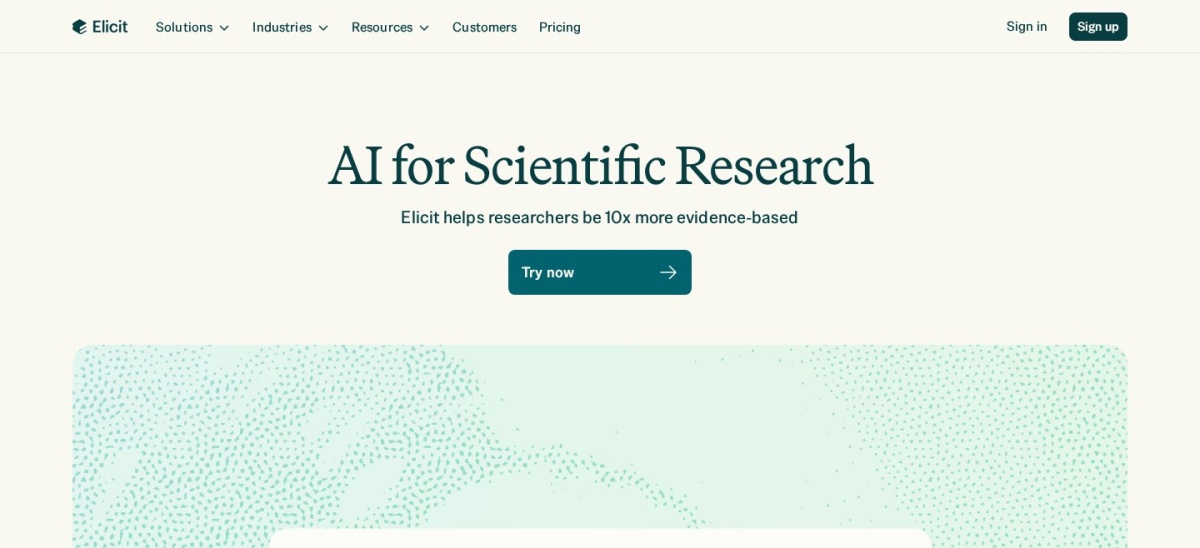
Elicit homepage, captured Nov 2026.
Elicit is an AI research assistant built to search academic papers, summarise studies and extract structured findings into tables. Its Basic plan is free with unlimited paper search, and Pro adds large-scale screening.
The trade off is price. Pro costs $588 a year billed annually ($75 a month monthly), the highest in this list, and the G2 review base is a single review. It suits researchers running systematic reviews with thousands of papers to screen.
What we like
Unlimited paper search on the free Basic plan
Structured extraction tables for systematic reviews
Free plans cover occasional editing and drafting well. Paperpal gives 200 monthly edits free, and Jenni AI gives unlimited citation formatting on its free tier.
Paid plans mostly add volume and checks. Higher monthly edit allowances, plagiarism word counts, reference checks and PDF chat sit behind the paywall.
For a thesis or a journal submission, one month of a paid plan often costs less than a single rejected round of review. Buy the month you submit, then cancel if the work pauses.
How we chose
We started from the academic writing tools most often recommended for researchers, then kept the seven with published pricing and a public rating on G2, Capterra or Trustpilot.
Prices come from each vendor's pricing page or our sibling academic-writing comparison checked in November 2026, with regular prices shown and promotional discounts excluded. Ratings and review counts come from G2, Capterra or Trustpilot on the same day.
We left out general chatbots and tools with no verifiable rating on the three review platforms. No vendor paid for a place, and we do not claim hands-on testing for this list.
How to choose AI writing software for research papers
Start with the job your paper needs most, then check the caps that will stop you mid-draft.
Name the main job first. Polishing needs Paperpal or Trinka, drafting needs Jenni AI or Yomu, and literature work needs Scite or Elicit.
Check monthly caps before paying. Free plans cap edits, AI actions or plagiarism words, so match the allowance to the weeks you write most.
Confirm your editor works with it. Overleaf users need Writefull or Paperpal, Word users need Trinka or Paperpal, and Zotero users get most from Scite.
Read your journal AI policy. Some journals restrict generative rewriting or require disclosure, so check the rules before the tool writes a paragraph.
FAQ
What is the best AI writing software for research papers?
Paperpal is the best pick for most researchers. Prime costs $144 a year and adds journal checks, plagiarism screening and 20,000 monthly edits. Jenni AI suits drafting, while Writefull is the cheapest annual pick.
Is there free AI writing software for research papers?
Yes. Paperpal gives 200 monthly edits free, Jenni AI gives unlimited citation formatting, and Scite and Elicit both offer free tiers for searching papers. Paid plans add volume and full checks.
Can AI writing tools cite sources correctly?
Citation-aware tools like Jenni AI, Scite and Elicit work from real papers and format references for you. General chatbots can invent citations, so use a tool built for research and verify every reference yourself.
What is the cheapest AI writing tool for researchers?
Writefull Premium is the cheapest annual pick here at $65.52 a year, built for Overleaf and Word. Trinka AI Premium is next at $80 a year, and Yomu AI Pro costs $120 a year.
Is Jenni AI or Paperpal better for a thesis?
Jenni AI is better for drafting a thesis, with autocomplete and inline citations in one editor. Paperpal is better for polishing the finished draft, with journal checks and consistency screening before submission.
Do journals allow AI writing tools?
It depends on the journal. Many allow AI for language editing with disclosure, while some restrict generative drafting. Check your target journal and institution rules before relying on any AI writing tool.
SaaS SEO and WordPress specialist with about 8 years of experience. Rakib compares WordPress plugins, themes, hosting and software using public pricing, documentation and user reviews. See how we rank.