Best Accounting Software for Resellers in 2026: 7 Tools Compared
WLWPLegible EditorsLast verified 22 Nov 2026How we rank6 min read
★ Short answer
QuickBooks Online is the top pick for resellers thanks to broad bank-feed and third-party integration support, with regular US plans starting at $38/mo. Zoho Books offers low-cost entry at $15/mo billed annually, while Wave starts free with a $19/mo Pro option.
How we make this list: we compare pricing pages, product documentation and public user reviews, then re-check every price before each update. No product paid for a place. Disclosure.
QuickBooks Online Simple Start lists at $38/mo regular price in the US, with introductory discounts often advertised on its site.
Zoho Books Standard starts at $15/mo billed annually ($20/mo monthly) for up to 3 users, while a free tier applies to eligible small businesses.
Xero Early starts at $27/mo in the US with bank reconciliation, invoicing, and bill tracking up to monthly caps.
FreshBooks Lite starts at $23/mo regular price for up to 5 billable clients, with annual billing discounts available.
Wave offers a $0 Starter plan and a $19/mo ($190/yr) Pro plan for automated bank feeds and receipt capture.
Sage 50 Pro starts at $132.17/mo on its US cloud plan for one user with inventory and job costing.
What resellers need from accounting software
Resellers buy stock or digital goods and flip them across marketplaces, storefronts, or wholesale channels, which means small timing gaps between purchasing and selling can distort cash flow. Clear expense tracking and bank reconciliation help separate inventory purchases from everyday operating costs.
Item counts, cost of goods sold, and multi-channel payouts quickly outgrow basic spreadsheets once order volume climbs. Many resellers pair core bookkeeping software with dedicated inventory or ecommerce connectors rather than relying on one-size-fits-all stock tools.
Sales tax rules and client or vendor records also matter as soon as you sell across multiple states or manage repeat suppliers. Checking plan limits on invoices, bills, and user seats prevents surprise tier upgrades mid-season.
Before committing to an annual contract, verify whether key features such as purchase orders, multi-currency handling, or inventory tracking sit on entry tiers or require a higher plan.
Best for broad integrations and accountant familiarity
Regular US entry$38/mo (Simple Start)
Entry users1 user + accountant
Core workflowBank feeds & invoicing
Higher tiersEssentials, Plus, Advanced
quickbooks.intuit.com
QuickBooks Online homepage, captured Nov 2026.
QuickBooks Online is cloud accounting software from Intuit that covers bank feeds, expense categorization, invoicing, and financial reporting for small businesses. Its Simple Start plan lists at $38/mo regular price in the US for 1 user plus accountant access, with promotional discounts sometimes shown on its signup pages.
The trade off is that regular pricing climbs across higher tiers—such as Essentials at $85/mo and Plus at $140/mo—and extra seats or inventory features require moving up. It suits resellers who want wide app integrations and easy accountant sharing.
What we like
Broad third-party app ecosystem and widespread accountant familiarity
Automated bank feeds and reconciliation workflows
Clear step-up tiers as reporting or user needs grow
Watch out for
Regular monthly prices rise sharply on upper plans
Simple Start is limited to a single primary user
Some reviewers note interface changes and mixed support experiences
Higher plans add more user seats, multi-currency tools, inventory tracking, and project profitability.Visit quickbooks.intuit.com
02
Zoho Books
4.4/5on G2 (329 reviews, checked Nov 2026)
Paid from$15/mo
Best for low-cost entry pricing and Zoho users
Cheapest paid plan$15/mo billed annually
Monthly billing$20/mo (Standard)
Free option$0 for eligible small orgs
Standard seats3 users included
zoho.com
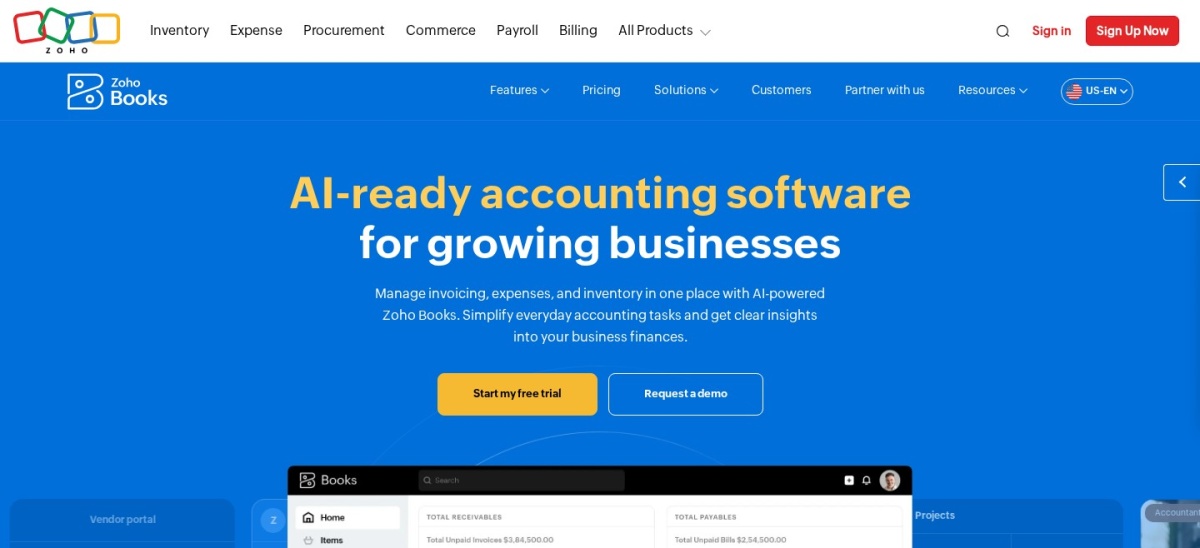
Zoho Books homepage, captured Nov 2026.
Zoho Books is online accounting software that handles invoicing, expenses, accounts, and financial reports, offering a $0 Free plan for qualifying small businesses and a Standard plan at $15/mo billed annually ($20/mo monthly). Standard includes 3 users per organization, with higher tiers ranging up to $240/mo billed annually.
The trade off is that certain workflows—such as purchase orders on Professional at $40/mo billed annually—sit on higher tiers, and fewer US accountants use it than QuickBooks. It suits cost-conscious resellers who want low starting rates or already use Zoho apps.
What we like
Low entry pricing at $15/mo billed annually with 3 users included
Offers a $0 tier for eligible micro businesses
Connects cleanly with other Zoho business applications
Watch out for
Purchase order workflows sit above the entry Standard tier
Smaller third-party integration library than QuickBooks or Xero
Less familiar to some external bookkeepers and CPAs
Upper tiers expand user limits, add purchase orders, and increase bill and expense capacities.Visit zoho.com
03
Xero
4.4/5on G2 (1,862 reviews, checked Nov 2026)
Starts at$27/mo
Best for bank reconciliation and multi-user flexibility
US Early plan$27/mo regular price
Higher US tiers$59/mo and $97/mo
Core featuresBank rec, invoicing, bills
Trial optionFree trial available
xero.com
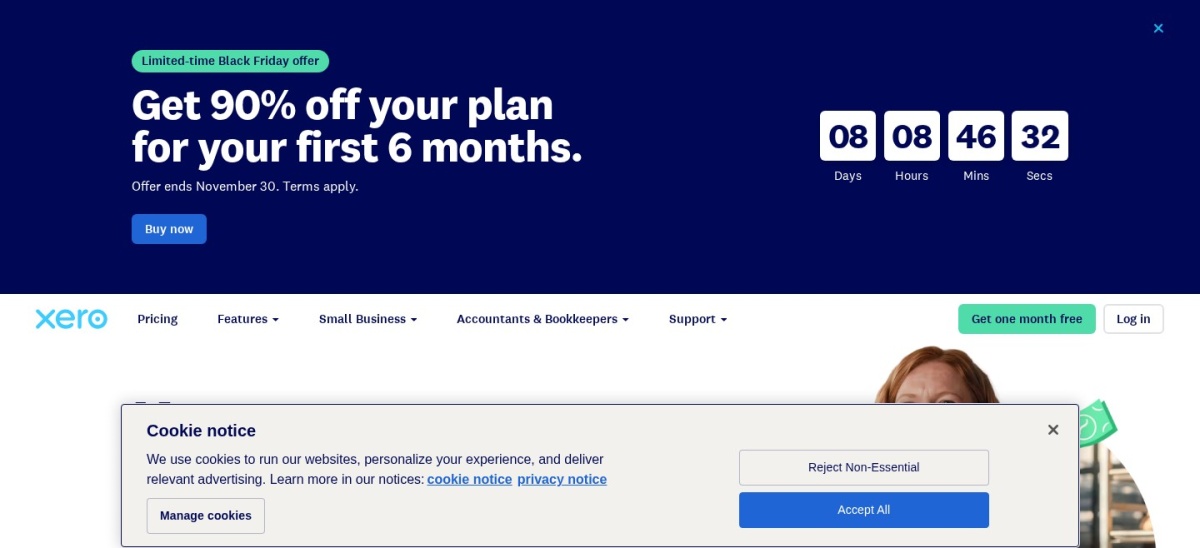
Xero homepage, captured Nov 2026.
Xero is a cloud accounting platform focused on bank transaction matching, online invoicing, bill tracking, and financial reporting. Its US Early plan is $27/mo at regular pricing (with promotional offers periodically advertised), covering up to 20 invoices and 5 bills per month alongside sales tax and 1099 tools.
The trade off is that the Early plan caps monthly invoice and bill counts, pushing higher-volume resellers toward the $59/mo or $97/mo tiers. It suits resellers who want a straightforward interface and strong reconciliation habits.
What we like
Straightforward bank reconciliation and transaction matching
Includes sales tax calculation support and 1099 reporting
Broad integration options for ecommerce and inventory apps
Watch out for
Early plan caps monthly invoices at 20 and bills at 5
Native inventory features are light for complex stock setups
Higher tiers cost noticeably more once volume outgrows Early
Growing and Established plans lift invoice and bill caps and expand reporting tools.Visit xero.com
04
FreshBooks
4.5/5on G2 (981 reviews, checked Nov 2026)
Starts at$23/mo
Best for simple invoicing and ease of use
Regular Lite price$23/mo ($276/yr annual)
Client cap on LiteUp to 5 billable clients
Upper plansPlus ($43/mo), Premium ($70/mo)
Extra team seats$11/mo per additional user
freshbooks.com
FreshBooks homepage, captured Nov 2026.
FreshBooks is cloud accounting and invoicing software built around clean client billing, expense tracking, estimates, and payment collection. Its Lite plan is $23/mo regular price ($276/yr on annual billing), with introductory discounts sometimes offered on its pricing page.
The trade off is that Lite caps you at 5 billable clients and lacks deep stock management, while extra users cost $11/mo each. It suits solo resellers with a small client list who prioritize simple invoicing and expense tracking.
What we like
Approachable interface that is quick to set up without heavy accounting jargon
Straightforward invoicing, estimates, and expense tracking
Annual billing lowers the effective monthly cost
Watch out for
Lite caps billable clients at 5 and includes 1 user
Limited inventory depth for product-heavy resellers
Adding team members or scaling client count raises monthly costs
Plus and Premium raise client limits, add recurring billing and profitability tools, and expand reporting.Visit freshbooks.com
05
Wave
4.3/5on G2 (328 reviews, checked Nov 2026)
Paid from$19/mo
Best for starting free with optional Pro automation
Starter plan$0/mo basic accounting
Pro monthly price$19 USD/mo
Pro annual price$190 USD/year
Pro extrasAuto bank feeds & OCR
waveapps.com
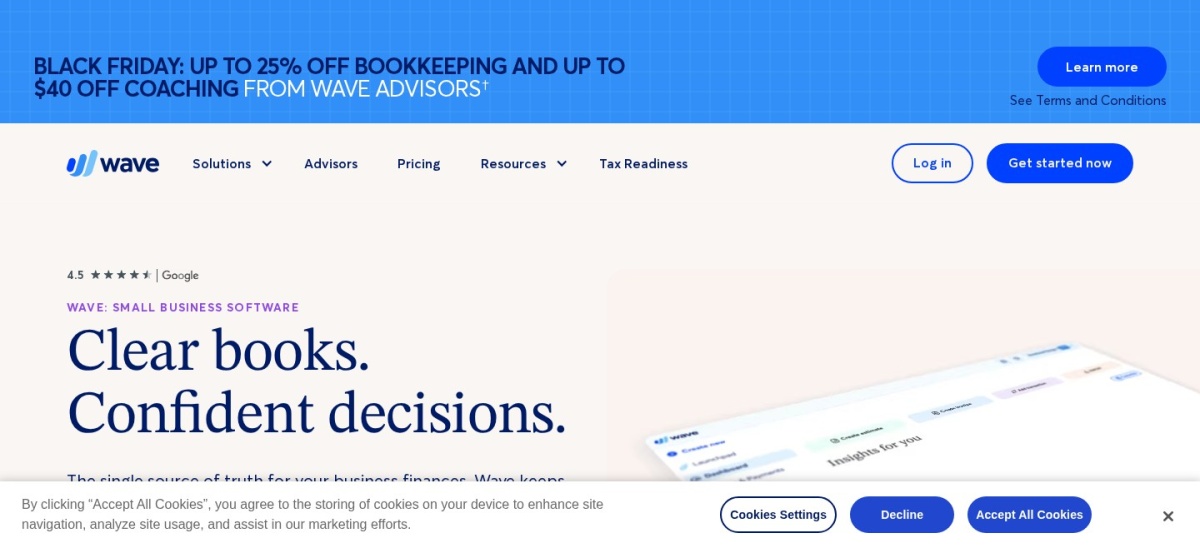
Wave homepage, captured Nov 2026.
Wave is an accounting and invoicing platform that offers a $0 Starter plan for basic bookkeeping and invoicing alongside a Pro plan at $19 USD/mo (or $190 USD/year). Pro adds automated bank transaction imports, receipt scanning, recurring billing, and automated payment reminders.
The trade off is that automated bank feeds and receipt capture sit on the paid Pro plan, and users frequently note payment-processing or support friction in public reviews. It suits small resellers starting on a tight budget with straightforward bookkeeping needs.
What we like
No-cost Starter tier covers foundational invoicing and bookkeeping
Pro at $19/mo or $190/yr adds automated bank feeds and receipt capture
Simple reporting covering profit and loss, balance sheet, and cash flow
Watch out for
Automated bank feeds and receipt scanning require upgrading to Pro
Public reviews highlight occasional payment holds and support delays
Not built for complex multi-warehouse inventory workflows
Pro unlocks automated bank imports, receipt OCR, recurring billing, and payment reminders.Visit waveapps.com
06
Kashoo
4.6/5on G2 (55 reviews, checked Nov 2026)
Starts at$30/mo
Best for flat-rate simple double-entry bookkeeping
Regular plan price$30.00/mo (single plan)
Trial option14-day free trial
Accounting basisDouble-entry bookkeeping
User seatsMulti-user included
kashoo.com
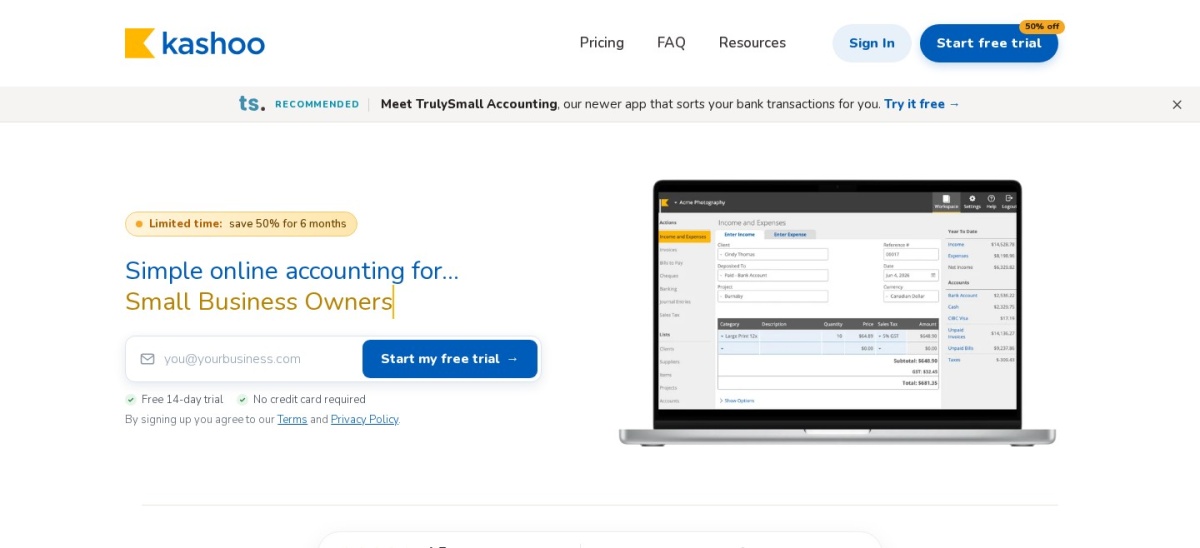
Kashoo homepage, captured Nov 2026.
Kashoo is a cloud bookkeeping and invoicing app offering one main plan at $30.00/mo regular price (with promotional discounts sometimes advertised) and a 14-day free trial. It supports double-entry accounting, bank feeds, expense tracking, invoicing, and core financial statements.
The trade off is a smaller integration ecosystem and fewer advanced features—such as deep inventory control or broad multi-currency support—than larger suites. It suits small resellers who want a single flat-rate plan without tier hunting.
What we like
Single straightforward monthly price at $30.00/mo without complex tier ladders
Provides double-entry accounting and core financial statements
Supports multiple users per business subscription
Watch out for
Smaller third-party integration ecosystem than major competitors
Limited inventory management for stock-heavy operations
Smaller review footprint than mainstream accounting platforms
A single plan bundles core bookkeeping, invoicing, bank feeds, and multi-user access.Visit kashoo.com
07
Sage 50
3.9/5on G2 (155 reviews, checked Nov 2026)
Starts at$132.17/mo
Best for detailed inventory costing and job tracking
US Pro cloud price$132.17/mo (1 user)
Upper tiersPremium ($182.50/mo), Quantum
Key strengthsInventory & job costing
Payroll optionPaid add-on subscription
sage.com
Sage 50 homepage, captured Nov 2026.
Sage 50 is an established accounting platform with cloud and desktop options designed around detailed inventory tracking, job costing, purchase orders, and financial reporting. Its US Pro Accounting cloud plan starts at $132.17/mo for one user, with Premium at $182.50/mo and Quantum at $271.17/mo.
The trade off is a much higher entry price than basic small-business tools and a more traditional interface that can feel dated. It suits resellers with heavier inventory and costing needs who can justify the higher monthly cost.
What we like
Stronger inventory and job costing focus than entry invoicing tools
Supports purchase orders, bill tracking, and bank reconciliation
Clear tier path up to multi-user and multi-company plans
Watch out for
Higher starting price than entry cloud tools at $132.17/mo
Interface feels more traditional than newer cloud-first apps
Payroll requires a separate add-on subscription
Premium and Quantum expand user counts, multi-company support, and advanced inventory controls.Visit sage.com
Practical bookkeeping habits for resellers
Track marketplace fees, shipping labels, and payment processing charges separately from gross sales so you can see true net margin on every order. Mixing net payouts with gross revenue makes profit reports harder to reconcile at tax time.
Reconcile bank and payment accounts monthly rather than waiting until year-end. Catching duplicate charges, refunds, or unposted inventory bills early keeps cash-flow forecasts reliable.
How we chose
We built this list from established accounting platforms commonly used by small product sellers and resellers, focusing on tools with public US pricing and active maintenance.
All prices, review scores, and review counts were checked on 22 Nov 2026 from vendor pricing pages and public software review directories.
We excluded tools that lacked transparent public pricing or did not fit standard reseller bookkeeping workflows. No vendor paid for a place, and we do not claim testing for this list.
How to choose accounting software for reselling
Follow four steps to narrow down the right accounting platform for your reselling workflow.
Check your monthly transaction and invoice volume. Compare entry plan limits—such as Xero Early's monthly caps or FreshBooks Lite's client limit—against how many orders, invoices, and bills you process each month.
Decide how you handle inventory and sales channels. If you track unit costs across multiple channels or warehouses, check whether built-in features or third-party integrations cover your stock workflow cleanly.
Verify regular pricing rather than promo rates. Look past introductory discounts to see the standard monthly or annual renewal rate, plus the cost of extra users or add-ons.
Confirm accountant compatibility and export options. Make sure your bookkeeper or tax preparer can work with your chosen platform and export clean profit-and-loss and balance-sheet reports.
FAQ
What is the cheapest paid option on this list?
Zoho Books Standard starts at $15/mo billed annually ($20/mo monthly) for up to 3 users, while Wave Pro is $19 USD/mo or $190 USD/year. Wave also offers a $0 Starter plan for basic bookkeeping and invoicing.
Do resellers need dedicated inventory software alongside accounting?
Often yes. Basic accounting plans handle invoices, expenses, and simple items well, whereas high-SKU or multi-channel resellers frequently pair their accounting ledger with specialized inventory or ecommerce sync tools.
Why do accounting tools advertise lower monthly rates than the regular price?
Many vendors run limited-time introductory discounts or lower rates for annual billing. Always check the standard renewal rate so your ongoing budget matches what you will pay after any promo ends.
Is a free accounting plan enough for a new reseller?
A free tier can work when you have low transaction volume and simple bookkeeping needs. Once you need automated bank feeds, higher limits, or more team access, a paid plan usually saves time.
How should resellers track marketplace fees and refunds?
Record gross sales, refunds, and platform fees or shipping deductions clearly rather than posting only net bank deposits. That breakdown keeps revenue, expense, and margin figures accurate on financial statements.
When should a reseller consider a pricier plan like Sage 50?
Consider higher-priced options like Sage 50 when you need deeper inventory and job costing controls or multi-user capabilities beyond what entry-level cloud plans provide.