Best Accounting Software for Real Estate Investors in 2026: 7 Tools Compared
WLWPLegible EditorsLast verified 22 Nov 2026How we rank6 min read
★ Short answer
Stessa is our top pick for real estate investors, offering free property-level tracking for unlimited properties and paid plans starting at $12/mo billed annually. Baselane suits landlords who want property banking paired with bookkeeping, while Buildium fits larger portfolios that need full property management and trust accounting.
How we make this list: we compare pricing pages, product documentation and public user reviews, then re-check every price before each update. No product paid for a place. Disclosure.
#2 Best banking
Baselane
Property banking and bookkeeping with no monthly fee
Stessa starts free for unlimited properties, with Manage at $12/mo billed annually ($15/mo monthly) and Pro at $28/mo billed annually ($35/mo monthly).
Baselane offers a free Core plan for banking and bookkeeping, plus Smart at $20/mo billed annually for added automation.
Landlord Studio starts free on Go for up to 3 units, with Pro starting at $12/mo billed annually ($15/mo monthly) plus $1 per extra unit.
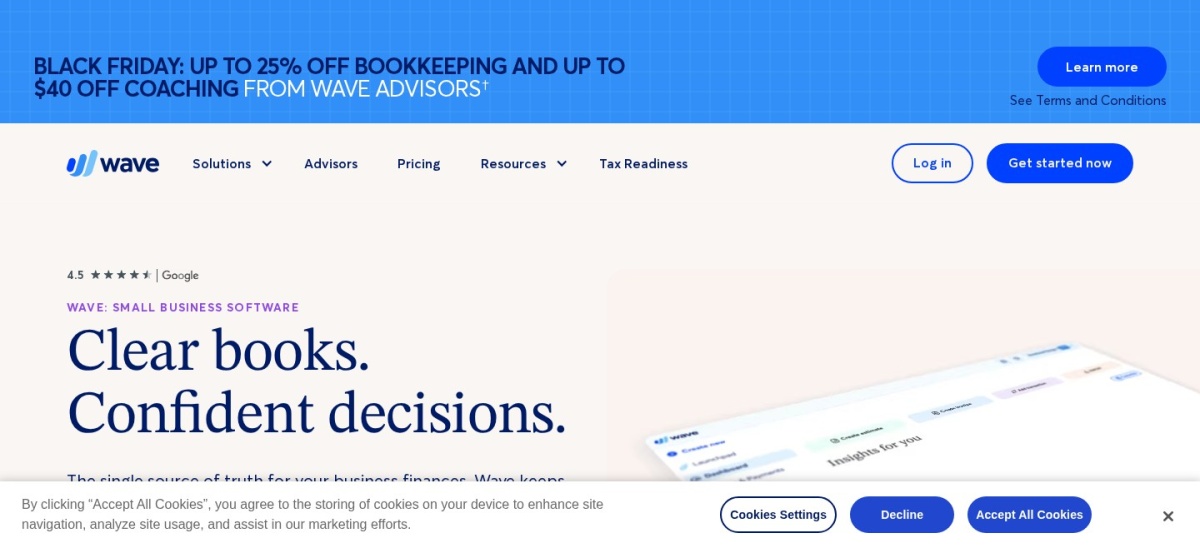
Wave provides a free Starter plan for basic bookkeeping and invoicing, while Pro is $19/mo monthly or $190/yr billed annually.
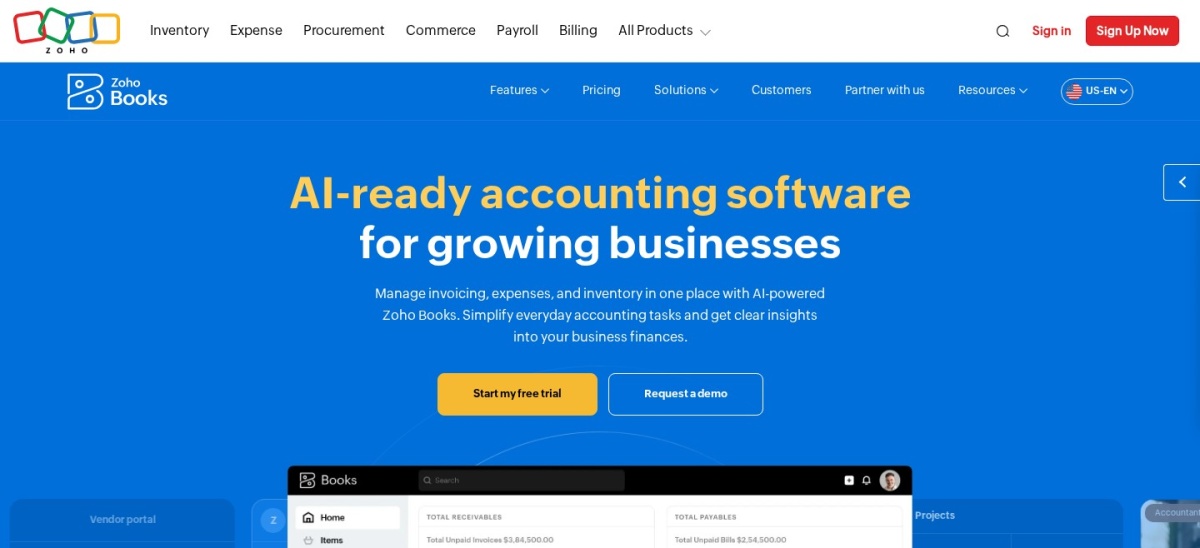
Zoho Books offers a free plan for eligible small businesses and a Standard plan at $15/mo billed annually ($20/mo monthly).
Buildium starts at $65/mo for property accounting and management across growing residential portfolios.
What to look for in real estate investor accounting
General small-business ledgers track income and expenses by company, but real estate investors usually need numbers broken down by property, unit, and legal entity. Without property-level tagging or dedicated sub-accounts, separating mortgage interest, repairs, and capital improvements at tax time takes extra cleanup.
Decide whether you want standalone rental bookkeeping, landlord banking tied to each property, or full property management software. All-in-one property tools add rent collection, tenant portals, and maintenance logs, whereas pure accounting tools focus on ledgers, bank feeds, and financial statements.
Watch how pricing scales as your door count or entity count grows. Flat-rate plans stay predictable when adding units, while per-unit pricing can climb quickly once you pass a small threshold, and payment processing or screening fees often sit outside the base subscription.
Check how easily your CPA or bookkeeper can pull year-end summaries and tax reports. Clean exportable ledgers, Schedule E views, and accountant access save hours during tax preparation and reduce classification errors.
The 7 best accounting software for real estate investors
01
Stessa
4.5/5on Capterra (104 reviews, checked Nov 2026)
Paid from$144/yr
Best for rental property bookkeeping
Free tierUnlimited properties
Entry paid planManage ($12/mo annual)
Core focusRental bookkeeping & tax
Pro tier$28/mo annual ($35/mo)
stessa.com
Stessa homepage, captured Nov 2026.
Stessa is a rental finance and bookkeeping platform built for landlords and real estate investors across single-family and small multifamily properties. Its free plan covers unlimited properties with income and expense tracking, rent collection, and maintenance tracking.
The trade off is that receipt scanning caps, higher cash-management yields, and priority phone support sit behind paid plans starting at $12/mo billed annually ($15/mo monthly) on Manage. It suits investors who want property-focused financial tracking without paying per door.
What we like
Free plan supports unlimited rental properties
Built around property-level income and expense tracking
Offers tax-ready reporting and portfolio dashboards
Includes optional landlord banking accounts
Watch out for
Some automation and higher cash-balance yields require paid tiers
Less suited to complex third-party property management trust accounting
Manage starts at $12/mo billed annually ($15/mo monthly); Pro is $28/mo billed annually ($35/mo monthly).Visit stessa.com
02
Baselane
4.8/5on Trustpilot (558 reviews, checked Nov 2026)
Paid from$240/yr
Best for landlord banking and cash flow
Free tierCore ($0/mo)
Entry paid planSmart ($20/mo annual)
BankingProperty checking/savings
Accounting syncQuickBooks & Xero
baselane.com
Baselane homepage, captured Nov 2026.
Baselane is a landlord banking and bookkeeping platform that pairs property-specific checking and savings accounts with income, expense, and Schedule E tracking. Its free Core plan includes no monthly maintenance fee, rent collection tools, and bookkeeping reports.
The trade off is that external ACH or card payments carry transaction fees and Smart automation costs $20/mo on an annual plan. It suits self-managing investors who want banking and bookkeeping tied directly to each property.
What we like
Core plan has $0 monthly maintenance fee
Supports separate accounts by property and entity
Generates Schedule E and cash-flow reports
Syncs with QuickBooks and Xero
Watch out for
Transaction and card fees apply to certain payments
Focused on US landlords rather than full-service agency workflows
Smart plan is $20/mo on an annual plan for added automation and features.Visit baselane.com
03
Landlord Studio
4.9/5on Capterra (150 reviews, checked Nov 2026)
Paid from$144/yr
Best for mobile expense and rent tracking
Free tierGo (up to 3 units)
Entry paid planPro ($12/mo annual)
Extra units$1/mo per unit past 3
Higher tierPro Plus ($28/mo annual)
landlordstudio.com
Landlord Studio homepage, captured Nov 2026.
Landlord Studio is rental property accounting and management software designed for independent landlords tracking income, expenses, and rent collection. The free Go plan covers up to 3 units with basic reporting and online rent collection.
The trade off is that bank feeds, expanded reporting, and extra units beyond 3 add cost on Pro starting at $12/mo billed annually ($15/mo monthly) plus $1 per extra unit. It suits landlords who want mobile receipt capture and unit-level tracking.
What we like
Free Go plan covers up to 3 units
Strong mobile workflow for expenses and rent tracking
Supports listing syndication and tenant screening
Clear step-up tiers with Pro Plus at $28/mo annual
Watch out for
Free tier caps units at 3 and documents at 10
Per-unit add-on fees increase cost as portfolios grow
Pro starts at $12/mo billed annually ($15/mo monthly) plus $1 per additional unit beyond 3.Visit landlordstudio.com
04
Wave
4.4/5on Capterra (1,726 reviews, checked Nov 2026)
Paid from$190/yr
Best for simple double-entry bookkeeping
Free tierStarter ($0)
Entry paid planPro ($190/yr annual)
Monthly Pro$19/mo billed monthly
AccountingDouble-entry ledger
waveapps.com
Wave homepage, captured Nov 2026.
Wave is small-business accounting software offering double-entry bookkeeping, invoicing, expense tracking, and financial reports. Its free Starter plan lets owners record transactions, create invoices and bills, and pull standard reports without a base fee.
The trade off is that automated bank transaction imports and receipt capture move to Pro at $190/yr billed annually ($19/mo monthly), and it lacks native landlord lease tools. It suits investors who want traditional double-entry books and already handle leases elsewhere.
What we like
Starter plan offers core double-entry bookkeeping for free
Straightforward invoicing and financial statements
Optional paid add-ons for payments and bookkeeping help
Simple interface for solo operators
Watch out for
Automated bank feeds and receipt tools require Pro
No built-in property management or tenant portal workflows
Pro is $190/yr billed annually or $19/mo billed monthly; payment processing fees apply separately.Visit waveapps.com
05
Zoho Books
4.4/5on Capterra (683 reviews, checked Nov 2026)
Paid from$180/yr
Best budget multi-user accounting ledger
Free tierAvailable ($0)
Entry paid planStandard ($15/mo annual)
Monthly Standard$20/mo billed monthly
Higher tiersUp to $240/mo annual
zoho.com
Zoho Books homepage, captured Nov 2026.
Zoho Books is cloud accounting software with automated workflows, expense tracking, invoicing, and customizable financial reports. It offers a free plan for qualifying small businesses and a Standard plan at $15/mo billed annually ($20/mo monthly).
The trade off is that deeper project or purchase workflows require higher tiers such as Professional at $40/mo annual, and real estate tracking takes custom setup. It suits cost-conscious investors who want structured accounting and multi-user access.
What we like
Low entry pricing with a free tier for eligible small businesses
Clean reporting and automated transaction rules
Integrates smoothly with other Zoho business apps
Multiple paid tiers from Standard up to Ultimate
Watch out for
Not built specifically around rental units or lease schedules
Some advanced workflows require stepping up to higher plans
Standard is $15/mo billed annually ($20/mo monthly); Professional is $40/mo billed annually.Visit zoho.com
06
QuickBooks Online
4.3/5on Capterra (8,498 reviews, checked Nov 2026)
Starts at$456/yr
Best for CPA familiarity and class tracking
Free tier30-day trial only
Entry paid planSimple Start ($38/mo)
Mid tiersEssentials & Plus
Top tierAdvanced
quickbooks.intuit.com
QuickBooks Online homepage, captured Nov 2026.
QuickBooks Online is widely used small-business accounting software offering bank feeds, expense categorization, invoicing, and financial statements. Its Simple Start plan starts at a regular price of $38/mo (with introductory discounts offered periodically).
The trade off is that class and location tracking for separating properties sits on higher plans like Plus, and it lacks native property management features. It suits investors whose tax preparers already work in QuickBooks daily.
What we like
Widely supported by CPAs and bookkeepers
Strong bank feed matching and financial reporting
Large ecosystem of third-party real estate integrations
Scalable plans up to Advanced
Watch out for
No free plan beyond a trial and no native landlord tools
Class tracking for property breakdowns requires Plus
Simple Start regular price is $38/mo ($456/yr), with Essentials and Plus as higher tiers.Visit quickbooks.intuit.com
07
Buildium
4.5/5on Capterra (2,235 reviews, checked Nov 2026)
Starts at$780/yr
Best for growing residential portfolios
Free tierFree trial only
Entry paid planEssential (from $65/mo)
Growth tierFrom $202/mo
Top tierPremium (from $420/mo)
buildium.com
Buildium homepage, captured Nov 2026.
Buildium is property management and accounting software combining rental ledgers, rent collection, maintenance tracking, and leasing workflows. Its Essential plan starts at $65/mo for core property operations and accounting.
The trade off is a higher starting cost than standalone bookkeeping apps, plus separate fees for items like eSignatures, screening, or bank account setup depending on plan. It suits investors scaling across multiple properties who want accounting and operations under one roof.
What we like
Combines property accounting with leasing and maintenance
Designed for multi-property residential portfolios
Clear upgrade path through Growth and Premium tiers
Centralizes tenant and owner records
Watch out for
Higher monthly cost than general bookkeeping tools
Additional fees apply for certain add-on services
Essential starts at $65/mo ($780/yr); Growth starts at $202/mo and Premium at $420/mo.Visit buildium.com
Standalone accounting vs. property management software
Standalone accounting tools focus on ledgers, bank reconciliation, expense categories, and financial statements. They often cost less and give your accountant clean books, but you may handle lease agreements, maintenance tickets, or rent collection in separate tools.
Property management platforms bundle accounting with tenant portals, work orders, and payment collection. They reduce tool switching as your unit count rises, though you should check base pricing and add-on payment or screening fees before committing.
How we chose
We shortlisted active accounting and landlord finance platforms commonly used by real estate investors for rental income, expense tracking, and financial reporting.
All pricing, free-tier terms, and third-party ratings in this guide were verified on 22 Nov 2026 from vendor pricing pages and review directories.
We excluded discontinued products, tools without verifiable pricing or review data, and platforms whose core workflow did not fit investor bookkeeping needs. No vendor paid for a place, and we do not claim testing for this list.
How to choose real estate accounting software
Follow four practical steps to match a platform to your properties and reporting workflow.
Map how you want to view property performance. Decide whether you need separate profit-and-loss and cash-flow views per property, unit, or LLC before you start importing bank transactions.
Separate base subscription costs from transaction fees. Compare regular monthly or annual plan rates alongside ACH, card, screening, or add-on charges so your real annual cost is clear.
Check how your tax preparer reviews your records. Confirm whether your CPA prefers exported ledgers and Schedule E summaries or direct access to a familiar accounting platform.
Plan ahead for unit and entity growth. Pick software that will not force an awkward mid-year migration when you add another rental property or separate business entity.
FAQ
Can real estate investors use free accounting software?
Yes. Several options offer free plans or free tiers, such as Stessa for unlimited properties, Baselane Core for landlord banking and bookkeeping, and Wave Starter for basic double-entry accounting, though advanced features or add-ons may cost extra.
Do I need real estate-specific software instead of general accounting software?
General accounting software can work well if you keep clean records and use classes or tags where supported, while real estate-focused tools organize tracking around properties, leases, and rental cash flow out of the box.
What reports matter most at tax time for rental properties?
Investors typically rely on property-level income and expense statements, cash-flow reports, receipt records, and Schedule E summaries so deductions and capital items are easy for a tax professional to review.
Should I keep separate bank accounts for each rental property?
Many investors use separate checking or reserve accounts per property or entity to keep deposits, repairs, and mortgage payments distinct, which can simplify bank reconciliation and audit trails.
When does it make sense to upgrade from a free plan to a paid tier?
Upgrading usually makes sense when you need automated bank feeds, expanded reporting, additional users, higher unit limits, or faster workflows that save time across more properties.
Are payment processing fees included in monthly software prices?
Not always. Even when a software plan is free or low cost, online rent collection via ACH or card, tenant screening, or add-on services often carry separate processing or per-use fees.