Harness is the best of the Argo CD alternatives, with managed continuous delivery, GitOps and automatic rollback in one platform, rated 4.6 out of 5 on G2 from 335 reviews. GitLab suits teams that want repos and CI/CD in one app, while Jenkins costs nothing and fits teams happy to self-host.
How we make this list: we compare pricing pages, product documentation and public user reviews, then re-check every price before each update. No product paid for a place. Disclosure.
Harness is the only pick with blue-green, canary, verification and automatic rollback in one platform, with a free plan for up to 25 users.
All 9 tools have a free plan or tier, but only Jenkins and Spinnaker are fully free with no paid edition at all.
Octopus Deploy's cheapest paid plan is $4,330 a year, a big step up from the $45 Cloud plan older guides still list.
GitLab Premium at $29 a user a month is the priciest per-seat plan here; Azure DevOps Basic at $6 a user a month is the cheapest paid seat.
Buildkite's 4.7/5 G2 rating is the highest here, but it rests on only 30+ reviews, against 901 for GitLab and 585 for Azure DevOps.
Flux CD, the closest GitOps match to Argo CD, has no public 1-5 rating, so it is not in this ranked list.
How do you choose the best Argo CD alternatives?
Start with where your apps run. Argo CD only deploys to Kubernetes, so teams that also ship to VMs, servers or serverless functions need a tool with more targets, such as Octopus Deploy or Jenkins.
GitOps is the dividing line. Harness, GitLab and Octopus Deploy all support GitOps-style deploys, while Jenkins, CircleCI and Buildkite run push-based pipelines that need plugins or orbs to sync from Git.
Price shapes the list as much as features. Every tool here has a free plan, yet a 10-person team can still pay anything from $0 to $4,330 a year once users, targets or minutes run out.
Managed beats self-hosted for small teams. Jenkins and Spinnaker cost nothing in licences but need servers, upgrades and someone on call, while Harness, CircleCI and GitLab run the platform for you.
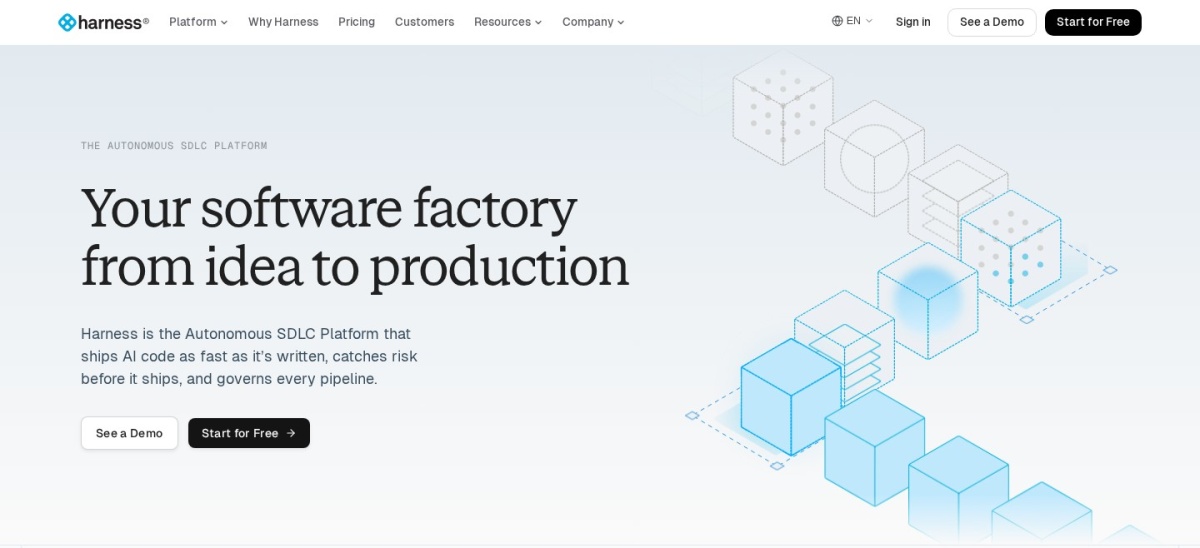
Harness is a managed continuous delivery platform that covers CI/CD, GitOps, feature flags and cloud cost tools in one place. Its CD module ships blue-green and canary strategies, watches health signals during a rollout and rolls back on its own when a check fails, and the free plan covers up to 25 users with 2,000 cloud credits a month.
The trade off is price. Paid plans are custom-priced by sales with no public figure, so you cannot budget from the pricing page, and costs can rise as you add modules. It suits teams that deploy often and want verification and rollback handled by the platform.
What we like
Blue-green and canary built in, not added by plugins
Automatic rollback when health checks fail
Free plan covers up to 25 users
Strong G2 scores for support
Watch out for
No published price for paid plans
Costs can grow as you add modules
G2 reviewers report about 3 months to implement
Paid plans add more users, modules and support by quoteVisit harness.io
02
GitLab
4.5/5on G2 (901 reviews, checked Nov 2026)
Paid from$29/user/mo
Best all-in-one DevOps replacement
GitOps supportVia GitLab agent
Free plan5 users, 400 CI minutes
Premium plan$29/user/mo
Self-managedYes, free tier
gitlab.com
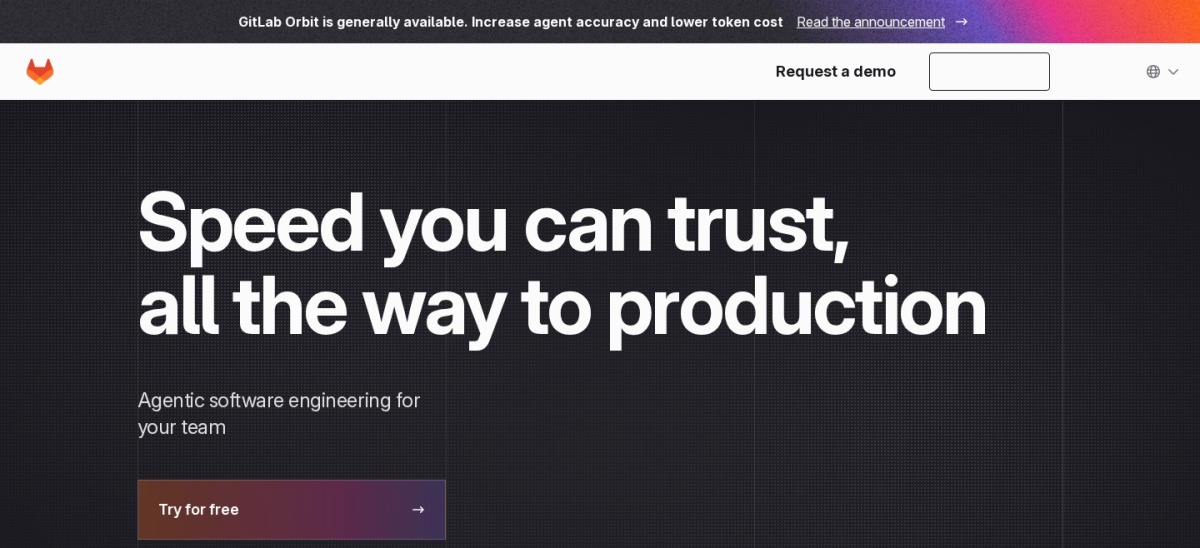
GitLab homepage, captured Nov 2026.
GitLab is a full DevOps platform that puts repositories, CI/CD, planning and security scanning in one app. Deployments run through environments and the GitLab agent for Kubernetes, and the free plan covers 5 users per group with 400 compute minutes a month.
The trade off is price. Premium costs $29 a user a month billed yearly, about seven times GitHub Team per seat, and the free plan covers only 5 users per group. It suits teams that want source control, CI and deployment in one tool and will use the bundled scanning and planning.
What we like
Repos, CI/CD and scanning in one app
10,000 compute minutes a month on Premium
Self-managed edition available
Rated 4.5/5 on G2 from 901 reviews
Watch out for
Premium is $29 a user a month
Free plan limited to 5 users per group
Ultimate tier is quote-only
Premium adds 10,000 compute minutes and advanced CI/CDVisit gitlab.com
03
Octopus Deploy
4.4/5on G2 (58 reviews, checked Nov 2026)
Paid from$4,330/yr
Best for releases and approvals
GitOps supportYes, GitOps deployments
Free tier10 projects, 10 targets
Professional Cloud$4,330/yr
Billing basisPer deployment target
octopus.com
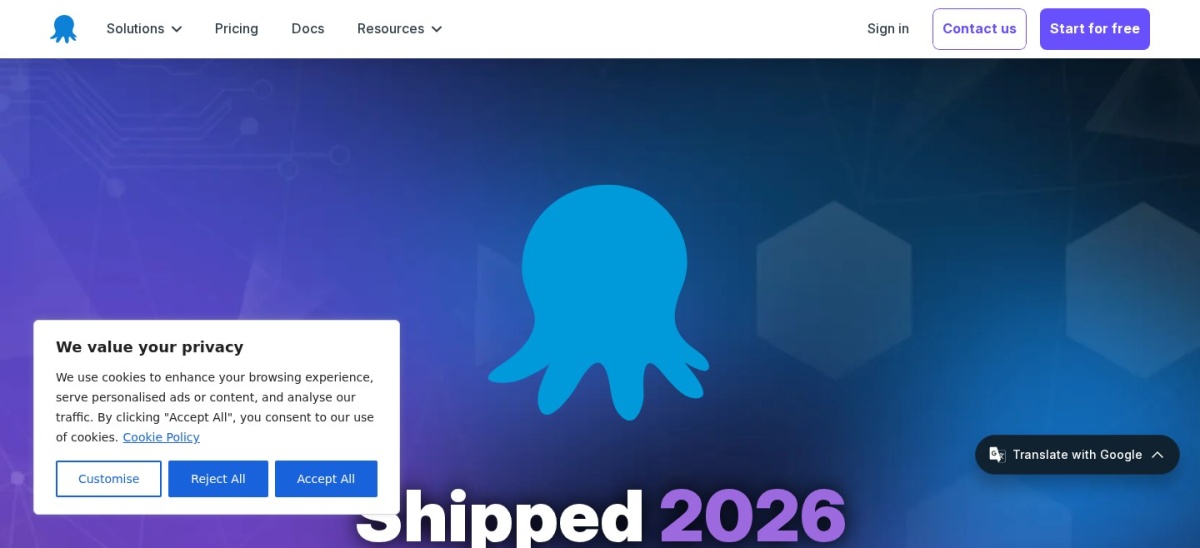
Octopus Deploy homepage, captured Nov 2026.
Octopus Deploy is a release and deployment platform that treats environments, approvals and rollbacks as first-class ideas. It supports GitOps deployments alongside its classic push model, and the free tier covers 10 projects, 10 targets and 10 users.
The trade off is price. The cheapest paid plan is Professional Cloud at $4,330 a year on yearly billing, far above the $45 Cloud plan older guides still list, and each extra target adds cost. It suits teams that deploy the same app to many servers or clusters and want approvals and runbooks in one place.
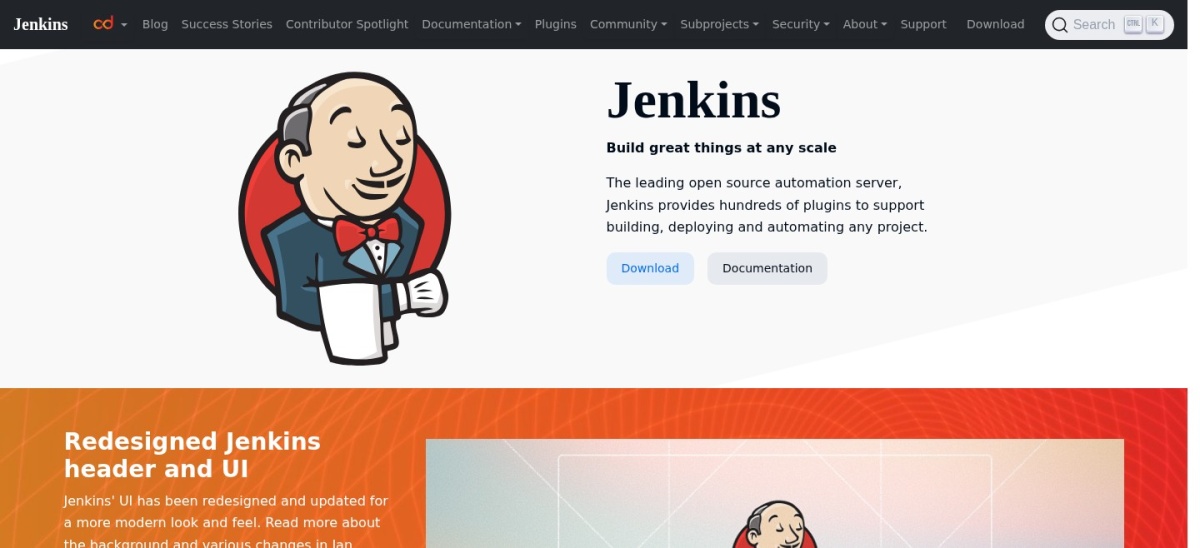
Jenkins is a free, open-source automation server that has run CI/CD pipelines longer than any tool in this list. Hundreds of plugins cover Kubernetes deploys, GitOps workflows and every major cloud, and there is no licence fee at all.
The trade off is upkeep. You host, upgrade and secure Jenkins yourself, the interface shows its age, and G2 reviewers rate ease of setup 8.0 out of 10. It suits teams that want full control, already run their own infrastructure and have someone to look after the server.
CircleCI is a cloud CI/CD platform that runs pipelines from a config file in your repo. Deployments run through orbs, reusable config packs that deploy the new version, check its health and shift traffic, and the free plan includes 30,000 credits a month for up to 5 users.
The trade off is billing. Performance starts at $15 a month, but each extra user consumes credits and compute blocks cost $15 each, so the bill can climb past the headline price. It suits teams that want fast cloud builds and are happy to configure releases in YAML.
Buildkite is a hybrid CI/CD platform with a managed control plane and agents that run on your own infrastructure or on hosted compute. Pipelines are defined in YAML, agents scale to 250 concurrent jobs on Pro, and the free plan covers 5 users with 2,000 Linux vCPU minutes a month.
The trade off is price. Pro costs $30 per active user a month before a single job runs, plus $3.50 a month per agent past the ten included, and hosted compute is metered per vCPU minute. It suits teams whose builds need their own machines and who want a bill they can read up front.
Azure DevOps is Microsoft's suite for boards, repos, pipelines and artifacts in one bill. Releases run through pipelines and App Service deployment slots: the new version warms up in a slot, then swaps into production, and the first 5 Basic users are free.
The trade off is the Microsoft world. It fits best on Azure and .NET, the interface can overwhelm newcomers, and the 6th user triggers $6 a month for every additional Basic user. It suits teams already on Azure that want repos, boards and pipelines in one place.
TeamCity is a CI/CD server from JetBrains with on-premises and cloud options. The free Professional edition covers 3 build agents and 100 build configurations, and TeamCity Cloud adds hosted agents from $15 per committer a month with a 3-committer minimum.
The trade off is that the free edition has hard caps. Teams that pass 100 build configurations or need more agents must buy licences or move to Cloud credits, and Cloud pricing uses committers plus build credits, so finance teams need to model both. It suits teams that live in JetBrains IDEs.
Spinnaker is a free, open-source continuous delivery platform that runs the same pipeline across AWS, Google Cloud, Azure and Kubernetes. Its red/black strategy is blue-green by another name: it spins up the new version beside the old one, shifts traffic over and keeps the old version ready.
The trade off is upkeep. You host Spinnaker yourself, it is heavy on resources, and G2 reviewers rate setup 6.1 out of 10, the lowest in this list. It suits platform teams that already run Kubernetes or several clouds and can afford to operate the tool.
Flux CD is the closest GitOps match to Argo CD. It is free, open source and syncs Kubernetes clusters from Git, just like Argo CD does.
It is not in this ranked list because it has no public 1-5 rating on G2, Capterra or Trustpilot, and this list only ranks tools with a published rating and review count.
If you want a pure GitOps replacement and do not need a rating to decide, Flux CD is worth a look beside Spinnaker and Harness.
How we chose
We started from the tools most often named as Argo CD replacements in GitOps and CD comparisons, then kept the nine with a published 1-5 rating and review count on G2.
Prices come from each vendor's pricing page or a pricing record checked on 29 November 2026. Ratings and review counts come from G2 on the same day. Where a vendor shows a sale, the list shows the regular price.
We left out Flux CD because it has no public 1-5 rating anywhere we could verify. No vendor paid for a place, and we do not claim to have used these tools ourselves.
How to choose an Argo CD alternative
Start with where your apps run, then match the deployment model to your team.
List every target you deploy to. If everything is Kubernetes, a GitOps tool such as Harness or Spinnaker fits. If you also ship to VMs or servers, pick Octopus Deploy or Jenkins instead.
Decide between GitOps and pipelines. GitOps syncs a cluster from Git and rolls back with a revert. Pipeline tools push releases through steps and need plugins or orbs for the same result.
Count the real monthly cost. Per-seat plans such as GitLab at $29 a user and Buildkite at $30 an active user grow with headcount, while Octopus Deploy charges per target. See how a free tier covers the first projects in our guide on deploying WordPress with GitHub Actions.
Try the free plan before you pay. Every tool here has a free plan or tier. Run one real service through it for a week before moving your main deploys.
FAQ
What are the best Argo CD alternatives in 2026?
Harness is the best Argo CD alternative overall, with managed CD, GitOps and automatic rollback, rated 4.6 out of 5 on G2 from 335 reviews. GitLab is the best all-in-one option, and Jenkins is the best free one.
Which Argo CD alternative is cheapest?
Jenkins and Spinnaker are the cheapest, because both are free and open source with no paid edition at all. Among hosted tools, Azure DevOps Basic is the cheapest paid seat at $6 a user a month, and CircleCI Performance starts at $15 a month.
Is there a free alternative to Argo CD?
Yes. Jenkins and Spinnaker are free and open source, and Harness, GitLab, Octopus Deploy, CircleCI, Buildkite, Azure DevOps and TeamCity all have free plans or tiers. Argo CD itself is also free, so most teams switch for managed hosting or wider targets, not for price.
Which Argo CD alternative is best for small teams?
Harness is the best pick for small teams, because its free plan covers up to 25 users with managed CD and GitOps included. CircleCI is a simpler choice if you only need fast cloud builds, and Jenkins fits small teams happy to self-host.
Harness vs GitLab: which is the better Argo CD alternative?
Harness is better if delivery is the job: it is built for CD with blue-green, canary and automatic rollback, and rates 4.6 out of 5 on G2. GitLab is better if you also want repos, planning and scanning in one app, and it rates 4.5 out of 5 from 901 reviews.
Is Flux CD a good Argo CD alternative?
Yes, Flux CD is the closest GitOps match to Argo CD: free, open source and built to sync Kubernetes clusters from Git. It is not in this ranked list because it has no public 1-5 rating on G2, Capterra or Trustpilot, so we could not rank it on the same basis.
SaaS SEO and WordPress specialist with about 8 years of experience. Rakib compares WordPress plugins, themes, hosting and software using public pricing, documentation and user reviews. See how we rank.