Sonatype Nexus Repository is the best of the Artifactory alternatives for most teams, with a free self-hosted Community Edition and a 4.5 out of 5 G2 rating. Pick Cloudsmith if you want a fully managed registry, or GitHub Packages if your code already lives on GitHub.
How we make this list: we compare pricing pages, product documentation and public user reviews, then re-check every price before each update. No product paid for a place. Disclosure.
Sonatype Nexus Repository is the only pick here with a free self-hosted edition and paid cloud from $1,950 a year.
Cloudsmith is the simplest managed switch, with a free Core plan and Pro at $149 a month.
GitHub Packages costs nothing extra for public packages, and Team starts at $4 per user a month.
The cloud registries are cheapest at low volume: AWS CodeArtifact charges $0.05 per GB a month for storage.
Packagecloud has the highest G2 rating in this list at 4.7 out of 5, but it is built for Linux packages first.
ProGet Basic costs $2,395 a year, the dearest flat starting price here, with a free edition for private feeds.
How do you pick the right Artifactory alternative?
Format support decides the shortlist. A team shipping Maven, npm and Docker needs one registry for all three, while a team shipping only Debian packages can pick a narrower tool.
The bill splits into two models. Flat plans such as Cloudsmith Pro charge the same each month up to an allowance, while cloud registries such as AWS CodeArtifact charge per GB stored.
Self-hosting trades money for work. Nexus Community Edition and ProGet Free Edition cost nothing to run on your own server, but you patch and back them up yourself.
Security scanning is often a paid extra. Check whether vulnerability checks and licence blocking sit in the plan you pay for, or in a higher tier. Our guide on running a WordPress security audit shows the kind of checks to expect.
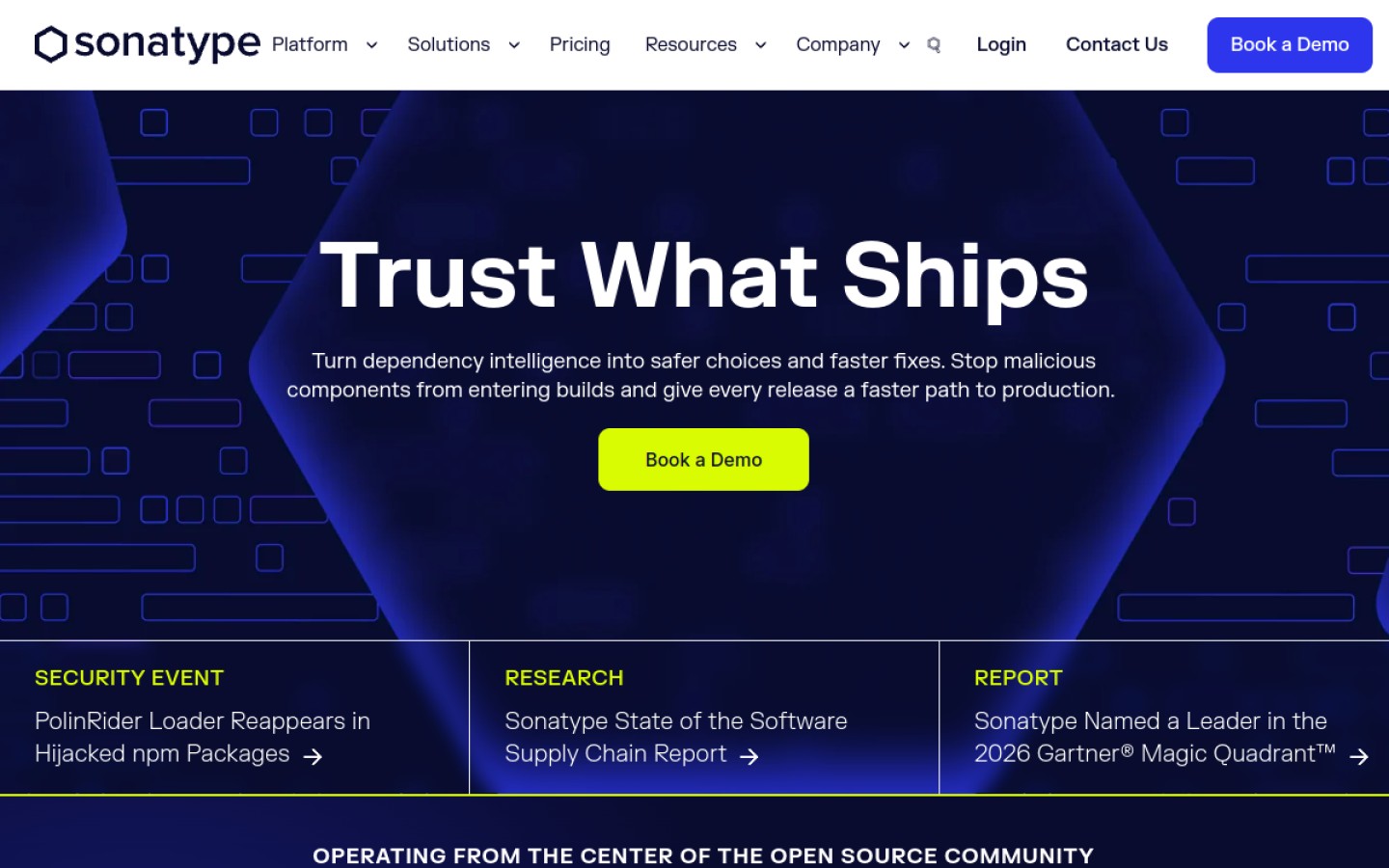
Sonatype Nexus Repository homepage, captured Nov 2026.
Sonatype Nexus Repository is a self-hosted artifact manager that has been around since the early Maven days. Its free Community Edition stores Maven, npm, PyPI, NuGet and Hugging Face packages, caches public registries, and connects to Jenkins, GitHub Actions and GitLab CI.
The trade off is the step up to paid. Cloud Pro starts at $1,950 a year and includes 25 GB of consumption, while self-hosted Pro lists at $7,500 a year. It suits teams that want a free registry on their own server with a paid path when they grow.
What we like
Free Community Edition for self-hosting
Covers the main package formats and proxies upstream registries
Rated 4.5 out of 5 on G2
Watch out for
Cloud Pro is billed yearly, with no monthly option
Cloudsmith is a managed artifact repository with nothing to install or run. The free Core plan covers 500 MB of artifact data and 1 GB of delivery, and the service supports more than 30 package formats, containers and AI models.
The trade off is the allowance. Pro costs $149 a month for 5 GB of data and 25 GB of delivery, with extra data at $1.50 per GB, so heavy downloads push the bill up. It suits small teams that want a flat monthly price and no servers to look after.
What we like
Fully managed, with nothing to install or run
Flat monthly price with unlimited users
Free Core plan and a free plan for open-source projects
Watch out for
Pro includes only 5 GB of data and 25 GB of delivery
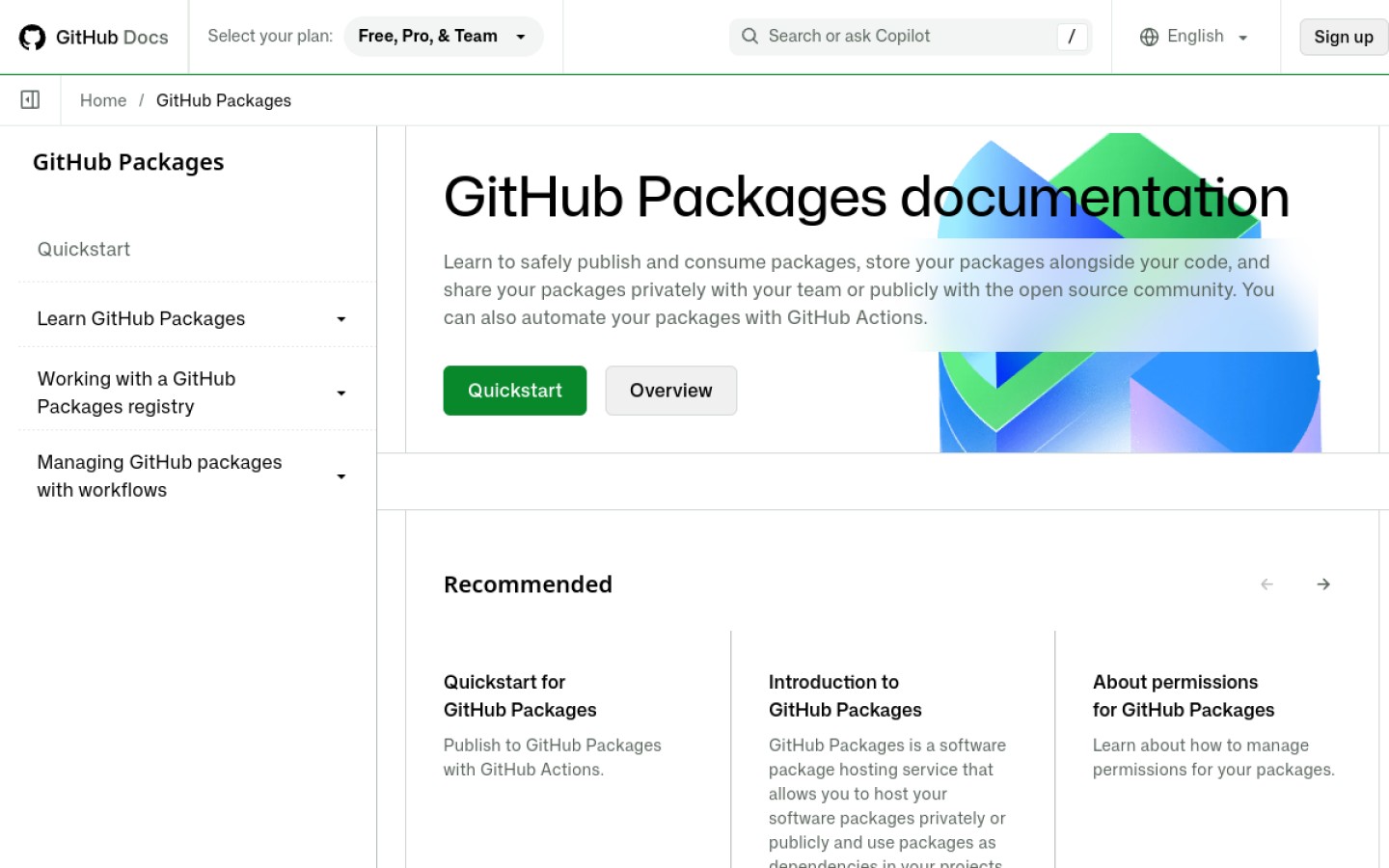
GitHub Packages is the registry built into GitHub, so a team already on GitHub gets package hosting with no extra setup. It covers npm, Maven, NuGet, RubyGems and Docker, public packages are free with no limit, and Team at $4 per user a month includes 2 GB of storage and 10 GB of transfer.
The trade off is scope. Debian, RPM and Terraform packages are outside its range, and private storage is small on the Free and Team plans, with extra storage at $0.25 per GB a month. It suits teams whose code and CI already live on GitHub.
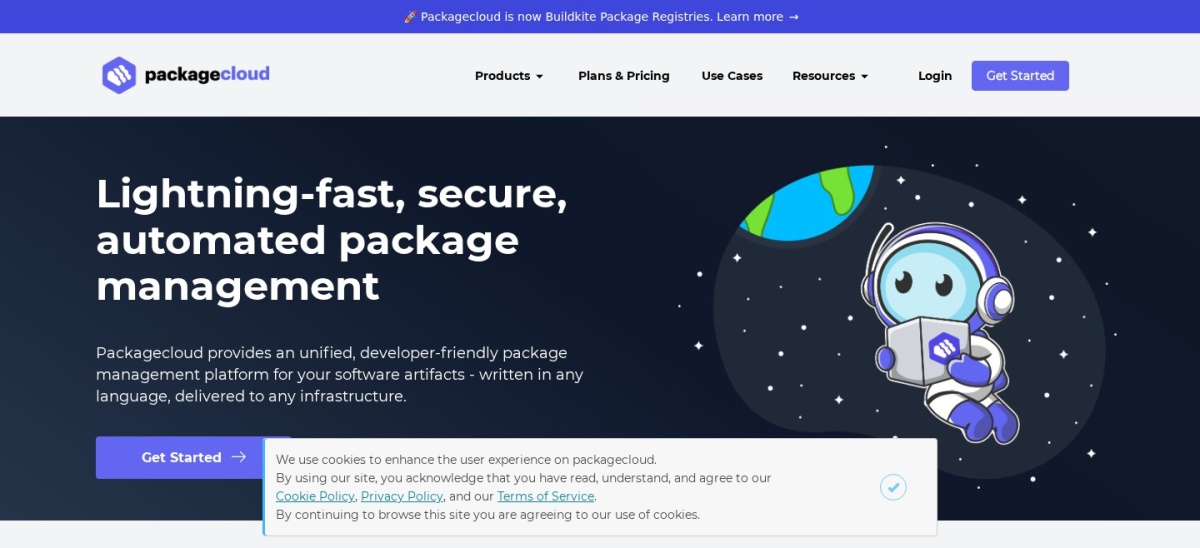
Packagecloud is a hosted repository that puts Linux packages first, with Debian and RPM repos beside npm, Maven and other formats. A limited free plan is available, every paid plan has a 14-day trial, and Starter lists at $89 a month.
The trade off is breadth. It covers fewer formats than the universal registries, it now sits under the Buildkite Package Registries brand, and Starter storage overage costs $2 per GB. It suits teams that ship Linux packages and want a simple hosted repo.
What we like
Strongest focus on Debian and RPM packages
Highest G2 rating in this list, at 4.7 out of 5
Simple hosted setup with a limited free plan
Watch out for
Narrower than universal registries
Starter overage is $2 per GB of storage
Homepage now brands it as Buildkite Package Registries
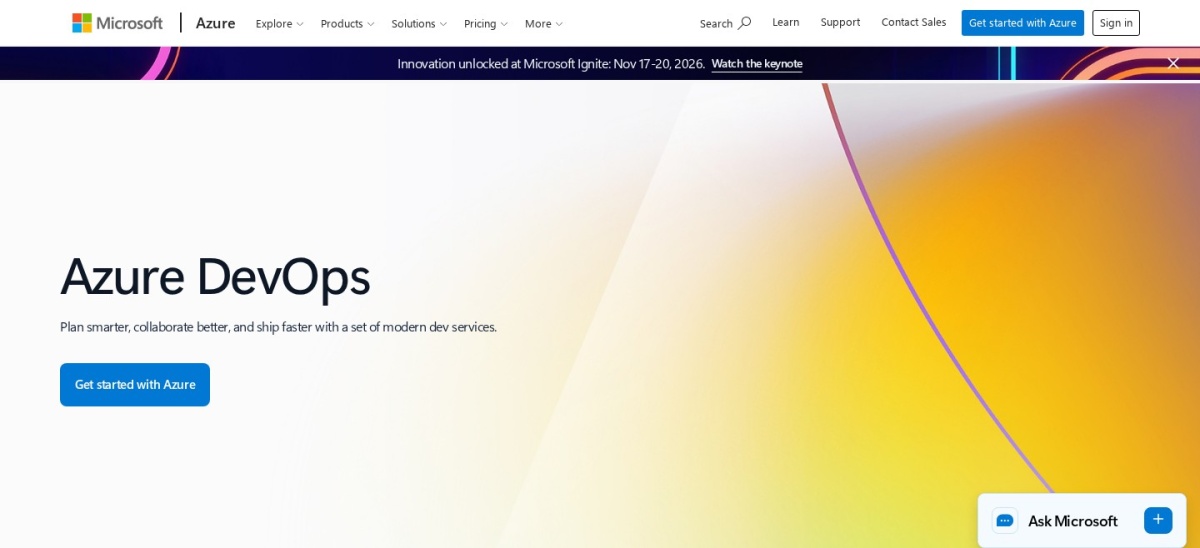
Azure Artifacts is the package feed inside Azure DevOps, and it hosts NuGet, npm, Maven, Python, Cargo and Universal Packages. Each organisation gets 2 GiB of storage free, and beyond that the price falls with volume, from $2 per GiB down to $0.25 per GiB above 1,000 GiB.
The trade off is reach. It is a feed for Azure DevOps teams, not a stand-alone universal registry, and the per-GB rate is high at small volumes. It suits teams already using Azure DevOps for boards, repos and pipelines.
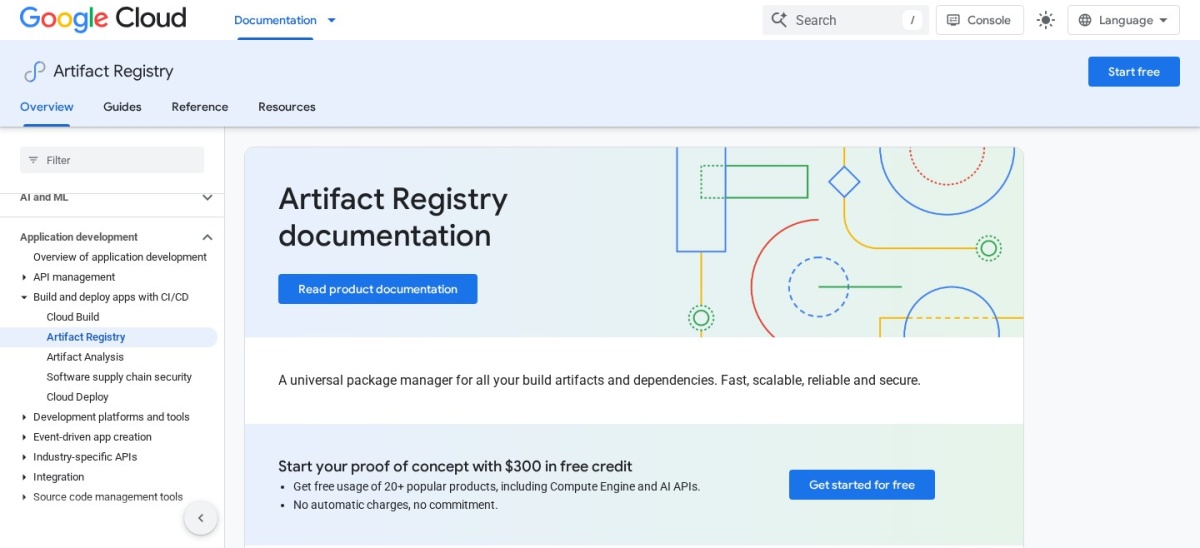
Google Artifact Registry homepage, captured Nov 2026.
Google Artifact Registry is the managed registry for Google Cloud, and it replaced Container Registry in 2025. It stores Docker and OCI images, Maven, npm, Python, Go, Debian and RPM packages, with the first 0.5 GB of storage free each month and $0.10 per GB above that.
The trade off is the extras. Vulnerability scanning is billed apart from storage, and pulls outside Google Cloud pay standard egress rates. It suits teams running on Google Cloud that want one registry for containers and language packages.
What we like
One registry for containers and language packages
Same-location pulls inside Google Cloud are free
Covers Docker, Maven, npm, Python, Go, Debian and RPM
AWS CodeArtifact is a fully managed artifact repository for npm, PyPI, Maven, NuGet, RubyGems, Swift, Cargo and generic packages. There is no server to run, access is controlled with IAM, and the free tier covers 2 GB of storage and 100,000 requests a month.
The trade off is scope and egress. It supports only 8 formats, with no Debian or RPM packages, and data transfer out to the internet adds $0.09 per GB on top of storage and request charges. It suits teams whose builds already run on AWS.
What we like
No infrastructure to run or patch
IAM access control and CloudTrail audit logging
Very low entry cost for small volumes
Watch out for
Only 8 package formats, the narrowest in this list
GitLab is a DevOps platform with a package registry built into every tier, covering Maven, npm, NuGet, PyPI, Debian, Go, Helm and generic packages beside a container registry. The free tier on GitLab.com covers 5 users per top-level group, and self-managed GitLab Free has no user cap.
The trade off is weight. You take on the whole GitLab platform to get its registry, Premium costs $29 per user a month, and RPM packages are not supported. It suits teams that already run their code, CI and issues in GitLab.
ProGet is a self-hosted package and container repository from Inedo, with strong support for NuGet, npm, Maven, PyPI and Docker. The Free Edition allows unlimited users and feeds for private packages and Docker, and it installs in minutes on Windows or Linux.
The trade off is that security is gated. The Free Edition has no vulnerability assessments or licence blocking, and those features start with Basic at $2,395 a year. It suits .NET and Windows teams that want a private registry on their own servers.
What we like
Free Edition with unlimited users and feeds
Strong NuGet and .NET package support
Licence detection and blocking on paid plans
Watch out for
No security features in the Free Edition
Basic at $2,395 a year is a big step up from free
G2 review base is small, at 12 reviews
Basic adds vulnerability checks and licence blockingVisit inedo.com
Flat plans vs pay as you go: which bill is easier to predict
Flat plans charge the same each month whatever you store, up to the included allowance. Cloudsmith Pro at $149 a month and Packagecloud Starter at $89 a month are easy to budget, until overage kicks in.
Pay-as-you-go services charge only for what you store and move. AWS CodeArtifact, Azure Artifacts and Google Artifact Registry cost very little for a small team, but the bill grows with every GB stored and every download.
If downloads are heavy, check the transfer price before the storage price. Egress is where cloud registries get dear, while flat plans bundle a delivery allowance into the monthly fee.
How we chose
We started from the established artifact repositories on G2, then kept the nine with a live product, a public pricing page and enough reviews to rate.
Prices come from each vendor's pricing page, checked on 29 November 2026. Ratings and review counts come from G2 on the same day. Where a vendor shows a sale, the list shows the regular price.
We left out single-format registries and tools with no public pricing. No vendor paid for a place, and we do not claim to have used these tools ourselves.
How to choose an Artifactory alternative
Start with the formats you ship today, then check the bill at your real volume.
List every format you ship. Maven, npm, Docker and Debian in one list points to Nexus or Cloudsmith. One or two formats points to a cloud registry or GitHub Packages.
Check where your builds already run. A team on AWS, Azure or Google Cloud pays least with that cloud's own registry, while a GitHub team pays least with GitHub Packages.
Price it at your real volume. Work out storage plus downloads for a month. A flat plan wins for heavy downloads, while pay as you go wins for light use.
Check what security costs extra. Vulnerability scanning and licence blocking are often in a higher plan. See how to run a WordPress security audit for the kind of checks to expect.
FAQ
What is the best alternative to Artifactory?
Sonatype Nexus Repository is the best Artifactory alternative for most teams. Its free Community Edition runs on your own server, it covers the main package formats, and it is rated 4.5 out of 5 on G2.
Is there a free alternative to Artifactory?
Yes. Sonatype Nexus Community Edition and ProGet Free Edition are free to self-host, GitHub Packages is free for public packages, and Cloudsmith Core is free with 500 MB of artifact data.
What is the cheapest Artifactory alternative?
For light use, the cloud registries are cheapest. AWS CodeArtifact charges $0.05 per GB a month for storage, Google Artifact Registry charges $0.10, and Azure Artifacts gives 2 GiB free before charging $2 per GiB.
Sonatype Nexus vs Cloudsmith: which is better?
Nexus is better if you want a free self-hosted registry and the widest format control, while Cloudsmith is better if you want a managed service with nothing to run. Both are rated 4.5 out of 5 on G2, but Cloudsmith has 45 reviews against 23 for Nexus.
Can I self-host an Artifactory alternative?
Yes. Sonatype Nexus Community Edition and ProGet Free Edition are free to self-host, and GitLab Free runs on your own server with its package registry included.
Is GitHub Packages enough instead of Artifactory?
GitHub Packages is enough if you ship npm, Maven, NuGet or Docker packages and your code is on GitHub. Artifactory fits teams that also need Debian, RPM, Terraform or machine learning models in one registry.
Do Artifactory alternatives scan packages for vulnerabilities?
Some do, often on paid plans. Cloudsmith scanning and ProGet vulnerability checks are paid features, while the cloud registries usually bill scanning apart from storage.
SaaS SEO and WordPress specialist with about 8 years of experience. Rakib compares WordPress plugins, themes, hosting and software using public pricing, documentation and user reviews. See how we rank.