Next.js is the best alternative to Svelte for most teams, rated 4.7 out of 5 on G2, with file-based routing and server rendering in a free, open-source framework. Vue suits teams that want a gentler learning curve, while Angular fits large teams that need a complete, opinionated framework.
How we make this list: we compare pricing pages, product documentation and public user reviews, then re-check every price before each update. No product paid for a place. Disclosure.
Next.js leads the list at 4.7 out of 5 on G2, and it is the only pick here that bundles routing, server rendering and API routes in one free framework.
Vue scores 4.6 out of 5 and is the gentlest move for a Svelte team, since its components stay close to plain HTML, CSS and JavaScript.
Angular carries the most reviews in the list, 169 on G2 at 4.5 out of 5, and it is the only pick with routing, forms and HTTP all built in.
Six of the seven cost nothing to use. Ext JS is the exception: its Community edition is free, while Pro is $1,499 per developer per year.
Backbone and jQuery UI are the lightest options, but both are older tools, and reviewers note Backbone's last stable build was in 2022.
How do you choose the best alternative to Svelte?
Start with the app, not the framework. A content site needs server rendering and SEO, while a dashboard needs grids and state, and each tool here leans a different way.
Ecosystem size decides how fast a team hires and finds answers. Next.js and Angular have the largest communities in this list, so a team that values hiring speed should weigh that above raw speed.
Free does not mean equal cost. Six of these seven frameworks cost nothing, yet the real cost is learning time and hosting, so check what your host already covers before you pick. Our guide on deferring JavaScript in WordPress shows how much load a framework choice can add to a page.
Migration effort is the hidden price. Moving from Svelte's compiler model to React or Vue means rewriting components, so a small project can switch in days while a large app should budget weeks.
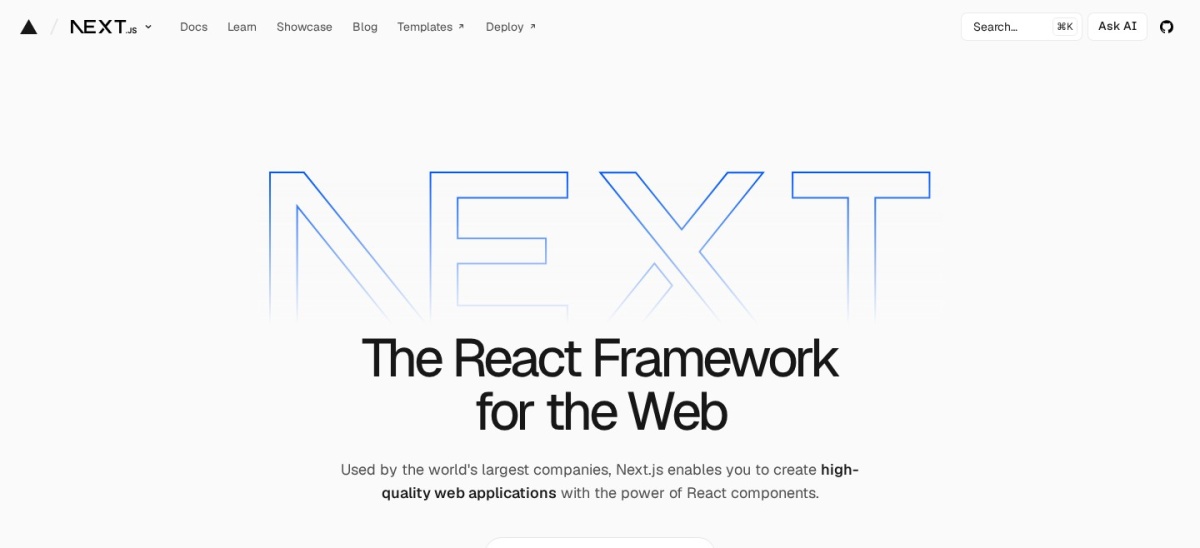
Next.js is a React framework that adds what plain React leaves out: file-based routing, server rendering, static generation and API routes. It is free and open source under the MIT license, and Vercel maintains it alongside its hosting platform.
The trade off is the React dependency. You write React components, so a Svelte team must learn JSX and the React way of doing state before the framework pays off. It suits teams building full-stack apps or content sites that need SEO and fast first loads.
What we like
Routing, server rendering and API routes built in
Largest ecosystem of any tool in this list
Free and open source, with strong documentation
Watch out for
Requires learning React and JSX first
Deployment is smoothest on Vercel, less so elsewhere
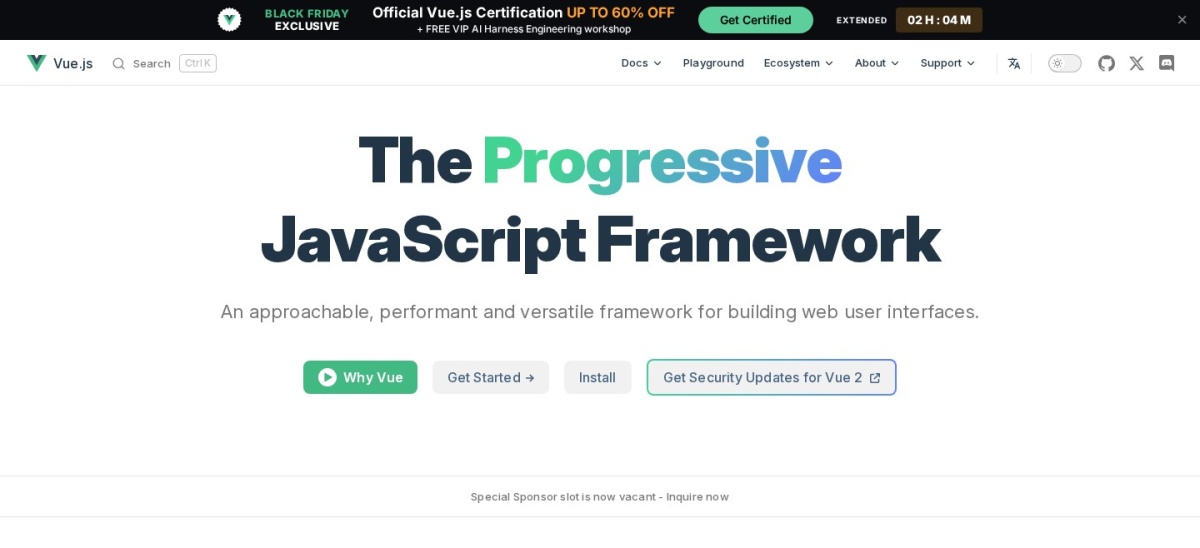
Vue.js is a progressive JavaScript framework that builds user interfaces from single-file components, with template, script and styles in one file. It is free and open source, and its official router and Pinia state library cover the pieces SvelteKit bundles in.
The trade off is ecosystem size. Vue has fewer libraries and fewer job listings than React, so a niche integration can mean building it yourself. It suits small and mid-size teams that want readable code and a short path from a first component to a finished app.
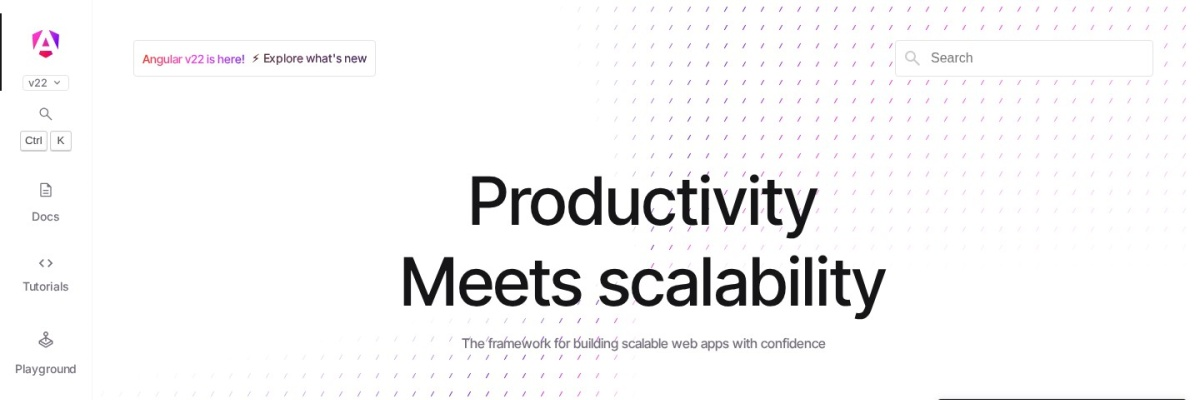
Angular is a full framework from Google that ships routing, forms, HTTP and dependency injection as built-ins, all in TypeScript. It is free and open source, and the Angular CLI scaffolds, builds and tests a project from one command.
The trade off is weight. Angular expects TypeScript throughout and carries more structure than a small project needs, so setup takes longer than with Vue or Svelte. It suits large teams that want one shared way of building every screen.
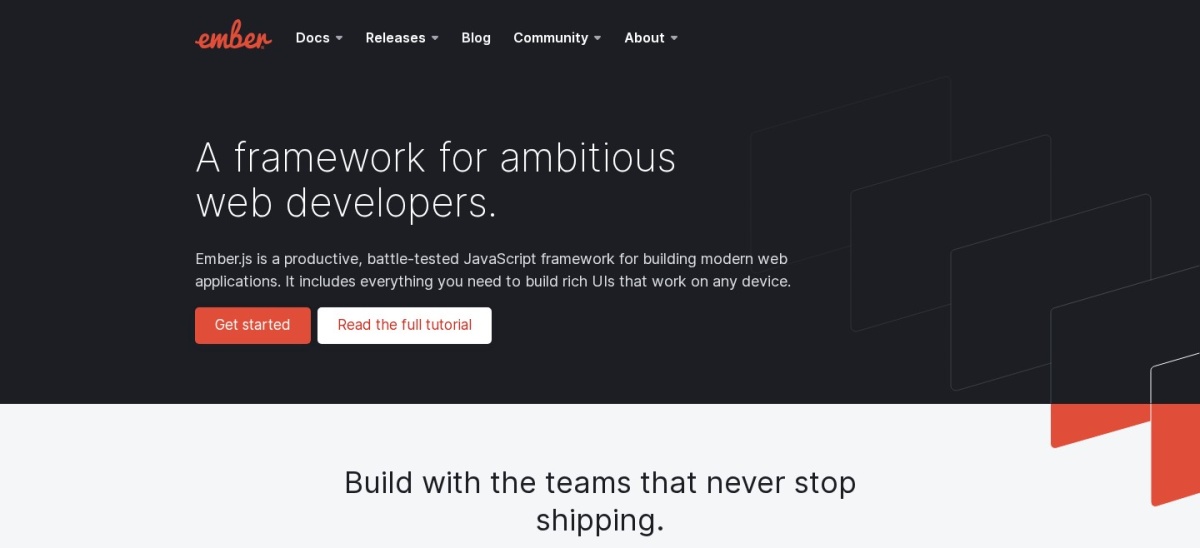
Ember.js is a framework built on convention over configuration, so every Ember app shares the same structure, router and data layer. It is free and open source, and Ember CLI plus Ember Data handle scaffolding, builds and API data out of the box.
The trade off is momentum. Ember's community is smaller than React's or Vue's, and reviewers note new features take longer to land. It suits teams running long-lived apps who value stability and a fixed way of working over chasing new releases.
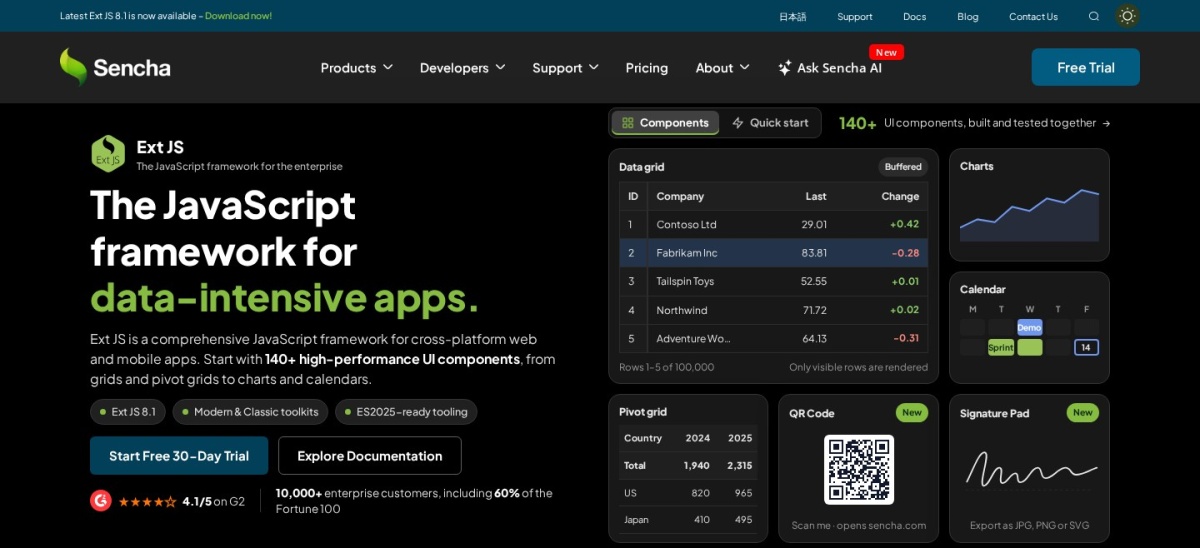
Ext JS is a commercial JavaScript framework from Sencha for data-heavy enterprise apps, with more than 140 UI components including grids, charts and pivot tables. The Community edition is free for small teams, and the current release is Ext JS 8.1.
The trade off is price. Pro costs $1,499 per developer per year, and the bundle is heavy for a simple site, so it only earns its keep on complex dashboards. It suits enterprise teams that need a finished grid and chart library without stitching together dozens of packages.
What we like
Grid handles large datasets with buffered rendering
140+ components tested and released together
Charts, pivot grids and calendars included
Watch out for
Pro licence costs $1,499 per developer per year
Heavy bundle for simple sites
Community edition is free; Pro adds all components and toolsVisit sencha.com
06
Backbone.js
4/5on G2 (37 reviews, checked Nov 2026)
PriceFree
Best lightweight pick for small apps
PatternMVC, models and views
SizeLightweight library
DataREST sync built in
Paid planNone, free and open source
backbonejs.org
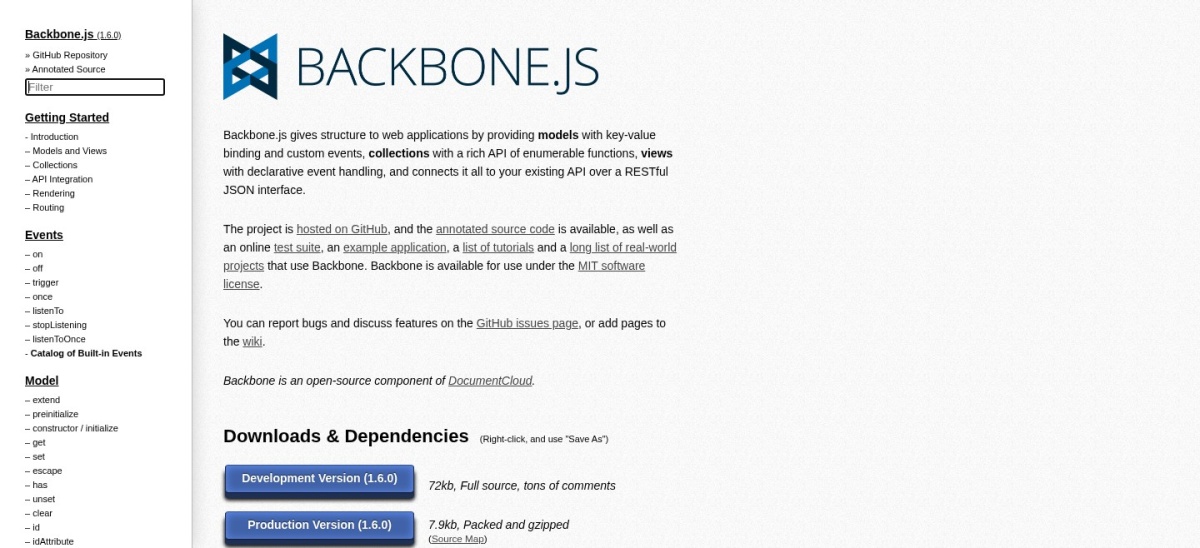
Backbone.js homepage, captured Nov 2026.
Backbone.js is a small MVC library that gives models, views and collections just enough structure to organise a single-page app. It is free and open source, weighs little, and syncs models with a REST API with almost no setup.
The trade off is age. Reviewers note the last stable build was in 2022, and you write more boilerplate than with a modern framework. It suits small apps and legacy codebases where a light structure layer is enough and a rewrite is out of scope.
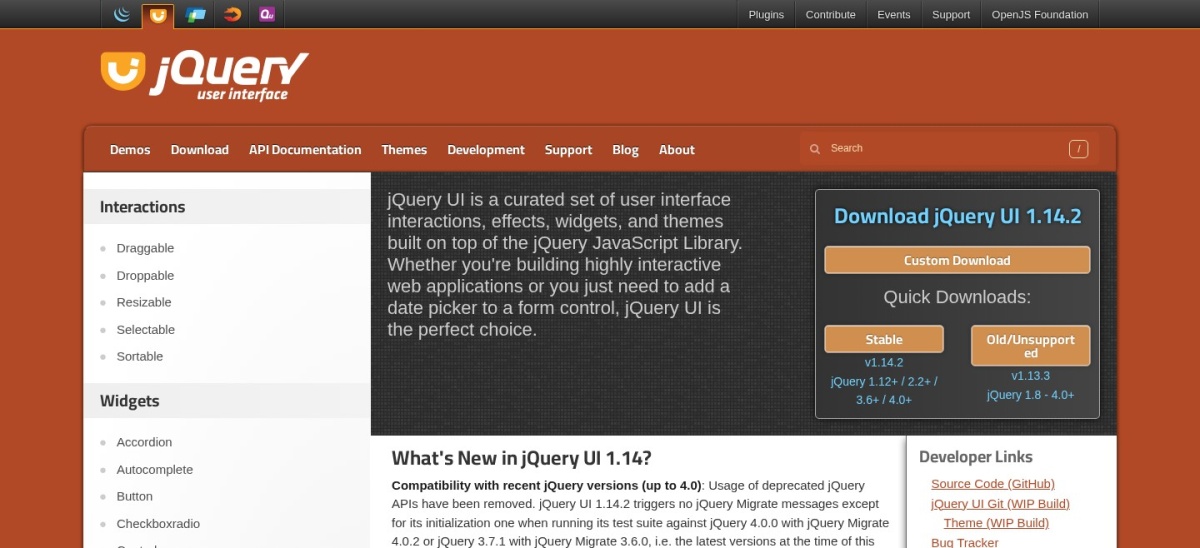
jQuery UI is a set of widgets, effects and interactions built on jQuery, including date pickers, dialogs, tabs and drag-and-drop. It is free and open source, and its ThemeRoller themes the widgets to match an existing site.
The trade off is relevance. Modern frameworks have taken over new builds, and jQuery UI needs jQuery underneath, so it adds weight for a single widget. It suits existing jQuery sites that need a tested date picker or dialog without a rewrite.
Six of the seven frameworks in this list cost nothing to use. Next.js, Vue, Angular, Ember, Backbone and jQuery UI are all free and open source, with no paid plan needed to build and ship.
Ext JS is the exception. Its Community edition is free for small teams, while Pro costs $1,499 per developer per year and Enterprise costs $1,899, both from Sencha's own pricing page.
The paid costs that do appear are hosting and support. Next.js apps often run on Vercel, and large teams pay for support or enterprise plans, so budget for hosting before you budget for a framework.
How we chose
We started from the frameworks developers name most often as Svelte replacements, then kept only those with a public rating on G2, so every tool here carries a verified score.
Prices come from each vendor's own site, checked on 29 November 2026. Ratings come from G2 on the same day. Six frameworks are free and open source; Ext JS Pro is $1,499 per developer per year.
We left out React, Astro, SolidJS and Qwik, the closest matches to Svelte, because none has a public G2, Capterra or Trustpilot rating to check against. No vendor paid for a place, and we do not claim to have used these tools ourselves.
How to choose an alternative to Svelte
Match the framework to the app you are building, then check the rating and the cost of switching.
List what the app must do. A content site needs server rendering and SEO, while a dashboard needs grids and state. Write the list before you compare frameworks.
Check the ecosystem, not just the features. Look for the libraries, hiring pool and answers you will need. Next.js and Angular have the largest communities in this list.
Weigh the cost of switching. Moving from Svelte means rewriting components. Small projects can switch fast; large apps should run a pilot page first.
Start free, then pay only for hosting. Six of these seven frameworks cost nothing. Spend the budget on hosting and support, and keep Ext JS for data-heavy enterprise apps.
FAQ
What is the best alternative to Svelte in 2026?
Next.js is the best alternative to Svelte for most teams in 2026. It is rated 4.7 out of 5 on G2, it is free and open source, and it adds file-based routing, server rendering and API routes to React.
Are the alternatives to Svelte free?
Most are. Next.js, Vue, Angular, Ember, Backbone and jQuery UI are all free and open source, so you pay nothing for the framework itself. Only Ext JS charges, with Pro at $1,499 per developer per year.
Which alternative to Svelte is easiest for beginners?
Vue is the easiest for beginners. It builds on standard HTML, CSS and JavaScript, its documentation is widely praised, and it is rated 4.6 out of 5 on G2 from 30 reviews.
Next.js or Vue: which is the better Svelte alternative?
Next.js wins for full-stack apps and SEO, with server rendering and routing built in. Vue wins for simpler apps and faster onboarding, with a smaller API and a gentler learning curve.
Is Angular too heavy for a small project?
Angular can feel heavy for a small project, because it ships routing, forms and HTTP as built-ins and expects TypeScript throughout. For small apps, Vue or Backbone are lighter fits.
Why are React, Astro and SolidJS not in this list?
React, Astro, SolidJS and Qwik have no public rating on G2, Capterra or Trustpilot, so we could not verify a score for them. All four are strong alternatives in practice, and we will add them if a public rating source is approved.
SaaS SEO and WordPress specialist with about 8 years of experience. Rakib compares WordPress plugins, themes, hosting and software using public pricing, documentation and user reviews. See how we rank.