Next.js is the best alternative to SolidJS for most teams, rated 4.7 out of 5 on G2, with a free open-source framework and full-stack routing built in. Vue suits developers who want a gentler learning curve, while Angular fits large teams that need a complete, opinionated framework.
How we make this list: we compare pricing pages, product documentation and public user reviews, then re-check every price before each update. No product paid for a place. Disclosure.
Next.js is the top pick at 4.7 out of 5 on G2, with file-based routing and server rendering in a free framework.
Vue is the easiest switch at 4.6 out of 5, building on plain HTML, CSS and JavaScript.
Angular is the most complete framework here at 4.5 out of 5 from 169 G2 reviews, with routing, forms and HTTP built in.
Six of the seven tools are free to start; only Ext JS charges, with Pro at $1,499 per developer per year.
Backbone and jQuery UI are the lightest picks, but both are older tools with slower development.
How do you choose the best alternative to SolidJS?
Start with the size of the app, not the framework. A marketing site needs rendering and SEO, while a data-heavy dashboard needs grids and state management, and each tool in this list leans a different way.
Ecosystem size decides how fast you hire and find answers. Next.js and Angular have the largest communities and the most libraries, so a team that values hiring speed should weight that above raw speed.
Free does not mean equal cost. Every framework here is free to start, yet the real cost is learning time and hosting, so check what your host already covers before you pick. Our guide on deferring JavaScript in WordPress shows how much load a framework choice can add to a page.
Migration effort is the hidden price. Moving from SolidJS fine-grained reactivity to React or Vue means rewriting components, so a small project can switch in days while a large app should budget weeks.
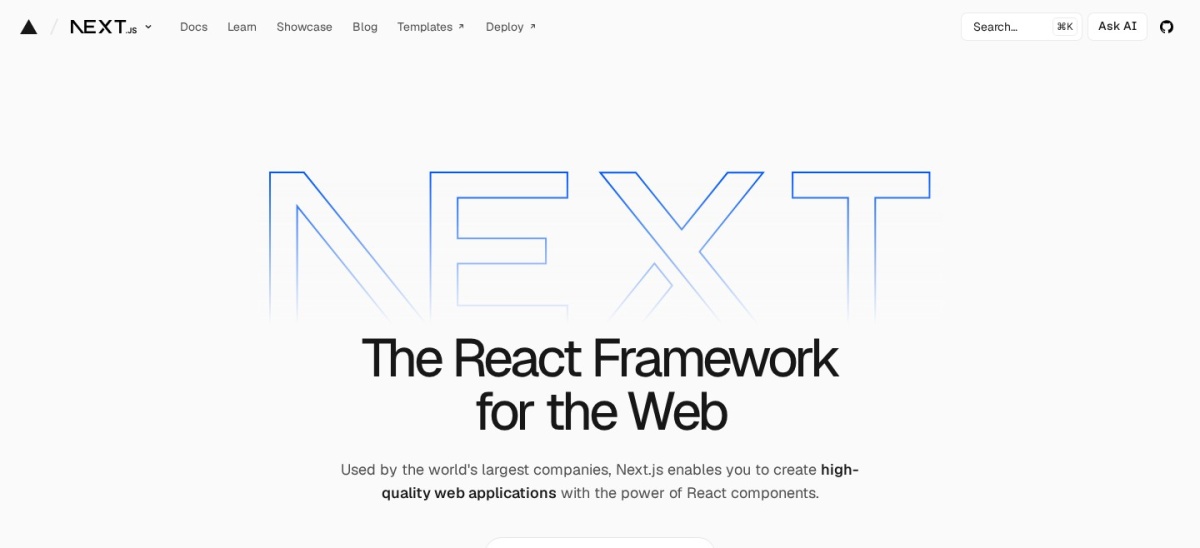
Next.js is the full-stack React framework from Vercel, now at version 16.4.6. It adds file-based routing, server rendering, data fetching and build tooling around React components, and the framework itself is free and open source under the MIT license.
The trade off is that you leave SolidJS fine-grained reactivity behind for the React model, and the smoothest hosting path is Vercel's paid platform. It suits teams that want the largest React ecosystem, strong SEO from server rendering and a framework that covers the full stack.
What we like
Highest G2 rating in this list at 4.7 out of 5
File-based routing and server rendering built in
Largest ecosystem of the frameworks listed here
Free and open source under the MIT license
Watch out for
Means adopting React, not a SolidJS-style reactive model
Best hosting experience sits on Vercel's paid plans
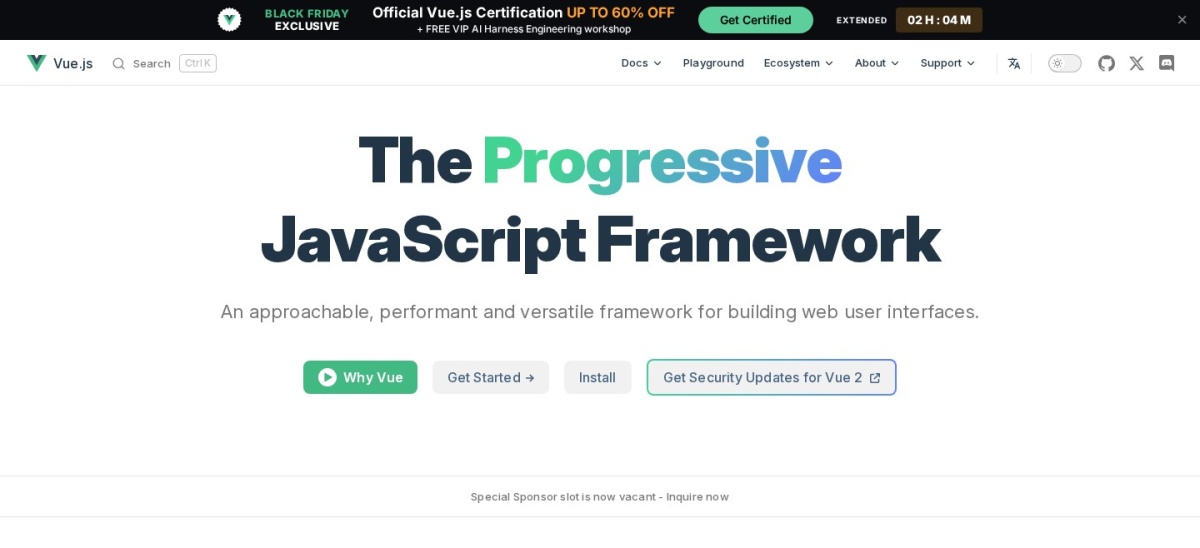
Vue.js is a progressive JavaScript framework for building web user interfaces. It builds on standard HTML, CSS and JavaScript, with a compiler-optimized reactive system, the official Vue Router and the Pinia state library, and the core framework is free and open source.
The trade off is a smaller ecosystem than React, so some libraries arrive later and fewer job listings ask for Vue. It suits small teams and solo developers who want to ship interactive interfaces fast without a steep learning curve.
What we like
Easiest to learn of the full frameworks here
Builds on standard HTML, CSS and JavaScript
Scales from a library to a full framework
Rated 4.6 out of 5 on G2
Watch out for
Smaller ecosystem than React
Fewer job listings ask for Vue
Some libraries arrive later than React versions
Paid support and courses are the extras; the framework is freeVisit vuejs.org
03
Angular
4.5/5on G2 (169 reviews, checked Nov 2026)
PriceFree
Best for large, long-lived apps
Latest versionv22
LanguageTypeScript throughout
Built-insRouter, forms and HTTP
MaintainerGoogle
angular.dev
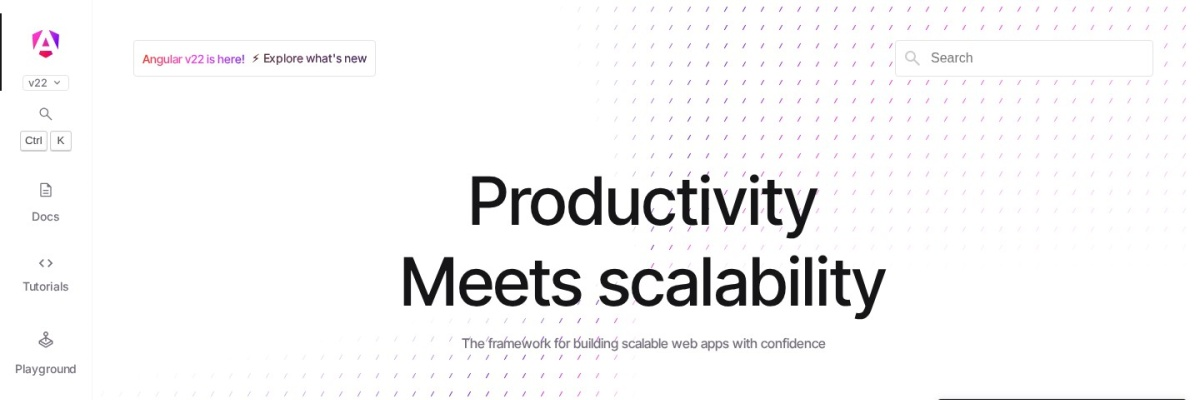
Angular homepage, captured Nov 2026.
Angular is Google's framework for building scalable web apps, now at version 22. It ships routing, forms, HTTP and testing as built-ins, uses TypeScript throughout, and adds signals, control flow and deferrable views for performance.
The trade off is a steep learning curve, and G2 reviewers name complexity and setup as the main drawbacks. It suits large teams that want one opinionated framework with everything included and a clear upgrade path.
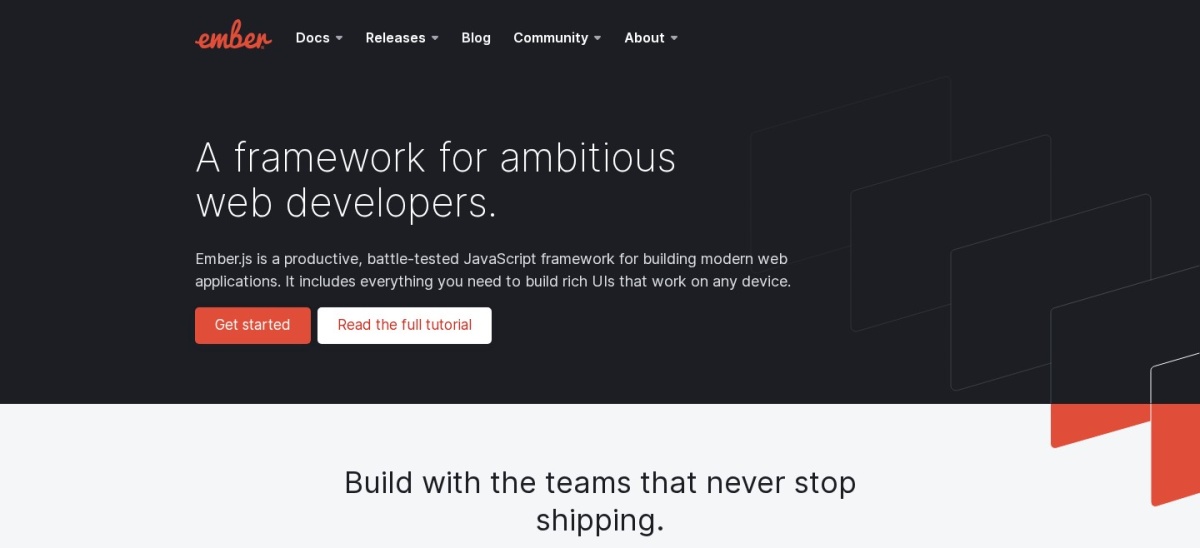
Ember.js is a productive, battle-tested JavaScript framework for modern web applications. It includes routing, a data layer, a test harness and the Ember CLI code generator out of the box, and the framework is free and open source.
The trade off is that Ember is opinionated and its community is smaller than React or Vue, so finding developers takes longer. It suits teams that want conventions to decide the structure and a stable upgrade path over many years.
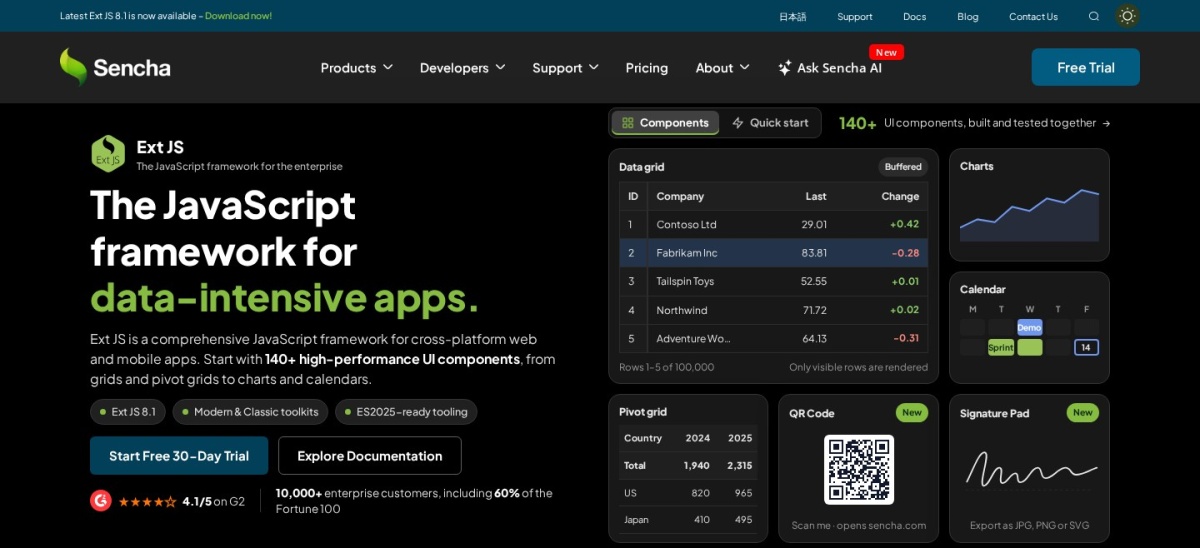
Ext JS is Sencha's comprehensive JavaScript framework for data-intensive enterprise apps, now at version 8.1. It ships more than 140 UI components, including buffered data grids, charts, pivot grids and calendars, with a free Community edition for small teams.
The trade off is price. Pro costs $1,499 per developer per year, and the framework is heavy with a steep learning curve. It suits enterprise teams building data-rich dashboards and admin apps where the grid matters most.
What we like
More than 140 components built and released together
Buffered grid handles very large datasets
Used by large enterprises, including 60% of the Fortune 100
Free Community edition for small teams
Watch out for
Pro costs $1,499 per developer per year
Heavy framework with a steep learning curve
Community edition is limited to small teams
Pro adds all 140+ components at $1,499 per developer per yearVisit sencha.com
06
Backbone.js
4/5on G2 (37 reviews, checked Nov 2026)
PriceFree
Best lightweight structure for SPAs
Size7.9kb packed and gzipped
DependencyUnderscore.js only
LicenseMIT, open source
SyncRESTful JSON built in
backbonejs.org
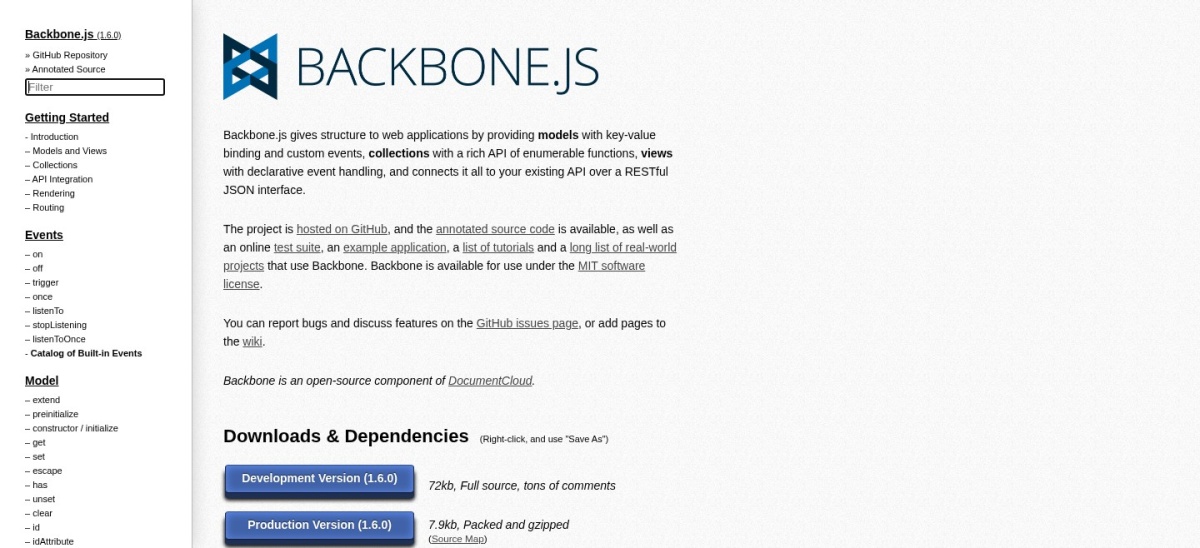
Backbone.js homepage, captured Nov 2026.
Backbone.js is a lightweight library that gives structure to web applications with models, collections and views. Its production build is 7.9kb packed and gzipped, it needs only Underscore.js, and it syncs models to a RESTful JSON API.
The trade off is that Backbone is minimal by design, so templates and build tooling are yours to choose, and the project moves slowly. It suits small apps and older codebases that need structure without a heavy framework.
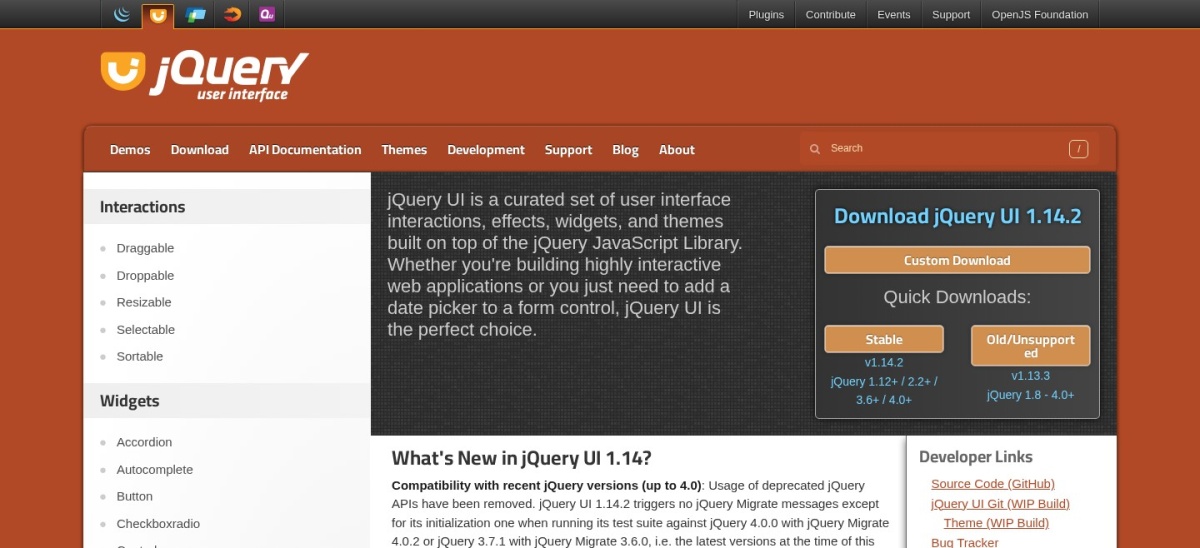
jQuery UI is a curated set of user interface interactions, effects, widgets and themes built on top of jQuery. Version 1.14.2 works with jQuery up to 4.0, and it adds date pickers, dialogs, drag-and-drop and accordions to existing pages.
The trade off is age. G2 reviewers call it dated next to newer frameworks, and it is a widget library, not a full app framework. It suits older sites that already run jQuery and need widgets without a rewrite.
Six of the seven frameworks in this list cost nothing to use. Next.js, Vue, Angular, Ember, Backbone and jQuery UI are all free and open source, with no paid plan needed to build and ship.
Ext JS is the exception. Its Community edition is free for small teams, while Pro costs $1,499 per developer per year and Enterprise costs $1,899, both from Sencha's own pricing page.
The paid costs that do appear are hosting and support. Next.js apps often run on Vercel, and large teams pay for support or enterprise plans, so budget for hosting before you budget for a framework.
How we chose
We started from the frameworks developers name most often as SolidJS replacements, then kept only those with a public rating on G2, so every tool here carries a verified score.
Prices come from each vendor's own site, checked on 29 November 2026. Ratings come from G2 on the same day. Six frameworks are free and open source; Ext JS Pro is $1,499 per developer per year.
We left out React and Svelte, the two most named alternatives, because neither has a public G2, Capterra or Trustpilot rating to check against. No vendor paid for a place, and we do not claim to have used these tools ourselves.
How to choose an alternative to SolidJS
Match the framework to the app you are building, then check the rating and the cost of switching.
List what the app must do. A content site needs server rendering and SEO, while a dashboard needs grids and state. Write the list before you compare frameworks.
Check the ecosystem, not just the features. Look for the libraries, hiring pool and answers you will need. Next.js and Angular have the largest communities in this list.
Weigh the cost of switching. Moving from SolidJS means rewriting components. Small projects can switch fast; large apps should run a pilot page first.
Start free, then pay only for hosting. Six of these seven frameworks cost nothing. Spend the budget on hosting and support, and keep Ext JS for data-heavy enterprise apps.
FAQ
What is the best alternative to SolidJS in 2026?
Next.js is the best alternative to SolidJS for most teams in 2026. It is rated 4.7 out of 5 on G2, it is free and open source, and it adds file-based routing, server rendering and data fetching to React.
Are the alternatives to SolidJS free?
Most are. Next.js, Vue, Angular, Ember, Backbone and jQuery UI are all free and open source, so you pay nothing for the framework itself. Only Ext JS charges, with Pro at $1,499 per developer per year.
Which alternative to SolidJS is easiest for beginners?
Vue is the easiest for beginners. It builds on standard HTML, CSS and JavaScript, its docs are widely praised, and it is rated 4.6 out of 5 on G2 from 30 reviews.
Next.js or Vue: which is the better SolidJS alternative?
Next.js wins for full-stack apps and SEO, with server rendering and routing built in. Vue wins for simpler apps and faster onboarding, with a smaller API and a gentler learning curve.
Is Angular too heavy for a small project?
Angular can feel heavy for a small project, because it ships routing, forms and HTTP as built-ins and expects TypeScript throughout. For small apps, Vue or Backbone are lighter fits.
Why are React and Svelte not in this list?
React and Svelte have no public rating on G2, Capterra or Trustpilot, so we could not verify a score for them. Both are strong alternatives in practice, and we will add them if a public rating source is approved.
SaaS SEO and WordPress specialist with about 8 years of experience. Rakib compares WordPress plugins, themes, hosting and software using public pricing, documentation and user reviews. See how we rank.