Python is the best alternative to Rust for most teams, rated 4.8 out of 5 on G2 from 275 reviews, and it is free and open source. Choose Node.js for JavaScript back ends, or Kotlin when you need memory safety on the JVM.
How we make this list: we compare pricing pages, product documentation and public user reviews, then re-check every price before each update. No product paid for a place. Disclosure.
Python leads at 4.8 out of 5 from 275 G2 reviews and costs $0.
All 9 picks are free and open source, so the price ladder is $0 throughout.
Node.js matches Python at 4.8 out of 5 from 101 reviews for JavaScript back ends.
Flutter, TypeScript and Kotlin all score 4.6 out of 5; Flutter has the most reviews of the three at 73.
Go, C++ and Zig have no public G2 rating, so the closest systems replacements are not ranked here.
What should you look for in alternatives to Rust?
Rust earns its keep on speed and memory safety, so a replacement has to match the job, not the language. A team that picked Rust for a fast API, a command-line tool or a game engine needs a different answer for each.
The picks below split into three groups. Languages such as Python, TypeScript, Kotlin, Dart and Groovy replace the code itself, Node.js replaces the runtime, and Flutter, React Native and Ionic replace the app framework.
Free is not the same as equal. Every pick here costs $0, but none of them matches Rust's raw speed, and most trade compile-time safety checks for a garbage collector. The right question is what your project gains in return: libraries, hiring pool or speed of writing.
A switch of language is also a switch of workflow. Keep both codebases in version control while you compare them, as our guide to using Git with WordPress explains.
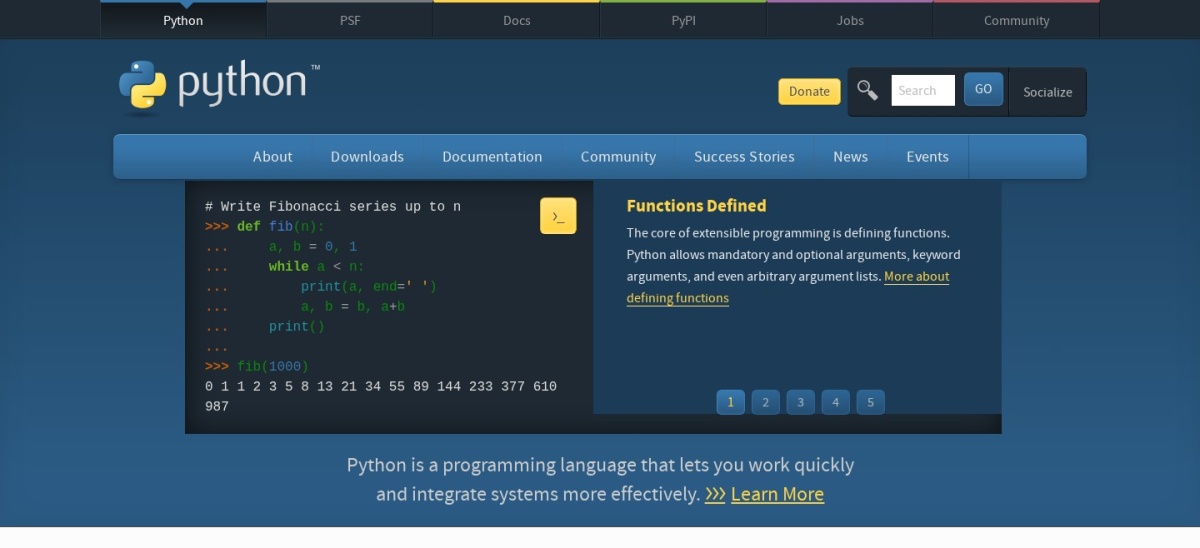
Python is a readable, general-purpose language with the largest library collection in this list, covering web back ends, data science and automation with NumPy, SciPy and pandas. It is free and open source, runs on Windows, macOS and Linux, and its plain syntax makes it the fastest of these languages for a beginner to read and write.
The trade off is speed. Python runs slower than compiled languages on CPU-heavy work, and its dynamic typing means some errors only appear at runtime. It suits scripts, APIs, data work and teams that value speed of writing over raw speed.
What we like
Free with the largest library collection here
Easy to learn and read
Runs on Windows, macOS and Linux
Huge community and hiring pool
Watch out for
Slower than compiled languages
Runtime type errors slip past the compiler
Mobile apps are not its strength
The language is free; paid help comes from support vendorsVisit python.org
02
Node.js
4.8/5on G2 (101 reviews, checked Nov 2026)
PriceFree
Best for JavaScript back ends
LicenceMIT, free and open source
Package registrynpm, largest here
PlatformsWindows, macOS, Linux
Paid planNone, fully free
nodejs.org
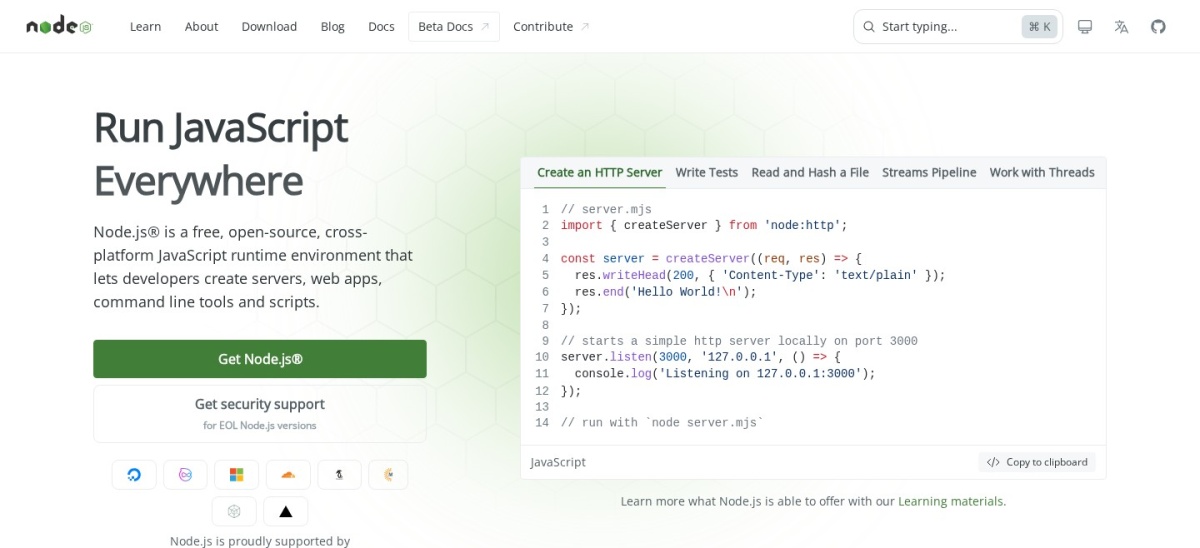
Node.js homepage, captured Nov 2026.
Node.js is a free, open-source JavaScript runtime that runs JavaScript on the server, so one language can cover the front end and the back end. Its npm registry holds the largest package collection in this list, and its event-driven model handles many simultaneous connections well. It runs on Windows, macOS and Linux.
The trade off is CPU-heavy work. A single-threaded event loop slows down on long computations, and the size of npm means dependency updates need care. It suits APIs, real-time apps and teams that already write JavaScript.
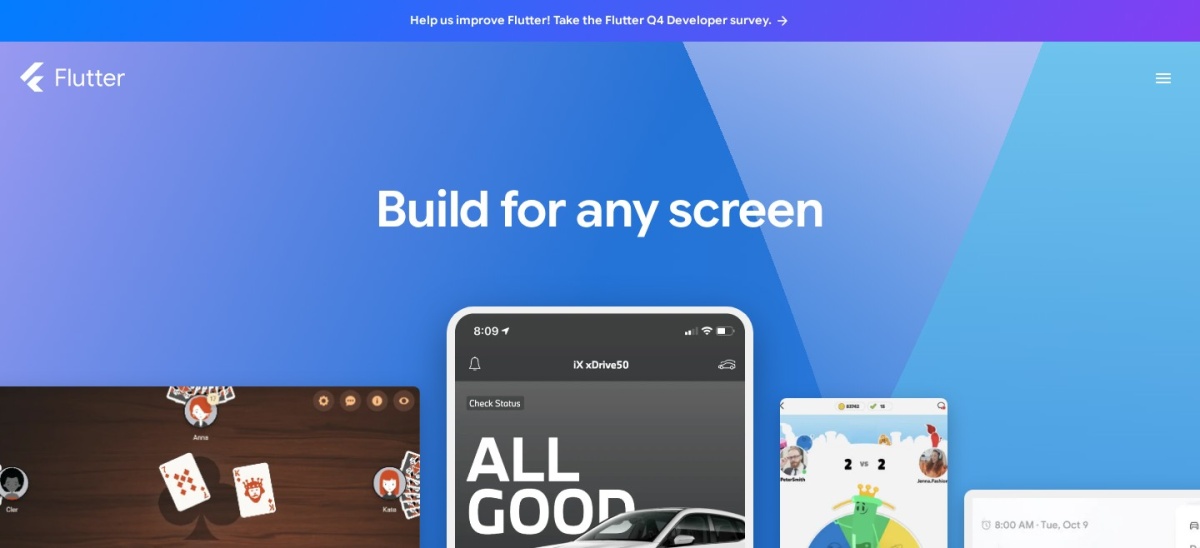
Flutter is Google's open-source UI kit for building apps for Android, iOS, web, Windows, macOS and Linux from one codebase. Its widget system and hot reload let a small team ship a consistent interface fast, and its Dart language compiles to native code. It is free, with no paid plan.
The trade off is size and reach. Flutter apps are larger than native apps, and some platform features still need native code or community plugins. It suits cross-platform apps where one team ships to every screen.
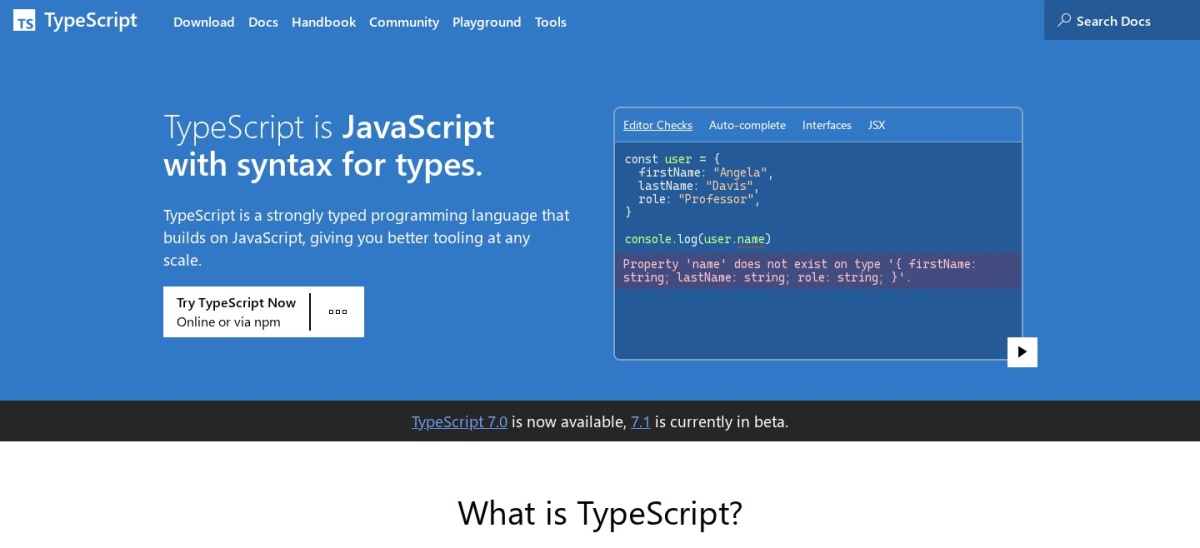
TypeScript is a typed superset of JavaScript from Microsoft that adds static types to catch errors before code runs. It compiles to plain JavaScript, works with the whole npm ecosystem, and makes large codebases easier to refactor. It is free and open source.
The trade off is setup. A TypeScript project needs a build step and a tsconfig file, browsers cannot run it directly, and strict type errors can slow down fast-moving work. It suits web teams that outgrew plain JavaScript.
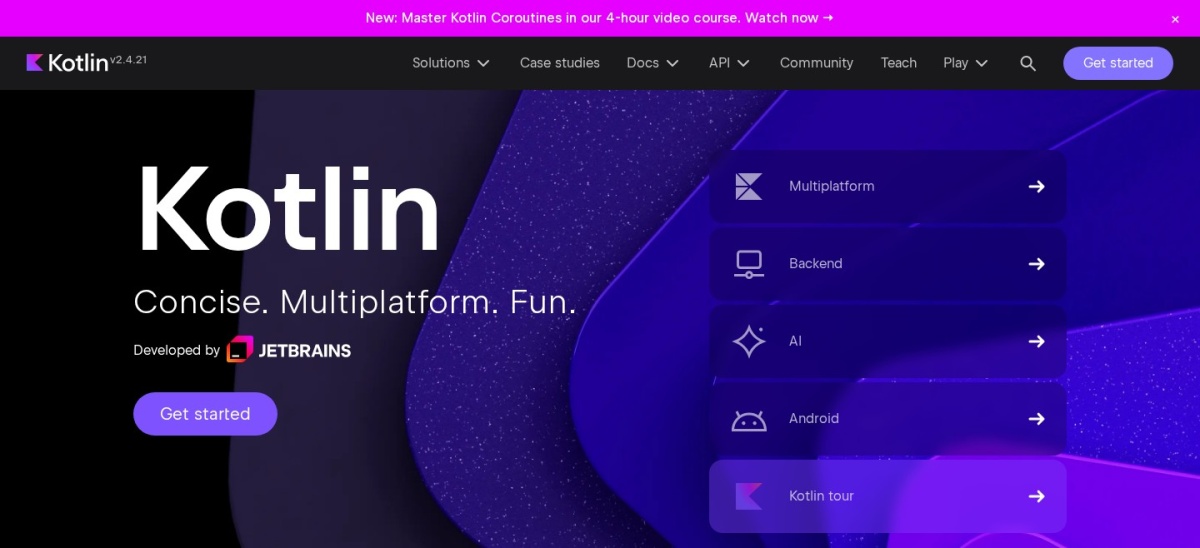
Kotlin is a concise, null-safe language from JetBrains that runs on the JVM and interoperates with Java, so existing Java code and libraries work unchanged. Its coroutines handle background work cleanly, and Kotlin Multiplatform shares code across Android and iOS. It is free and open source.
The trade off is speed of build and size of community. Kotlin compiles more slowly than Java, and its community is smaller, so answers can be harder to find. It suits Android apps, servers and teams moving off Java.
React Native is Meta's open-source framework for building Android and iOS apps from shared JavaScript and React code. Its fast refresh shows changes at once, and web developers can reuse their React skills. It is free, with no paid plan.
The trade off is native gaps. Some device features need custom native modules, library versions can clash, and debugging is harder than on the web. It suits teams that already know React and need both app stores.
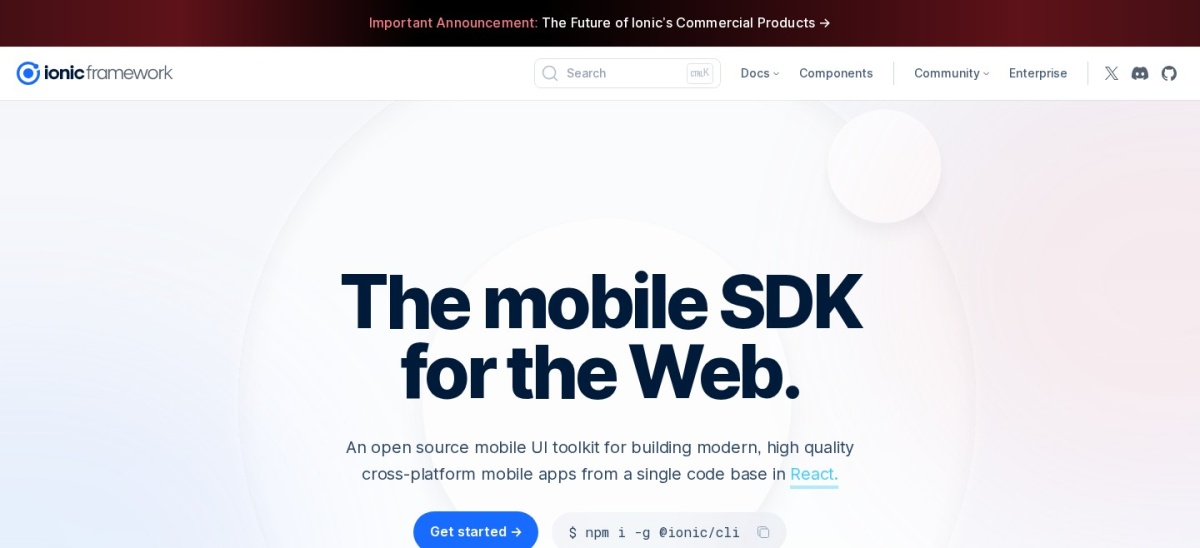
Ionic is an open-source UI toolkit for building iOS, Android and web apps from one codebase using web technologies. It works with Angular, React and Vue, and its ready-made components cover most mobile interfaces. The framework itself is free.
The trade off is performance and plugins. Complex apps can feel slower than native ones, and plugin setup and compatibility still take work. It suits web teams shipping their first mobile app.
What we like
Builds with familiar web skills
Works with Angular, React and Vue
Ready-made mobile components
Free and open source
Watch out for
Slower than native on complex apps
Plugin setup can be fiddly
Needs a web view to run
The framework is free; Appflow is a paid extraVisit ionic.io
08
Dart
4.4/5on G2 (52 reviews, checked Nov 2026)
PriceFree
Best for Flutter apps and servers
LicenceBSD, free and open source
CompilationJIT and AOT
Main useFlutter apps
Paid planNone, fully free
dart.dev
Dart homepage, captured Nov 2026.
Dart is Google's open-source, general-purpose language with static typing, garbage collection, and both JIT and AOT compilation. It is the language behind Flutter, and it also runs on servers and the web. It is free, with a clear syntax and null safety.
The trade off is ecosystem size. Outside Flutter, Dart's package collection is small, and its isolates cannot share memory the way threads can. It suits Flutter apps and teams that want one language for app and server.
What we like
Compiles ahead of time to native code
Null safety built in
Clear syntax close to Java
Free and open source
Watch out for
Small package collection outside Flutter
Isolates cannot share memory
Fewer Dart developers to hire
The language is free; Flutter is its main homeVisit dart.dev
09
Groovy
4/5on G2 (5 reviews, checked Nov 2026)
PriceFree
Best for JVM scripting and Jenkins
LicenceApache 2.0, free
Runs onJVM, beside Java
Main useScripts, Jenkins
Paid planNone, fully free
groovy-lang.org
Groovy homepage, captured Nov 2026.
Groovy is a JVM language with a concise syntax that runs beside Java code, so Java libraries and tools work unchanged. It is widely used for scripting, Jenkins pipelines and small services, and its dynamic style means less boilerplate than Java. It is free and open source.
The trade off is evidence and speed. Groovy has only 5 G2 reviews behind its 4.0 rating, it runs slower than statically typed languages, and its community is small. It suits Jenkins users and Java shops that need quick scripts.
The three names most people expect here are Go, C++ and Zig. All three are closer to Rust than any pick above: compiled, fast, and built for systems work.
None of the three has a public rating with a review count on G2, Capterra or Trustpilot, so none of them could be ranked under the rules of this list. We did not substitute ratings from IDEs, editors or services companies.
If raw speed is the deciding factor, weigh Go, C++ and Zig on their own merits beside this list. Python wins this ranking on ratings and libraries, not on speed, and a team that needs Rust-level speed should not take this list as the whole answer.
How we chose
We started from the languages, runtimes and frameworks most often named as Rust replacements for servers, CLIs, data work and apps, then kept only those with a numeric rating and review count on G2 for the tool itself.
Prices and ratings were checked on 29 November 2026. Every pick here is free and open source, so the price ladder is $0 throughout and the choice turns on fit, not fees.
We left out Go, C++, Zig, C#, Java, Swift and Scala because no G2, Capterra or Trustpilot rating exists for the language itself, and we did not use IDE, editor or services-company ratings in their place. No vendor paid for a place, and we do not claim to have used these tools ourselves.
How to choose an alternative to Rust
Start with the job Rust was doing for you, then match the replacement to that job.
Match the replacement to the workload. Systems work that needs raw speed points to Kotlin or Dart; web back ends point to Node.js or Python; mobile apps point to Flutter or React Native.
Check the safety guarantees you are giving up. Rust's borrow checker catches memory errors at compile time. Most picks here use a garbage collector instead, so budget for tests and code review to cover the gap.
Weigh the ecosystem, not just the language. Python's libraries, npm for Node.js and pub for Dart decide how fast a team ships. Check that the packages your project needs exist before you commit.
Try the smallest real piece first. Rebuild one small service or screen before migrating a whole codebase, and keep the Rust code running beside it until the replacement proves itself. Keep both versions in version control; our guide to using Git with WordPress covers the workflow.
FAQ
What is the best alternative to Rust in 2026?
Python is the best alternative to Rust for most teams. It is rated 4.8 out of 5 from 275 G2 reviews, it is free, and its libraries cover web back ends, data work and automation.
Is there a free alternative to Rust?
Yes, all 9 picks in this list are free and open source, including Python, Node.js and Flutter. Rust itself is also free, so a switch costs no licence fees; the real cost is learning time and rewriting code.
Which alternative to Rust is best for beginners?
Python is the best pick for beginners. Its plain syntax reads almost like English, it is rated 4.8 out of 5 from 275 G2 reviews, and its tutorials and libraries cover most first projects.
What is the best alternative to Rust for speed?
None of the ranked picks matches Rust's speed. Kotlin and Dart come closest here because both compile to native code, but Go, C++ and Zig are the true speed rivals and could not be ranked because they have no public G2 rating.
Python vs Node.js: which is the better Rust alternative?
Python wins on libraries and ease of learning, with a 4.8 rating from 275 reviews against 101 for Node.js. Node.js wins when your team already writes JavaScript and needs one language for the front end and the back end.
Can I build mobile apps without Rust?
Yes. Flutter, React Native and Ionic all build Android and iOS apps from one codebase and are free. Flutter scores highest of the three at 4.6 out of 5, while React Native suits teams that already know React.
SaaS SEO and WordPress specialist with about 8 years of experience. Rakib compares WordPress plugins, themes, hosting and software using public pricing, documentation and user reviews. See how we rank.