Flagsmith is the best alternative to LaunchDarkly for most teams, rated 4.8 out of 5 on G2 with a Start-Up plan at $45 a month. ConfigCat suits teams that want flat pricing with unlimited seats at $110 a month, while Statsig is the pick for flags plus experiments on a generous free tier.
How we make this list: we compare pricing pages, product documentation and public user reviews, then re-check every price before each update. No product paid for a place. Disclosure.
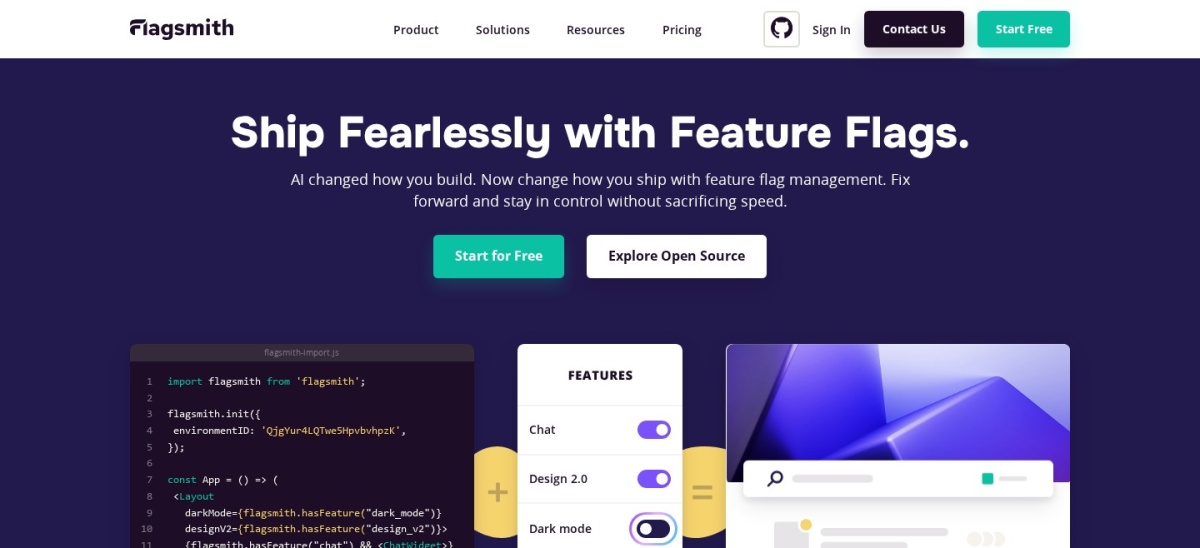
Flagsmith is the top pick: open source flags, a 4.8 out of 5 G2 rating and a Start-Up plan at $45 a month.
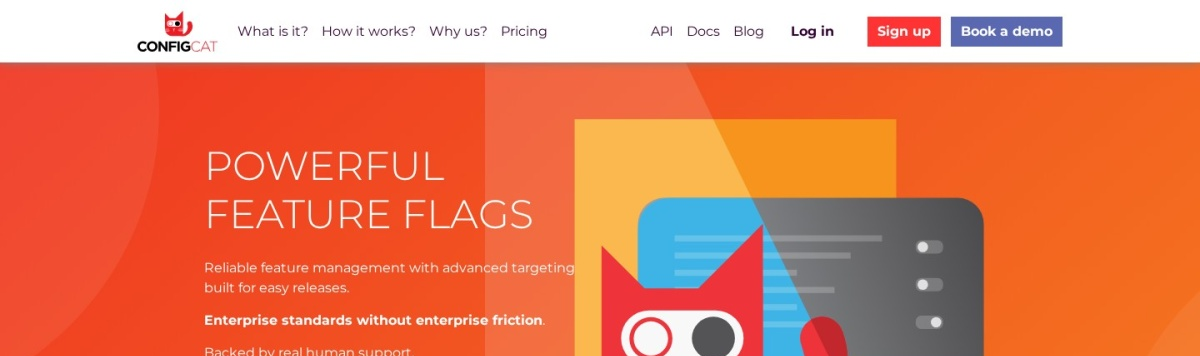
ConfigCat charges a flat $110 a month with unlimited seats, so the bill does not grow with headcount.
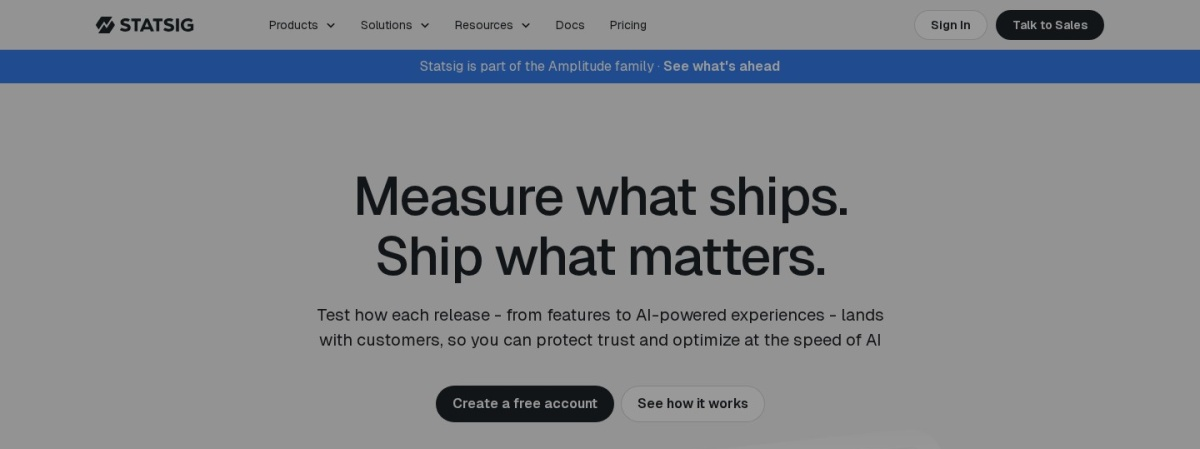
Statsig has the most generous free tier: 2 million events a month, unlimited flag checks and 50,000 session replays.
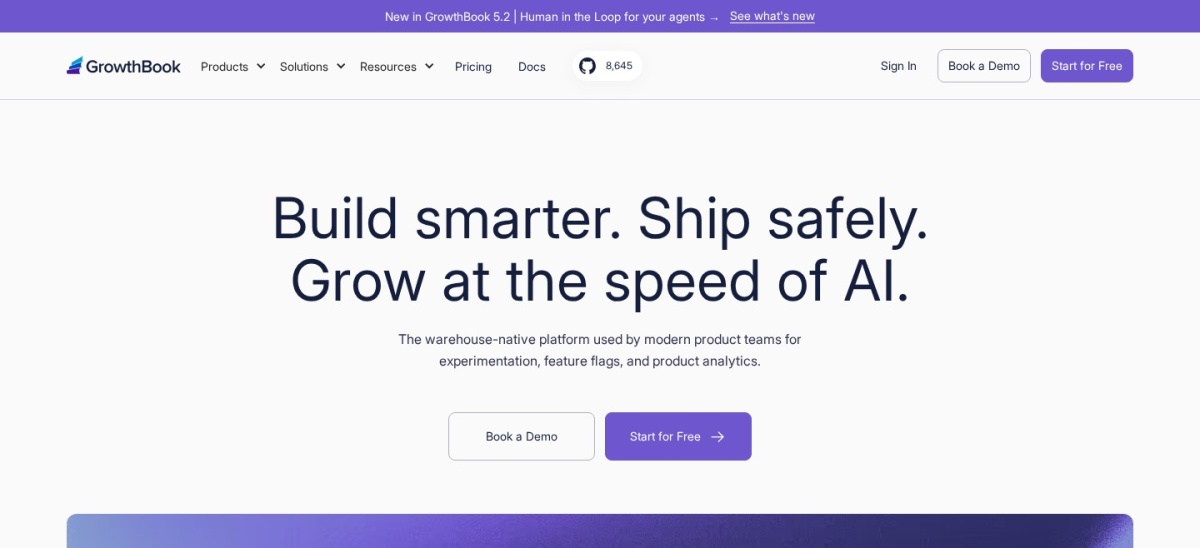
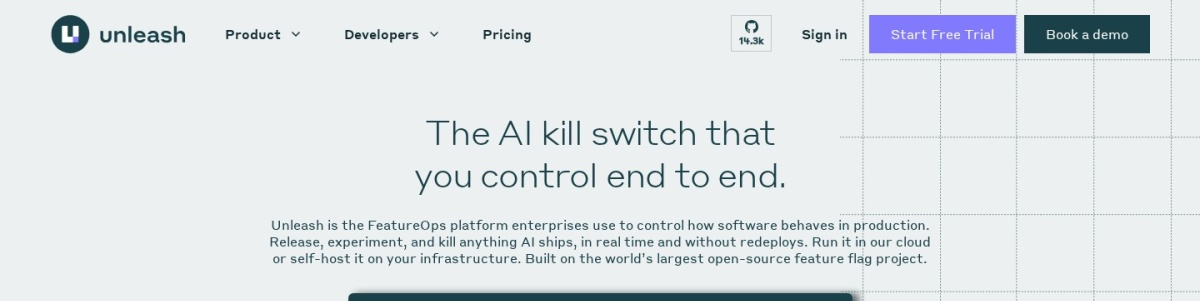
GrowthBook and Unleash both offer free self-hosted editions, but their paid cloud plans charge $40 and $75 per seat a month.
Split and Optimizely publish no paid prices, so budget for a sales quote before you shortlist them.
How do you choose between alternatives to LaunchDarkly?
Price models differ more than the feature lists do. Some tools charge per seat, some by requests or events, and two in this list publish no price at all.
Free tiers are the real starting point for most teams. Every tool in this list has a free plan, but the caps differ: Flagsmith limits requests, ConfigCat limits flags, and Statsig limits metered events.
Open source matters if you want an exit route. Flagsmith, GrowthBook and Unleash can all be self-hosted, so your flags keep working even if you stop paying.
Experiments decide the shortlist for data-led teams. Statsig, GrowthBook, Split and Optimizely bundle statistics with flags, while Flagsmith and ConfigCat keep flags and testing separate. Trial risky flag changes on a staging copy first; our guide on setting up a staging site for WordPress shows the setup.
Flagsmith is an open source feature flag and remote config platform, licensed under BSD-3-Clause. The free cloud plan covers unlimited flags, environments and segments for up to 50,000 API requests a month, and the self-hosted edition has no request limit.
The trade off is experimentation depth. A/B and multivariate testing need the Start-Up plan at $45 a month, which raises the limit to 1 million requests, and there is no built-in stats engine. It suits small teams that want open source flags at a predictable price.
What we like
Open source with a free self-hosted edition
Remote config alongside boolean flags
Unlimited flags on the free cloud plan
Low $45-a-month starting price
Watch out for
A/B testing needs the paid Start-Up plan
No built-in experimentation statistics
Enterprise controls such as SSO sit on higher tiers
ConfigCat is a feature flag and remote config service with unlimited seats on every plan. The free plan includes 10 feature flags, 2 environments, 2 products and 5 million config downloads a month, with SDKs for JavaScript, .NET, Java, Go, Python and more.
The trade off is the free plan's caps. Ten flags and 2 environments cover a small product, but a growing team will need Pro at $110 a month for 100 flags and 25 million downloads. It suits teams that want flat, predictable pricing without per-seat billing.
What we like
Unlimited seats on every plan
Flat pricing with no per-user charges
Free plan includes 5 million downloads a month
SDKs for 19 languages and frameworks
Watch out for
Free plan allows only 10 flags
No built-in experimentation or stats engine
Smart plan at $325 a month is needed for unlimited flags
Statsig is an experimentation-first platform that combines feature flags, A/B tests, product analytics and session replay. The free Developer tier includes 2 million metered events a month, unlimited flag and config checks, 50,000 session replays a month and unlimited seats.
The trade off is event-based billing. Flags themselves are free to check, but analytics and experiment events count toward the meter, and Pro costs $150 a month for 5 million events, with $0.05 per extra 1,000. It suits teams that want flags and measurement in one place.
What we like
Generous free tier with 2 million events a month
Unlimited flag checks on every plan
Flags, experiments, analytics and replays in one tool
GrowthBook is an open source feature flag and experimentation platform that analyses results in your own data warehouse. The free cloud Starter plan covers up to 3 users and 1 project with unlimited flags, experiments and traffic, and the self-hosted edition is free with unlimited users.
The trade off is seat pricing on cloud. Pro costs $40 per seat a month for up to 30 users and 3 projects, adding the visual editor, multi-arm bandits and safe rollouts. It suits warehouse-first teams that want strong statistics without per-user traffic charges.
What we like
Open source with a free self-hosted edition
Warehouse-native stats, including CUPED and bandits
Unleash is the longest-running open source feature flag platform in this list, in use since 2014. The free self-hosted edition covers 1 project, 2 environments and 5,000 flags with no seat limit, and flags are evaluated locally in your apps by 25-plus SDKs.
The trade off is per-seat pricing on the managed plans. Pay-As-You-Go costs $75 per seat a month with a 5-seat minimum for self-hosted, and includes 53 million API requests a month. It suits regulated teams that need open source control and in-app flag evaluation.
What we like
Open source with a free self-hosted edition
Flags evaluated locally, so user data stays in-house
25-plus SDKs
Unlimited client-side users on paid plans
Watch out for
Paid cloud starts at $75 per seat a month
No native experimentation suite
Open source edition allows only 1 project and 2 environments
Pay-As-You-Go adds cloud hosting and 53 million requests a monthVisit getunleash.io
06
Split (Harness FME)
4.7/5on G2 (145 reviews, checked Nov 2026)
PricingCustom/yr
Best for impact analysis with flags
Free flags50
Free seatsUp to 10
ExperimentationBuilt-in impact analysis
Paid planCustom quote
split.io
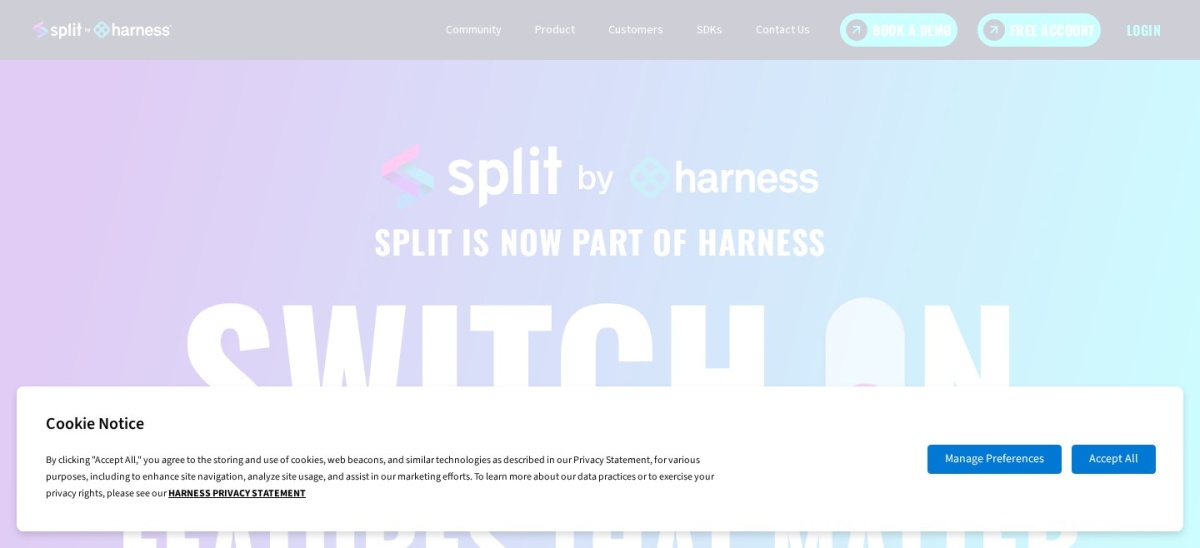
Split (Harness FME) homepage, captured Nov 2026.
Split is a feature management and experimentation platform, now sold as Harness Feature Management and Experimentation after Harness acquired Split in 2024. It pairs flags with impact analysis that ties a flag change to business metrics, with 15-plus open source SDKs.
The trade off is pricing transparency. The free tier covers up to 10 seats, 50 flags and 2 environments, but Harness publishes no paid dollar figure, and third-party reports put the Teams plan at $33 per seat a month. It suits teams already using Harness that want flags and experiments together.
What we like
Strong impact analysis tied to flag changes
Built-in experimentation with rigorous statistics
Free tier with 10 seats and 50 flags
15-plus open source SDKs
Watch out for
No published paid price; quotes only
Free tier caps at 50 flags
Direction is now tied to the wider Harness platform
Paid plans add impact analysis at scale and supportVisit split.io
07
PostHog
4.5/5on G2 (1,057 reviews, checked Nov 2026)
PriceFree
Best flags plus analytics in one tool
Free flag requests1 million/mo
Free events1 million/mo
Session replays5,000/mo free
Paid planPay-as-you-go, $0 base
posthog.com
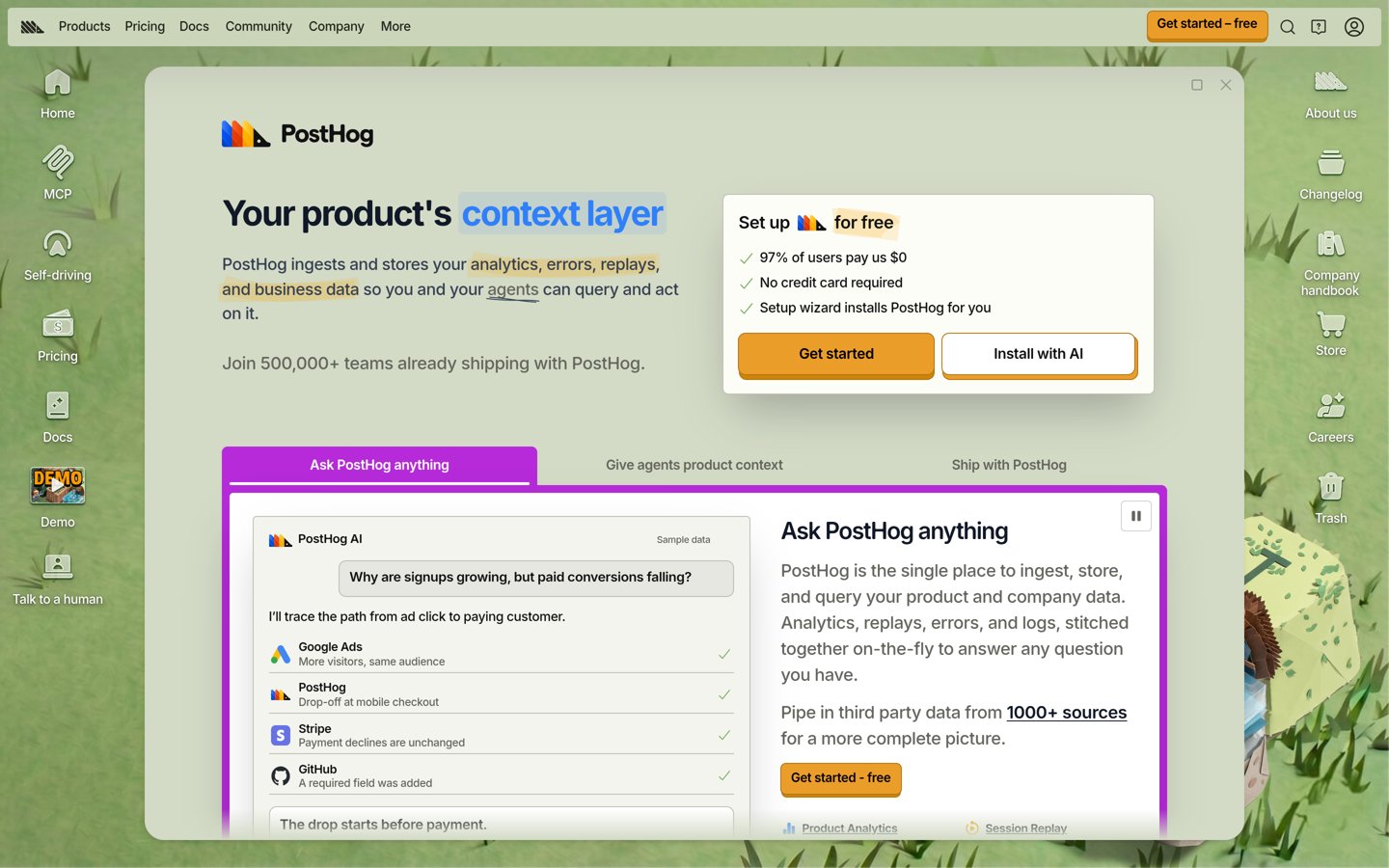
PostHog homepage, captured Nov 2026.
PostHog is an open source product platform that bundles feature flags with analytics, session replay, surveys and experiments. The free tier includes 1 million analytics events, 1 million flag requests and 5,000 session recordings a month, with unlimited team members.
The trade off is usage-based billing. There is no platform fee, but every event and flag request above the free allowance is metered, so a traffic spike moves the bill. It suits product teams that want flags, analytics and replays on one bill.
What we like
Flags, analytics, replays and surveys in one tool
Generous free tier with 1 million flag requests a month
Open source with a self-hosted option
No platform fee on pay-as-you-go
Watch out for
Usage billing is hard to forecast from traffic spikes
Free plan drops events above the allowance instead of billing
Advanced access controls need paid platform packages
DevCycle is a feature flag platform with edge-based local evaluation and A/B testing on every plan. The free plan includes unlimited seats, flags, environments and projects for up to 1,000 client-side monthly active users, and Dynatrace acquired DevCycle in January 2026.
The trade off is the jump to paid. Business costs $500 a month billed annually, or $625 a month billed monthly, and includes 100,000 monthly active users and 500,000 events a month. It suits developer-led teams that want flags first with simple usage-based pricing.
What we like
A/B testing on the free plan
Unlimited seats, flags and environments
Edge-based flag evaluation
OpenFeature-native SDKs
Watch out for
Big jump from free to the $500-a-month Business plan
Optimizely Feature Experimentation homepage, captured Nov 2026.
Optimizely Feature Experimentation is the server-side flag and experimentation product in the Optimizely platform. The free Rollouts plan includes unlimited feature flags with one experiment at a time, and paid plans add its Stats Engine with sequential, Bayesian and frequentist analysis.
The trade off is cost and opacity. Paid plans are billed by monthly active users and need a sales quote, with third-party estimates starting near $36,000 a year. It suits large, data-mature teams that need rigorous statistics and governance at scale.
Per-seat tools are the easiest to forecast. GrowthBook at $40 and Unleash at $75 a month both charge per seat, so the bill grows every time a new teammate needs access.
Usage-based tools charge by traffic or events instead. Statsig bills metered events, DevCycle bills monthly active users, and PostHog bills events and flag requests above its free allowance.
Flat tools keep the bill steady. ConfigCat at $110 a month and Flagsmith at $45 a month charge the same however many seats you add, with limits on flags, requests or downloads instead.
Quote-only tools need a sales conversation before you can budget at all. Split and Optimizely publish no paid prices, so ask for a written quote early and check what counts toward the meter.
How we chose
We started from the feature flag tools that appear most often in G2, Capterra and developer comparisons of LaunchDarkly alternatives, then kept nine established products with a public free plan or free tier.
Prices come from each vendor's pricing page, checked on 29 November 2026. Ratings come from G2 on the same day, with most figures matching the feature flag list checked on 25 November 2026.
We left out tools with no public pricing and no free tier, and tools that are only a small part of a wider suite. No vendor paid for a place, and we do not claim to have used these tools ourselves.
How to choose an alternative to LaunchDarkly
Start with how your team ships, then match the pricing model to your traffic.
Count who needs access. Per-seat tools get expensive when many people manage flags. If most of your team needs access, prefer unlimited-seat tools such as ConfigCat, Flagsmith or PostHog.
Check the free tier's real limit. Some free plans cap flags, others cap requests, events or users. Trial new flags on a staging copy first; our guide on setting up a staging site for WordPress shows the setup.
Decide if you need experiments. If every release needs a measured result, pick Statsig, GrowthBook or Split. If you only need safe rollouts, a flags-only tool such as ConfigCat or Flagsmith costs less.
Ask for the quote early. Split and Optimizely publish no paid prices. Get a written quote before you shortlist them, and check what counts toward the meter.
FAQ
What is the best alternative to LaunchDarkly in 2026?
Flagsmith is the best alternative to LaunchDarkly for most teams. It is open source, rated 4.8 out of 5 on G2 from 37 reviews, and its Start-Up plan costs $45 a month with 1 million API requests included.
How much do alternatives to LaunchDarkly cost?
Paid plans in this list start at $40 per seat a month for GrowthBook and $45 a month for Flagsmith, and climb to $500 a month for DevCycle Business. Statsig and PostHog charge by usage, while Split and Optimizely publish no prices.
Is there a free alternative to LaunchDarkly?
Yes, every tool in this list has a free plan or free tier. Flagsmith and Unleash also offer free self-hosted editions, and Statsig's free tier covers 2 million events a month with unlimited flag checks.
Which LaunchDarkly alternative is best for a small team?
Flagsmith suits most small teams, with unlimited flags on its free cloud plan and a $45-a-month Start-Up plan. ConfigCat is the better pick if you want unlimited seats on a flat $110-a-month plan.
Flagsmith or ConfigCat: which is the better LaunchDarkly alternative?
Flagsmith wins for open source teams and the lowest starting price at $45 a month, with remote config included. ConfigCat wins for larger teams that want unlimited seats and flat pricing at $110 a month.
Can I self-host a LaunchDarkly alternative?
Yes. Flagsmith, GrowthBook and Unleash all offer free self-hosted editions under open source licences. Self-hosting suits teams that need data control, but you take on upgrades and uptime yourself.
Do LaunchDarkly alternatives include A/B testing?
Most do. Statsig, GrowthBook, Split and Optimizely bundle experiments with flags, and DevCycle and PostHog include testing too. Flagsmith offers A/B testing on its paid Start-Up plan, while ConfigCat is flags only.
SaaS SEO and WordPress specialist with about 8 years of experience. Rakib compares WordPress plugins, themes, hosting and software using public pricing, documentation and user reviews. See how we rank.