Python is the best alternative to R for most analysts: it is free, rated 4.8 out of 5 from 275 G2 reviews, and its pandas and scikit-learn libraries cover most statistics and machine learning work. Pick KNIME if you want a free no-code workflow, or SPSS if you need menu-driven tests without writing code.
How we make this list: we compare pricing pages, product documentation and public user reviews, then re-check every price before each update. No product paid for a place. Disclosure.
Python is free and the top-rated pick at 4.8 out of 5 from 275 G2 reviews, with libraries for nearly every statistics task.
Alteryx is the highest-rated paid workflow tool at 4.6 out of 5, but Starter costs $250 per user a month.
KNIME is the only other free platform here, with a drag-and-drop canvas and a $19-a-month Pro plan.
SPSS, Stata, JMP and Minitab are menu-driven, but their cheapest plans run from $925 to $2,394 a year.
SAS/STAT has no published price; expect a negotiated enterprise quote.
What should you look for in alternatives to R?
The best alternatives to R match how your team already works. Coders keep their habit with Python or MATLAB, while everyone else gets further with a menu-driven tool such as SPSS, Stata or JMP.
Price is the widest gap in this list. Python and KNIME cost nothing, MATLAB and Stata sit near $1,000 a year, and Minitab reaches $2,394 a year for one named user.
Free plans differ more than the price suggests. Python is free forever with no limits, while KNIME's free platform covers full analysis and only charges for scheduling and team sharing.
Check the methods you actually run before you commit. Panel data, survival analysis and design of experiments are not in every plan, and some sit in add-ons or higher editions that cost far more than the headline price.
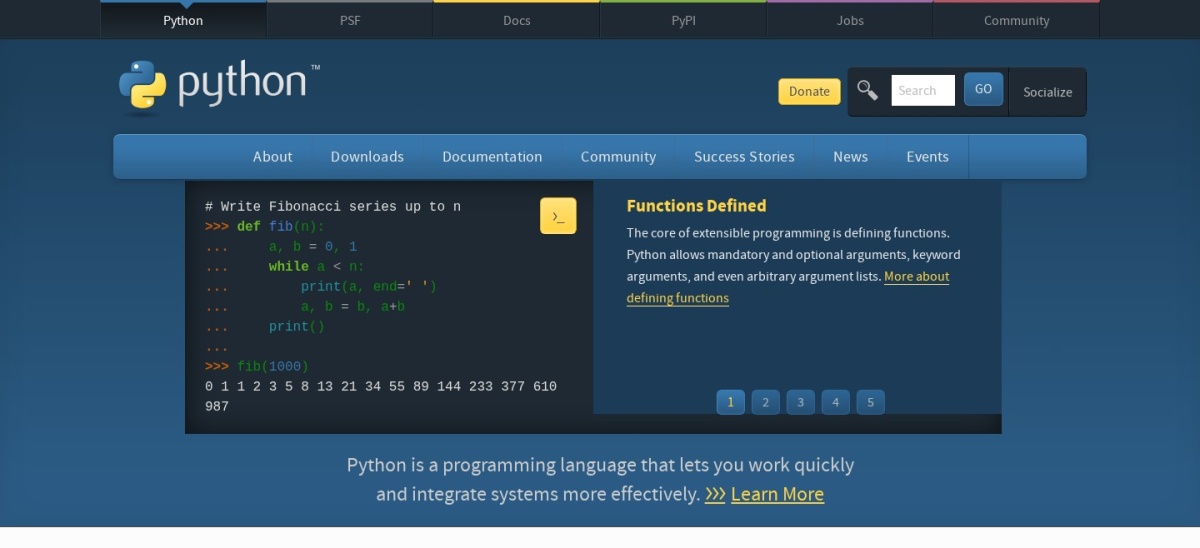
Python is a free, open-source programming language, and its pandas, NumPy and scikit-learn libraries cover data cleaning, regression, plotting and machine learning. Jupyter notebooks give R users a familiar interactive workflow, and the package index holds a library for almost every method R offers.
The trade off is that Python has no built-in statistics console like RStudio, so setup means installing an editor and managing packages. It suits analysts who code already and want the largest library ecosystem at no licence cost.
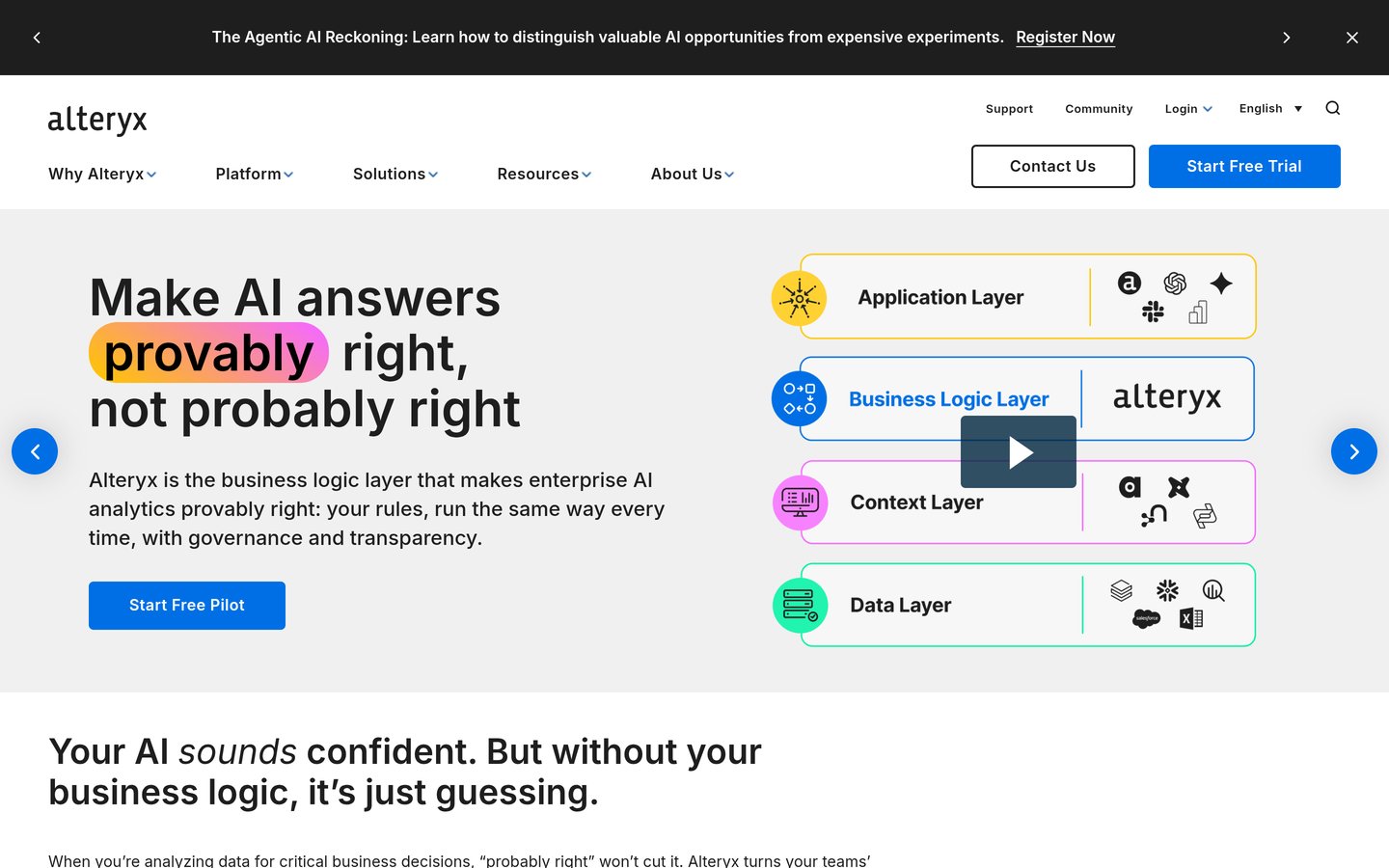
Alteryx is a drag-and-drop analytics platform that cleans, blends and models data without code, and its Designer workflows run the repetitive prep R scripts usually handle. Starter covers basic prep, joins and aggregation on flat files, with sharing built in.
The trade off is price and scope. Starter costs $250 per user a month billed annually, is cloud-only, and covers flat files only, so database work needs the quote-only Professional plan. It suits small teams that want governed, repeatable prep without hiring coders.
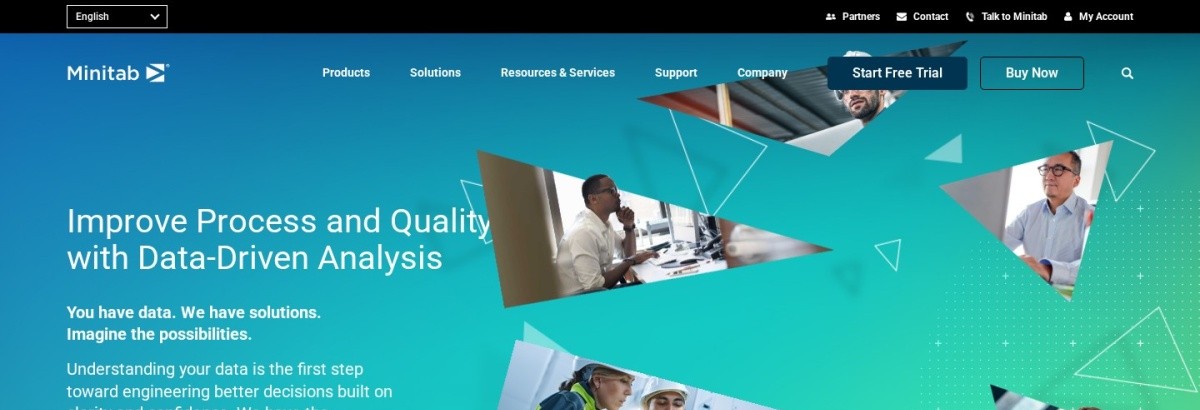
Minitab Statistical Software homepage, captured Nov 2026.
Minitab Statistical Software is a menu-driven statistics package built for quality engineers, with control charts, capability analysis and design of experiments ready to use. Core includes the desktop and web apps, dashboards, and an AI helper that explains results in plain words.
The trade off is cost. Core is $2,394 per named user a year, and predictive analytics needs the Analytics plan at $2,593.50 a year. It suits manufacturing and quality teams that run the same controlled analyses every week.
MATLAB is a numeric computing environment from MathWorks for matrix maths, signal processing and simulation, with toolboxes for statistics, machine learning and optimisation. Its live editor mixes code, output and charts in one document, much like an R notebook.
The trade off is the add-on bill. The $940-a-year standard licence covers MATLAB only, and each toolbox is bought separately, so a full statistics setup costs more. It suits engineers and researchers who already work in matrix maths.
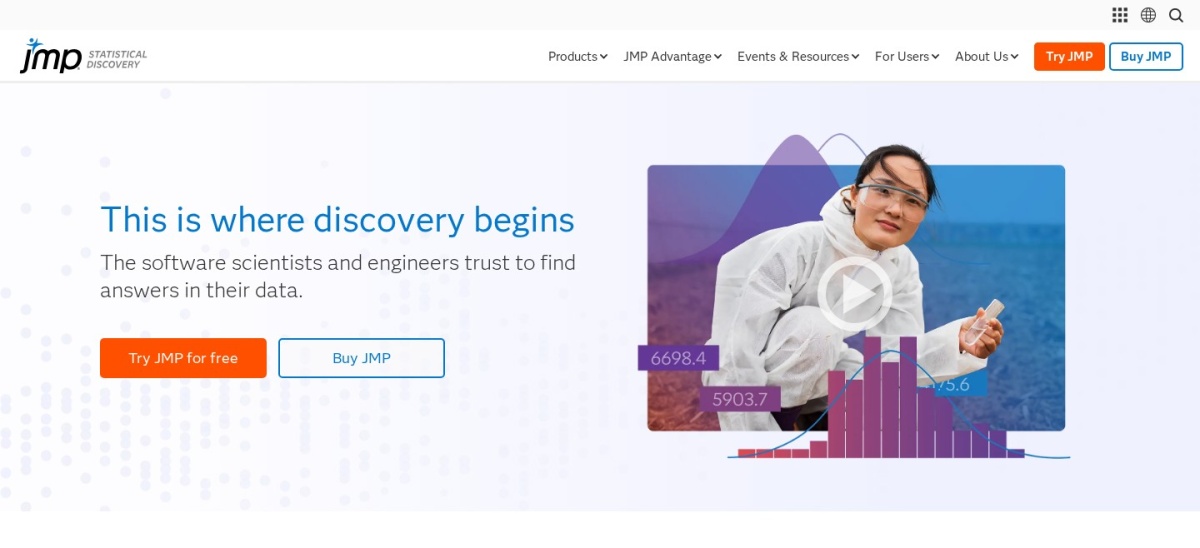
JMP is statistical discovery software from SAS that links every graph to the underlying data, so brushing a point in a chart highlights it everywhere. It covers regression, design of experiments, reliability and quality methods through menus, with scripting for repeatable work.
The trade off is the jump to Pro. Advanced methods such as predictive modelling and text analysis sit in JMP Pro at $8,820 a year. It suits scientists and engineers who explore data visually before they model it.
What we like
Linked graphs make patterns easy to see
Strong design of experiments
Menus cover most methods
30-day trial
Watch out for
Pro costs $8,820 a year
Smaller community than R or Python
JMP Pro adds predictive modelling at $8,820 a yearVisit jmp.com
06
KNIME
4.5/5on G2 (128 reviews, checked Nov 2026)
Paid from$19/mo
Best free no-code workflows
Cheapest planPro, $19/mo
Free planAnalytics Platform, free
Works without codeYes
Connectors300+ data sources
knime.com
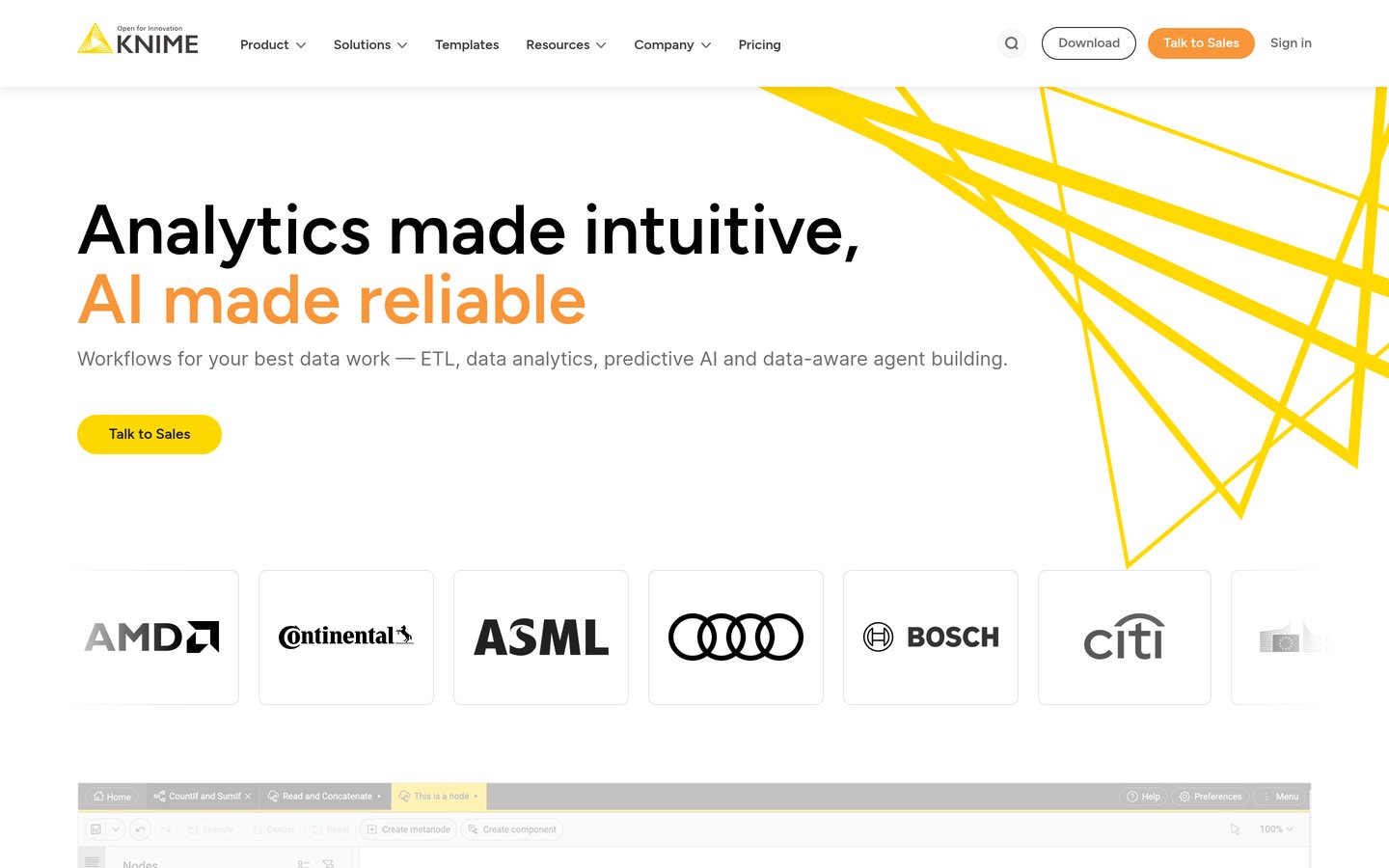
KNIME homepage, captured Nov 2026.
KNIME is a free, open-source analytics platform where you build analysis by connecting nodes on a canvas instead of writing code. The free Analytics Platform covers data prep, statistics, machine learning and reporting, and it runs Python and R code inside workflows when you need it.
The trade off is scale. Scheduling, deployment and shared team spaces need a paid Hub plan, and the desktop app can feel slow on very large files. It suits beginners and small teams that want a free, visual route into data work.
What we like
Free desktop platform with no usage cap
Visual workflows need no code
Runs Python and R code when needed
Large library of ready-made nodes
Watch out for
Scheduling needs a paid plan
Can feel slow on large files
Pro adds scheduling and deployment from $19 a monthVisit knime.com
07
Stata
4.3/5on G2 (166 reviews, checked Nov 2026)
Starts at$925/yr
Best for reproducible research code
Cheapest planBusiness SE, $925/yr
Free trialYes
Works without codeMenus and commands
Panel dataBuilt in
stata.com
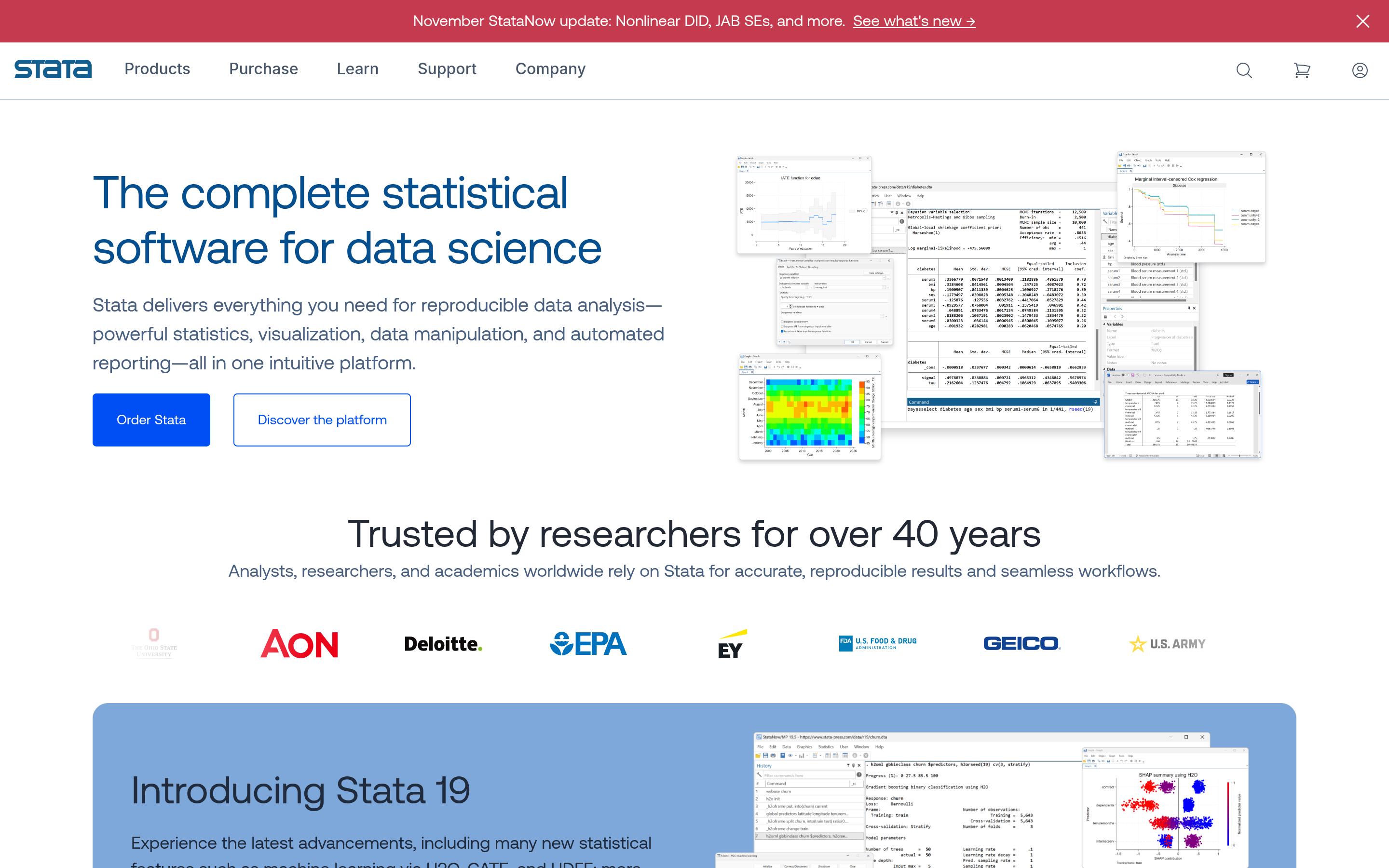
Stata homepage, captured Nov 2026.
Stata is a statistics package for data management, regression, panel data and survival analysis, used widely in economics, epidemiology and public health. Menus build each analysis while the command log keeps a reproducible record, and its manuals are famously complete.
The trade off is price for one person. A business single-user licence starts at $925 a year, and faster multi-core editions cost more. It suits researchers who want one documented workflow from raw data to publication-ready tables.
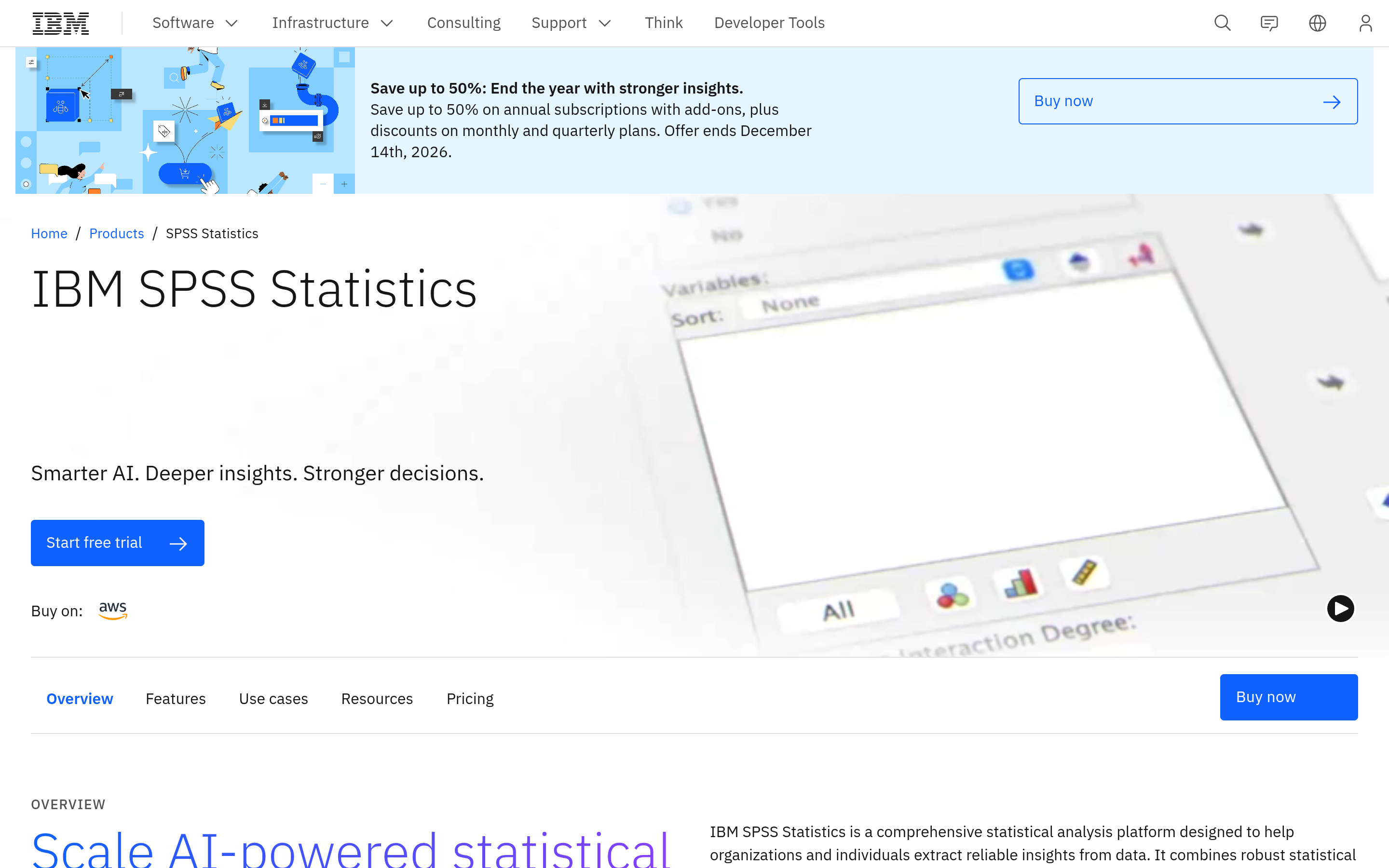
IBM SPSS Statistics is a point-and-click statistics package widely used in hospitals, universities and market research. The Base subscription covers descriptive statistics, regression, factor and cluster analysis, data preparation and bootstrapping, with syntax available when a study needs a reproducible record.
The trade off is price and age. Base costs $99 a month per user, or $1,188 a year, and the interface looks dated next to newer tools, while add-on bundles for advanced statistics, forecasting and exact tests cost $79 a month each. It suits teams that want a familiar menu-driven tool for standard analyses.
What we like
Menu-driven tests need no coding
Syntax keeps analyses reproducible
Large user base in research
Free trial to test it first
Watch out for
$99 a month adds up for small teams
Interface looks dated
Advanced methods need $79-a-month add-ons
Paid add-ons add advanced statistics, forecasting and exact testsVisit ibm.com
09
SAS/STAT
4.2/5on G2 (59 reviews, checked Nov 2026)
PricingCustom/yr
Best validated methods for regulated work
Cheapest planQuote-only
Free trialRequest a demo
Works without codeNo, code-first
ProceduresPROC MIXED, GLM, LOGISTIC
sas.com
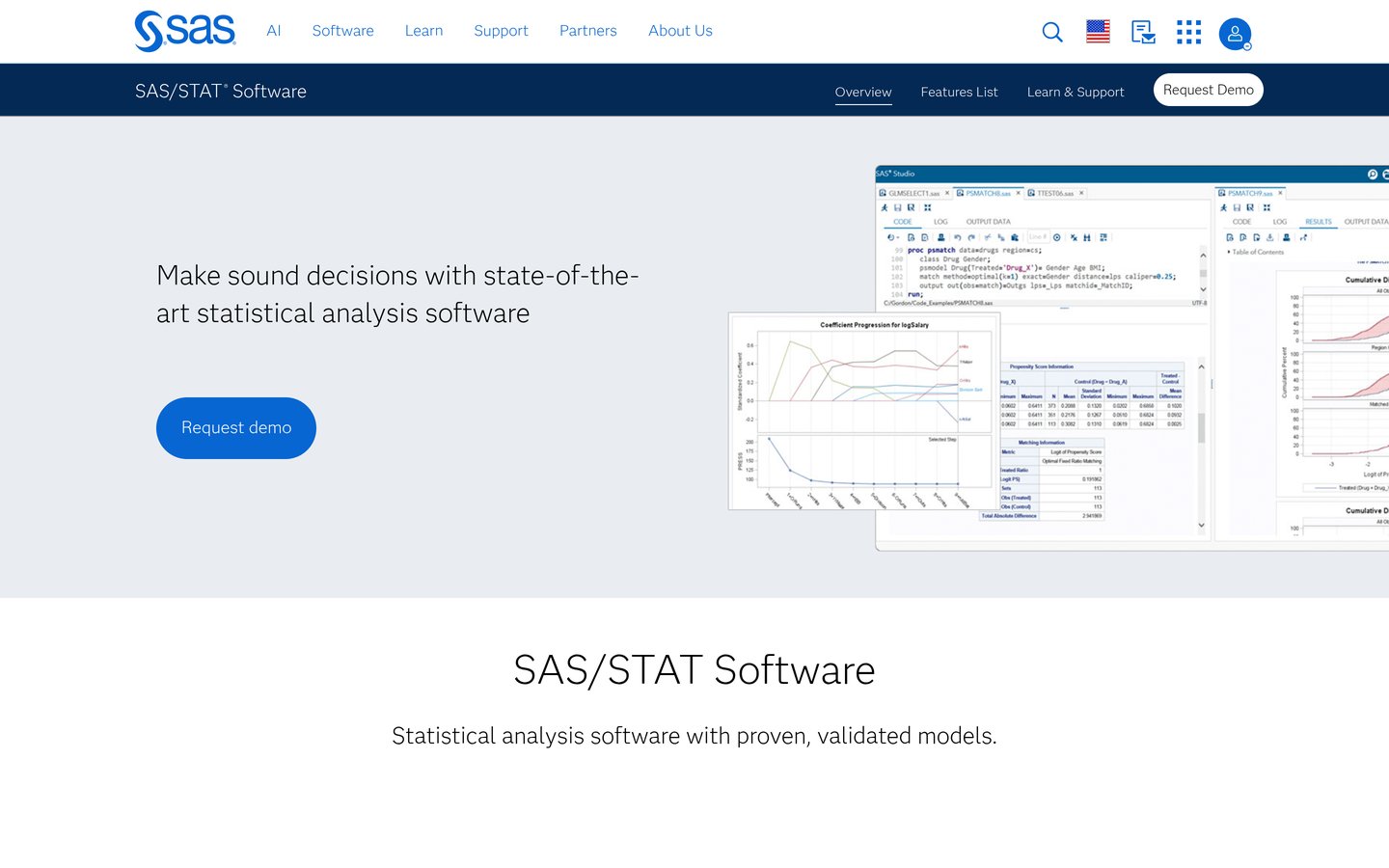
SAS/STAT homepage, captured Nov 2026.
SAS/STAT is the statistical engine inside SAS, with validated procedures for linear and mixed models, logistic regression, survival analysis and Bayesian methods. Its PROC steps are a standard in clinical trials and regulated industries, where methods must be documented and defended.
The trade off is cost and access. SAS publishes no price and licences are negotiated per organisation, often reaching five figures a year, and code cannot be shared with anyone who lacks SAS. It suits regulated teams that need audited, defensible statistics.
Free plans cover the basics well. Python costs nothing and KNIME's free platform handles full analysis, so most solo analysts never need to pay.
Paid plans mostly add convenience and scale. You get menus instead of code, scheduling, team sharing and support, plus methods that free tools leave out.
The dearest trap is the add-on. SPSS, MATLAB and JMP all sell a reasonable base plan, then charge separately for the advanced methods many teams actually need.
For a team of five, count seats before you fall for a low monthly figure. SPSS at $99 a month per user passes $5,900 a year, while Python and KNIME still cost nothing.
How we chose
We started from the statistical and data tools most often named as R replacements, then kept the nine with a public rating on G2 and a verifiable price or a clear quote-only status.
Prices come from each vendor's pricing page or vendor-supplied pricing, checked on 29 November 2026. Ratings and review counts come from G2 on the same day. Where a vendor shows a sale, the list shows the regular price; IBM lists a year-end discount on SPSS until 14 December 2026.
We left out Julia and JASP, two natural free picks, because neither has a public rating with a review count on G2, Capterra or Trustpilot. No vendor paid for a place, and we do not claim to have used these tools ourselves.
How to choose an alternative to R
Start with how your team already works, then match the tool to that habit.
Decide whether you will code. If your team already writes R, Python or MATLAB keeps that habit. If not, pick a menu-driven tool such as SPSS, Stata or JMP.
Count the seats before you compare prices. A free tool with five users still costs nothing, while SPSS at $99 a month per user passes $5,900 a year for the same team.
Check the methods you actually run. Panel data, survival analysis and design of experiments are not in every plan, and some sit in add-ons or higher editions.
Try the free route first. Python, KNIME and the free tiers here cost nothing to test, and most paid tools offer a 30-day trial.
FAQ
What is the best alternative to R in 2026?
Python is the best alternative to R for most analysts. It is free, rated 4.8 out of 5 from 275 G2 reviews, and its pandas and scikit-learn libraries cover most statistics and machine learning work.
What is the best free alternative to R?
Python and KNIME are the strongest free alternatives to R. Python suits people who code, with the largest library ecosystem, while KNIME suits people who prefer a drag-and-drop canvas and want no code at all.
How much do alternatives to R cost?
Prices run from free for Python and KNIME to $2,394 a year for Minitab. MATLAB costs $940 a year, Stata $925 a year, SPSS $99 a month, and Alteryx $250 per user a month, while SAS/STAT is quote-only.
Which alternative to R is best for beginners?
KNIME is the easiest free start, because its drag-and-drop canvas needs no code and the free platform has no usage cap. SPSS is the easiest paid start, with menus for every standard test and a free trial.
Is SPSS or Stata better than R?
SPSS is better than R for teams that want menu-driven tests without code, while Stata is better for researchers who want a reproducible command log. R stays better for cutting-edge methods, since its package library is larger than either.
Python vs MATLAB: which replaces R better?
Python replaces R better for most analysts because it is free, rated higher at 4.8 out of 5, and covers statistics and machine learning in one ecosystem. MATLAB fits better when the work is matrix maths, signal processing or simulation.
SaaS SEO and WordPress specialist with about 8 years of experience. Rakib compares WordPress plugins, themes, hosting and software using public pricing, documentation and user reviews. See how we rank.