Python is the best alternative to Kotlin for most developers, rated 4.8 out of 5 from 275 G2 reviews and free, with the largest library collection of any language here. Node.js suits server-side work, while Flutter and React Native cover cross-platform mobile apps.
How we make this list: we compare pricing pages, product documentation and public user reviews, then re-check every price before each update. No product paid for a place. Disclosure.
Python leads at 4.8/5 from 275 G2 reviews and costs nothing.
Node.js matches Python at 4.8/5 and runs JavaScript on the server.
Flutter and React Native are the cross-platform mobile picks, rated 4.6 and 4.5.
TypeScript adds static types to JavaScript at 4.6/5 from 64 reviews.
All seven picks are free and open source; the price ladder is $0 throughout.
Groovy is the closest JVM drop-in but rests on only 5 G2 reviews.
What should you look for in alternatives to Kotlin?
Kotlin spans three jobs at once. It builds Android apps, runs server-side code and powers multiplatform projects, so no single replacement covers all three, and the right pick depends on which job you are replacing.
Match the pick to the platform. Flutter and React Native replace Kotlin for mobile apps, Node.js and Python for the server, and Groovy for JVM code, while TypeScript covers web and shared code across platforms.
Price is not the deciding factor here. Every pick in this list is free and open source, so the choice turns on libraries, hiring and tooling, not licences. Our guide on how to set up a local WordPress development environment shows the same free-first approach for a dev setup.
Ratings here come from the tool itself. Each G2 score below belongs to the named language, runtime or framework, not to an IDE or a neighbouring product, which is why some famous Kotlin rivals are missing from this list.
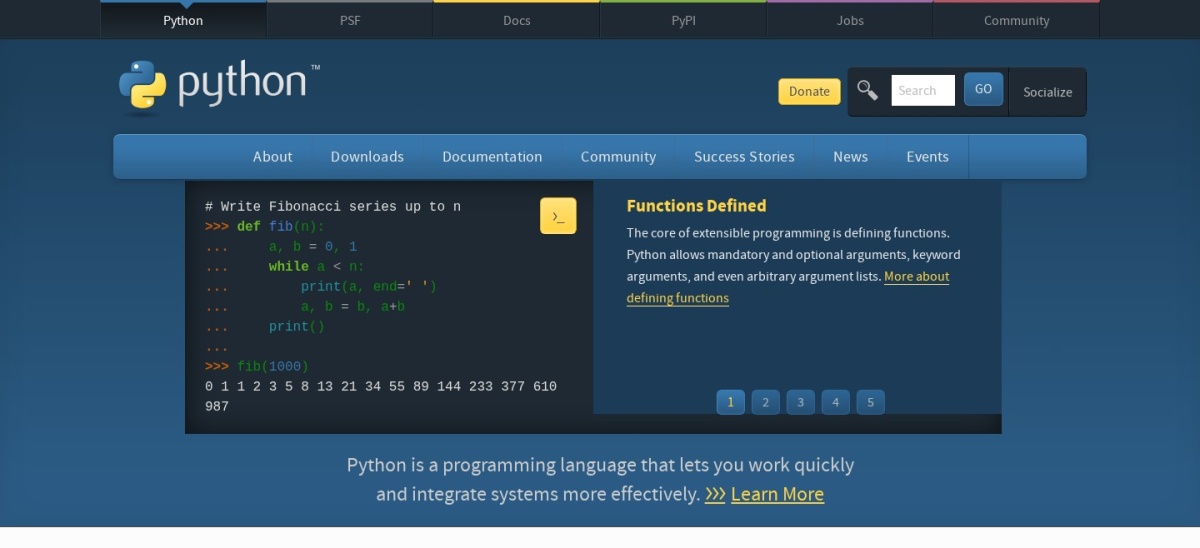
Python is a readable, general-purpose language with the largest library collection in this list, covering web backends, data science and automation with NumPy, SciPy and pandas. It is free and open source, runs on Windows, macOS and Linux, and its plain syntax makes it the fastest of these languages for a beginner to read and write.
The trade off is speed. Python runs slower than compiled languages on CPU-heavy work, and its dynamic typing means some errors only appear at runtime. It suits scripts, APIs, data work and teams that value speed of writing over raw speed.
What we like
Free with the largest library collection here
Easy to learn and read
Runs on Windows, macOS and Linux
Huge community and hiring pool
Watch out for
Slower than compiled languages
Runtime type errors slip past the compiler
Mobile apps are not its strength
The language is free; paid help comes from support vendorsVisit python.org
02
Node.js
4.8/5on G2 (101 reviews, checked Nov 2026)
PriceFree
Best for server-side JavaScript
LicenceMIT, free and open source
RuntimeJavaScript on the server
UseServers, CLIs, scripts
Paid planNone, fully free
nodejs.org
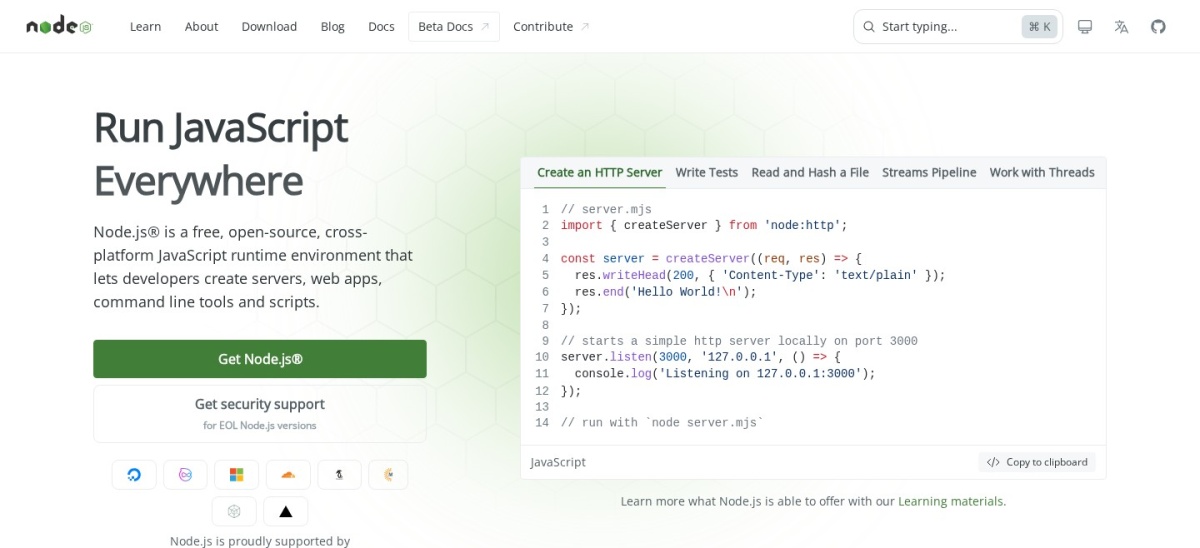
Node.js homepage, captured Nov 2026.
Node.js is a free, open-source, cross-platform JavaScript runtime that lets developers build servers, web apps, command-line tools and scripts with one language. It ships a built-in test runner and standard modules for HTTP, crypto, streams and worker threads, and the npm ecosystem covers almost any backend need.
The trade off is single-threaded work. CPU-heavy tasks can block the event loop, and async code gets hard to follow as a codebase grows. It suits real-time APIs and teams that already write JavaScript on the front end.
What we like
One language for front end and back end
Huge npm ecosystem
Built-in test runner and HTTP modules
Free, with no paid edition
Watch out for
CPU-heavy work blocks the event loop
Async code gets messy at scale
Smaller standard library than the JVM
The runtime is free; paid help comes from support vendorsVisit nodejs.org
03
Flutter
4.6/5on G2 (73 reviews, checked Nov 2026)
PriceFree
Best for one codebase on Android and iOS
LanguageDart
PlatformsMobile, web, desktop
Hot reloadYes, keeps app state
Paid planNone, fully free
flutter.dev
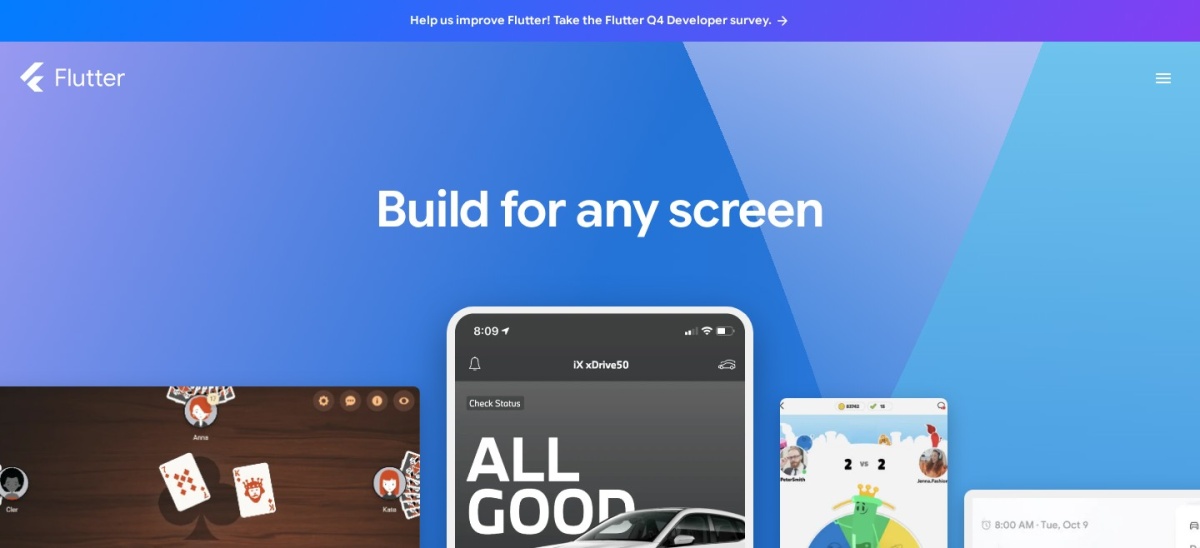
Flutter homepage, captured Nov 2026.
Flutter is Google's open-source UI framework for building apps from a single codebase for mobile, web, desktop and embedded devices. Code compiles to ARM or Intel machine code as well as JavaScript for fast performance, and hot reload shows changes almost instantly without losing state.
The trade off is app size and native gaps. Flutter apps can be larger than native ones, and some platform features still need native code. It suits teams that want one codebase for both app stores with a polished interface.
What we like
One codebase ships to mobile, web and desktop
Hot reload speeds up interface work
Compiles to native machine code
Google-backed with a large community
Watch out for
Larger app size than native apps
Some features still need native code
Web performance trails native apps
The framework is free; paid help comes from consultanciesVisit flutter.dev
04
TypeScript
4.6/5on G2 (64 reviews, checked Nov 2026)
PriceFree
Best for typed JavaScript at scale
LicenceApache 2.0, open source
Builds onJavaScript, plus types
OutputPlain JavaScript
Runs onBrowser, Node.js, Deno, Bun
typescriptlang.org
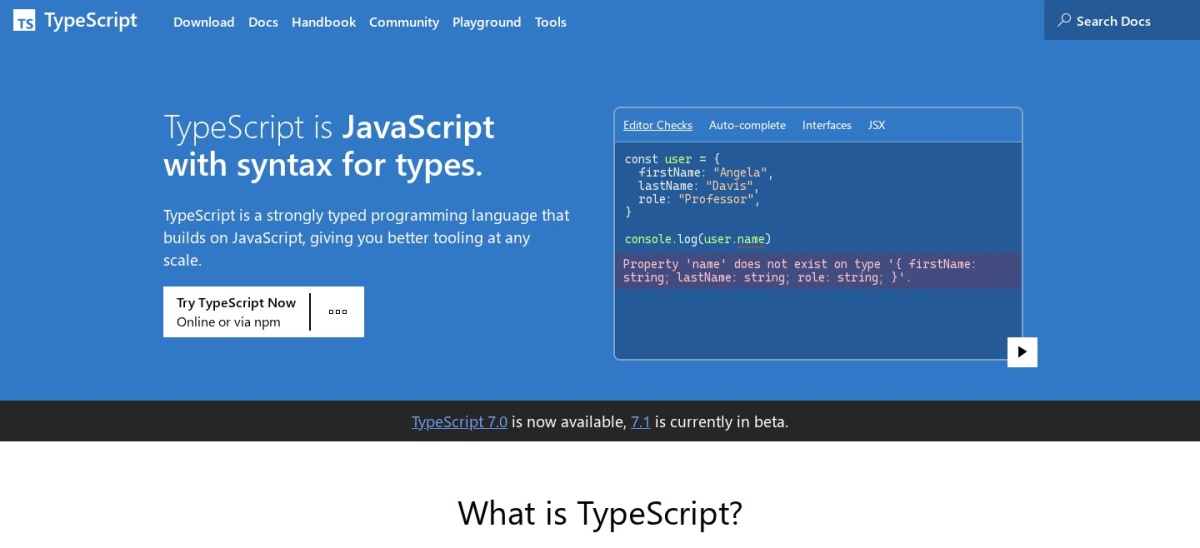
TypeScript homepage, captured Nov 2026.
TypeScript is JavaScript with syntax for types, a strongly typed language that builds on JavaScript and catches errors in the editor before code runs. It compiles to plain JavaScript, so it runs anywhere JavaScript runs, including browsers, Node.js, Deno and Bun, and it powers React Native apps too.
The trade off is setup. Strict type checks and a tsconfig file add friction on small projects, and the type system has its own learning curve. It suits teams building large web apps or shared code across web and mobile.
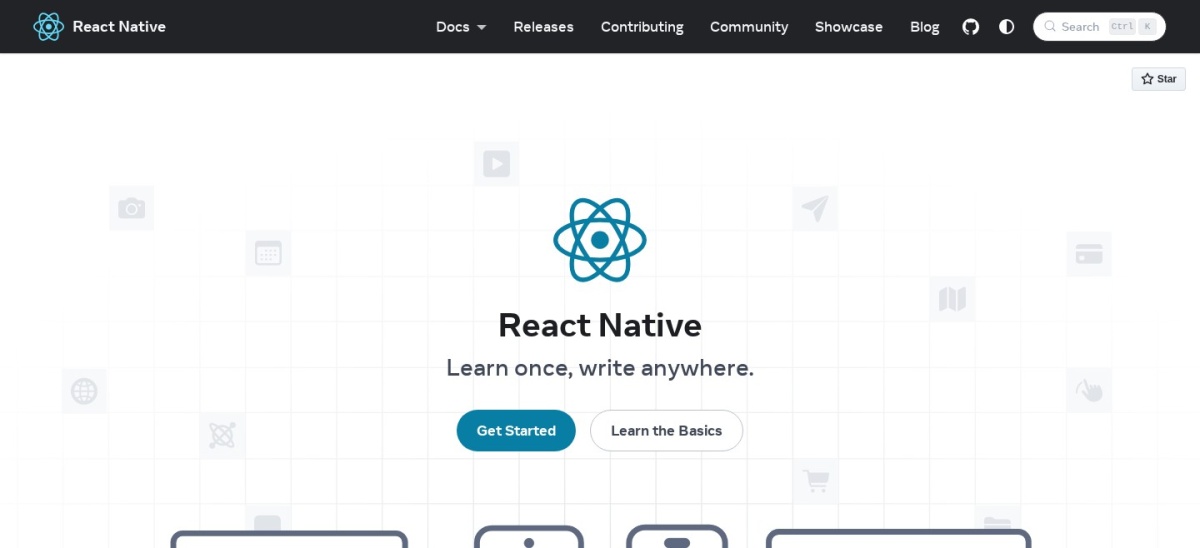
React Native is Meta's open-source framework for building native Android and iOS apps with React and JavaScript from one codebase. Its primitives render to native platform UI, so apps use the same native APIs as other apps, and the project recommends Expo as the starting framework.
The trade off is native bridging. Advanced device features can need custom native modules in Java, Kotlin, Swift or Objective-C, and dependency versions can clash across libraries. It suits teams that already know React and want mobile apps without learning a new language.
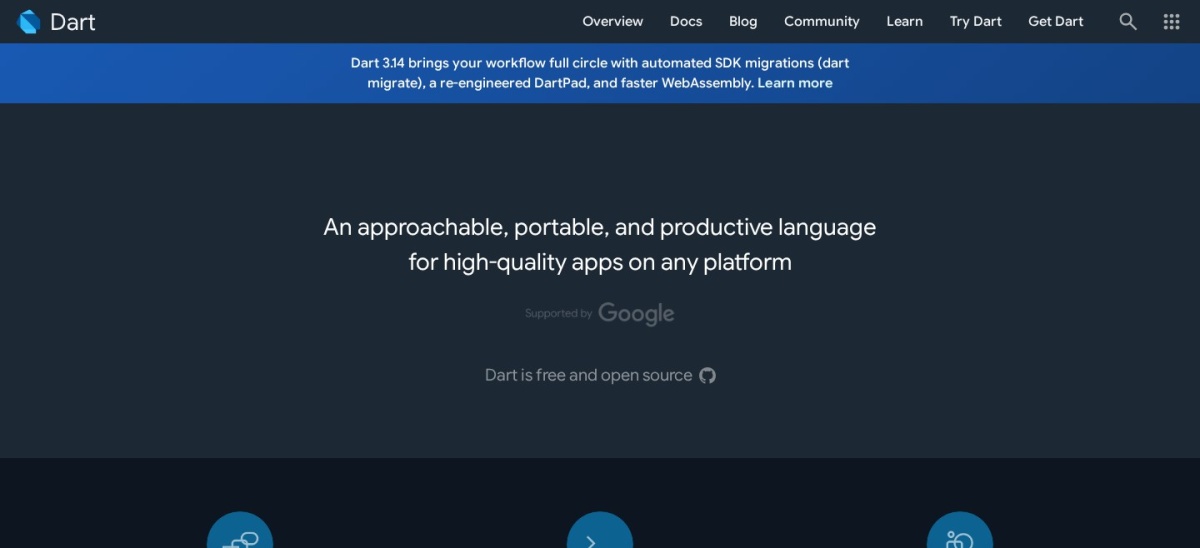
Dart is Google's free and open-source language behind Flutter, and Dart 3.14 is the release featured on dart.dev. It is a consistent, concise, strongly typed language with null safety and pattern matching, and it compiles to native ARM, x64 and RISC-V code or to JavaScript and WebAssembly for the web.
The trade off is depth outside mobile. Dart's backend and desktop libraries are thinner than Java's or Python's, and hiring Dart developers is harder than hiring Java or JavaScript developers. It suits teams that want one codebase for both app stores without JavaScript.
What we like
One codebase ships to Android and iOS
Hot reload speeds up interface work
Null safety is built into the language
Free SDK with strong tooling
Watch out for
Smaller community than Java or Python
Few backend libraries compared with JVM options
Tied closely to Flutter's fortunes
The language, SDK and Flutter are free and open sourceVisit dart.dev
07
Groovy
4/5on G2 (5 reviews, checked Nov 2026)
PriceFree
Best for the closest JVM switch
LicenceApache 2.0, open source
Runs onJVM
Java interopTwo-way, with any Java library
Main useScripting, Jenkins pipelines
groovy-lang.org
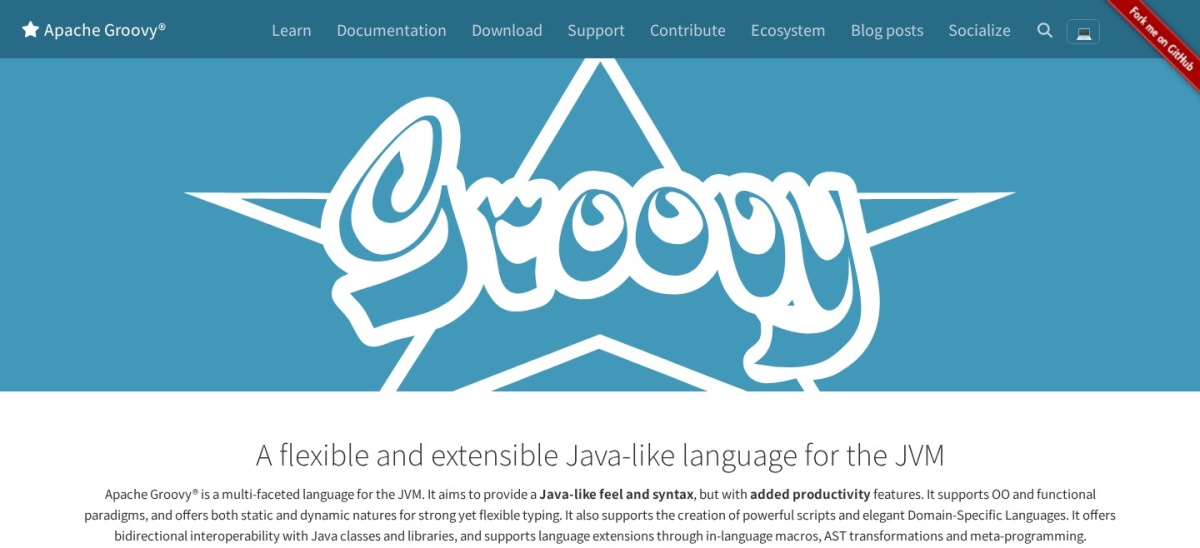
Groovy homepage, captured Nov 2026.
Groovy is the Apache programming language for the JVM, a flexible Java-like language that aims for a Java feel with added productivity features. It interoperates both ways with Java classes and libraries, supports scripting and testing glue, and is widely used for Jenkins pipelines and build automation.
The trade off is a thin rating and a smaller community. Its G2 score rests on only 5 reviews, and Groovy runs slower than statically typed languages. It suits JVM teams that want Kotlin's conciseness without leaving Java libraries behind.
Languages, runtimes and frameworks: what you are actually swapping
Kotlin is a language, but replacing it can mean swapping a language, a runtime or a framework. Python, TypeScript, Dart and Groovy are languages; Node.js is a runtime that runs JavaScript; Flutter and React Native are frameworks that ship apps.
The swap that matters is the one that ships your product. A team leaving Kotlin for Android apps should compare Flutter and React Native first, while a team leaving Kotlin on the server should compare Node.js and Python.
Do not compare a language rating with a framework rating as if they were the same thing. Each score in this list is the G2 rating for the named tool itself, so the numbers are comparable only as user satisfaction with each tool.
How we chose
We started from the languages, runtimes and frameworks most often named as Kotlin replacements for Android, server and cross-platform work, then kept only those with a numeric rating and review count on G2 for the tool itself.
Prices and ratings were checked on 29 November 2026. Every pick here is free and open source, so the price ladder is $0 throughout and the choice turns on fit, not fees.
We left out Java, Scala, Swift, Go, Rust, C++, C# and Ruby because no G2, Capterra or Trustpilot rating exists for the language itself, and we did not use IDE, framework or services-company ratings in their place. No vendor paid for a place, and we do not claim hands-on testing for this list.
How to choose an alternative to Kotlin
Start with the platform you ship to, then match the tool to it.
Name the platform first. Android apps point to Flutter or React Native, server work points to Node.js or Python, and JVM code points to Groovy.
List the Kotlin features you use most. Coroutines, null safety, data classes or multiplatform sharing each point to a different pick, so write down your top three before you compare.
Check the libraries for your field. Make sure the packages you need exist and are maintained before you commit, since a thin ecosystem costs more than a new syntax.
Try one small feature first. Build a single screen or endpoint in the new tool and measure how long it takes before you commit the whole app.
FAQ
What is the best alternative to Kotlin in 2026?
Python is the best alternative to Kotlin for most developers. It is rated 4.8 out of 5 from 275 G2 reviews, it is free, and its libraries cover web backends, data work and automation. It is not a mobile language, so Flutter is the better pick for apps.
Is there a free alternative to Kotlin?
Yes. All seven picks in this list are free and open source: Python, Node.js, Flutter, TypeScript, React Native, Dart and Groovy. You pay nothing for the language, runtime or framework; the real cost is the time your team spends learning it.
What is the best alternative to Kotlin for Android apps?
Flutter is the best alternative to Kotlin for Android apps when one codebase must also cover iOS, rated 4.6 out of 5 on G2 from 73 reviews. React Native is the closest rival at 4.5 from 144 reviews and suits teams that already know JavaScript and React.
What is the best alternative to Kotlin for server-side development?
Node.js is the best server-side alternative, rated 4.8 out of 5 on G2 from 101 reviews, and it lets JavaScript teams use one language on the front and back end. Python is the rival pick for data-heavy APIs and scripting.
Python vs Node.js: which replaces Kotlin better?
Python replaces Kotlin better for data work, scripting and teams that value readable code and libraries, while Node.js replaces it better for real-time APIs and teams already writing JavaScript. Both are rated 4.8 out of 5 on G2, and both are free.
Which alternative to Kotlin is closest to Kotlin itself?
Groovy is the closest to Kotlin itself: it runs on the JVM, shares Java libraries and reads like Java with less boilerplate. Its G2 rating rests on only 5 reviews, so treat its 4.0 score as a weak signal and weigh the JVM fit instead.
SaaS SEO and WordPress specialist with about 8 years of experience. Rakib compares WordPress plugins, themes, hosting and software using public pricing, documentation and user reviews. See how we rank.