Imprivata is the best access management software for medical clinics, because it is the only pick built for clinical work, with badge tap-in and tap-out on shared workstations and multi-factor authentication for e-prescribing. Okta is the strongest general platform at 6 dollars per user a month, while Duo is the cheapest paid start at 3 dollars.
How we make this list: we compare pricing pages, product documentation and public user reviews, then re-check every price before each update. No product paid for a place. Disclosure.
Imprivata leads for clinical shared workstations, with badge tap-in and e-prescribing MFA, but pricing is quote only.
Okta is the strongest general platform at $72 per user a year, with the deepest app catalog in this list.
Entra ID P1 costs $84 per user a year and is already included in Microsoft 365 E3 and Business Premium.
Duo is the cheapest paid start at $36 per user a year, with a free plan for up to 10 users.
Ping needs a 5,000-user minimum, so it fits large health systems, while Auth0 is the pick for patient portals.
How do you choose access management software for medical clinics?
A clinic runs on shared workstations. A nurse moves between rooms, a doctor logs in at a nurses station, and a receptionist opens the schedule on a front-desk computer, so access has to be fast without being loose.
Good access management gives each staff member one sign-in for the EHR and clinical apps, adds multi-factor authentication for e-prescribing and remote access, and logs who opened what.
HIPAA does not name a product, but it does require access controls, audit trails and a signed business associate agreement with vendors that handle protected health information. Every pick in this list can work under a BAA, but check the agreement before signing.
Price spreads are wide here. Per-user plans start at $2 a month, while the clinical specialist is quote only, so a small clinic and a hospital system will not pay anything alike.
Access management software for patient portals and telehealth apps
$35/mo
Free plan
4.3/5
Price ladder: cheapest paid plan per year
List prices, USD, checked Nov 2026
ImprivataCustom
CyberArk$24
DuoFREE$36
Ping$36
OneLogin$36
Okta$72
Entra IDFREE$84
JumpCloud$132
Auth0FREE$420
The 9 best access management software tools for medical clinics
01
Imprivata
4.7/5on G2 (25 reviews, checked Nov 2026)
PricingCustom/yr
Best access management software for clinical shared workstations
Clinical SSOBadge tap-in and tap-out
E-prescribing MFAYes, Confirm ID
HIPAA BAAYes, vendor signs a BAA
PricingQuote only, per user
imprivata.com
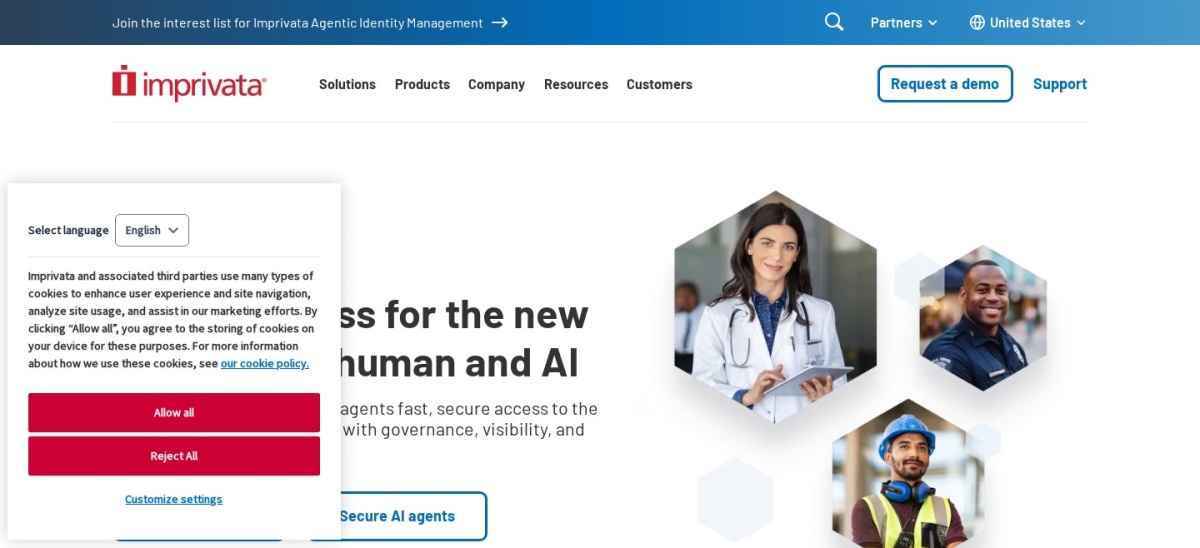
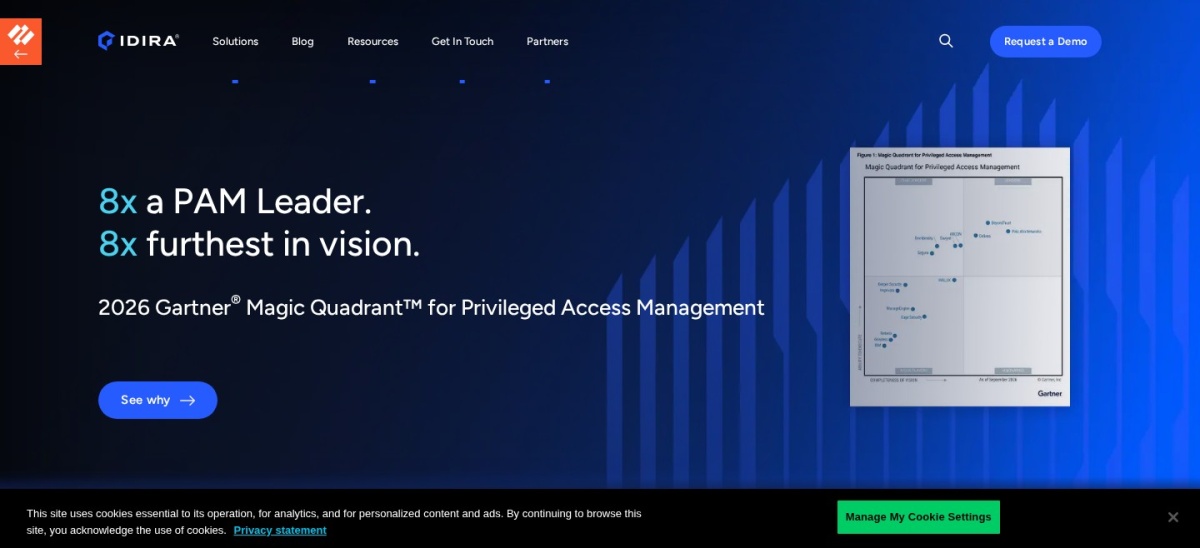
Imprivata homepage, captured Nov 2026.
Imprivata is the healthcare identity platform built for clinical work. OneSign gives clinicians single sign-on to the EHR and clinical apps with badge tap-in and tap-out, so a nurse taps a badge, opens a patient record, and taps out when leaving a shared workstation. Confirm ID adds multi-factor authentication for e-prescribing and remote access.
The trade off is the price and the setup. Imprivata publishes no list price, so a clinic gets a custom quote through sales or a partner, and implementation usually needs a partner too. It suits hospitals and larger clinics where shared workstations are the main login problem and the budget allows an enterprise rollout.
Okta is the workforce identity platform most healthcare organizations compare first. It covers single sign-on, multi-factor authentication, a cloud directory and lifecycle management in one place, with more than 7,000 pre-built integrations including typical EHR and clinical apps. Adaptive MFA adds risk-based step-up checks for unusual logins.
The trade off is the price ladder. Starter costs $6 per user a month billed annually and covers SSO, MFA and the directory, but lifecycle management and identity governance sit in higher suites at $14 and $17 per user a month. Okta also sets a $1,500 annual contract minimum, so very small clinics should check the floor first.
What we like
Deepest app catalog in this list
SSO, MFA and directory in one suite
Adaptive MFA for risky logins
Strong audit logs for compliance
Watch out for
$1,500 annual contract minimum
Lifecycle and governance cost extra
No free plan, trial only
Starter covers SSO and MFA at $6 per user a monthVisit okta.com
03
Microsoft Entra ID
4.5/5on G2 (915 reviews, checked Nov 2026)
Paid from$7/mo
Best access management software for Microsoft 365 clinics
Conditional AccessYes, on P1
Passwordless sign-inYes, Windows Hello and FIDO2
Included inMicrosoft 365 E3, Business Premium
Paid planP1, per user
microsoft.com
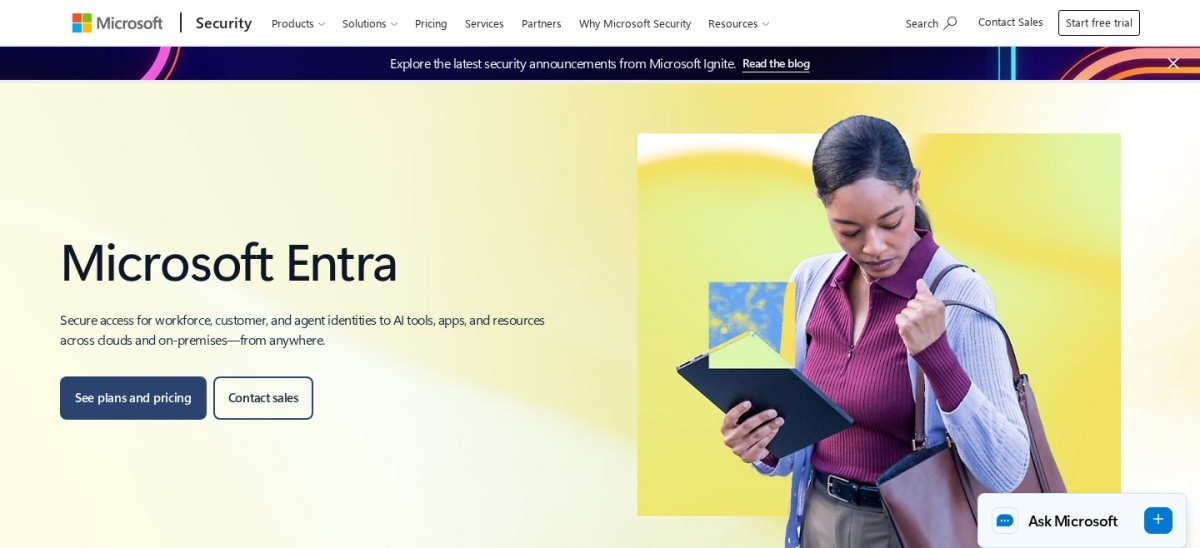
Microsoft Entra ID homepage, captured Nov 2026.
Microsoft Entra ID is the identity service behind Microsoft 365 and Azure. It signs clinic staff in to Microsoft apps and thousands of third-party apps, and P1 adds Conditional Access, passwordless sign-in and phishing-resistant authentication. P1 is already included in Microsoft 365 E3 and Business Premium, so many clinics already pay for it.
The trade off is the Microsoft lock-in. Clinics outside Microsoft 365 get less value, and the app catalog is smaller than Okta, so niche EHR integrations may need extra setup. Access reviews and identity governance need the $7 per user a month governance add-on on top of P1.
Best access management software for fast MFA rollout
Multi-factor authPush, passkeys, biometrics
Single sign-onYes, on Essentials
DirectoryUses Active Directory or Entra ID
Paid planEssentials, per user
duo.com
Cisco Duo homepage, captured Nov 2026.
Cisco Duo is the fastest way to put multi-factor authentication on a clinic workforce. It is built around push approvals on a phone, and the Essentials plan at $3 per user a month adds single sign-on, passwordless sign-in and phishing-resistant MFA. The free plan covers up to 10 users, so a small clinic can start without a purchase.
The trade off is the narrower scope. Duo has no directory of its own, so it pulls users from Active Directory or Entra ID, and lifecycle automation and access reviews sit in higher tiers at $6 and $9 per user a month. It suits clinics that need MFA fast and already run a directory elsewhere.
What we like
Cheapest paid start in this list
Free plan for up to 10 users
Push MFA staff actually adopt
Phishing-resistant MFA on Essentials
Watch out for
No directory of its own
Lifecycle automation costs extra
Access reviews need higher tiers
Essentials adds SSO and passwordless at $3 per user a monthVisit duo.com
05
JumpCloud
4.5/5on G2 (4,151 reviews, checked Nov 2026)
Starts at$11/mo
Best access management software for clinics without on-premises servers
Cloud directoryYes, replaces Active Directory
Single sign-onYes, SSO package
Device managementSeparate $9 package
Paid planSSO, per user
jumpcloud.com
JumpCloud homepage, captured Nov 2026.
JumpCloud is a cloud directory that combines identity, single sign-on, multi-factor authentication and device management in one console. It replaces on-premises Active Directory for small teams, and the SSO package at $11 per user a month covers the cloud directory, MFA, SSO and lifecycle management. It also manages Windows, Mac and Linux devices from the same console.
The trade off is the add-on math. LDAP and RADIUS need the quote-only Platform plans, and device management is a separate $9 per user a month package, so the bill grows when a clinic combines packages. JumpCloud also has no permanent free tier, only a 30-day trial of the full platform.
Best access management software for large health systems
Single sign-onYes, with orchestration
Adaptive MFAYes, risk-based
FederationYes, hybrid estates
Paid planWorkforce Essential, per user
pingidentity.com
Ping Identity homepage, captured Nov 2026.
Ping Identity is an enterprise identity platform for workforce, customer and partner sign-in. PingOne for Workforce Essential covers single sign-on, multi-factor authentication, a SCIM directory, an app portal and no-code orchestration for $3 per user a month. It is built for hybrid estates with complex federation needs and fine-grained access control.
The trade off is the size floor. The $3 workforce plan needs an annual contract with a 5,000-user minimum, which rules out most single clinics, and the setup is heavier than simpler tools. It suits large health systems with plenty of apps and specialist admins rather than a small practice.
Best access management software for simple mid-market SSO
Single sign-onYes, with app catalog
Multi-factor authYes, context-aware policies
Directory integrationYes
Paid planBasic, per user
onelogin.com
OneLogin homepage, captured Nov 2026.
OneLogin is a cloud identity platform for mid-market teams that want simple single sign-on and multi-factor authentication. The Basic plan covers authentication and limited user management for $3 per user a month, with an app catalog, directory integration and context-aware access policies that smaller IT teams learn fast.
The trade off is the thin top end. Advanced bundles cost more and some plans are quote-based, so the real price depends on which features a clinic needs, and the app catalog is smaller than Okta. It suits clinics that want straightforward, budget-friendly SSO without enterprise complexity.
Best access management software for privileged access plus SSO
Single sign-onYes, from $2 per user a month
Adaptive MFAFrom $3 per user a month
Access reviewsYes, built in
Privileged accessYes, vaulted credentials
cyberark.com
CyberArk Workforce Identity homepage, captured Nov 2026.
CyberArk Workforce Identity is an access platform that layers single sign-on and adaptive multi-factor authentication on privileged access management. Single sign-on starts at $2 per user a month and adaptive MFA at $3, with device, location and behavior checks behind each sign-in. It also covers access reviews, so managers confirm who should keep access.
The trade off is the enterprise shape. CyberArk targets bigger or more complex estates, so volume-based pricing and sales-led deals are the norm on enterprise tiers, and the platform is heavier than a simple SSO tool. It suits clinics that also need vaulted credentials and privileged session management.
What we like
Lowest paid start in this list
Access reviews built in
Privileged session management
Adaptive MFA with behavior checks
Watch out for
Enterprise tiers are sales-led
Heavier than a simple SSO tool
Narrower fit for small clinics
SSO starts at $2 per user a month, the lowest paid start hereVisit cyberark.com
09
Auth0
4.3/5on G2 (314 reviews, checked Nov 2026)
Paid from$35/mo
Best access management software for patient portals and telehealth apps
Patient loginYes, social and passwordless
Multi-factor authYes, on Essentials
Free tierUp to 25,000 monthly active users
Paid planEssentials, per month
auth0.com
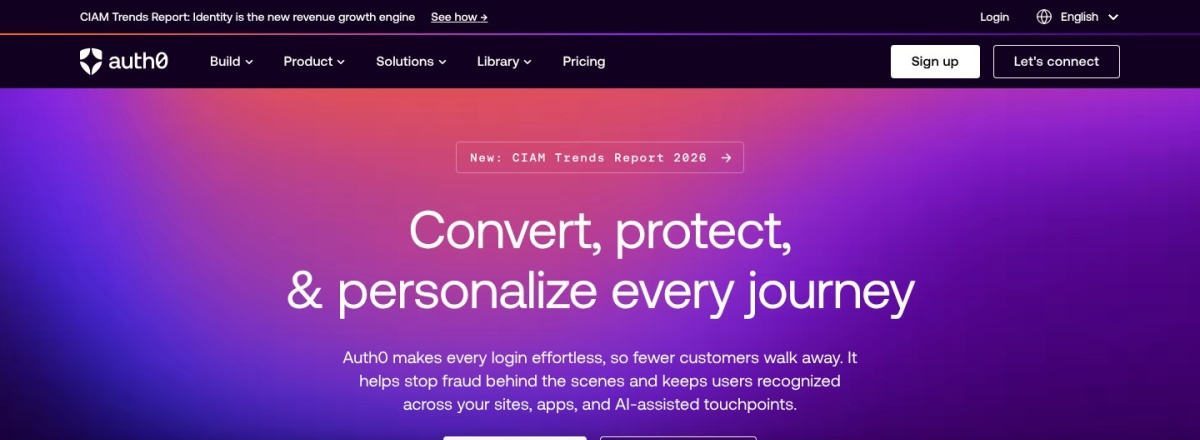
Auth0 homepage, captured Nov 2026.
Auth0 is the customer identity platform from Okta, built for patient-facing login in telehealth apps and patient portals. Essentials costs $35 a month for up to 500 monthly active users and adds multi-factor authentication and higher API limits. The free tier covers up to 25,000 monthly active users, so a small clinic can test patient login without paying.
The trade off is the audience. Auth0 is built for customer login, not workforce sign-in, so it does not replace an employee directory or staff SSO on its own. It suits clinics that need patients to sign in to a portal or a telehealth app, alongside a workforce tool from higher up this list.
Workforce tools sign employees in to the EHR and clinical apps. Patient tools sign patients in to a portal or a telehealth app, and the two jobs need different features.
Imprivata, Okta, Entra ID, Duo, JumpCloud, Ping, OneLogin and CyberArk are workforce tools. They manage staff accounts, enforce MFA and log who opened a record.
Auth0 is the patient pick here. It handles social login, passwordless sign-in and large numbers of monthly active users, which is what a portal needs.
Most clinics need both. Pick a workforce tool first, then add Auth0 for the portal, and keep the two accounts separate so a patient login never reaches staff systems.
How we chose
We started from identity and access management tools with published G2 ratings and a real workforce sign-in feature, then kept those that fit medical clinics, from single practices to hospital systems.
Prices come from each vendor pricing page, checked on 30 November 2026. Ratings come from G2 on the same day. Where a vendor shows a sale, the list shows the regular price.
We left out tools with no aggregator rating and tools built only for customer login with no workforce story. No vendor paid for a place, and we do not claim hands-on testing for this list.
How to choose access management software for medical clinics
Start with how your staff actually sign in, then match the tool to the clinic, not the other way round.
Map how staff sign in today. If nurses share workstations between rooms, badge tap-in matters more than anything. If staff work from fixed desks, standard SSO and MFA are enough.
Check the HIPAA paperwork. Ask for a signed business associate agreement and confirm audit logs cover who opened which patient record and when.
Price it for every user. Per-user plans look cheap for one seat but add up fast. Okta sets a $1,500 annual minimum and Ping needs 5,000 users, so small clinics should check the floor.
Separate staff login from patient login. Workforce tools cover employees. Patient portals and telehealth apps need a customer identity tool like Auth0 alongside them.
FAQ
What is the best access management software for medical clinics?
Imprivata is the best pick for most clinics with shared workstations. It is the only tool built for clinical work, with badge tap-in and tap-out, e-prescribing MFA and a HIPAA business associate agreement, though pricing is quote only.
Is there free access management software for medical clinics?
Yes. Duo covers up to 10 users free, Entra ID has a free tier, and Auth0 is free for up to 25,000 monthly active users. For staff sign-in at scale, Duo Essentials at $3 per user a month is the cheapest paid start.
How much does access management software for medical clinics cost?
Per-user plans start at $2 a month for CyberArk SSO and $3 for Duo or Ping, while Okta Starter is $6 and Entra ID P1 is $7. Imprivata is quote only, so a hospital system should budget through a sales conversation.
Do clinics need HIPAA-compliant access management software?
Clinics need access controls, audit trails and a signed business associate agreement with any vendor handling protected health information. Imprivata signs a BAA, and the other picks in this list can work under one, but confirm the agreement before buying.
What access management software works with Epic or other EHRs?
Imprivata integrates with Epic and other EHR systems through single sign-on, and Okta lists more than 7,000 pre-built integrations including typical EHR and clinical apps. Check that your EHR is in the vendor integration catalog before buying.
SaaS SEO and WordPress specialist with about 8 years of experience. Rakib compares WordPress plugins, themes, hosting and software using public pricing, documentation and user reviews. See how we rank.