ShipHero is the best warehouse labor management software for small warehouses, with scan-driven picking, labor time tracking and unlimited users from fifteen thousand dollars a year. SKULabs is the cheapest published option at two hundred ninety-nine dollars a month, while Logiwa adds labor planning for high-volume teams.
How we make this list: we compare pricing pages, product documentation and public user reviews, then re-check every price before each update. No product paid for a place. Disclosure.
ShipHero leads for small warehouses that ship direct to consumers, with labor time tracking and unlimited users from $15,000 a year.
SKULabs is the cheapest published start at $299 a month, with barcode scanning that records pick times per worker.
Logiwa, CartonCloud, Infoplus, Extensiv, Deposco and Softeon all sell by quote, so budget them only after a sales call.
Packiyo is the only small-3PL option with a published mid-tier price: $949 a month for 5 users and 5,000 shipments.
Softeon is the only tool here built around activity-based labor standards, the classic way to measure pick rates against a target.
How do you choose warehouse labor management software for a small warehouse?
Labor is the largest cost in most small warehouses. Picking, packing and putaway soak up hours that no inventory report can see, so the first job of labor software is to make that time visible per worker, per task and per shift.
The best tools record work as it happens. Barcode scans, voice confirmations and mobile task lists stamp each pick and pack with a time, so a manager can see who is fast, who is stuck and which tasks run long.
Standards turn raw times into targets. Activity-based and engineered standards set an expected rate for each task, and the gap between actual and expected is where coaching, layout changes and incentive pay start.
Price models split two ways in this list. Published prices run from $299 a month at SKULabs to $15,000 a year at ShipHero, while six tools sell by quote and need a sales call before you can budget them.
Small warehouses should start with the tool that fits their order flow. A brand shipping its own orders needs different labor reports than a 3PL billing clients by the hour, so match the tool to the work, not the brand name.
The 9 best warehouse labor management software for small warehouses
01
ShipHero
4.5/5on G2 (234 reviews, checked Nov 2026)
Starts at$15,000/yr
Best warehouse labor management software for small warehouses overall
Starting planCore, $15,000/yr
Shipments included25,000 DTC/yr
Labor trackingTime and productivity reports
UsersUnlimited
shiphero.com
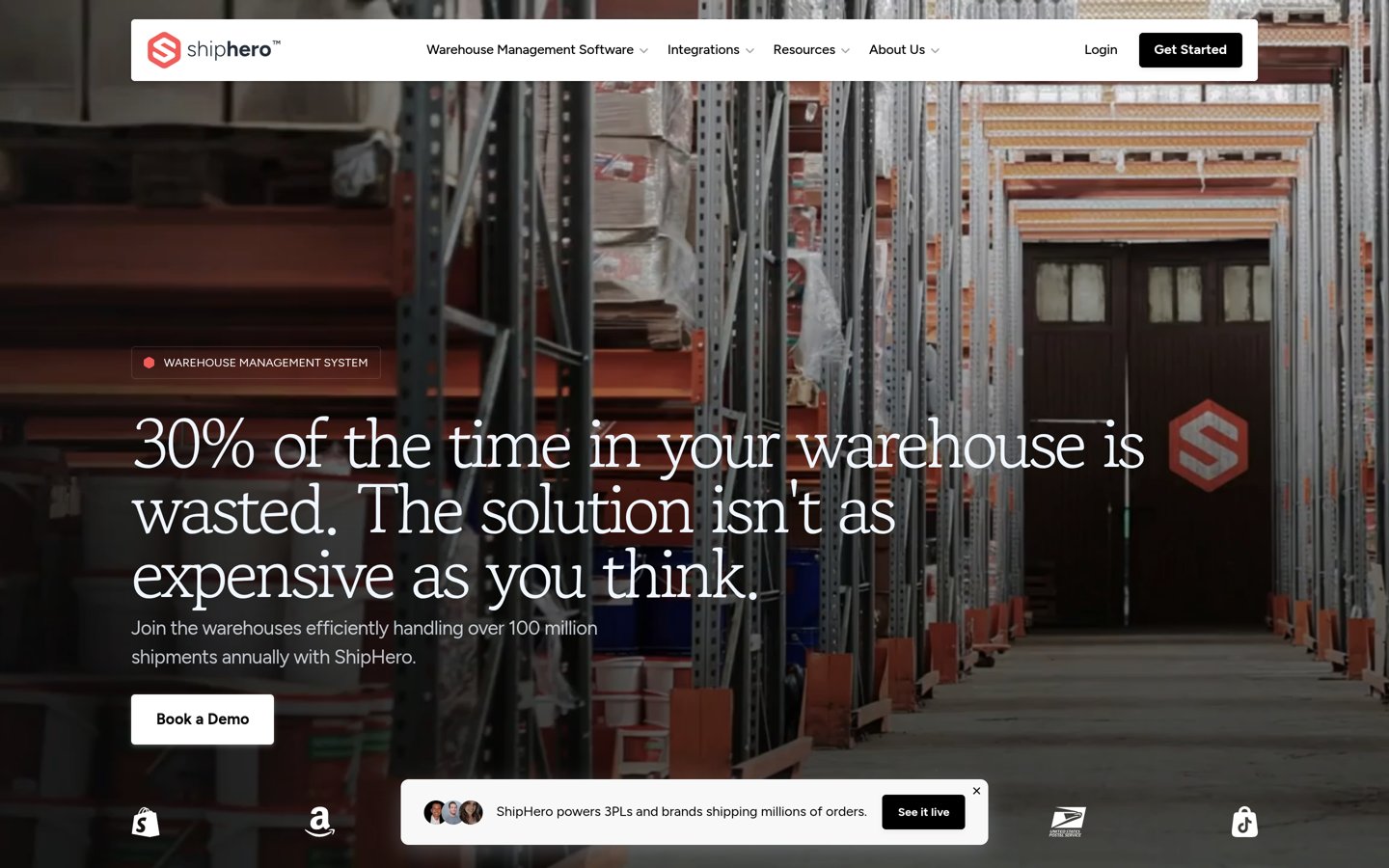
ShipHero homepage, captured Nov 2026.
ShipHero is a cloud warehouse system for ecommerce brands and 3PLs, built around scan-driven picking, packing and shipping. Every pick and pack is timed through mobile scans, so managers can see labor time per order and per worker, and unlimited users mean the whole floor works in one system without per-seat fees.
The trade off is the entry price. Core starts at $15,000 a year for 25,000 direct shipments, plus a one-time onboarding fee from about $5,000, so the smallest warehouses pay for volume they may not ship yet. It suits brands shipping close to that volume that want labor tracking inside a full WMS.
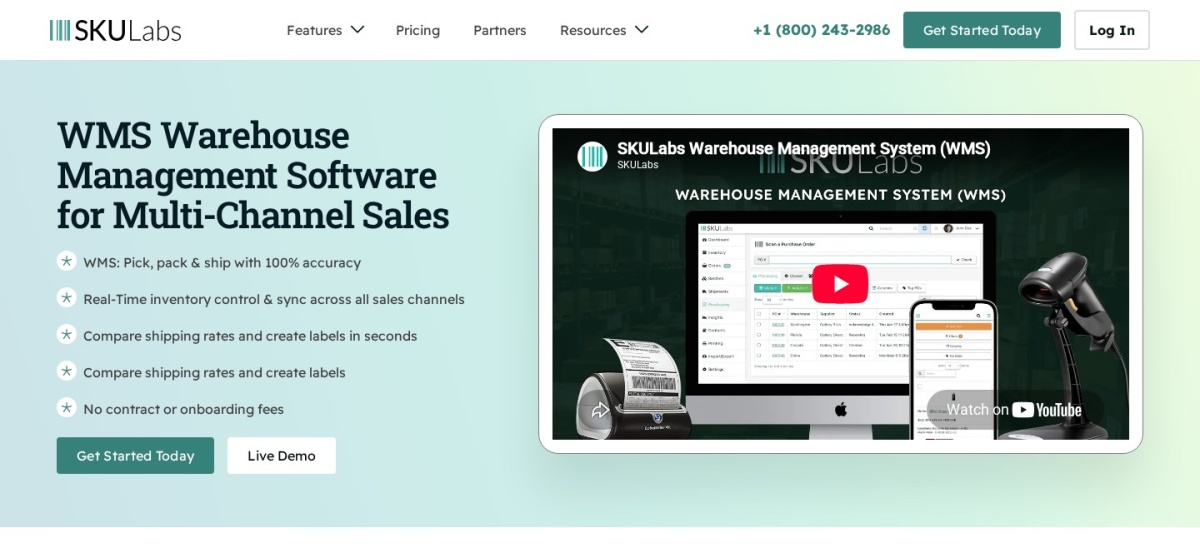
SKULabs is a barcode-first warehouse system for ecommerce brands, priced from $299 a month with no contract. Guided barcode scanning records pick times per worker, batch picking speeds up multi-order runs, and the Starter plan covers 1,000 orders, 3 users and 2 warehouses.
The trade off is depth. Labor reports are scan times and throughput, not activity-based standards, and the G2 rating rests on only 6 reviews. It suits small brands that want cheap, honest labor visibility without a sales call or a long contract.
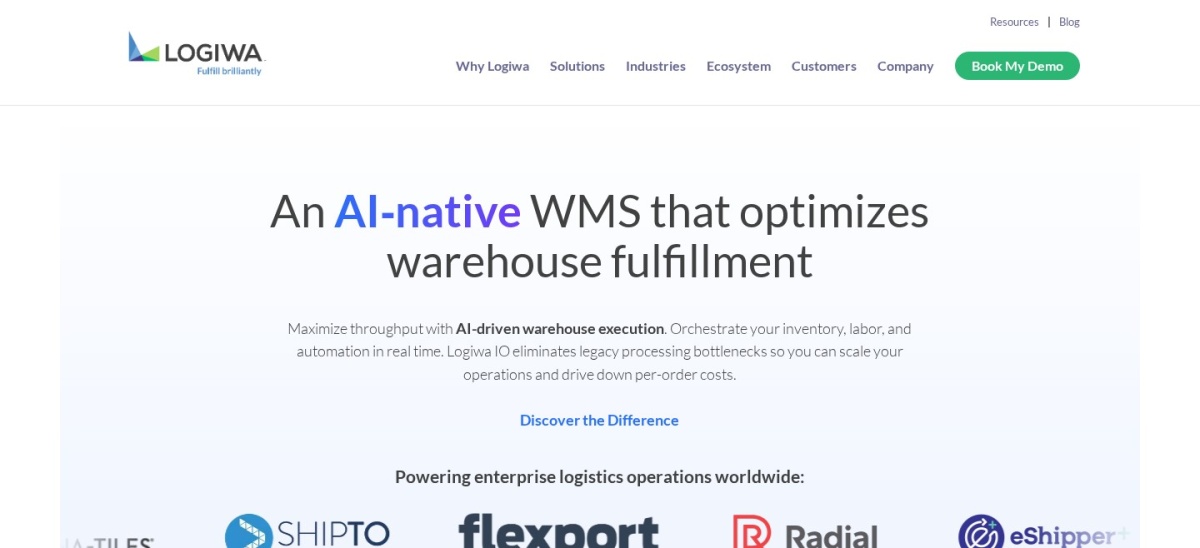
Logiwa is a cloud fulfillment system for high-volume brands and 3PLs, with labor planning named as a core feature of Logiwa IO. It plans warehouse labor against order volume, runs AI batch optimization, and charges on fulfillment volume with unlimited users, so adding staff never adds a seat fee.
The trade off is price transparency. Logiwa publishes no prices and sells by custom quote after a discovery call, so a small warehouse cannot budget it from the website. It suits growing 3PLs and brands that outgrow flat monthly tiers.
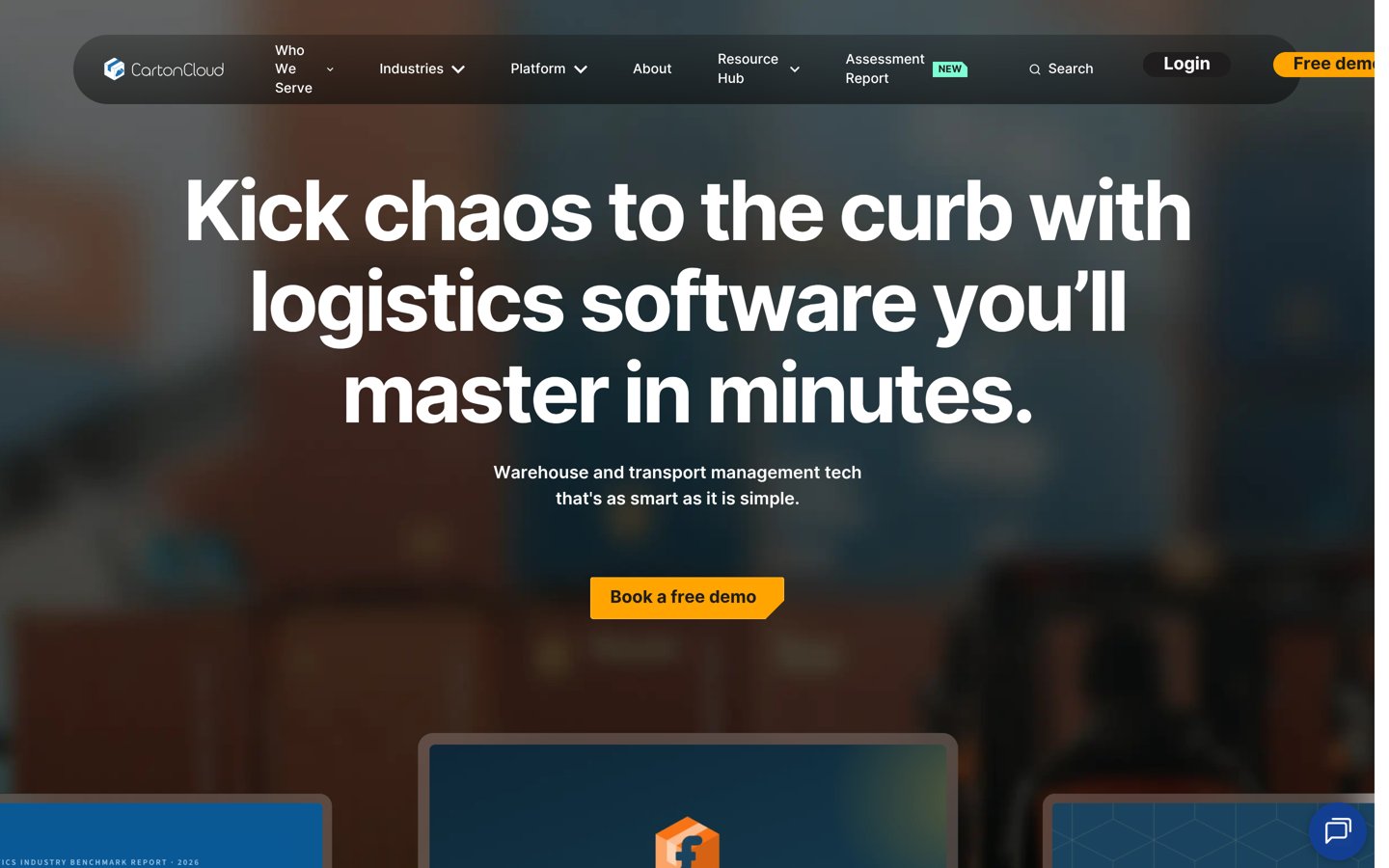
CartonCloud is a combined warehouse and transport system for 3PLs and in-house logistics teams, built by people from the industry. Labor KPIs and dashboards sit beside picking, dispatch and client billing, and average onboarding takes about 6 hours, the fastest here.
The trade off is pricing. CartonCloud charges by usage and publishes no rates on its pricing page, so the bill depends on volume and tier. It suits 3PLs that want warehouse, transport and billing in one place.
Infoplus is a cloud warehouse system for 3PLs and brands that want WMS, order management and shipping together. Pick rates per worker, wave picking and barcode scanning give small teams labor visibility, and more than 6,500 businesses run on the platform.
The trade off is pricing. Infoplus sells by quote and publishes no rates, though switchers get the first three months free. It suits growing 3PLs and brands with seasonal spikes that need flexible workflows.
Extensiv is a warehouse system built for 3PLs that bill clients for storage and handling, sold as Extensiv 3PL Warehouse Manager. Per-client rate cards tie labor time to client invoices, and multi-client inventory keeps each customer's stock and billing separate.
The trade off is cost creep. The bill scales with revenue, which growing 3PLs report as a frustration, and Extensiv publishes no prices. It suits established 3PLs that live or die by rate-card billing.
Deposco is a cloud supply chain suite built around its Bright Warehouse system, with a dedicated labor management module. Its Felix AI forecasts demand and labor needs, and the platform covers warehouse, order and shipping work on one system.
The trade off is fit. Deposco targets mid-market and enterprise 3PLs, so a small warehouse buys more platform than it needs, and pricing is quote-only. It suits fast-growing brands and 3PLs with an implementation budget.
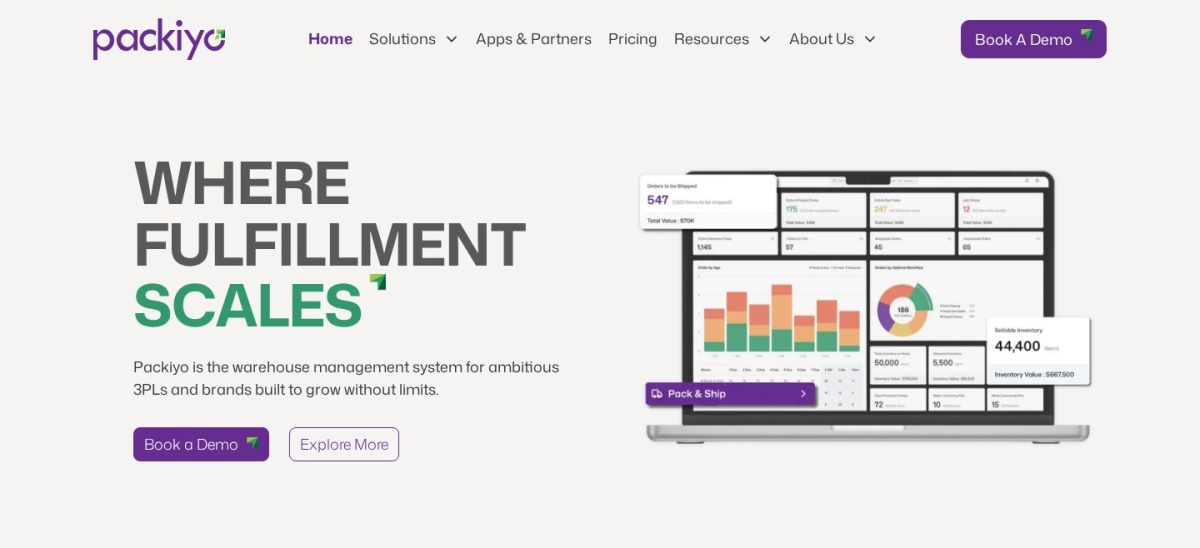
Packiyo is a cloud warehouse system for ecommerce brands and small 3PLs, and the only mid-tier option here with a published price. The 3PL plan costs $949 a month for 5 users and 5,000 shipments, with multi-client inventory, native 3PL billing and pick and pack time tracking.
The trade off is the review base. Packiyo holds 4.0 out of 5 on Trustpilot from 16 reviews, the thinnest evidence here, and Starter and Enterprise plans are quote-only. It suits small 3PLs that want a published price before a sales call.
Softeon is a warehouse platform for 3PLs, food and beverage and healthcare distributors, and the only tool here built around activity-based labor standards. It measures each task against a standard, so managers can compare actual pick rates with expected rates per worker.
The trade off is pricing and scale. Softeon sells by quote and suits larger operations, so a small warehouse may find the platform heavy. It suits teams that want classic labor standards rather than simple pick-rate reports.
Labor tracking is a feature inside most warehouse systems, not a separate product. ShipHero, Logiwa, CartonCloud and the rest of this list are warehouse systems first, and their labor reports sit on top of picking, packing and shipping.
Dedicated labor systems still exist for larger sites. Softeon measures work against activity-based standards, and enterprise tools from Manhattan Associates and Blue Yonder build engineered standards, but both sell by quote and suit sites far larger than a small warehouse.
For a small warehouse, the combined tool is the better buy. You get labor visibility without a second contract, a second login and a second integration, and the labor data stays tied to the orders it came from.
How we chose
We started from warehouse systems with a named labor feature: labor planning, pick-rate tracking, time per task or activity-based standards. Tools without a labor story, and enterprise-only systems such as Manhattan Associates, were left out.
Prices come from each vendor's pricing page, checked on 30 November 2026. ShipHero, SKULabs and Packiyo publish prices; Logiwa, CartonCloud, Infoplus, Extensiv, Deposco and Softeon sell by quote, so they are marked Custom. Ratings come from G2, Capterra or Trustpilot on the same day.
We left out tools with no rating on G2, Capterra or Trustpilot, including Lucas Systems and ProCat. No vendor paid for a place, and we do not claim hands-on testing for this list.
How to choose warehouse labor management software for a small warehouse
Start with how your team actually works, then check what the labor reports show.
List the tasks you want timed. Picking, packing, putaway and cycle counts are the usual four. If a tool only times picks, it will not show where packers lose time.
Check the report before the price. Ask for a sample labor report. It should show units per hour per worker, not just a team total, or you cannot coach anyone.
Ask how standards are set. Activity-based standards suit most small warehouses. Engineered standards need time studies and suit larger sites with steady tasks.
Price the quote-only tools early. Six tools here sell by quote. Get numbers before a trial, because a quote-only tool can cost several times a published one.
FAQ
What is the best warehouse labor management software for small warehouses?
ShipHero is the best overall pick for most small warehouses. Its Core plan starts at $15,000 a year with scan-driven picking, labor time tracking and unlimited users, and it is rated 4.5 out of 5 on G2 from 234 reviews. SKULabs is the cheaper start at $299 a month.
How much does warehouse labor management software cost?
Published prices run from $299 a month at SKULabs to $15,000 a year at ShipHero, with Packiyo at $949 a month in between. Six tools in this list sell by quote only, so their cost depends on order volume, users and the modules you switch on.
What is labor management software in a warehouse?
It tracks how long warehouse tasks take and compares that time against a target. Scans and mobile task lists record each pick, pack and putaway, then reports show units per hour per worker so managers can spot slow tasks and coach staff.
Do small warehouses need engineered labor standards?
Most do not. Engineered standards need time studies and suit large sites with steady, repeated tasks. Activity-based standards, which Softeon uses, or simple pick-rate targets are enough for a small warehouse starting out.
Can warehouse labor software track part-time staff?
Yes, if the work runs through the system. Mobile task lists and barcode scans record every worker the same way, so part-time and seasonal staff show up in the same reports as full-time pickers.
Is ShipHero worth $15,000 a year for a small warehouse?
It depends on volume. Core includes 25,000 direct shipments a year and unlimited users, so a brand shipping close to that volume gets real value. A warehouse shipping far less should start with SKULabs at $299 a month instead.
SaaS SEO and WordPress specialist with about 8 years of experience. Rakib compares WordPress plugins, themes, hosting and software using public pricing, documentation and user reviews. See how we rank.