Microsoft Intune is the best unified endpoint management software for enterprise teams on Microsoft 365, at eight dollars per user a month and often already included in their license. Jamf Pro leads for Apple fleets, while NinjaOne is the cheapest full platform per endpoint.
How we make this list: we compare pricing pages, product documentation and public user reviews, then re-check every price before each update. No product paid for a place. Disclosure.
Microsoft Intune is the default pick for Microsoft 365 firms at $8 per user a month, often included already.
NinjaOne is the cheapest full endpoint platform here at $1.50 per endpoint a month, with the largest review base at 4,307.
Jamf Pro is the best Apple management here at $12.50 per device a month, while Mosyle is the cheapest Apple MDM at $1.
ManageEngine Endpoint Central is the lowest per-endpoint price at $1.09, with a free edition for 25 endpoints.
Kandji is now Iru, so its G2 listing and pricing may change under the new name.
How do you pick unified endpoint management software for enterprise teams?
Enterprise endpoint management is about one console for every device. Windows laptops, Macs, phones and tablets all need policies, apps and patches from the same place.
Per-user and per-device pricing change the bill. Intune and JumpCloud charge per user, while Jamf, NinjaOne and Hexnode charge per device, so the cheaper option depends on how many devices each person carries.
Apple fleets need Apple tools. Jamf Pro, Mosyle and Kandji manage Apple devices best, while Intune and NinjaOne suit mixed Windows and Mac fleets. Our best device management software covers the wider device stack.
Compliance evidence matters at enterprise scale. Look for attestation, audit logs and conditional access, not just enrolment, before signing a multi-year deal.
The 9 best unified endpoint management software for enterprise
01
Microsoft Intune
4.5/5on G2 (272 reviews, checked Nov 2026)
Starts at$8/mo
Best unified endpoint management for Microsoft shops
Cheapest planPlan 1, $8/user/mo
Included inMicrosoft 365 E3/E5
PlatformsWindows, macOS, iOS, Android
Free planNo, trial only
microsoft.com
Microsoft Intune homepage, captured Nov 2026.
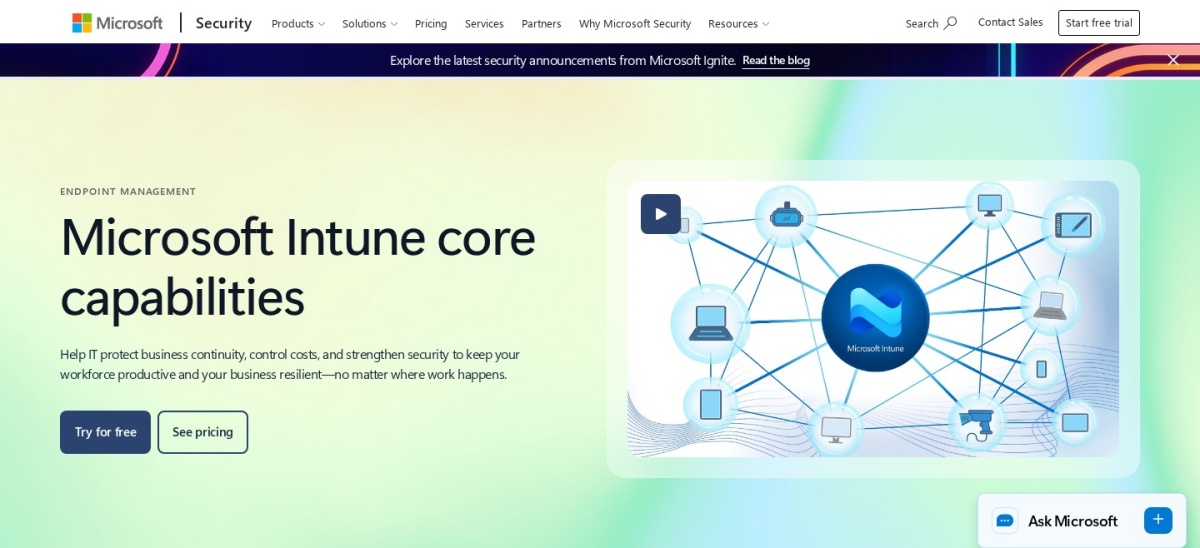
Microsoft Intune is a cloud endpoint management platform that manages Windows, macOS, iOS and Android devices, apps and policies from one console. Plan 1 costs $8 per user a month standalone, and many firms already have it through Microsoft 365 E3 or E5.
The trade off is Apple depth. Mac management trails Jamf Pro, and setup takes time for large fleets moving from on-premises tools. It suits enterprises standardised on Microsoft 365 and Entra ID.
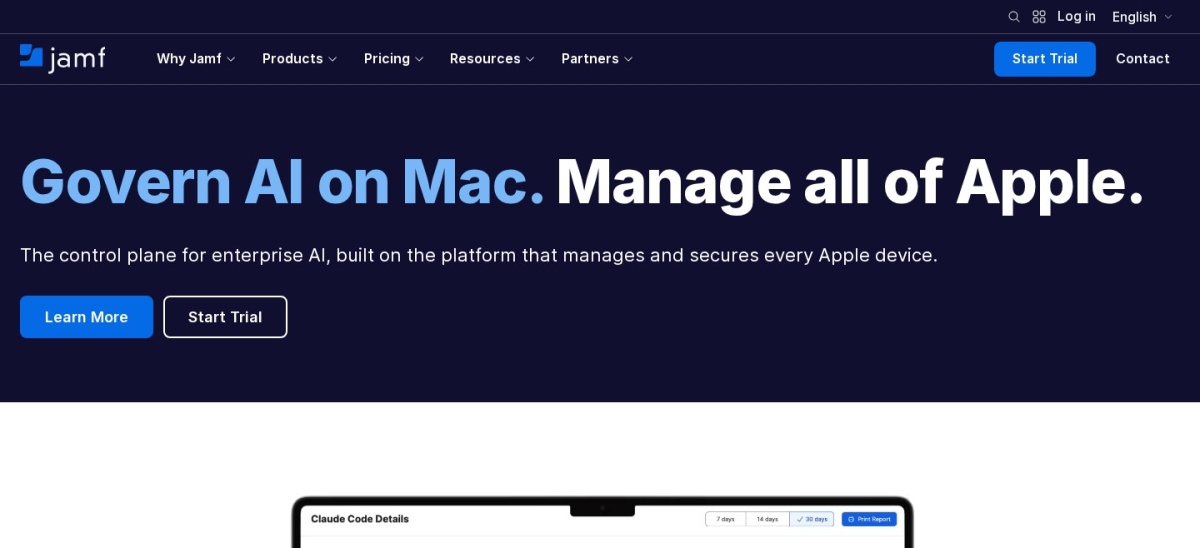
Jamf Pro is the standard for managing Apple devices at scale, with deep macOS configuration profiles, same-day support for new Apple releases and Apple Business Manager integration. Jamf for Mac costs $12.50 a device a month billed annually, with a 25-device minimum.
The trade off is scope. Jamf Pro is Apple only, so mixed fleets need a second tool, and $12.50 is dearer than most rivals. It suits enterprises where Macs and iPhones are a large share of the fleet.
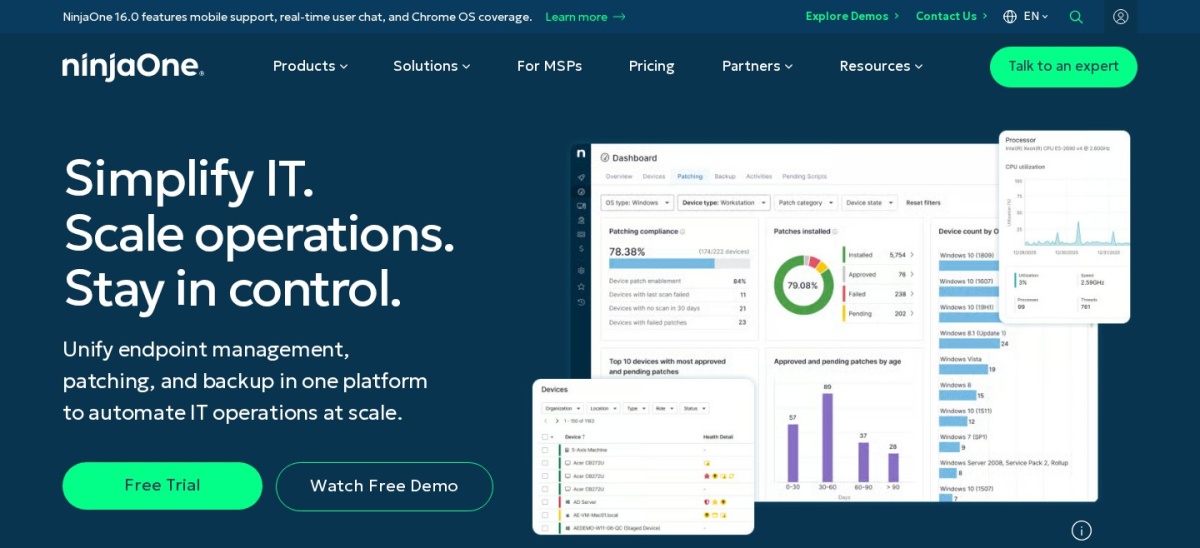
NinjaOne is a cloud endpoint platform that combines patching, monitoring, backup and remote control for Windows, macOS and Linux. Pricing starts as low as $1.50 an endpoint a month at 10,000 endpoints, rising to $3.75 at 50 or fewer endpoints, so the bill depends on fleet size.
The trade off is quote-based pricing. The exact rate depends on endpoints and products, so small fleets pay the higher end of the range. It suits MSPs and IT teams that want patching, backup and monitoring in one console.
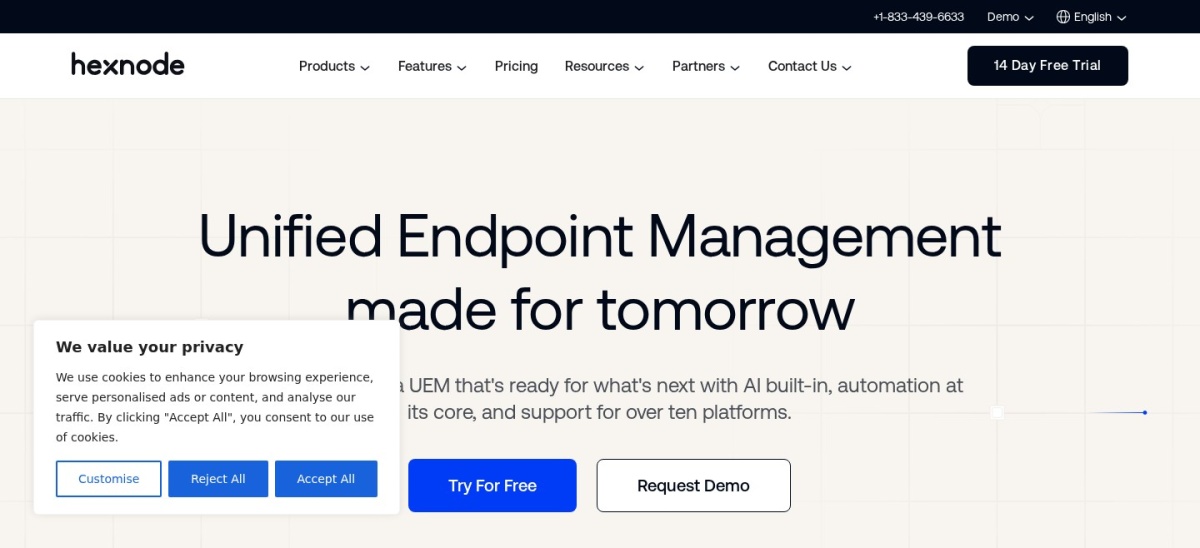
Hexnode UEM is a unified endpoint management platform that covers Windows, macOS, Linux, Android, iOS and tvOS from one console. Pro costs $2.20 a device a month billed annually and covers kiosk and app management with Apple Business Manager integration.
The trade off is review depth. Its G2 base of 243 reviews is thin next to NinjaOne, and reporting is basic next to the dearer platforms. It suits mixed fleets that want broad coverage on a tight budget.
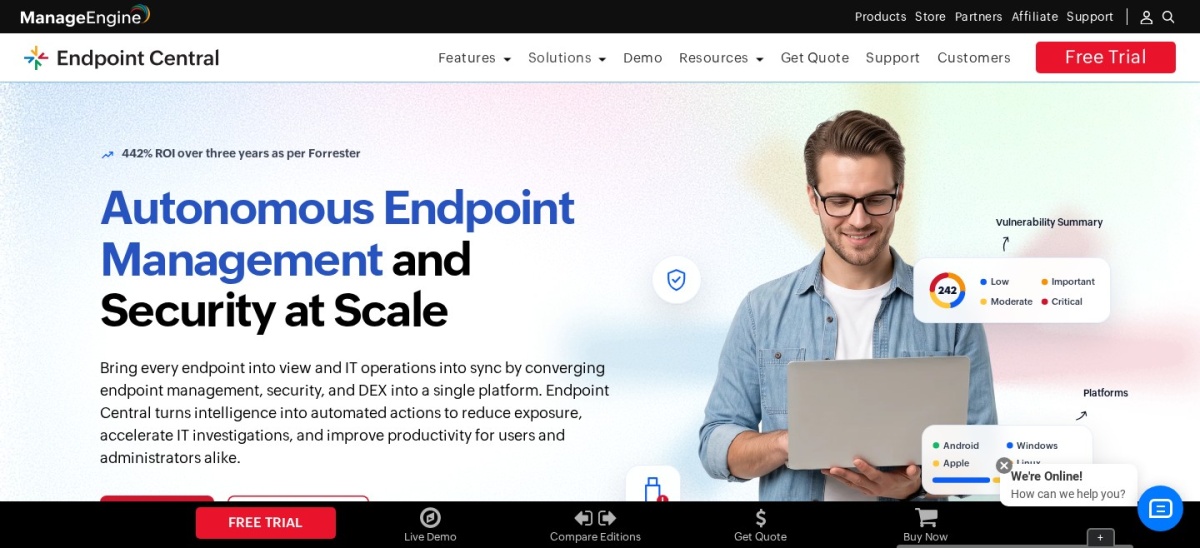
ManageEngine Endpoint Central homepage, captured Nov 2026.
ManageEngine Endpoint Central is an endpoint management platform for Windows, macOS, Linux, Android and iOS, with patch management, software deployment and remote control. Professional starts at $1.09 an endpoint a month for 500 endpoints, with a free edition for 25 endpoints.
The trade off is price tiers. The per-endpoint price falls as the fleet grows, so small fleets pay $1.32 an endpoint a month at 50 endpoints, and the interface feels dated next to rivals. It suits large fleets that need patch management at scale.
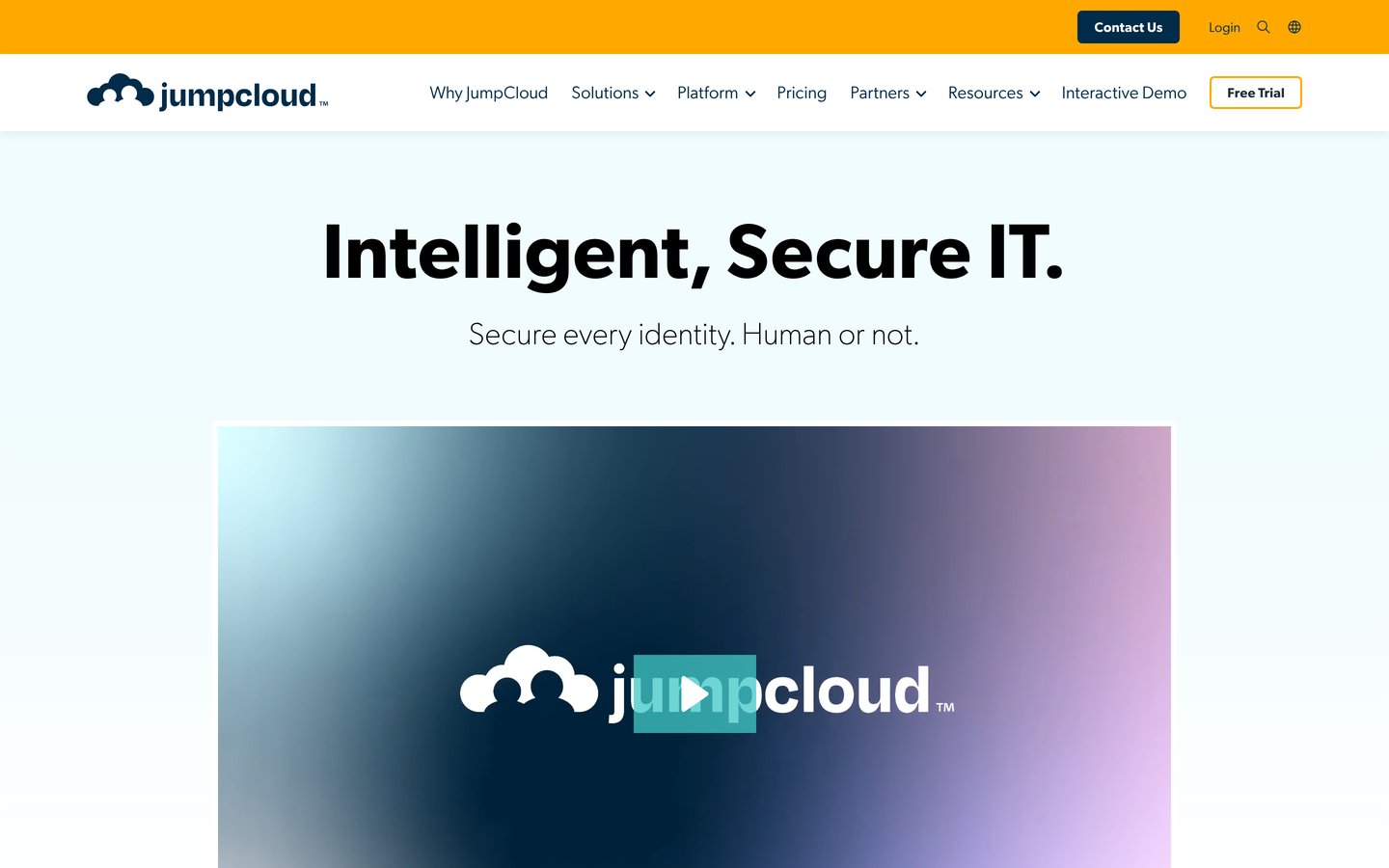
JumpCloud is a cloud directory and device management platform that manages users, devices and access from one console. Device Management costs $9 a user a month billed annually, or $11 billed monthly, and covers Windows, macOS, Linux, iOS and Android.
The trade off is per-user pricing. It is charged per user, not per device, so it costs more than per-device rivals for fleets with many devices per person. It suits cloud-first teams that want directory and devices together.
Scalefusion is a unified endpoint management platform for Android, Apple, Windows, Linux and ChromeOS, with identity and endpoint security built in. Essential costs $2 a device a month for Android and iOS fleets, while Business at $5 adds Windows and macOS.
The trade off is enterprise depth. Reporting is basic next to rivals, and it has fewer enterprise features than Intune. It suits Android-heavy frontline and kiosk fleets that want simple setup.
Mosyle is an Apple-only device management platform for macOS, iOS, iPadOS, tvOS and visionOS. The free tier covers up to 30 devices, and Business Premium costs $1 a device a month on annual billing, with a 30-licence minimum.
The trade off is scope. Mosyle manages Apple devices only, so mixed fleets need another tool, and its G2 base of 45 reviews is the thinnest here. It suits Apple-only teams that want the cheapest path past the free tier.
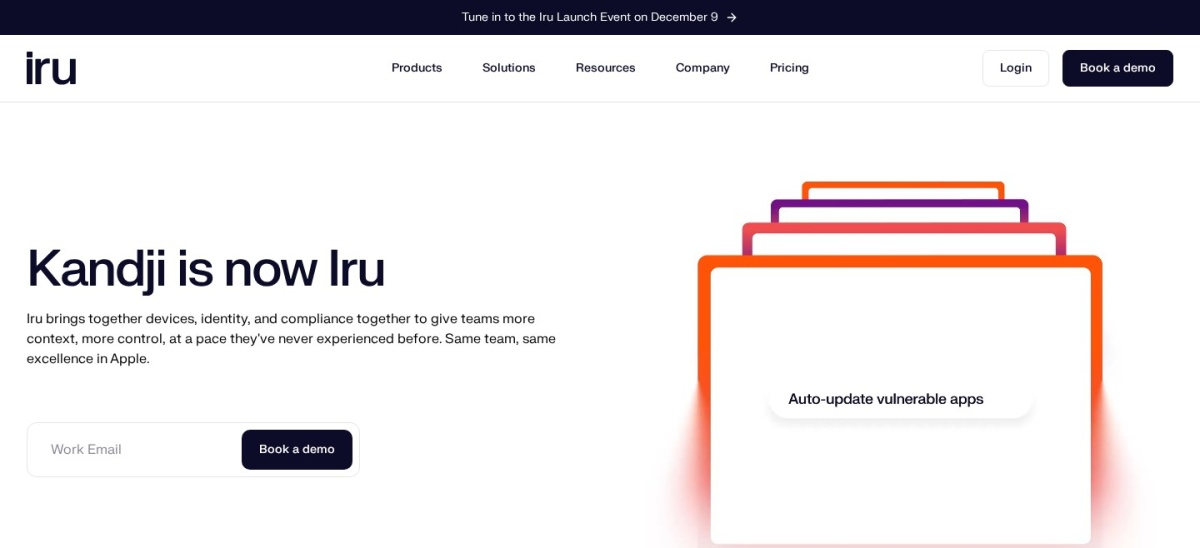
Kandji is an Apple device management platform that automates compliance, patching and configuration for Mac, iPhone and iPad fleets. Pricing is custom by quote, based on the solutions and device counts in the plan.
The trade off is the rebrand. Kandji is now Iru, so its G2 listing and pricing pages may change under the new name, and buyers should confirm current terms with sales. It suits Apple-majority firms that want compliance handled with little admin work.
Per-user pricing suits firms where each person has one laptop and one phone. Intune at $8 a user a month covers every device that person uses, so a second device costs nothing extra.
Per-device pricing suits frontline fleets with shared devices. NinjaOne from $1.50 an endpoint a month and ManageEngine from $1.09 an endpoint a month cost far less than per-user plans when devices outnumber people.
Count both before you buy. A 500-person firm with 900 devices pays $4,000 a month on Intune and far less per endpoint on NinjaOne, while a 500-person firm with 550 devices may find Intune simpler.
How we chose
We started from the endpoint management tools with the largest G2 review bases, then kept those that manage Windows, macOS, iOS and Android from one console.
Prices come from each vendor's pricing page, checked on 30 November 2026. Ratings and review counts come from G2 on the same day. Where a vendor prices by fleet size, the list shows the lowest published rate.
We left out quote-only tools with no published starting price. No vendor paid for a place, and we do not claim hands-on testing for this list.
How to choose unified endpoint management software for enterprise
Start from your device mix, then price the bill at your real counts.
Count devices per person. Per-user plans win when each person has one device, while per-device plans win for shared or frontline fleets, so count both before comparing prices.
Match the tool to your main operating system. Jamf, Mosyle and Kandji lead on Apple, Intune leads on Windows, and Hexnode, NinjaOne and Scalefusion suit mixed fleets.
Check compliance evidence, not just enrolment. Ask for attestation, audit logs and conditional access, because enterprise audits need proof that policies actually applied.
Trial with a real device group. Enrol a small group of each device type, push policies and patches, then check reporting before rolling out to the whole fleet.
FAQ
What is the best unified endpoint management software for enterprise in 2026?
Microsoft Intune is the best unified endpoint management software for most enterprises, at $8 per user a month standalone and often already included in Microsoft 365 E3 or E5. Jamf Pro is the better pick for Apple-heavy fleets, and NinjaOne for mixed fleets on a budget.
How much does unified endpoint management software cost?
Prices run from $1 per device a month for Mosyle to $12.50 per device a month for Jamf Pro, with Intune at $8 per user a month. Per-device plans look cheaper, but the bill depends on how many devices each person carries.
Is Microsoft Intune included in Microsoft 365?
Yes, Intune Plan 1 is included in Microsoft 365 E3 and E5, and in Enterprise Mobility + Security E3 and E5. Firms without those licences can buy Plan 1 standalone at $8 per user a month.
Which is better for Apple devices, Jamf Pro or Intune?
Jamf Pro is better for Apple devices. It offers deeper macOS configuration, same-day support for new Apple releases and Apple Business Manager integration that Intune does not match, which is why many firms run Jamf beside Intune.
Does NinjaOne suit large enterprises?
Yes, NinjaOne manages Windows, macOS and Linux from one console with patching, backup and monitoring, and it holds the largest review base here at 4,307 G2 reviews. Its price runs from $1.50 to $3.75 an endpoint a month by fleet size.
What is the cheapest unified endpoint management software for enterprise?
ManageEngine Endpoint Central is the cheapest per endpoint at $1.09 a month for 500 endpoints, with a free edition for 25 endpoints. Mosyle is the cheapest for Apple fleets at $1 a device a month, with a free tier up to 30 devices.
SaaS SEO and WordPress specialist with about 8 years of experience. Rakib compares WordPress plugins, themes, hosting and software using public pricing, documentation and user reviews. See how we rank.