TrueNAS is the best of these Unraid alternatives for most home servers: it is free, built on OpenZFS, and rated 4.8 out of 5 on G2 from 167 reviews. Pick Synology DSM for a polished appliance, or OpenMediaVault if you want a free NAS that runs on old hardware.
How we make this list: we compare pricing pages, product documentation and public user reviews, then re-check every price before each update. No product paid for a place. Disclosure.
TrueNAS is the strongest free pick: OpenZFS checksums, snapshots and replication, rated 4.8 out of 5 on G2 from 167 reviews.
Synology DSM is the most polished option, but it only runs on Synology hardware, so you buy the box first.
OpenMediaVault, Rockstor and XigmaNAS are all free, so 7 of the 9 tools cost nothing in software.
Proxmox VE is the pick when virtual machines matter more than file sharing, with paid support from about $137 a year.
ZimaOS is the only paid upgrade here at $29 one-time, lifting the free tier's 4-disk and 3-user limits.
QNAP QTS trails the list at 3.9 out of 5 on G2, so check recent reviews before buying the hardware.
How do you pick the right Unraid alternative?
The filesystem decides how safe your data is. ZFS and Btrfs checksum every block and can heal silent corruption, while parity arrays and software RAID handle drive failure differently.
Hardware freedom is the next split. TrueNAS, OpenMediaVault, Proxmox VE, Rockstor and XigmaNAS run on a PC you already own, while Synology DSM and QNAP QTS only ship on their makers' boxes.
Apps come third. Most of these tools run Docker apps or virtual machines, so one box can host files, photos, media and backups at once, and our 3-2-1 backup rule guide explains why one copy on the server is not a backup plan.
Price is the easy part. Seven of the nine tools here are free to install, so the real cost is usually the hardware, the drives and your time.
TrueNAS is a free, open source storage operating system built on OpenZFS, with checksums, snapshots and replication guarding every block you store. The Community Edition runs on your own hardware, and the 25.10 Goldeye release adds Docker apps, LXC containers and virtual machines beside file, block and object sharing.
The trade off is the learning curve. ZFS pool layout and memory sizing take some reading before you build, and the interface packs in more options than a beginner needs. It suits home servers and small businesses that want the strongest free data protection and plan to keep the box for years.
What we like
OpenZFS snapshots, compression and checksums protect against bit rot
Free Community Edition with no licence paywall for core storage
Docker apps, LXC containers and virtual machines included
Synology DSM is the web-based operating system that ships with Synology NAS hardware, turning a small box into a private cloud for files, photos, backups and media. Its Package Center apps cover photo management, file sync, surveillance and office documents through one calm interface.
The trade off is hardware lock-in. DSM only runs on Synology hardware, so you pay for the box first and cannot move the software to a PC you own. It suits households that want a quiet appliance the whole family can use without learning Linux.
4.8/5on SourceForge (169 reviews, checked Nov 2026)
PriceFree
Best free NAS for old hardware
BaseDebian Linux
LicenceGPL-3.0, free
Latest release8.6.0, Oct 2026
File sharingSMB, NFS, SSH, rsync
openmediavault.org
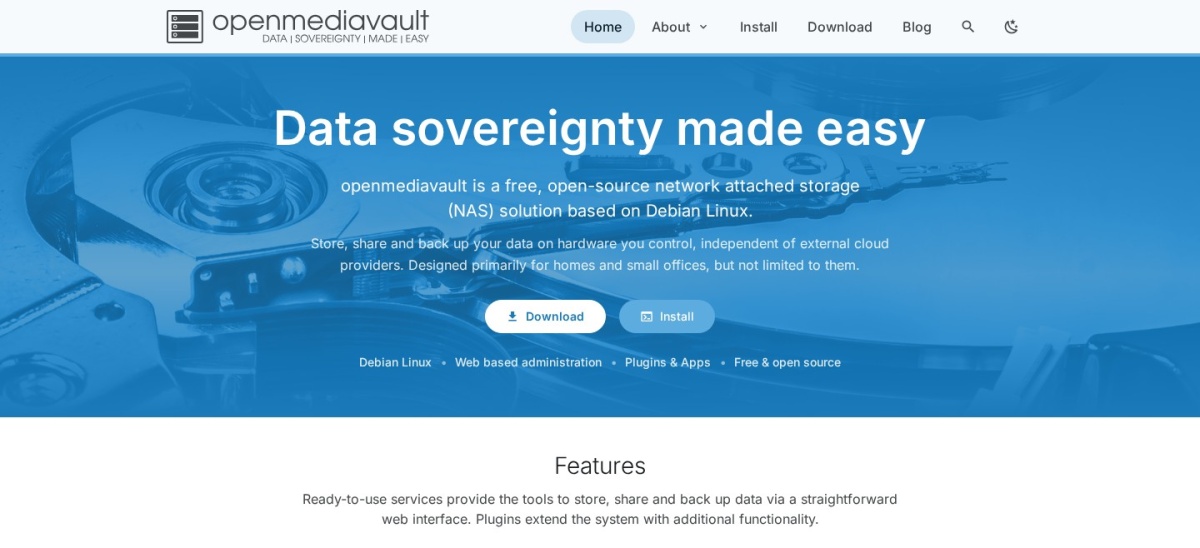
OpenMediaVault homepage, captured Nov 2026.
OpenMediaVault is a free, open source NAS system based on Debian Linux, built for small and older hardware such as a Raspberry Pi or an old PC. Release 8.6.0, published in October 2026, manages volumes, shares, users and updates through a web interface, with plugins adding Docker apps and more.
The trade off is polish. Setup takes more manual steps than Synology or Unraid, and some features live in plugins you must find and add, including ZFS support. It suits budget builds and Pi-based servers where free software matters most.
What we like
Free, and light enough for old hardware
Runs well on a Raspberry Pi
Rated 4.8 out of 5 on SourceForge from 169 reviews
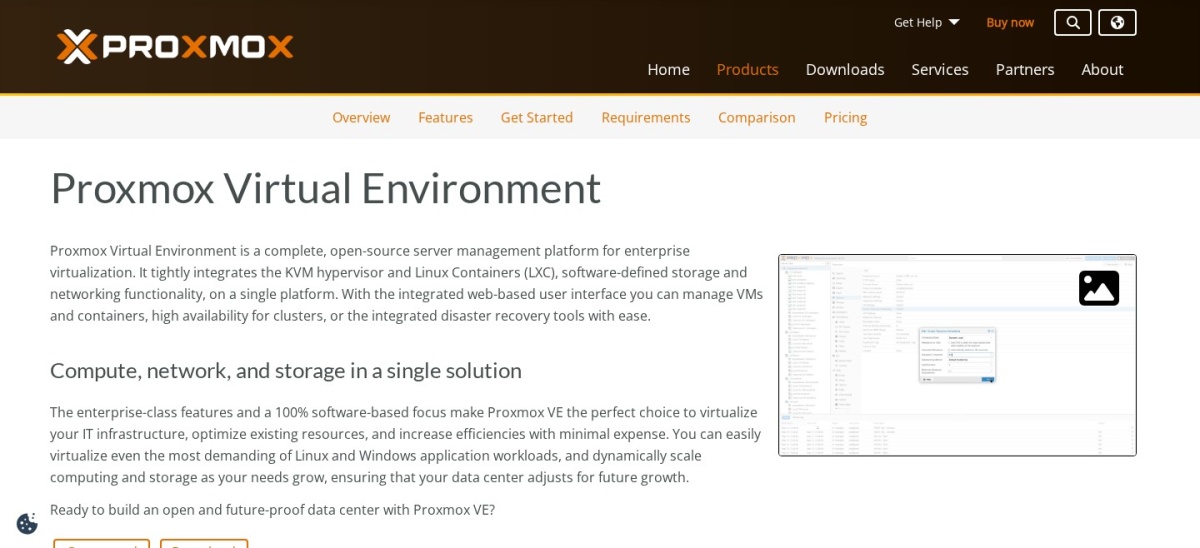
Proxmox VE is a free, open source virtualisation platform that runs KVM virtual machines and LXC containers on one home server, with clustering, live migration, backups and ZFS or Ceph storage. Every feature is open to free users under the GNU AGPLv3 licence.
The trade off is that it is not a NAS first. File sharing and media apps need a VM or container of their own, and the optional Community subscription costs €120 per CPU socket a year, about $137. It suits homelab owners who want to run many services on one box.
What we like
Free, with all features included
Runs VMs and containers side by side
Clustering and live migration built in
Rated 4.6 out of 5 on G2 from 39 reviews
Watch out for
No built-in file sharing or media apps
Needs Linux comfort to run well
Community subscription adds the stable Enterprise update repositoryVisit proxmox.com
05
ZimaOS
4.5/5on Zima Space (100+ reviews, checked Nov 2026)
Paid from$29/once
Best modern home NAS with a $29 upgrade
Free limitUp to 4 disks, 3 users
Plus licence$29 one-time
RAID modesRAID 0, 1, 5, 6 and ZFS
App catalog800+ apps
zimaspace.com
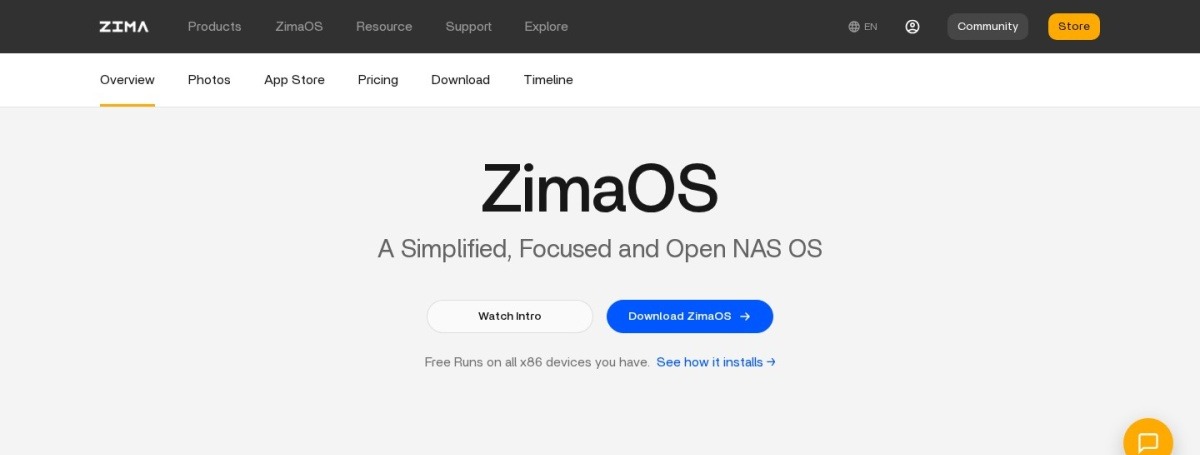
ZimaOS homepage, captured Nov 2026.
ZimaOS is a Linux-based NAS and personal cloud operating system for x86 hardware, with a free tier for up to 4 disks and 3 members. It supports RAID 0, 1, 5 and 6, ZFS options, 3-2-1 backup tasks, ZVM virtual machines and an app catalog of more than 800 apps.
The trade off is the free tier's ceiling. Pass 4 disks or 3 members and you need the $29 Plus licence, a one-time payment tied to one device. It suits home users and small teams wanting a visual app store and straightforward backups.
What we like
Free tier covers core NAS features and apps for up to 4 disks
Plus is a $29 one-time payment, not a subscription
Combines RAID, backup jobs, VMs and 800+ apps
Watch out for
Free edition limits you to 4 disks and 3 users
Plus licence is tied to a single device
ZimaOS Plus costs $29 one-time and removes the disk and user limitsVisit zimaspace.com
06
Umbrel
4.5/5on Trustpilot (71 reviews, checked Nov 2026)
PriceFree
Best one-click home cloud
App store300+ one-click apps
Photos and mediaYes, incl. Jellyfin
Bitcoin nodeYes, built in
HardwareUmbrel Home, up to 4TB
umbrel.com
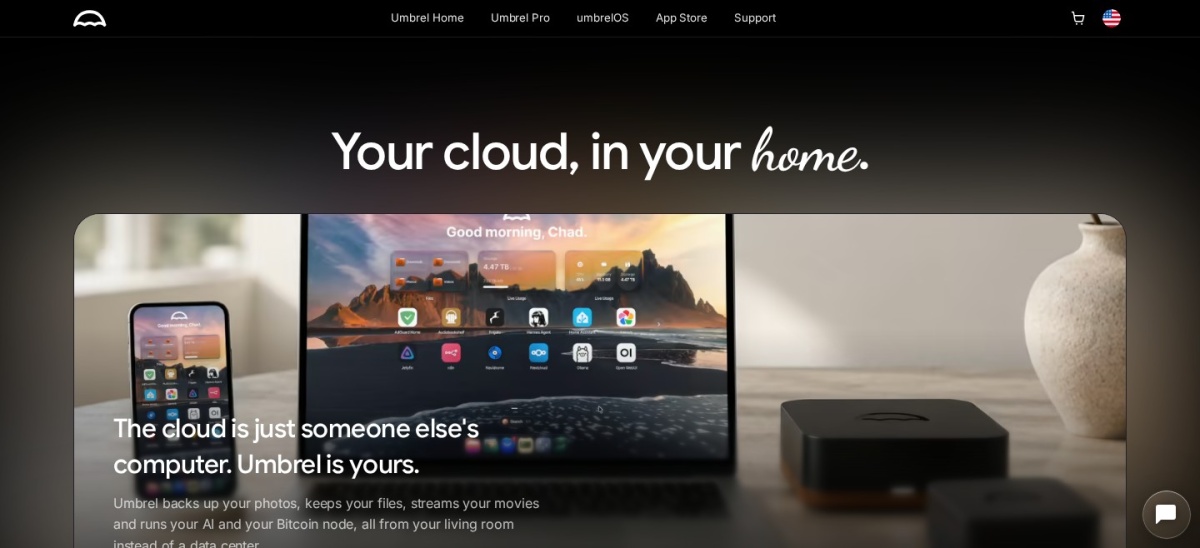
Umbrel homepage, captured Nov 2026.
Umbrel is a free home cloud OS that turns a small computer into a private cloud with a one-click app store of more than 300 apps. It backs up photos, stores files, streams media through Jellyfin and runs AI apps and a Bitcoin node, all from a browser at umbrel.local.
The trade off is depth. Umbrel hides the storage layer, so it gives less control over pools and parity than TrueNAS or Unraid, and there is no parity or pool management shown. It suits beginners who want apps running in an evening with no Linux commands.
What we like
Easiest setup in this list
300+ apps install in one click
Rated 4.5 out of 5 on Trustpilot from 71 reviews
Free umbrelOS runs on your own hardware
Watch out for
Less control over storage than TrueNAS
No parity or pool management shown
Umbrel Home hardware is optional; the OS itself is freeVisit umbrel.com
07
Rockstor
4.8/5on SourceForge (21 reviews, checked Nov 2026)
PriceFree
Best Btrfs NAS for tinkerers
FilesystemBtrfs, snapshots
BaseopenSUSE
File sharingNFS, Samba, SFTP
AppsRock-ons, Docker based
rockstor.com
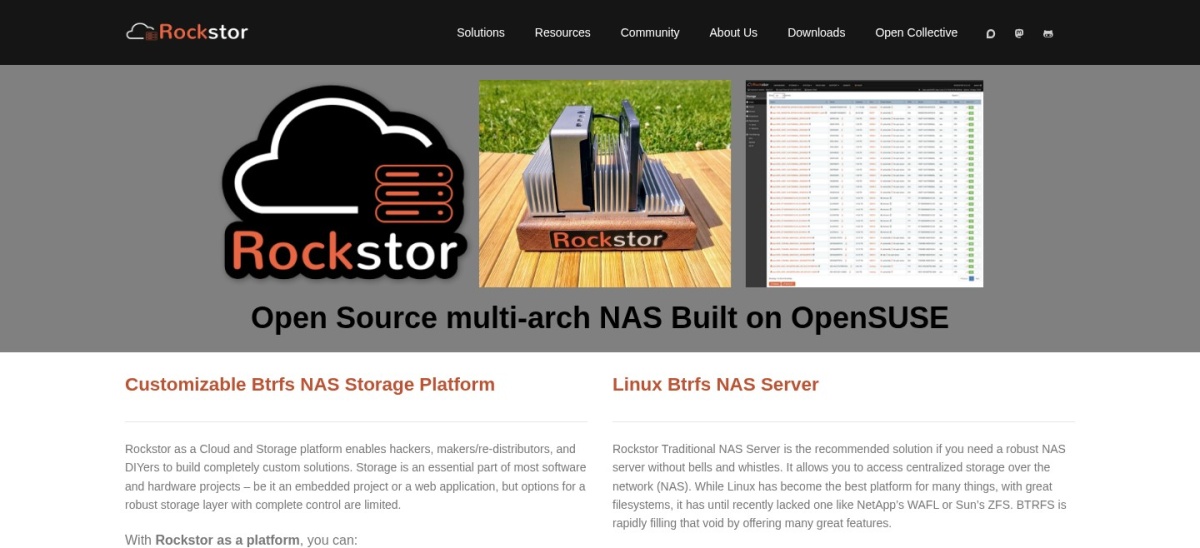
Rockstor homepage, captured Nov 2026.
Rockstor is a free, open source NAS built on Btrfs and openSUSE, with snapshots, replication and bit-rot protection from the filesystem itself. Its Rock-ons run Docker apps such as Syncthing and Plex beside NFS, Samba and SFTP file shares.
The trade off is scale and polish. Its review base is small, with 21 SourceForge reviews, and the interface feels more technical than Unraid or DSM. It suits Linux users who like Btrfs and want a free NAS they can shape.
4.8/5on SourceForge (85 reviews, checked Nov 2026)
PriceFree
Best free FreeBSD NAS with ZFS
BaseFreeBSD
FilesystemZFS v5000
Latest release14.3.0.5, Sep 2025
InstallEmbedded, USB or disk
xigmanas.com
XigmaNAS homepage, captured Nov 2026.
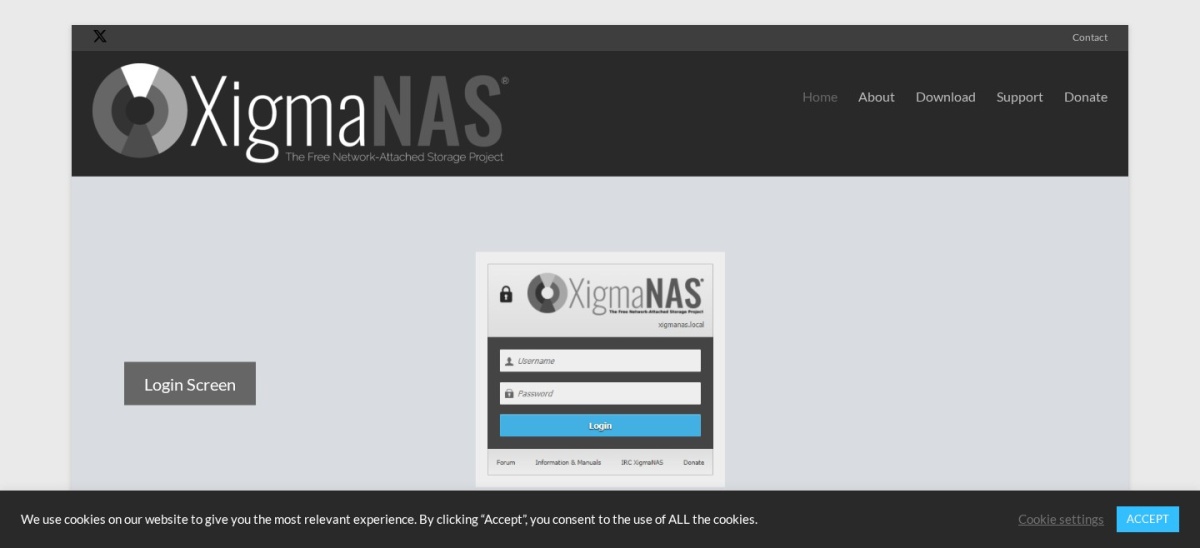
XigmaNAS is a free, open source NAS operating system based on FreeBSD, continuing the original FreeNAS line with ZFS v5000, software RAID, disk encryption and S.M.A.R.T. reports. Release 14.3.0.5 arrived in September 2025, and the embedded build runs from a USB stick.
The trade off is the interface. It is functional rather than polished, and the project is smaller than TrueNAS, so answers take longer to find. It suits builders who want FreeBSD ZFS on light hardware without paying for a licence.
QNAP QTS is the operating system on QNAP NAS appliances, with network file sharing, backup utilities, access control lists and container or virtual machine apps. The App Center adds media, surveillance and sync tools, and QuTS hero offers a ZFS-based option on some models.
The trade off is the mixed review record. QNAP NAS holds 3.9 out of 5 on G2 from 18 reviews, the lowest here, with some users reporting interface lag and third-party app friction. It suits buyers looking at QNAP appliances who want built-in backup and virtualisation options.
Unraid's best trick is mixing drive sizes in one parity array. None of these alternatives copies it exactly, so check how each one handles mismatched disks before you switch.
TrueNAS and XigmaNAS want matched drives in a ZFS pool, and adding disks later means adding a whole vdev. Synology SHR comes closest among appliances, and some OpenMediaVault setups use MergerFS with SnapRAID for mixed drives.
If your drives are all different sizes, start with Synology DSM or plan a matched set for TrueNAS. Moving a mixed array to ZFS without buying new drives is the most common regret in this switch.
How we chose
We started from the NAS operating systems people actually run instead of Unraid, then kept those with a public rating and review count on G2, Capterra, Trustpilot, Slashdot or SourceForge.
Prices come from each vendor's pricing page, checked on 29 November 2026. Ratings and review counts come from the review sites named on the same day. Where a vendor shows a sale, the list shows the regular price.
We left out CasaOS and HexOS, which have no public rating and review count we could verify, and XPEnology, which runs Synology software on other hardware in a grey area. No vendor paid for a place, and we do not claim to have used these tools ourselves.
How to choose an Unraid alternative
Start with your drives, then match the software to the box you already own.
Count your drives and their sizes. Matched drives suit TrueNAS or XigmaNAS; mixed sizes point to Synology DSM or a MergerFS setup on OpenMediaVault.
Decide between DIY and an appliance. A spare PC runs TrueNAS, OpenMediaVault or Proxmox VE for free. An appliance means Synology DSM or QNAP QTS, with the hardware cost up front.
List the apps the box must run. Media, photos and backups are covered by most picks, but check that your must-have app is in the tool's store before you commit.
Check the rating before you buy hardware. Appliance picks lock you into a box, so read the G2 or SourceForge reviews for that model first.
FAQ
What is the best Unraid alternative in 2026?
TrueNAS is the best Unraid alternative for most home servers in 2026. It is free, built on OpenZFS with checksums, snapshots and replication, and rated 4.8 out of 5 on G2 from 167 reviews.
Is there a free alternative to Unraid?
Yes. TrueNAS, OpenMediaVault, Proxmox VE, Umbrel, Rockstor and XigmaNAS are all free to install on your own hardware. ZimaOS is free for up to 4 disks and 3 members, with a $29 one-time Plus licence for larger setups.
How much does an Unraid alternative cost?
Seven of the nine tools here cost nothing in software. The only paid software is ZimaOS Plus at $29 one-time and Proxmox VE support from about $137 a year. Synology DSM and QNAP QTS come free with their hardware, so the box is the cost.
Which Unraid alternative is best for beginners?
Synology DSM is the easiest for beginners, with the most polished interface and a quiet appliance you plug in and use. Umbrel is the easiest free option, with a one-click app store and no Linux commands needed for basic use.
TrueNAS vs Synology DSM: which should I pick?
Pick TrueNAS if you want free ZFS storage on hardware you already own and do not mind learning pool layout. Pick Synology DSM if you want a polished appliance the whole household can use and are happy to buy Synology hardware.
Can an Unraid alternative mix different drive sizes?
Not like Unraid does. TrueNAS and XigmaNAS want matched drives in a ZFS pool, while Synology SHR comes closest by letting you mix sizes in an appliance. OpenMediaVault users often pair MergerFS with SnapRAID for the same effect.
SaaS SEO and WordPress specialist with about 8 years of experience. Rakib compares WordPress plugins, themes, hosting and software using public pricing, documentation and user reviews. See how we rank.