Citrix DaaS is the best VDI alternative for most teams, starting at $10 per user per month with the strongest remote display protocol and delivery across Azure, AWS, Google Cloud and on-premises. Azure Virtual Desktop suits Microsoft shops that already hold licences, while Omnissa Horizon is the cheapest enterprise pick at $5.79 per user per month.
How we make this list: we compare pricing pages, product documentation and public user reviews, then re-check every price before each update. No product paid for a place. Disclosure.
Citrix DaaS leads on protocol quality and multi-cloud delivery, from $10 per user per month before infrastructure costs.
Azure Virtual Desktop adds no access charge for users who already hold an eligible Microsoft 365 or Windows licence.
Omnissa Horizon is the lowest-priced enterprise VDI licence here, with Standard Plus at $5.79 per user per month.
Amazon WorkSpaces and Windows 365 give the simplest all-in monthly prices, at $25 and $25.60 per user per month.
Kasm Workspaces is the only tool here with a free plan, with a Community Edition for up to 5 concurrent sessions.
How do you choose the best VDI alternative?
The headline price is rarely the full bill. Citrix DaaS, Azure Virtual Desktop and Omnissa Horizon charge for the licence or access, and the virtual machines, storage and networking underneath are billed separately.
Deployment decides most of the shortlist. Managed cloud desktops such as Amazon WorkSpaces, Windows 365 and V2 Cloud run the infrastructure for you, while Horizon and Parallels RAS expect you to bring your own servers or cloud capacity.
Licensing units change the maths more than the rate card. Parallels RAS charges per concurrent user, so two people on different shifts can share one licence, while most others charge per named user. Our guide on how to run a security audit is a useful check before you open any remote desktop to the internet.
Ratings in this list come from G2, Capterra and Gartner Peer Insights, checked on 29 November 2026. No tool here scored below 4.1 out of 5, so the choice comes down to your cloud, your budget and how much infrastructure you want to run.
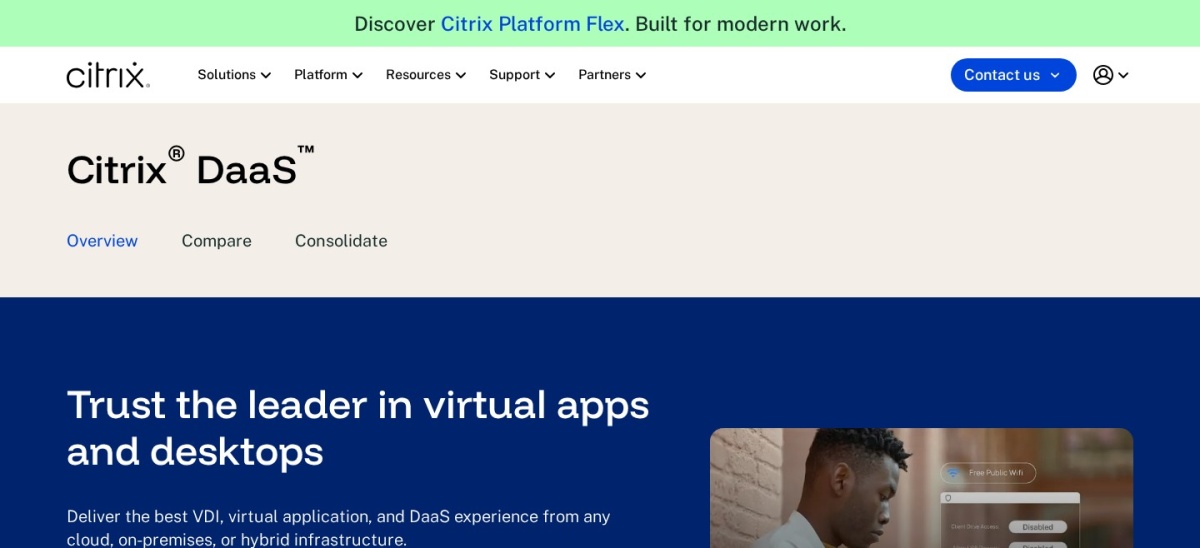
Citrix DaaS is the cloud-hosted version of Citrix Virtual Apps and Desktops, and it delivers virtual desktops and apps from Azure, AWS, Google Cloud or your own data centre through one control plane. The entry Standard tier costs $10 per user per month, and the HDX protocol gives the smoothest multimedia and USB redirection in this list.
The trade off is that the licence is only part of the bill. Cloud compute, storage and networking are charged separately, so a realistic all-in cost lands near $30 to $50 per user per month. It suits large or regulated teams that need the broadest delivery options and the most policy control.
What we like
Best remote display protocol in this list
Runs on any cloud or on-premises from one console
Four tiers from $10 to $23 per user per month
Largest reviewer base here, with 546 G2 reviews
Watch out for
Infrastructure costs sit on top of the licence
Licensing has changed often, so quotes need checking
More than a small team needs to manage
Premium tiers add image management, monitoring and analyticsVisit citrix.com
02
Azure Virtual Desktop
4.2/5on G2 (29 reviews, checked Nov 2026)
Starts at$10/mo
Best for Microsoft 365 shops
Access charge$10/user/mo, external users
Apps-only access$5.50/user/mo, external users
Licensed usersNo extra access charge
BillingPay-as-you-go Azure compute
azure.microsoft.com
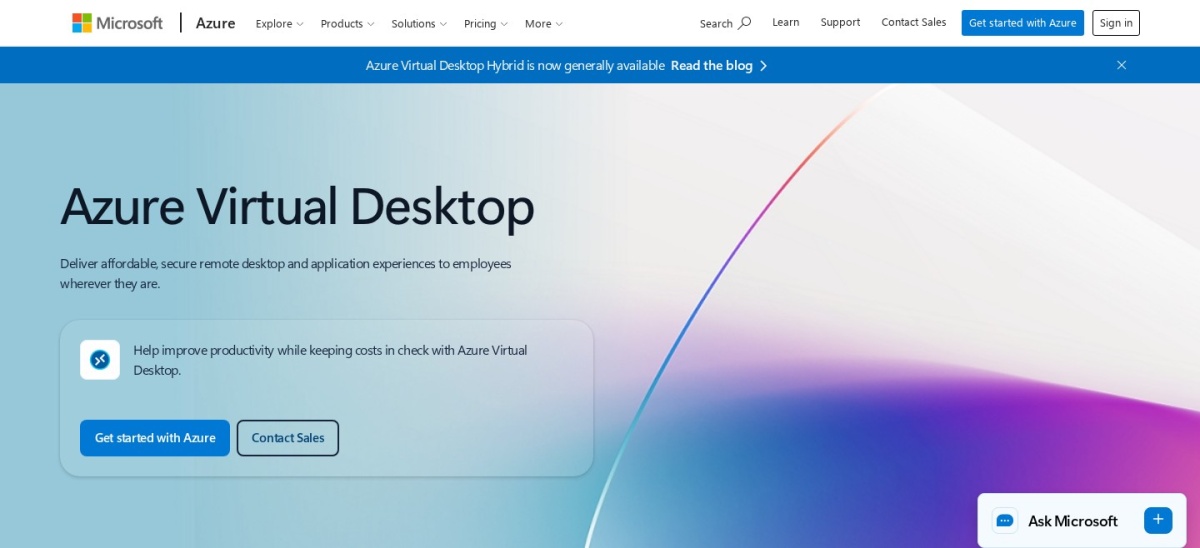
Azure Virtual Desktop homepage, captured Nov 2026.
Azure Virtual Desktop is Microsoft's cloud VDI service, and it delivers Windows 11 desktops and apps from Azure with multi-session hosts that let several users share one virtual machine. Users who already hold an eligible Microsoft 365, Windows Enterprise or RDS licence pay no extra access charge, and external users cost $10 per user per month for full desktops.
The trade off is that the bill is consumption-based. Virtual machines, storage and networking are charged by use, so costs swing with session-host density and hours powered on. It suits teams already standardised on Microsoft 365 and Entra ID that want VDI inside Azure.
Omnissa Horizon is the former VMware Horizon, and it delivers virtual desktops and apps across on-premises, Azure and hybrid cloud from one console. Horizon Standard Plus costs $5.79 per user per month, the lowest enterprise VDI licence in this list, and it fits teams already running vSphere and vCenter.
The trade off is that the headline price is the licence only. You still pay for the hypervisor, storage and cloud compute underneath, and Omnissa has warned of a one-time price adjustment on Horizon bundles. It suits VMware-rooted estates that want to keep their existing virtualisation investment.
What we like
Lowest enterprise licence price in this list
Native fit with vSphere and vCenter
Named-user or concurrent-user licensing
Rated 4.4 out of 5 on Capterra
Watch out for
Licence excludes hypervisor and compute costs
Bundle prices have moved, so get a fresh quote
Setup needs Microsoft SQL Server and a gateway
Universal at $12.50 adds the full multi-cloud feature setVisit omnissa.com
04
Amazon WorkSpaces
4.2/5on G2 (110 reviews, checked Nov 2026)
Starts at$25/mo
Best managed desktops for AWS shops
Entry bundleValue, $25/mo AlwaysOn
Standard bundle$33/mo AlwaysOn, US East
BillingAlwaysOn monthly or AutoStop hourly
Free tier2 Standard bundles, 3 months
aws.amazon.com
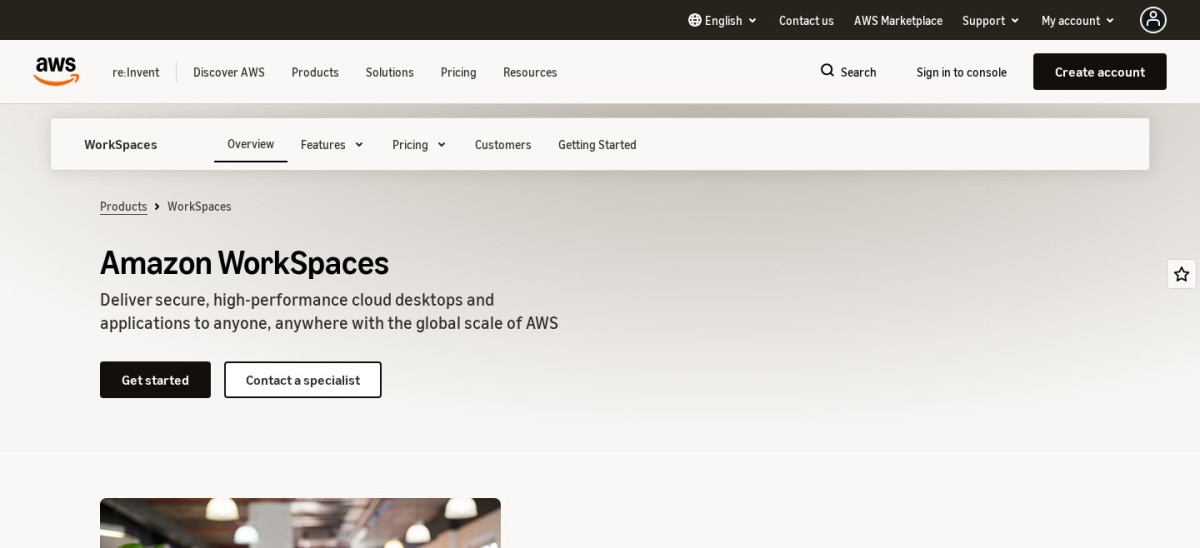
Amazon WorkSpaces homepage, captured Nov 2026.
Amazon WorkSpaces is AWS's managed virtual desktop service, and each user gets a persistent Windows or Linux desktop that keeps apps, files and settings between sessions. The Value bundle costs $25 a month on AlwaysOn billing in the AWS example, and AutoStop billing pairs a small monthly fee with an hourly charge for part-time users.
The trade off is that prices vary by region and bundle. The same Standard bundle lists at $33 a month in US East and $44 in US West, and directory and licence extras sit on top. It suits teams already on AWS that want a published per-desktop price with no VDI stack to run.
What we like
Published per-desktop prices, no quote needed
Hourly AutoStop billing for part-time users
Persistent desktops keep files and settings
Free tier covers two Standard bundles for 3 months
4.5/5on Gartner Peer Insights (229 reviews, checked Nov 2026)
Starts at$25.60/mo
Simplest fixed-price Cloud PC
Entry planBusiness, 2 vCPU, 4 GB, 64 GB
Popular size2 vCPU, 8 GB, 128 GB, $36/mo
User limitBusiness, up to 300 users
Free trialYes, up to 30 days
microsoft.com
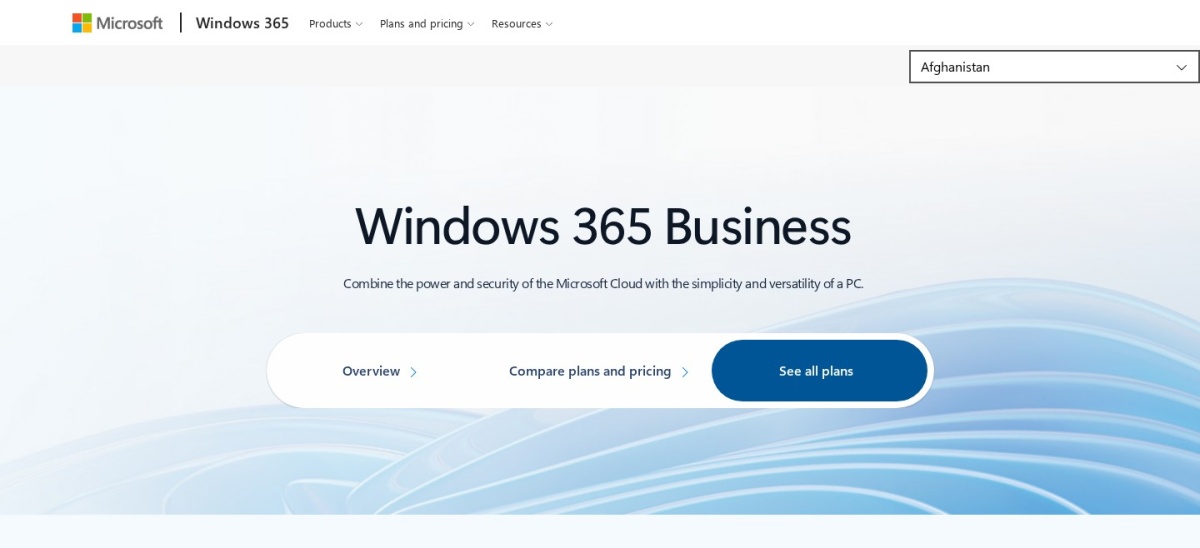
Windows 365 homepage, captured Nov 2026.
Windows 365 is Microsoft's Cloud PC service, and each user gets a dedicated Windows PC in the cloud at a fixed monthly price, with no host pools, images or Azure bill to manage. Business plans start at $25.60 per user per month for 2 vCPUs, 4 GB of RAM and 64 GB of storage, for up to 300 users.
The trade off is flexibility. You cannot tune host pools or share capacity the way Azure Virtual Desktop allows, and larger sizes climb to $56 and $108.80 per user per month. It suits small and mid-size teams that want one Cloud PC per person with no VDI engineer.
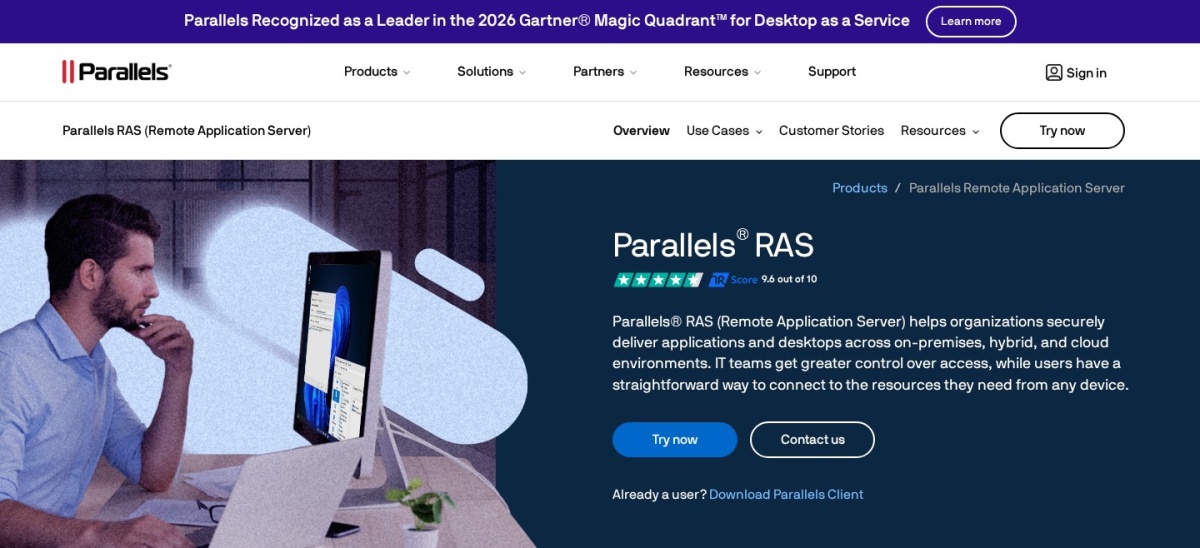
Parallels RAS is a remote application server that delivers virtual apps and desktops from on-premises servers, private cloud or public cloud through one console. It costs $120 per concurrent user per year on a one-year subscription, and the single edition covers publishing, load balancing, gateway access and clients.
The trade off is the licence unit. Concurrent licensing helps shift teams, since two people on different shifts share one licence, but the 15-user minimum means at least $1,800 a year to start. It suits schools, clinics and mid-size teams running their own servers at a fixed price.
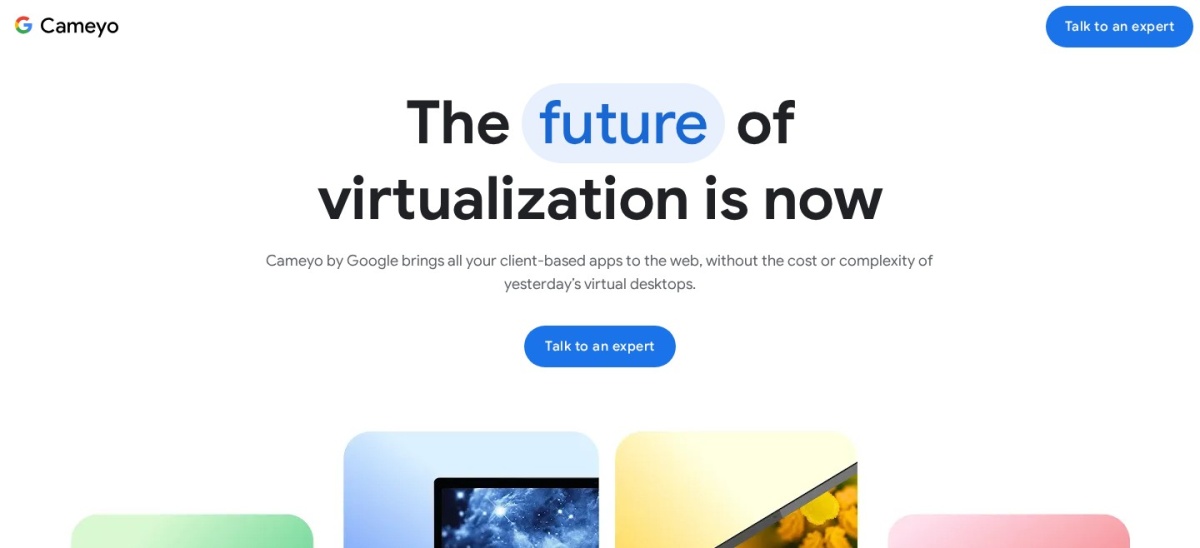
Cameyo is a virtual application delivery platform, now part of Google, that streams Windows and internal web apps to any device through a browser, with no VPN or desktop client. It costs $12 per user per month with a 10-user minimum, and it suits teams that need a few legacy apps online rather than full desktops.
The trade off is scope. Cameyo delivers apps, not full persistent desktops, so it cannot replace VDI for users who need a whole Windows workspace. It suits schools and businesses moving legacy apps to ChromeOS or the browser without the cost of full virtual desktops.
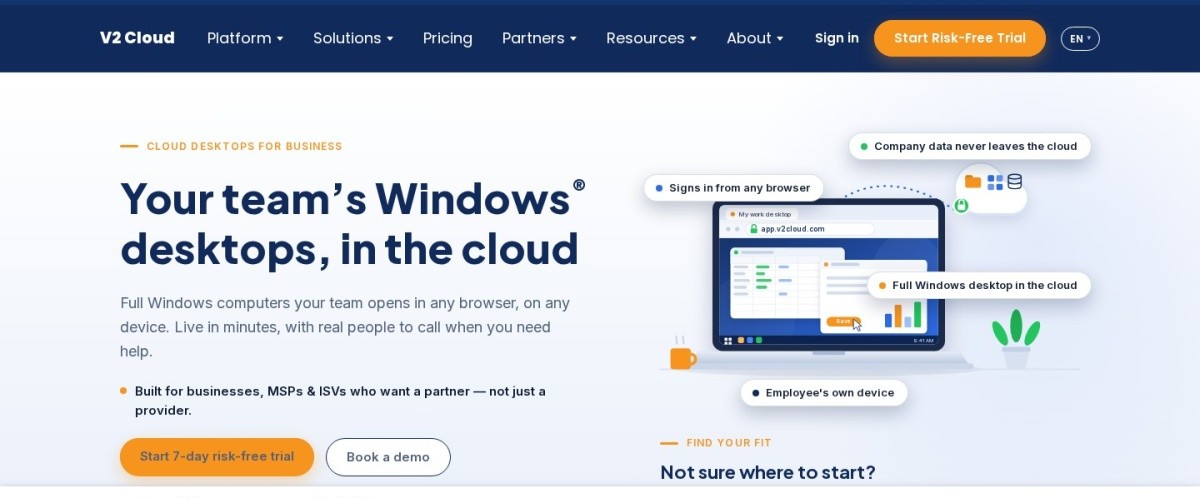
V2 Cloud is a managed cloud desktop platform that gives each team full Windows workstations, files, databases and business apps in one cloud environment, opened from any browser. It costs $40 per virtual machine per month, and environments go live in minutes with no on-premises hardware to buy.
The trade off is that the price is per virtual machine, not per user. Shared desktops keep costs down, but a team that gives every person a dedicated VM pays $40 each. It suits small businesses and accountants that want QuickBooks and office apps in the cloud without running infrastructure.
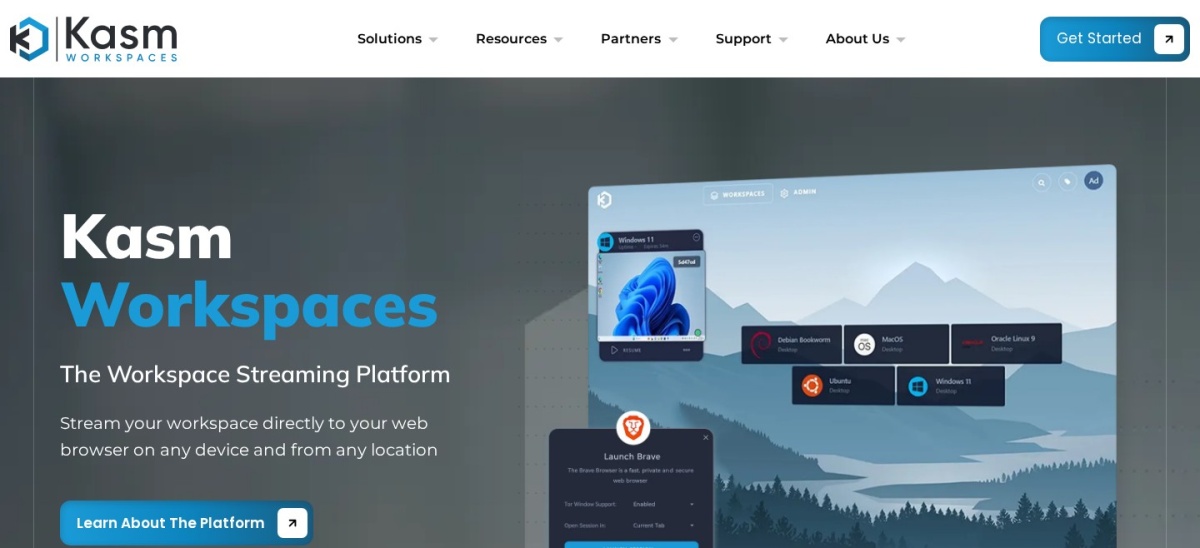
Kasm Workspaces is a container streaming platform that delivers isolated browsers and Linux desktops straight to a web browser, with no endpoint agent to install. The free Community Edition supports up to 5 concurrent sessions, and Starter costs $10 per user per month for self-hosted teams under 25 users.
The trade off is that Kasm streams containers, not full Windows VDI. Windows desktops are available, but the platform shines for browser isolation and Linux workspaces. It suits security teams and small teams that want disposable workspaces without paying for a full VDI stack.
Cloud desktops move the infrastructure to the vendor. WorkSpaces, Windows 365, V2 Cloud and Cameyo run the servers, so your team manages users and apps, not hardware.
Self-hosted VDI keeps the desktops on your own servers or cloud. Horizon and Parallels RAS give you more control over images, storage and network, but you own patching, capacity and uptime.
Azure Virtual Desktop sits in the middle. Microsoft runs the brokering and access, while you size and pay for the session hosts underneath.
For most small teams, a managed option costs less in staff time than the licence saving of a self-hosted stack. Count admin hours beside the per-user price before you choose.
How we chose
We started from the leading VDI and desktop-as-a-service products named in current comparisons, then kept the nine with published prices and public review ratings.
Prices come from each vendor's pricing page or a pricing listing checked on 29 November 2026. Ratings come from G2, Capterra and Gartner Peer Insights on the same day. Where a vendor shows a sale, the list shows the regular price.
We left out products with no public price and no public rating, and products that only manage VDI rather than deliver desktops. No vendor paid for a place, and we do not claim to have used these tools ourselves.
How to choose a VDI alternative
Start with where your users and apps already live, then match the licence to the way they work.
Count named users against concurrent users. Shift teams pay less on concurrent licences such as Parallels RAS, while office teams fit named-user plans.
Check what you already pay for. Microsoft 365 and Windows licences may already cover Azure Virtual Desktop access, so do not pay twice.
Add infrastructure to every headline price. Citrix, Horizon and Azure Virtual Desktop licences exclude compute, so model the VM and storage bill beside the licence.
Run a trial with your heaviest app. Most tools here offer a trial, so put your slowest legacy app through it before you sign a yearly deal.
FAQ
What is the best VDI alternative in 2026?
Citrix DaaS is the best VDI alternative for most teams. It starts at $10 per user per month, delivers desktops across Azure, AWS, Google Cloud and on-premises, and holds the strongest remote display protocol in this list.
How much does a VDI alternative cost per user?
Entry prices in this list run from $5.79 per user per month for Omnissa Horizon to $40 per virtual machine per month for V2 Cloud. Most licences exclude compute, so add the VM and storage bill before you compare totals.
Is there a free VDI alternative?
Kasm Workspaces is the only tool here with a free plan. Its Community Edition is free for up to 5 concurrent sessions. Amazon WorkSpaces offers a free tier for 3 months, and most others offer a free trial instead of a free plan.
Which VDI alternative is best for a small team?
Windows 365 is the simplest pick for a small team, with a fixed $25.60 per user per month and no infrastructure to run. V2 Cloud suits teams that share desktops at $40 per VM, and Kasm fits teams that only need browser workspaces.
Citrix DaaS vs Azure Virtual Desktop: which is better?
Citrix DaaS is better for multi-cloud fleets and the smoothest remote display, while Azure Virtual Desktop is better for Microsoft shops. AVD adds no access charge for users with eligible Microsoft licences, and its autoscaling can cut idle compute costs.
Do I still need my own servers with a VDI alternative?
No, not with a managed cloud desktop such as Amazon WorkSpaces, Windows 365 or V2 Cloud, which run the infrastructure for you. Omnissa Horizon and Parallels RAS still need your own servers or cloud capacity underneath.
SaaS SEO and WordPress specialist with about 8 years of experience. Rakib compares WordPress plugins, themes, hosting and software using public pricing, documentation and user reviews. See how we rank.