Freshservice is the best pick among the top IT operations apps, with the highest G2 rating in this list and paid plans from 19 dollars per agent a month. Dynatrace suits cloud observability best, while PagerDuty is the pick for on-call incident response.
How we make this list: we compare pricing pages, product documentation and public user reviews, then re-check every price before each update. No product paid for a place. Disclosure.
Freshservice is the highest-rated pick at 4.6 out of 5, and its $19 Starter plan is the cheapest ITSM entry in this list.
Dynatrace starts at $7 a month, but full-stack monitoring with APM is $58 a month per 8 GiB host.
PagerDuty is free for up to 5 users; Professional costs $21 per user a month on annual billing.
Datadog and Splunk both start at $15 a month, but Datadog charges $31 extra per host for APM.
ServiceNow IT Operations Management is quote-only, so budget it by talking to sales, not by a list price.
New Relic has the most generous free tier: 100 GB of data a month and one full platform user at no cost.
How do you choose the top IT operations apps?
IT operations is two jobs, not one. The service desk takes requests and incidents from people, while observability watches the systems those people depend on.
Start with the pain you feel most often. If tickets pile up and nobody knows who owns what, pick a service desk first; if outages surprise you, pick observability first.
Price is hard to compare across this list because the billing unit changes. Service desks charge per agent, observability charges per host or per user, and ServiceNow charges by quote, so model the bill on your own team and host counts.
Free plans are real here, but they are narrow. PagerDuty covers 5 users free, Datadog covers 5 hosts, and Jira Service Management covers 3 agents, so check the free limits before you build on them.
Our best AIOps platforms guide compares the observability half of this list in more depth, including the AI features each platform bundles.
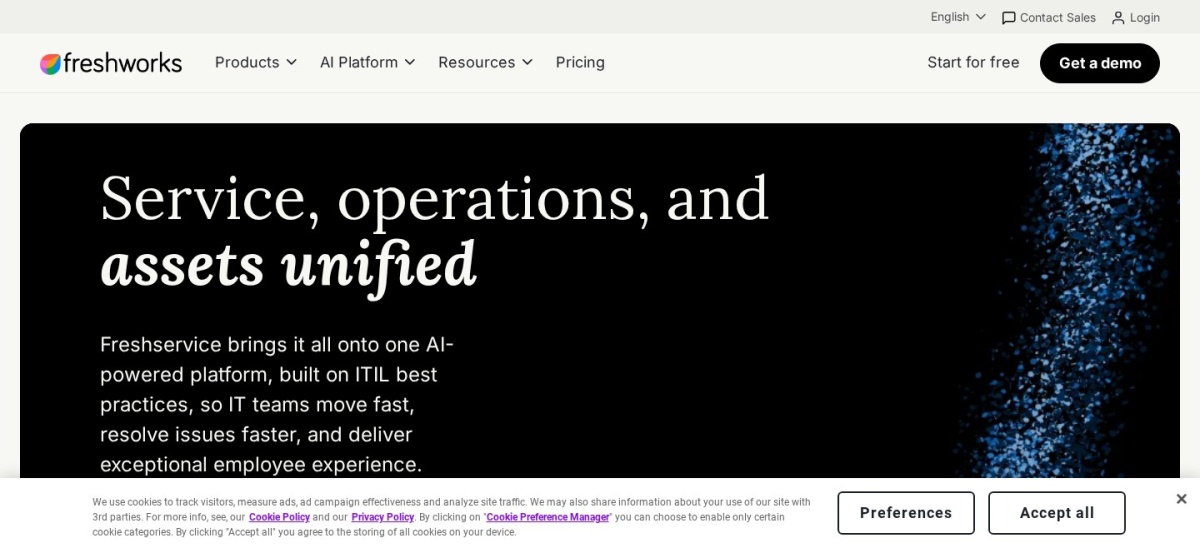
Freshservice is Freshworks' IT service desk, built on ITIL practices for teams that want ticketing, a knowledge base and a support portal without enterprise complexity. The Starter plan costs $19 per agent a month on annual billing and covers incident, knowledge and task management, plus a bot for Slack and Teams.
The trade off is that the cheapest plan stays basic. A service catalog, SLA management and on-call management need Growth at $49 per agent a month, and problem and change management need Pro at $99. It suits small and mid-sized IT teams that want a proper desk at a fair per-agent price.
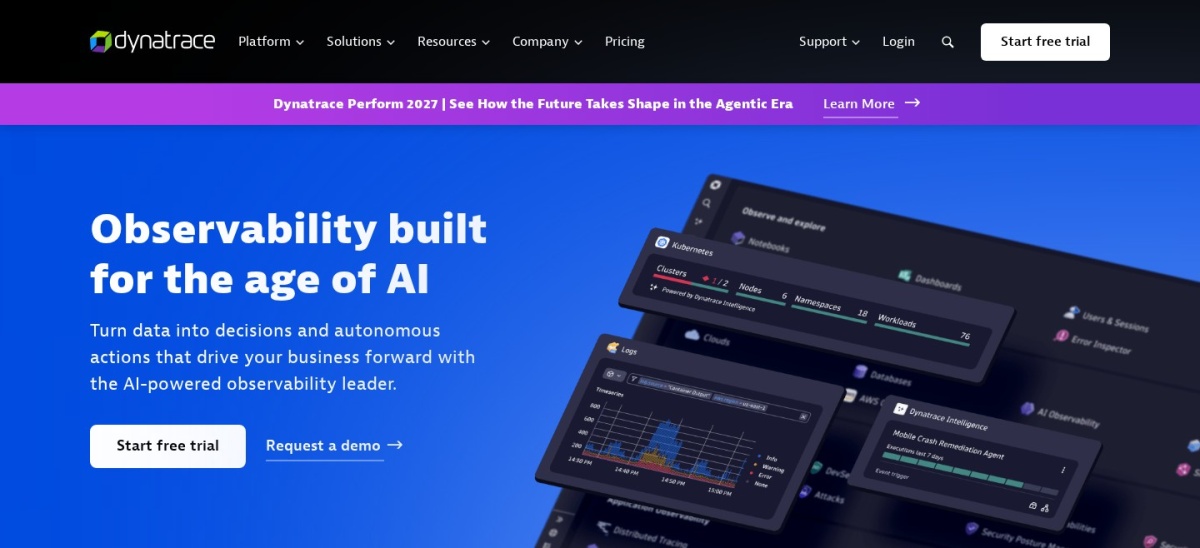
Dynatrace is an observability platform with AI-powered root-cause analysis built in, and its Davis AI engine traces problems across apps, infrastructure and logs. The platform auto-discovers services and maps dependencies, so teams see the full chain behind an incident instead of a single alert.
The trade off is price structure. The $7 Foundation tier covers basic host health only, infrastructure monitoring is $29 a month per host, and full-stack monitoring with APM is $58 a month per 8 GiB host. It suits cloud teams that want one agent and one AI engine for the whole stack.
What we like
Largest G2 review base among observability tools here
AI root-cause analysis included, not an add-on
Auto-discovery and dependency mapping out of the box
Watch out for
No free plan, only a trial
Full-stack monitoring costs far more than the $7 entry
PagerDuty is the incident response platform that pages the right responder by phone, SMS and push, then tracks the incident to resolution. The free plan covers up to 5 users, and Professional at $21 per user a month on annual billing adds on-call scheduling, escalation policies and a status page for 250 subscribers.
The trade off is that the useful AI costs extra. AIOps starts at $699 a month as an add-on, and Business at $41 per user a month is needed for custom workflows and internal status pages. It suits teams where a missed page means lost revenue or a broken service.
What we like
Free plan for up to 5 users
Reliable multi-channel paging and scheduling
Integrates with more than 700 monitoring and ITSM tools
LogicMonitor is a hybrid infrastructure monitoring platform that watches networks, servers, cloud resources and storage from one dashboard. It is rated 4.5 out of 5 on G2 from 637 reviews, and its starting price is $19 a month.
The trade off is that it is a monitoring specialist, not a service desk. There is no built-in ticketing or knowledge base, so most teams pair it with a desk tool such as Freshservice or Jira Service Management. It suits teams that want broad infrastructure coverage without per-host pricing.
What we like
Strong 4.5 out of 5 G2 rating from 637 reviews
Covers hybrid infrastructure in one dashboard
Simple starting price at $19 a month
Watch out for
No service desk, ticketing or knowledge base
Starting price taken from a published listicle, not the vendor page
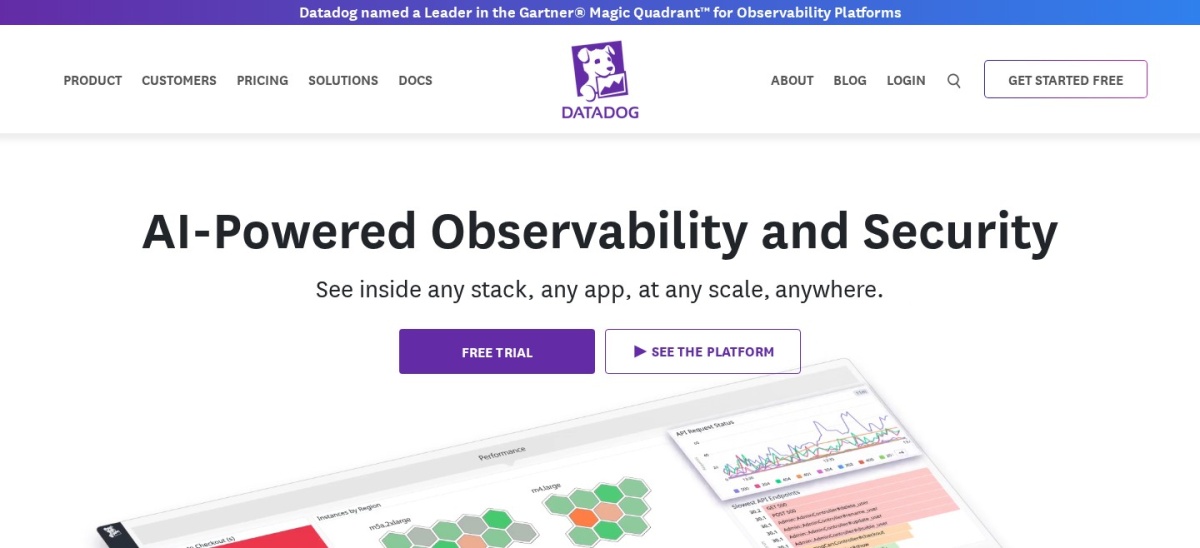
Datadog is a monitoring service for IT, Dev and Ops teams that turns metrics, logs and traces from apps and infrastructure into dashboards and alerts. Infrastructure Pro costs $15 per host a month on annual billing and includes 100 custom metrics, 5 containers per host and 15-month retention.
The trade off is that the bill grows with every add-on. APM costs $31 per host a month on top of infrastructure, and log ingestion is $0.10 per GB. It suits cloud teams that already run Datadog agents and want the broadest set of integrations.
What we like
Free plan for up to 5 hosts
More than 600 integrations
One platform for metrics, logs, traces and APM
Watch out for
APM and logs are priced separately and add up fast
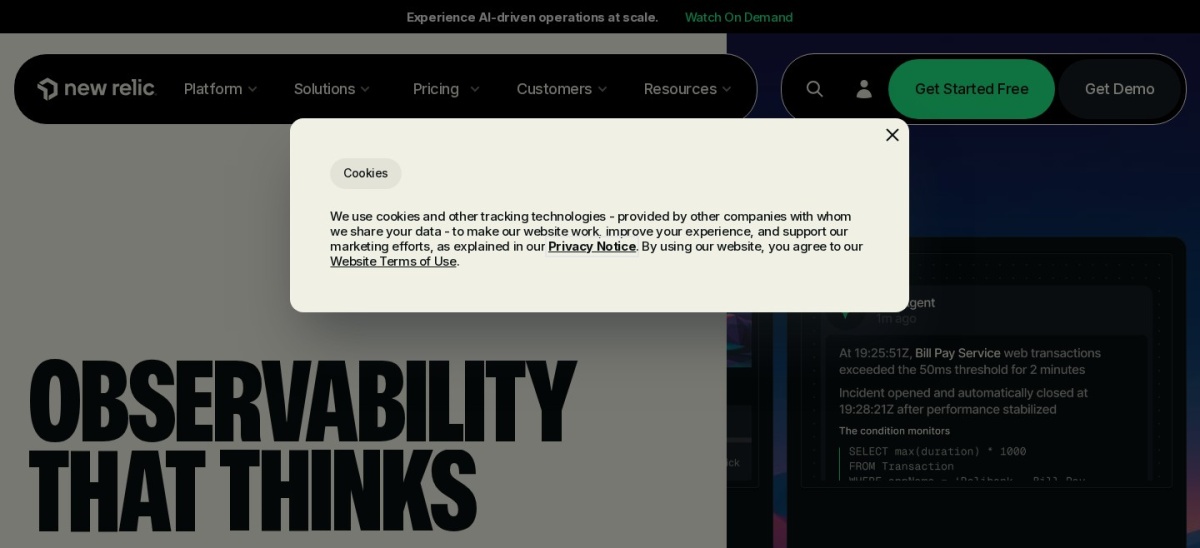
New Relic is a full-stack observability platform that prices by data ingested and users, not by host, so short-lived containers cost nothing extra. The free tier includes 100 GB of data a month, one full platform user and access to more than 50 capabilities.
The trade off is seat pricing. Standard costs $10 for the first full platform user but $99 for each additional user, capped at five, and Pro jumps to $349 per user on an annual commitment. It suits small teams that want a generous free tier before they pay.
ServiceNow IT Operations Management homepage, captured Nov 2026.
ServiceNow IT Operations Management is the enterprise pick for teams already running ServiceNow ITSM, with visibility, health and automation across infrastructure and apps. It is rated 4.4 out of 5 on G2 from 415 reviews and is sold by subscription units counted by configuration item.
The trade off is that there is no published price at all. Every deal is a custom quote, and the platform is built for large organizations with process-heavy operations. It suits enterprises that want IT operations and the service desk on one platform.
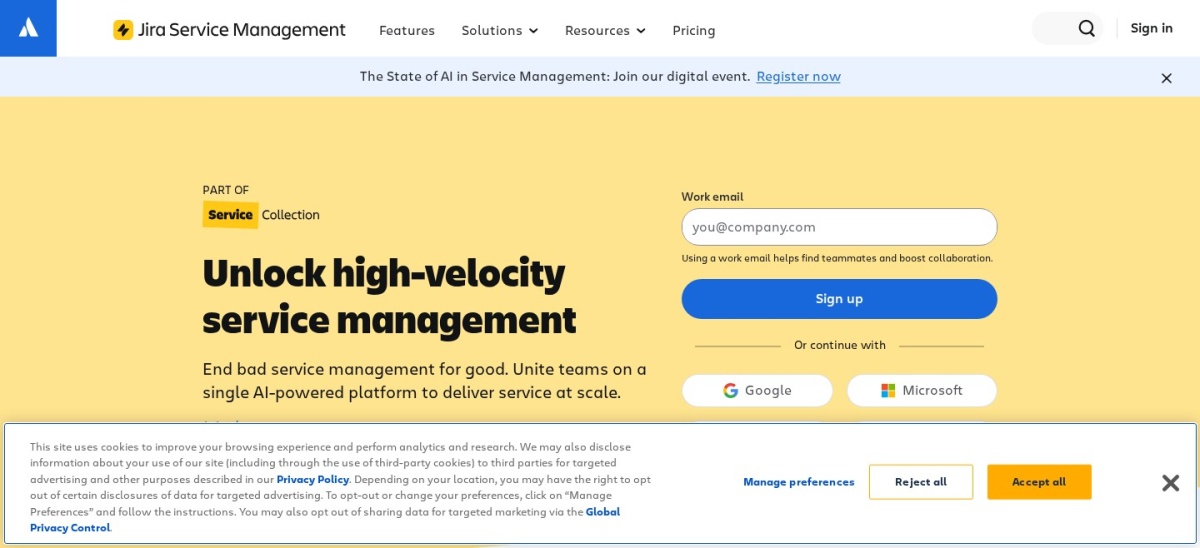
Jira Service Management homepage, captured Nov 2026.
Jira Service Management is Atlassian's ITSM platform, built for teams already using Jira and Confluence. The free plan covers up to 3 agents, and Standard costs $26.90 per agent a month for the first 15 agents, adding asset management with 5,000 Assets objects and a branded help center.
The trade off is tiered pricing that falls as the team grows. The per-agent rate drops to $20.15 for agents 16 to 100, and change management waits until Premium at $61.60 per agent a month. It suits Jira shops that want a desk without leaving the Atlassian suite.
Splunk Observability Cloud homepage, captured Nov 2026.
Splunk Observability Cloud is the observability arm of Splunk, for teams whose logs and metrics already live in Splunk. It starts at $15 a month, includes a free plan, and is rated 4.3 out of 5 on G2 from 55 reviews.
The trade off is a small review base and a Splunk-shaped world. With only 55 G2 reviews it has far less public feedback than Dynatrace or Datadog, and it fits best where Splunk is already the standard. It suits Splunk shops that want observability beside their existing data.
ITSM vs observability: which half do you need first
ITSM tools manage people and process. Freshservice, Jira Service Management and ServiceNow take tickets, route them to the right team, track SLAs and keep a knowledge base for repeat questions.
Observability tools manage systems. Dynatrace, Datadog, New Relic, LogicMonitor and Splunk watch hosts, apps and networks, then alert a human when something breaks.
Most teams end up with one of each. PagerDuty sits between the two halves: it takes the alert from an observability tool and pages the responder who works the ticket in the desk tool.
If you can only buy one thing this quarter, buy the half that hurts today. A desk fixes slow responses to users; observability fixes surprise outages.
How we chose
We started from the IT operations tools with the largest G2 review bases, then kept nine that cover both halves of the job: the service desk and observability. Every tool here has a published G2 rating and a verifiable starting price or a stated quote-only model.
Prices come from vendor pricing pages and pricing guides checked in November 2026, with the cheapest paid plan shown on annual billing where the vendor publishes one. Ratings and review counts come from G2 pages read on 29 November 2026.
We left out tools with no verifiable rating on G2, Capterra or Trustpilot, and tools whose pricing could not be confirmed anywhere. No vendor paid for a place, and we do not claim hands-on testing for this list.
How to choose an IT operations app
Start with the job that hurts most, then check the billing unit before you fall for the headline price.
Decide which half you need. Pick a service desk if tickets and SLAs are the pain, or observability if surprise outages are. Buy the other half later.
Model the bill on your own counts. Service desks charge per agent, observability per host or per user, so a cheap headline price can still mean a big invoice at your scale.
Check the free plan limits. PagerDuty covers 5 users free and Datadog 5 hosts, but those limits run out fast. Confirm the free tier covers your team before you build on it.
Test the alert path end to end. Send a test alert from your monitoring tool through PagerDuty or your desk and confirm the right person gets paged before an outage does it for you.
FAQ
What are the best IT operations apps in 2026?
Freshservice is the best overall pick, with the highest G2 rating in this list and Starter plans from 19 dollars per agent a month. Dynatrace leads for cloud observability, PagerDuty leads for on-call response, and Datadog leads for the broadest set of integrations.
How much do IT operations apps cost?
Paid plans in this list start from 7 dollars a month for Dynatrace Foundation and 10 dollars per user a month for New Relic Standard, rising to 27 dollars per agent a month for Jira Service Management Standard. ServiceNow is the only tool here with no published price at all.
Is there a free IT operations app?
Yes. PagerDuty is free for up to 5 users, Datadog is free for up to 5 hosts, New Relic gives 100 GB of data and one full user free each month, and Jira Service Management is free for up to 3 agents. Freshservice, Dynatrace and LogicMonitor offer trials instead of free plans.
Which IT operations app is best for a small team?
Freshservice is the best small-team pick, because its Starter plan costs 19 dollars per agent a month and covers ticketing, a knowledge base and a portal. New Relic is the best free start for observability, and PagerDuty covers on-call for teams of five or fewer at no cost.
Dynatrace vs Datadog: which is better for observability?
Dynatrace is the better pick for AI root-cause analysis, with a 4.5 out of 5 G2 rating and its Davis AI engine included. Datadog is the better pick for breadth, with more than 600 integrations, but its APM costs 31 dollars extra per host a month on top of infrastructure.
Do I need ITSM and observability, or just one?
Most teams need one of each, because they solve different problems. ITSM tools such as Freshservice manage tickets and SLAs, while observability tools such as Dynatrace watch systems and raise alerts. PagerDuty connects the two by paging the responder when an alert fires.
SaaS SEO and WordPress specialist with about 8 years of experience. Rakib compares WordPress plugins, themes, hosting and software using public pricing, documentation and user reviews. See how we rank.