Epic is the top HIM software for record tracking for large hospitals, with built-in deficiency tracking and chart completion dashboards that keep charts moving to sign-off. Hyland OnBase suits hospitals that already run OnBase, while Tebra fits small practices with a published monthly price.
How we make this list: we compare pricing pages, product documentation and public user reviews, then re-check every price before each update. No product paid for a place. Disclosure.
Epic is the strongest all-round pick for hospitals, rated 4.2 out of 5 from 942 G2 reviews.
Hyland OnBase is the HIM-specific pick, with deficiency and chart completion tools rated 4.4 out of 5.
Only four of the nine vendors publish a starting price, from $99 a month for Tebra to $499 for eClinicalWorks.
Five vendors sell by quote only, so budget for a demo and a negotiated contract.
Tebra is the cheapest published price and the easiest fit for small practices.
How do you choose the top HIM software for record tracking?
Record tracking covers three different jobs. One is finding paper charts, another is following chart deficiencies until physicians sign, and the third is logging every release of information request.
Most hospitals do not need a separate tracker for each job. A large EHR such as Epic or an enterprise content platform such as Hyland OnBase already carries deficiency tracking and chart completion inside the record. Our EMR and EHR software guide compares the same vendors on broader clinical features.
Price is the hardest part to compare. Five of the nine vendors in this list publish no price at all, so a quote is the only way to compare them, and implementation often costs more than the first year of software.
Ratings in this list come from G2 and Capterra, checked on 29 November 2026. The highest-rated tool is ModMed at 4.5 out of 5, while the largest review base belongs to Epic with 942 reviews.
Start with your backlog. If unsigned charts are the problem, pick for deficiency workflows; if request volume is the problem, pick for release tracking and audit trails.
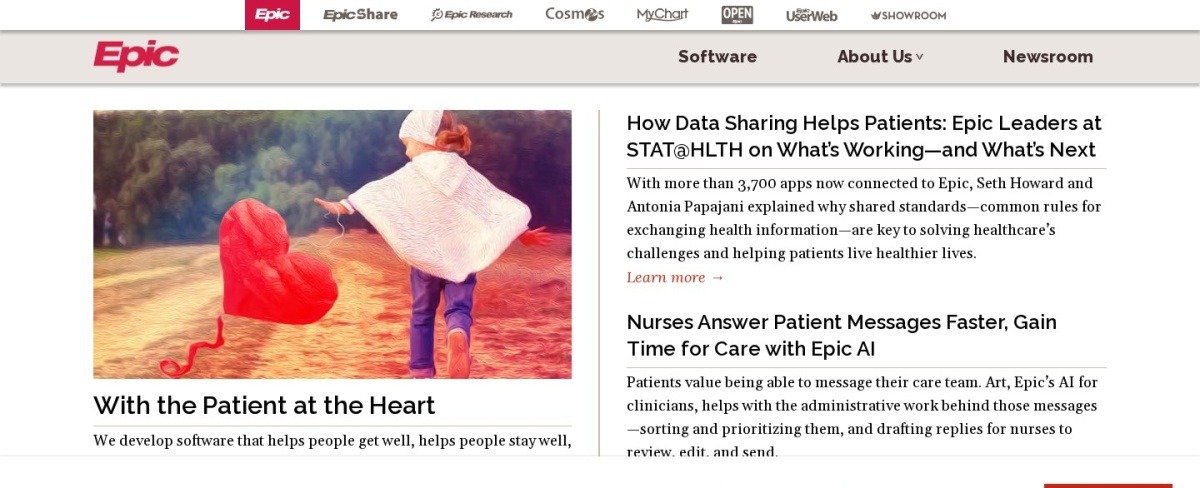
Epic is the electronic health record used by large hospitals and health systems, covering inpatient, ambulatory, emergency and billing work in one record. Its deficiency tracking and chart completion dashboards show which charts still need a signature, and its MyChart portal gives patients access to results and messages. Epic lists more than 3,700 apps connected to its platform.
The trade off is scale and cost. G2 reviewers report an average implementation time of 9 months, and pricing is by quote only, so smaller hospitals face a long, expensive rollout. It suits large hospitals and health systems that want one record for clinical, HIM and billing work.
What we like
Largest review base in this list, 942 G2 reviews
Deficiency and chart completion dashboards built in
MyChart patient portal included
More than 3,700 connected apps
Watch out for
Average implementation of 9 months on G2
Quote-only pricing with no published starting price
Steep learning curve with many ways to do one task
Enterprise pricing is by quote; implementation averages 9 monthsVisit epic.com
02
Hyland OnBase
4.4/5on G2 (324 reviews, checked Nov 2026)
PricingCustom/yr
Best HIM-specific record tracking
SettingHospitals on OnBase
Record trackingDeficiency tables & coding
Starting priceQuote only
G2 rating4.4/5, 324 reviews
hyland.com
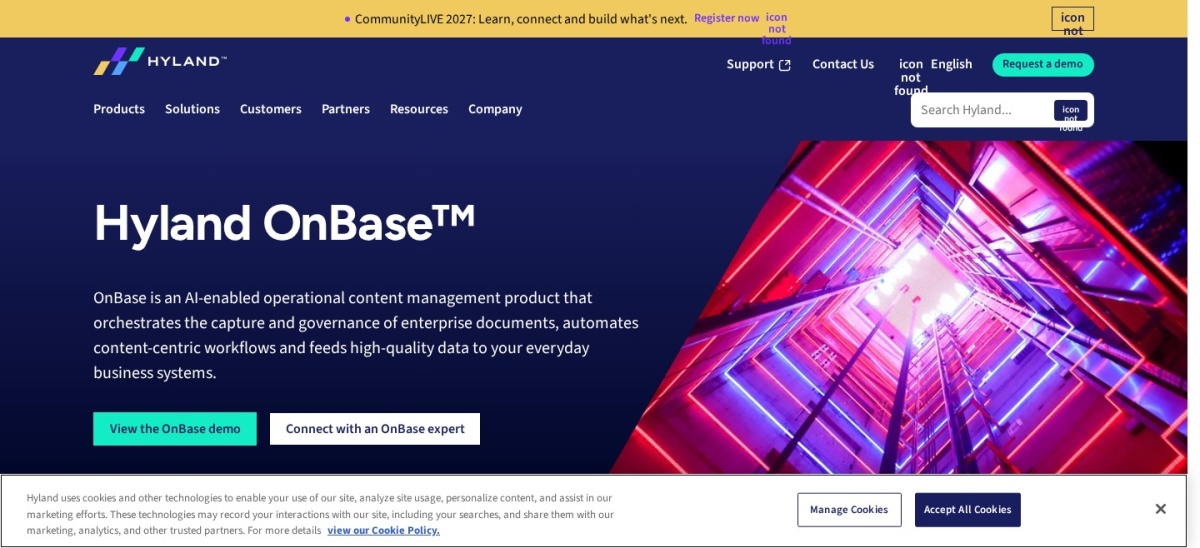
Hyland OnBase homepage, captured Nov 2026.
Hyland OnBase is an enterprise content platform whose HIM tools handle capture, indexing, storage, auditing and physician completion of unstructured records. Its deficiency tables work at both chart and document level, and coding workflow tables route work to the right staff. It connects with major EHRs so records open from inside the chart.
The trade off is weight. OnBase is a platform, not an app you switch on in an afternoon, so buyers should budget for setup, interface work with their EHR and ongoing administration. It suits hospitals that already run OnBase or need deep document governance.
What we like
Deficiency tables at chart and document level
Coding workflow tables route work to staff
Integrates with major EHRs
Covers the full record life cycle
Watch out for
Enterprise implementation usually needs an admin or partner
No published pricing
More than a small facility needs
Pricing is by quote; plan for setup and interface workVisit hyland.com
03
ModMed
4.5/5on G2 (362 reviews, checked Nov 2026)
PricingCustom/yr
Best specialty EHR for record tracking
SettingSpecialty practices
Record trackingChart & document workflows
Starting priceQuote only
G2 rating4.5/5, 362 reviews
modmed.com
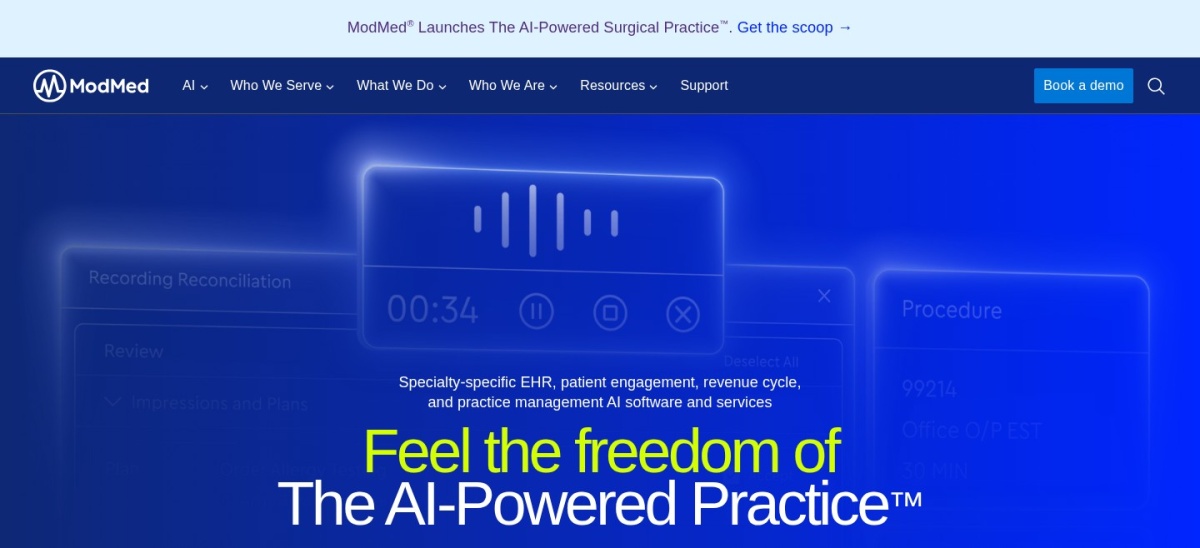
ModMed homepage, captured Nov 2026.
ModMed is a specialty EHR built for practices such as dermatology, orthopedics and ophthalmology, with charting, scheduling and billing in one cloud system. It is the highest-rated tool in this list on G2, at 4.5 out of 5 from 362 reviews, and reviewers praise its specialty workflows and ease of use.
The trade off is price and scope. ModMed publishes no list price, so every deal is a quote, and its depth is aimed at specialty practices rather than hospitals. It suits specialty groups that want charting built around their workflows instead of a general hospital record.
What we like
Highest G2 rating in this list at 4.5 out of 5
Specialty workflows for dermatology, orthopedics and eye care
Ease of use praised by reviewers
Charting, scheduling and billing in one system
Watch out for
No published price; every deal is a quote
High cost with frequent add-on charges flagged
Built for specialties, not hospitals
Pricing is by quote; ask what each specialty module addsVisit modmed.com
04
Tebra
4.1/5on G2 (268 reviews, checked Nov 2026)
Starts at$99/mo
Best value for small practices
SettingSmall practices
Record trackingChart & billing workflows
Starting price$99/provider/mo
G2 rating4.1/5, 268 reviews
tebra.com
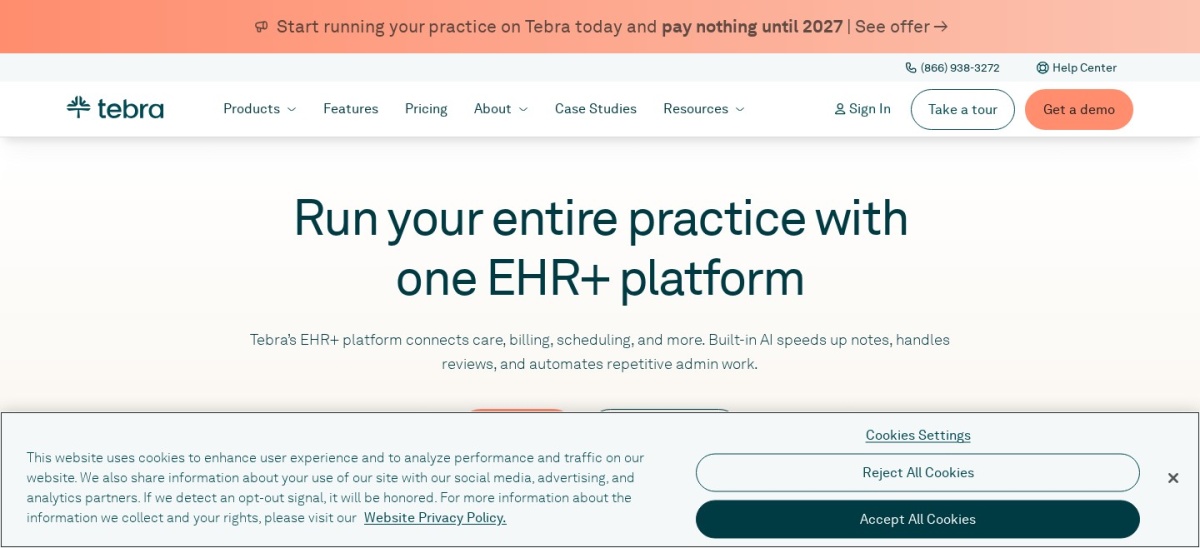
Tebra homepage, captured Nov 2026.
Tebra is a cloud EHR and practice management platform for small practices, combining charting, scheduling, billing and patient messaging. Its price starts at 99 dollars per provider per month, the cheapest published price in this list, and G2 reviewers rate it 4.1 out of 5 from 268 reviews.
The trade off is that the low entry price covers the basics. Billing, telehealth and AI note tools cost more, and some reviewers cite cost concerns as add-ons stack up. It suits small practices that want an affordable cloud record with charting and billing in one place.
What we like
Cheapest published price in this list
Ease of use praised by reviewers
Billing and claims built in
Fast setup, about 2 months on G2
Watch out for
Add-ons raise the cost above the entry price
Some reviewers cite cost concerns
Reporting limits noted by reviewers
Entry price is $99/provider/mo; billing and telehealth cost moreVisit tebra.com
05
AdvancedMD
4.1/5on Capterra (85 reviews, checked Nov 2026)
Starts at$429/mo
Best for multi-provider groups
SettingMulti-provider groups
Record trackingCharting & scheduling
Starting price$429/provider/mo
Capterra rating4.1/5, 85 reviews
advancedmd.com
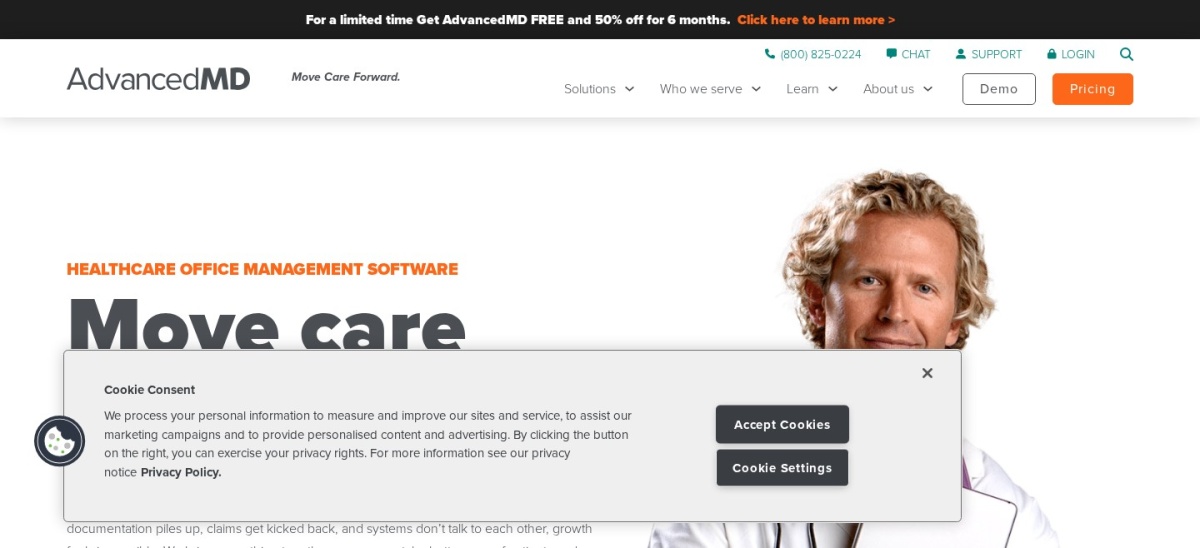
AdvancedMD homepage, captured Nov 2026.
AdvancedMD is a cloud platform for multi-provider practices that combines EHR, practice management and billing in one database. Its medical specialty packages start at 429 dollars per provider per month, and Capterra reviewers rate its billing services 4.1 out of 5 from 85 reviews.
The trade off is the learning curve. Reviewers call it the most feature-complete option for growing groups, but also the steepest to learn, and bundled prices climb toward 1,070 dollars per provider per month. It suits multi-provider groups that need scheduling, charting and billing depth in one system.
What we like
Scheduling depth for multi-location groups
EHR, practice management and billing in one database
Capterra rating of 4.1 out of 5 for billing services
Specialty packages for many practice types
Watch out for
Steepest learning curve in this list
Bundled prices climb toward $1,070 per provider per month
Practice Fusion is a cloud EHR for independent practices, with charting, e-prescribing, lab integrations and billing support. Its published price starts at 199 dollars per provider per month with a required annual commitment, and G2 reviewers rate it 3.8 out of 5 from 62 reviews.
The trade off is scale. Practice Fusion fits solo and small practices, but larger groups will outgrow its reporting and workflow depth, and some reviewers note price increases. It suits independent practices that want a low-cost cloud record without a long implementation.
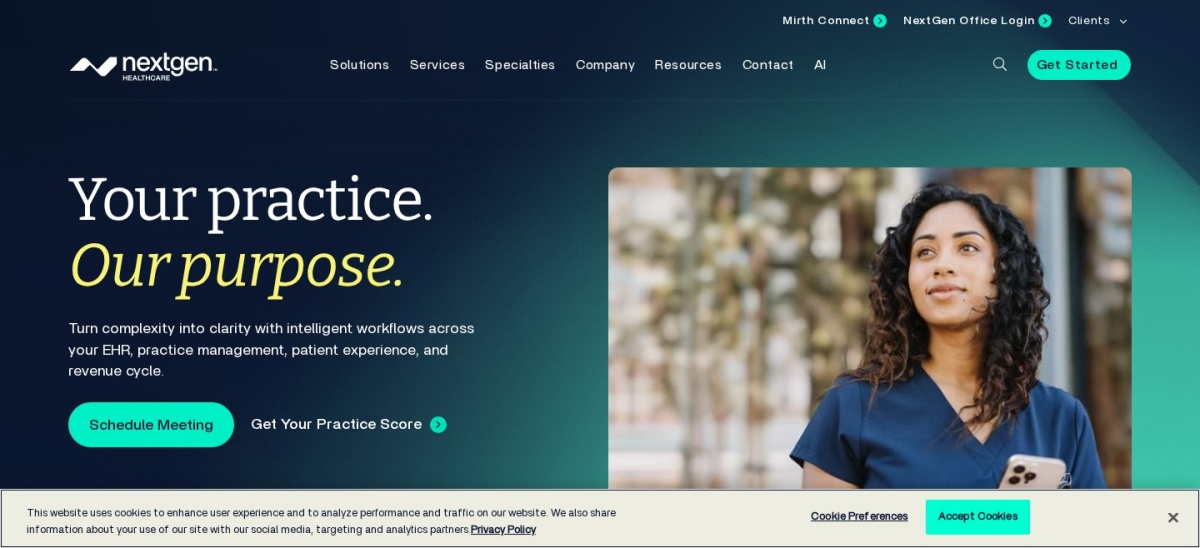
NextGen Healthcare is an ambulatory EHR with chart completion governed by physician sign-off, so deficiency tracking and closure workflows keep releases and coding moving. G2 reviewers rate it 3.7 out of 5 from 175 reviews, and report an average implementation time of 4 months.
The trade off is navigation. Reviewers praise its reporting and document management but cite extra clicks, system lags and support delays. Pricing is by quote only. It suits mid-size specialty groups that need governed chart completion without a hospital-scale system.
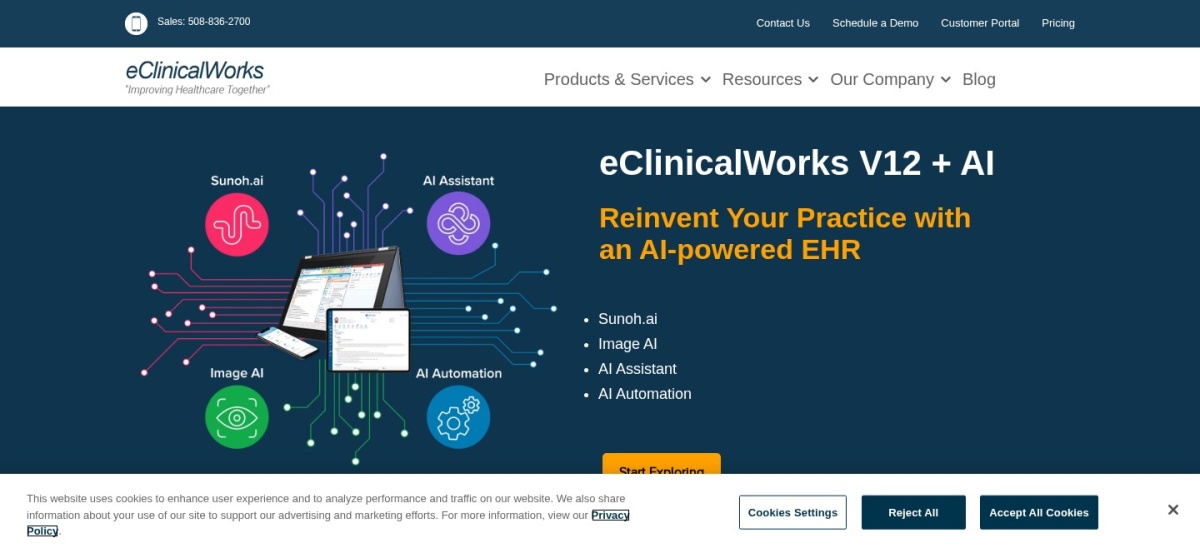
eClinicalWorks is a cloud EHR and practice management platform for ambulatory practices, used by more than 180,000 physicians and nurse practitioners according to the vendor. The EHR Only plan is 499 dollars per provider per month with no start-up costs, and the plan with practice management is 599 dollars.
The trade off is cost creep. Per-statement and per-message fees sit outside the monthly price, and the Sunoh AI scribe is a separate add-on. It suits ambulatory practices that want a published per-provider price and broad specialty coverage.
What we like
Published pricing with no start-up costs
Used by more than 180,000 physicians and nurse practitioners
Broad specialty coverage
Practice management plan adds scheduling and billing
Watch out for
Per-statement and per-message fees sit outside the price
athenaOne is a cloud platform from athenahealth that combines EHR, practice management and billing, with deficiency management tied to coding and claim readiness worklists. G2 reviewers rate it 3.4 out of 5 from 115 reviews, and report an average implementation time of 2 months.
The trade off is that athenaOne works on a percentage-of-collections model for many customers, so the bill grows with revenue, and pricing is by quote. It suits practices that want documentation, coding and claims in one coordinated workflow.
What we like
Deficiency management tied to coding and claims
Fast setup, about 2 months on G2
Documentation, coding and billing in one workflow
Strong payer and eligibility workflows
Watch out for
Quote-only pricing
Percentage-of-collections billing grows with revenue
Five of the nine vendors in this list publish no price. That is normal for hospital software, but it means the first quote is a starting point, not a price.
Ask every quote-only vendor to break out the same five lines: software, implementation, interfaces, training and annual support. Without that split, two quotes cannot be compared.
Also ask how the price moves as you grow. Per-provider, per-bed and percentage-of-collections models behave very differently when volume rises, so get the growth math in writing before signing.
How we chose
We started from the EHR and HIM platforms hospitals actually use for chart completion, deficiency tracking and release of information, then kept the nine with a verifiable user rating on G2 or Capterra.
Prices and ratings were checked on 29 November 2026. Five vendors publish no price and sell by quote, so the list shows Custom for them; the four published prices come from vendor pricing pages as reported in November 2026 checks.
We left out ROI-only vendors such as Verisma, whose tools publish no user ratings on G2, Capterra or Trustpilot, and paper-chart trackers with no review base. No vendor paid for a place, and we do not claim hands-on testing for this list.
How to choose HIM software for record tracking
Start with the three jobs record tracking covers, then match the tool to your size.
Name the job first. Chart completion, release of information and paper-chart location are different jobs. Pick the tool that covers your biggest backlog first.
Match the tool to your size. Epic and Hyland fit hospitals; Tebra, Practice Fusion and ModMed fit practices. A hospital-scale system will swamp a small team.
Ask for the full price. Quote-only vendors should break out implementation, interfaces and training. For per-provider tools, multiply by every provider, not just doctors.
Check deficiency workflows in a demo. Ask to see an unsigned chart move from flag to sign-off, and ask how releases are logged for audit.
FAQ
What is the top HIM software for record tracking in 2026?
Epic is the top pick for large hospitals, thanks to its deficiency tracking and chart completion dashboards and a 4.2 out of 5 G2 rating from 942 reviews. Hyland OnBase is the best HIM-specific option, and Tebra is the best value for small practices.
How much does HIM software for record tracking cost?
Published prices run from 99 dollars per provider per month for Tebra to 499 dollars for eClinicalWorks. Five of the nine vendors publish no price and sell by quote, so expect a negotiated contract with implementation fees on top.
Is there a free HIM software for record tracking?
No. None of the nine tools in this list has a free plan, and all of them charge per provider or by quote. Free options cover only narrow jobs, such as a single document scanner, not governed record tracking.
Which HIM software is best for small practices?
Tebra is the best fit for small practices, with the cheapest published price at 99 dollars per provider per month and a 4.1 out of 5 G2 rating. Practice Fusion is the low-cost alternative at 199 dollars per provider per month.
Epic vs Hyland OnBase: which is better for record tracking?
Epic is better if you want the clinical record and HIM workflows in one system, with deficiency dashboards built in. Hyland OnBase is better if you need deep document governance and already run OnBase for content.
What is release of information software?
Release of information software logs and fulfils requests for patient records from patients, lawyers, payers and other providers. It tracks each request from intake to delivery and keeps an audit trail showing who released what and when.
Do I need separate HIM software if I already have an EHR?
Usually not. Most EHRs in this list already include deficiency tracking and chart completion. Separate HIM software makes sense only for large release-of-information volumes or paper-chart rooms that the EHR does not cover.
SaaS SEO and WordPress specialist with about 8 years of experience. Rakib compares WordPress plugins, themes, hosting and software using public pricing, documentation and user reviews. See how we rank.