WLWPLegible EditorsLast verified 23 Nov 2026How we rank13 min read
★ Short answer
Epic is the best hospital software for large hospitals and health systems, rated 4.2 out of 5 on G2 from 942 reviews, with MyChart and more than 3,700 connected apps. Choose MEDITECH Expanse for independent hospitals, or Tebra for hospital-owned clinics that need published pricing.
How we make this list: we compare pricing pages, product documentation and public user reviews, then re-check every price before each update. No product paid for a place. Disclosure.
Epic leads on depth and scale: 4.2/5 on G2 from 942 reviews, MyChart for patients and 3,700+ connected apps.
Seven of the nine systems sell by quote only; only eClinicalWorks ($499/provider/mo) and Tebra ($99/provider/mo) publish a starting price.
MEDITECH Expanse is the strongest fit for independent and community hospitals, rated 3.1/5 on G2 from 116 reviews.
TruBridge pairs its Evident Thrive EHR with revenue cycle services for rural hospitals, serving more than 1,500 clients.
G2 ratings across this list run from 3.1 to 4.2, so shortlist by hospital size and inpatient needs, not by rating alone.
What hospital software has to cover
Hospital software is mostly the electronic health record, or EHR. It has to join inpatient care, the emergency department, surgery, pharmacy, labs and billing into one patient record.
Size decides the shortlist. Large health systems need the depth of Epic or Oracle Health, while independent and community hospitals fit MEDITECH Expanse, Altera Sunrise or TruBridge better.
Patient records are sensitive data, so security and backups belong in the buying decision, not after it. Our guide on how to run a WordPress security audit covers the checks that apply to any system holding records.
Ask for a demo built around your own workflows: admissions, orders, e-prescribing, lab results and discharge, plus how the system shares data with other hospitals.
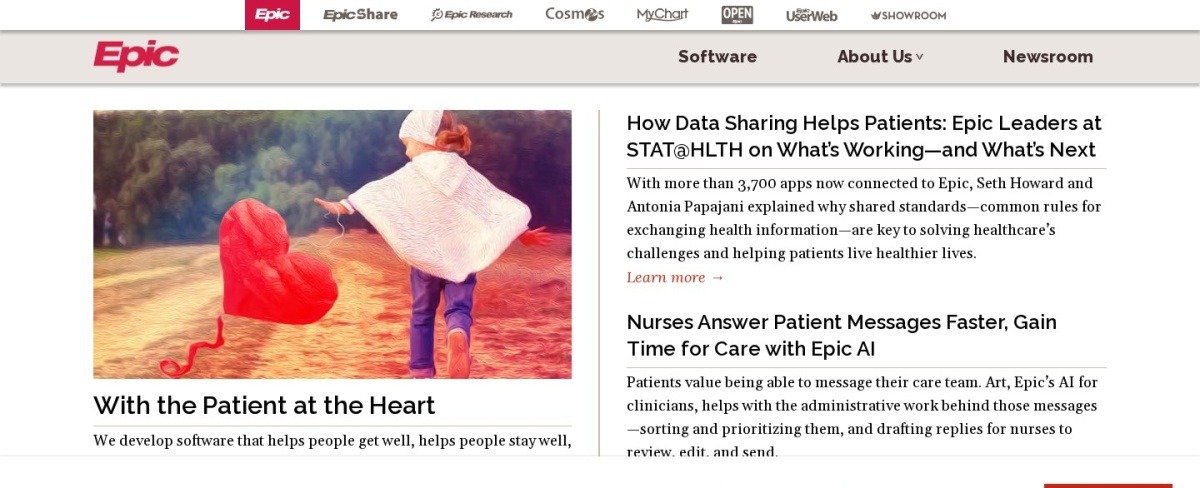
Epic is the electronic health record used by large hospitals and health systems for inpatient care, emergency, surgery, pharmacy and billing in one record. Its MyChart portal lets patients view results, message care teams and manage appointments, and Epic lists more than 3,700 apps connected to its platform.
The trade off is scale and cost. G2 reviewers report an average implementation time of 9 months, and pricing is by quote only, so smaller hospitals face a long, expensive rollout. It suits large hospitals and health systems that need deep inpatient coverage and can staff the project.
What we like
Deepest inpatient coverage in this list
MyChart is the best-known patient portal
More than 3,700 connected apps
Highest G2 rating here, from 942 reviews
Watch out for
Quote-only pricing with no published starting price
Average implementation of 9 months on G2
Too large and costly for small hospitals
Pricing is by quote and depends on organisation sizeVisit epic.com
02
Oracle Health
3.5/5on G2 (239 reviews, checked Nov 2026)
PricingCustom/yr
Best cloud EHR for large hospitals
SettingLarge hospitals & systems
EHROracle Health EHR (ex-Cerner)
Starting priceQuote only
G2 rating3.5/5, 239 reviews
oracle.com
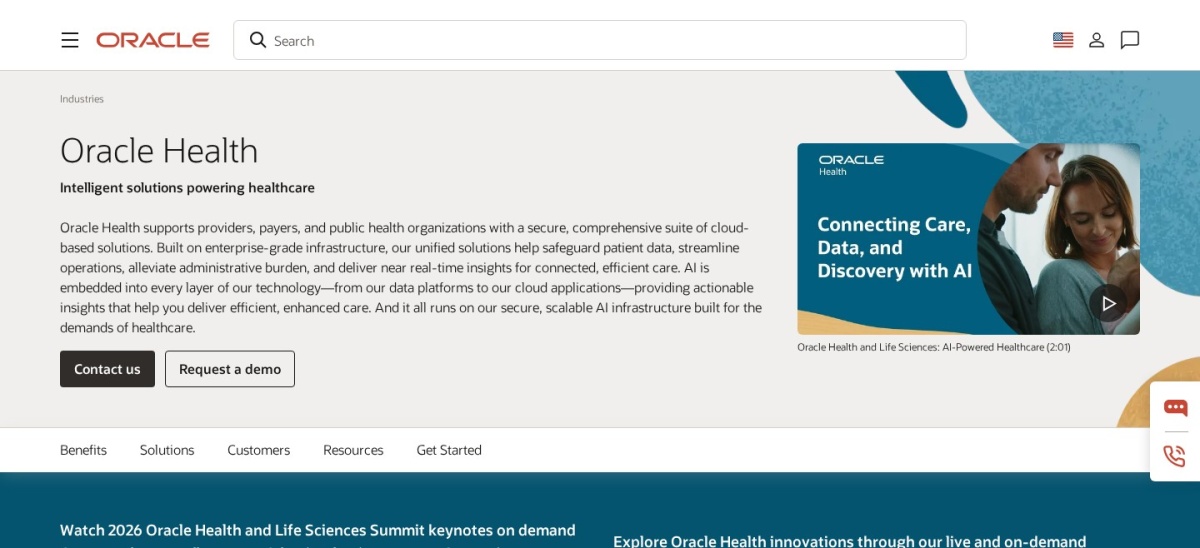
Oracle Health homepage, captured Nov 2026.
Oracle Health is the cloud-based EHR built on the former Cerner system, which Oracle acquired in 2022. It covers clinical care, service lines, revenue cycle and analytics, with AI built into documentation and reporting, and a fully managed delivery model for community and rural hospitals.
The trade off is time and complexity. G2 reviewers report an average implementation of 7 months, and pricing is by quote only, so costs stay unclear until late in the sales process. It suits large hospitals already running Oracle systems or moving their EHR to the cloud.
What we like
Full clinical, financial and analytics suite
AI built into documentation and reporting
Managed delivery model for smaller hospitals
Strong interoperability console
Watch out for
Quote-only pricing with no published starting price
Average implementation of 7 months on G2
Reviewers report slow performance at times
Pricing is by quote; managed delivery available for smaller hospitalsVisit oracle.com
03
MEDITECH Expanse
3.1/5on G2 (116 reviews, checked Nov 2026)
PricingCustom/yr
Best for independent hospitals
SettingIndependent & community hospitals
PlatformExpanse EHR
Starting priceQuote only
G2 rating3.1/5, 116 reviews
ehr.meditech.com
MEDITECH Expanse homepage, captured Nov 2026.
MEDITECH Expanse is an EHR built for independent and community hospitals, covering inpatient, emergency, ambulatory and ancillary care in one record. It adds AI-driven insights for clinicians and leaders, plus Traverse Exchange, its network for sharing patient data with other organisations.
The trade off is reviewer satisfaction. Expanse is rated 3.1 out of 5 on G2 from 116 reviews, the lowest score among the hospital EHRs here, with reviewers citing an older interface and limited customisation. It suits independent hospitals that want one system for the whole hospital at a price reviewers describe as affordable for most facilities.
What we like
Built for independent and community hospitals
One record across inpatient and ambulatory care
Traverse Exchange for sharing patient data
Reviewers describe it as affordable for most facilities
athenaOne is a cloud EHR, billing and patient engagement platform from athenahealth, used by more than 180,000 clinicians. It combines charting, scheduling, claims and an embedded ambient scribe, and athenahealth reports that users see a 2-6% increase in collections after switching.
The trade off is price opacity and billing gripes. Pricing is by quote only, and G2 reviewers report rising costs and billing issues after the first period. It suits hospital-owned ambulatory practices that want billing and EHR from one vendor and a 2-month average implementation.
What we like
EHR, billing and engagement in one platform
More than 180,000 clinicians on the network
Embedded ambient scribe for notes
Fastest average implementation here at 2 months
Watch out for
Quote-only pricing with no published starting price
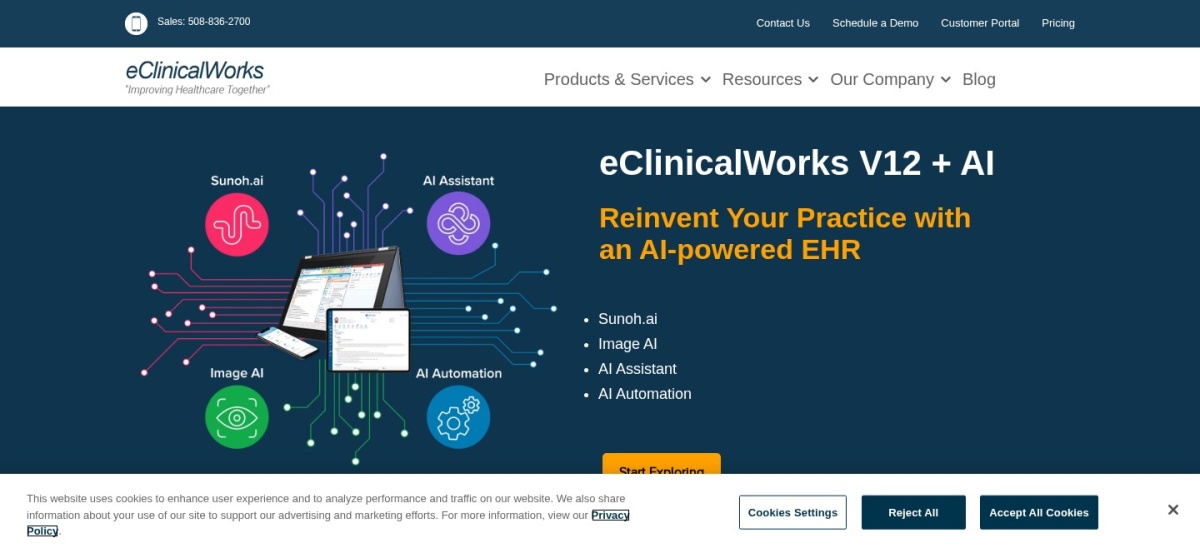
eClinicalWorks is a cloud EHR used by more than 180,000 physicians and nurse practitioners across 110,000 facilities. Version 12 adds AI tools including Sunoh.ai, an AI scribe, healow Genie for patient calls, and Image AI, alongside e-prescribing, telehealth and practice management.
The trade off is the per-provider price. EHR only starts at $499 per provider per month, or $599 with practice management, and revenue cycle services cost 2.9% of collections. It suits clinics and hospital-owned practices that want a published price and a large, established user base.
What we like
One of only two published prices in this list
110,000+ facilities run on the system
AI scribe and patient-call tools included in V12
No start-up costs for the standard plans
Watch out for
$499 per provider per month adds up fast
Revenue cycle service costs 2.9% of collections
Reviewers report an outdated interface in places
EHR with practice management is $599/provider/mo; RCM is 2.9% of collectionsVisit eclinicalworks.com
06
NextGen Healthcare
3.7/5on G2 (175 reviews, checked Nov 2026)
PricingCustom/yr
Best for groups that may grow
SettingMid-size groups & hospitals
EditionsOffice & Enterprise
Starting priceQuote only
G2 rating3.7/5, 175 reviews
nextgen.com
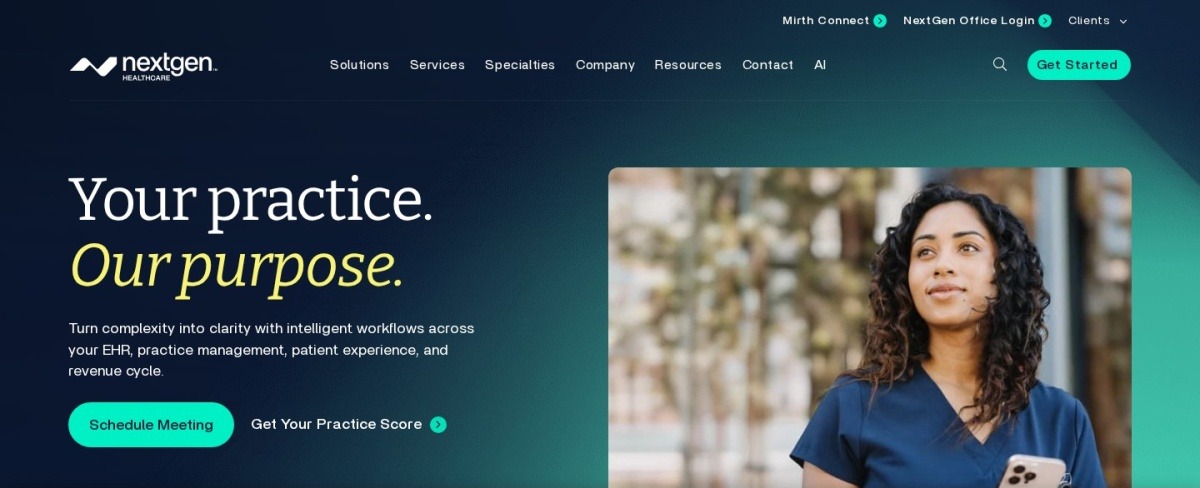
NextGen Healthcare homepage, captured Nov 2026.
NextGen Healthcare is an EHR vendor selling its system in two editions: NextGen Office for smaller practices and NextGen Enterprise for larger groups. Both cover charting, scheduling, billing and patient engagement, with a mobile EHR, Ambient Assist for AI notes, and reminders in more than 33 languages.
The trade off is quote-only pricing and a long rollout. G2 reviewers report an average implementation of 4 months, and third-party estimates put NextGen Office at $299 to $549 per provider per month, which NextGen does not publish. It suits groups that may grow into an enterprise system.
What we like
Two editions that scale with group size
Mobile EHR with notes flowing to the chart
Ambient Assist AI scribe
Reminders in more than 33 languages
Watch out for
Quote-only pricing with no published starting price
Average implementation of 4 months on G2
Enterprise customisation adds complexity
Pricing is by quote; Office and Enterprise are priced separatelyVisit nextgen.com
07
Altera Sunrise
3.2/5on G2 (19 reviews, checked Nov 2026)
PricingCustom/yr
Best for hospitals staying with Altera
SettingHospitals & health systems
PlatformSunrise EHR
Starting priceQuote only
G2 rating3.2/5, 19 reviews
alterahealth.com
Altera Sunrise homepage, captured Nov 2026.
Altera Sunrise is the hospital EHR spun out of Allscripts in May 2022, covering inpatient, emergency and ambulatory care. Its Sunrise Thread AI pilot adds ambient note generation, and the Paragon Denali platform moves the system to a cloud-based, containerised setup.
The trade off is a thin review base. Sunrise is rated 3.2 out of 5 on G2 from only 19 reviews, so the score says little about current performance, and pricing is by quote only. It suits hospitals already running Sunrise or Paragon that want to stay with Altera rather than migrate.
What we like
Full inpatient EHR for hospitals
Sunrise Thread AI for ambient notes
Paragon Denali moves the platform to the cloud
Higher G2 ease-of-use score than MEDITECH Expanse
Watch out for
Only 19 G2 reviews, so the rating is thin
Quote-only pricing with no published starting price
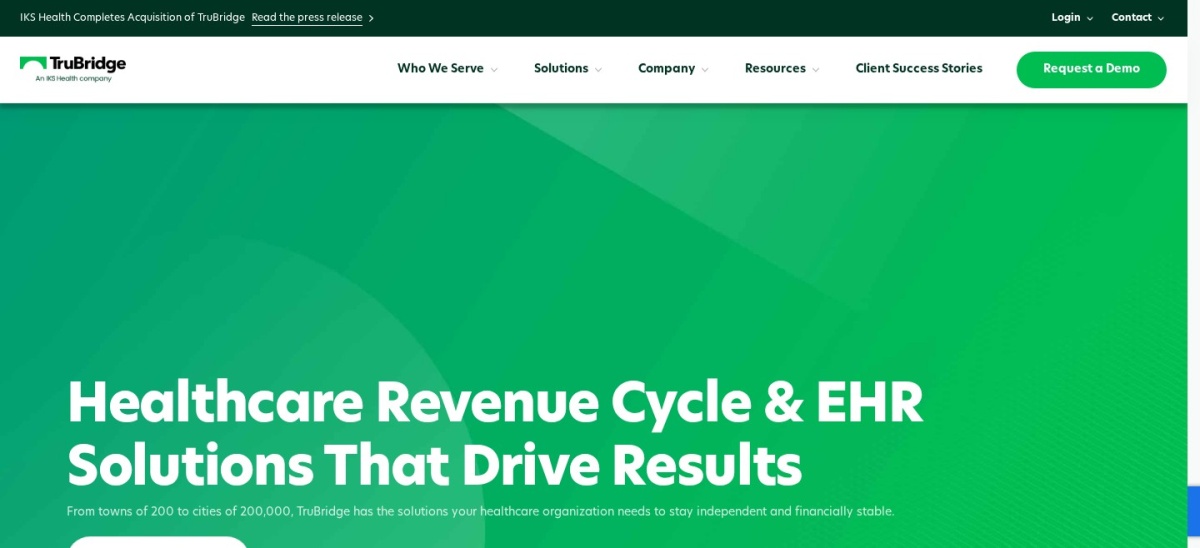
TruBridge is the former CPSI, rebranded in 2024, and its Evident Thrive EHR serves rural and community hospitals. It pairs the EHR with revenue cycle services, medical coding and patient engagement, and the company says it serves more than 1,500 clients with over 45 years in healthcare.
The trade off is scope and a thin review base. TruBridge is aimed at rural and community hospitals, so large systems will find less clinical depth than Epic or Oracle, and its Capterra rating of 4.0 comes from only 4 reviews. It suits small hospitals that want EHR and billing help from one partner.
What we like
EHR and revenue cycle from one vendor
Built for rural and community hospitals
More than 1,500 clients, per the vendor
HFMA Peer Reviewed revenue cycle products
Watch out for
Only 4 Capterra reviews, so the rating is thin
Quote-only pricing with no published starting price
Narrow fit for large health systems
nTrust has no upfront costs; TruBridge takes a percentage of collectionsVisit trubridge.com
09
Tebra
4.1/5on G2 (266 reviews, checked Nov 2026)
Starts at$99/mo
Best value for hospital-owned clinics
SettingHospital-owned clinics
EHR Starter$99/provider/mo, non-physician
Practice Essentials$599/provider/mo, physician
G2 rating4.1/5, 266 reviews
tebra.com
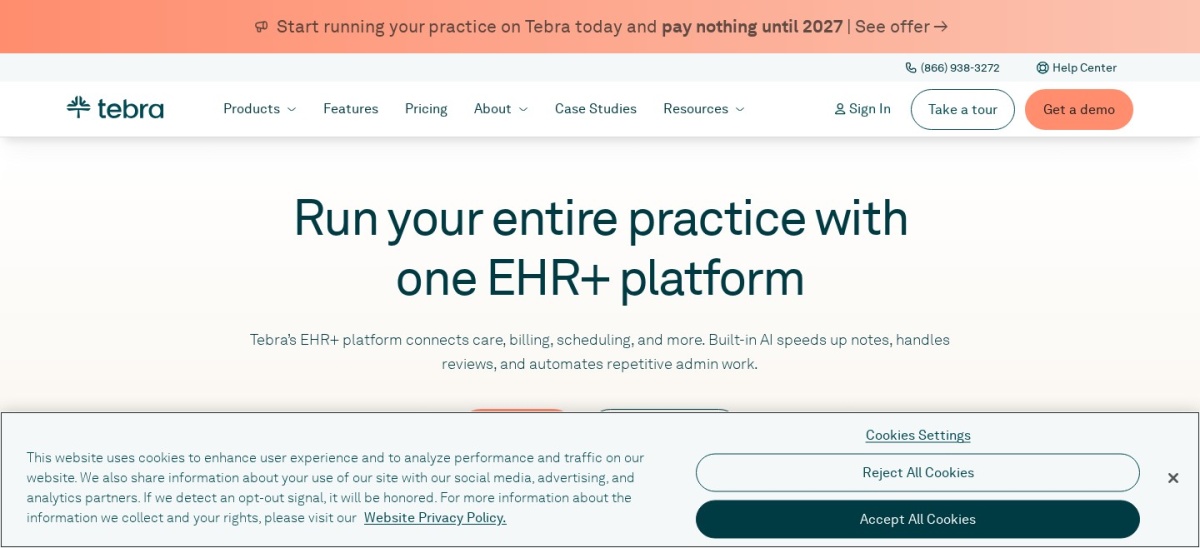
Tebra homepage, captured Nov 2026.
Tebra is the platform formed in 2021 from the Kareo and PatientPop merger, combining EHR, billing, telehealth and patient engagement. EHR Starter starts at $99 per provider per month for non-physicians and $199 for physicians, for practices submitting fewer than 100 claims a month.
The trade off is the bundle catch. EHR Starter requires the Billing Starter plan at the same price, so the real entry cost is $198 per provider per month for a non-physician, and AI Note Assist adds $99. It suits hospital-owned clinics that want one system and a published price.
What we like
Lowest published starting price in this list
EHR, billing and telehealth in one platform
Subscription pricing, not a share of collections
Low-volume pricing under 100 claims a month
Watch out for
EHR Starter requires Billing Starter too
Physician pricing starts at $199 per provider per month
AI add-ons cost $99 or more per provider per month
EHR Starter requires Billing Starter at the same priceVisit tebra.com
Why most hospital software is quote-only
Seven of the nine tools here publish no price. Hospital deals bundle licences, implementation, migration, training and hosting, so vendors price each hospital separately.
Only eClinicalWorks and Tebra publish a starting price: $499 and $99 per provider per month. Even those figures exclude add-ons such as AI scribes and revenue cycle services.
Ask every vendor for the same written quote: licences, implementation months, data migration, training and yearly support, so the totals compare like for like.
How we chose
We started from the hospital EHRs with the largest presence in G2's EHR category, then kept systems with real inpatient coverage and a current vendor site.
Prices and ratings were checked on 23 November 2026. Prices come from vendor pricing pages where published; where a vendor shows no price, the list says quote only. Ratings come from G2, except TruBridge, which comes from Capterra.
We left out systems with no hospital inpatient product and vendors without a public review base. No vendor paid for a place, and we do not claim to have used these tools ourselves.
How to choose hospital software
Start with your hospital's size and inpatient needs, then work through price and proof.
Map your inpatient needs first. List what must run in one record: admissions, emergency, surgery, pharmacy, labs and billing. Ambulatory-only tools fall short on inpatient wards.
Shortlist by hospital size. Large systems fit Epic or Oracle Health. Community hospitals fit MEDITECH Expanse, Altera Sunrise or TruBridge. Hospital-owned clinics fit athenaOne, eClinicalWorks or Tebra.
Get the full price in writing. Most vendors sell by quote only, so ask for licences, implementation, migration, training and yearly support in one written total before you compare.
Check security and backup duties. Patient data needs strong access controls and a tested backup plan. See our guide on how to run a WordPress security audit for the checks to run on any system holding records.
FAQ
What is the best hospital software?
Epic is the best hospital software for large hospitals and health systems. It is rated 4.2 out of 5 on G2 from 942 reviews, includes the MyChart patient portal, and lists more than 3,700 connected apps.
How much does hospital software cost?
Most hospital software sells by quote only, so there is no list price to compare. The two published starting prices here are eClinicalWorks at $499 per provider per month and Tebra at $99 per provider per month, before add-ons and implementation.
What is the best hospital software for small hospitals?
MEDITECH Expanse and TruBridge fit small hospitals best. Expanse is built for independent and community hospitals, while TruBridge pairs its Evident Thrive EHR with revenue cycle services for rural hospitals.
Is Epic or Oracle Health better?
Epic rates higher on G2 at 4.2 out of 5 from 942 reviews, against 3.5 out of 5 from 239 reviews for Oracle Health. Epic also leads on ease of use and support scores, though its average implementation runs longer at 9 months against 7 for Oracle Health.
Do any hospital EHRs have a free plan?
No. None of the nine systems in this list offers a free plan. Vendors sell demos and quotes instead, so expect a sales conversation and a written quote before you see a price.
How long does it take to switch hospital software?
G2 reviewers report average implementation times of 2 months for athenaOne, 4 months for NextGen Healthcare, 7 months for Oracle Health and 9 months for Epic. Data migration, training and go-live support add time on top of those figures.