WLWPLegible EditorsLast verified 23 Nov 2026How we rank14 min read
★ Short answer
Epic is the best EMR and EHR software for large health systems, rated 4.2 out of 5 from 938 G2 reviews. Pick ModMed for specialty charting at 4.5 out of 5, or Practice Fusion for the lowest listed price at $199 per provider per month.
How we make this list: we compare pricing pages, product documentation and public user reviews, then re-check every price before each update. No product paid for a place. Disclosure.
Epic leads for hospitals and large groups, rated 4.2 out of 5 from 938 G2 reviews, but it publishes no price.
ModMed has the highest G2 rating in this list at 4.5 out of 5, built for specialty practices.
Only 4 of the 9 vendors publish a starting price: Tebra from $99, Practice Fusion $199, AdvancedMD $429 and eClinicalWorks $499 per provider per month.
Practice Fusion is the cheapest listed EHR at $199 per provider per month, but the price needs a 12-month commitment.
athenaOne and Oracle Health are quote-only enterprise picks; athenaOne takes about 2 months to implement and Oracle Health about 7, according to G2.
What to look for in EMR and EHR software
EMR and EHR software holds the patient chart, orders, prescriptions and billing for a practice. The wrong choice follows a practice for years, because moving charts between systems is slow and costly.
Start with size. Hospitals need an enterprise record such as Epic or Oracle Health, while a solo practice needs a lighter cloud EHR such as Practice Fusion or Tebra.
Price is the hardest part to compare. Five of the nine vendors here publish no price at all, so a quote is the only way to compare them. Patient data also brings strict protection duties; our guide on GDPR compliance for WordPress explains the data protection basics that apply to any system holding personal records.
Ratings help, but read them with care. G2 scores in this list range from 3.4 to 4.5 out of 5, and the highest-rated tools are specialty systems, not all-rounders.
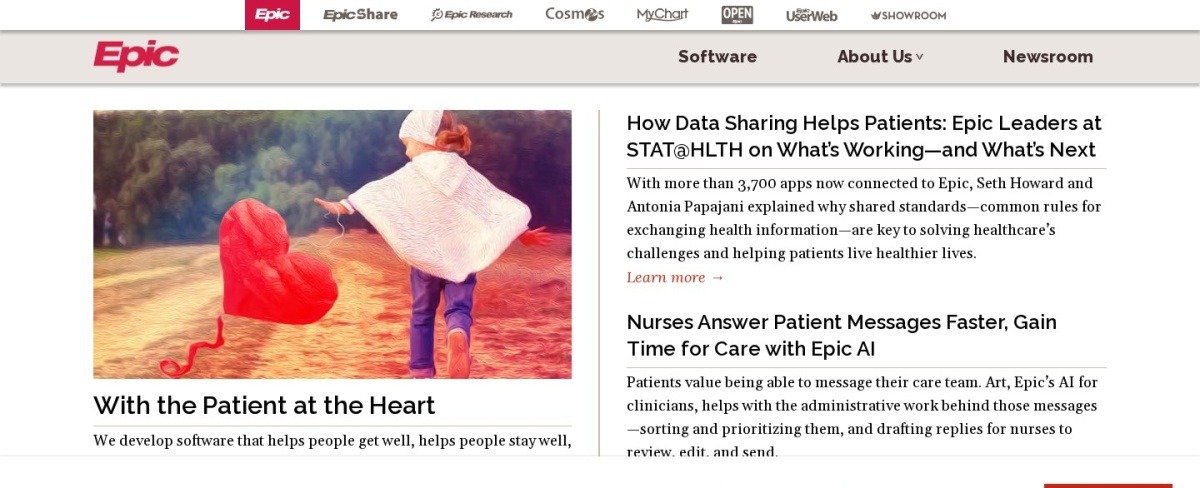
Epic is the EHR used by many of the largest hospitals and health systems, covering inpatient, ambulatory, emergency and billing work in one record. Its MyChart portal gives patients access to results, messages and scheduling, and Epic says more than 3,700 apps now connect to its platform.
The trade off is fit. Epic is built for large organisations, so a small independent practice will find the sales process, the implementation and the cost out of reach. It suits hospitals and large groups that want one record across every department.
What we like
One record across inpatient, ambulatory and billing
Largest review base in this list, 938 G2 reviews
MyChart portal patients already know
More than 3,700 connected apps
Watch out for
No published price
Not built for small independent practices
Long implementation projects
Pricing is by quote and depends on organisation sizeVisit epic.com
02
ModMed
4.5/5on G2 (362 reviews, checked Nov 2026)
PricingCustom/yr
Best for specialty charting speed
SpecialtiesDermatology, eye, ortho, GI
ChartingEMA adaptive notes
Starting priceQuote only
G2 rating4.5/5, 362 reviews
modmed.com
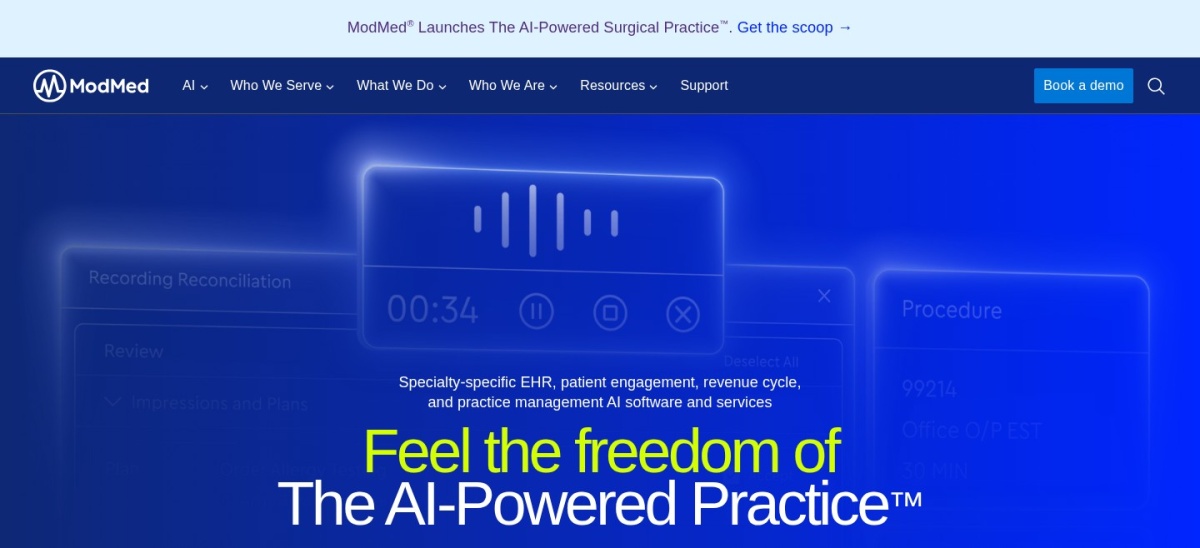
ModMed homepage, captured Nov 2026.
ModMed is a specialty EHR built around EMA, its charting system for dermatology, ophthalmology, orthopedics, gastroenterology and other specialties. EMA learns how each provider documents and suggests ICD-10 codes from the chart, and the suite adds practice management, billing and patient engagement around it.
The trade off is price. ModMed publishes no price list, and third-party comparisons put the full suite near $500 per provider per month, so the real total only comes from a quote. It suits high-volume specialty practices where faster charting pays for the premium.
What we like
Highest G2 rating in this list at 4.5 out of 5
Charting built for each specialty, not generic
AI scribe and billing in the same suite
Suggested codes cut documentation time
Watch out for
No published price
Premium pricing for the full suite
Specialty focus limits general-practice fit
Get an itemised quote before comparing with flat-priced EHRsVisit modmed.com
03
Tebra
4.1/5on G2 (266 reviews, checked Nov 2026)
Starts at$99/mo
Best value for independent practices
EHR Starter$99/mo, non-physician
Claim capUnder 100/mo
AI Note Assist$99/mo add-on
G2 rating4.1/5, 266 reviews
tebra.com
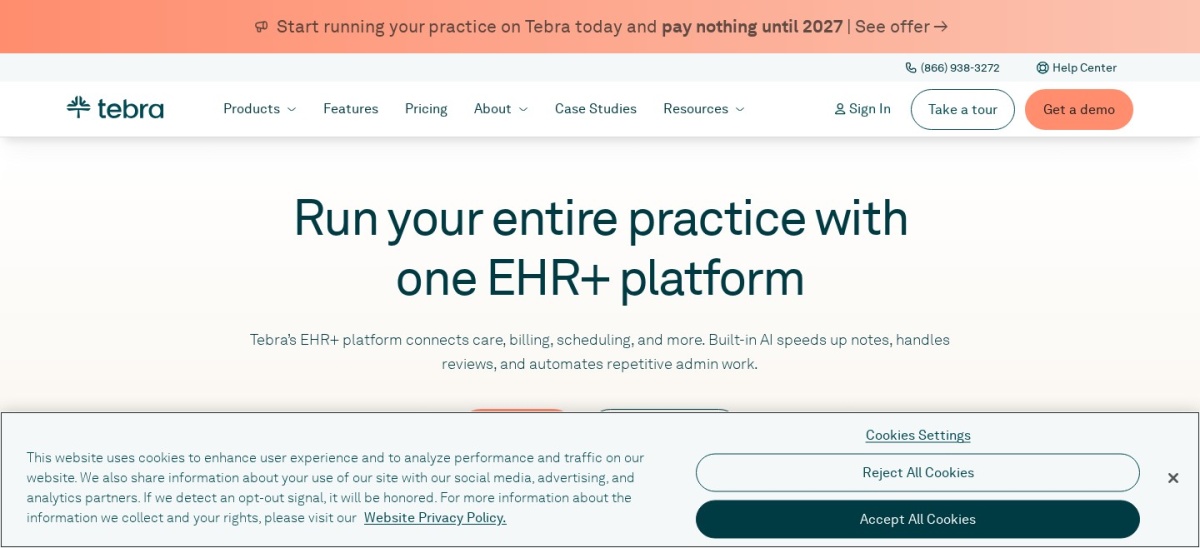
Tebra homepage, captured Nov 2026.
Tebra is the platform formed in 2021 from the Kareo and PatientPop merger, combining EHR, billing, scheduling, telehealth and patient growth tools for independent practices. EHR Starter starts at $99 per provider per month for non-physician providers under 100 claims a month, with AI Note Assist as a $99 add-on.
The trade off is the fine print. EHR Starter requires Billing Starter too, also from $99, and physicians pay $199 for EHR Starter at the same low volume. It suits small independent practices that want billing and patient engagement in the same system as the chart.
What we like
Lowest listed starting price in this list
Billing, scheduling and marketing in one system
Per-provider pricing, not per staff seat
Free trial offered
Watch out for
EHR Starter needs Billing Starter as well
Physician price is double the non-physician price
Starter tiers cap at 100 claims a month
Budget for both starters, not just the $99 EHR figureVisit tebra.com
04
Practice Fusion
3.8/5on G2 (63 reviews, checked Nov 2026)
Starts at$199/mo
Best for a clear low listed price
Starting price$199/provider/mo
ContractAnnual commitment
Staff licenses3 signing, unlimited rest
G2 rating3.8/5, 63 reviews
practicefusion.com
Practice Fusion homepage, captured Nov 2026.
Practice Fusion is a cloud EHR for independent practices, owned by Veradigm, with charting templates, e-prescribing including controlled substances, lab and imaging orders and a patient portal. The pricing page lists $199 per provider per month, billed monthly with a required annual commitment, and each license includes 3 signing staff licenses.
The trade off is scope. Billing services, premium engagement and the AI scribe are priced by quote, and the $199 price excludes taxes. It suits a small practice that wants a listed price and a free trial before signing a year-long contract.
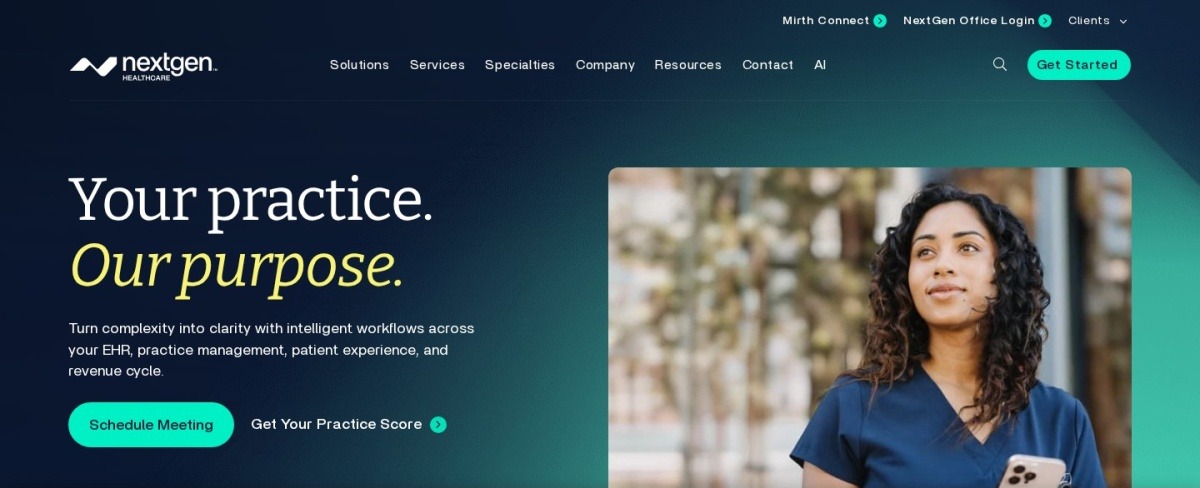
NextGen Healthcare is an ambulatory EHR with practice management and revenue cycle services, sold as NextGen Office for smaller specialty practices and NextGen Enterprise for larger groups. It covers charting, scheduling, billing and reporting, with templates shaped for each specialty it serves.
The trade off is opacity. NextGen publishes no price, and third-party estimates put NextGen Office near $299 to $549 per provider per month, so buyers need an itemised quote. It suits mid-size specialty groups with an administrator who can own the system.
What we like
Two editions for small and large groups
Specialty templates across many fields
Revenue cycle services in the same vendor
About 4 months to implement, per G2
Watch out for
No published price
Needs dedicated admin time to run well
Reviewers report system lags
Ask for implementation, training and support itemised in the quoteVisit nextgen.com
06
eClinicalWorks
3.7/5on G2 (158 reviews, checked Nov 2026)
Starts at$499/mo
Best for published per-provider pricing
EHR Only$499/provider/mo
With practice mgmt$599/provider/mo
RCM service2.9% of collections
G2 rating3.7/5, 158 reviews
eclinicalworks.com
eClinicalWorks homepage, captured Nov 2026.
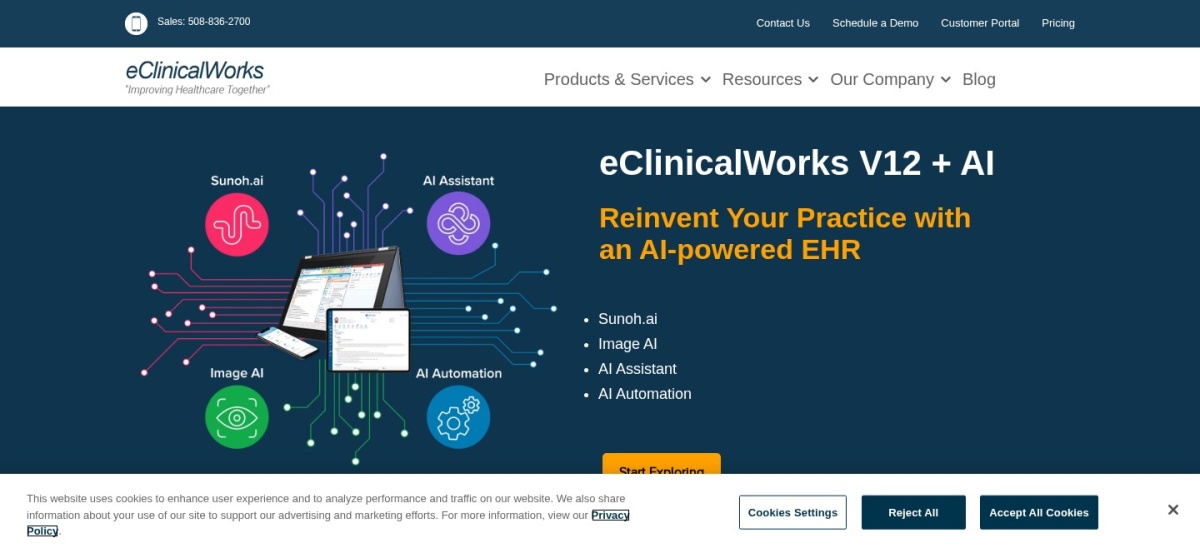
eClinicalWorks is a cloud EHR and practice management platform for ambulatory practices, used by more than 180,000 physicians and nurse practitioners according to the vendor. The EHR Only plan is $499 per provider per month with no start-up costs, and the plan with practice management is $599.
The trade off is cost creep. Per-statement and per-message fees sit outside the monthly price, and the Sunoh.ai scribe is a separate add-on. It suits multi-specialty practices that want a published price before they talk to sales.
What we like
Published prices with no start-up costs
Used by more than 180,000 physicians and NPs
Patient portal, mobile app and e-prescribing included
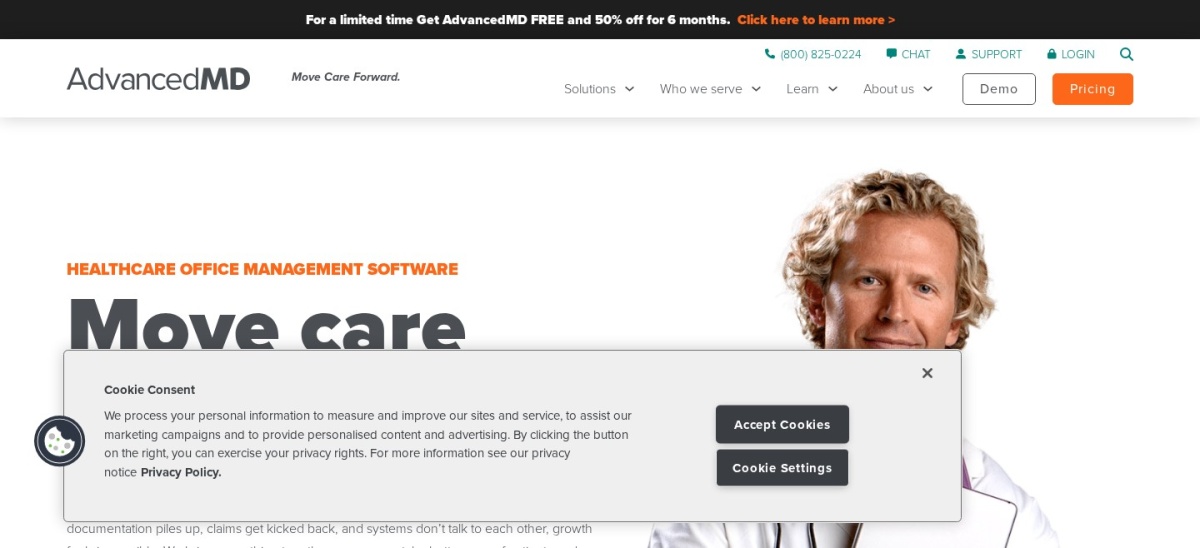
AdvancedMD is a cloud suite that combines EHR, practice management, billing and patient engagement for independent ambulatory practices. Medical specialties are listed at $429 to $1,070 per provider per month, with mental health from $130, and a per-claim option runs $0.87 to $1.74 per claim.
The trade off is that $429 is a floor. Full bundles cost more, and add-ons for eligibility, fax and e-prescribing raise the total further. It suits growing multi-specialty groups that want modular pricing and a path to outsourced billing.
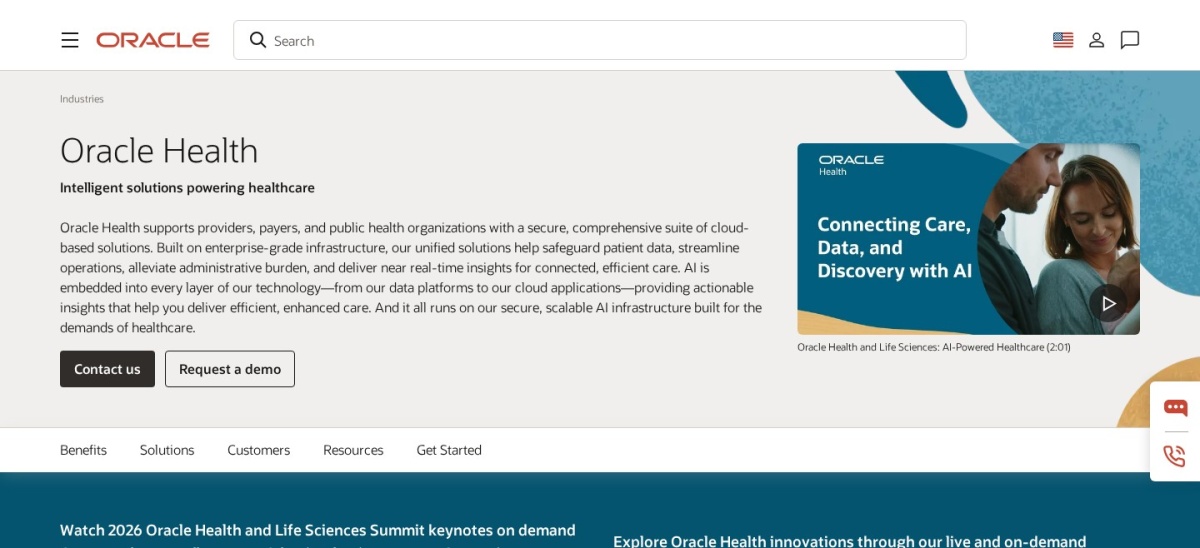
Oracle Health is the former Cerner EHR, now part of Oracle, built for hospitals and large health systems. It covers inpatient and ambulatory charting, orders, labs and population health on Oracle infrastructure, with AI features built into the platform. G2 reviewers report about 7 months to implement.
The trade off is complexity. Oracle Health is an enterprise system that needs months of implementation and deep configuration, and it publishes no price. It suits large hospitals already invested in Oracle systems that need one record across many departments.
What we like
Built for inpatient and ambulatory care together
Strong charting and decision support
Runs on Oracle cloud infrastructure
Large review base of 239 G2 reviews
Watch out for
No published price
About 7 months to implement, per G2
Reviewers report slow performance at times
Budget for months of implementation and configurationVisit oracle.com
09
athenaOne
3.4/5on G2 (115 reviews, checked Nov 2026)
PricingCustom/yr
Best for billing-led ambulatory practices
SettingAmbulatory practices
Implement timeAbout 2 months (G2)
Starting priceQuote only
G2 rating3.4/5, 115 reviews
athenahealth.com
athenaOne homepage, captured Nov 2026.
athenaOne is athenahealth's cloud platform for ambulatory practices, combining the EHR with billing, scheduling and patient engagement in one contract. It includes e-prescribing, lab orders, a patient portal and reporting, and G2 reviewers report about 2 months to implement.
The trade off is pricing. athenaOne publishes no list price and prices by quote, commonly tied to a share of practice collections, so costs rise with revenue. It suits insurance-heavy practices that want billing and the EHR from one vendor.
What we like
EHR, billing and engagement in one contract
Fastest implementation in this list, about 2 months
Five of the nine vendors in this list publish no price. That does not mean they are expensive, but it does mean the first quote is a starting point, not a final figure.
Ask for the per-provider monthly fee, the implementation fee, the cost of e-prescribing for controlled substances, and the price of the AI scribe, since each can sit outside the headline quote.
Get the contract length and the price rise at renewal in writing. Several G2 reviewers report price rises after the first year, so a low first-year figure can mislead.
How we chose
We started from the most widely used EHR and EMR systems for hospitals and ambulatory practices, then kept nine with a live product, a public homepage and a G2 review page.
Prices come from each vendor's pricing page, checked on 23 November 2026. Ratings and review counts come from G2 on the same day. Where a vendor shows no price, the list says quote only instead of using a third-party estimate as the price.
We left out small or discontinued EHR products with too few reviews to judge. No vendor paid for a place, and we do not claim hands-on testing for this list.
How to choose EMR and EHR software
Start with your practice size and specialty, then test the shortlist against price, charting and billing.
Match the system to your size. A solo practice wastes money on a hospital EHR, and a hospital cannot run on a solo-practice EHR. Shortlist by setting first.
Get every price in writing. Ask for the per-provider fee, implementation, e-prescribing and AI scribe costs. Quote-only vendors should itemise each line.
Check the charting workflow. Ask for a demo with your own common visit types. A system that needs many clicks per note will cost hours every week.
Confirm billing and support. Check whether billing is built in or an add-on, and what support hours and response times the contract promises.
FAQ
What is the best EMR and EHR software?
Epic is the best choice for large hospitals and health systems, rated 4.2 out of 5 from 938 G2 reviews. For a specialty practice, ModMed rates higher at 4.5 out of 5, and for a small practice Practice Fusion lists the lowest price at $199 per provider per month.
What is the difference between EMR and EHR software?
The terms are used for the same systems today. EMR once meant the record inside one practice, while EHR meant a record shared between providers. Vendors now sell one product under either name, so compare features and price, not the label.
How much does EHR software cost?
Listed prices in this list run from $99 per provider per month for Tebra EHR Starter to $499 for eClinicalWorks EHR Only. Five of the nine vendors publish no price, so most buyers need a written quote to compare real costs.
Which EHR is best for a small practice?
Practice Fusion suits a small practice best on price, at $199 per provider per month with a free trial. Tebra is the other low-cost option, with EHR Starter from $99 for non-physician providers under 100 claims a month.
Is there a free EHR?
No tool in this list has a free plan. Practice Fusion offers a free trial, and Tebra offers a free trial too. Free EHR products have largely disappeared, and the remaining low-cost options start near $99 to $199 per provider per month.
How long does it take to switch EHR systems?
G2 reviewers report about 2 months to implement athenaOne, about 4 months for NextGen Healthcare and about 7 months for Oracle Health. Large hospital systems take longer, and data migration adds weeks on top of training.