Float is the best team capacity planning software for IT teams, with live capacity views, time off and margin tracking from $7 per scheduled person a month. Runn suits teams that plan months ahead with scenarios, while Resource Guru is the cheapest full planner at $5 a person a month.
How we make this list: we compare pricing pages, product documentation and public user reviews, then re-check every price before each update. No product paid for a place. Disclosure.
Float bills only scheduled people, so small and part-time teams pay for who works, not who exists.
Runn is the strongest forecaster here, with tentative projects and saved scenarios from $7 a resource a month.
Resource Guru is the cheapest full planner at $5 a person a month, with clash alerts that stop double-bookings.
Seat minimums change the real price: Runn needs 20 seats and Forecast needs 10.
Four tools here have a free plan or free tier, and paid plans run from $5 to $29 a person a month.
What should team capacity planning software for IT teams cover?
IT teams run on people, not machines. When two projects need the same senior developer in the same week, the plan breaks, and the fix is a capacity view that shows who is free before the work is promised.
Capacity planning answers three questions a task list cannot: who is free, who is overloaded, and what the pipeline demands next month. Without it, teams discover overload only when deadlines slip.
Skills matter as much as hours. A team with 40 free hours and no available database specialist still cannot start the database work, so the best tools track roles and skills beside the hours.
Sprint work and support work compete for the same people. Our guide to the best capacity planning software shows how teams ring-fence support time so sprints survive contact with real tickets.
Watch the billing unit before you buy. Float bills only scheduled people, Runn has a 20-seat minimum and Forecast needs 10 seats, so the same per-seat price means very different monthly bills.
The 9 best team capacity planning software tools for IT teams
01
Float
4.2/5on G2 (2,249 reviews, checked Nov 2026)
Starts at$7/mo
Best team capacity planning software for IT teams overall
Capacity viewBy person, role and team
Time trackingPro plan only
Free trial30 days
Paid planStarter, $7 per scheduled person
float.com
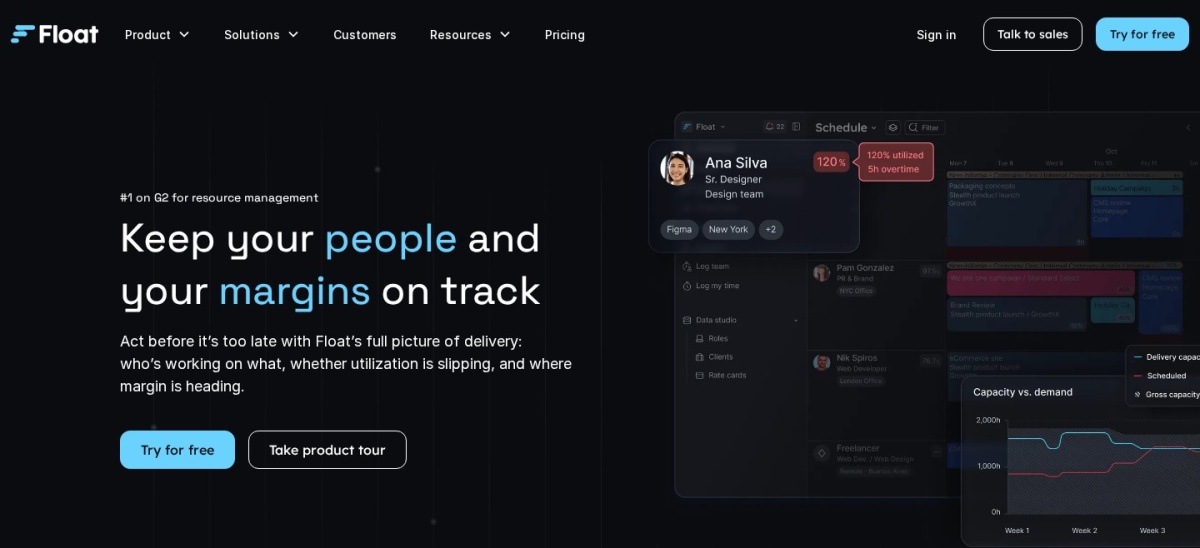
Float homepage, captured Nov 2026.
Float is a purpose-built resource and capacity planning tool for agencies and delivery teams. The Starter plan at $7 per scheduled person a month includes visual scheduling, capacity and time-off management, unlimited projects and project margin tracking, and only scheduled people are billed.
The trade off is that time tracking, single sign-on and advanced reporting need the Pro plan at $12 a month. It suits IT teams that want a clear weekly capacity view without paying for people who are not scheduled.
What we like
Bills only scheduled people, no seat minimum
Live capacity bars show overbooking at a glance
Rated 4.2 out of 5 from 2,249 G2 reviews
Watch out for
Time tracking needs the Pro plan
No task management, so teams run it beside a project tool
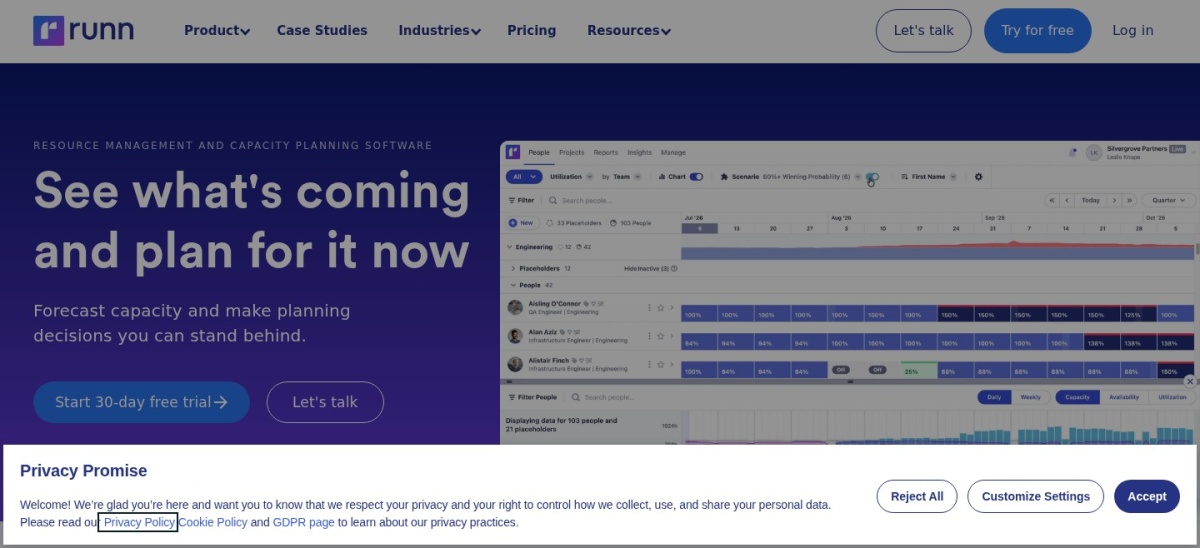
Runn is a resource planning and forecasting platform for professional teams. Its Lite plan at $7 per resource a month includes capacity and utilization charts, tentative projects, placeholders for roles you have not hired yet, and project financials.
The trade off is the 20-seat minimum. Lite costs $140 a month even for a team of eight, and its Capterra rating rests on only 33 reviews. It suits IT teams that plan months ahead and want cost beside capacity.
What we like
Tentative projects and saved scenarios
Project cost and revenue in the same view
Free for up to five users
Watch out for
20-seat minimum makes it costly for small teams
Capterra rating rests on only 33 reviews
No free plan beyond 5 users
Higher tiers add rate cards and more reportingVisit runn.io
03
Resource Guru
4.6/5on G2 (506 reviews, checked Nov 2026)
Starts at$5/mo
Cheapest full planner for IT teams
SchedulingDrag-and-drop booking grid
Clash managementStops double-bookings
BooksPeople, rooms and equipment
Paid planGrasshopper, $5 per person a month
resourceguruapp.com
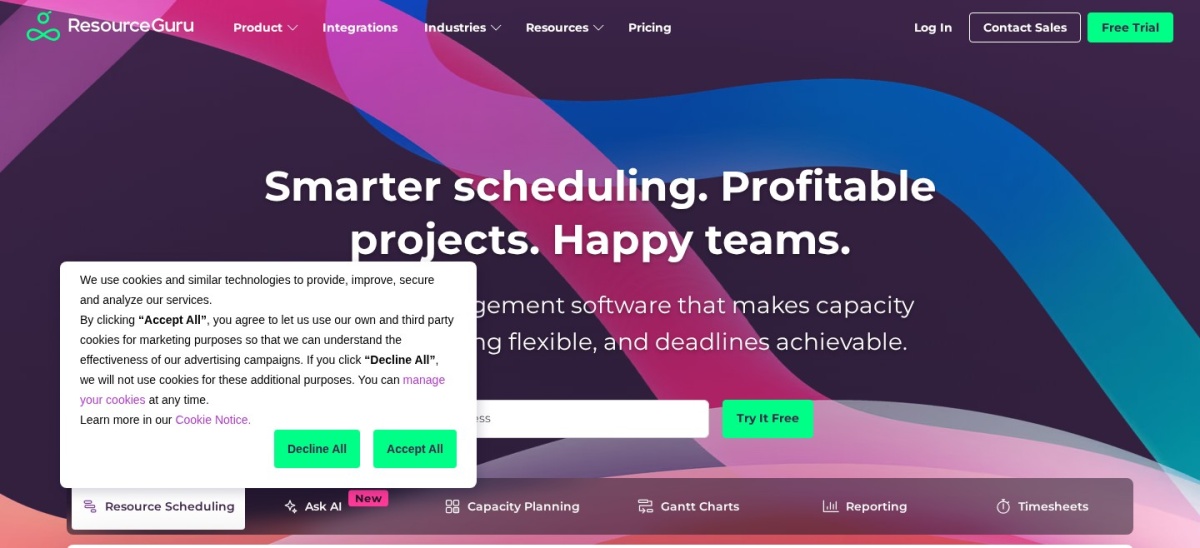
Resource Guru homepage, captured Nov 2026.
Resource Guru is a simple visual scheduler built around one job: stopping double-bookings. The Grasshopper plan at $5 per person a month covers drag-and-drop scheduling, clash management, leave management and unlimited projects and clients.
The trade off is depth. It has no forecasting, scenario planning or margin reports, so larger teams outgrow it fast. It suits IT teams that want a simple booking grid at the lowest price in this list.
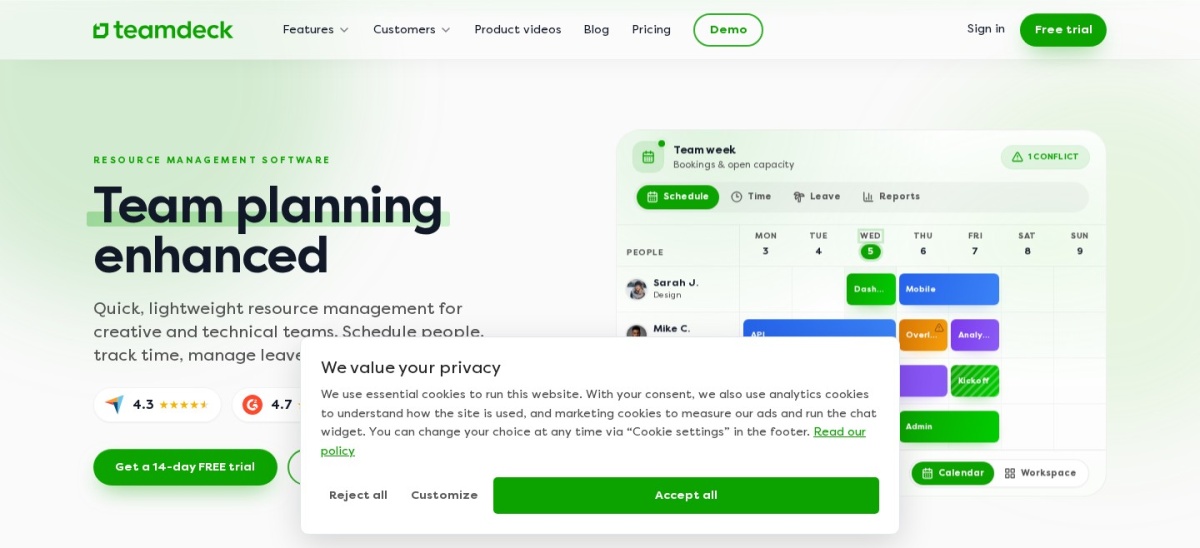
Teamdeck is a lightweight resource manager for creative and technical teams. The Full Member plan at $6 per user a month covers scheduling, time tracking, leave management and reports, while Light Member seats at $2 are view-only.
The trade off is scale and proof. It has only 15 G2 reviews, and it lacks the forecasting depth of Float or Runn. It suits small IT teams that want scheduling, time and leave in one affordable package.
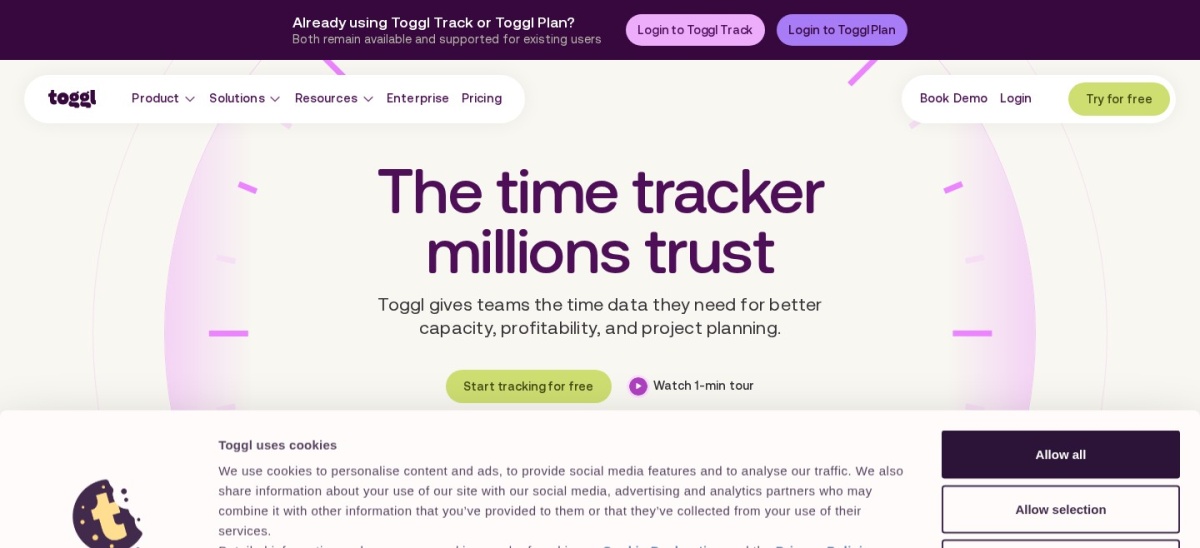
Toggl Plan is a simple timeline planner for small teams that schedule people across projects. The free Solo plan covers one user, and the Team plan at $9 per user a month adds shared timelines, time-off tracking and team reports.
The trade off is depth. It has no forecasting, scenario planning or margin reports, so larger teams outgrow it fast. It suits small IT teams that want a clean timeline without a heavy setup.
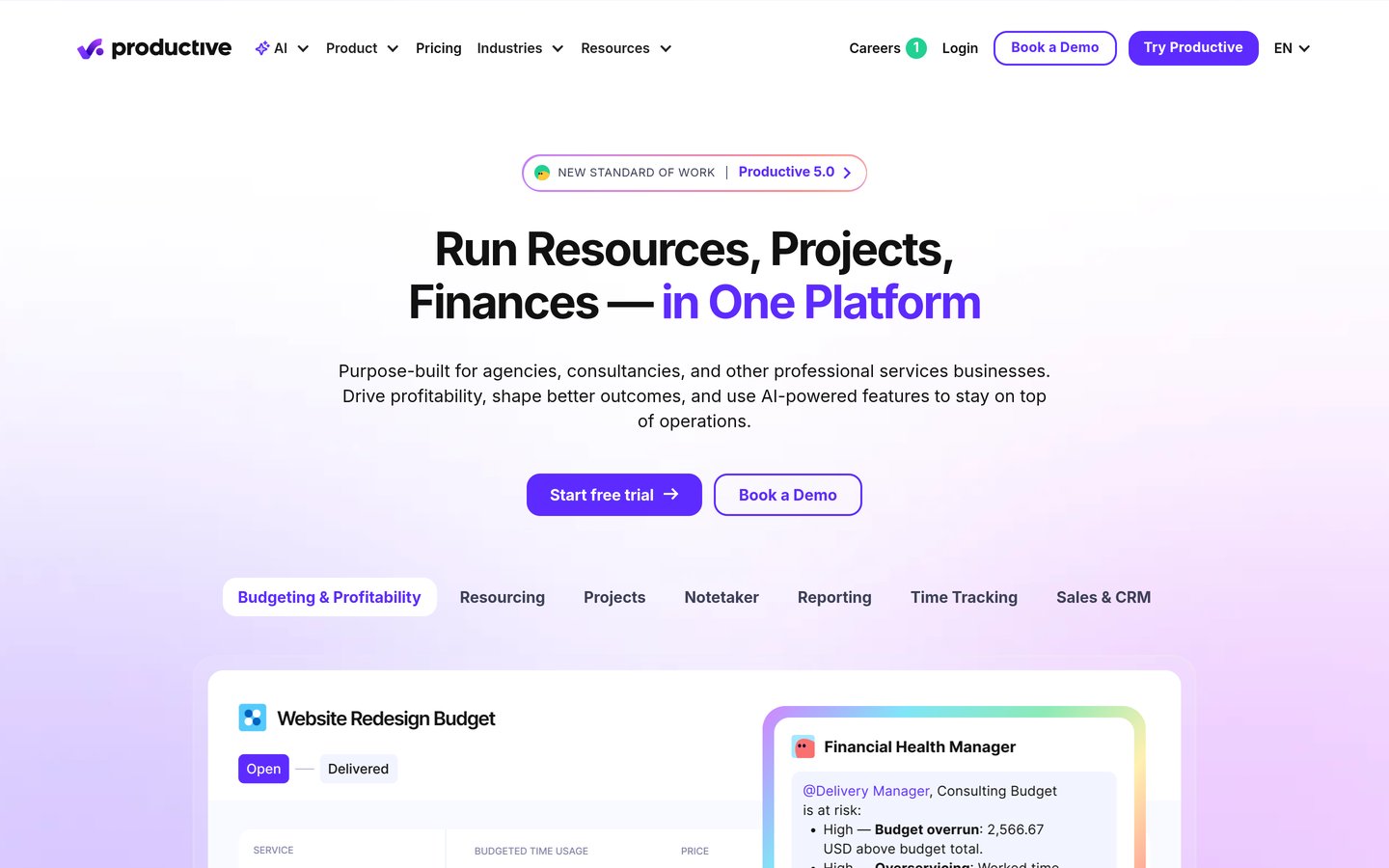
Productive is an agency management platform that pairs resource planning with budgets, deals and invoicing. Essential costs $10 a user a month and covers scheduling, tentative bookings, placeholders and project budgets in one place.
The trade off is that it is built for agencies, not pure IT teams. It needs 3 seats minimum and the operations depth can feel heavy for a team that only needs capacity planning. It suits IT teams inside agencies that bill clients.
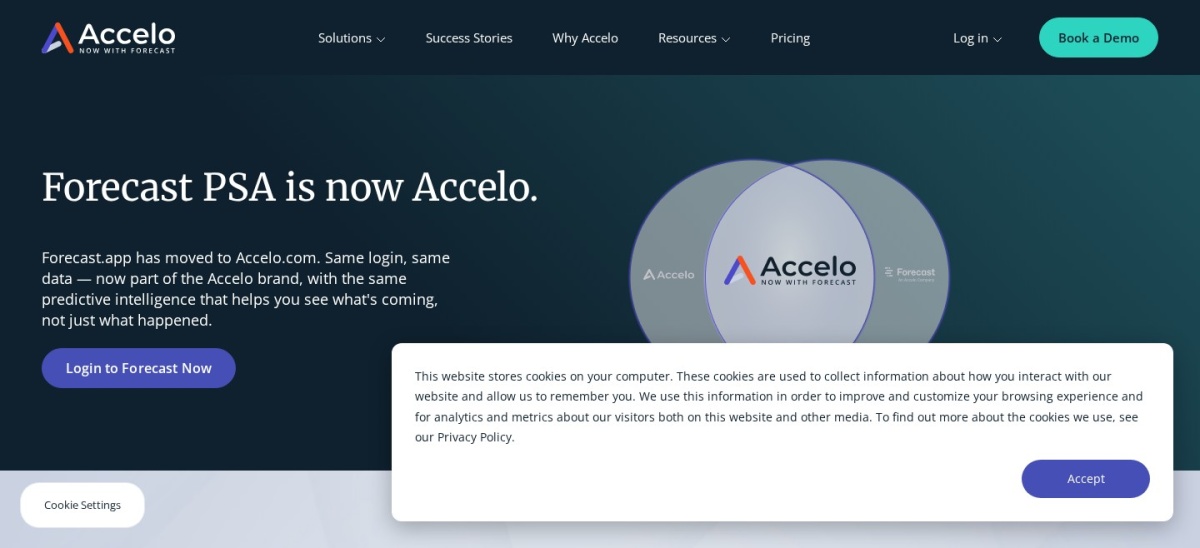
Forecast is an AI-assisted resource planning tool from Harvest. Lite costs $29 a seat a month and adds auto-scheduling, capacity heatmaps and project financials to Harvest time tracking, with a 10-seat minimum.
The trade off is price and lock-in. It is the most expensive entry here at $29 a seat, and it works best beside Harvest. It suits teams already on Harvest that want scheduling next to their timesheets.
ClickUp is one workspace for tasks, docs, goals and chat, with workload views that show who is over capacity across projects. The free plan covers unlimited tasks and members, while Core at $12 per user a month adds unlimited storage, custom fields and more automations.
The trade off is that capacity planning is one feature among many. It lacks the forecasting depth of Float or Runn, and setup takes time. It suits IT teams that already run ClickUp and want workload views without another tool.
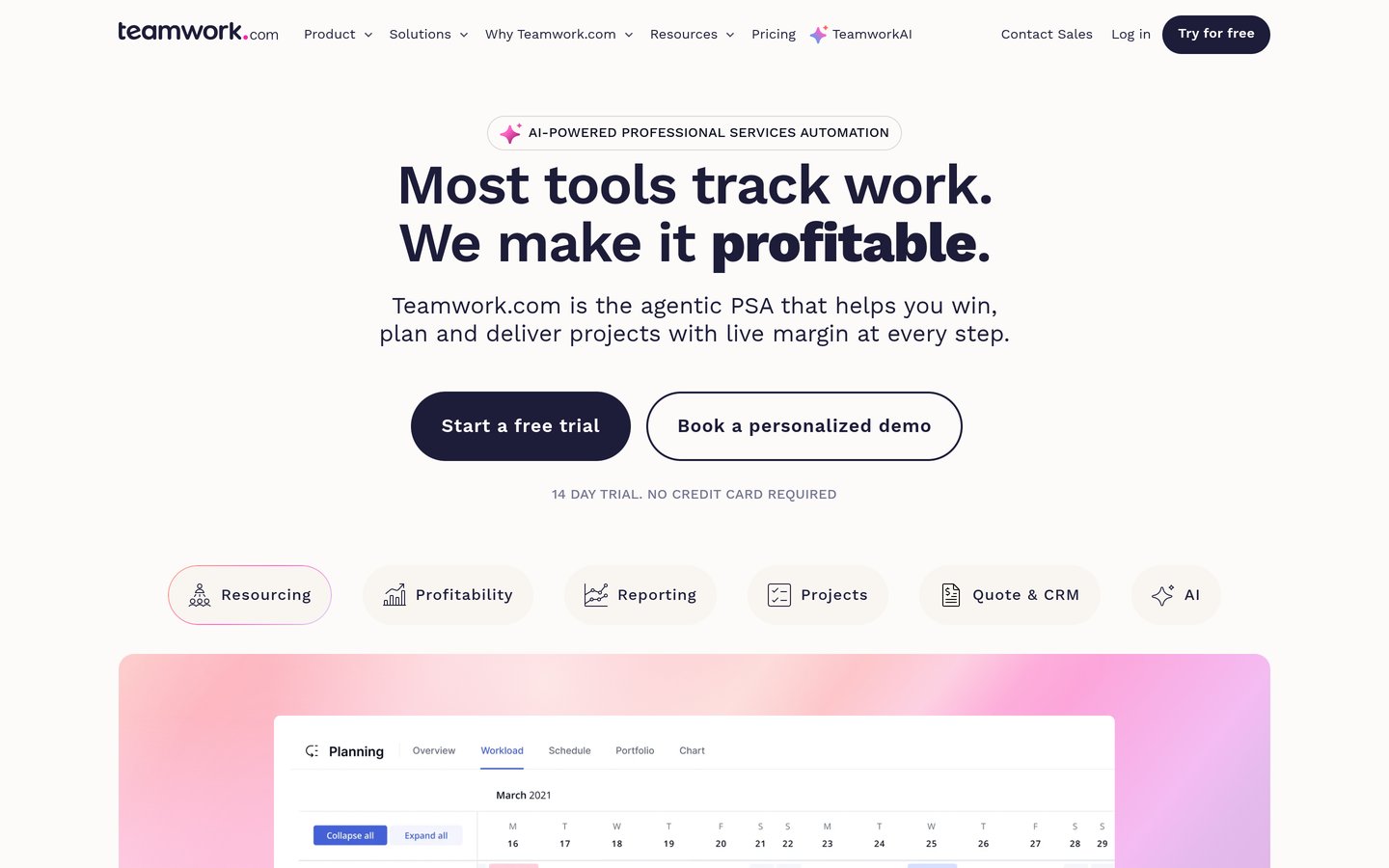
Teamwork.com is a client-service platform with project planning, capacity views and time tracking in one place. The free plan covers up to 5 users, while Deliver at $24.99 per user a month adds workload planning, project templates and more integrations.
The trade off is price. It is the second most expensive tool here at $24.99 a user a month, and capacity planning sits inside a wider client-work platform. It suits IT teams that deliver client projects and bill for them.
Several tools in this list charge for seats you do not use. Runn needs 20 seats, Forecast needs 10 and Productive needs 3, so a small team pays for empty chairs.
Float bills only the people on the schedule, which suits teams with part-time or rotating members. Resource Guru bills per person with no minimum.
Count who gets billed before you compare prices. A $7 tool with a 20-seat minimum costs $140 a month even for a team of eight.
How we chose
We started from the capacity planning tools IT and delivery teams name most often, keeping only those with a published price and a public G2 or Capterra rating.
Prices come from each vendor pricing page, checked on 30 November 2026 for the top three tools. Ratings and review counts come from G2 and Capterra on the same day. Where a vendor shows a sale, the list shows the regular price.
We left out tools with no public aggregator rating and tools that only track time without planning capacity. No vendor paid for a place, and we do not claim hands-on testing for this list.
How to choose team capacity planning software for IT teams
Start from your real team size, then check how the tool counts the people you pay for.
Count the people you will actually schedule. Part-time members, contractors and on-call staff change the bill. Pick a tool that charges for who is scheduled, not who exists.
Check the seat minimum. Runn needs 20 seats and Forecast needs 10. A small team pays for empty chairs on those plans.
Test the capacity view with real data. Import a real month of projects and leave. If the overbooking is not obvious at a glance, the tool is not doing its job.
Check the integrations you already use. Jira, Slack and your time tracker should feed the schedule, or the plan goes stale in a week.
FAQ
What is the best team capacity planning software for IT teams in 2026?
Float is the best team capacity planning software for IT teams. It shows live capacity by person, role and team, tracks time off and project margin, is rated 4.2 out of 5 on G2, and starts at $7 per scheduled person a month.
How much does team capacity planning software cost?
Paid plans in this list run from $5 to $29 a person a month. Resource Guru is cheapest at $5, Float and Runn cost $7, Toggl Plan costs $9, and Forecast is the most expensive at $29 a seat a month.
Is there a free team capacity planning tool for IT teams?
Yes. Runn is free for up to five users, Toggl Plan has a free Solo plan for one user, and ClickUp and Teamwork.com both have free plans with workload views. Float, Resource Guru and Teamdeck offer free trials instead.
Which capacity planner is best for small IT teams?
Float fits small IT teams best because it bills only scheduled people, with no seat minimum. Resource Guru is a strong second at $5 a person a month, and Toggl Plan suits teams of up to three on its free plan.
Float or Runn: which is better for IT teams?
Float is better for day-to-day scheduling with its live capacity bars and margin tracking. Runn wins for teams that plan months ahead, with tentative projects, saved scenarios and project financials in one view.
How do I plan capacity for an IT team with on-call work?
Ring-fence on-call and support hours first, then plan sprint work around what is left. Float and Runn both show time off and availability on the schedule, so on-call weeks show up as reduced capacity rather than free time.
SaaS SEO and WordPress specialist with about 8 years of experience. Rakib compares WordPress plugins, themes, hosting and software using public pricing, documentation and user reviews. See how we rank.