Fivetran is the best of these Talend alternatives for most teams, rated 4.3 out of 5 on G2 from 857 reviews, with a free plan to 500,000 monthly active rows and 700+ connectors. Airbyte is the cheapest managed start at $20 a month, while Hevo Data suits small teams that want simple no-code pipelines.
How we make this list: we compare pricing pages, product documentation and public user reviews, then re-check every price before each update. No product paid for a place. Disclosure.
Fivetran leads on review volume: 4.3 out of 5 from 857 G2 reviews, with a free plan to 500,000 monthly active rows.
Airbyte is the cheapest managed start at $20 a month, and its Core edition is free to self-host.
Skyvia has the highest rating here at 4.8 out of 5, with a free tier and Basic at $79 a month.
Hevo Data starts at $265 a month for 5 million events, with a free plan to 1 million events.
Stitch is the simplest pick at $100 a month, but it does extract and load only.
Usage pricing dominates: Fivetran, Azure Data Factory and AWS Glue have no flat monthly price.
What should you look for in Talend alternatives?
Talend alternatives split into two camps: managed ELT services that copy data into a warehouse, and full integration platforms that also transform it and connect applications. Decide which camp you need before comparing prices, because a cheap ELT tool plus a separate transformation tool can cost more than one platform.
Pricing meters differ more than prices. Fivetran bills monthly active rows, Hevo counts events, Airbyte sells credits, and AWS Glue charges per DPU-hour, so compare the same workload on each tool rather than the headline rate.
A free plan is worth more than a free trial for a migration test. Fivetran, Airbyte, Hevo and Skyvia all let you run real pipelines without paying, so you can prove a connector works on your own data before committing.
Check connector coverage for your exact sources, not the total count. A tool with 700 connectors can still miss the one finance app your team depends on, and enterprise sources often sit in higher tiers.
Fivetran is a managed ELT service that copies data from SaaS apps, databases and files into a warehouse, then leaves transformation to SQL and dbt. The free plan covers 500,000 monthly active rows with Standard features, and paid Standard syncs every 15 minutes with unlimited users.
The trade off is usage billing. Standard charges a $5 base per connection plus $495 per million monthly active rows, so a 1-million-row connection costs $500 a month and heavy tables add up fast. It suits teams that want the widest managed connector set without running pipelines themselves.
What we like
700+ pre-built connectors
Free plan to 500,000 monthly active rows
15-minute syncs on Standard
Unlimited users on every plan
dbt Core integration included
Watch out for
Usage bills climb fast with change-heavy tables
No flat monthly price to budget against
Deletions count toward monthly active rows
Annual contracts start at $12,000 a year with volume discountsVisit fivetran.com
02
Airbyte
4.4/5on G2 (78 reviews, checked Nov 2026)
Paid from$20/mo
Best open-source Talend alternative
Connectors600+
Free optionCore, self-hosted
Cloud Standard$20/mo, 5 credits
Sync speedHourly on Standard
airbyte.com
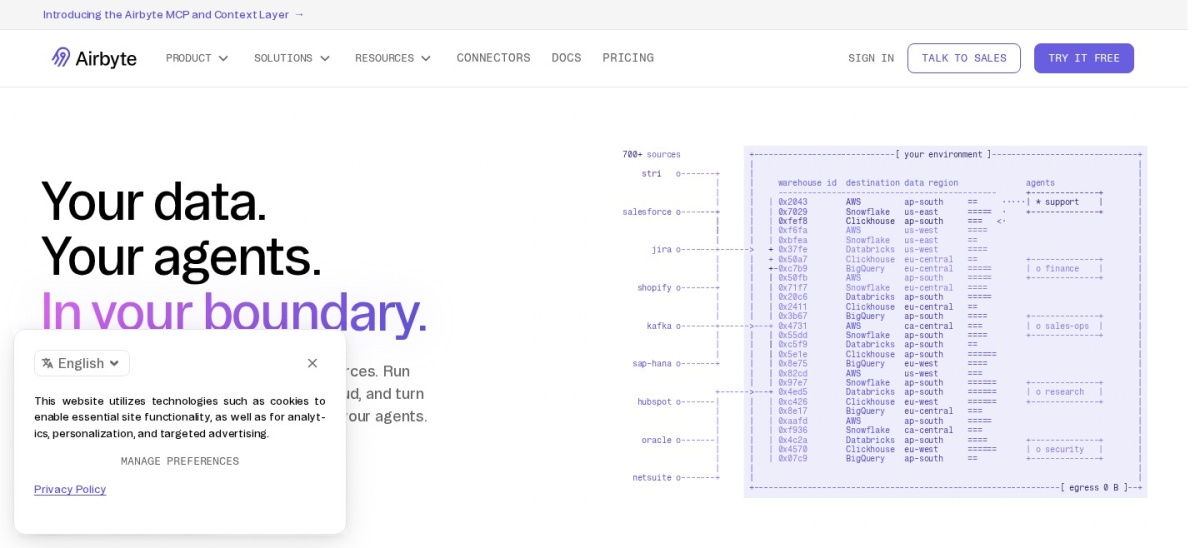
Airbyte homepage, captured Nov 2026.
Airbyte is an open-source ELT platform with a free self-hosted Core edition and a credit-priced Cloud service. Cloud Standard starts at $20 a month for 5 credits, covers about 1 GB of syncs, and new accounts get a 14-day trial with 400 credits.
The trade off is running it yourself for free. Core costs nothing in licence fees but needs your own servers and upkeep, and Cloud credits burn faster on API-heavy sources at 6 credits per million rows. It suits data teams that want open-source control and the cheapest managed start.
What we like
Free open-source Core to self-host
600+ connectors with log-based CDC
Cloud starts at $20 a month
No per-connector fees on Cloud
Watch out for
Self-hosting needs engineering time
Credit use is hard to predict on API sources
Standard syncs at most hourly
Plus adds 15-minute syncs; Pro and Enterprise Flex are custom-pricedVisit airbyte.com
03
Hevo Data
4.4/5on G2 (292 reviews, checked Nov 2026)
Paid from$265/mo
Best for small teams and fast setup
Sources150+
Free plan1M events/mo
Starter$265/mo, 5M events
UsersUp to 10 on Starter
hevodata.com
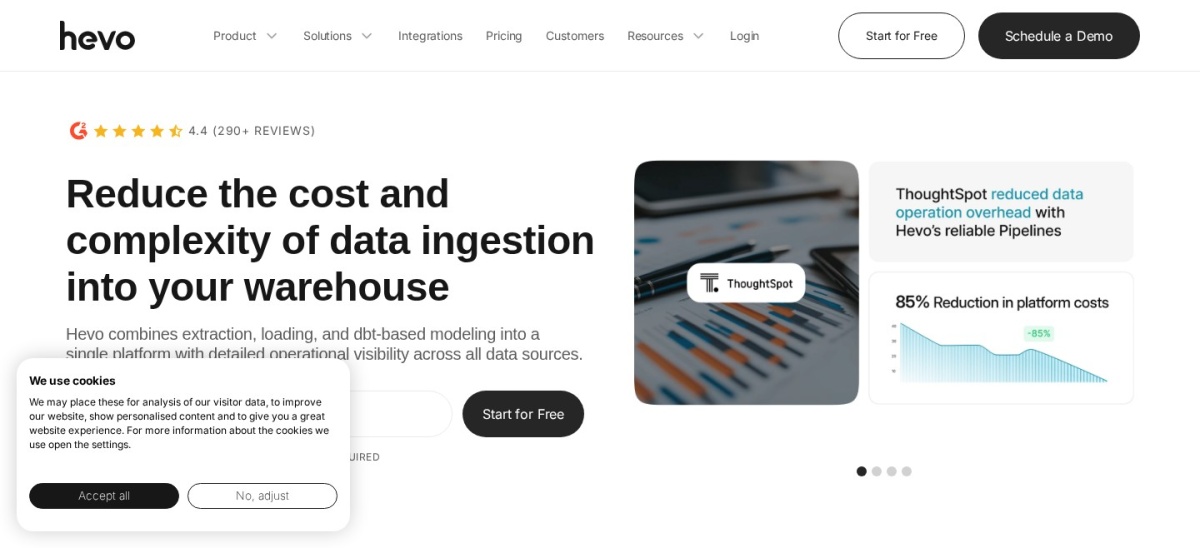
Hevo Data homepage, captured Nov 2026.
Hevo Data is a no-code ELT platform that moves data from 150+ sources into a warehouse with real-time change data capture and automatic schema handling. The free plan covers 1 million events a month, and Starter adds the full connector library at $265 a month for 5 million events.
The trade off is event-based billing. Costs rise steeply once volumes pass the Starter allowance, and transformations are lighter than in code-first tools. It suits small analytics teams that want pipelines live in minutes without managing infrastructure.
Skyvia is a no-code data integration platform for ETL, replication, reverse ETL and sync between cloud apps and databases. The free plan covers 10,000 records a month, and Basic starts at $79 a month on annual billing with daily runs.
The trade off is speed on the entry plan. Basic runs daily only, so hourly refreshes need the $159 plan, and the free plan covers just two daily schedules. It suits small teams without a data engineer that need simple, affordable pipelines.
What we like
Highest G2 rating in this list at 4.8 out of 5
Free plan for trying real pipelines
No-code wizards for non-engineers
Covers ETL, sync and reverse ETL
Watch out for
Basic plan runs daily, not hourly
Free plan limited to 10,000 records a month
No real-time integration support
Higher plans add hourly runs, more records and priority supportVisit skyvia.com
05
Stitch
4.4/5on G2 (68 reviews, checked Nov 2026)
Starts at$100/mo
Best simple ELT for small stacks
SourcesAbout 140
Standard$100/mo, 5M rows
Destinations1 on Standard
Users5 on Standard
stitchdata.com
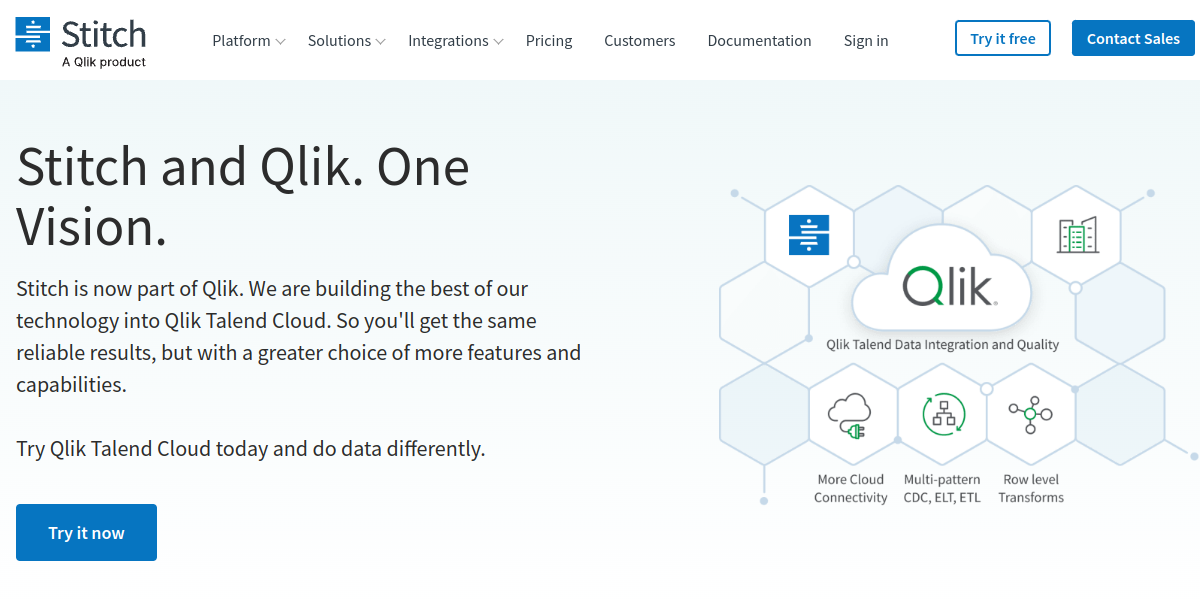
Stitch homepage, captured Nov 2026.
Stitch is a managed ELT service that extracts data from about 140 sources and loads it into a warehouse, leaving transformation to the warehouse. Standard starts at $100 a month for 5 million rows, with 10 standard sources, one destination and 5 users.
The trade off is depth. Stitch does extract and load only, so transformations need dbt or warehouse SQL, and the jump to Advanced starts at $1,500 a month. It suits small teams with a handful of sources that want the simplest possible pipeline.
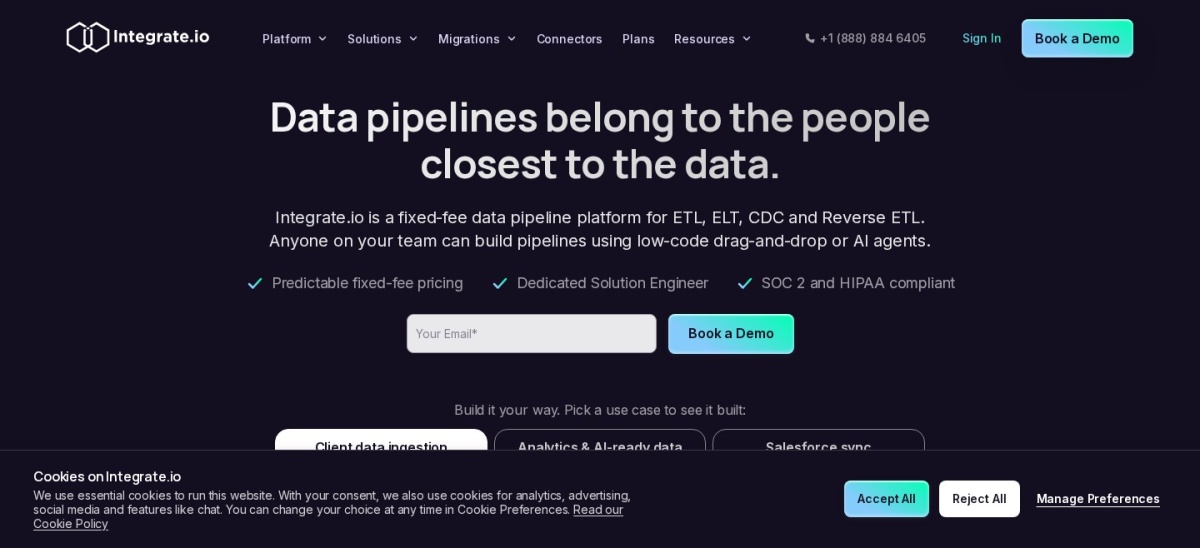
Integrate.io is a low-code data delivery platform covering ETL, ELT, change data capture and reverse ETL in one product. Core costs a flat $1,999 a month with unlimited data volume, pipelines and connectors, plus 30-day onboarding.
The trade off is the entry price. There is no permanent free plan beyond a 14-day trial, and role-based access control and HIPAA readiness sit in a quote-based tier. It suits operations teams that want one predictable bill instead of usage meters.
SnapLogic is an integration platform that connects applications, data, APIs and AI workflows through visual pipelines built from pre-built connectors called Snaps. The Basic plan is listed at $9,995 a year, and pipelines are built with little or no code.
The trade off is enterprise pricing. The entry plan is far dearer than the ELT tools above, and deeper features and scale need quote-based tiers. It suits larger teams that need application integration and data pipelines in one platform.
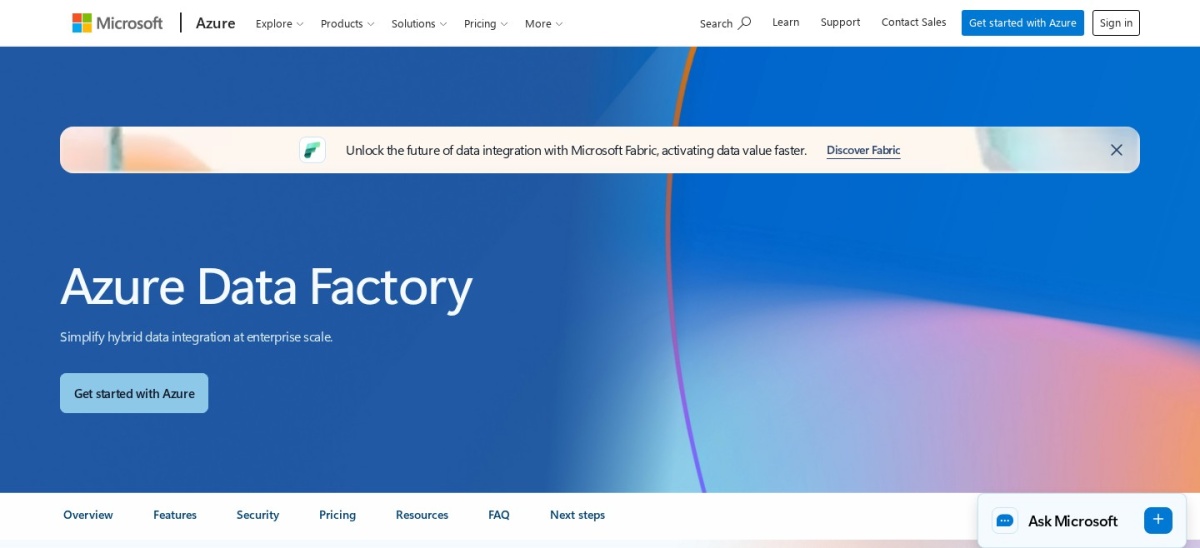
Azure Data Factory is a cloud-native service for building and orchestrating data pipelines inside Azure. It offers a visual drag-and-drop designer, event-driven processing and built-in monitoring, billed pay-as-you-go from $1 per 1,000 pipeline runs.
The trade off is lock-in. It works best inside Azure, the learning curve is steep for teams new to the platform, and heavy workloads can push the usage bill up. It suits organisations already running on Azure that want pipelines without managing servers.
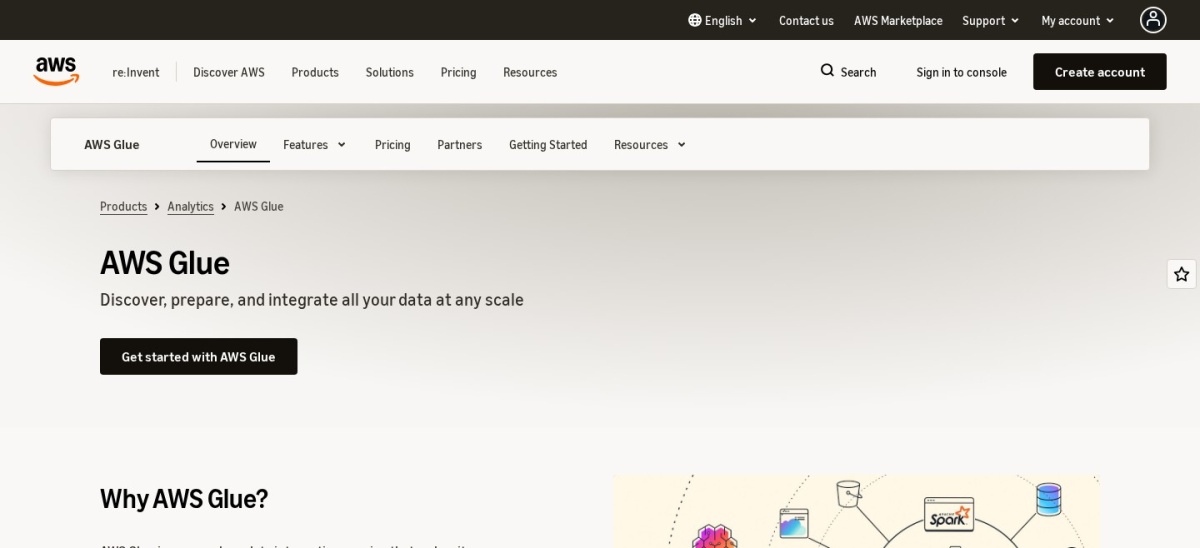
AWS Glue is a fully managed, serverless ETL service from Amazon Web Services that runs data integration on Apache Spark. It includes a built-in Data Catalog, visual and code-based job design, and billing of $0.44 per DPU-hour with a 1-minute minimum.
The trade off is the AWS tie-in and the learning curve. Glue fits AWS-native workloads best, PySpark debugging is painful, and unoptimised jobs can push costs up fast. It suits teams already on AWS that want serverless Spark without managing clusters.
Four tools in this list have a real free plan: Fivetran to 500,000 monthly active rows, Airbyte Core with no licence fee, Hevo to 1 million events a month, and Skyvia to 10,000 records a month. Each one runs real pipelines, so a free plan is enough to prove a migration works.
Free plans all cap volume or speed. Fivetran warns and then pauses connections after repeated overages, Airbyte Core needs your own servers, and Skyvia Basic only runs daily, so a growing team outgrows the free tier within months.
Paid plans mostly buy volume, speed and support. The jump that matters most is Stitch Standard at $100 a month to Advanced at $1,500, and Integrate.io Core at $1,999 a month, so check the next tier up before you commit to the cheapest one.
How we chose
We started from the established Talend alternatives with public G2 ratings and published pricing, then kept the nine that cover managed ELT, open-source, flat-fee and cloud-native options.
Prices come from each vendor's pricing page or its published G2 pricing, checked on 29 November 2026. Ratings and review counts come from G2 on the same day. Where a vendor bills annually, the list shows the annual-billed monthly rate.
We left out tools with no public price or no verifiable rating, including Matillion and Informatica. No vendor paid for a place, and we do not claim to have used these tools ourselves.
How to choose a Talend alternative
Start with your sources and your warehouse, then let the pricing meter decide.
List your sources and destinations first. Check that the tool covers every source you need, including enterprise apps, because coverage gaps in higher tiers are the most common surprise.
Model one month of real volume on each meter. Run the same workload through Fivetran rows, Hevo events, Airbyte credits and Glue DPU-hours, since the cheapest headline rate often loses on your data.
Prove it on the free plan. Move one real pipeline end to end before paying, and confirm the connector handles schema changes and deletes the way you expect.
Check the next tier before you buy. Look at what the plan above your entry tier costs and what it unlocks, so a volume jump does not force a painful migration.
FAQ
What is the best Talend alternative in 2026?
Fivetran is the best Talend alternative for most teams. It is rated 4.3 out of 5 on G2 from 857 reviews, offers 700+ connectors and a free plan to 500,000 monthly active rows, and syncs every 15 minutes on Standard. Airbyte is the cheaper open-source option.
How much do Talend alternatives cost?
Talend alternatives range from free to $1,999 a month. Airbyte Cloud starts at $20 a month, Skyvia Basic at $79, Stitch at $100, Hevo Starter at $265 and Integrate.io Core at $1,999. Fivetran, Azure Data Factory and AWS Glue bill by usage instead.
Is there a free alternative to Talend?
Yes. Fivetran has a free plan to 500,000 monthly active rows, Airbyte Core is free to self-host, Hevo Data is free to 1 million events a month, and Skyvia is free to 10,000 records a month. Each runs real pipelines, not just a trial.
Which Talend alternative is best for small teams?
Hevo Data is the best Talend alternative for small teams. Its no-code setup gets most connectors live in minutes, the free plan covers 1 million events a month, and Starter at $265 a month adds the full connector library. Skyvia is the cheaper option at $79 a month.
Which Talend alternative is best for beginners?
Skyvia is the best Talend alternative for beginners. It is rated 4.8 out of 5 on G2, the highest in this list, and its no-code wizards need no data engineering background. Stitch is simpler still, but it only handles extract and load.
Fivetran vs Airbyte: which is better?
Fivetran is better for teams that want a fully managed service with 700+ connectors and 15-minute syncs, while Airbyte is better for teams that want open-source control and lower costs. Fivetran has 857 G2 reviews against Airbyte's 78, but Airbyte Cloud starts at $20 a month.
SaaS SEO and WordPress specialist with about 8 years of experience. Rakib compares WordPress plugins, themes, hosting and software using public pricing, documentation and user reviews. See how we rank.