Storyblok is the best Sanity alternative for most teams, because its visual editor lets marketers build pages without developer help, from $99 a month. Pick Contentful for enterprise governance, and Strapi when you want free open-source hosting under your own control.
How we make this list: we compare pricing pages, product documentation and public user reviews, then re-check every price before each update. No product paid for a place. Disclosure.
Storyblok has the best visual editor in this list, with a free Starter plan and Growth from $99 a month.
Contentful is the enterprise default, with the strongest governance, from $300 a month after a free plan.
Strapi is free to self-host and the cheapest hosted option, with Cloud Starter at $35 a month.
Hygraph is the GraphQL-first pick, with content federation across remote sources from $199 a month.
Payload is the highest-rated tool here at 4.9 out of 5 on G2, and it is free for Next.js teams.
How do you choose a Sanity alternative?
Sanity treats content as structured data, which suits developer-led teams, but it needs developers to set up and run. The alternatives split into two camps: visual tools for marketing teams, and open-source tools for teams that want to own their hosting.
The visual editor is the biggest practical difference. Storyblok and Prismic show editors the page as they build it, while Contentful and Hygraph use structured forms. Marketing teams ship faster with a visual editor; developer teams often prefer forms.
Price jumps matter more than sticker prices. Contentful jumps from free to $300 a month, Storyblok from free to $99, and Strapi from free self-hosting to $35 a month in the cloud. Check the seat and API limits, not just the headline price.
Migration effort is the hidden cost. Moving content models, entries and assets out of Sanity takes real work, so pick the tool that fits your team in two years, not just the one that is cheapest today.
List prices in each vendor's currency, checked Nov 2026
PayloadFree
PrismicFREE$120
ContentstackFREE$348
StrapiFREE$420
StoryblokFREE$1,188
CosmicFREE$1,188
DatoCMSFREE€1,788
HygraphFREE$2,388
ContentfulFREE$3,600
The 9 best Sanity alternatives
01
Storyblok
4.5/5on G2 (592 reviews, checked Nov 2026)
Paid from$99/mo
Best Sanity alternative overall
Free planStarter, 1 space and 1 seat
Visual editorYes, live preview editing
API calls100K a month free, 1M on Growth
Paid planGrowth, $99/mo
storyblok.com
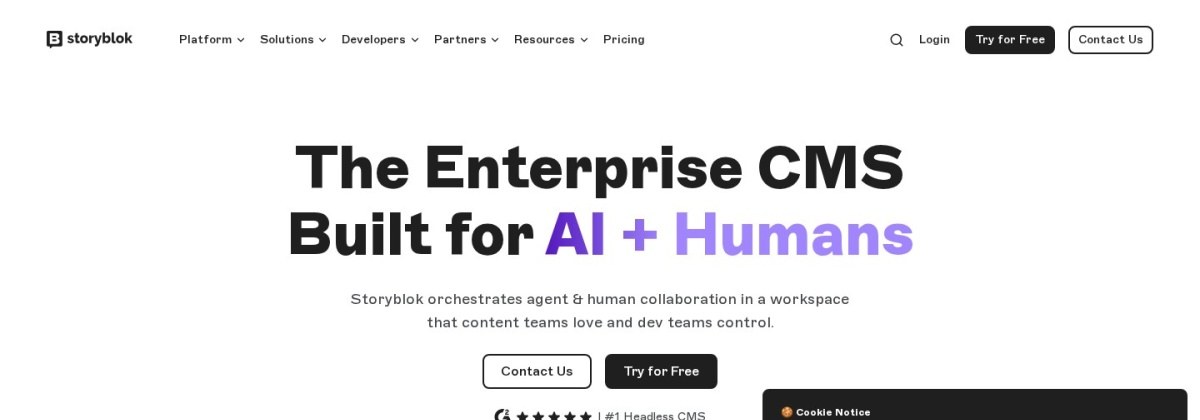
Storyblok homepage, captured Nov 2026.
Storyblok is a cloud-native headless CMS built around its Visual Editor, where editors click on a live preview and edit the page directly. The free Starter plan covers 1 space, 1 seat and 100,000 API calls a month, and Growth costs $99 a month with 5 seats and 1 million calls.
The trade off is non-page content. Storyblok shines for marketing pages and components, but teams with heavy structured data may prefer Hygraph or Contentful. It suits marketing teams that want to see the page while they build it.
What we like
Best visual editor in this list
Free Starter plan with no credit card
Rated 4.5 out of 5 on G2 from 592 reviews
45-day free trial of Growth Plus
Watch out for
Weaker for non-page structured content
Growth Plus at $349 a month is a big jump
Fewer marketplace apps than Contentful
Growth Plus adds 15 seats and 4 million calls from $349 a monthVisit storyblok.com
02
Contentful
4.3/5on G2 (327 reviews, checked Nov 2026)
Paid from$300/mo
Best for enterprise governance
Free plan10 users, 100K API calls a month
Locales2 free, 3 on Lite
API calls1M a month on Lite
Paid planLite, $300/mo
contentful.com
Contentful homepage, captured Nov 2026.
Contentful is one of the longtime players in headless CMS, with solid governance, fine-grained roles, a large integration ecosystem and mature SDKs. The free plan covers 10 users, 2 locales and 100,000 API calls a month, and Lite costs $300 a month with 20 users and 1 million calls.
The trade off is price and rigidity. The jump from free to Lite is steep, and content modeling is form-based rather than visual. It suits large multi-team organizations that need governance and compliance. Note that Salesforce completed its acquisition of Contentful in September 2026.
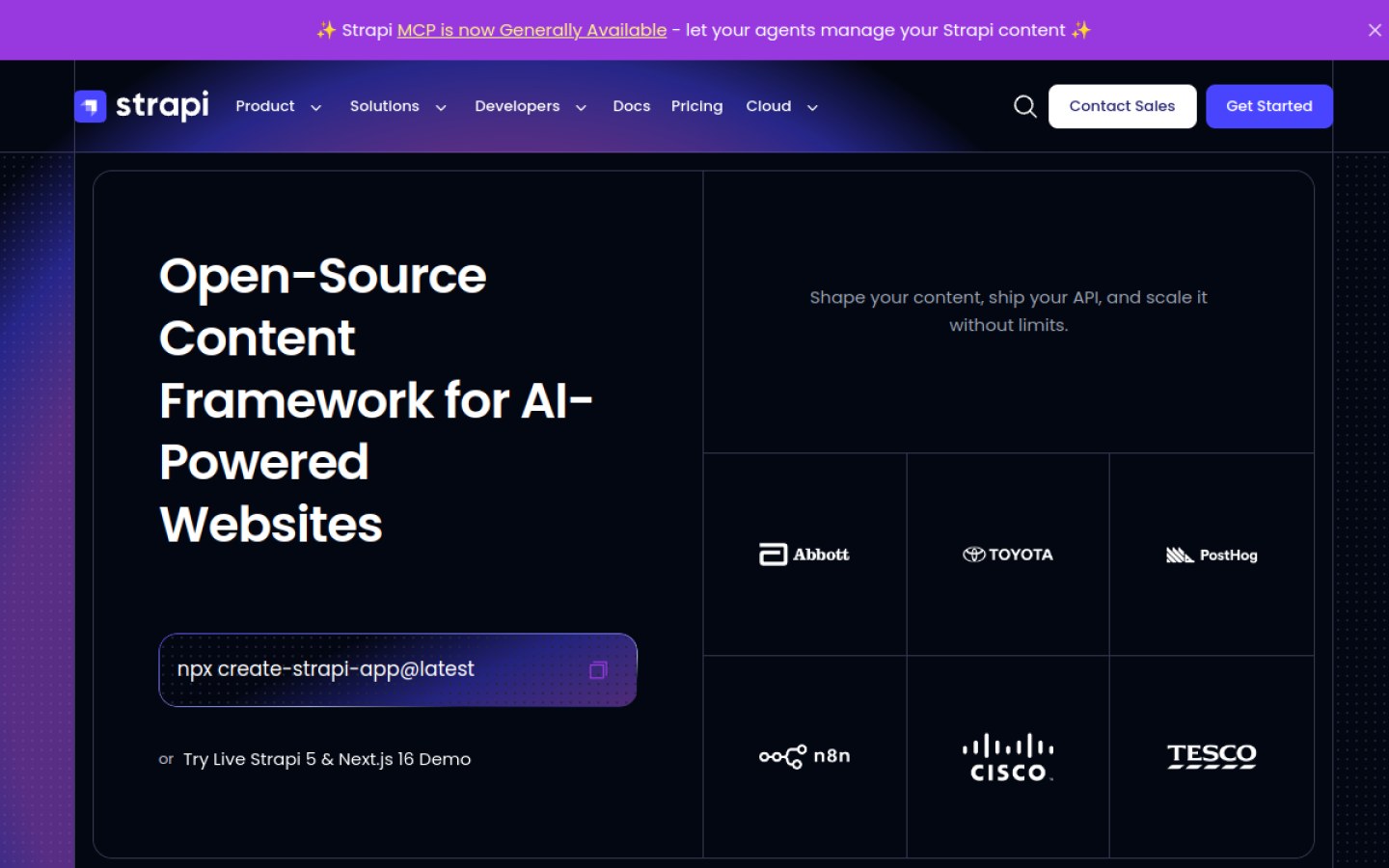
Strapi is an open-source headless CMS with a full admin interface and a graphical content type builder. The Community edition is free to self-host under an MIT license, and Strapi Cloud starts at $35 a project a month with 100,000 API requests and a global CDN.
The trade off is operations. Self-hosting means your team runs the server, the database and upgrades, and Strapi Cloud no longer has a free plan. It suits developer teams that want to own their hosting and pay no license fee.
What we like
Free to self-host under an MIT license
Largest headless CMS community
Roughly 70,000 GitHub stars
Cloud from $35 a project a month
Watch out for
Self-hosting means running the server yourself
Cloud has no free plan
Support is thin outside enterprise tiers
Cloud Pro adds environments and backups from $90 a monthVisit strapi.io
04
Hygraph
4.4/5on G2 (735 reviews, checked Nov 2026)
Paid from$199/mo
Best for GraphQL and content federation
Free planHobby, for small projects
GraphQL APINative, with federation
Growth$199/mo billed yearly
Content sourcesRemote REST and GraphQL
hygraph.com
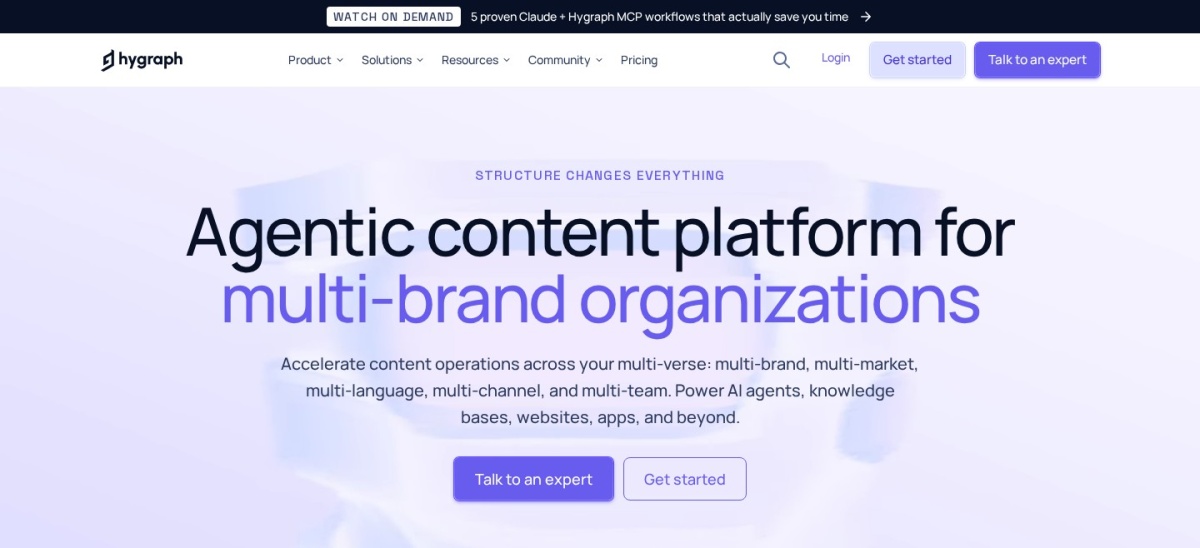
Hygraph homepage, captured Nov 2026.
Hygraph is a GraphQL-native headless CMS that can federate content from remote REST or GraphQL sources into one API. The free Hobby plan covers small projects, and Growth costs $199 a month billed annually with higher limits and support.
The trade off is cost at scale. Growth is $199 a month billed yearly or $299 billed monthly, and limits can be outgrown quickly. It suits developer teams that want to combine CMS content with data from other services.
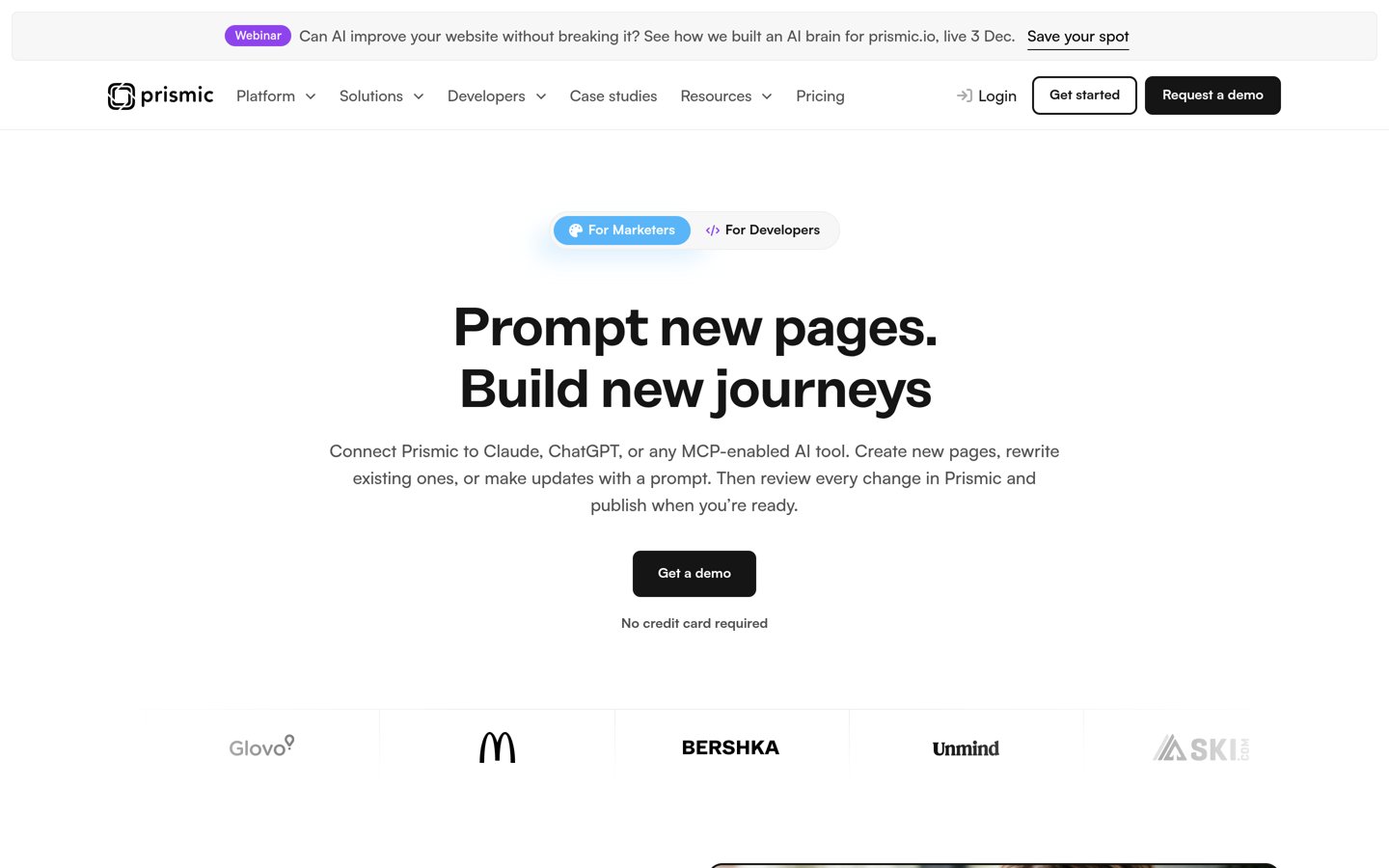
Prismic is a headless CMS built around slices, which are reusable page sections that editors assemble into pages. The free plan covers small projects, and Starter costs $10 a month billed annually, which makes it one of the cheapest hosted options in this list.
The trade off is scale. Prismic suits marketing teams of up to 25 editors, but larger teams hit plan limits and move to a Medium plan at $150 a month billed annually. It suits teams that want visual page building on a small budget.
What we like
Slice-based page building for marketers
Cheapest hosted paid plan here at $10 a month
Page Builder with live previews
Rated 4.3 out of 5 on G2
Watch out for
Plan limits hit fast at scale
Medium plan jumps to $150 a month
Smaller ecosystem than Contentful
Medium adds more users and locales at $150 a month billed annuallyVisit prismic.io
06
Contentstack
4.4/5on G2 (303 reviews, checked Nov 2026)
Paid from$29/mo
Best for AI agents and composable stacks
Free plan3 users, 100K API calls a month
Build plan$29/mo, 250K calls
Visual editorIncluded on every tier
AI agentsAgent OS on every tier
contentstack.com
Contentstack homepage, captured Nov 2026.
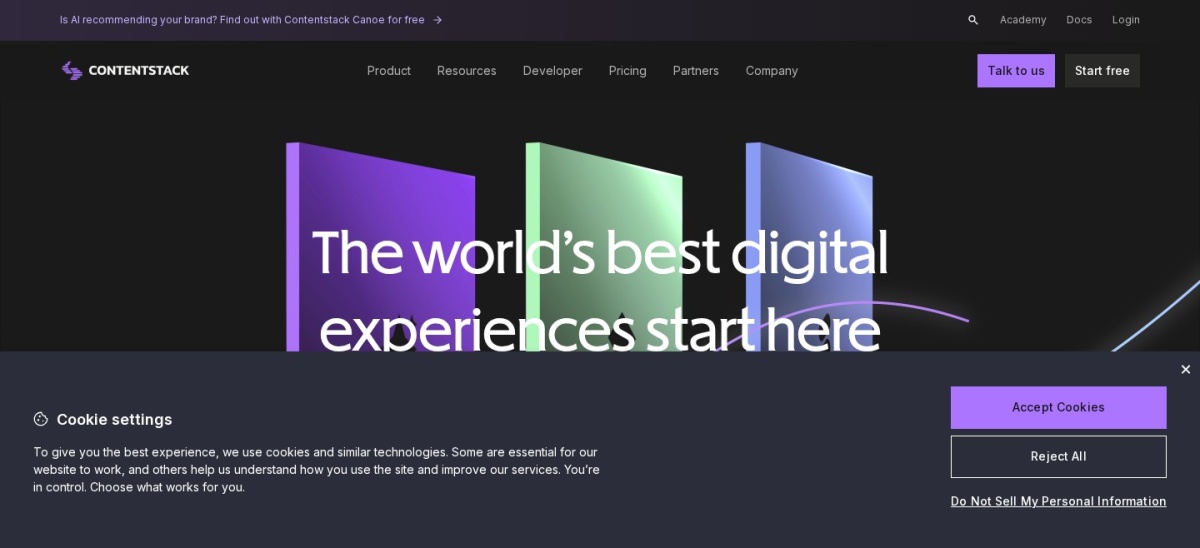
Contentstack is a headless CMS now sold as an agentic experience platform, with Agent OS, Brand Kit and a visual editor included on every tier. The free plan covers 3 users, and Build costs $29 a month with 250,000 API calls and a custom domain.
The trade off is complexity. Contentstack bundles a CMS, AI agents and a CDP, which is more platform than a small team needs. It suits digital teams that want AI workflows and governed content in one place.
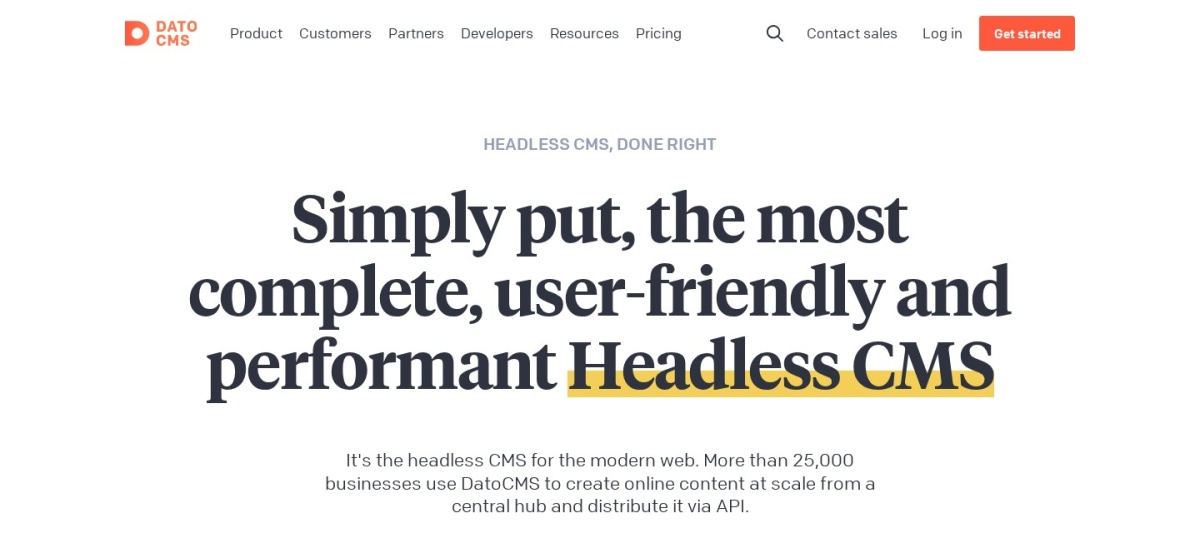
DatoCMS is a cloud headless CMS with one self-serve paid plan and pay-as-you-go overages. The free Developer plan covers small projects, and Professional costs 149 euros a month with generous quotas for teams of up to 10 editors.
The trade off is currency. Professional is priced in euros, not dollars, so the dollar cost moves with the exchange rate. It suits agencies that want generous quotas on one plan without seat-based pricing.
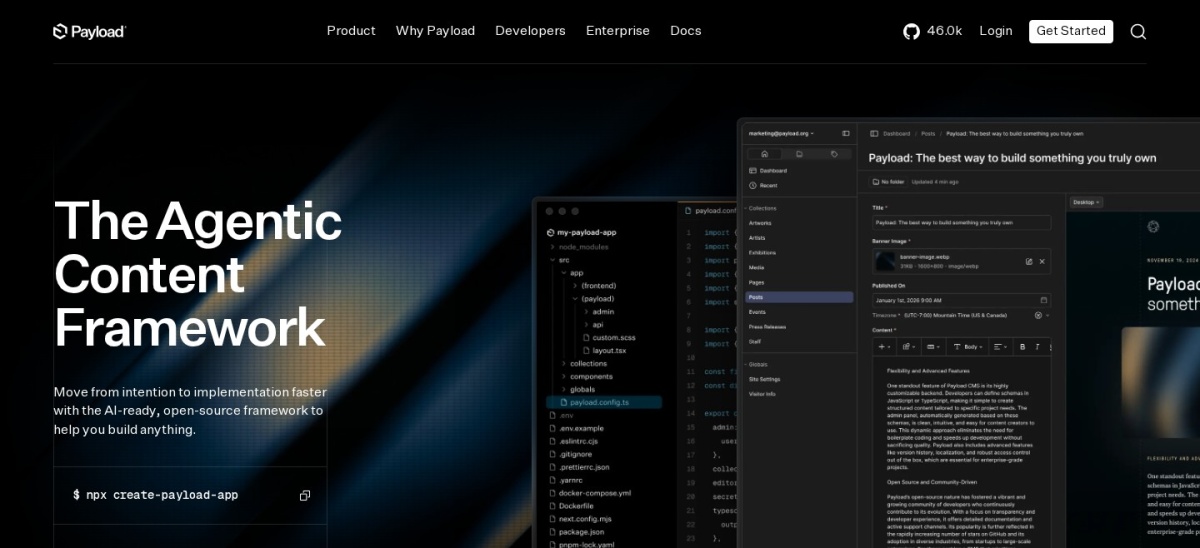
Payload is a code-first headless CMS that lives inside a Next.js app, with the schema in TypeScript config files alongside the website code. It is free and open source under an MIT license, and Payload Cloud offers hosted plans for teams that do not want to run servers.
The trade off is scope. Payload suits Next.js teams best, and teams on other frameworks get less from it. It suits developer teams that want the CMS and the website in one codebase.
What we like
Highest G2 rating here at 4.9 out of 5
Free and open source under MIT
Schema lives in TypeScript with the app
Admin panel inside the Next.js app
Watch out for
Best only for Next.js teams
Smaller plugin ecosystem than Strapi
Cloud pricing is less transparent
Payload Cloud adds hosted plans for teams that skip self-hostingVisit payloadcms.com
09
Cosmic
4.3/5on G2 (6 reviews, checked Nov 2026)
Paid from$99/mo
Best for AI-assisted content workflows
Free planYes, for small teams
AI agentsBuilt in, with MCP server
Paid planBuilder, $99/mo
Add-ons$99/mo each for webhooks and more
cosmicjs.com
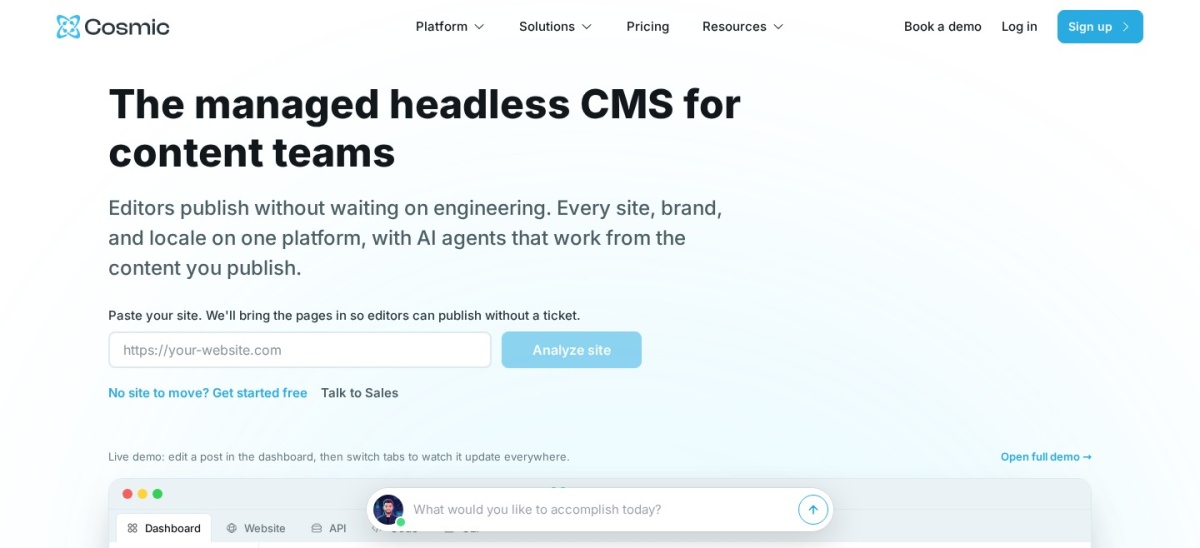
Cosmic homepage, captured Nov 2026.
Cosmic is an API-first headless CMS with AI agents and workflows built in, including a hosted MCP server, scheduled content agents and native text, image and video generation. The free plan covers small teams, and Builder costs $99 a month.
The trade off is maturity. Cosmic has only 6 G2 reviews, no SOC 2 or ISO 27001 certification, and key features such as webhooks and localization cost $99 a month each as add-ons. It suits small teams that want AI-assisted workflows fast.
Every tool here has a free tier, but the caps differ a lot. Contentful gives 10 users and 100,000 API calls a month, Storyblok gives 1 seat and 100,000 calls, and Strapi self-hosted has no license cap at all.
Paid plans mostly add seats, locales, API calls and support. Storyblok Growth adds 5 seats and 1 million calls for $99 a month, while Contentful Lite adds 20 users and 1 million calls for $300.
Self-hosting looks free until you count the work. Strapi and Payload cost nothing in licenses, but your team runs the server, the database, upgrades and backups.
How we chose
We started from the headless CMS tools teams actually shortlist against Sanity in 2026, then kept the nine with a real free tier, a published price and a G2 rating.
Prices for Storyblok, Contentful and Strapi come from each vendor's pricing page, checked on 30 November 2026. Other prices rest on November 2026 comparisons and are flagged in our notes. Ratings and review counts come from G2 on the same day.
We left out tools with no public price and no G2 rating. No vendor paid for a place, and we do not claim hands-on testing for this list.
How to choose a Sanity alternative
Start with who edits content every day, then match the tool to that person.
Name the editor, not the stack. If marketers edit daily, pick a visual editor such as Storyblok. If developers own content, pick a code-first tool such as Strapi or Payload.
Check the free tier caps. Count your seats, locales and API calls against the free plan. A tool that is free for one editor can cost $300 a month for a team of ten.
Test the editing experience. Build one real page in each shortlisted tool. A visual editor that feels slow will cost more in editor time than any license saving.
Price the migration before you commit. Moving models, entries and assets out of Sanity takes real work. See our Contentful alternatives guide for how the other enterprise CMS prices the same move.
FAQ
What is the best alternative to Sanity in 2026?
Storyblok is the best Sanity alternative for most teams, because its visual editor lets marketers build pages without developer help, from $99 a month. Contentful is better for enterprise governance, and Strapi is better for free self-hosting.
Is there a free alternative to Sanity?
Yes. Strapi Community and Payload are free to self-host under open-source licenses, and Contentful, Storyblok, Hygraph, Prismic and DatoCMS all offer free tiers. Strapi self-hosted is the only option with no license cap at all.
What is the cheapest Sanity alternative?
Strapi is the cheapest, because self-hosting costs nothing in licenses and Strapi Cloud starts at $35 a project a month. Prismic Starter is $10 a month and Contentstack Build is $29 a month for teams that want a hosted plan.
Storyblok vs Contentful: which is better?
Storyblok is better for marketing teams that want a visual editor and predictable pricing from $99 a month. Contentful is better for large organizations that need governance, roles and a deep integration ecosystem, from $300 a month.
Can I migrate from Sanity to Strapi?
Yes, but it takes real work. Content models, entries and assets must be rebuilt in Strapi, and GROQ queries must be rewritten as REST or GraphQL calls. Plan a migration sprint, not a weekend.
Which Sanity alternative is best for developers?
Strapi is the best pick for developers who want full control, with an admin UI, plugin marketplace and free self-hosting. Payload is the best pick for Next.js teams, because the CMS lives inside the app codebase.
SaaS SEO and WordPress specialist with about 8 years of experience. Rakib compares WordPress plugins, themes, hosting and software using public pricing, documentation and user reviews. See how we rank.