beehiiv is the best newsletter platform for creators and bloggers who want to grow and earn, with a free plan up to 2,500 subscribers and paid plans from $59 a month. Substack is the simplest free start with built-in discovery, while Kit suits creators who sell courses and digital products.
How we make this list: we compare pricing pages, product documentation and public user reviews, then re-check every price before each update. No product paid for a place. Disclosure.
beehiiv is the strongest all-rounder: free to 2,500 subscribers, unlimited sends and no cut of paid subscriptions on paid plans.
Substack costs nothing to publish at any list size and takes 10% only when you charge readers, plus Stripe fees.
Kit has the most generous free plan at 10,000 subscribers, but automations start on Creator at $39 a month.
Ghost takes 0% of paid revenue, but paid subscriptions need Publisher, which starts at $35 a month.
Buttondown and Brevo are the cheapest paid starts at $9 a month, though Buttondown charges extra for add-ons.
How do you pick the right newsletter platform for creators and bloggers?
The fee model matters more than the feature list. A platform that takes a share of your revenue gets expensive exactly when you succeed, while a flat monthly fee stays predictable as your list grows.
Free plans are not equal. Some cap subscribers at 100, others at 10,000, and one popular option has a free plan that collects subscribers but cannot send email at all.
Growth tools separate the newsletter-first platforms from general email tools. Recommendation networks, referral programs and ad marketplaces bring new readers without paid ads.
Ownership is the quiet deciding factor. Open-source options and platforms with easy exports let you leave with your list intact, while network platforms keep discovery inside their own walls.
The 9 best newsletter platforms for creators and bloggers
01
beehiiv
4.5/5on G2 (40 reviews, checked Nov 2026)
Paid from$59/mo
Best newsletter platform for creators overall
Free planUp to 2,500 subscribers
Paid planLite, from $59/mo
Platform fee0% on paid plans
Email sendsUnlimited on every plan
beehiiv.com
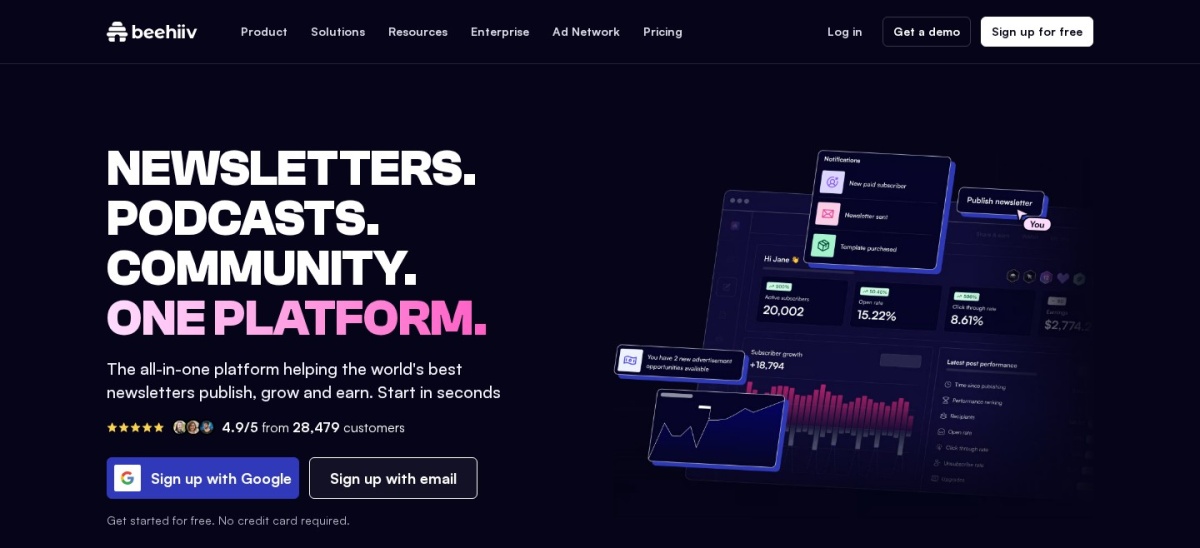
beehiiv homepage, captured Nov 2026.
beehiiv is a newsletter-first platform built for creators who treat the newsletter as the business. The free plan covers up to 2,500 subscribers with unlimited sends, a website, podcast hosting and a recommendation network, and paid plans take 0% of subscription revenue.
The trade off is the price curve. Lite starts at $59 a month for 1,000 subscribers and rises in steps as the list grows, so a large list costs far more than the headline price. It suits creators who plan to monetize and want growth tools built in.
What we like
Free plan covers 2,500 subscribers with unlimited sends
0% platform fee on paid subscriptions
Built-in recommendation network and ad marketplace
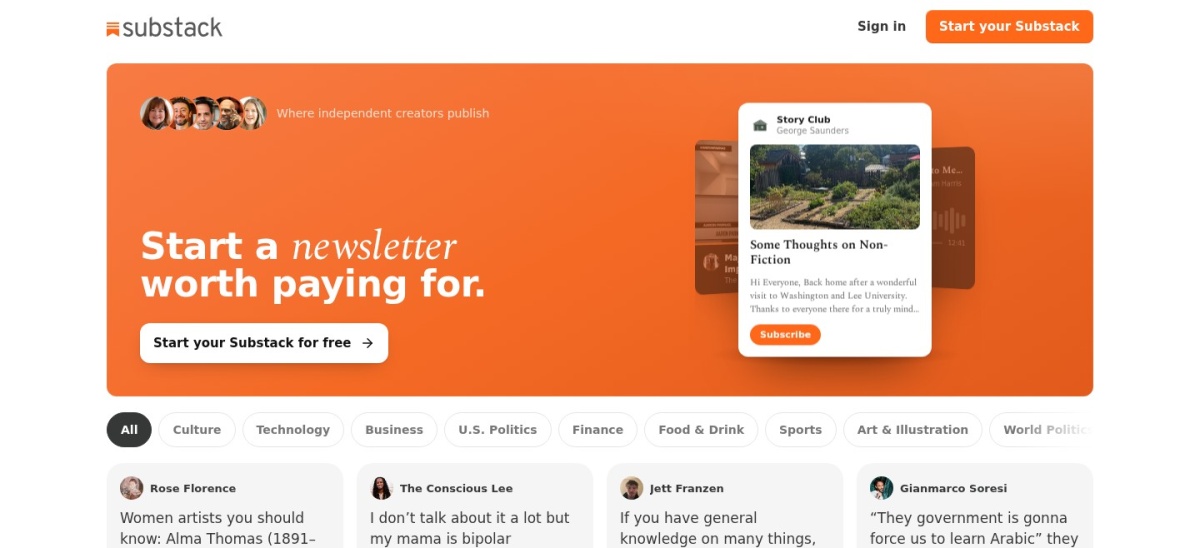
Substack is a publishing platform that combines a blog, newsletter, podcast and video in one free account. Publishing costs nothing at any list size, and Substack earns only when you do, taking 10% of paid subscription revenue plus Stripe card fees.
The trade off is that the 10% cut never shrinks. Once paid revenue passes a few hundred dollars a month, a flat-fee platform costs less, and Substack offers little design control or automation. It suits writers who want zero setup and built-in reader discovery.
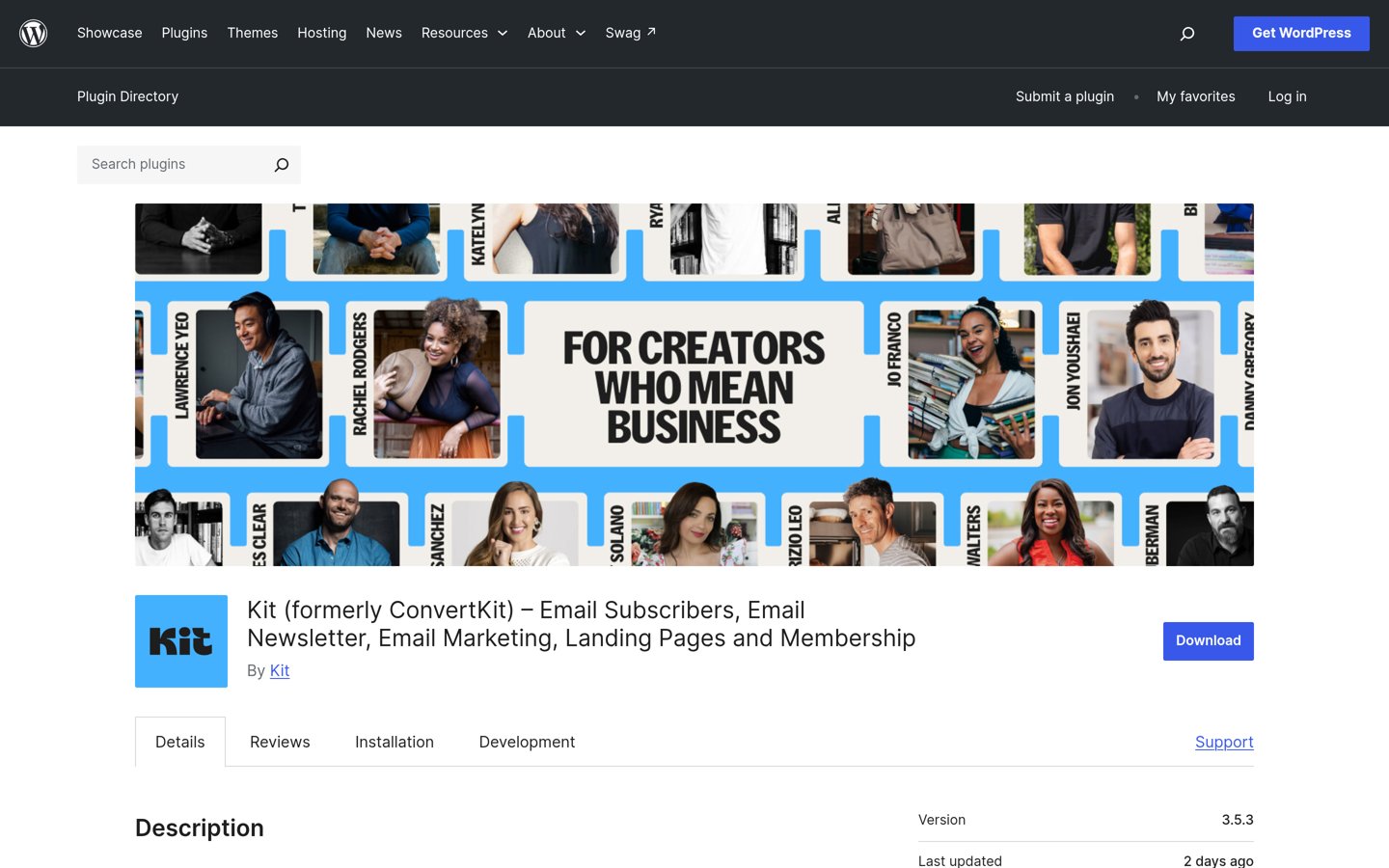
Kit is a platform built for creators who sell courses, memberships and digital products, formerly known as ConvertKit. The free plan covers up to 10,000 subscribers with unlimited broadcasts, landing pages and forms, and paid plans add visual automations, sequences and a storefront.
The trade off is that the free plan has no automations or sequences. Creator starts at $39 a month for 1,000 subscribers and climbs with list size, and digital product sales carry a 3.5% fee. It suits creators whose newsletter feeds a product business.
What we like
Free plan covers 10,000 subscribers
Strong visual automations and sequences
Built-in storefront for digital products
Free migration from other platforms
Watch out for
No automations on the free plan
Price rises with every subscriber tier
Sales fee applies on Creator plan
Creator adds automations, sequences and A/B testsVisit kit.com
04
Ghost
4.7/5on Capterra (53 reviews, checked Nov 2026)
Starts at$18/mo
Best for full ownership of your audience
Free planNo, self-hosted software is free
Paid planStarter, from $18/mo
Platform fee0% on paid subscriptions
MembersUp to 1,000 on Starter
ghost.org
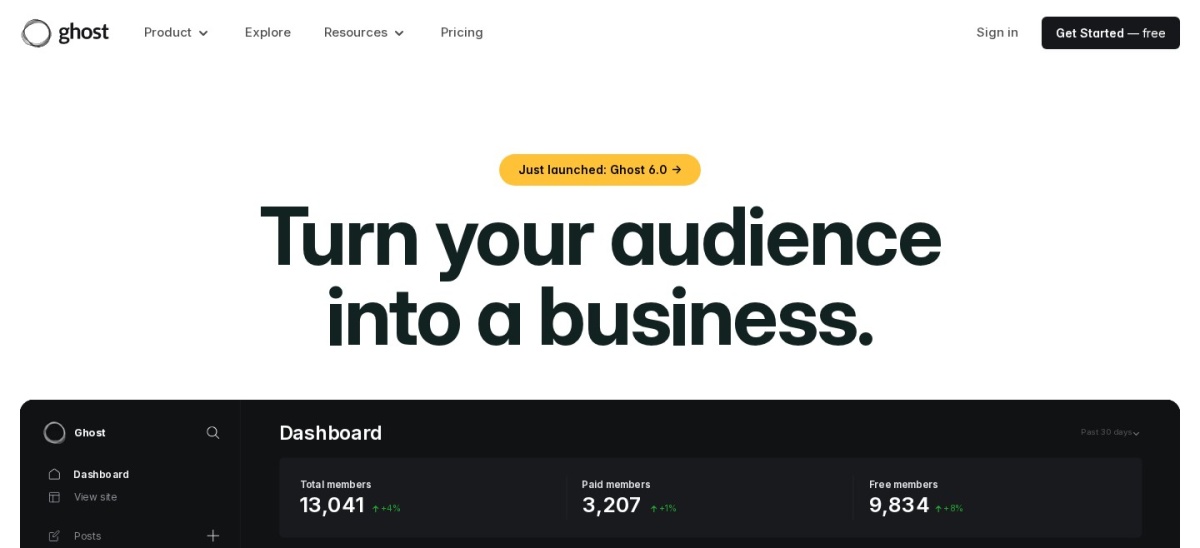
Ghost homepage, captured Nov 2026.
Ghost is an open-source publishing platform for blogs and newsletters, run either self-hosted for free or on managed Ghost(Pro) hosting. It takes 0% of paid subscription revenue, and the Starter plan at $18 a month covers up to 1,000 members with a website and newsletter.
The trade off is that Starter cannot charge readers at all. Paid subscriptions need Publisher from $35 a month, and the price rises with member count. It suits independent publishers who want to own their site, content and subscriber data outright.
What we like
0% platform fee on paid subscriptions
Open-source software you can self-host
Full website, memberships and newsletter in one
Strong SEO and custom theme support
Watch out for
No free hosted plan
Paid subscriptions need the Publisher plan
Needs more setup than Substack or beehiiv
Publisher adds paid subscriptions and custom themesVisit ghost.org
05
MailerLite
4.7/5on Capterra (2,322 reviews, checked Nov 2026)
Paid from$12/mo
Best budget option for small lists
Free planUp to 250 subscribers
Paid planComfort, from $12/mo
Platform fee0% on paid newsletters
Emails10x subscriber tier on Comfort
mailerlite.com
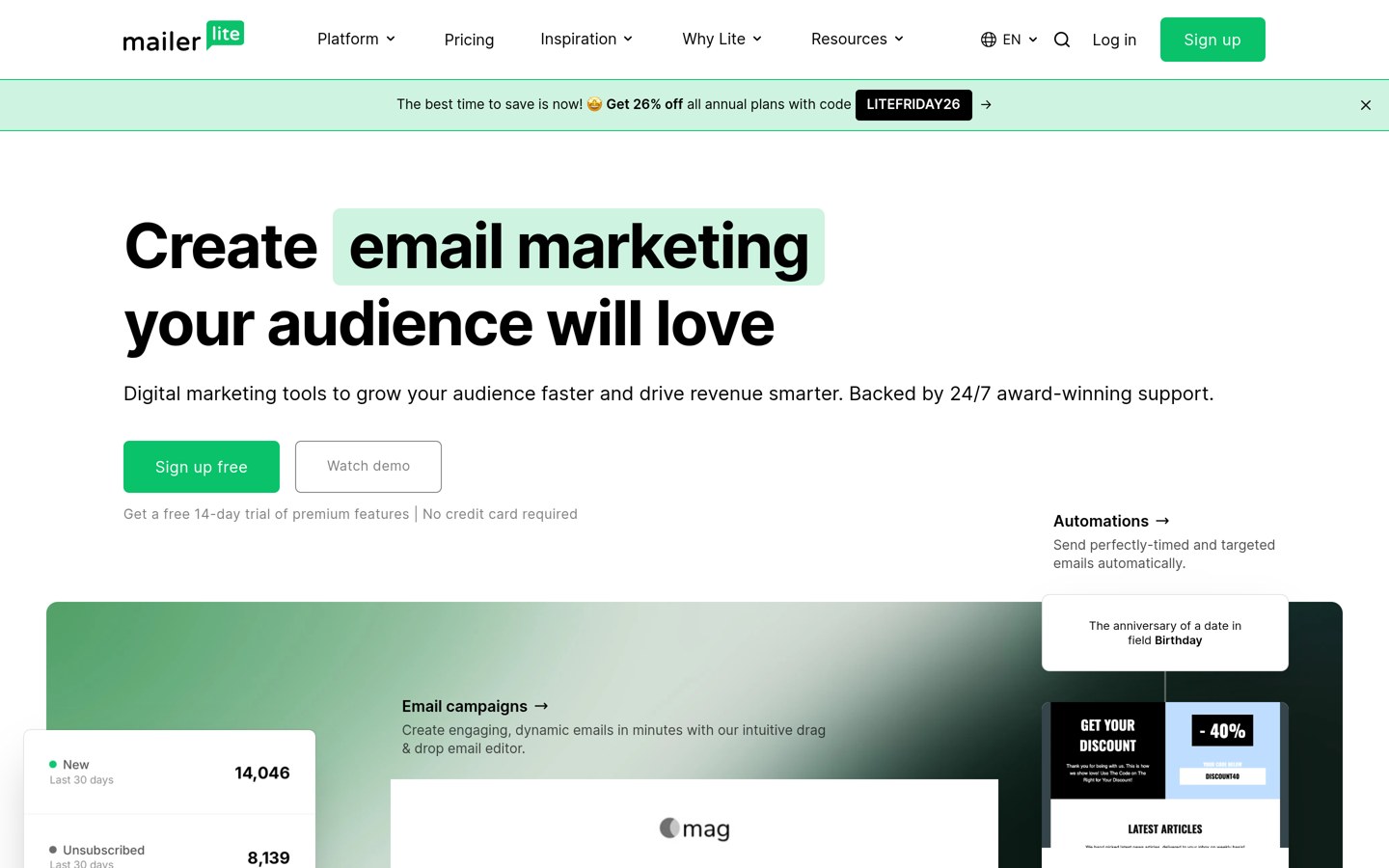
MailerLite homepage, captured Nov 2026.
MailerLite is a low-cost email platform for bloggers and small creators, with a fast drag-and-drop editor, landing pages, forms and a simple website. The free plan covers 250 subscribers, and Comfort starts at $12 a month for 500 subscribers with automations and paid newsletters at 0% platform fee.
The trade off is the shrunken free plan. It fell from 1,000 subscribers to 250 in June 2026, and Comfort caps monthly sends at 10 times the subscriber tier. It suits small senders who want a cheap, easy editor and strong support.
4.5/5on Capterra (17,626 reviews, checked Nov 2026)
Paid from$13/mo
Best known all-rounder
Free planUp to 250 contacts
Paid planEssentials, from $13/mo
AutomationsLimited to 4 steps on Essentials
TemplatesLarge library included
mailchimp.com
Mailchimp homepage, captured Nov 2026.
Mailchimp is the most widely used email marketing platform in this list, with a large template library, landing pages, forms and built-in analytics. The free plan covers 250 contacts, and Essentials starts at $13 a month for 500 contacts with A/B testing and 24/7 chat support.
The trade off is cost at scale. Prices rise steeply past 1,500 contacts, Essentials caps automations at four steps, and the free plan has no automation at all. It suits creators who want the familiar default with the widest integration library.
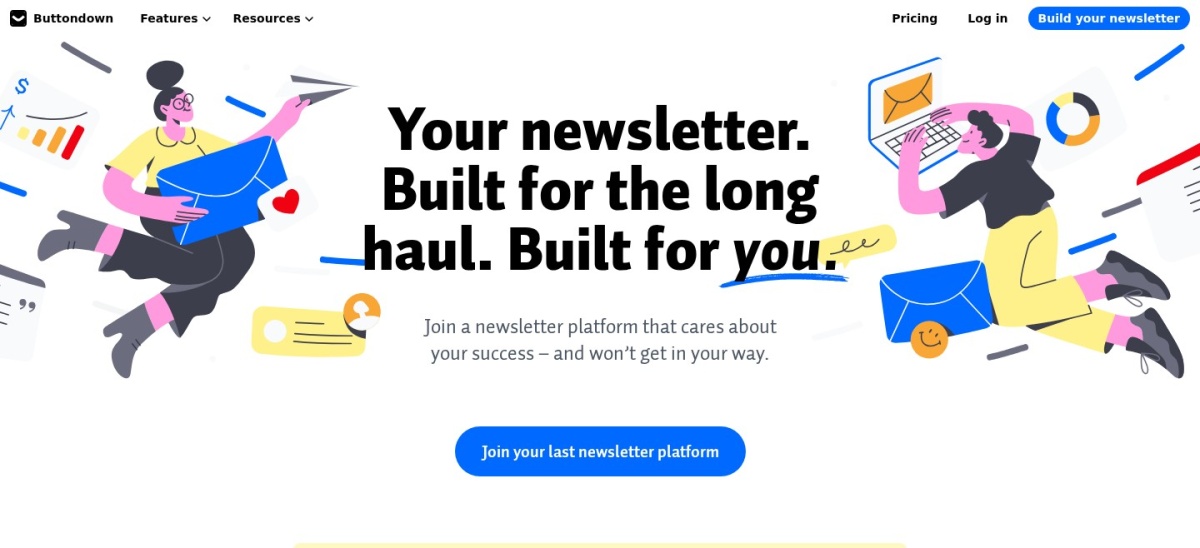
Buttondown is a minimal, Markdown-first newsletter platform built for writers and developers who want a fast editor, a full API and no revenue cut. The first 100 subscribers are free, and the base plan starts at $9 a month for up to 1,000 subscribers with a custom domain and hosted archives.
The trade off is the add-on model. Analytics, paid subscriptions and RSS-to-email cost about $9 a month each, and automations sit in a $29 bundle, so the real bill can pass the base price quickly. It suits technical writers who value simplicity and privacy.
4.6/5on Capterra (3,500+ reviews, checked Nov 2026)
Paid from$9/mo
Best for large lists on a budget
Free plan300 emails a day
Paid planStarter, from $9/mo
Pricing modelBy emails sent, not contacts
Contacts storedUp to 100,000 on free
brevo.com
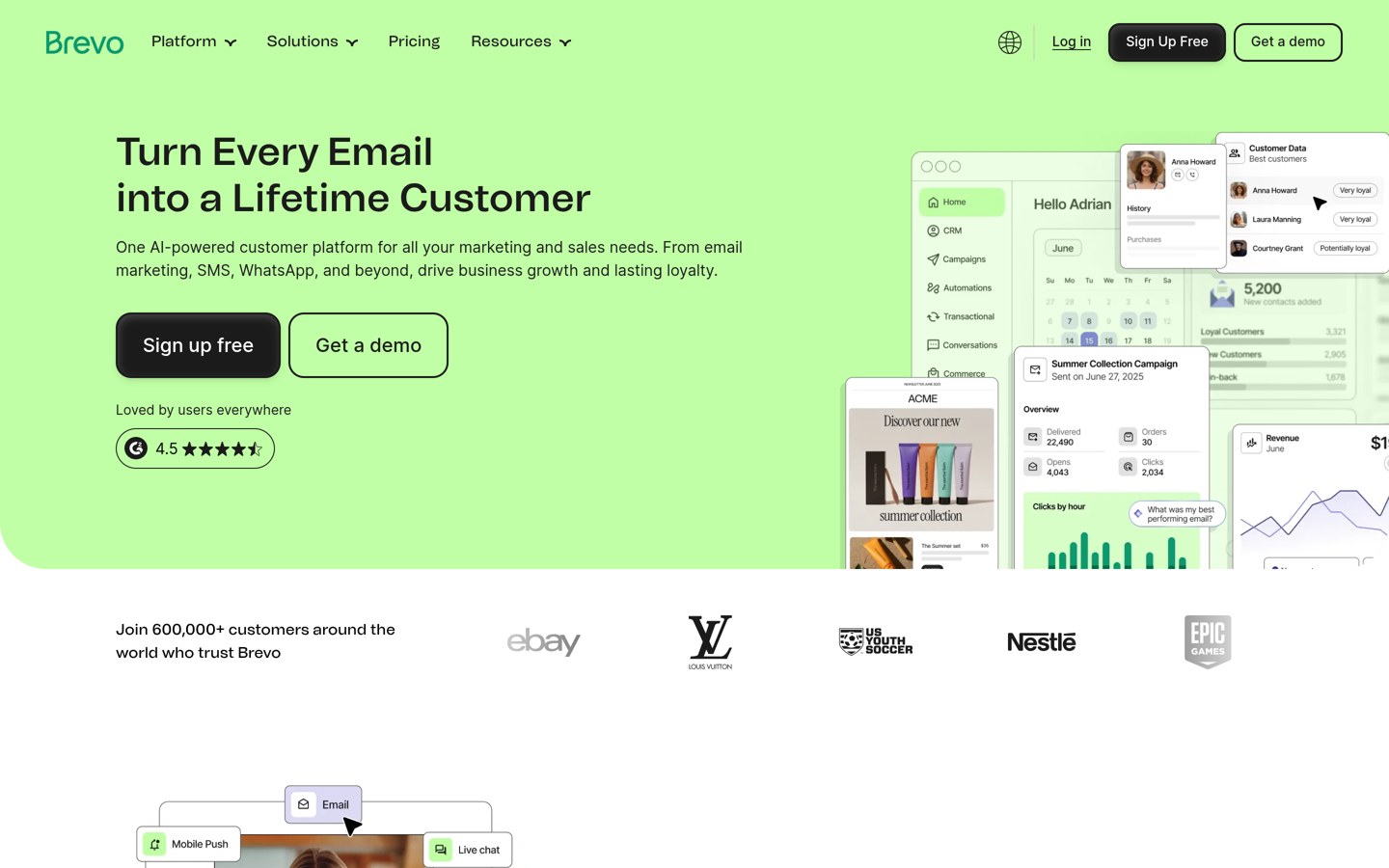
Brevo homepage, captured Nov 2026.
Brevo is a platform, formerly Sendinblue, that prices by emails sent rather than contacts stored, which keeps big lists cheap for infrequent senders. The free plan stores up to 100,000 contacts with 300 emails a day, and Starter starts at $9 a month for 5,000 emails with no daily cap.
The trade off is that the bill follows send volume. A creator emailing weekly to a large list pays far more than $9, and removing Brevo branding on Starter costs extra. It suits bloggers with a large list who send a few campaigns a month.
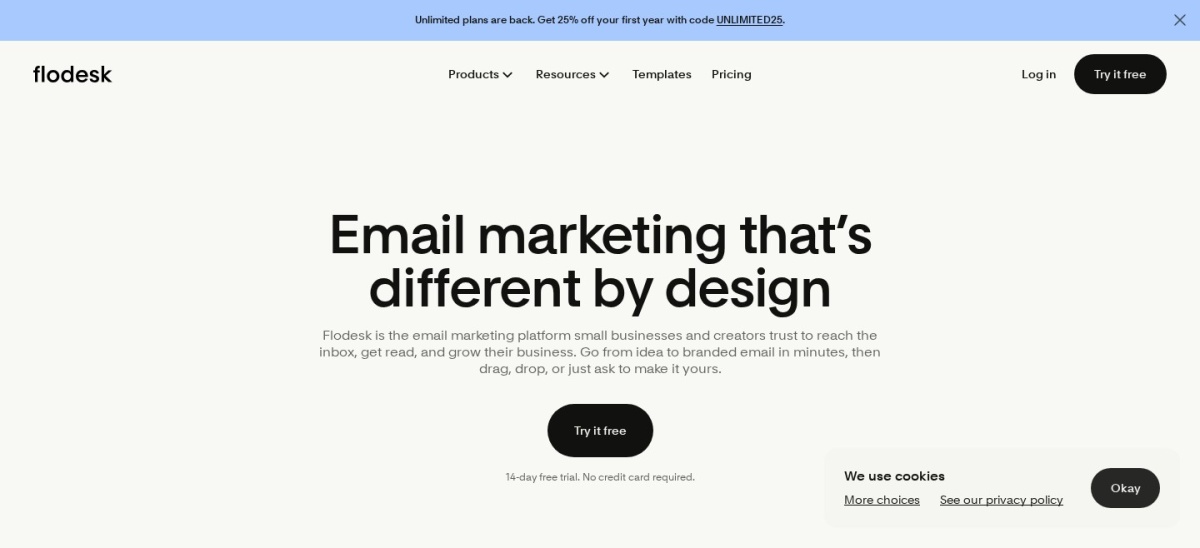
Flodesk is a design-first email platform for creators who care how every email looks, with polished templates and a simple visual workflow builder. The Email plan costs $46 a month with unlimited subscribers and unlimited sends, and the free plan covers forms and landing pages only.
The trade off is that the free plan cannot send email. Selling products needs the Everything plan at $99 a month, and Flodesk has no ad network or referral tools. It suits visual creators with a growing list who want one flat price.
What we like
Unlimited subscribers and sends for one flat price
Free plans cover writing and sending well. Most include a website or archive, forms and basic analytics at no cost.
Paid plans mostly add money tools. Paid subscriptions, automations, A/B tests and branding removal are where the paywall usually sits.
The fee model is the real cost. A 10% revenue share looks free until your paid list grows, while a flat monthly fee is the same whether you earn $100 or $10,000.
If your newsletter already earns a few hundred dollars a month, compare the revenue-share cost against a flat plan before you commit to a platform.
How we chose
We started from the newsletter platforms creators and bloggers mention most, then kept the nine with a real free or low-cost entry and a public rating on G2 or Capterra.
Prices come from each vendor pricing page, checked on 30 November 2026. Kit and Ghost prices come from their pricing pages, which load prices through a script, and were cross-checked against November 2026 reads of the same pages. Ratings and review counts come from G2 and Capterra on the same day.
We left out platforms with no aggregator rating and tools aimed only at large marketing teams. No vendor paid for a place, and we do not claim hands-on testing for this list.
How to choose a newsletter platform for creators and bloggers
Start with how you plan to earn, then match the fee model to that plan.
Decide how you will earn first. If paid subscriptions are the plan, compare a 10% revenue share against a flat monthly fee at your expected revenue.
Check the free plan limits. Free tiers range from 100 to 10,000 subscribers, and one free plan cannot send email at all.
Price your list at its real size. Most platforms charge by subscriber count, so check the price at 1,000 and 10,000 subscribers, not just the headline figure.
Confirm you can export your list. You should be able to leave with every subscriber, so check export options before you build an audience somewhere.
FAQ
What is the best newsletter platform for creators and bloggers in 2026?
beehiiv is the best overall pick for creators and bloggers in 2026. Its free plan covers 2,500 subscribers with unlimited sends, paid plans take 0% of subscription revenue, and built-in growth tools help the list expand without paid ads.
What is the cheapest newsletter platform for creators?
Buttondown and Brevo are the cheapest paid starts at $9 a month. Buttondown covers 1,000 subscribers for that price, while Brevo covers 5,000 emails a month, so the better deal depends on how often you send.
Is Substack really free?
Yes, publishing on Substack is free at any list size, with no monthly fee and no subscriber limit. You pay only when you charge readers: Substack takes 10% of paid subscription revenue, plus Stripe card fees of 2.9% plus $0.30 per payment.
Which newsletter platform is best for beginners?
Substack is the easiest start, because there is nothing to set up and no monthly bill. beehiiv is the better next step once you want monetization tools, since its free plan covers 2,500 subscribers and paid plans take no cut.
beehiiv vs Substack: which should I choose?
Choose beehiiv if the newsletter is a business: it takes 0% of paid revenue and adds growth tools, though paid plans start at $59 a month. Choose Substack if you want the simplest free start and accept a 10% cut once you charge readers.
Does Ghost or Kit take a cut of paid subscriptions?
No, neither takes a platform cut. Ghost takes 0% on every plan that can charge readers, and Kit charges only Stripe-style card fees plus a 3.5% sales fee on digital products. Both charge a flat monthly fee instead.
SaaS SEO and WordPress specialist with about 8 years of experience. Rakib compares WordPress plugins, themes, hosting and software using public pricing, documentation and user reviews. See how we rank.