Beehiiv is the best newsletter platform for writers who want to grow and earn, with a free plan to 2,500 subscribers, a referral program, an ad network and a 0% cut of paid subscriptions. Substack is the fastest start for a paid newsletter, while Ghost is the pick for writers who want to own their site and keep every cent.
How we make this list: we compare pricing pages, product documentation and public user reviews, then re-check every price before each update. No product paid for a place. Disclosure.
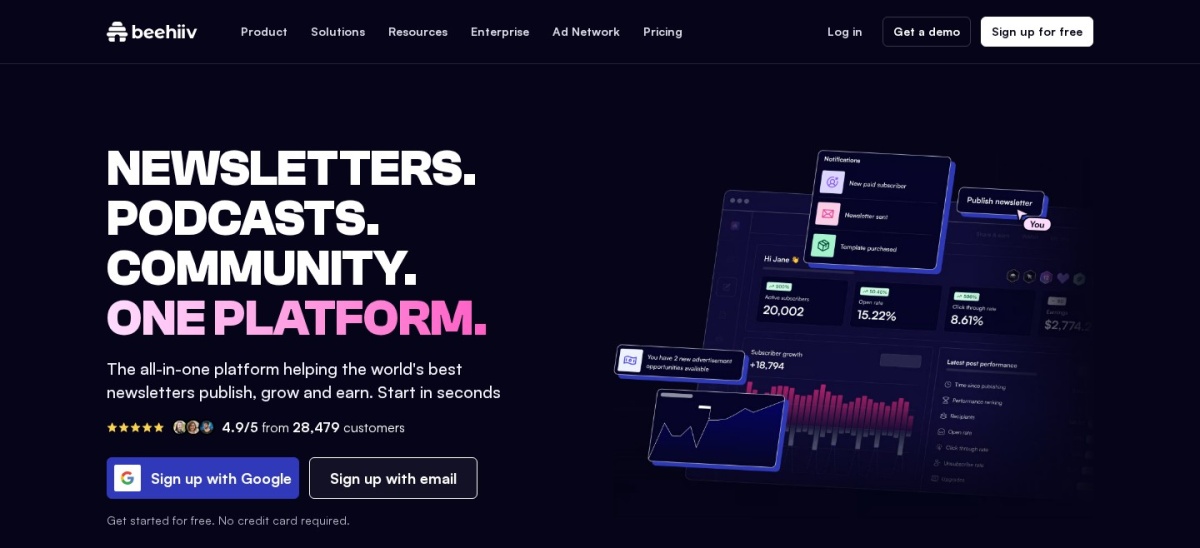
Beehiiv is free to 2,500 subscribers and takes 0% of paid subscriptions, with referrals and an ad network built in.
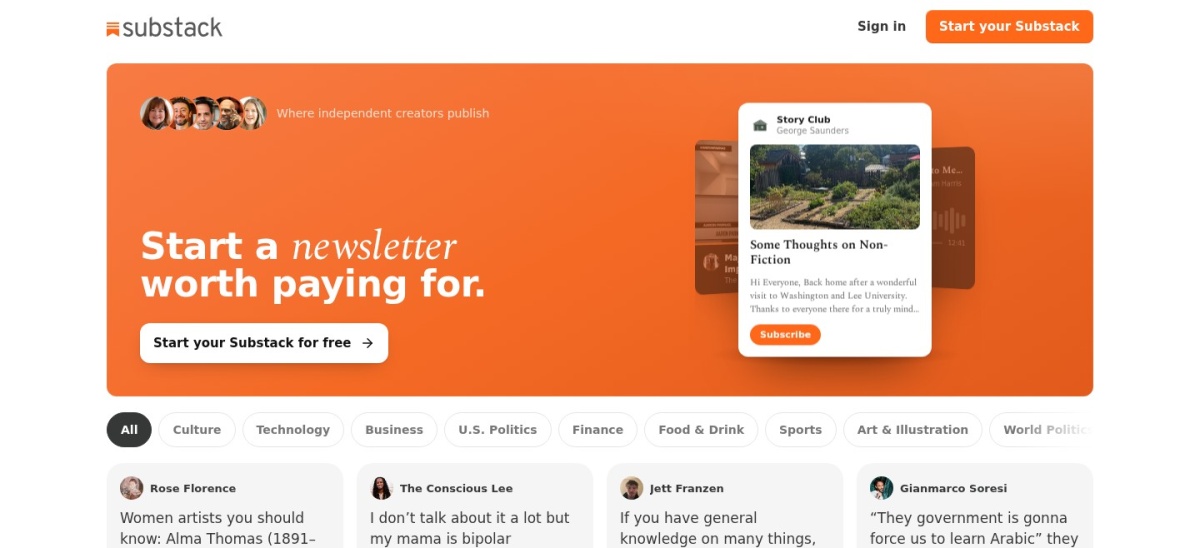
Substack charges no monthly fee at any list size and takes 10% of paid subscription revenue.
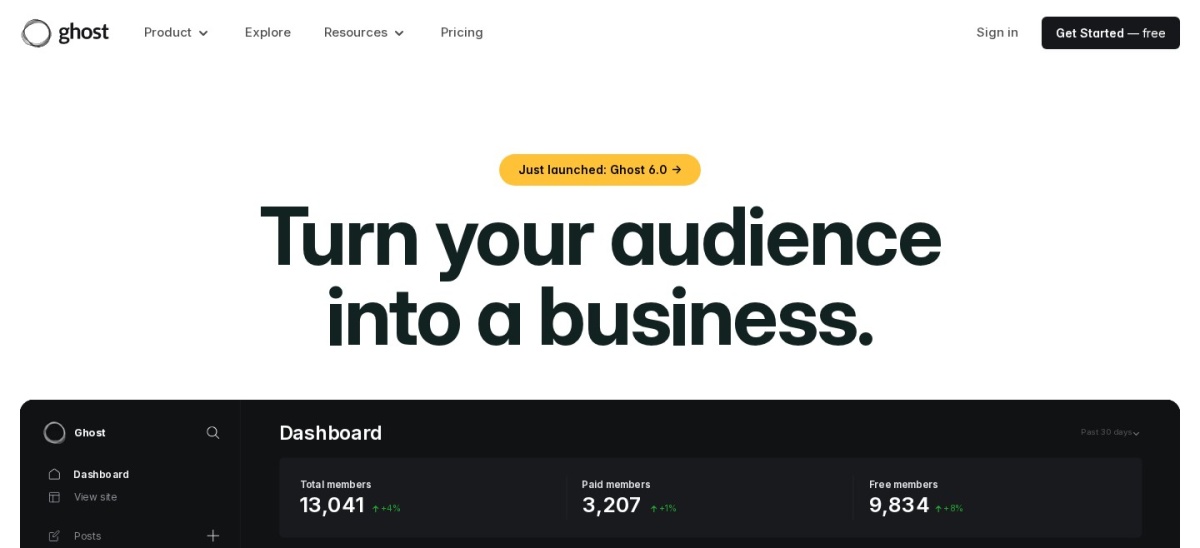
Ghost(Pro) starts at $18 a month billed yearly and takes 0%, with self-hosting free for writers who want full control.
Kit is free to 10,000 subscribers, the largest free list here, but automations need the $33-a-month Creator plan.
The cheapest paid plans run from $9 a month (Buttondown, EmailOctopus) to $49 a month (beehiiv Lite).
How do you choose newsletter platforms for writers?
The revenue cut is the number that matters most. A platform that takes 10% of paid subscriptions costs a writer earning $1,000 a month $100 a month, while a flat-fee platform costs the same whether the list earns $100 or $10,000.
Free plan limits decide how far you get before paying. Kit covers 10,000 subscribers free, beehiiv and EmailOctopus cover 2,500, and Buttondown stops at 100, so a writer testing an idea gets a very different runway on each.
Discovery is the other split. Substack and beehiiv put your work in front of readers through recommendations and a reader network, while Ghost and Buttondown leave growth to you. Our guide on growing an email list covers the habits that work on any platform.
Ownership is the last question. Ghost is open source and self-hostable, so no platform can change your terms, while Substack and beehiiv host everything for you and keep the keys.
beehiiv is a newsletter-first platform built for writers who want to grow a list into a business. The free plan covers 2,500 subscribers with unlimited sends, landing pages and the recommendations network, and paid plans add referrals, automations and an ad network.
The trade off is price. Lite costs $49 a month billed yearly at 1,000 subscribers, and the bill rises with the list, so a large free list costs more here than on Kit. It suits writers who want growth tools and ad revenue in one place.
What we like
Free plan covers 2,500 subscribers with unlimited sends
Referral program, recommendations and ad network built in
Takes 0% of paid subscription revenue
Rated 4.5 out of 5 on G2
Watch out for
Lite at $49 a month is the priciest paid step here
Substack is a publishing platform where writers post free and paid newsletters from one page, with no design work and no monthly fee. Readers subscribe to the publication, discover new writers through the reader network, and pay through Stripe.
The trade off is the 10% cut. Substack takes 10% of paid subscription revenue on top of Stripe processing fees, so a writer earning $1,000 a month pays $100 to the platform. It suits writers who want the fastest free start and built-in discovery.
Ghost is an open-source publishing platform that combines a website, newsletter and paid memberships in one product. The managed Ghost(Pro) Starter plan costs $18 a month billed yearly for 1,000 members, and the open-source code is free to self-host.
The trade off is that paid subscriptions need the Publisher plan at $29 a month billed yearly, and self-hosting means paying for email delivery separately. It suits writers who want to own their site, their list and every cent of revenue.
What we like
Open source, with free self-hosting
0% fee on paid subscriptions and tips
Website, newsletter and memberships in one product
Rated 4.7 out of 5 on Capterra
Watch out for
No free hosted plan, only a 14-day trial
Paid subscriptions need the $29 Publisher plan
Self-hosting adds email delivery costs
Publisher adds paid subscriptions and custom themesVisit ghost.org
04
Kit
4.4/5on G2 (233 reviews, checked Nov 2026)
Paid from$33/mo
Best for creators who sell by email
Free planUp to 10,000 subscribers
AutomationsCreator plan only
Sales fee3.5% + 30c per sale
Paid planCreator, $33/mo
kit.com
Kit homepage, captured Nov 2026.
Kit, formerly ConvertKit, is an email platform for creators who sell to their audience. The free Newsletter plan covers 10,000 subscribers with unlimited broadcasts, landing pages, forms and tagging, plus digital product sales on every plan.
The trade off is automation. Visual automations, email sequences and branding removal need the Creator plan at $33 a month billed yearly, and every sale carries a 3.5% plus 30 cent fee. It suits writers who sell courses, books or paid newsletters by email.
What we like
Largest free plan here: 10,000 subscribers
Unlimited sends and landing pages on free
Sell digital products on every plan
Free migration from another platform
Watch out for
Automations and sequences need Creator
Creator rose from $29 to $39 a month in 2025
3.5% plus 30 cent fee on every sale
Creator adds automations, sequences and no brandingVisit kit.com
05
Buttondown
4.8/5on Capterra (114 reviews, checked Nov 2026)
Paid from$9/mo
Best minimalist newsletter tool
Free planFirst 100 subscribers
Revenue cut0%, flat fee
Paid subscriptions+$9/mo add-on
Paid plan$9/mo at 1,000 subs
buttondown.com
Buttondown homepage, captured Nov 2026.
Buttondown is a small, independent newsletter platform for writers who want email without the marketing suite. The free plan covers the first 100 subscribers with a Markdown editor, a hosted archive and a custom sending domain.
The trade off is the add-on pricing. Paid subscriptions cost an extra $9 a month on top of the $9 base plan at 1,000 subscribers, and automations cost extra again. It suits minimalist writers who value a small team and a stable price.
MailerLite is a simple email platform with a clean drag-and-drop editor, landing pages, websites and a visual automation builder. The free plan covers 250 subscribers and 2,500 emails a month, and the Comfort plan starts at $12 a month.
The trade off is the small free plan. MailerLite cut free coverage to 250 subscribers in November 2026, and paid newsletters only arrive on paid plans. It suits writers who want a friendly all-rounder at a low monthly price.
Mailchimp is the best-known email marketing platform, with the largest template library, more than 300 integrations and simple automation flows. The free plan covers 250 contacts and 500 sends a month, and Essentials starts at $13 a month.
The trade off is the bill. The price rises steeply with contact count, reaching $75 a month at 5,000 contacts, and the free plan is now one of the smallest here. It suits writers who want the widest template and integration choice.
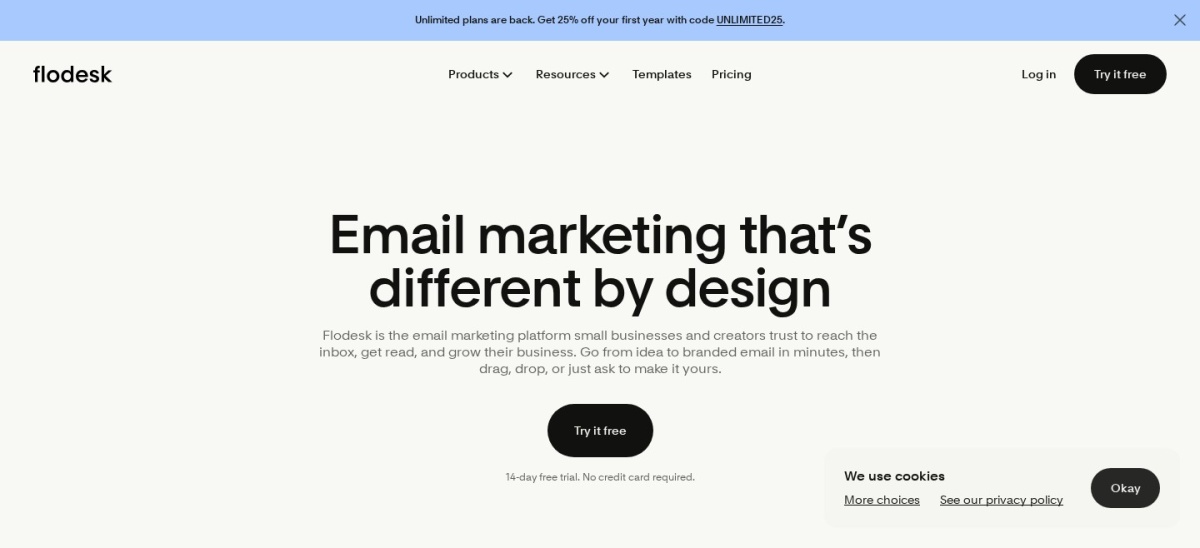
Flodesk is a design-first email platform built around beautiful templates and typography. The Email plan costs $38 a month billed annually for unlimited subscribers and unlimited sends, with workflows, forms and A/B testing included.
The trade off is the flat price and the missing free plan. There is no free tier, only a 14-day trial, and a writer with 200 subscribers pays the same $38 as one with 200,000. It suits design-led writers with a list big enough to justify the flat fee.
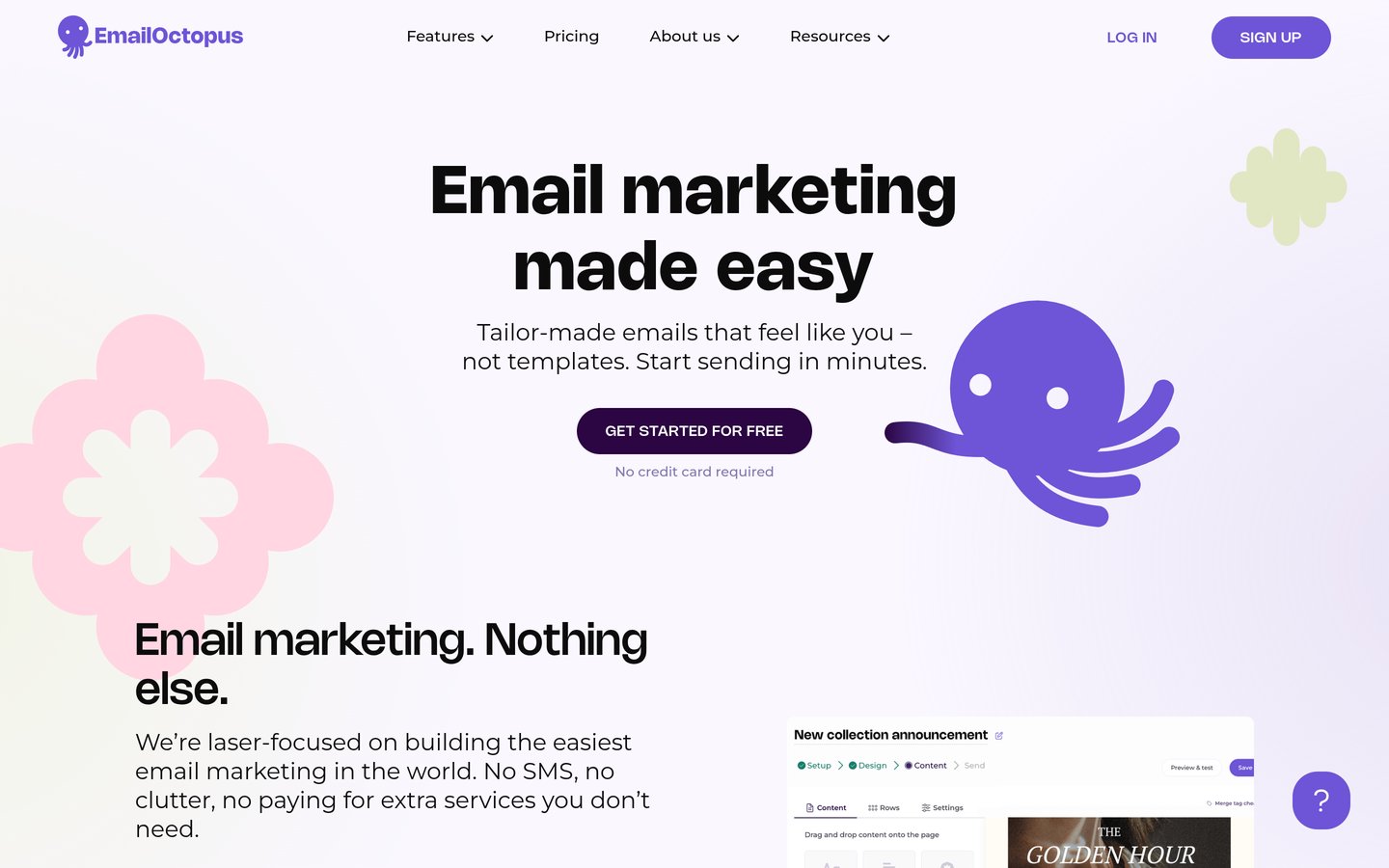
EmailOctopus is a plain email platform that does email and nothing else, with a drag-and-drop editor, landing pages, forms and automations. The free Starter plan covers 2,500 subscribers and 10,000 emails a month with no time limit.
The trade off is depth. There is no built-in ad network, recommendation network or paid subscription system, so earning from the list needs another tool. It suits writers who want a cheap, simple home for a newsletter.
A percentage cut scales with your income, while a flat fee does not. On Substack, $500 a month in paid subscriptions costs $50 a month in platform fees, and $5,000 a month costs $500.
Flat-fee platforms flip that math. Beehiiv Lite at $49 a month and Ghost Publisher at $29 a month cost the same whether you earn $100 or $10,000, so they win once a paid list earns a few hundred dollars a month.
Stripe processing sits on top everywhere, at about 2.9% plus 30 cents per transaction, and Kit adds its own 3.5% plus 30 cent fee on sales. Check the fee line on any platform before you compare headline prices.
For a free newsletter, the cut does not matter at all. Pick on the free plan limits and the editor instead, and switch when paid readers arrive.
How we chose
We started from the newsletter platforms writers mention most, then kept the nine with a real free or low-cost entry point and a public pricing page.
Prices come from each vendor's pricing page, checked on 30 November 2026. Ratings and review counts come from G2 or Capterra on the same day. Where a vendor shows a sale, the list shows the regular price.
We left out platforms with no public pricing and tools built only for large marketing teams. No vendor paid for a place, and we do not claim to have used these tools ourselves.
How to choose a newsletter platform for writers
Start with the money, then check the free plan fits your list.
Work out what a 10% cut costs you. Multiply your expected monthly paid revenue by 0.10. Above a few hundred dollars a month, a flat fee beats Substack's cut.
Pick the free plan that fits your list size. Kit covers 10,000 subscribers free and beehiiv 2,500, while Buttondown stops at 100. Start where you will not hit a paywall in month one.
Decide how much discovery you need. Substack and beehiiv bring readers through recommendations; Ghost and Buttondown leave growth to you.
Check you can leave with your list. Every tool here lets you export subscribers, but confirm the export format before you build a list of thousands.
FAQ
What is the best newsletter platform for writers in 2026?
Beehiiv is the best newsletter platform for writers who want to grow and earn. Its free plan covers 2,500 subscribers, and it adds a referral program, a recommendations network and an ad network while taking 0% of paid subscription revenue.
How much does a newsletter platform cost?
Most writers start free. Paid plans in this list run from $9 a month for Buttondown or EmailOctopus to $49 a month for beehiiv Lite, and Substack charges no monthly fee but takes 10% of paid subscription revenue.
Which newsletter platform has the best free plan?
Kit has the largest free plan, covering 10,000 subscribers with unlimited sends. Beehiiv and EmailOctopus both cover 2,500 subscribers free, while Buttondown stops at 100 and Mailchimp at 250 contacts.
Is Substack or beehiiv better for writers?
Beehiiv is better for writers who want to grow and earn, with referrals, an ad network and a 0% revenue cut. Substack is better for writers who want the fastest free start and built-in discovery, and accept its 10% cut on paid subscriptions.
Can beginners use these newsletter platforms?
Yes. Substack and Buttondown are the simplest to start, with almost nothing to set up. Beehiiv, MailerLite and EmailOctopus add more features but stay friendly to first-time senders.
Which newsletter platform is best for a small team?
MailerLite is the best fit for a small team on a budget, with three seats on the free plan and paid plans from $12 a month. Kit adds two seats on Creator, and Ghost Publisher covers three staff users.
SaaS SEO and WordPress specialist with about 8 years of experience. Rakib compares WordPress plugins, themes, hosting and software using public pricing, documentation and user reviews. See how we rank.