Among Nagios alternatives, Zabbix is the best pick for most teams: it is free and open source with no host limits, and hosted Cloud starts at $50 a month. Pick PRTG for the easiest setup with a free 100-sensor tier, or Checkmk if you want Nagios plugin compatibility with auto-discovery.
How we make this list: we compare pricing pages, product documentation and public user reviews, then re-check every price before each update. No product paid for a place. Disclosure.
Zabbix is the only pick here with no licence fee and no host limit: the software is free, and hosted Cloud starts at $50 a month.
PRTG is the easiest move from Nagios, with auto-discovery and a free tier covering 100 sensors.
Checkmk runs Nagios plugins and adds auto-discovery, with a free Community edition and paid Cloud from $2,880 a year.
Site24x7 is the cheapest hosted plan at $9 a month, while Datadog starts at $15 per host a month.
Paid entry prices run from $95 a year for OpManager to $2,880 a year for Checkmk Cloud.
What should you look for in Nagios alternatives?
Start with what Nagios does for you today. Some teams only need host and service checks with alerts, while others need network maps, flow data and APM, and the right replacement depends on which of those you actually use.
Free tiers are genuinely useful here. Zabbix, Icinga and Checkmk Community cost nothing to run yourself, and PRTG covers 100 sensors free, so a small estate can often switch without spending anything. Our guide on how to monitor a WordPress site shows the same thinking on a smaller scale.
Watch how each tool charges. Per-host, per-sensor, per-service and per-user pricing all scale differently, so a cheap entry price can still grow fast once you add devices, checks or seats.
Check plugin compatibility before you commit. If your Nagios setup leans on custom plugins, Icinga and Checkmk run them, while cloud platforms will need new integrations. Our hosting uptime guide explains why uptime checks alone are not enough for a busy site.
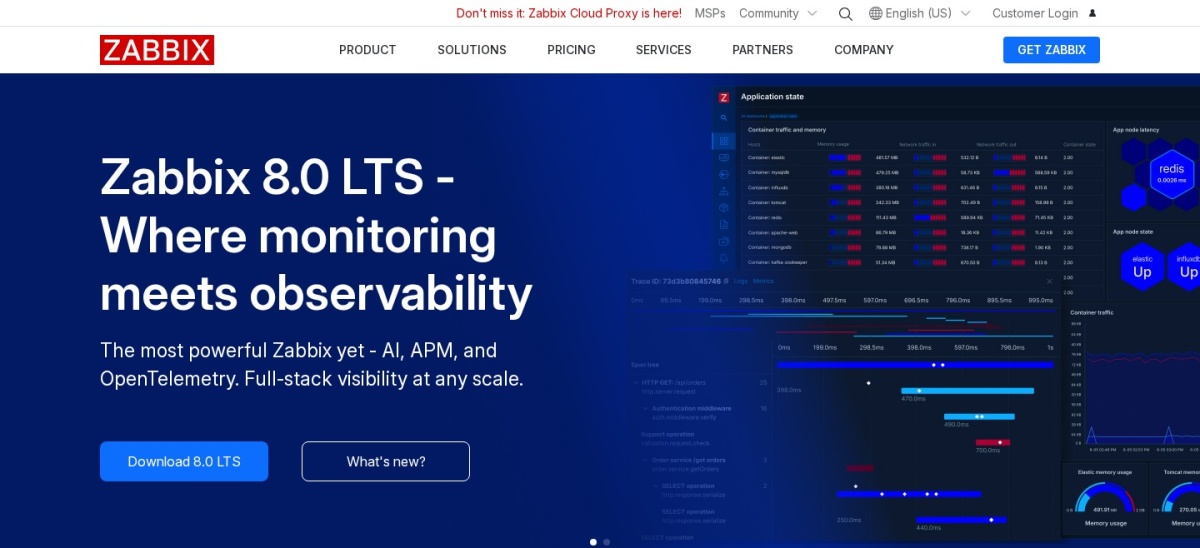
Zabbix is a free, open-source monitoring platform for servers, networks, cloud services and applications, with no licence fee and no host limit. The current release is 8.0 LTS, with AI features, APM and OpenTelemetry support, and the managed Zabbix Cloud option starts at $50 a month for the Nano tier.
The trade off is setup effort. Zabbix needs a Linux server and database, and templates, triggers and dashboards take time to shape to your estate. It suits teams with Linux skills that want enterprise monitoring without licence fees, and hosted Cloud removes the server work.
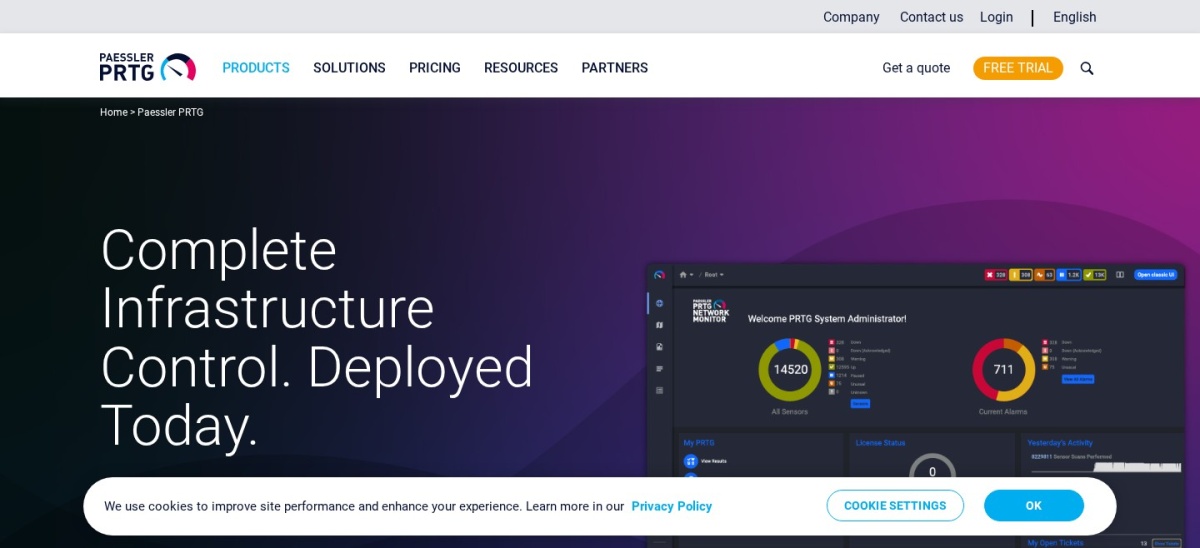
PRTG is a sensor-based monitoring tool from Paessler for networks, servers, applications and devices. Auto-discovery finds devices and suggests sensors, and the freeware edition covers 100 sensors, about 10 devices, with the full feature set included.
The trade off is the sensor model. Every monitored item uses sensors, so a busy estate can outgrow a tier fast, and the server runs on Windows only. It suits small and mid-sized teams that want on-premises monitoring with clear, predictable tiers.
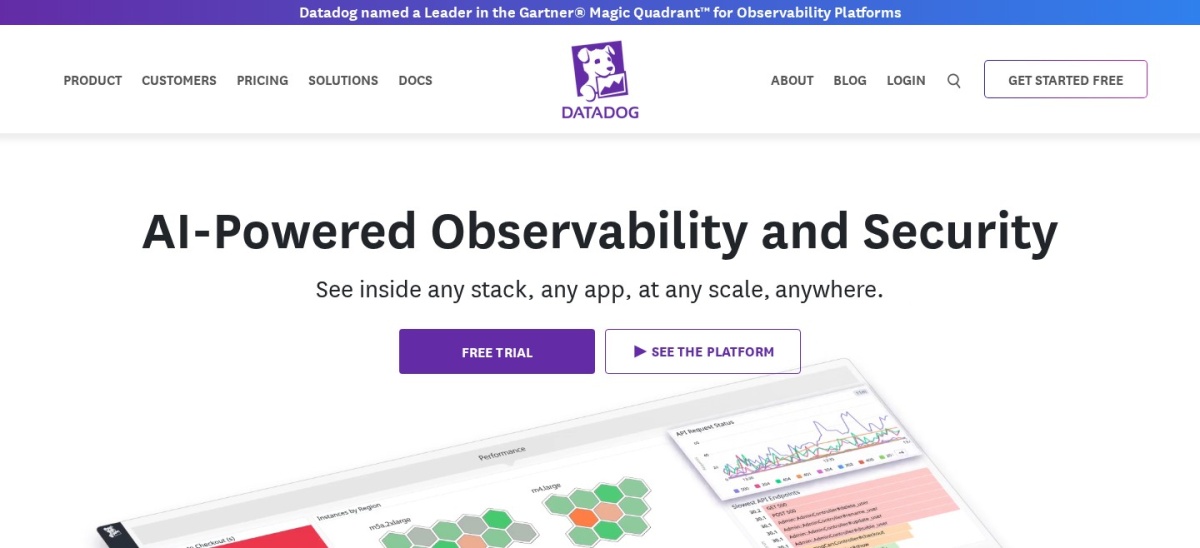
Datadog is a cloud monitoring platform that covers infrastructure, applications, logs and real user activity in one place. The free tier covers up to 5 hosts, and Infrastructure Pro starts at $15 per host per month billed annually, with APM from $31 per host per month.
The trade off is cost at scale. Per-host and per-GB charges add up fast once you turn on APM, logs and synthetics across many services. It suits teams that want one platform for everything and can watch usage.
What we like
One platform for infra, APM, logs and browser monitoring
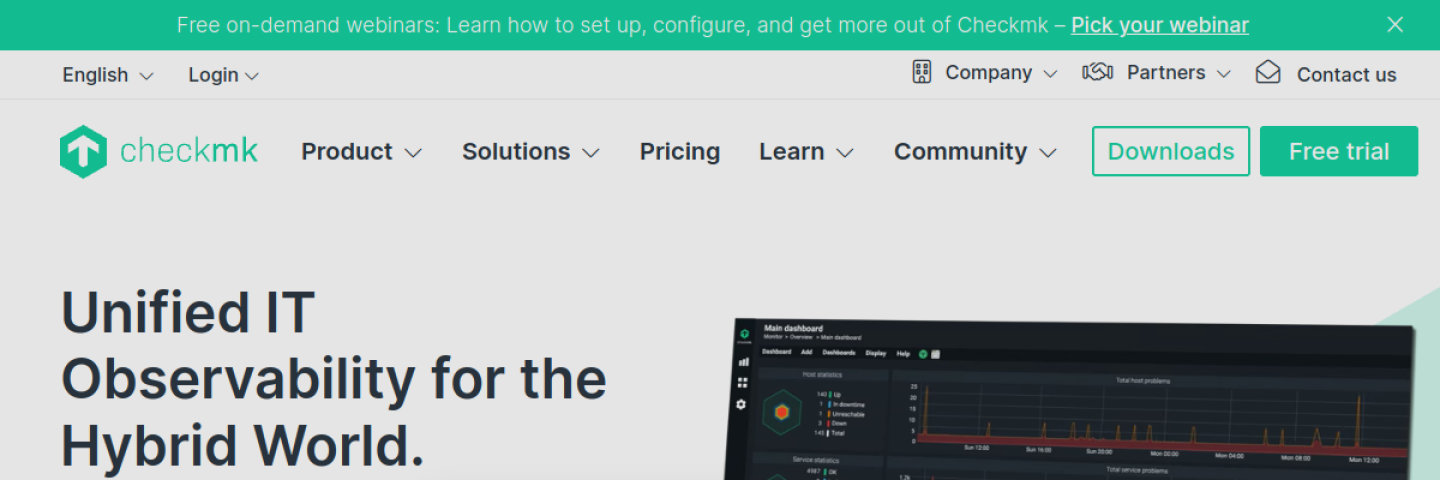
Checkmk is an open-source-based monitoring platform with more than 2,000 built-in check plugins and automatic service discovery. The Community edition is free, it runs Nagios plugins, and the managed Cloud edition starts at $2,880 a year.
The trade off is pricing. Checkmk bills by monitored service rather than by host, so the bill depends on how many checks discovery finds, and the self-hosted Pro edition starts at $275 a month. It suits teams that want open-source roots with commercial support.
Icinga is an open-source monitoring platform that grew out of Nagios, and it runs Nagios plugins without changes. Icinga 2 monitors hosts, services and networks with a web interface, and the Icinga Director module replaces hand-written config files with a visual setup.
The trade off is effort. Icinga is free forever, but setup and scaling need Linux skills, and paid support is quote-based rather than a listed plan. It suits Nagios shops that want a familiar, open-source move with no licence cost.
OpManager is a monitoring tool from ManageEngine for networks, servers and applications, with real-time alerts and NOC-style views in one dashboard. The free edition covers 3 devices, and the Standard edition starts at $95 a year for 10 devices.
The trade off is setup effort. Advanced features take time to configure, and features such as flow analysis and configuration management are add-ons. It suits IT teams that want broad on-premises coverage at a low entry price.
What we like
Lowest paid entry price for on-premises tools here
Site24x7 is a cloud monitoring service for websites, servers, applications and networks from one dashboard. The Starter plan costs $9 a month and covers 11 monitors, with real-time alerts by email, SMS and push.
The trade off is depth at the low end. Starter covers only 11 monitors, so growing estates move to Pro at $35 a month, and there is no permanent free plan. It suits small teams that want cheap, broad monitoring without running a server.
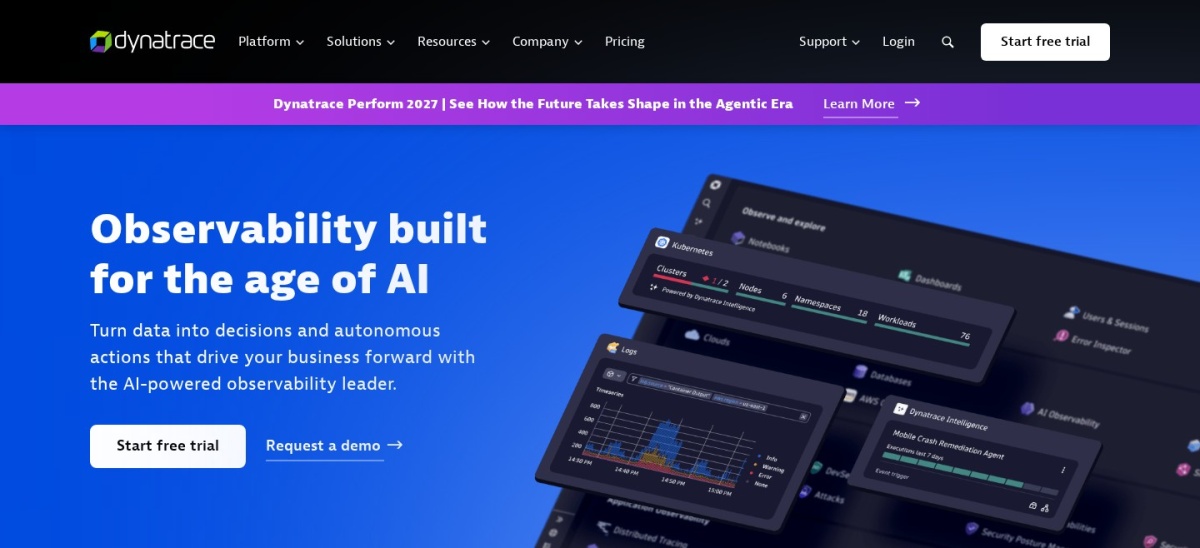
Dynatrace is a full-stack observability platform built around automatic discovery and AI root-cause analysis. Its Davis AI maps dependencies and points to the cause of a problem, and Infrastructure Monitoring starts at $29 per host per month.
The trade off is price and complexity. Full-stack monitoring costs $58 per month per 8 GiB host, and usage draws down an annual platform commitment, which is hard to forecast. It suits large teams running complex hybrid estates.
New Relic is a full-stack observability platform with a generous free tier: 100 GB of data ingest a month and one full-platform user at no cost. Core users cost $49 a month, and the platform covers infrastructure, APM, logs and browser monitoring.
The trade off is the seat model. Full-platform seats add up quickly for larger engineering teams, and ingest beyond 100 GB costs extra. It suits small teams that want full observability without a big starting bill.
The biggest change is configuration. Nagios leans on text files, while PRTG, Checkmk and Icinga Director use a web interface, so the team that edits configs today needs to learn a new workflow.
Alerting changes too. Most replacements send alerts to email, SMS and chat tools out of the box, and several add on-call schedules and escalation, which Nagios Core leaves to add-ons.
Expect a parallel run. Keep Nagios watching your estate while the new tool proves its alerts for a few weeks, then retire the old checks once the new dashboards match what your team trusts.
How we chose
We started from the best-known Nagios replacements on G2, then kept nine with published ratings, public pricing and an established user base.
Prices come from each vendor's pricing page or vendor-supplied G2 listing, checked on 29 November 2026. Ratings and review counts come from G2 on the same day. Where a vendor shows a sale, the list shows the regular price.
We left out Nagios itself, including Nagios XI, since this list is about replacements, and tools with quote-only pricing and no public rating, including SolarWinds NPM. No vendor paid for a place, and we do not claim to have used these tools ourselves.
How to choose a Nagios alternative
Start with what Nagios does for you today, then match the replacement to that job.
Count what you will monitor. Hosts, devices, sensors and users all drive the bill. A tool that is cheap for 10 hosts can be costly for 200.
List the plugins you cannot lose. If custom Nagios plugins run your checks, shortlist Icinga and Checkmk first, since both run them without changes.
Try the free tier on real systems. Run the free plan or trial against your own servers for a week and check alert quality, not just dashboards. See how to check your hosting uptime for a simple first test.
Price a year ahead. Work out the cost at twice your current size, since monitoring bills grow with your estate.
FAQ
What is the best Nagios alternative in 2026?
Zabbix is the best Nagios alternative for most teams. It is free and open source with no host limits, and hosted Zabbix Cloud starts at $50 a month. PRTG is the easier move if you want guided setup, and Checkmk fits teams that want Nagios plugin compatibility.
Is there a free alternative to Nagios?
Yes. Zabbix, Icinga and Checkmk Community are free and open source with no licence fee. PRTG covers 100 sensors free, OpManager covers 3 devices free, and Datadog and New Relic both have free tiers for small estates.
How much do Nagios alternatives cost?
Entry prices run from free for Zabbix, Icinga and Checkmk Community to $9 a month for Site24x7 Starter and $95 a year for OpManager Standard. At the top end, Checkmk Cloud starts at $2,880 a year and PRTG 500 costs $200 a month.
Which Nagios alternative is best for small teams?
PRTG is the best pick for small teams that want a quick setup, with auto-discovery and a free 100-sensor tier. Site24x7 is the cheapest hosted option at $9 a month, and OpManager Standard covers 10 devices for $95 a year.
Zabbix vs PRTG: which is better?
Zabbix is better if you want free, unlimited monitoring and have Linux skills to run it. PRTG is better if you want fast setup and a polished interface, with auto-discovery and a free 100-sensor tier. Zabbix is rated 4.3 out of 5 on G2 and PRTG 4.7 out of 5.
Can I reuse my Nagios plugins with an alternative?
Yes, with Icinga and Checkmk. Icinga grew out of Nagios and runs Nagios plugins without changes, and Checkmk keeps Nagios plugin compatibility while adding auto-discovery. Cloud platforms such as Datadog and New Relic need their own integrations instead.
SaaS SEO and WordPress specialist with about 8 years of experience. Rakib compares WordPress plugins, themes, hosting and software using public pricing, documentation and user reviews. See how we rank.