HiveMQ is the best of the MQTT alternatives for most teams, with a 4.5 out of 5 G2 rating from 89 reviews and a managed cloud that starts at about $248 a month. Pick EMQX for very large connection counts, or Eclipse Mosquitto when a free, lightweight broker on your own hardware is enough.
How we make this list: we compare pricing pages, product documentation and public user reviews, then re-check every price before each update. No product paid for a place. Disclosure.
HiveMQ leads with a 4.5 out of 5 G2 rating from 89 reviews, the largest review base of any dedicated MQTT broker here.
EMQX has the highest rating in this list at 4.6 out of 5 on G2, and its managed Dedicated Flex plan starts at about $234 a month.
Eclipse Mosquitto is free and runs on hardware from single-board computers to full servers, but it has no built-in clustering.
AWS IoT Core charges $1 per million messages after a 12-month free tier, while Azure IoT Hub starts at a flat $10 per unit a month.
Four of the nine tools are free to run yourself, and paid plans run from $10 a month to quoted enterprise pricing.
What should you look for in MQTT alternatives?
MQTT is a protocol, not a product, so every option here is a broker or a platform that speaks MQTT. The choice is really about who runs the broker and how far it has to scale.
Start with the fleet size you expect in a year, not the one you have today. A single Mosquitto node handles a small fleet well, but a fleet that grows past one server needs clustering or a managed cloud.
Managed clouds remove the operations work, and they charge for it. HiveMQ Cloud Starter bills by the hour plus per million messages, while EMQX Cloud Dedicated Flex starts at a flat hourly rate, so the cheaper option depends on your traffic.
Free self-hosted brokers cost nothing in licences, but they cost your time. Our guide on how to monitor a WordPress site shows the same trade off in another setting: free tools still need someone watching them.
Ratings are thin in this niche because most MQTT brokers are infrastructure, not apps people review. HiveMQ has 89 G2 reviews, while the open-source brokers have few or none, so treat small review counts with care.
HiveMQ is a dedicated MQTT platform built for industrial and enterprise fleets, with clustering, a rules engine and extensions for data integration. The free Community Edition covers small set-ups, and the managed Cloud Starter plan allows 10,000 connections with a 99.95% uptime SLA.
The trade off is usage-based billing. Cloud Starter costs from $0.34 an hour plus $0.80 per million messages, so the monthly bill rises with traffic, and the free Serverless cloud plan retires on 31 December 2026. It suits teams running large fleets that need support and uptime guarantees.
What we like
Largest G2 review base of any dedicated MQTT broker here
Clustering and enterprise extensions built in
Managed cloud with a 99.95% uptime SLA
Free Community Edition for small set-ups
Watch out for
Usage-based cloud billing is hard to predict
Free Serverless cloud plan retires 31 December 2026
EMQX is an MQTT platform built to hold millions of concurrent connections, with a rules engine, data integrations and a managed cloud. The Serverless free tier covers 1 million session minutes, 1 GB of traffic and 1 million rule actions a month for up to 1,000 connections.
The trade off is the jump to production pricing. Dedicated Flex starts at about $234 a month for a single-tenant cluster with a 99.99% SLA, and the self-managed Enterprise plan is quoted. It suits teams with very large device counts that want one broker for edge and cloud.
What we like
Highest G2 rating in this list at 4.6 out of 5
Generous Serverless free tier for small projects
Built-in clustering and 40+ integrations
99.99% SLA on the Dedicated Flex plan
Watch out for
Only 23 G2 reviews, a small base
Dedicated Flex is a big step up from free
Enterprise pricing is quoted, not published
Paid plans add a dedicated cluster, SLA and 24/7 supportVisit emqx.com
03
Eclipse Mosquitto
5/5on SourceForge (2 reviews, checked Nov 2026)
PriceFree
Best free broker for small fleets
MQTT versions5.0, 3.1.1, 3.1
ClusteringNo, single node
Free planFree, open source
Paid planNone, Pro via Cedalo
mosquitto.org
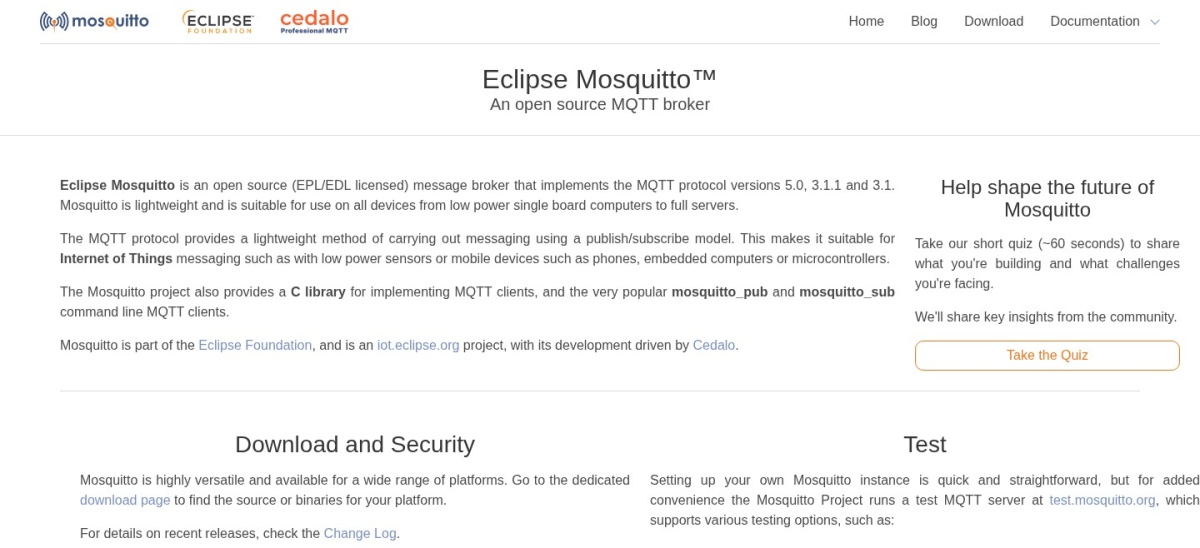
Eclipse Mosquitto homepage, captured Nov 2026.
Eclipse Mosquitto is the free, open-source MQTT broker most projects meet first, and it runs on hardware from low-power single-board computers to full servers. It ships with the widely used mosquitto_pub and mosquitto_sub command-line clients, and the project runs a public test server at test.mosquitto.org.
The trade off is scale. Mosquitto is a single broker with no built-in clustering, so very large fleets outgrow it or need workarounds, and there is no management UI. It suits home automation, prototypes and small commercial fleets that want a free broker with no licence cost.
AWS IoT Core is the managed MQTT broker inside AWS, with a device registry, authentication, Device Shadow state and a rules engine that routes messages to other AWS services. The 12-month free tier covers 500,000 messages a month, and messaging costs $1 per million messages after that.
The trade off is cost control. Connection minutes, shadow operations and rules are billed separately, so the bill grows with traffic and needs monitoring. It suits teams whose stack already lives on AWS and who want MQTT without running a broker.
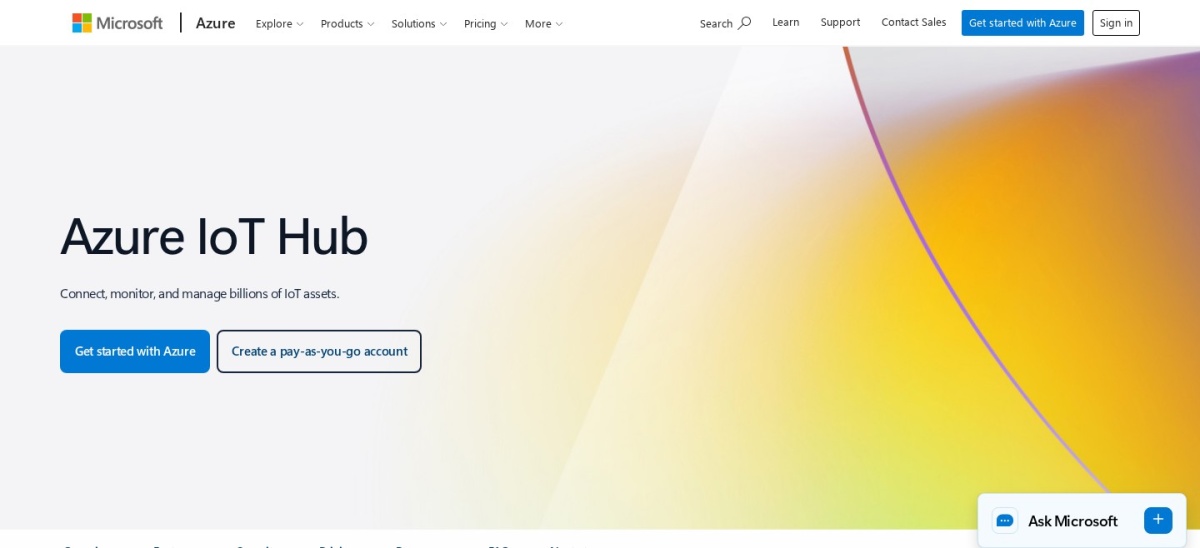
Azure IoT Hub is the cloud service behind most Azure IoT fleets, with two-way messaging, per-device authentication and device twins that hold each device's state. The Basic B1 tier costs $10 per IoT Hub unit a month for 400,000 messages a day, and the free tier allows 8,000 messages a day across 500 devices.
The trade off is that the cheap tier is one-way only. Basic leaves out cloud-to-device messaging, device twins and jobs, which need the Standard tier from $25 a unit a month. It suits teams already on Azure that want predictable per-unit pricing.
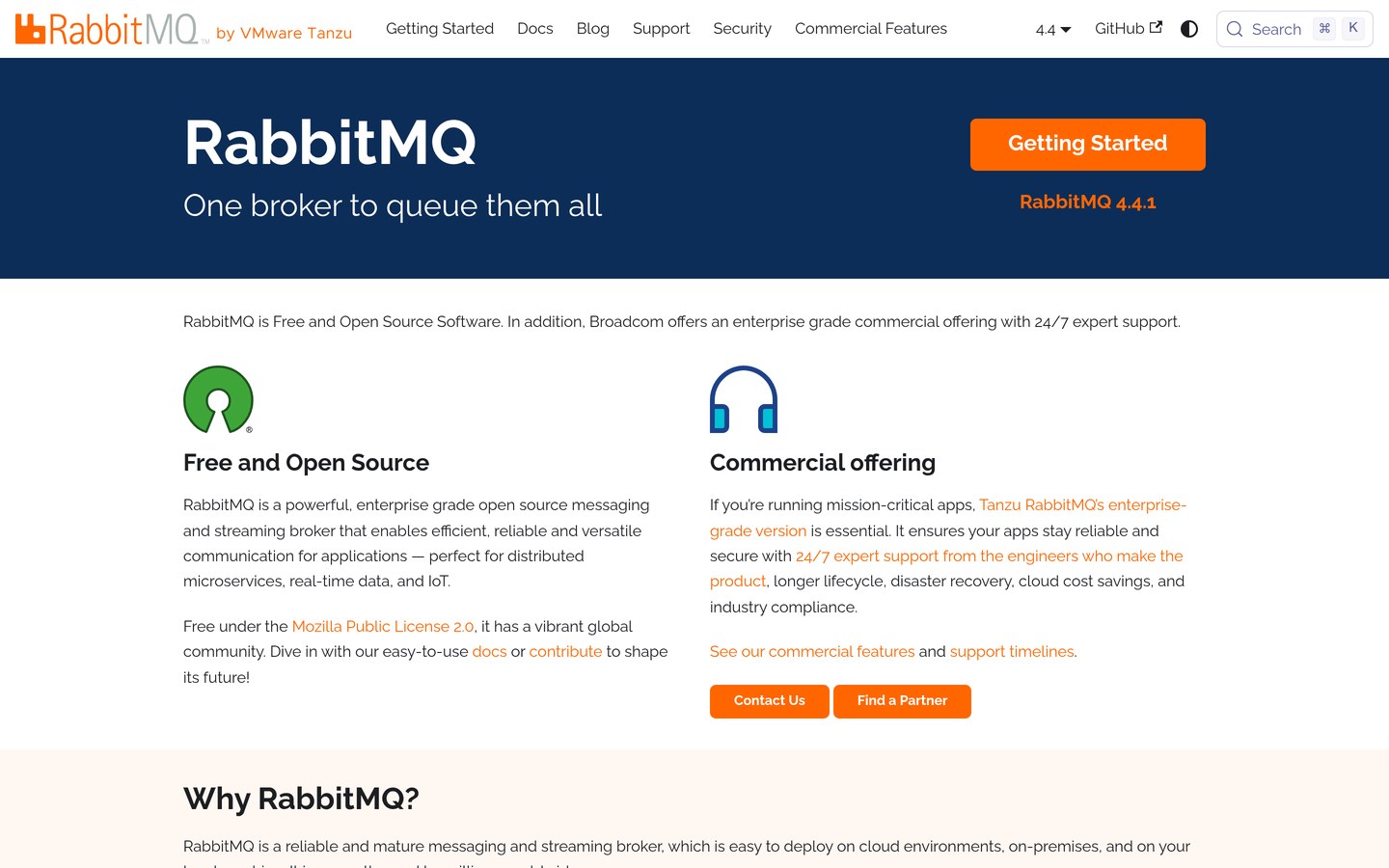
RabbitMQ is a free, open-source message broker that handles queues, routing and streams, and it speaks MQTT through a plugin alongside AMQP and STOMP. The current release is 4.4.1, and Broadcom offers a commercial Tanzu edition with 24/7 expert support for mission-critical apps.
The trade off is that MQTT is a second language here, not the first. Queues, exchanges and routing add concepts an MQTT-only broker does not have, and clustering takes care to run well. It suits teams that already use RabbitMQ and want to add MQTT devices to the same broker.
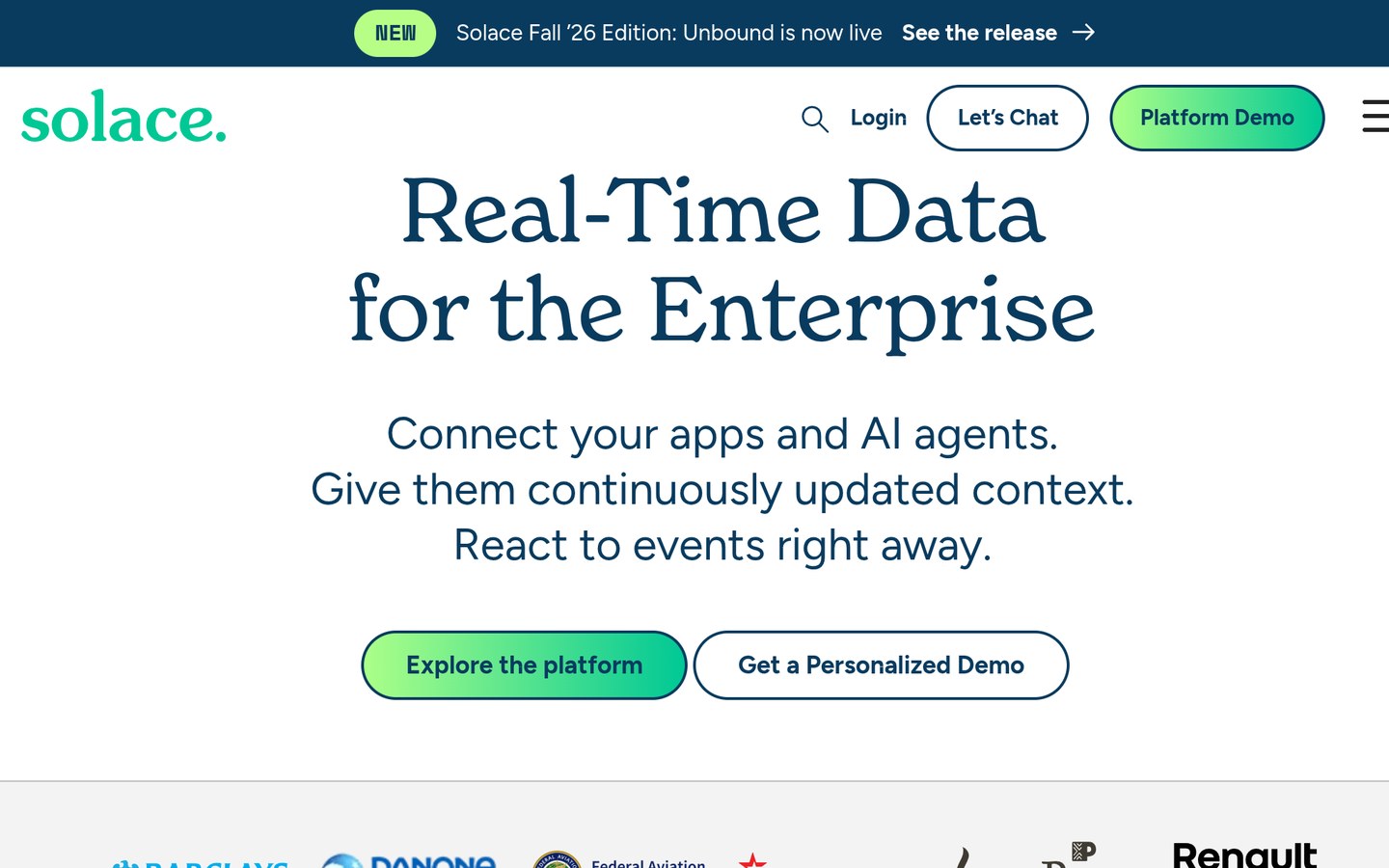
Solace PubSub+ is an event broker that speaks MQTT, AMQP, JMS and REST on one bus, so a Java service, an IoT device and a browser can share the same topic hierarchy. The Standard edition of the software broker is free for production within capacity limits, and the same broker runs as a managed cloud service or a hardware appliance.
The trade off is that no prices are published at any tier. Cloud and software plans are quoted by broker tier, from ENT-250 to ENT-100K, so you cannot judge the budget before a sales call. It suits large enterprises building an event mesh across regions and clouds.
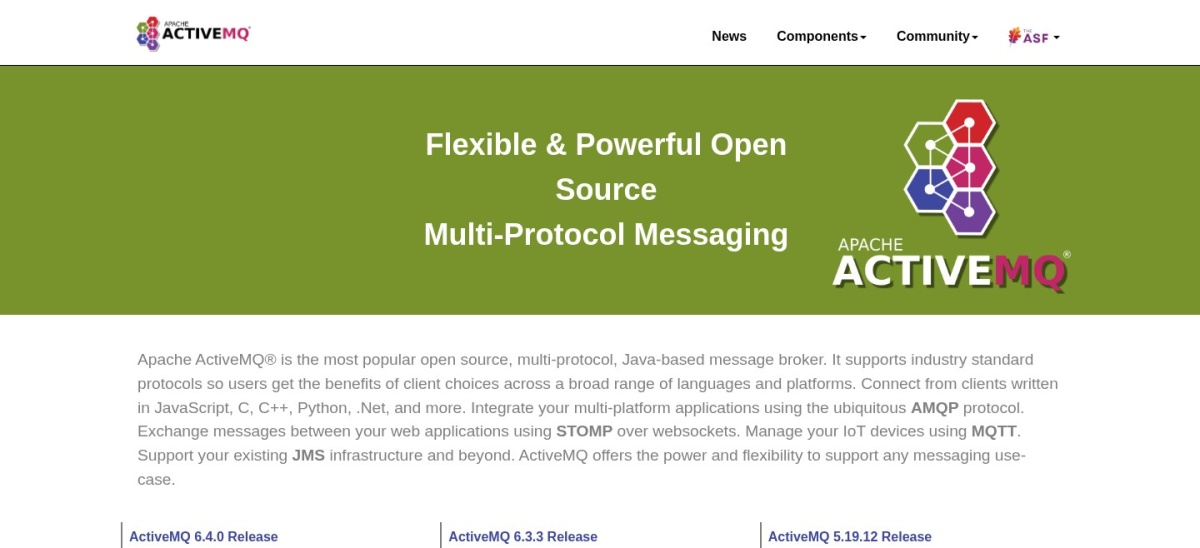
Apache ActiveMQ is a free, open-source, Java-based message broker that supports MQTT alongside AMQP, STOMP and JMS, so clients in many languages can share one broker. Recent releases include 6.4.0 and 6.3.3, and it manages IoT devices over MQTT while also serving existing JMS infrastructure.
The trade off is age and focus. ActiveMQ is a general message broker rather than an MQTT-first product, and support comes from the community rather than a vendor. It suits Java teams that already run ActiveMQ and want to add MQTT devices without a second broker.
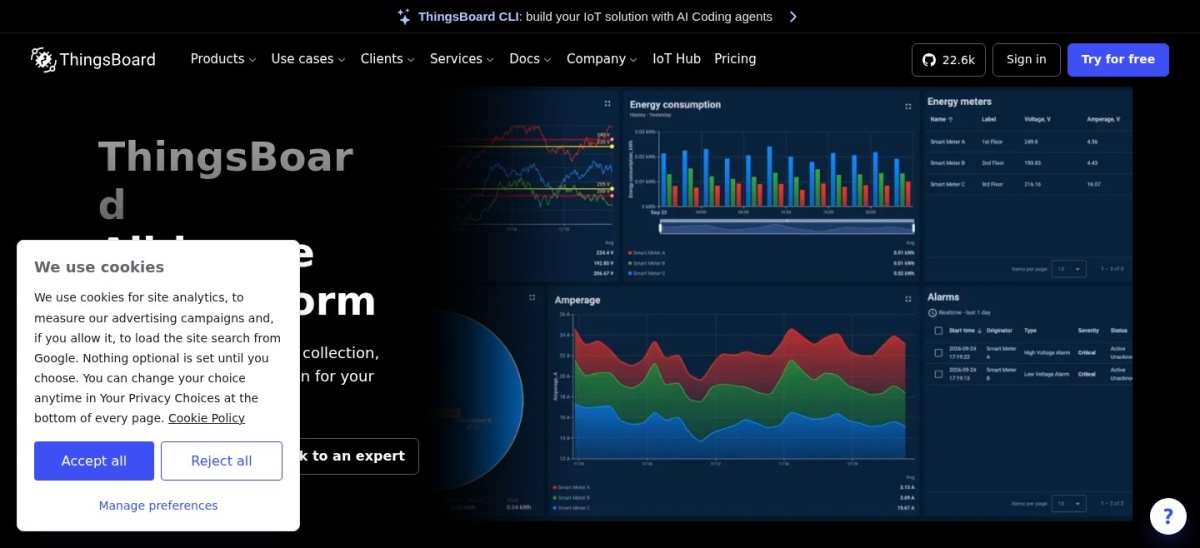
ThingsBoard is an open-source IoT platform for device management, telemetry, rule chains and dashboards, with MQTT built in as a device transport. The Community Edition is free to self-host, and ThingsBoard Cloud starts with a free plan for 5 devices, then Prototype at $49 a month for 50 devices and 10 million data points.
The trade off is that it is a full platform, not just a broker. Cloud plans cap data points per month, so a chatty fleet needs a higher tier or top-up packs. It suits teams that want dashboards and device management in the same product as their MQTT broker.
Self-hosted vs managed: where the cost really sits
Self-hosted brokers such as Mosquitto, RabbitMQ and ActiveMQ cost nothing in licences. The bill is your server, your time to patch and monitor, and your on-call rota when the broker stops at night.
Managed clouds such as HiveMQ Cloud and EMQX Cloud move that work to the vendor. You pay by the hour or by the message, and you get an uptime SLA and support in return.
Cloud platforms such as AWS IoT Core and Azure IoT Hub sit in between. There is no broker to run, but the bill follows your traffic, so count messages per device per day before you commit.
For a prototype, start free. Mosquitto on a small server or the free tier of a managed cloud will show whether your devices behave before you sign a contract.
How we chose
We started from the MQTT brokers and platforms teams actually shortlist in 2026: dedicated brokers such as HiveMQ, EMQX and Mosquitto, cloud services such as AWS IoT Core and Azure IoT Hub, and general brokers that speak MQTT such as RabbitMQ, Solace and ActiveMQ.
Prices come from each vendor's pricing page, checked on 29 November 2026. Ratings and review counts come from G2, Capterra or SourceForge on the same day. Where a vendor shows a sale, the list shows the regular price.
We left out Google Cloud IoT Core, which was retired in 2023, and VerneMQ and Cedalo, which have no public rating on G2, Capterra or Trustpilot. No vendor paid for a place, and we do not claim to have used these tools ourselves.
How to choose an MQTT alternative
Count your devices and messages first, then match the broker to the fleet.
Count devices and messages per day. A fleet of 50 sensors sending one reading a minute is a very different bill from 50,000 devices sending ten a second.
Decide who runs the broker. Self-host Mosquitto or RabbitMQ if you have operations time, or pick a managed cloud if you want an SLA and support.
Check the protocol version you need. Most of these brokers support MQTT 5.0, but check shared subscriptions, retained messages and bridging if your devices rely on them.
Start on a free tier and measure. Run your real devices against the free tier for a week, then compare the measured traffic with the paid plan that fits it. See how to monitor a WordPress site for the same measure-first habit.
FAQ
What are the best MQTT alternatives in 2026?
HiveMQ is the best MQTT alternative for most teams, with a 4.5 out of 5 G2 rating from 89 reviews and a managed cloud from about $248 a month. EMQX suits very large connection counts, and Eclipse Mosquitto is the best free broker for small fleets.
How much do MQTT alternatives cost?
Four of the nine tools here are free to run yourself. Paid plans start at $10 a month for Azure IoT Hub and $49 a month for ThingsBoard Cloud, while HiveMQ Cloud starts at about $248 a month and EMQX Dedicated Flex at about $234 a month.
Is there a free MQTT broker?
Yes. Eclipse Mosquitto, RabbitMQ and Apache ActiveMQ are all free and open source, and EMQX, HiveMQ, AWS IoT Core, Azure IoT Hub, Solace and ThingsBoard all offer a free tier or free edition with limits.
Which MQTT broker is best for beginners or small teams?
Eclipse Mosquitto is the easiest start: it is free, installs in minutes and runs on a single-board computer or a small server. For a managed start with no server to run, EMQX Cloud Serverless has the most generous free tier here.
HiveMQ vs EMQX: which is better?
HiveMQ has the larger review base at 89 G2 reviews against 23 for EMQX, and the stronger enterprise feature set. EMQX has the higher rating at 4.6 out of 5 and the cheaper managed entry at about $234 a month against about $248 for HiveMQ Cloud Starter.
Is MQTT itself free to use?
Yes. MQTT is an open protocol, so there is no licence fee for using it. You pay for the broker you run or the managed service you use, and for the servers or cloud usage behind it.
SaaS SEO and WordPress specialist with about 8 years of experience. Rakib compares WordPress plugins, themes, hosting and software using public pricing, documentation and user reviews. See how we rank.