Amazon Web Services is the best Microsoft Azure alternative for most teams, with more than 200 services and a 4.6/5 G2 rating. Google Cloud suits data and AI work, while DigitalOcean is the simplest pick, with virtual servers from $4 a month.
How we make this list: we compare pricing pages, product documentation and public user reviews, then re-check every price before each update. No product paid for a place. Disclosure.
AWS is the closest like-for-like Azure replacement, with 200+ services and a 4.6/5 G2 rating from 1,200 reviews.
Google Cloud undercuts AWS on entry compute at $6.11 a month, and adds a $300 credit for new accounts.
DigitalOcean is the cheapest fixed-price start in this list: a Basic Droplet costs $4 a month.
Oracle Cloud has the most generous free tier, with Always Free virtual machines and 10 TB of free outbound transfer a month.
Heroku is the only pick to avoid for new projects: Salesforce moved it to sustaining engineering in February 2026.
How do you choose a Microsoft Azure alternative?
The best Microsoft Azure alternative depends on what you run on Azure today. A team moving virtual machines needs a different platform than a team moving web apps or databases.
Price is the first filter. Hyperscalers bill by the meter, so a small virtual machine can cost $6 to $8 a month, while the same workload on a fixed-price host costs $4 or $5 with no surprises.
Service breadth is the second filter. Only AWS, Google Cloud and Oracle Cloud match Azure's range of managed services, so teams with complex setups should stay with a hyperscaler.
For smaller workloads, a fixed-price host is often the better buy. Our guide on what a VPS is explains how a virtual server compares with a managed cloud platform.
Migration effort is the hidden cost. Moving databases, identity and networking takes longer than moving a single app, so budget weeks, not days, for a full move.
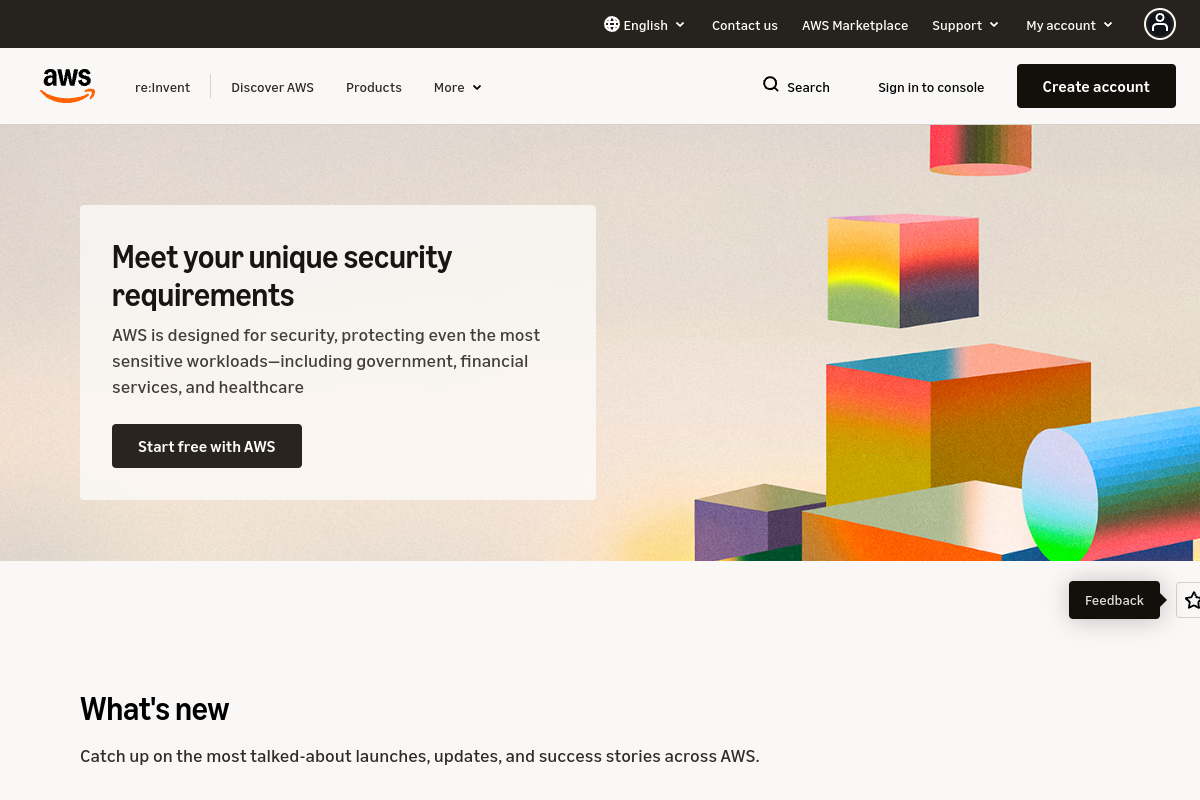
Amazon Web Services is the largest cloud platform in this list, with more than 200 services covering compute, storage, databases, machine learning and analytics. An EC2 t3.micro virtual server costs $7.59 a month on demand, and the Free Tier covers 12 months of limited use across popular services.
The trade off is complexity. The console, IAM permissions and billing take time to learn, and pay-as-you-go prices can surprise teams that do not set budgets and alerts. It suits teams that need the widest service catalogue and global regions, and that can invest in cloud skills.
What we like
Widest range of cloud services in this list
Free Tier for the first 12 months
Mature tools for migrating from Azure
Watch out for
Console and IAM have a steep learning curve
Pay-as-you-go bills can surprise without budgets
Paid use is metered; Savings Plans cut EC2 costs for steady workloadsVisit aws.amazon.com
02
Google Cloud
4.5/5on G2 (953 reviews, checked Nov 2026)
Paid from$6.11/mo
Best for data, analytics and AI
Entry VMe2-micro, $6.11/mo
Free credit$300 for new accounts
KubernetesGKE, managed
Data and AIBigQuery, Vertex AI
cloud.google.com
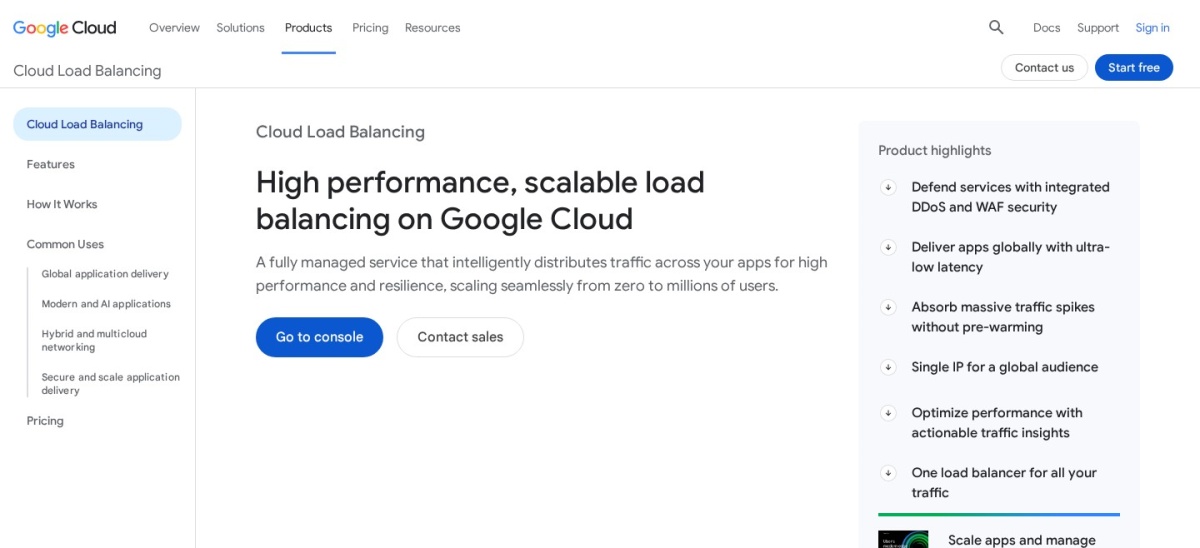
Google Cloud homepage, captured Nov 2026.
Google Cloud is Google's cloud platform, built around Compute Engine, Cloud Storage, BigQuery and Kubernetes Engine, which Google created. A small e2-micro virtual machine costs about $6.11 a month, and new accounts get $300 in free credit to try paid services.
The trade off is billing clarity. Sustained-use and committed-use discounts help, but the price list is large and invoices can be hard to predict. It suits teams doing data, analytics or AI work, and teams already using Google tools.
DigitalOcean is a developer cloud that keeps things simple: virtual servers called Droplets, managed databases, Kubernetes and an App Platform. A Basic Droplet with 1 vCPU, 512 MB of RAM and 10 GB of SSD costs $4 a month, billed per second with a monthly cap.
The trade off is scope. There is no equivalent of Azure's enterprise service catalogue, and managed services are fewer than the hyperscalers offer. It suits developers and small teams that want a predictable bill and a server running in minutes.
Linode is a Linux cloud from Akamai, now sold as Akamai Cloud Computing, with shared, dedicated and GPU servers plus Kubernetes and object storage. The smallest Nanode server costs $5 a month, with 1 vCPU, 1 GB of RAM, 25 GB of SSD and 1 TB of transfer.
The trade off is management. Servers are unmanaged, so updates, patching and security are your job, and there is no free tier. It suits developers who are comfortable running Linux and want flat monthly prices on a large network.
What we like
Flat $5 starting price with 1 TB transfer
Support by ticket and phone around the clock
Full API and Terraform support
Watch out for
No free tier or trial
Linux only, no Windows servers
Paid plans add dedicated CPU, GPU and managed databasesVisit linode.com
05
Oracle Cloud Infrastructure
4.1/5on G2 (69 reviews, checked Nov 2026)
PricingCustom/yr
Best free tier among hyperscalers
Entry VMPay-as-you-go, metered
Always Free2 VMs + ARM instance
Free trial credit$300 for 30 days
Free egress10 TB/mo
oracle.com
Oracle Cloud Infrastructure homepage, captured Nov 2026.
Oracle Cloud Infrastructure is Oracle's public cloud, with compute, storage, databases and Kubernetes, plus strong Oracle Database options. Its Always Free tier includes two small virtual machines and an ARM instance, and new accounts get $300 in credit for 30 days.
The trade off is polish. The console feels less refined than AWS or Google Cloud, and some services have fewer regions. It suits teams running Oracle databases or heavy workloads that benefit from low egress pricing and 10 TB of free outbound transfer a month.
Render is a managed application platform that deploys web services, APIs, static sites, background workers and managed PostgreSQL from a Git repository. A free web service covers prototypes, and an always-on Starter instance with 512 MB of RAM costs $7 a month.
The trade off is control. You cannot tune the underlying servers as you can with a virtual machine, and free services spin down after 15 minutes idle. It suits small teams that want to deploy code without managing servers or learning cloud infrastructure.
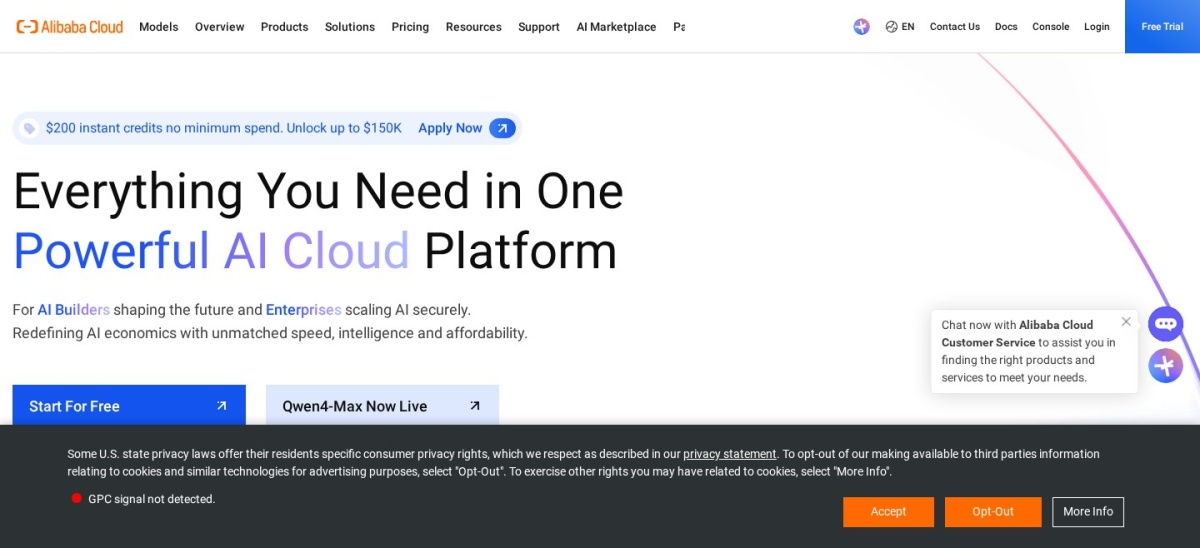
Alibaba Cloud is the largest cloud provider in Asia-Pacific, with Elastic Compute Service at its centre. Compute, storage and databases are pay-as-you-go, and the platform is strongest in China and Southeast Asia, where it has deep local coverage.
The trade off is documentation and support in English. Reviewers praise low prices and scale but report a steep learning curve and slow support replies. It suits teams serving customers in Asia, or needing cloud regions inside mainland China.
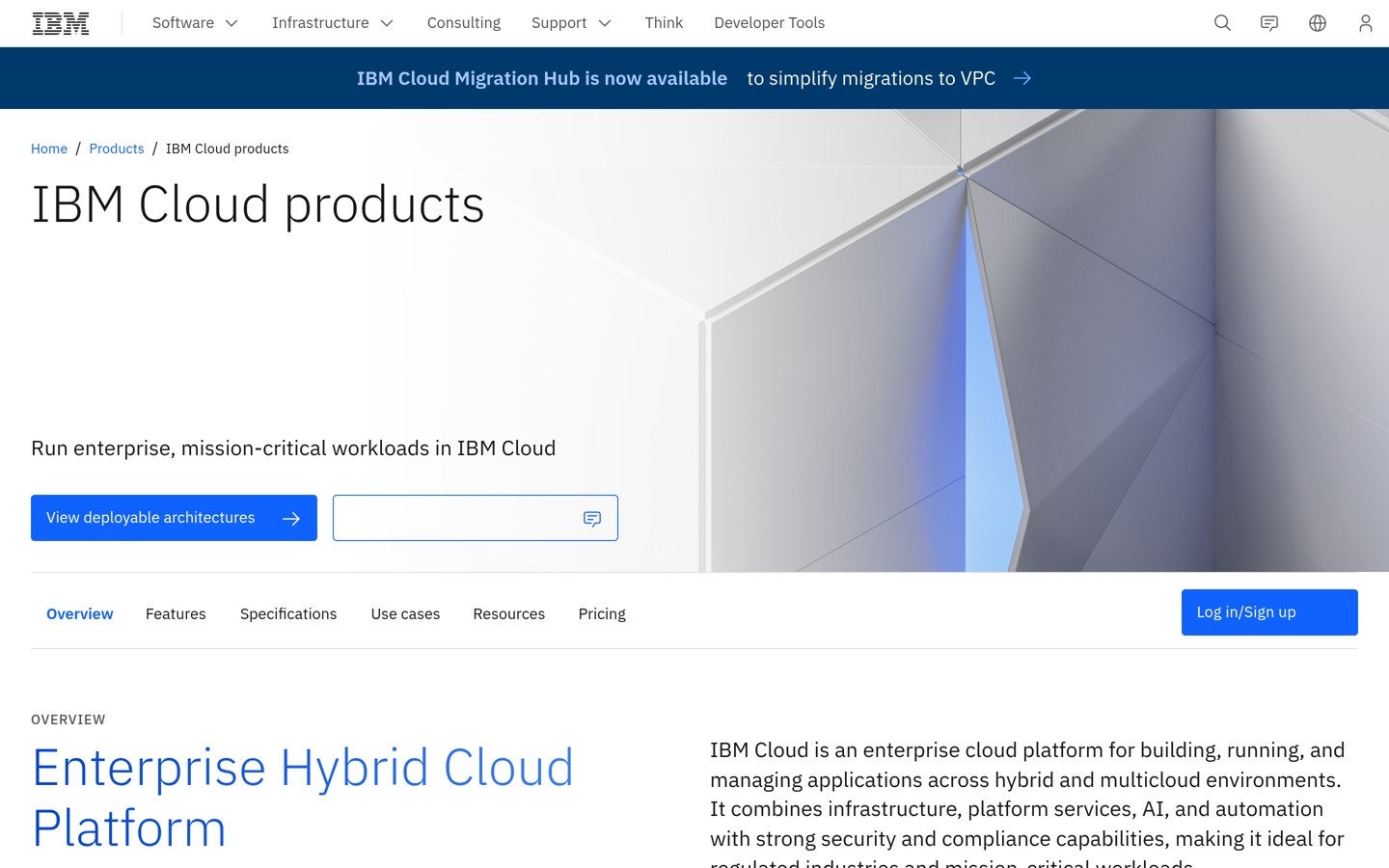
IBM Cloud is an enterprise cloud platform for building, running and managing applications across hybrid and multicloud setups. It combines virtual servers, Red Hat OpenShift, AI services and strong security and compliance tooling for regulated industries.
The trade off is price clarity. Virtual servers are priced through a calculator rather than a flat list, and reviewers call the structure complicated. It suits enterprises in finance, health care or government that need hybrid cloud and compliance features.
What we like
Strong hybrid cloud with Red Hat OpenShift
Deep compliance tooling for regulated work
Fast, secure virtual server performance
Watch out for
Pricing needs the calculator, not a flat list
Lowest G2 rating in this list at 3.8/5
Paid use is metered; support plans cost extraVisit ibm.com
09
Heroku
4.2/5on G2 (148 reviews, checked Nov 2026)
Starts at$5/mo
Best for existing Heroku teams
Entry dynoEco, $5/mo
Free tierNone since 2022
Managed PostgresFrom $5/mo
Deploy fromGit push
heroku.com
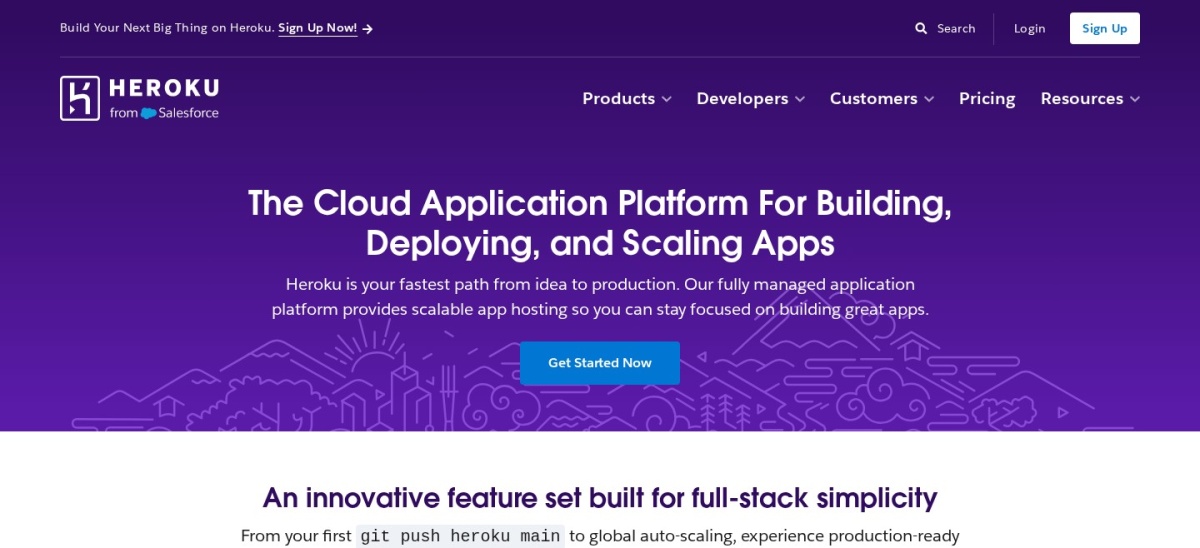
Heroku homepage, captured Nov 2026.
Heroku is a managed platform that deploys apps with a Git push, buildpacks and managed Postgres, without server management. An Eco dyno costs $5 a month for a shared pool of 1,000 dyno hours, and a production Standard dyno costs $25 a month.
The trade off is momentum. Salesforce moved Heroku to sustaining engineering in February 2026, so no new features are planned, and the free tier ended in 2022. It suits existing Heroku teams with stable apps, not teams starting a new platform today.
Hyperscalers charge for what you use, so the bill moves with traffic. That is flexible, but storage, data transfer and idle resources sit on top of the headline virtual machine price.
Fixed-price hosts charge one monthly number for a set server size. A $4 or $5 server costs the same every month, which makes budgeting easy for steady workloads.
A good rule is to match the billing to the workload. Steady apps fit fixed prices, while spiky or experimental work fits pay-as-you-go, where you only pay for hours used.
Either way, set a billing alert on day one. Our WordPress hosting cost guide shows how small charges add up across a month.
How we chose
We started from the cloud platforms most often named as Azure replacements, then kept the nine with a public G2 rating, a published entry price or metered pricing, and an established user base.
Prices come from each vendor's pricing page, checked on 29 November 2026. Ratings and review counts come from G2 on the same day. Where a vendor shows a sale, the list shows the regular price.
We left out niche hosts without a public rating. No vendor paid for a place, and we do not claim to have used these tools ourselves.
How to choose a Microsoft Azure alternative
Start with what you run on Azure today, then match the replacement to that workload.
List what you actually use on Azure. Virtual machines, databases, identity and networking each point to a different replacement, so write the list before comparing prices.
Pick hyperscaler or fixed-price host. Complex setups with many managed services need AWS, Google Cloud or Oracle Cloud, while single servers fit DigitalOcean, Linode or Render.
Test with the free tier first. Run a copy of one workload on the free tier or trial credits, and watch the first bill before moving anything live.
Plan the migration, not just the price. Moving databases and identity takes longer than moving an app, so keep Azure running until the new setup is proven.
FAQ
What is the best Microsoft Azure alternative in 2026?
Amazon Web Services is the best Microsoft Azure alternative for most teams, with more than 200 services and a 4.6/5 G2 rating. Google Cloud is the strongest second choice for data and AI work, and DigitalOcean is the simplest option for small servers.
Which Microsoft Azure alternative is the cheapest?
DigitalOcean is the cheapest fixed-price start at $4 a month for a Basic Droplet. Among hyperscalers, Google Cloud has the cheapest entry virtual machine at about $6.11 a month.
Is there a free Microsoft Azure alternative?
Yes. AWS, Google Cloud, Oracle Cloud and Render all offer a free tier or trial credits. Oracle Cloud has the most generous free tier, with Always Free virtual machines that do not expire.
Which Microsoft Azure alternative is best for beginners or small teams?
DigitalOcean is the best pick for beginners, with flat $4 pricing and clear documentation. Render is the easiest option for teams that want to deploy code without managing a server at all.
AWS vs Google Cloud: which is the better Azure alternative?
AWS wins on breadth, with 200+ services and the largest region footprint, while Google Cloud wins on data and AI, with BigQuery and Vertex AI. AWS starts at $7.59 a month for a small server, and Google Cloud at $6.11 a month.
Can I migrate from Azure to AWS or Google Cloud?
Yes, both offer migration tools and documentation for moving virtual machines, databases and storage from Azure. Start with one non-critical workload, test it fully, and keep Azure running until the new setup is proven.
Is Heroku still a good Azure alternative?
Not for new projects. Heroku still works well for existing teams, with Git-push deploys from $5 a month, but Salesforce moved it to sustaining engineering in February 2026, so no new features are planned. Render is the closest modern replacement.
SaaS SEO and WordPress specialist with about 8 years of experience. Rakib compares WordPress plugins, themes, hosting and software using public pricing, documentation and user reviews. See how we rank.