Apideck is the best of the merge dev alternatives for most teams, with a 4.9 out of 5 G2 rating from 61 reviews and a Launch plan at $599 a month covering 170+ platforms. Pick Unified.to for the widest catalog at 2,786 integrations, or Finch when HR and payroll data is the whole job.
How we make this list: we compare pricing pages, product documentation and public user reviews, then re-check every price before each update. No product paid for a place. Disclosure.
Apideck leads on balance: 4.9 out of 5 on G2, 170+ platforms, and a published $599 a month starting price.
Unified.to has the widest catalog at 2,786 integrations and the top G2 score at 5.0 out of 5, but billing is usage-based from $750 a month.
Finch is the cheapest published entry at $65 a month per connection, but only for HR and payroll data.
Five of the nine tools publish no production price, so budget for a sales conversation if your shortlist is Kombo, Codat, Rutter, StackOne or Paragon.
Paragon and Cyclr are embedded iPaaS builders, not unified APIs: you design workflows instead of calling one API.
How do you choose among merge dev alternatives?
Start with the data category you actually need. Merge covers HRIS, ATS, accounting, CRM, ticketing and file storage, and no single rival matches all six, so a payroll product and an accounting product will shortlist different tools.
Price models split the list in two. Apideck, Unified.to, Finch and Cyclr publish starting prices from $65 to $1,595 a month, while Kombo, Codat, Rutter, StackOne and Paragon are quote-only, so a shortlist with three quote-only vendors means three sales calls.
Ratings are thin for a niche this new. The best-reviewed tools here carry 60 to 90 G2 reviews, and Rutter has only 16, so read the written reviews rather than trusting the star score alone.
Free tiers only go so far. Finch, Kombo, Codat, Rutter and StackOne all let you start free, but production use is paid everywhere, and sandbox data never touches a real customer account.
AI agents change the shortlist. Unified.to and StackOne both ship MCP servers, so if your roadmap includes agents reading customer data, check MCP support before price. Our guide to connecting WordPress to AI agents with MCP shows how MCP access works in practice.
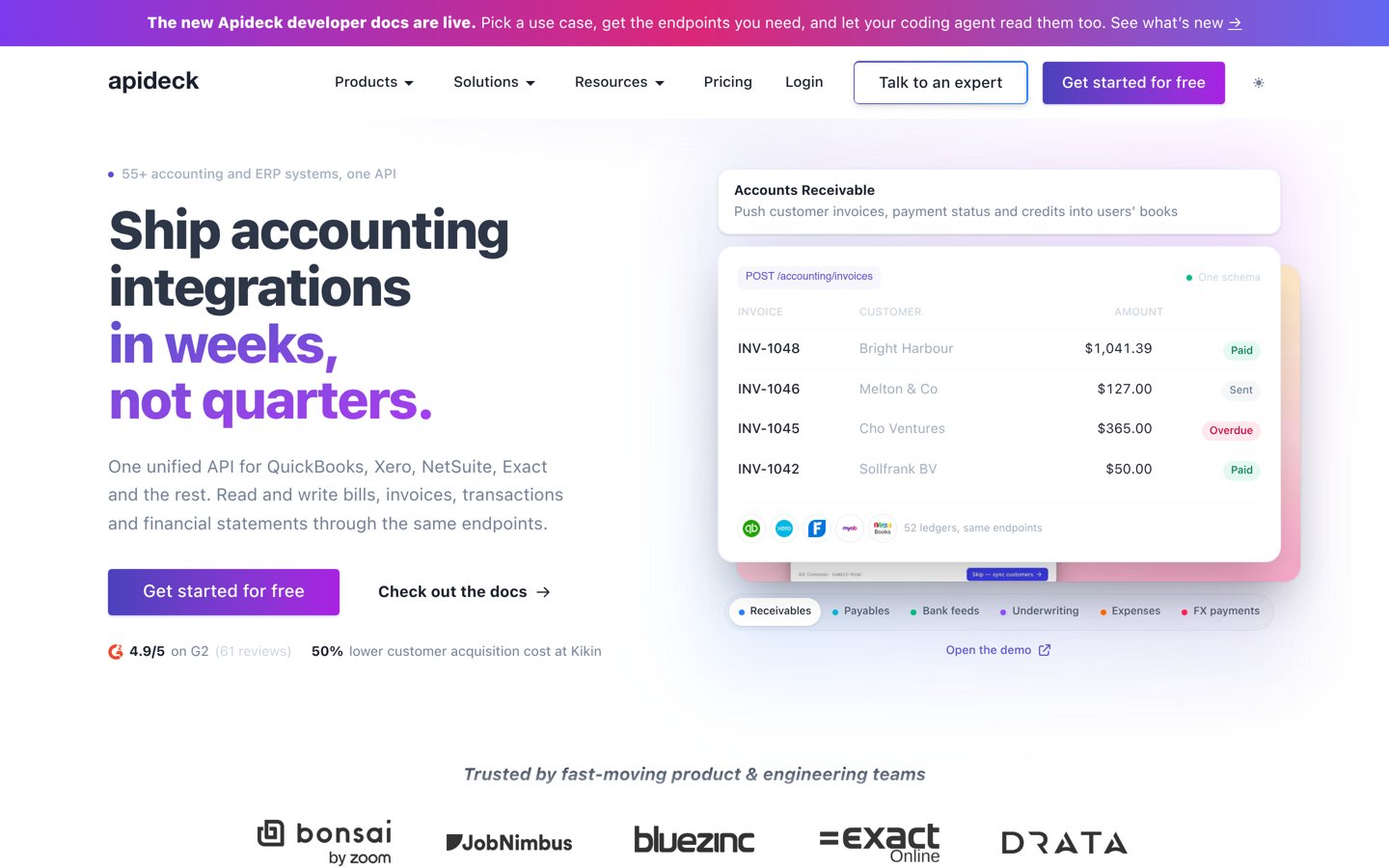
Apideck is a unified API platform that covers accounting, CRM, HRIS, ecommerce, ATS and file storage through one integration. Its Launch plan at $599 a month includes 2 unified APIs, 25 consumers, unlimited API calls and a 30-day free trial with no card required.
The trade off is the entry price. At $599 a month, Launch costs far more than Finch's $65 starter, and adding a third unified API category pushes you toward Scale at $1,299 a month. It suits SaaS teams that need several integration categories live fast and can spread the cost across customers.
What we like
Highest G2 rating in this list at 4.9 out of 5
40+ unified APIs across 170+ platforms
30-day free trial with full access
MCP server included on every plan
Watch out for
Launch covers only 2 unified APIs
Entry price is steep for early startups
Consumer-based billing can grow fast
Scale adds a third unified API and custom field mappingVisit apideck.com
02
Unified.to
5/5on G2 (31 reviews, checked Nov 2026)
Starts at$750/mo
Best for the widest integration catalog
Integrations2,786+
Unified APIs42+
Grow calls750,000/mo
Paid planGrow, $750/mo
unified.to
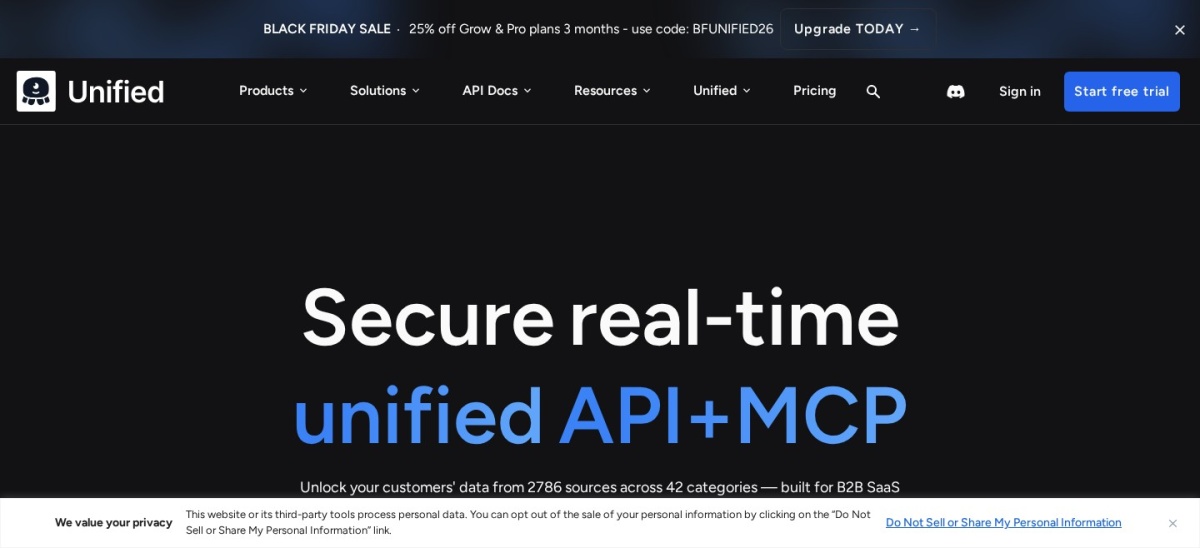
Unified.to homepage, captured Nov 2026.
Unified.to is a unified API and MCP platform with 2,786 integrations across 42 unified APIs, the widest catalog in this list. Its Grow plan starts at $750 a month with 750,000 monthly API calls, unlimited customers and connections, and virtual webhooks.
The trade off is usage-based billing. The $750 starting price is a floor, not a cap, and overage runs at $1.00 per 1,000 extra calls, so a busy product can outgrow Grow quickly. It suits teams that want the broadest coverage and an MCP server for AI agents.
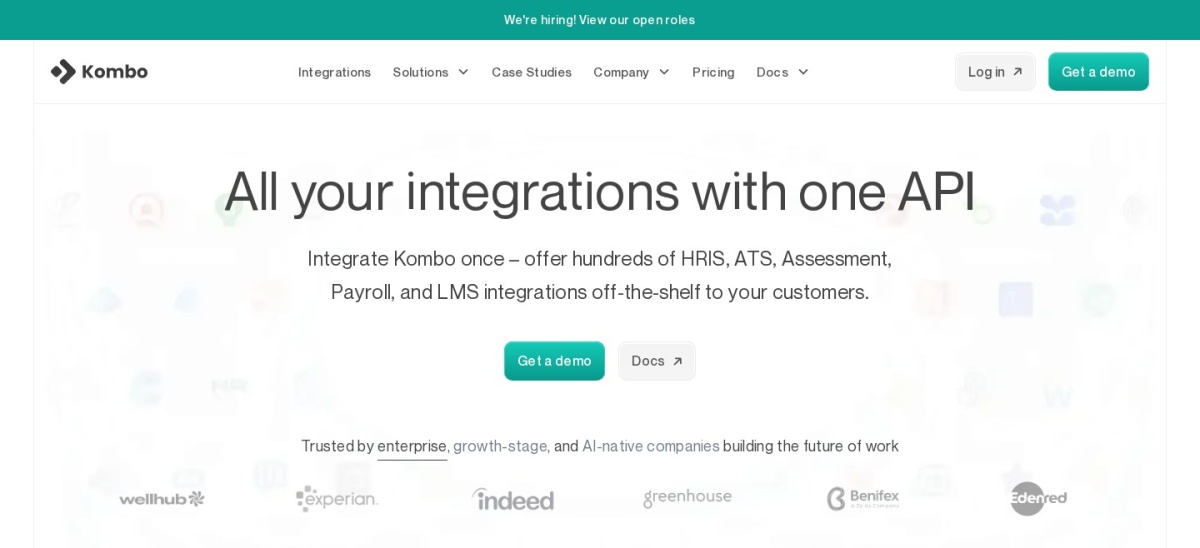
Kombo is a unified API built only for HR tech, covering HRIS, ATS, assessment and LMS systems through one data model. It connects to more than 250 systems, with deep coverage of European providers, and a free Proof of Concept tier for testing.
The trade off is that every paid plan is a custom quote. There is no published starting price, so budgeting means a sales conversation, and the per-connection fees only fall as volume grows. It suits HR software vendors that need reliable European HRIS and ATS coverage.
What we like
Deepest HRIS and ATS coverage in this list
4.8 out of 5 on G2 from 88 reviews
Free Proof of Concept tier
Unlimited API calls per connection
Watch out for
No published prices; every plan is a quote
HR only, no accounting or CRM
Weaker on US payroll coverage
Paid plans add write access and higher sync ratesVisit kombo.dev
04
Finch
4.7/5on G2 (67 reviews, checked Nov 2026)
Paid from$65/mo
Best for payroll data on a budget
Providers250+
Starter24 providers
Free tierSandbox
Paid planStarter, $65/mo
tryfinch.com
Finch homepage, captured Nov 2026.
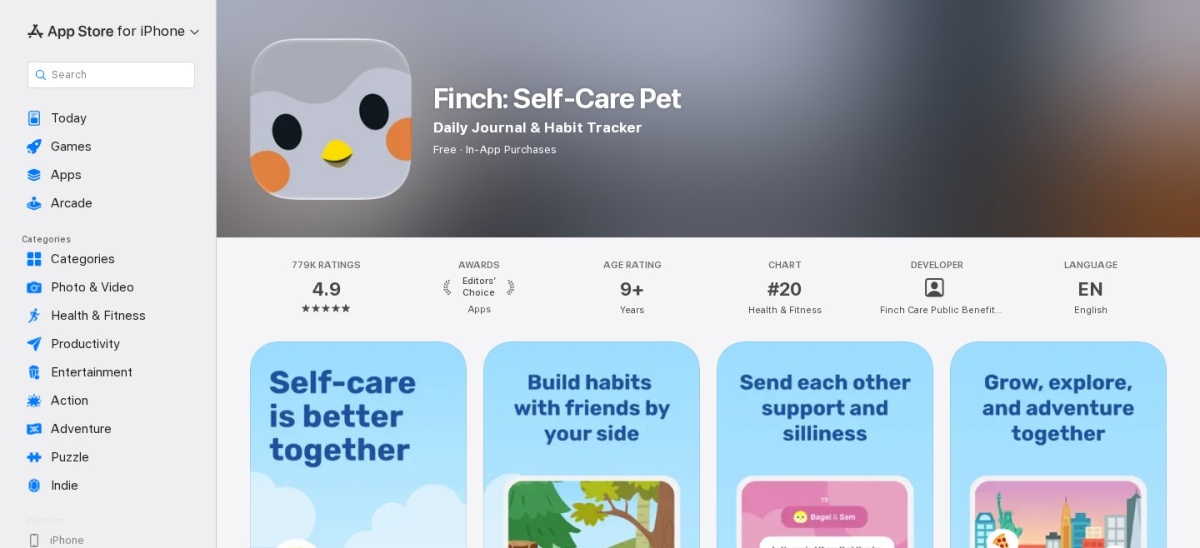
Finch is a unified API for HRIS and payroll data, reading company, employee and pay data from more than 250 providers through one integration. Its Starter plan costs $65 a month per connection and covers 24 providers, with a free sandbox for testing.
The trade off is scope. Starter is read-only and covers only 24 providers, so benefits data, deductions and write-back need the custom-priced Pro tier. It suits products that live on payroll data, such as benefits, lending and financial planning tools.
What we like
Cheapest published entry in this list at $65 a month
Codat is a unified API for financial data, connecting accounting, banking and commerce platforms for lending, underwriting and bill pay products. It standardizes ledgers, bank transactions and commerce data, and lists a free tier ahead of its custom-priced Enterprise plan.
The trade off is transparency. Codat publishes no prices and its pricing page returns a 404, so every production deal is a sales conversation with fees set in an order form. It suits fintech teams where accounting data drives credit and underwriting decisions.
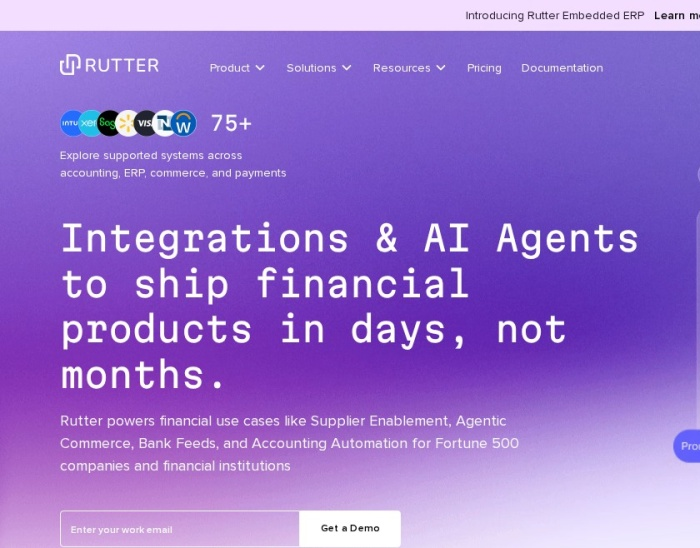
Rutter is a unified API for commerce, accounting, payments and ads data, aimed at fintech products that underwrite or reconcile against merchant data. One data model reads, writes, updates and deletes records across more than 60 platforms, and a free sandbox covers testing.
The trade off is that production pricing is not published. You build free in the sandbox, then negotiate a connection-based subscription, which reviewers call expensive for startups. It suits fintech teams building on commerce and payments data.
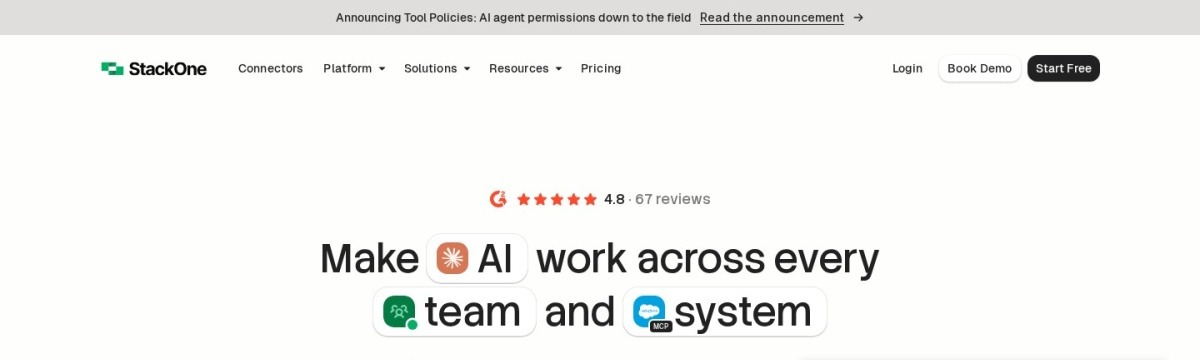
StackOne is a unified API and MCP gateway built for AI agents, with 640+ pre-built connectors and 46,000+ actions across HR, recruiting, CRM and more. Its Starter plan is free with 1,000 credits per seat a month, and agents call tools through one governed endpoint.
The trade off is maturity. StackOne is newer than Apideck or Codat, and reviewers report occasional breakages when providers change their APIs. It suits teams shipping AI agents that need governed, logged access to business apps.
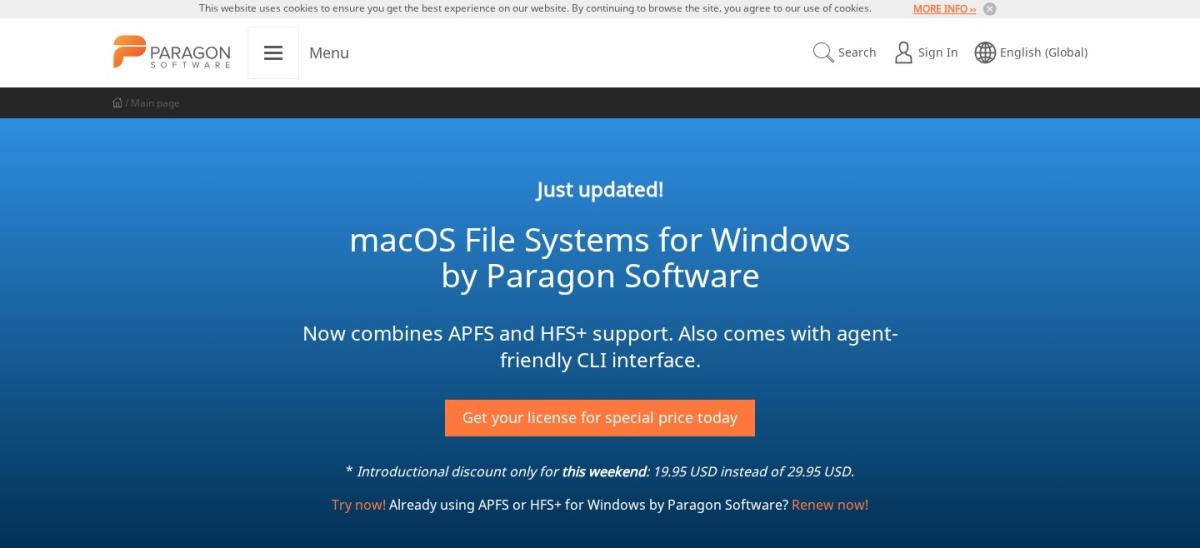
Paragon is an embedded integration platform that pairs a visual workflow builder with code steps, plus Managed Sync and ActionKit for product teams. It offers a 14-day free trial, unlimited integrations on every plan, and a white-labeled marketplace your customers see inside your app.
The trade off is that it is a builder, not a unified API. Your team still designs each workflow, and both paid plans are custom quotes priced by connected users. It suits product teams that want visual workflows and a hosted marketplace more than a single API.
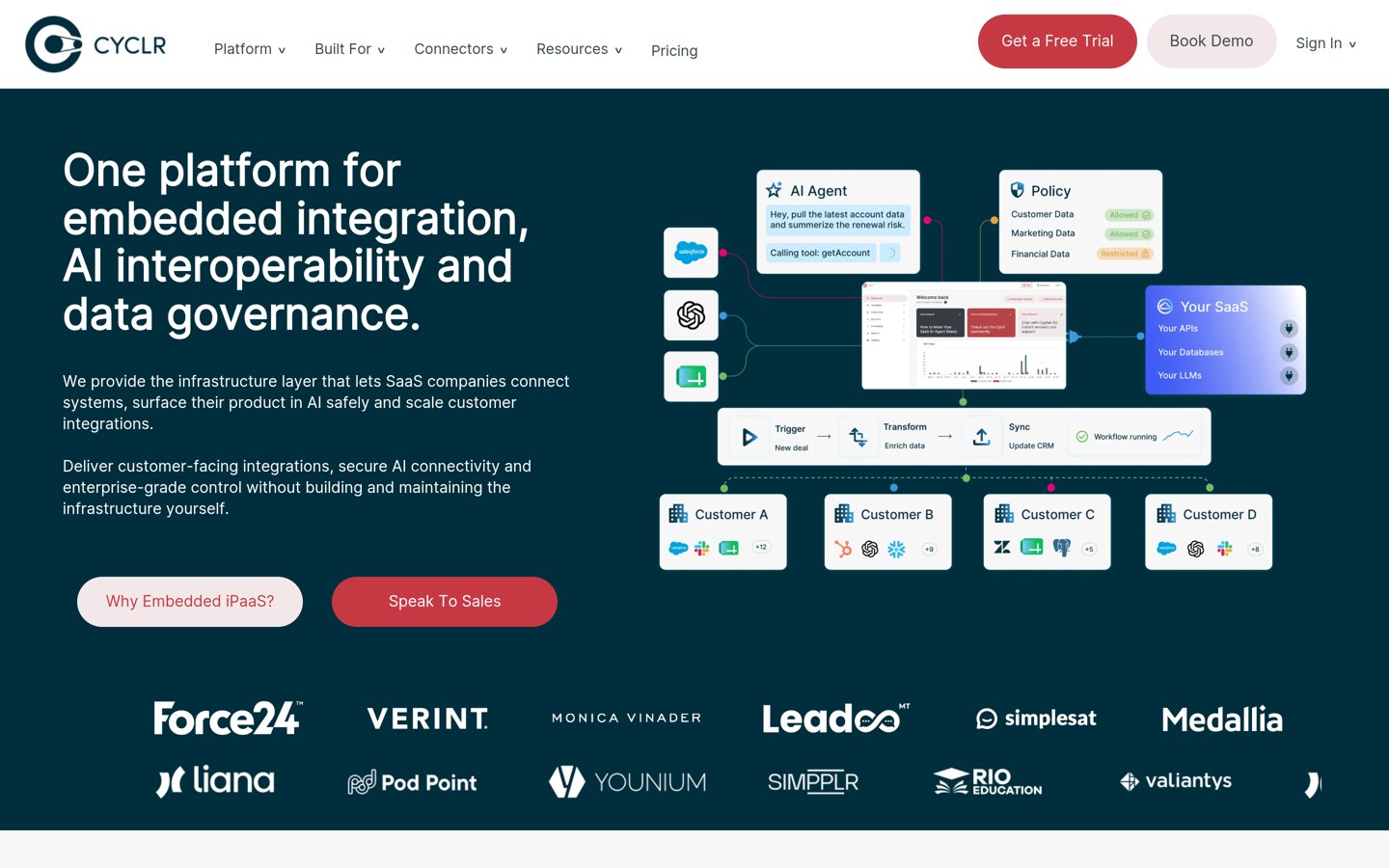
Cyclr is an embedded iPaaS with 600+ connectors and a low-code builder for integration templates your customers deploy themselves. Its Pay As You Go plan starts at $1,595 a month, with Growth at $2,595 and Scale at $7,195 a month.
The trade off is price and learning curve. At $1,595 a month it is the priciest entry point in this list, and reviewers note a learning curve before the builder feels fast. It suits established SaaS companies embedding integrations at scale.
Unified API or embedded iPaaS: which fits Merge buyers?
A unified API gives you one API for a whole category. You call the same endpoints for every HRIS or accounting system, and the vendor normalizes the differences.
An embedded iPaaS gives you a builder for any workflow. Paragon and Cyclr let your team design automations across hundreds of apps, but you still build each flow yourself.
Most Merge buyers want the first kind. If your product reads the same data from many customer systems, pick a unified API; if your customers ask for custom automations inside your app, pick an iPaaS.
Quote-only pricing: what to ask for
Five of the nine tools in this list publish no production price. Get implementation, onboarding and overage costs in writing before you sign anything.
Ask how the quote scales. Apideck charges by active consumer, Finch by connection, Paragon by connected user and Unified.to by API calls, so a quote that looks cheap for 10 customers can multiply at 100.
Ask what the sandbox covers. Free tiers from Finch, Kombo and Rutter use mock data, so confirm which providers you can test against before you commit.
How we chose
We started from every unified API and embedded integration platform named as a Merge rival on G2, then kept the nine with a real product, a public rating and a verifiable price or pricing model.
Prices come from each vendor's pricing page or its vendor-provided G2 listing, checked on 29 November 2026. Ratings and review counts come from G2 on the same day. Where a vendor shows a sale, the list shows the regular price.
We left out email-only APIs and enterprise suites with no public rating. No vendor paid for a place, and we do not claim to have used these tools ourselves.
How to choose a Merge alternative
Start with what your product actually reads, then match the price model to your volume.
List the categories you need. HRIS, payroll, accounting, CRM and ticketing rarely come from one vendor. Shortlist tools that cover your categories, not the longest feature list.
Check the free tier first. Finch, Kombo, Codat, Rutter and StackOne all offer a free start. Build a proof of concept against real provider sandboxes before any sales call.
Model the price at 100 customers. Per-connection, per-consumer and per-call billing diverge fast at scale. Ask each vendor for a quote at your expected volume, not at 10 customers.
Read the G2 reviews, not just the score. Review counts here run from 16 to 90, so a 4.9 can rest on few voices. Look for reviewers in your segment describing setup time and support.
FAQ
What are the best merge dev alternatives in 2026?
Apideck is the best merge dev alternative for most teams, with a 4.9 out of 5 G2 rating from 61 reviews and a Launch plan at $599 a month. Unified.to suits teams that want the widest catalog, and Finch is the cheapest published option for HR and payroll data.
How much do merge dev alternatives cost?
Published entry prices run from $65 a month per connection for Finch to $1,595 a month for Cyclr, with Apideck at $599 and Unified.to at $750 a month in between. Five of the nine tools are quote-only, so expect a sales conversation for Kombo, Codat, Rutter, StackOne or Paragon.
Is there a free merge dev alternative?
No tool in this list is free for production use. Finch, Kombo, Codat, Rutter and StackOne all offer a free tier or sandbox for testing, while Apideck and Unified.to offer 30-day free trials and Paragon offers a 14-day trial.
Which merge dev alternative is best for small teams?
Finch is the best fit for small teams that need HR and payroll data, at $65 a month per connection with a free sandbox. For broader categories, Apideck's $599 a month Launch plan is the cheapest published unified API that covers several categories at once.
Apideck vs Unified.to: which is better?
Apideck is the safer pick for most teams, with more reviews at 4.9 out of 5 and consumer-based pricing that is easier to predict. Unified.to wins on catalog size at 2,786 integrations and a 5.0 G2 score, but its usage-based billing from $750 a month can grow faster than expected.
Which merge dev alternative is best for HR and payroll only?
Finch is the best choice when HR and payroll data is the whole job, with 250+ providers and a $65 a month Starter plan. Kombo is the better pick for HR software vendors that need ATS coverage and deep European HRIS support.
Do I need a unified API or an embedded iPaaS?
Pick a unified API if your product reads the same data from many customer systems through one integration. Pick an embedded iPaaS such as Paragon or Cyclr if your customers want custom automations and workflows inside your app.
SaaS SEO and WordPress specialist with about 8 years of experience. Rakib compares WordPress plugins, themes, hosting and software using public pricing, documentation and user reviews. See how we rank.