Notion is the best of the Mem alternatives overall, with a free plan for one person and Plus at $10 a month billed yearly. Obsidian is the safest pick if you want to own your exported notes, and Evernote is best for searchable clipping.
How we make this list: we compare pricing pages, product documentation and public user reviews, then re-check every price before each update. No product paid for a place. Disclosure.
Mem becomes read-only on 18 December 2026 and shuts down on 15 January 2027, so export your notes before that date.
Notion leads overall with a free plan for one person and Plus at $10 a month billed yearly.
Obsidian stores notes as plain Markdown files you own, and Sync costs $4 a month billed yearly.
Evernote Starter costs $99 a year, but its free plan caps at 50 notes and one device.
Roam Research is the priciest pick at $15 a month with no free plan, while Bear Pro costs $29.99 a year.
Capacities, the app Mem's own migration guide names, has no public G2 or Capterra rating, so it is not ranked here.
What should you look for in Mem alternatives?
Mem is closing, so the first job is getting your notes out. Mem announced on 16 November 2026 that notes become read-only on 18 December 2026 and the service shuts down on 15 January 2027, and billing has already stopped. Export your library as Markdown before the deadline, because after 15 January you lose access.
File ownership matters more than features when an app can close. Obsidian and Logseq keep notes as plain Markdown files on your device, so a shutdown cannot take them away, while Notion and Evernote hold notes in their own databases and need an export step.
AI is the feature Mem users will miss most, and it now costs extra almost everywhere. Notion keeps full AI on its $20 Business plan, Evernote puts its AI suite on Advanced at $249.99 a year, and Obsidian ships no AI at all, so decide how much AI you actually used before paying for it.
Price spreads are wide, so match the plan to one person, not a team. Bear Pro costs $29.99 a year and Obsidian Sync $48 a year, while Notion Plus is $120 a year per member and Roam Research is $165 a year with no free plan at all.
Notion is a connected workspace where every note is a page that can hold text, tables, boards and databases. The free plan covers unlimited pages and blocks for one person, and Plus at $10 per member per month billed yearly adds unlimited file uploads and 30-day page history.
The trade off is setup and speed. Large workspaces can feel slow, and the flexibility that makes Notion powerful means more setup than a plain notes app, while full AI features need the $20 Business plan. It suits people and small teams who want notes, docs and a wiki in one place.
Obsidian is a local-first notes app that stores every note as a plain Markdown file on your own device. The full app is free for personal and commercial use, with backlinks, a knowledge graph and more than 1,600 community plugins, and no account is needed to start.
The trade off is that sync and publishing cost extra. Obsidian Sync is $4 per user per month billed annually, with end-to-end encryption and version history, and there is no built-in real-time collaboration. It suits solo researchers who want to own their files.
Evernote is the original capture app: clip web pages, save PDFs, scan paper and search inside documents from one inbox. The free plan covers 50 notes, one notebook, one device and 1 GB of uploads, while Starter at $99 a year raises the cap to 1,000 notes and 20 notebooks.
The trade off is the tight free plan and a price that has risen while rivals give more away. Advanced at $249.99 a year adds the full AI suite, including the AI Assistant and semantic search. It suits people with years of clipped material who live in search.
Microsoft OneNote is a free-form notebook where you can type, draw, paste and record anywhere on the page. The app itself is free, with notebooks, sections and pages, handwriting with a stylus and audio notes, and it syncs through OneDrive across every device.
The trade off is that there is no paid tier of its own. The cheapest paid route is a Microsoft 365 Personal subscription at $99.99 a year, which mainly buys Office apps and 1 TB of storage. It suits people already inside Microsoft 365 who want notes for no extra app cost.
Bear is a focused Markdown writing app for Apple devices, with nested tags instead of folders and a clean editor that stays out of the way. The free tier covers local notes on one Apple device, and Pro at $29.99 a year adds iCloud sync, encryption, themes and OCR search inside PDFs and images.
The trade off is the Apple-only wall. There is no Windows, Android or web version, and no databases or collaboration. It suits Mac and iPhone writers who want a fast, beautiful place to write long notes.
Craft is a block-based notes and document app built for clean layouts, daily notes and easy sharing. Its free Starter plan includes up to 1,500 blocks total, 1 GB of storage and one personal space, and Plus at $8 a month billed yearly removes those limits.
The trade off is block limits on the free plan and a higher regular price than most rivals here. Plus also caps AI at 50 credits a month, and tables are lighter than in spreadsheets. It suits writers and consultants who share structured notes.
Standard Notes is an encrypted note-taking app with end-to-end encryption and multi-device sync included on its free plan. Free users get plain-text notes, while Productivity starts at $90 per year and adds Markdown, rich text, spreadsheets and one-year note history.
The trade off is limited rich editing on the free tier and no team workspaces. Rich editors, folders and extended history require a paid plan, and the interface stays minimal. It suits security-focused people who want strong encryption over flashy tools.
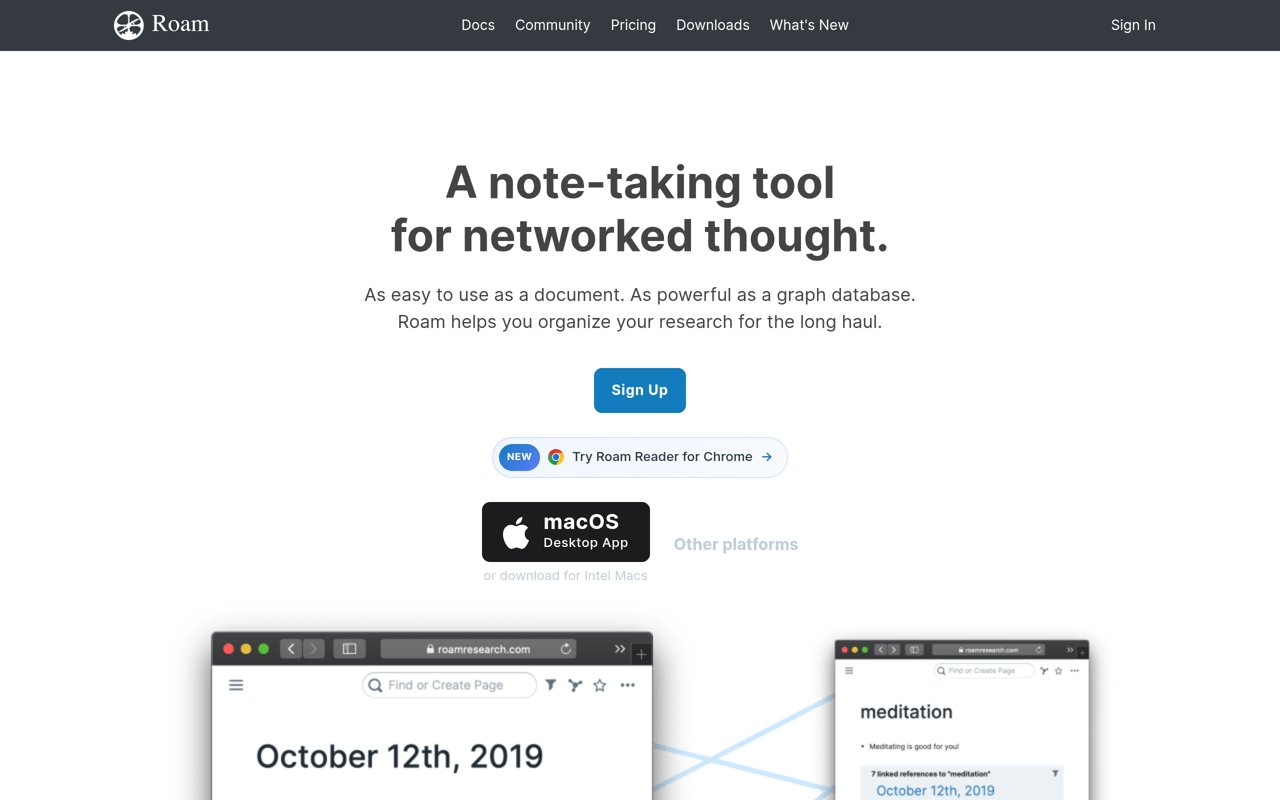
Roam Research is the original networked-thought app, where every bullet is a block that can be referenced from anywhere and daily notes build a journal automatically. It pioneered bidirectional linking and block references, and it still suits researchers who develop ideas across many connected notes.
The trade off is price and lock-in. At $15 a month, or $165 a year, with no free tier beyond a 31-day trial, it costs far more than Obsidian or Logseq, and notes live in the cloud only. It suits committed users of block-level thinking who accept the cost.
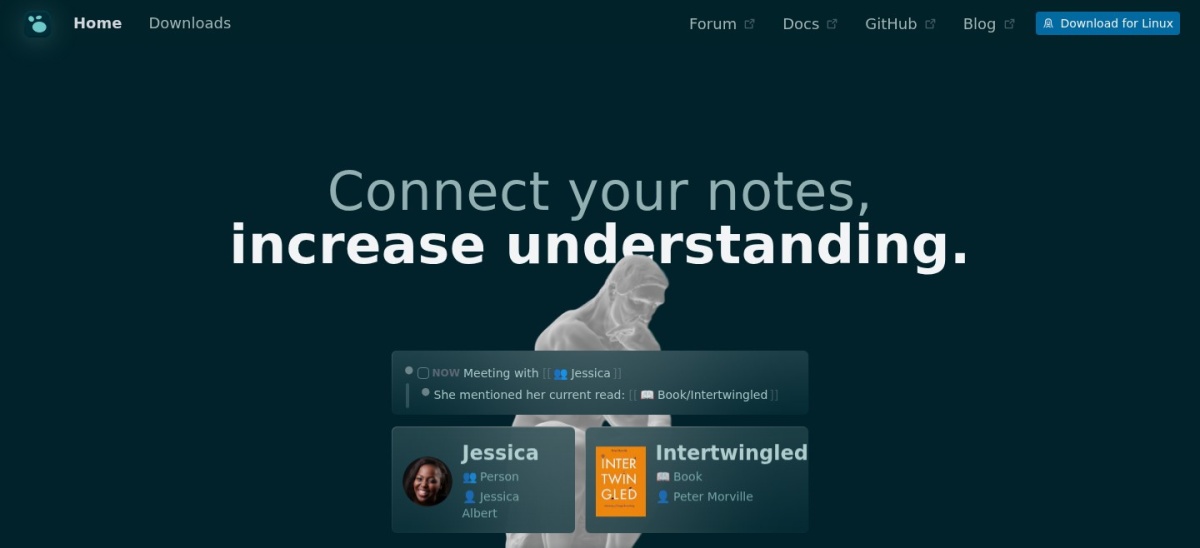
Logseq is a free, open-source outliner that stores notes as local plain-text Markdown files. Every day starts with a journal page, blocks link both ways, and a built-in query language and PDF annotation come free, with no account needed.
The trade off is polish and paid sync. Logseq Sync costs about $5 a month for backers, mobile apps trail the desktop, and some users report sync overwriting edits. It suits people who want Roam-style outlining without the subscription.
Mem's own migration guide describes the export. On a computer, open Settings, go to Exports, start a new export and download the ZIP of Markdown notes, collection indexes and attachments.
Check the ZIP before you import it anywhere. Open a few notes, confirm attachments came with them, and keep the original ZIP as a backup even after you move.
Do not wait until January. Notes become read-only on 18 December 2026, so anything you still create in Mem after that date has to go somewhere else, and access ends on 15 January 2027.
How we chose
We started from the apps Mem's own migration guide names, plus the established notes apps with public ratings, then kept the nine with a verifiable rating and a clear price.
Prices come from each vendor's pricing page, checked on 29 November 2026. Ratings and review counts come from G2 or Capterra on the same day. Where a vendor shows a sale, the list shows the regular price.
We left out Capacities, the app Mem's migration guide names first, because it has no public G2 or Capterra rating to rank it by. No vendor paid for a place, and we do not claim to have used these tools ourselves.
How to choose a Mem alternative
Start with your export, then match the tool to how you used Mem.
Export your Mem notes first. Download the Markdown ZIP from Settings and keep a copy, before notes go read-only on 18 December 2026.
Decide whether you need AI or files. If Mem's AI summaries did the work, Notion or Evernote fits best. If you want files no company can lock away, pick Obsidian or Logseq.
Check the free plan limits. Evernote caps free users at 50 notes, Craft at 1,500 blocks, and Roam has no free plan, so count your notes before you commit.
Confirm the regular renewal price. Look at the standard annual rate rather than short-term promos. Bear Pro renews at $29.99 a year and Obsidian Sync at $48 a year.
FAQ
What are the best Mem alternatives in 2026?
Notion is the best Mem alternative overall, with a free plan for one person and Plus at $10 a month billed yearly. Obsidian is the safest pick for owning your notes as files, and Evernote is best if you mainly clip and search documents.
When does Mem shut down?
Mem shuts down on 15 January 2027. Notes become read-only on 18 December 2026, so you can still read and export them until then, but you cannot create or edit notes. Billing has already stopped.
How do I export my notes from Mem?
On a computer, open Settings in Mem, go to Exports, start a new export and download the ZIP of Markdown notes, collection indexes and attachments. Check a few notes and attachments in the ZIP, then keep the original file as a backup.
Is there a free alternative to Mem?
Yes. Obsidian and Logseq are free and keep your notes as local Markdown files, and Notion's free plan covers unlimited pages for one person. Bear, Craft and Standard Notes also have free tiers, with paid plans starting at $29.99 a year.
Which Mem alternative is best for AI notes?
Notion is the closest match, but full AI features need the $20 Business plan. Evernote puts its AI Assistant and semantic search on Advanced at $249.99 a year, while Obsidian and Logseq ship no built-in AI at all.
Notion vs Obsidian: which is better after Mem?
Notion is better if you want one shared workspace with databases, AI and team features. Obsidian is better if you want to own your notes as plain Markdown files that no shutdown can take away, with Sync at $4 a month.
Is Roam Research worth $15 a month?
Roam suits researchers who live in block references and daily notes, and it pioneered the model Mem borrowed. For most Mem users it is hard to justify at $15 a month with no free plan when Obsidian and Logseq cover the same ideas for free.
SaaS SEO and WordPress specialist with about 8 years of experience. Rakib compares WordPress plugins, themes, hosting and software using public pricing, documentation and user reviews. See how we rank.