Lyssna is the best of the Maze alternatives for most teams, with a free plan and Growth at $166 a month billed annually, rated 4.4 out of 5 on G2 from 196 reviews. UserTesting suits enterprise video research, while Great Question is the strongest pick for interview-led teams.
How we make this list: we compare pricing pages, product documentation and public user reviews, then re-check every price before each update. No product paid for a place. Disclosure.
Lyssna is the closest Maze replacement, with five-second tests, card sorts, prototype tests and a free plan.
UserTesting has the biggest panel and the most reviews here at 791, but its pricing is custom only.
Great Question has the highest G2 rating in this list at 4.7 out of 5, from 23 reviews.
The cheapest paid entry is Lookback at $299 a year, while Hotjar Observe Plus starts at $32 a month billed annually.
Lyssna, Useberry, Userbrain, Userfeel and Hotjar have free plans; Optimal Workshop, Great Question and UserTesting do not.
How do you choose the best Maze alternatives?
Maze alternatives differ most in how they recruit participants. Some include a panel in the price, some charge per participant, and some expect you to bring your own users.
The research method matters as much as the price. Prototype testing, card sorting, tree testing and moderated interviews are different jobs, and no single tool here does all of them well.
Free plans are genuinely useful in this category. Lyssna, Useberry, Userbrain, Userfeel and Hotjar all let you run real studies without paying, though each caps seats, responses or sessions.
Watch the billing unit before you compare prices. Some tools charge per month, some per seat, some per study and some per credit, so the cheapest headline price is rarely the cheapest year.
If you also collect feedback on your own site, our guide on creating a contact form in WordPress covers the basics of gathering responses without a research platform.
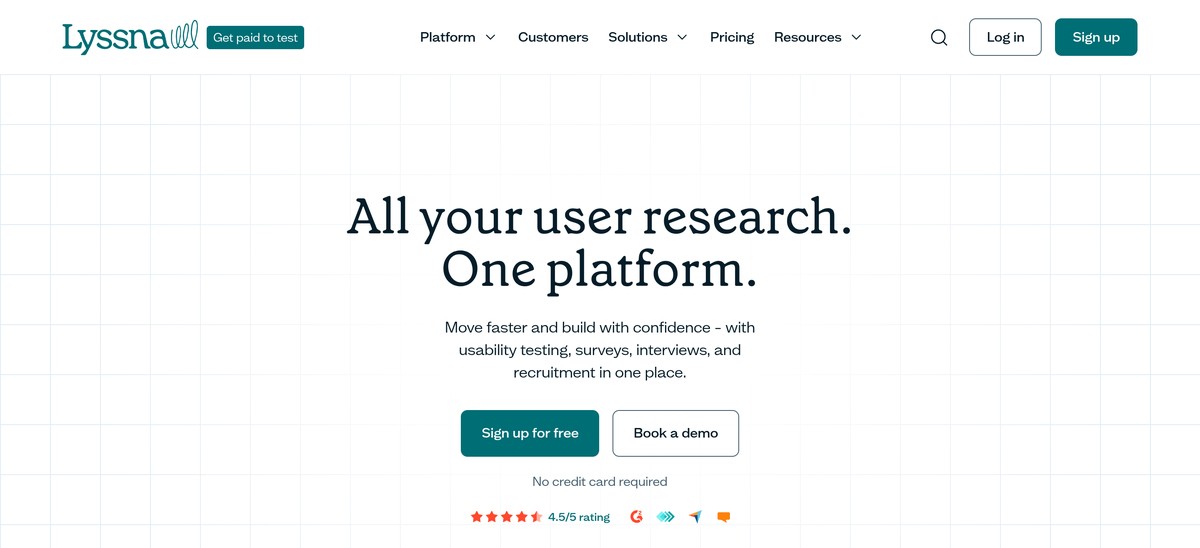
Lyssna is a remote research platform for quick design validation, with five-second tests, first-click tests, card sorting, tree testing, prototype tests and live website testing. The free plan covers 3 seats, unlimited quick studies and 15 self-recruited responses, and the panel holds more than 690,000 people.
The trade off is panel pricing. Panel responses are billed separately on every plan, so the $166 a month covers the software only. It suits design and product teams that run frequent small tests and can recruit their own users.
What we like
Closest match to Maze on methods and speed
Free plan with unlimited quick studies
Large panel with 395+ demographic filters
AI summaries and follow-up questions on Growth
Watch out for
Panel recruitment costs extra on every plan
In-depth studies capped at 5 a month on Growth
No moderated interviews on the free plan
Growth adds AI summaries, recordings and custom brandingVisit lyssna.com
02
UserTesting
4.4/5on G2 (791 reviews, checked Nov 2026)
PricingCustom/yr
Best for enterprise video research
Free planNo, demo only
Panel7M+ participants, 34 countries
MethodsVideo tests, interviews
Paid planCustom pricing
usertesting.com
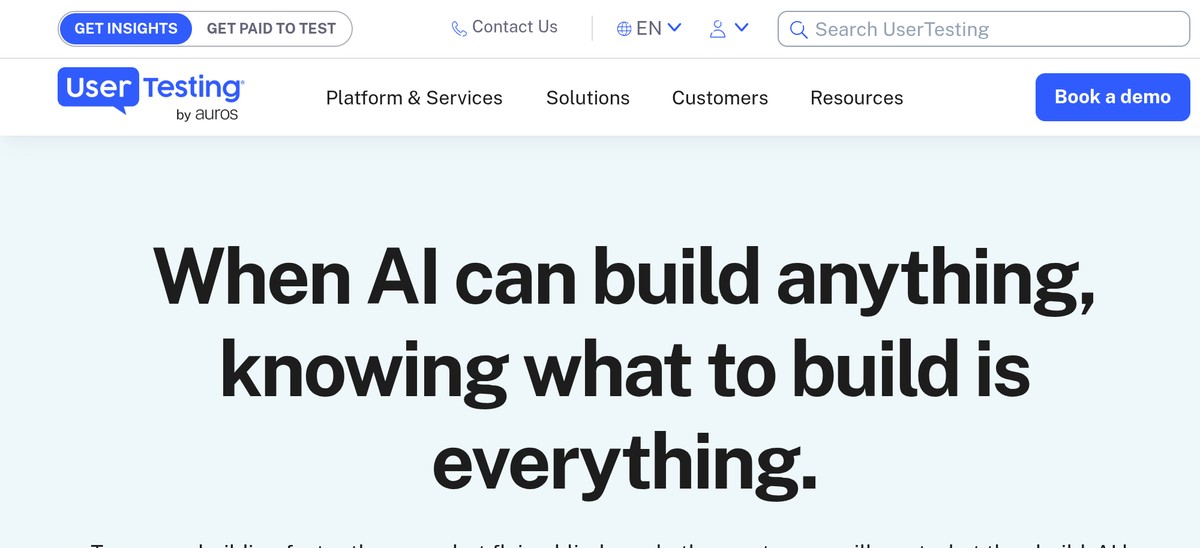
UserTesting homepage, captured Nov 2026.
UserTesting is an enterprise platform for video-based usability testing, with moderated and unmoderated tests, interviews and AI analysis. Its panel covers more than 7 million participants across 34 countries, and tests return video of real people thinking aloud as they use a product.
The trade off is price. UserTesting publishes no prices at any tier, so every deal is quoted by sales. It suits large teams that need scale, panel depth and enterprise security more than a published price.
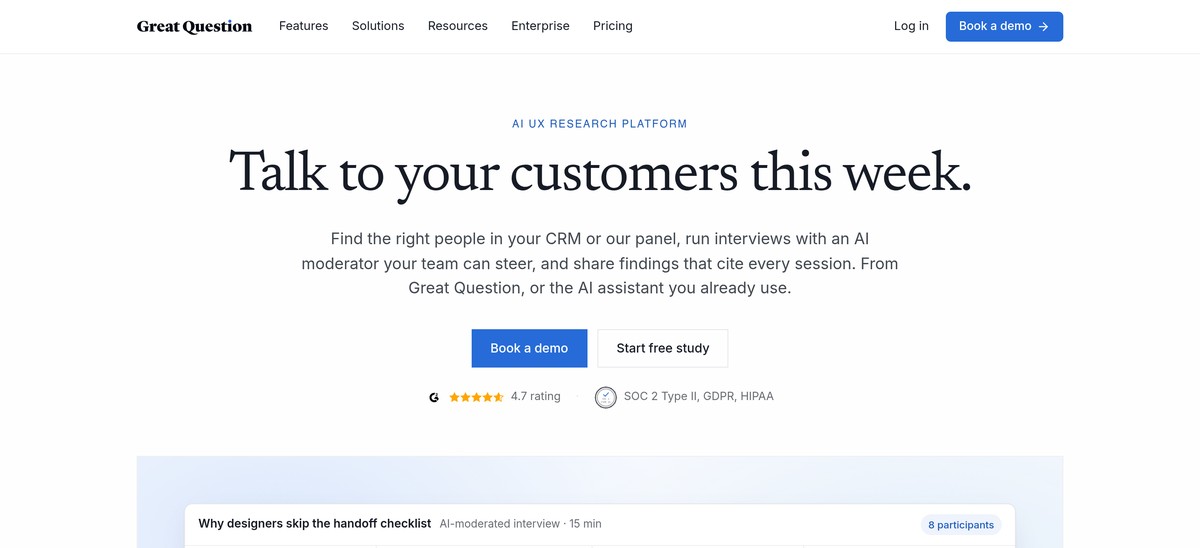
Great Question is a research platform for recruiting participants, running interviews and surveys, and turning sessions into searchable findings. The self-serve plan costs $129 per seat a month, or $1,290 per seat a year, and covers interviews, prototype tests, card sorting and tree testing.
The trade off is cost and the lack of a free plan. A 14-day trial is the only free route, and $129 per seat adds up fast for larger teams. It suits research teams that run interviews every week and need recruiting, scheduling and incentives handled in one place.
What we like
Highest G2 rating in this list at 4.7 out of 5
Recruiting, scheduling and incentives in one workflow
AI-moderated interviews with transcripts and themes
Optimal Workshop is a research platform built around information architecture, with card sorting, tree testing, first-click testing and surveys in one subscription. The Starter plan costs $199 a month billed annually and includes 5 studies a year with unlimited seats and unlimited responses per study.
The trade off is the study cap. Five studies a year is tight for a busy team, and there is no free plan, so every test counts against the quota. It suits teams whose main question is whether users can find things, rather than how they feel about a design.
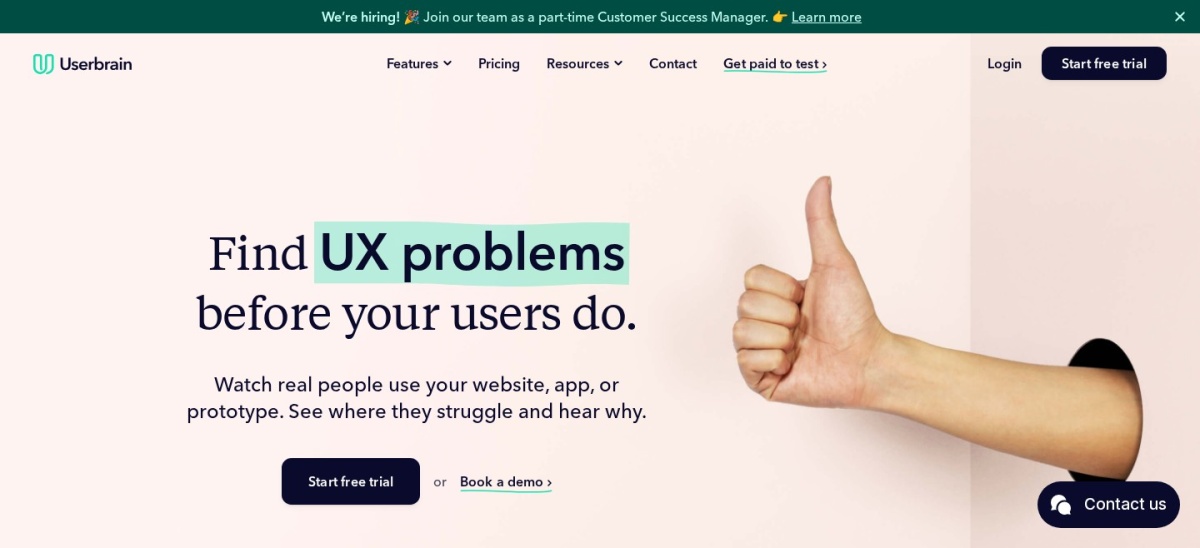
Userbrain is a user testing service for quick recorded usability tests on websites, apps and prototypes. The free plan includes 3 test setups a month and 5 sessions a month with your own users, and the Pro plan costs $49 a month with AI analysis and transcripts.
The trade off is depth. Userbrain focuses on short unmoderated tests, so it lacks the moderated interviews and card sorting of bigger platforms. It suits small teams that need a fast answer to one focused product question.
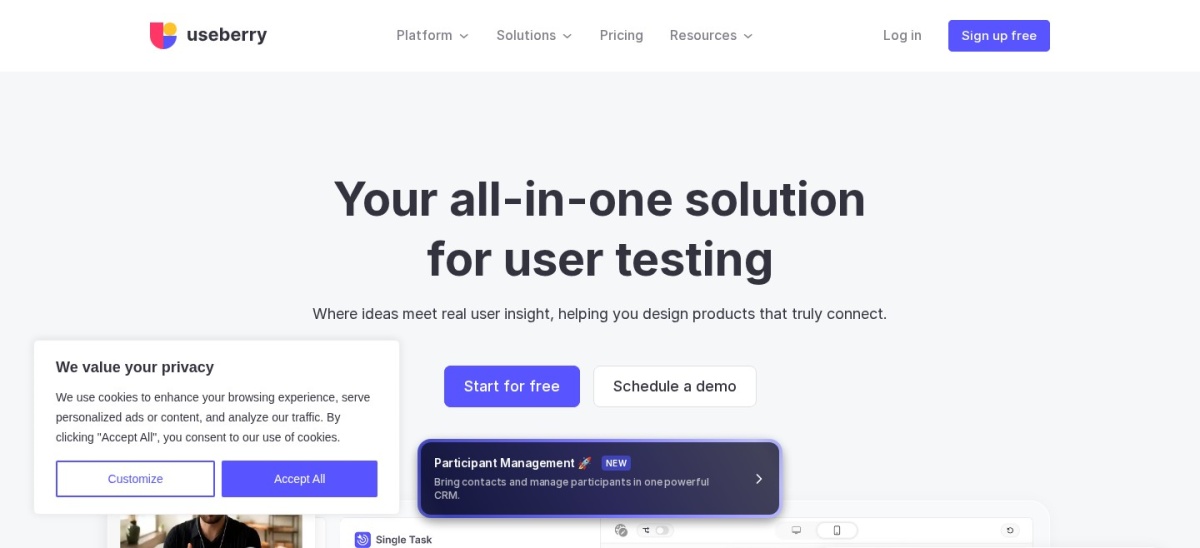
Useberry is a UX research platform for testing prototypes, websites and apps, with templates that turn static designs into clickable studies. The free plan covers 10 responses a month and 1 project, and Growth starts at $79 a month with 300 responses a month and unlimited projects.
The trade off is the seat limit. Growth includes 1 seat, and extra seats cost extra per month, so team costs climb quickly. It suits designers who test Figma prototypes often and work mostly alone.
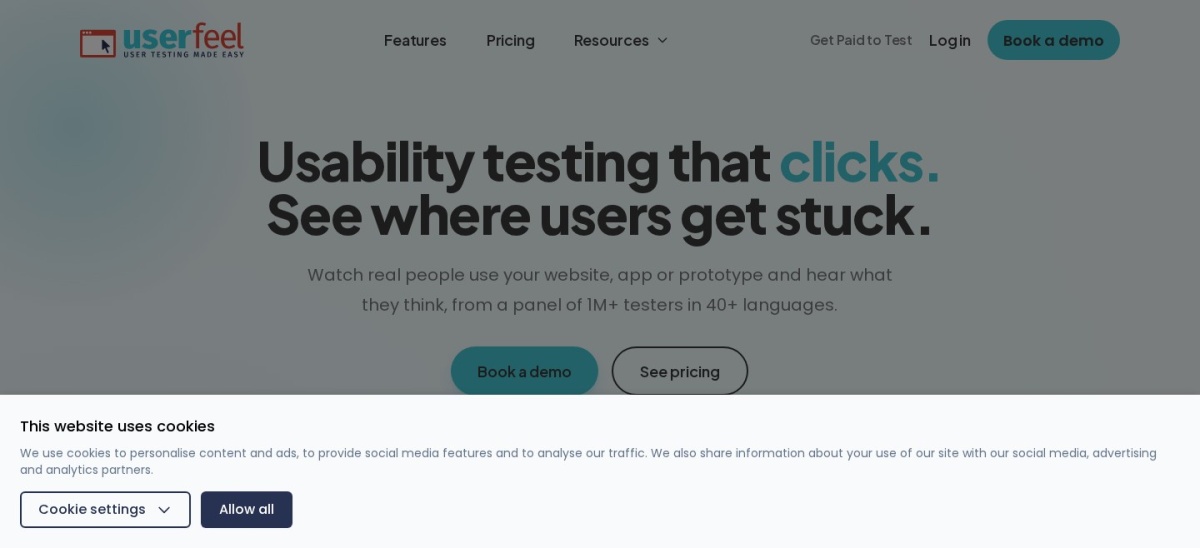
Userfeel is a usability testing platform for running tests with real users in many languages, with session recording, transcription and AI-assisted analysis. The free plan includes 3 credits a month with your own testers, and Solo costs $250 a month billed annually with 50 credits a year.
The trade off is the credit model. Every panel test spends credits, and top-up prices are not published, so heavy testing needs a quote. It suits agencies and small teams that test in several languages and want no monthly commitment.
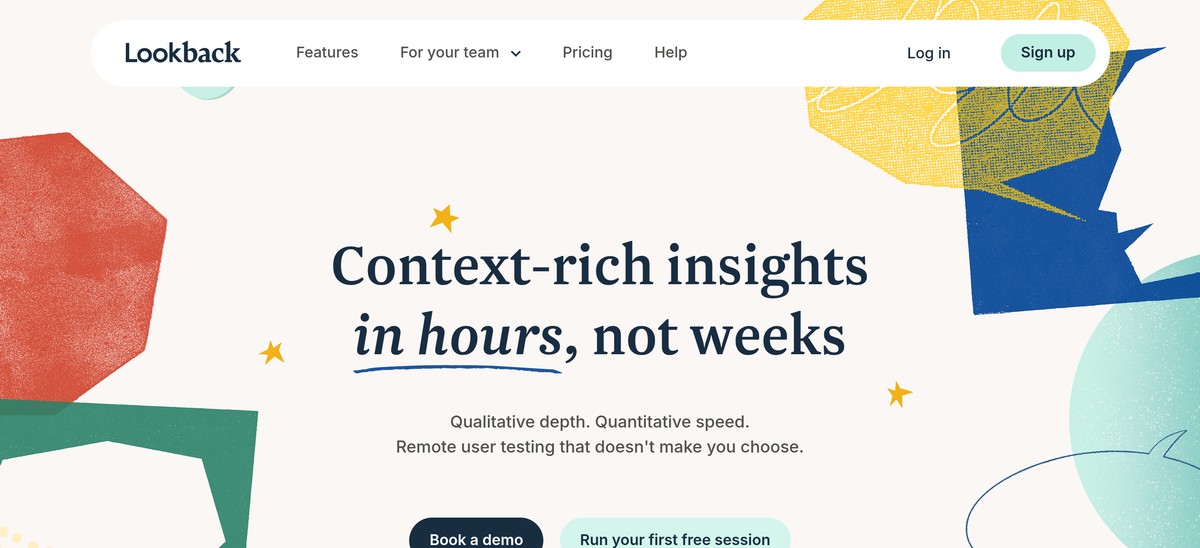
Lookback is a video research platform for live moderated interviews and unmoderated usability sessions, with screen sharing, cloud recording and an observer room. Freelance costs $299 a year for 10 sessions, and a 60-day trial covers 5 sessions.
The trade off is the session cap. Ten sessions a year is tight for regular research, and Lookback has no panel of its own, so you recruit testers yourself or pay per participant. It suits freelancers who run occasional moderated studies.
Hotjar is a behaviour analytics tool from Contentsquare that pairs heatmaps and session recordings with on-site surveys and feedback widgets. The free Observe Basic plan covers 35 daily sessions, and Observe Plus costs $32 a month billed annually with 100 daily sessions.
The trade off is that Hotjar watches behaviour rather than running task-based tests. It has no prototype testing or card sorting, and pricing is in flux after the Contentsquare move. It suits teams that want to see where users click and stall on a live site.
What we like
Cheapest monthly paid plan here at $32
Heatmaps plus recordings in one account
Free plan covers 35 daily sessions
Unlimited feedback widgets on free
Watch out for
No prototype testing or card sorting
Observe and Ask are billed separately
Pricing is in flux after the Contentsquare move
Observe Business adds 500 daily sessions and funnelsVisit hotjar.com
Moderated or unmoderated tests: which do you need?
Moderated tests suit questions you cannot script in advance. A live interview lets you follow up when a participant hesitates, which is why Lookback and Great Question lead here.
Unmoderated tests suit volume and speed. Lyssna, Userbrain and Useberry return results in hours, which fits teams that test every sprint.
Many teams need both, and that is where Maze earned its place. If you run moderated sessions weekly, pair a cheap unmoderated tool with Lookback rather than paying for one platform to do both.
How we chose
We started from the tools G2 lists as Maze alternatives and the comparison pages Maze, Dovetail and Lyssna publish, then kept nine established platforms that run usability tests, interviews or prototype testing.
Prices come from each vendor's pricing page, checked on 29 November 2026. Ratings and review counts come from G2 on the same day. Where a vendor shows a sale price, the list shows the regular price.
We left out tools with no published rating and tools that only recruit participants without running tests. No vendor paid for a place, and we do not claim to have used these tools ourselves.
How to choose a Maze alternative
Start with the research question you ask most often, then match the tool to it.
List the methods you actually use. If you mostly test Figma prototypes, Useberry or Lyssna fit. If you run card sorts, Optimal Workshop is the specialist.
Decide how you will recruit participants. Tools with a built-in panel save time, but panel responses often cost extra. Bringing your own users keeps the bill predictable.
Check the billing unit, not just the price. Per-seat, per-study and per-credit pricing behave very differently as a team grows, so model a full year before you commit.
Try the free plan or trial first. Five of these nine tools have a free plan. Run one real study on it before paying for a year.
FAQ
What are the best Maze alternatives in 2026?
Lyssna is the best Maze alternative for most teams, with a free plan, prototype testing and Growth at $166 a month billed annually. UserTesting suits enterprise video research, and Great Question leads for interview-led teams.
What is the cheapest Maze alternative?
Lookback is the cheapest paid entry at $299 a year for 10 sessions, and Hotjar Observe Plus costs $32 a month billed annually. Lyssna, Useberry, Userbrain, Userfeel and Hotjar all have free plans for occasional use.
Is there a free alternative to Maze?
Yes. Lyssna has a free plan with 3 seats and unlimited quick studies, Useberry offers 10 responses a month free, and Userbrain, Userfeel and Hotjar also have free plans. Each caps seats, responses or sessions.
Which Maze alternative is best for small teams?
Lyssna is the best fit for most small teams because its free plan covers real studies and Growth is $166 a month. Userbrain is cheaper at $49 a month, but it only runs short unmoderated tests.
Lyssna vs UserTesting: which is better?
Lyssna is better for fast, affordable design validation, with published pricing from $166 a month and a free plan. UserTesting is better for enterprise programs that need a 7-million-person panel, video at scale and custom security.
Which Maze alternative is best for moderated interviews?
Lookback is the cheapest dedicated option at $299 a year, with a live observer room and cloud recording. Great Question is stronger for teams that interview weekly, with recruiting, scheduling and incentives in one workflow.
SaaS SEO and WordPress specialist with about 8 years of experience. Rakib compares WordPress plugins, themes, hosting and software using public pricing, documentation and user reviews. See how we rank.