RankIQ is the best LowFruits alternative for bloggers who want a ready-made library of low-competition keywords with grades for every post. LowFruits alternatives such as Mangools and Ahrefs suit searchers who want keyword difficulty scores plus rank tracking and backlink data in one tool.
How we make this list: we compare pricing pages, product documentation and public user reviews, then re-check every price before each update. No product paid for a place. Disclosure.
RankIQ holds a 4.9 G2 rating from 532 reviews, the highest score here.
Mangools gives keyword difficulty scores from 0 to 100 for $37.70 a month.
Ahrefs Starter puts real Ahrefs data in reach for $29 a month.
AnswerThePublic is the cheapest paid plan here, at $9 a month for question research.
Only RankIQ and Mangools come close to the weak-SERP method LowFruits uses.
How do you choose the best LowFruits alternative?
LowFruits finds low-competition keywords by reading live search results and flagging weak spots, such as forums, thin pages and low-authority sites ranking where a better article could win. That SERP weakness check is the job most alternatives skip.
Most keyword tools work differently. They give a difficulty score from 0 to 100 based on the authority of the pages ranking, which is useful, but a low score does not always mean the live results are weak.
The closest swaps are the tools that also read the live results. RankIQ curates low-competition keywords for bloggers, and Mangools pairs difficulty scores with live SERP analysis, while the big suites rely on difficulty scores alone.
Price spreads are wide. Question research starts at $9 a month, budget suites cost $29 to $49 a month, and the big platforms cost $129 to $140 a month, so match the tool to how much research you actually do.
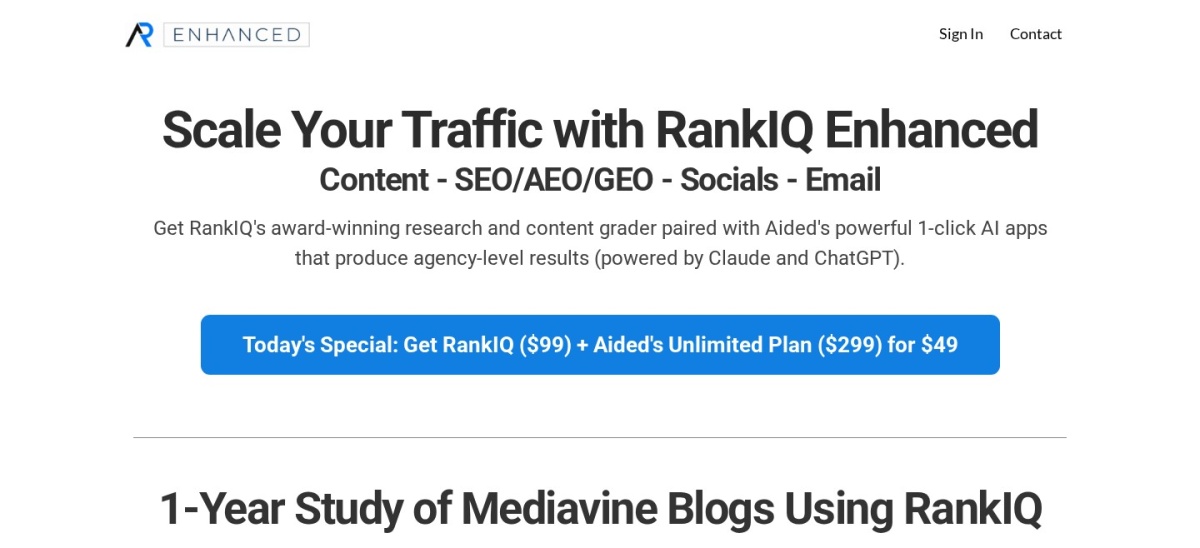
RankIQ is an AI-powered SEO tool for bloggers that hands you a curated library of low-competition keywords and grades each post from A to F. The Blogger plan costs $49 a month for 16 SEO reports a month, and each report covers the keywords to use, the words to include and the length to aim for.
The trade off is that RankIQ picks the keywords for you. You get less freedom to explore a topic than with a full keyword database, and $49 a month buys only 16 reports. It suits bloggers who want easy keywords chosen for them.
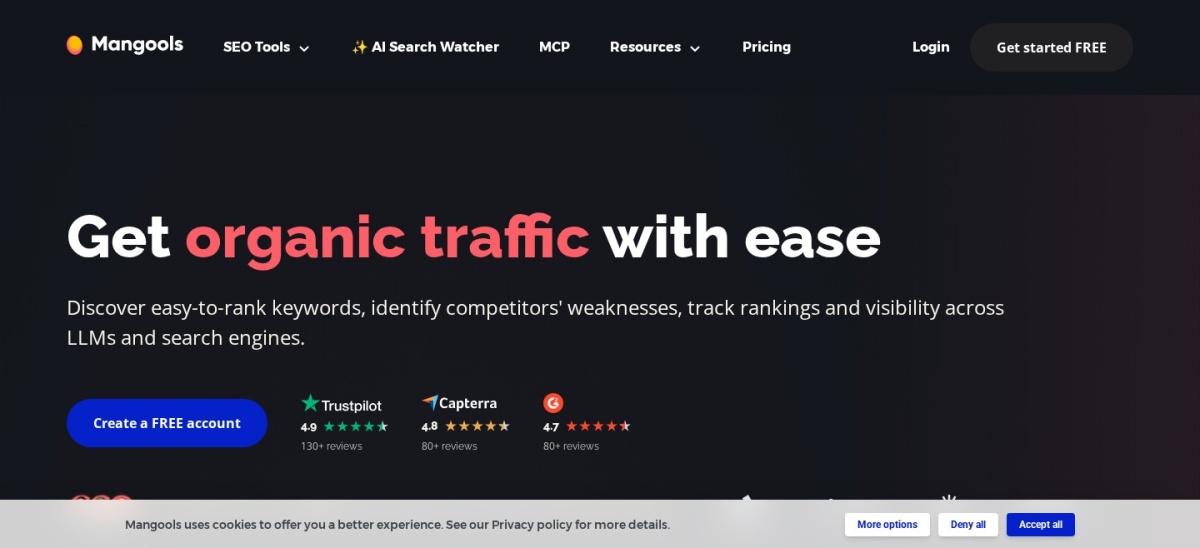
Mangools is an SEO toolkit built around KWFinder, which scores keyword difficulty from 0 to 100 next to every idea, so you can sort for easy terms in one click. Basic costs $37.70 a month on annual billing in the US and includes SERPChecker, SERPWatcher, LinkMiner and SiteProfiler in the same subscription.
The trade off is limits. Basic allows only 100 keyword lookups a day and 200 tracked keywords, and Mangools prices vary by country, so the price you see depends on where you buy. It suits beginners who want simple keyword and SERP tools.
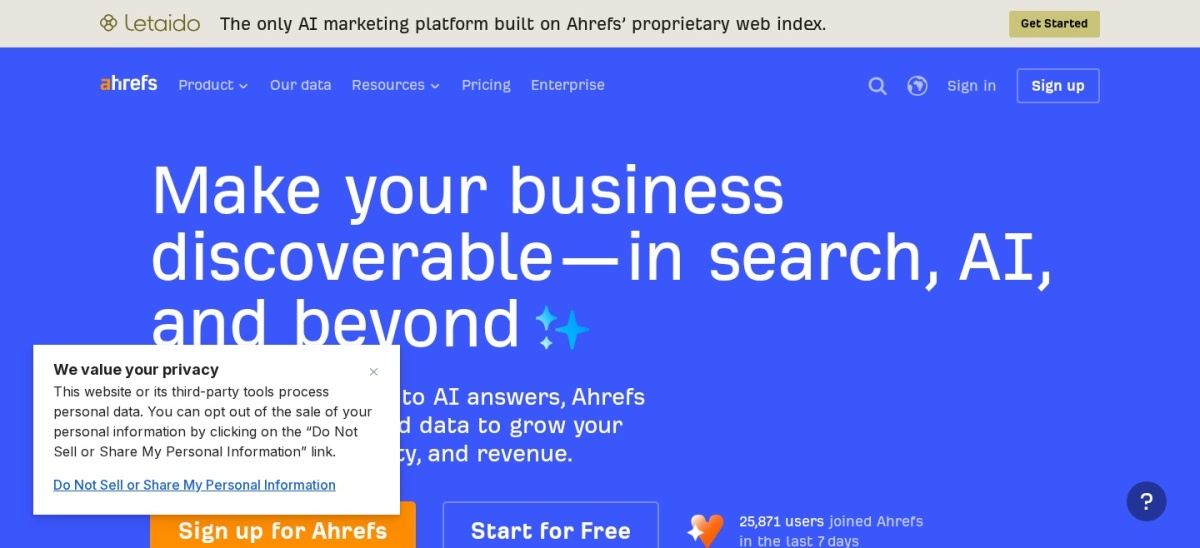
Ahrefs is the deepest keyword and backlink database here, and Starter costs $29 a month, which puts real Ahrefs data within reach of small sites. You can filter Keywords Explorer by difficulty, check the backlinks behind the top pages and see which terms a small site can actually win.
The trade off is limits. Starter is a light plan with tight allowances, and the full Lite plan costs $129 a month, so heavy research gets expensive fast. It suits freelancers who want Ahrefs data on a budget.
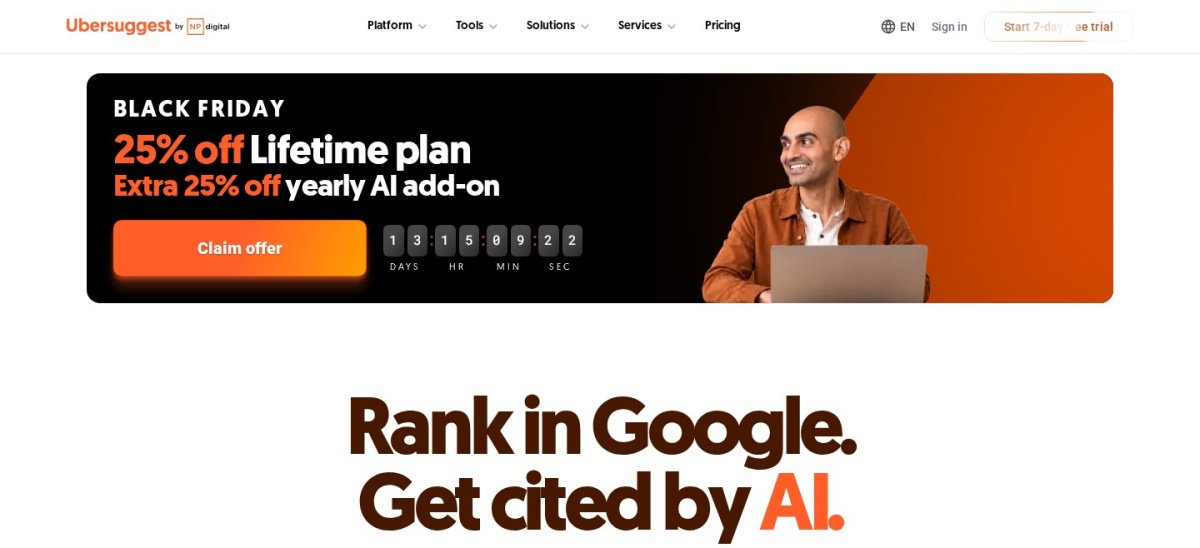
Ubersuggest is a beginner SEO tool from Neil Patel that covers keyword ideas, search volume, difficulty, site audits and rank tracking in one plan. Individual costs $29 a month, or $192 a year billed annually, and the free plan gives you 3 searches a day to test it.
The trade off is data depth. Ubersuggest indexes are thinner than the big suites, and its difficulty scores should be treated as a first pass rather than a verdict. It suits solo site owners who want keywords, audits and tracking in one cheap tool.
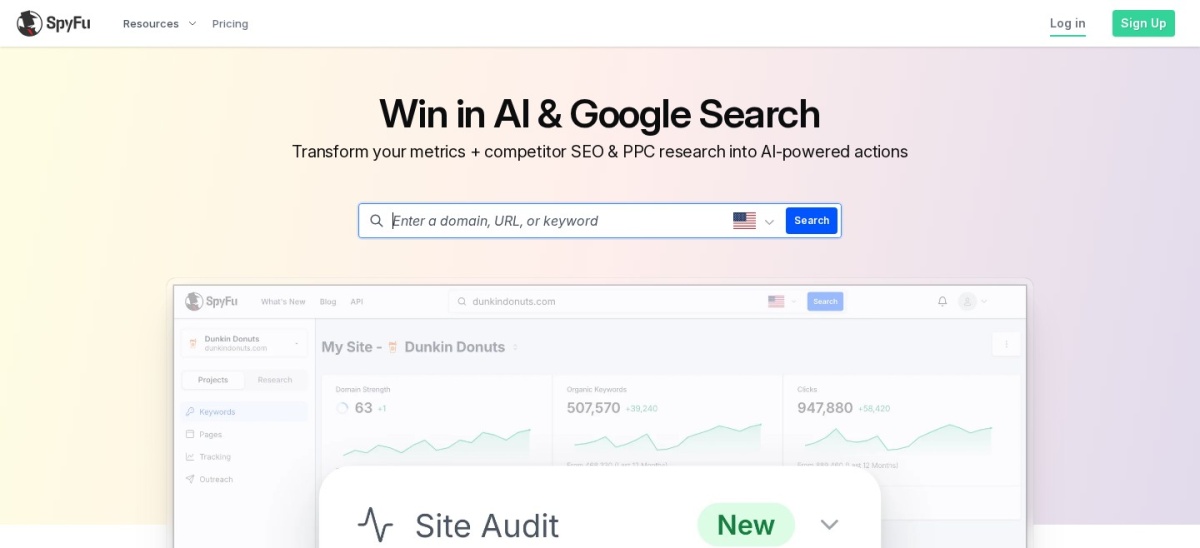
SpyFu is a competitor research tool that shows every keyword a rival ranks for and bids on, with ad history and ranking history beside it. Basic costs $39 a month and includes unlimited competitor keyword lookups, rank tracking and backlink data, with free searches to test it.
The trade off is focus. SpyFu is built for spying on competitors, so its keyword discovery is weaker than a dedicated research tool, and it has no content grading. It suits site owners who win by copying what already works for rivals.
What we like
Deepest competitor keyword history here
Unlimited competitor lookups on Basic
Ad history back many years
Watch out for
Weaker for discovering new keywords
No content briefs or grading
Professional adds more tracked keywords and reportsVisit spyfu.com
06
SE Ranking
4.7/5on G2 (1,591 reviews, checked Nov 2026)
Starts at$129/mo
Best suite for agencies
Tracked keywords2,000 daily, Core
Projects10 on Core
Keyword databaseIncluded in every plan
Paid planCore, $129/mo
seranking.com
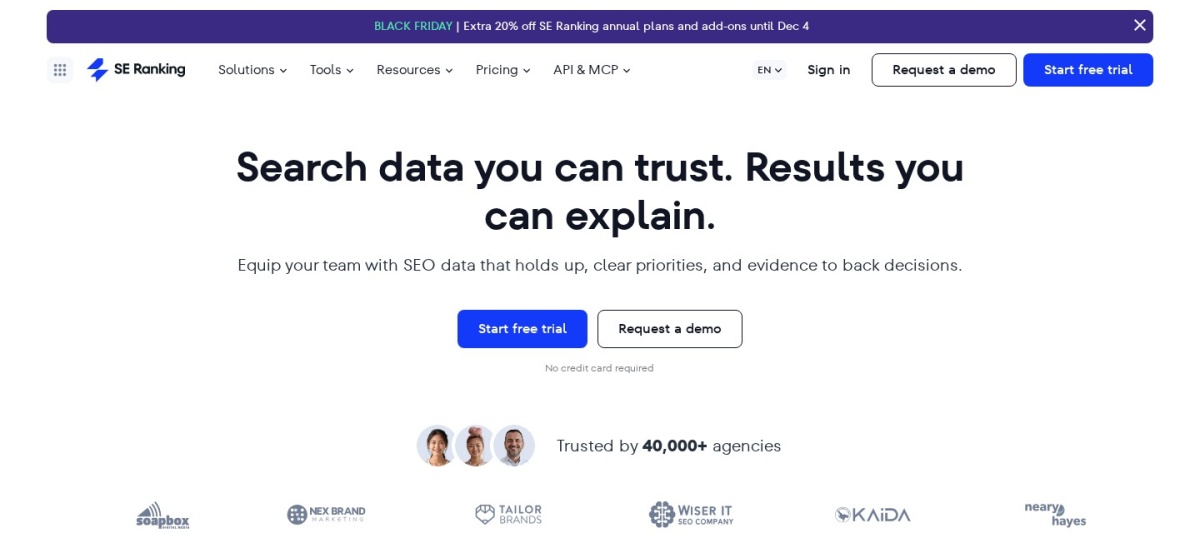
SE Ranking homepage, captured Nov 2026.
SE Ranking is an all-in-one SEO platform with keyword research, site audits, rank tracking and backlink checks. Core costs $129 a month, or $103.20 a month on annual billing, and includes 10 projects, 2,000 tracked keywords a day and 250,000 audit pages a month.
The trade off is price for keyword-only work. Core costs four times the cheapest tools here, and its difficulty scores are estimates like everyone else. It suits agencies that want keyword research beside audits and tracking in one platform.
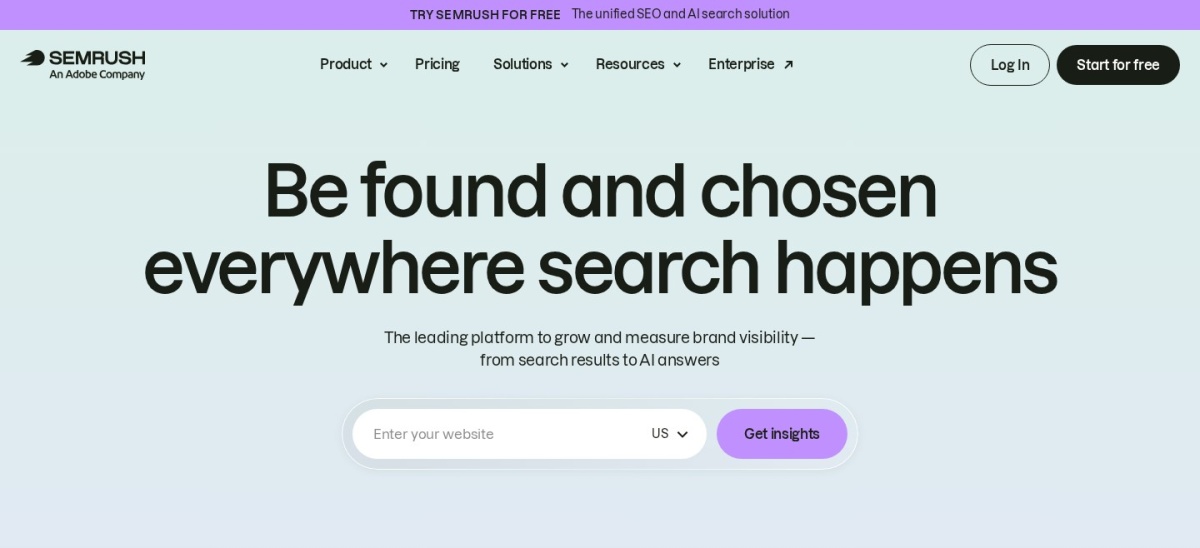
Semrush is the largest keyword database here, with Keyword Magic Tool, difficulty scores, SERP analysis and position tracking in one suite. Pro costs $139.95 a month and tracks 500 keywords, with a limited free account for small checks.
The trade off is price. Pro is the most expensive plan in this list, and its difficulty score alone does not flag weak SERPs the way LowFruits does. It suits teams that want the biggest keyword database plus audits and backlinks.
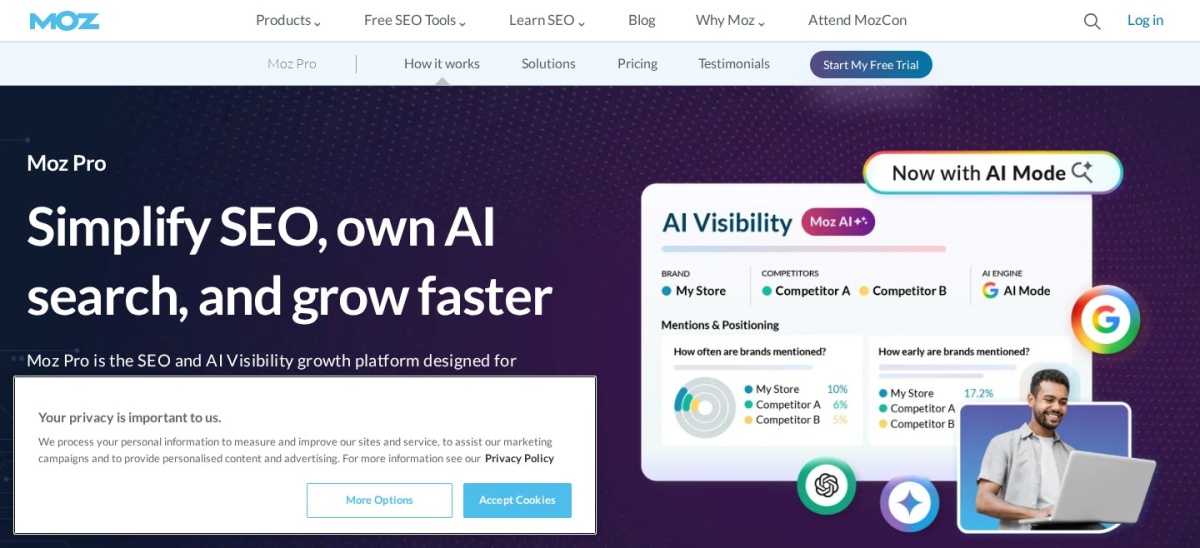
Moz Pro is an SEO suite whose Keyword Explorer shows keyword difficulty, search volume, organic click-through rate and SERP analysis in one view. Standard costs $99 a month and adds local listings management beside rank tracking and site crawls.
The trade off is database size. Moz keyword data is smaller than Ahrefs or Semrush, and the cheapest Starter plan at $49 a month has tighter limits. It suits beginners who want clear keyword metrics without a steep learning curve.
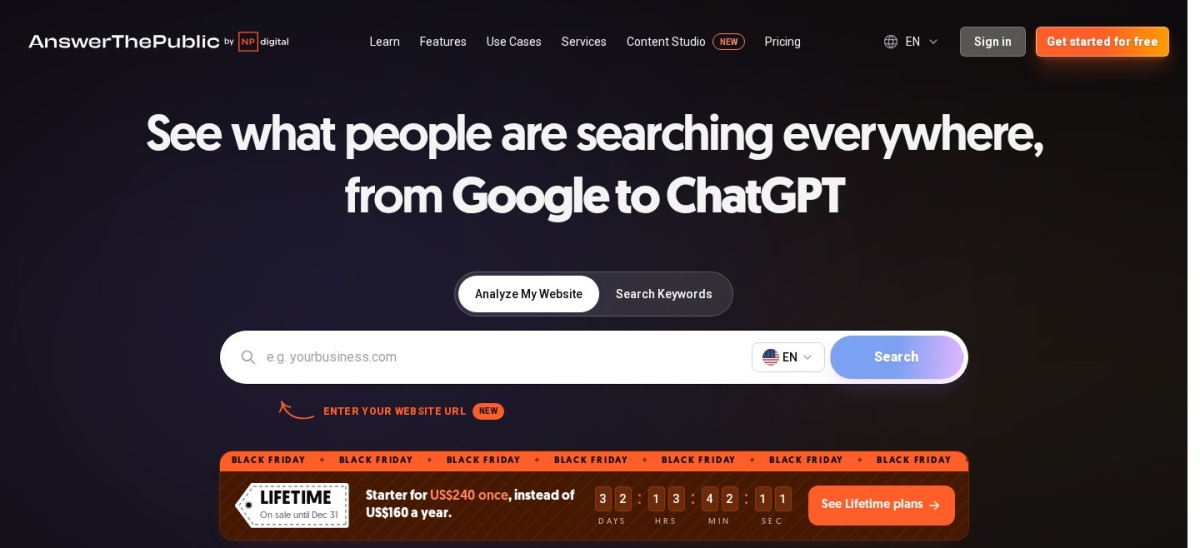
AnswerThePublic is a search listening tool that turns Google and Bing autocomplete data into visual maps of the questions, prepositions and comparisons people type around a keyword. Individual costs $9 a month, with 100 searches a day, and the free plan allows 3 searches a day.
The trade off is depth. AnswerThePublic finds questions brilliantly, but it gives no difficulty score and no weak-SERP flag, so you still need another tool to judge competition. It suits creators planning content from real questions.
Weak-SERP flags vs difficulty scores: what is the difference?
A weak-SERP flag reads the live results and marks the weak pages in them, such as forums, user-generated pages and thin content. LowFruits and RankIQ work this way.
A difficulty score rates a keyword from 0 to 100 based on the authority of the pages ranking. Mangools, Ahrefs, Semrush and SE Ranking work this way, and the score is a useful first filter.
Use both when you can. Start with a difficulty score to shortlist terms, then check the live results for weak pages before you commit to writing the article.
How we chose
We started from the tools bloggers name most often as LowFruits swaps, then kept those with a published price and a G2 or Capterra rating.
Prices come from each vendor pricing page and G2 and Capterra listings, checked on 30 November 2026. Where a vendor shows a sale, the list shows the regular price.
We left out weak-SERP tools with no G2 or Capterra rating, including Keyword Chef and TopicRanker, because a numeric rating is required for every tool here. No vendor paid for a place, and we do not claim hands-on testing for this list.
How to choose a LowFruits alternative
Start with how you find easy keywords, then check the price per search.
Decide if you need weak-SERP flags. If you want LowFruits-style weak-spot detection, pick RankIQ or Mangools. If a difficulty score is enough, the big suites work fine.
Check the daily limits. Budget plans cap lookups per day, so count how many keywords you research in a heavy session before you buy.
Test the free plan first. Most tools here have a free plan or trial. Run your real keywords through it before you pay.
Compare the yearly cost. A $29 monthly plan costs $348 a year, while a $129 suite costs $1,548, so match the spend to the research you actually do.
FAQ
What is the best LowFruits alternative in 2026?
RankIQ is the best LowFruits alternative for bloggers, with a curated library of low-competition keywords and grades for every post, rated 4.9 out of 5 on G2 from 532 reviews.
Is there a free alternative to LowFruits?
Yes. Mangools, Ubersuggest and AnswerThePublic all have free plans with daily limits, and Ahrefs offers free keyword generator tools, though full data needs a paid plan.
How much does a LowFruits alternative cost?
Prices run from $9 a month for AnswerThePublic to $139.95 a month for Semrush Pro. Most bloggers pay $29 to $49 a month for Mangools, Ahrefs Starter, Ubersuggest or RankIQ.
Which LowFruits alternative is best for beginners?
Mangools is the best pick for beginners, with simple difficulty scores from 0 to 100 and five tools in one subscription for $37.70 a month on annual billing.
RankIQ or Mangools: which should I pick?
Pick RankIQ if you want low-competition keywords chosen for you with grades for each post. Pick Mangools if you want to explore keywords yourself with difficulty scores and rank tracking in one toolkit.
Do LowFruits alternatives show weak search results?
Only a few do. RankIQ curates weak keywords for bloggers, and Mangools pairs difficulty scores with live SERP analysis, while Ahrefs, Semrush and SE Ranking rely on difficulty scores alone.
SaaS SEO and WordPress specialist with about 8 years of experience. Rakib compares WordPress plugins, themes, hosting and software using public pricing, documentation and user reviews. See how we rank.